


Our top 5 Mediterranean climbing plants that can withstand heat and drought
Perfect for a dry and sunny garden
Contents
Climbing plants are must-have choices for dressing a pergola, greening a low wall, or camouflaging an unsightly structure. In a hot, dry climate, you’ll need to choose undemanding varieties capable of withstanding drought and the sometimes fierce rays of the sun. The climbing plants suited to a Mediterranean climate are perfect for these constraints: They are accustomed to undemanding conditions, and this does not prevent them from producing beautiful colour blooms.
Here is our selection of five climbing plants for gardens, verandas or warm, sunlit greenhouses.

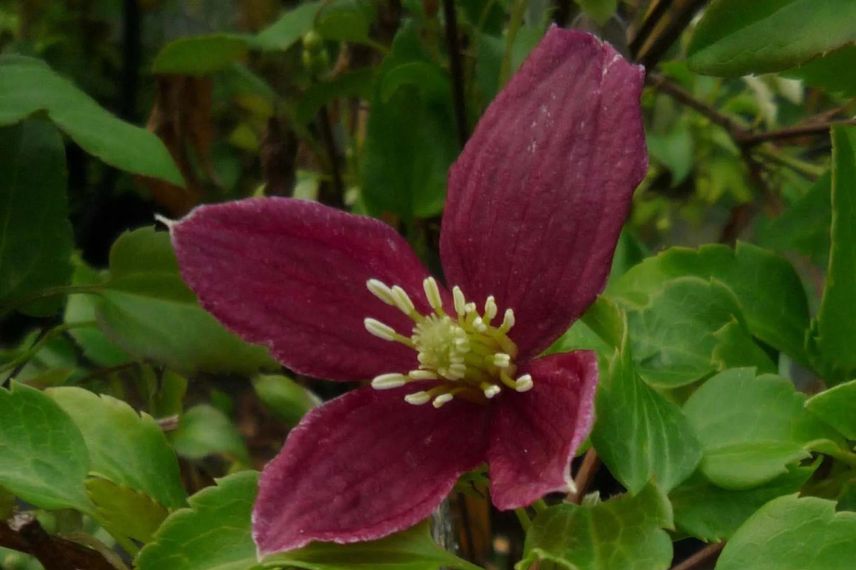
The clematis 'Lansdowne Gem' - Clematis cirrhosa
The clematis ‘Lansdowne Gem’ is a Mediterranean climbing plant that flowers for a long period in winter, from November to March. This is also known as the ‘Christmas clematis’. It is an uncommon variety, yet very interesting, especially at a time when the garden is less lush and colourful. It produces a multitude of bell-shaped flowers, about 7 cm across, formed of four waxy-looking sepals. They display an elegant purplish-red, simply set off by a heart of golden stamens. Their fragrance is subtle.
The lobed foliage is initially bronze, before turning green. It is evergreen if winter conditions are not too harsh.
Hardy to around -8°C, this rare climber will reach 3 metres in height with a 1.5-metre spread at maturity. It can therefore be grown in a pot, kept sheltered in the coldest regions, to better enjoy its flowering under glass or in a conservatory.
In terms of cultivation, due to its origins, it tolerates very well poor, stony and dry soils, even calcareous. Once established, it will withstand drought and thrive in full sun.
For more on growing clematis, read our guide “Clematis: Plant, prune and maintain”.
Read also
7 Mediterranean treesClimbing rose 'Cocktail'
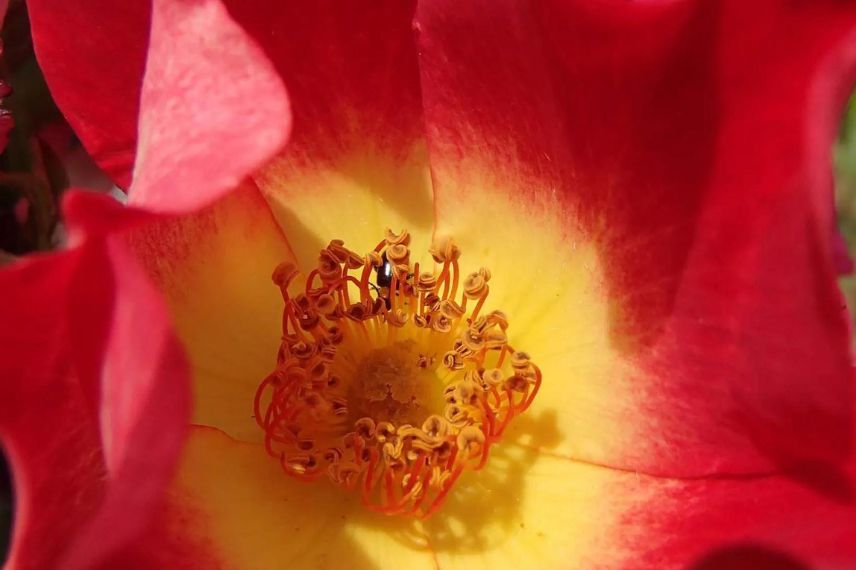
This brightly coloured rose is an original, which will only develop as a climbing plant in the southern regions of our territory. But ‘Cocktail’ will nonetheless form a handsome bush in the other regions.
For most of the summer, except during periods of hot weather that would temporarily put it to rest, this rose produces magnificent single eglantine flowers, grouped into bouquets. They are bright red with a sunny yellow centre surrounded by a paler halo. Scented, the flowers exude fruity and spicy notes. This flowering will attract both admiring glances and pollinating insects. It then gives way to decorative fruit. For its qualities, this rose has benefited from the prestigious title of ‘the world’s favourite rose’ in 2015.
Its glossy green foliage is somewhat susceptible to disease in humid climates.
‘Cocktail’ has a moderate growth habit. It will reach 2.5 m in height and 1.5 m in spread. It has the advantage of tolerating hot, dry climates, whereas many of its peers would suffer in such conditions. It will look lovely trained on a pergola or a trellis. Hardy down to -15°C, it can be grown outdoors in several of our regions. Plant it in deep soil, even if somewhat poor, provided it is light.
To learn more about growing roses, read our guide ‘Roses: the best varieties and how to grow them’.
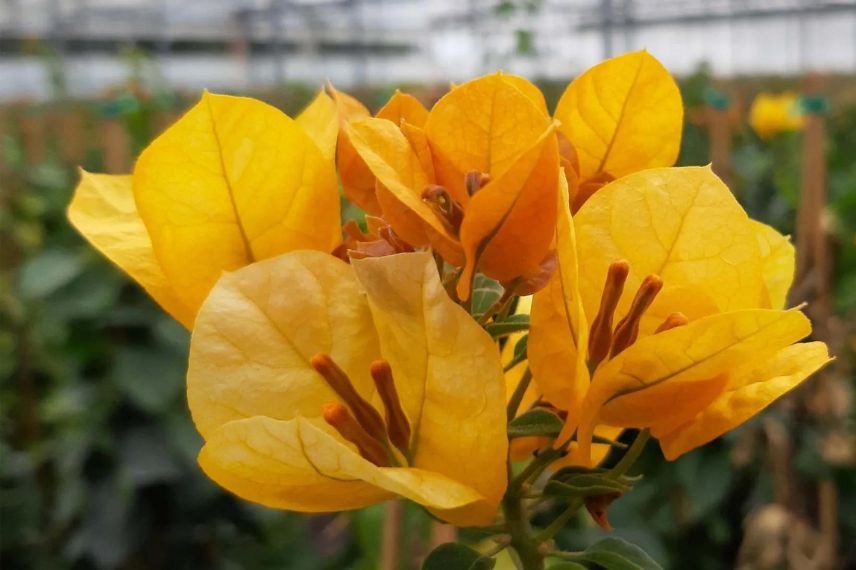
Bougainvillea 'Yellow' - Bougainvillea spectabilis
It is certainly one of the most iconic Mediterranean climbers: bougainvillea! The Yellow variety stands out from the more common violet-mauve, truly brightening sunlit spots. It flowers generously from late spring to late summer, revealing its famous heart-shaped bracts, a bright yellow with a hint of orange.
Its foliage, often evergreen, comprises leaves of a satin-green hue, with a slightly velvety texture and an oval, or lanceolate, shape.
With rapid growth, this Bougainvillea spectabilis will easily reach 5 to 8 metres across. This woody climber clings to available supports thanks to hooked thorns.
This climbing plant from a mild region is not hardy, but can certainly be grown in a large container, protected from winter frosts. It can be planted in the ground in south-eastern regions where winters are particularly mild.
For its cultivation, give it light, well-drained soil in a sunny position. It tolerates drought perfectly once established (in a pot, watering will need to be a little more regular due to faster evaporation).
For more on bougainvillea cultivation, read our guide “Bougainvillea: planting, care, growing in containers and in the garden”.
Read also
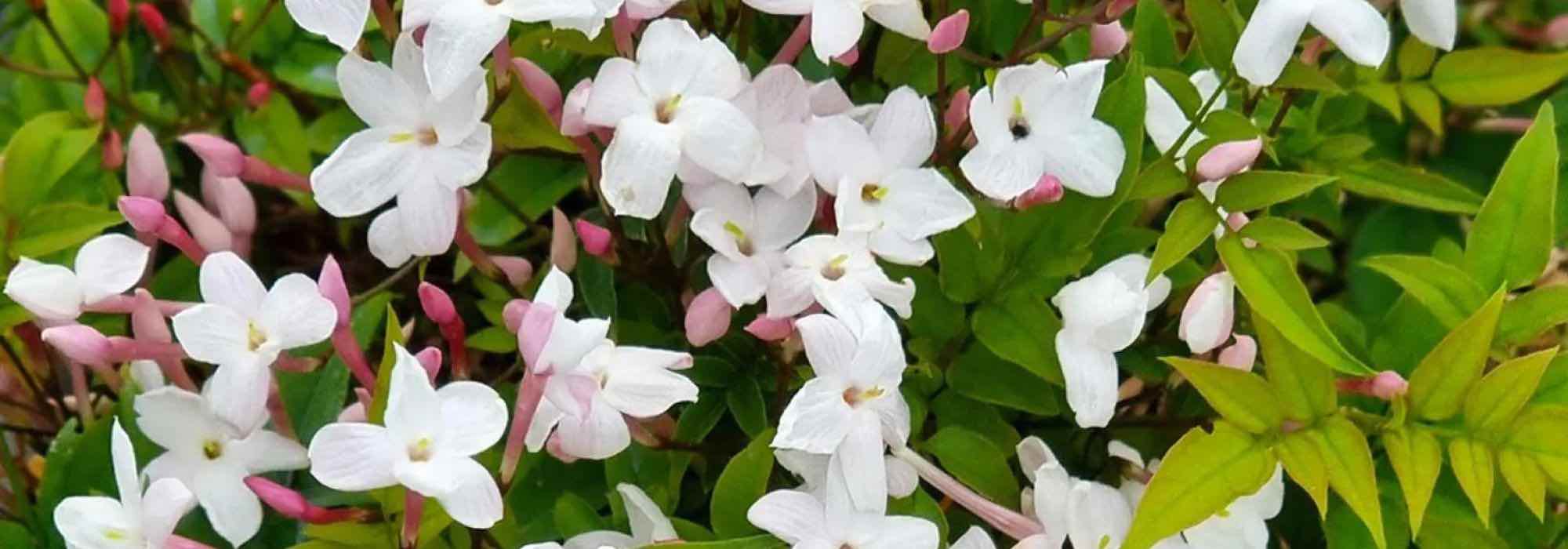
9 mediterranean shrubsHybrid jasmine ‘Starry Night’ – Jasminum officinale × polyanthum
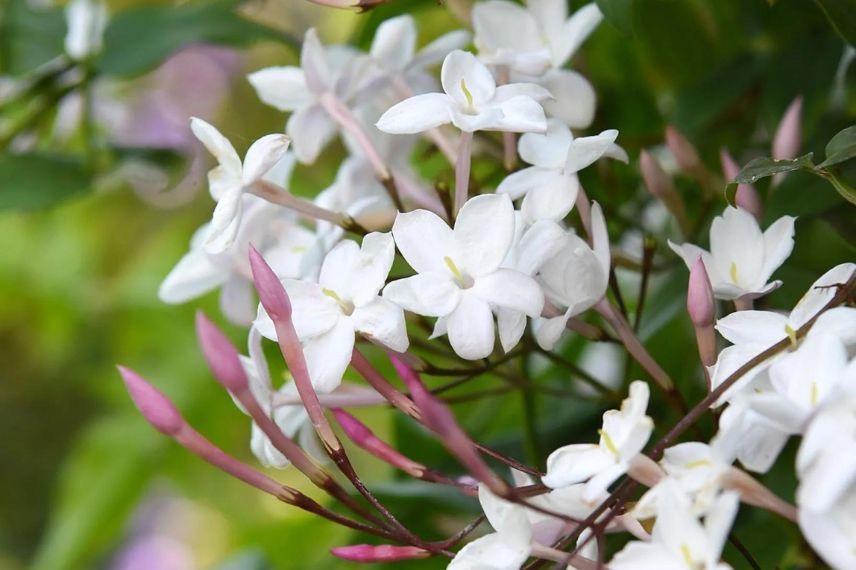
‘Starry Night’ is a jasmine hybrid that has the same qualities as its relatives. Flowering begins in late spring and continues until the end of summer. It delights us with pink buds, which open into a profusion of starry white flowers. This flowering exudes a floral, heady fragrance, which would be almost intoxicating for some. Melliferous, it will undoubtedly attract pollinating insects.
The green foliage may persist if the winter is not too harsh (< -5°C). This jasmine is hardy to about -9°C. It can be grown in open ground outside the Mediterranean region, provided it is sheltered from prevailing winds and rain.
This jasmine forms a vigorous liana measuring about 3 to 4 metres in height with a spread of over 2 metres. Its climbing stems will surge up trellises or fences, clothing them with charm.
Cultivate this jasmine in rich, but well-drained soil, in a sunny position. Once established, it will tolerate drought well.
For more on jasmine cultivation, read our guide Jasmine: planting, maintenance, pruning
Tendril-bearing trumpet vine - Campsis capreolata
This trumpet vine isn’t native to the Mediterranean, but to hot, dry regions of the south-eastern United States. As such, it tolerates sun and drought just as well.
The trumpet vine with tendrils delights us with its flowering that lasts all summer.
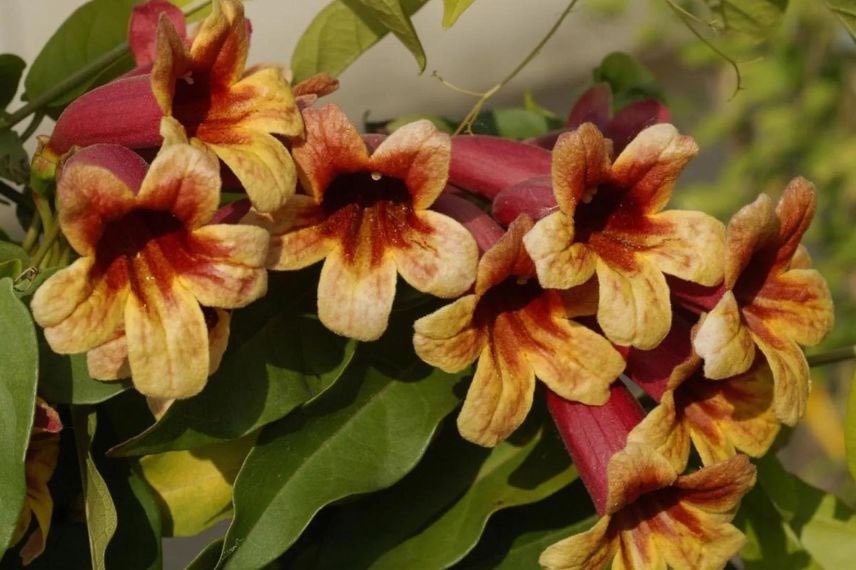
It features trumpets in shades ranging from red to orange, through coppery tones, against a yellow backdrop. It is above all its unusual fragrance that sets it apart from its sisters: it exudes indulgent notes of cocoa and roasted coffee. This flowering gives rise to small decorative black pods.
The dark green foliage is evergreen if winter is mild, taking on purplish hues.
Thanks to its suction-cup tendrils, this climber will take hold of different supports and quickly cover them.
Plant it in sun or partial shade in warmer regions. It will thrive in well-drained soil, even when dry, poor and calcareous. In regions where winters fall below -6°C, it should be grown in a large container. In the garden, it can reach 8 to 10 metres tall.
For more on growing trumpet vine, read our guide ‘Trumpet vine: planting, pruning, propagating‘.
- Subscribe!
- Contents
Comments