






























Plant communication: how does it work?
Plants talk to each other a lot!
Contents
Nature teems with mysteries, and among them, plant communication remains a subject of fascination and scientific exploration. Unlike animals, plants do not possess a nervous system or sensory organs in the conventional sense. Yet they have developed sophisticated communication mechanisms, enabling them to interact with their environment in a complex and nuanced way.
Plant communication occurs through a range of means: chemical signals, physical changes, and even underground interactions via their roots and fungal networks. These information exchanges are not limited to the isolated individual but extend to plant communities, revealing a remarkable level of organisation and cooperation. This article thus offers a plunge into this fascinating universe, where every plant, from the humblest herb to majestic trees, plays an active role in an ongoing dialogue with its surroundings.
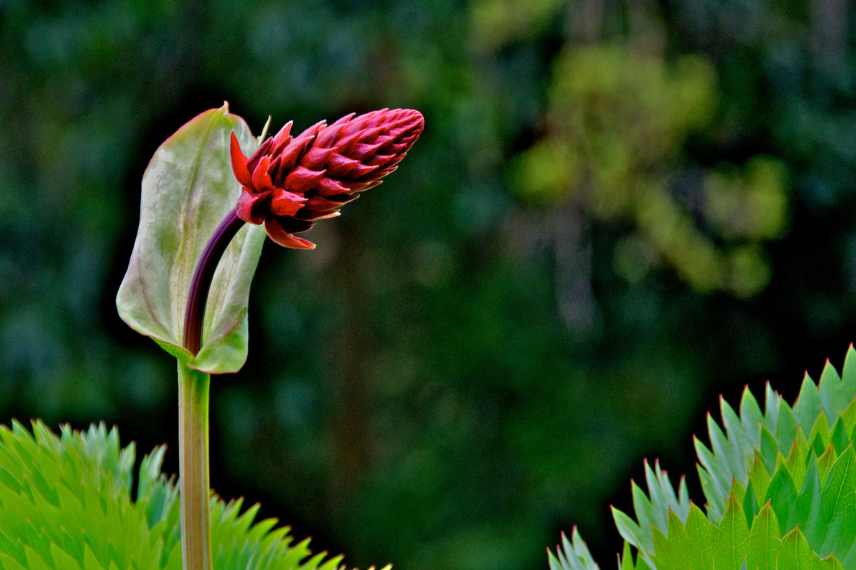
Phototropism in Melianthus major

The foundations of plant communication
Plant communication rests on unique biological and ecological foundations, reflecting their ability to perceive and respond to their environment in a dynamic and often surprising way.
Overview of communication mechanisms
Plants primarily communicate through biochemical signals. These signals can be volatile molecules emitted into the air or chemical substances transported within their vascular system. For example, when a plant is attacked by a predator, it can release volatile compounds that serve as an alarm signal to other parts of the plant, or even to neighbouring plants. These signals can induce defensive responses, such as the production of toxic or repellent substances for herbivores.
Plants also have the ability to communicate via electrical signals, similar to nerve impulses in animals. These electrical signals can propagate through the plant to trigger rapid responses, such as the closing of the stomata in response to water stress.
Perception and response of plants to their environment
Plants are equipped with chemical and physical sensors, enabling them to perceive changes in their environment. They detect, for example, variations in light, temperature, pressure, touch, and even electromagnetic fields. This perception is crucial for their survival and growth.
In response to these stimuli, plants can adapt their growth and development. Phototropism, for example, is a mechanism by which a plant grows towards light, thereby maximising its ability to carry out photosynthesis. Similarly, the roots of plants respond to gravity and the availability of water and nutrients, guiding their growth to optimise their uptake.
The ability of plants to communicate and to respond to their environment is not only a mechanism of individual survival; it also plays a crucial role in regulating ecosystems. Interactions between plants, and between plants and other organisms, form the basis of food chains and biogeochemical cycles. Moreover, communication between plants can be influenced by environmental conditions such as light, temperature, humidity, etc. These factors can modulate the intensity, nature or even the direction of the signals exchanged.

Plants possess a highly sophisticated network of communication
The chemical signals: the secret language of plants
Chemical communication is one of the most fascinating aspects of plant biology. Plants synthesise and release a wide range of chemical compounds to interact with their environment, a form of secret language that plays a crucial role in their survival and reproduction.
How do plants use chemical compounds to communicate?
Plants synthesise and release a variety of chemical compounds to communicate both within the plant and with their surroundings. These chemical signals may be pheromones, plant hormones, or other types of organic molecules. For example, when injured or attacked by herbivores, some plants emit volatile organic compounds that can be detected by other plants. These plants, upon receiving these signals, in turn trigger defence mechanisms, such as toxin production or changes in their physiology to become less attractive to herbivores.
Chemical compounds also play a role in intra-plant communication. Plant hormones, such as auxin or ethene, regulate various growth and development processes. They help the plant coordinate its responses to environmental changes, such as adapting to variations in light or water availability.
Response to environmental stresses and attacks by predators
Plants also respond to environmental stresses, such as drought, extreme temperatures or salinity, via physiological adjustments through chemical signals. For example, in response to a lack of water, plants can produce abscisin, a plant hormone that promotes stomatal closure to reduce water loss.
In the face of predator attacks, plants trigger sophisticated defence responses. Some produce toxic or repellent compounds specifically in response to an attack. Others may emit chemical signals that attract natural predators of their attackers, a clever strategy to reduce damage.
Moreover, chemical signals play a role in the symbiotic communication between plants and other organisms. For example, plant roots secrete exudates that influence the microbial composition of the soil, promoting the formation of beneficial relationships, such as with mycorrhizal fungi.
Root communication: the plant internet
Plant roots do not merely absorb water and nutrients; they also play a major role in a complex and largely unseen communication system.
Exploring communication between plant roots
Root communication involves exchanges of information between plant roots, enabling remarkable coordination and cooperation. For example, plants can detect the presence and density of other plants’ roots in their neighbourhood. This perception influences their root growth strategy, enabling them to avoid competition for resources or, conversely, to help each other in challenging environments.
Roots also secrete a variety of chemical compounds into the soil, including plant hormones, alarm signals and nutrients. These root exudates can affect the growth and behaviour of other nearby plants, as well as the soil’s microbial composition. For example, some plants release substances that inhibit the growth of neighbouring plants’ roots, a strategy known as allelopathy.
→ To learn more about the phenomenon of allelopathy, read “Allelopathic plants.”
 The visible and underground roots of trees: a highly sophisticated network in the communication system!
The role of mycorrhizal networks
These networks are formed by the symbiosis between plant roots and soil fungi. The mycorrhizal fungi extend their network of filaments, called hyphae, far beyond the roots of the host plants, thereby greatly increasing the surface area for water and nutrient absorption.
These mycorrhizal networks not only facilitate nutrient uptake but also enable the exchange of substances between different plants. For example, in a forest, larger trees in full light can share nutrients with younger trees or those located in less well-lit areas thanks to this underground network. This redistribution of resources plays a crucial role in the resilience and health of the forest ecosystem. Another example: many terrestrial orchids depend on mycorrhizal fungi for their germination and initial growth, drawing nutrients directly from these fungi.
Moreover, mycorrhizal networks can transmit distress signals or warnings from one plant to another. When a plant is attacked by pathogens or herbivores, it can send chemical signals via the mycorrhizal network, alerting neighbouring plants, which can then activate their own defences.
In addition to mycorrhizal fungi, plants interact with a wide range of bacteria and other soil microorganisms. These interactions can influence plant health, their growth and even their ability to resist diseases.
Read also
Botanical rules and nomenclaturesSignalling by light or touch
Plants’ ability to perceive and respond to light and touch allows them to adapt to their environment in a dynamic and often surprising way.
Phototropism: how plants adapt to light
Phototropism is the process by which a plant orients its growth in response to light. This adaptation is crucial, as light is the primary energy source for photosynthesis. Plants use special photoreceptors to detect light, including its direction, intensity and wavelength. Young sunflower plants (Helianthus annuus) are a classic example of positive phototropism. They angle their heads to track the sun during the day, maximising their exposure to light for optimal photosynthesis.
When a plant detects a unilateral light source, it can direct its growth towards that source. This phenomenon is particularly visible in young plants and shoots, where the stem bends towards the light. This movement is regulated by growth hormones, such as auxin, which redistribute to the shaded part of the plant, causing faster cell elongation on that side and thus bending towards the light.

Thigmotropism: plant responses to touch
Thigmotropism is a plant’s response to physical contact or to touch. This response is often observed in climbing plants with tendrils, such as Virginia creeper (Parthenocissus tricuspidata), which coil around a support when they come into contact with it. This ability helps them climb towards the light and stabilise themselves in their environment.
The mechanisms underlying thigmotropism involve changes in cell turgor and the distribution of growth hormones. When a part of the plant is stimulated by touch, this triggers a cascade of biochemical reactions that modify the plant’s growth in response to that stimulus. For example, climbing plant tendrils can grow more rapidly on one side than the other in response to touch, thereby enabling the plant to coil around a support.
These touch responses are not limited to directional growth. Some plants, such as Mimosa pudica, are known for their rapid response to touch, folding quickly in response to mechanical stimulation.
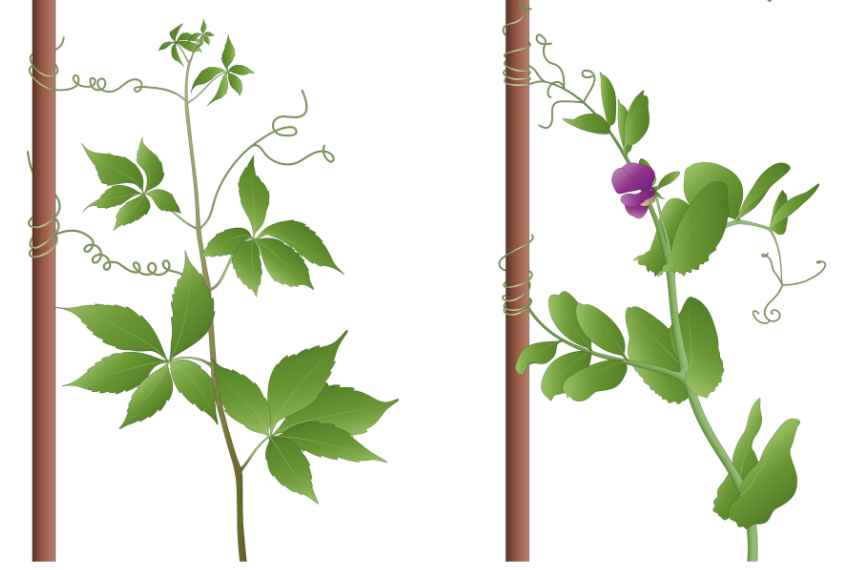
Thigmotropism in the leaves and stems of climbing plants
The interactions between plants and animals
Interactions between plants and animals are a fundamental pillar of ecosystems. Plants have developed ingenious strategies to attract pollinators and deter herbivores, thereby playing an active role in their relationship with the animal world.
We attract pollinators, but deter herbivores
To attract pollinators, plants use a combination of visual, olfactory and sometimes tactile signals. The flowers, in their shape, colour and scent, are designed to attract specific pollinators. For example, flowers with bright colours and sugary nectar often attract bees and butterflies, while those that emit strong odours may attract flies or beetles. Some plants have even evolved to resemble female insects pollinators, thereby prompting the males to attempt to mate with them, a process known as mimicry.
Regarding defence against herbivores, plants have developed an arsenal of mechanisms, ranging from the production of toxic or repellent chemical compounds to physical structures such as thorns or urticating hairs. These strategies aim to reduce damage caused by grazing and to deter herbivores. For example, some plants increase their content of bitter or toxic compounds in response to an attack, making their leaves less palatable.
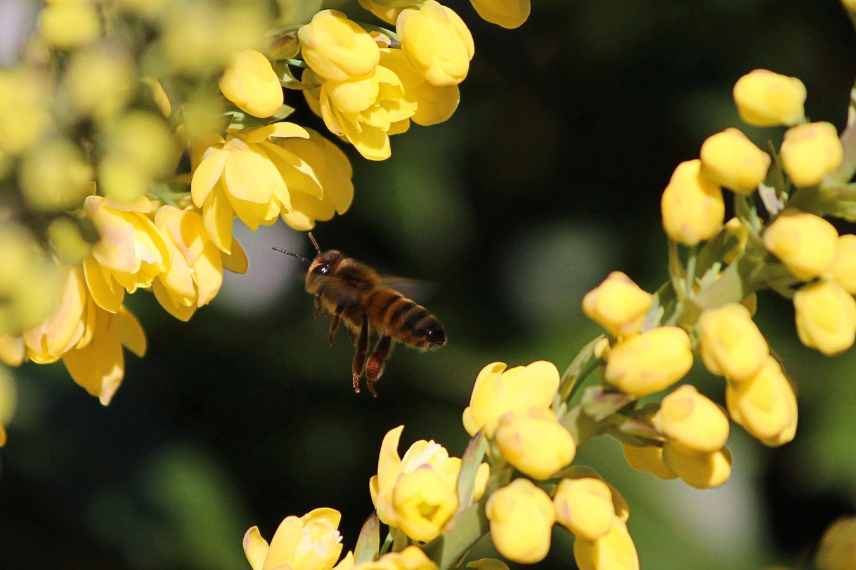
Yellow, blue and purple are cues for bees in particular
Concrete examples
- Pollination by bees: The flowers of many plants, such as apple trees or almond trees, are adapted to attract bees. Their colourful petals, their attractive fragrance and their nectar rich in sugar are incentives for bees, which, while feeding, carry pollen from flower to flower, thereby promoting the reproduction of plants.
- Defence against herbivores : Capsaicin in chilies is an example of a compound developed by plants to deter mammals from eating their fruits (but that doesn’t stop humans!), while allowing seed dispersal by birds, immune to capsaicin. Similarly, acacias in Africa produce tannins in large quantities when browsed by giraffes, making their leaves less palatable.
- Relationship with ants : Some plants such as the Vachellia cornigera develop special nectaries and homes for ants. In exchange for nectar and shelter, the ants protect the plant against herbivores and sometimes even against other competing plants.

Plants never cease to surprise us!
Plant communication is a relatively young scientific field, having taken off in the 1980s. It was in 1983 that researchers first clearly demonstrated that plants could communicate with one another via chemical signals, a wholly new field of research.
Since then, our understanding of plant communication has evolved considerably, revealing aspects of plant life that were once unsuspected. Advances in technology and sophisticated analytical methods now enable the discovery of ever more complex and subtle communication mechanisms. Whether through chemical signals, underground networks of mycorrhizal fungi, or even, in some studies, via sound vibrations, plants demonstrate a capacity for communication and interaction with their environment that challenges our previous conceptions. This dynamic and ever-evolving field continues to fascinate researchers and promises exciting new discoveries in the years to come.

- Subscribe!
- Contents

Comments