






























Plant respiration: a complex and fascinating process
Decoding the vital process of plant respiration
Contents
Plant respiration is a fundamental biological process, often less highlighted than photosynthesis, but just as essential to their survival and development. This mechanism involves the uptake of oxygen and the release of carbon dioxide, somewhat similar to animal respiration, but with characteristics unique to the plant world.
Furthermore, plant respiration plays a key role in the planet’s carbon cycle. While plants absorb a large amount of carbon dioxide during photosynthesis, they release some via respiration. This ongoing cycle helps regulate atmospheric carbon dioxide levels, thereby having a significant impact on the global environment.

Basic principle of respiration in plants
Apologies in advance for what follows… But, basically, plant respiration, although similar in its broad outline to that of animals, has adaptations tailored to plant life. It breaks down into several key phases: oxygen uptake, release of carbon dioxide, and the process of cellular respiration itself.
Oxygen uptake mechanisms
Plants absorb oxygen mainly through their leaves, but also via other aerial parts as well as their roots. This process occurs through microscopic structures called stomata, present on the surface of the leaves. Stomata can open and close in response to various environmental stimuli, thereby regulating gas exchange with the atmosphere. Oxygen absorbed is then transported to plant cells where it is used for cellular respiration.
Release of carbon dioxide
Release of carbon dioxide is the other facet of plant respiration. This gas is the end product of the breakdown of organic molecules within cells. Just as for oxygen uptake, carbon dioxide is expelled through the stomata, but also by other routes such as lenticels, present on stems and roots. This expulsion of CO2 is crucial not only for the plant itself, enabling disposal of a metabolic waste, but it also plays a major role in the global carbon cycle.
Cellular respiration in plants
Plant cellular respiration proceeds through several key stages. The first is glycolysis, which occurs in the cell’s cytoplasm, where glucose is broken down into pyruvate. This pyruvate is then transported into the mitochondria, where it undergoes the Krebs cycle (or citric acid cycle). This phase releases energy in the form of ATP (adenosine triphosphate), the cell’s energy source. Finally, the electron transport chain, the final stage of cellular respiration, uses oxygen to help convert the energy stored in the electrons into additional ATP.
This process of cellular respiration is essential for plant survival. It enables them to convert energy stored in carbohydrates into a form usable to power all their vital functions, such as growth, reproduction and response to environmental stresses.
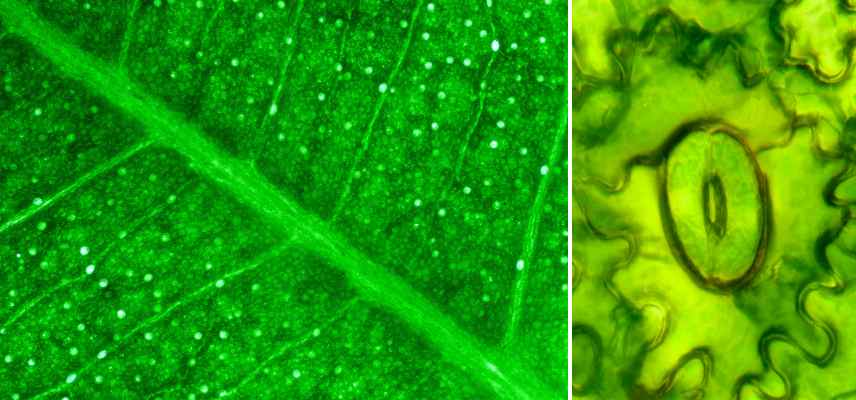
Stomata, on the right under the microscope
Respiration and life cycle of plants
Influence of respiration on germination
Germination is the process by which a seed develops into a new plant. During this phase, respiration is particularly important. The seed, under favourable moisture and temperature conditions, begins to absorb water, triggering the resumption of its metabolism after a long dormancy. Oxygen, absorbed from the surrounding medium, is essential for cellular respiration. This respiration provides the energy (ATP) required for cell division and growth, initiating the development of the young plant. Without effective respiration, germination could be compromised, as the seed would not be able to produce enough energy to support its initial development.
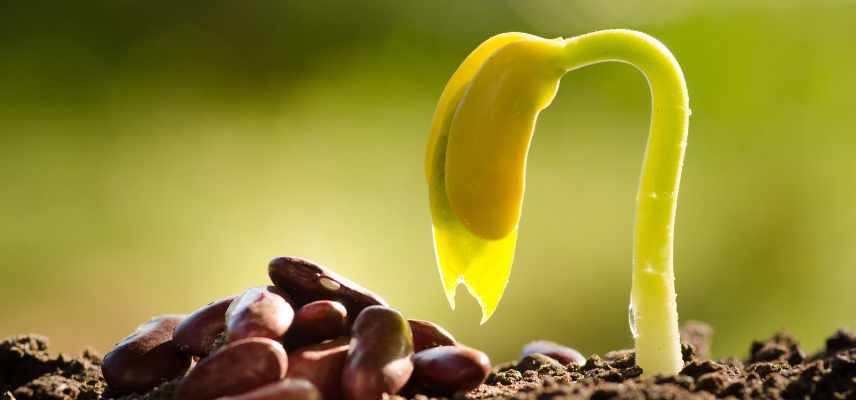
Germination, a phase in which respiration already plays a major role
Role in growth and development
After germination, respiration continues to play a key role in the growth and development of the plant. During growth, plants require a large amount of energy to produce new cells, extend their roots, develop leaves, stems and flowers. This energy is largely provided by cellular respiration, which converts sugars into ATP. The higher the rate of respiration, the faster the plant can grow, provided that other necessary factors (water, nutrients, light) are also present in sufficient quantities.
Some concrete examples
- Fabaceae or legumes (such as peas or beans): During germination, these plants actively use the reserves of their seeds, requiring an intense respiration to provide the energy needed for the growth of the radicle (the first root) and the plumule (the part of the germ that will form the stem).
- Poaceae or cereals (such as wheat or maize): These plants show a rapid increase in the rate of respiration after germination, fueling rapid growth of leaves and stems.
- Bulbous plants (such as tulips or onions): For these plants, respiration plays a key role during dormancy, maintaining minimal cellular functions, then accelerates during the active growth period, providing the energy for the development of flowers and leaves.
Factors influencing respiration in plants
Plant respiration is a dynamic process that is influenced by a range of environmental factors, among which temperature, light and humidity play major roles.
Effect of temperature
Temperature is one of the most influential factors affecting plant respiration. In general, an increase in temperature speeds up the rate of respiration to a point. This phenomenon is explained by the fact that rising temperatures increase the rate of enzymatic reactions involved in respiration. However, beyond a certain temperature, this process may be inhibited or damaged, leading to a decrease in respiration. This sensitivity varies among species and their adaptation to their climate. For example, plants from temperate regions may be more sensitive to high temperatures than those from tropical regions.
Effect of light
Although respiration occurs independently of light, it can indirectly influence the process. During the day, photosynthesis, which occurs in the presence of light, produces sugars that are subsequently used in respiration. Consequently, more intense light can increase the availability of these sugars, thereby indirectly affecting the rate of respiration. In addition, light-related processes, such as the opening and closing of stomata, can influence gas exchange and thus respiration.

Light also conditions plant respiration
Role of humidity
Humidity also affects plant respiration. A humid environment can promote respiration, as it facilitates the opening of stomata, enabling better uptake of oxygen and more efficient release of carbon dioxide. Conversely, under drought conditions, plants tend to close their stomata to conserve water, which can limit gas exchange and thus reduce respiration. This adaptation is particularly evident in xerophytes, which have evolved to survive in arid environments.
Intensive farming and plant respiration
The use of fertilisers and pesticides can affect the rate of plant respiration. Fertilisers, by supplying additional nutrients, can stimulate plant growth, potentially increasing their respiratory activity. However, an excess of fertiliser can cause a nutritional balance, disrupting metabolic processes, including respiration. Similarly, pesticides can also have side effects on plant physiology, sometimes negatively affecting respiration.
Moreover, intensive farming and monoculture will also influence plant respiration. Plants are often grown under stress in such systems, due to increased competition for resources like light, water and nutrients. This competition can reduce the efficiency of respiration, as plants must expend more energy to maintain their growth and survival. Moreover, monoculture can lead to a decrease in soil microbial diversity, which can indirectly affect plant respiration by altering nutrient availability and soil health.
Read also
Mild winter: trees are suffering!Plant respiration in the carbon cycle
Here is a timely reminder about the carbon cycle: it is a natural, essential process in which carbon is exchanged between the atmosphere, the biosphere (the sum of living beings), the oceans and the lithosphere (the Earth’s surface). It begins with photosynthesis, where plants absorb carbon dioxide (CO2) to produce oxygen and organic matter. Animals and plants then release CO2 into the atmosphere by respiration. Decomposition of dead organisms and the burning of fossil fuels also release CO2. The oceans, for their part, absorb some of this CO2, creating a delicate balance. The carbon cycle is crucial for regulating the Earth’s climate and supporting life, but it is disrupted by human activities, notably greenhouse gas emissions.
Plant respiration therefore plays two key roles in the carbon cycle. On the one hand, through photosynthesis, plants absorb carbon dioxide (CO2) from the atmosphere, using the carbon to build their tissues and releasing oxygen. On the other hand, plant respiration returns CO2 to the atmosphere. This process is particularly important, as it contributes to the regulation of atmospheric CO2 levels, a key greenhouse gas. At night, when photosynthesis ceases, respiration becomes the dominant process, underscoring the importance of the day-night cycle in the overall carbon balance.
Interactions of plants with their environment and with other organisms also influence the carbon cycle. For example, it is now known that plants interact with soil micro-organisms, such as fungi and bacteria, which play a role in the decomposition of organic matter and the release of carbon into the soil. These interactions can either store carbon in the soil (carbon sequestration) or release it into the atmosphere.
Moreover, plant respiration is influenced by environmental factors such as temperature, light and humidity. Changes in these conditions, often linked to climate change, can modify the rate of respiration in plants, thereby affecting their contribution to the carbon cycle. For example, a rise in temperature can increase the rate of respiration, releasing more CO2 into the atmosphere.
And finally, plants also play a role in long-term carbon fixation. Forests, in particular, are important carbon sinks, storing carbon in their standing crop for long periods. Deforestation and forest degradation can release substantial amounts of carbon, thus intensifying climate change.
Impact of plant respiration on the environment
Role in natural ecosystems
As you will have gathered, in ecosystems, plant respiration plays a vital role in the nutrient cycle and the balance of carbon dioxide (CO2). By releasing CO2, plant respiration contributes to providing this vital gas for photosynthesis, not only for other plants, but also for algae and phytoplankton, which form the basis of many aquatic food chains. This process thus supports the ecosystem’s primary productivity, which is the basis of the entire food chain.
On the other hand, plant respiration, by consuming oxygen, also helps regulate its availability in various environments, particularly in aquatic environments where oxygen can be a limiting factor.
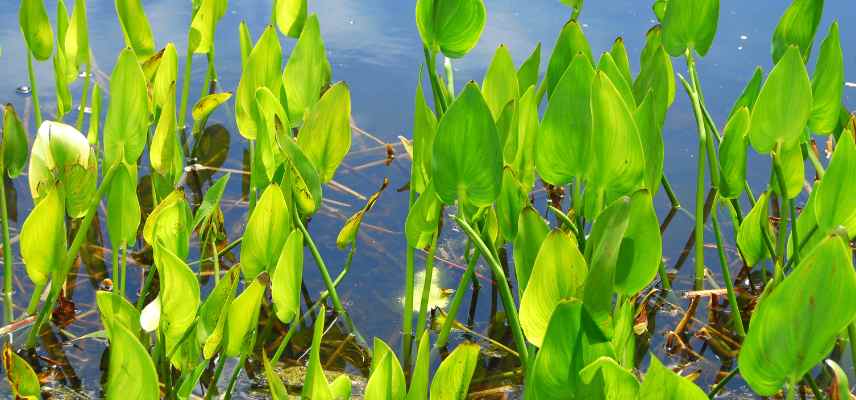
Aquatic plants
Impact on climate change
Plant respiration also has a significant impact on climate change. Although overall photosynthesis by plants contributes to reducing atmospheric CO2 levels, respiration returns a portion of this carbon to the atmosphere. Under normal conditions, this process is balanced. However, with rising temperatures due to climate change, the rate of plant respiration can increase, leading to greater CO2 release.
Moreover, land-use changes, such as deforestation, can reduce the ability of ecosystems to absorb CO2, while increasing the amount of CO2 released by plant respiration and the decomposition of organic matter.
This delicate balance between photosynthesis and respiration is crucial for regulating Earth’s climate. Disruptions to this balance, due to human activities or to climate change, can have profound consequences on our planet’s ability to maintain a stable climate conducive to life.
- Subscribe!
- Contents

Comments