





























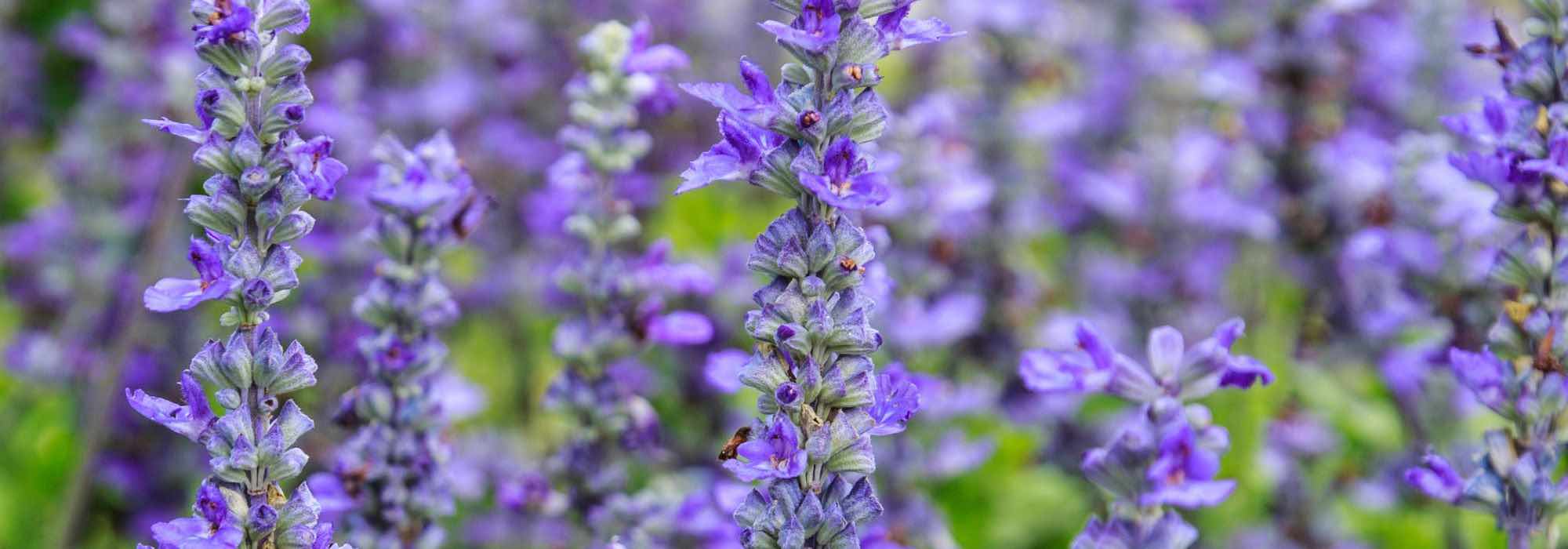
Purple and mauve flowers: how to pair them to make them stand out?
Ideas and inspiration for a harmonious look in the garden
Contents
The colour palette among plants is almost endless. But to ensure each hue is shown to best effect, it’s best to choose the right combinations. Mauve or violet flowers are part of cool colours, and can be quite subtle in the garden. The range of hues runs from very pale mauve, almost white or pink, to a vibrant violet leaning towards purple.
Discover here our tips for highlighting your violet or mauve flowers, by opting for successful colour combinations

Purple in the garden
Purple is a colour resulting from the blending of red and blue. Symbolically, it has long been associated with royalty, the clergy and esotericism. It is one of the cool colours. Bringing a touch of mystery when it is very dark (almost purple) or playing on softness and calm when it is light (mauve), lpurple is a colour offering a wide palette of shades for all tastes in the garden. So many variations of purple flowers. Purple will be best showcased in the sun, rather than in shaded corners where it may appear too subdued or too cool.
Notes: in the garden, some colour combinations are considered more harmonious than others. If you’re afraid of getting it wrong, you can of course follow conventional guidelines. But remember that the garden should also remain a space for creativity, and that a beautiful harmony of colours can indeed be a matter of taste: therefore grant yourself the right to try things, to experiment and perhaps to find a bold pairing that will please you even more.
→ Read also: The perception of flower colour.
Read also
7 purple flowering shrubsA range of purples for a monochrome garden
A classic scheme is to create a shade range to achieve a harmonious look in the garden. By using a gradient that shades different tones of the same colour, you’re sure not to take any risks.
If there is one shrub associated with purple, it is the common lilac (Syringa vulgaris). On its own, it offers a whole range of violets, illustrating well the palette available in the garden: from the purple at ‘Paul Thirion’ to mauve-pink at ‘Konchalovskii’, via the purplish-red at ‘Charles Joly’.
Create, for example, a flowering hedge with lilacs, but also Lagerstroemia that will take over in summer, such as ‘Violacea’, ‘Violet d’été’ or ‘Petite canaille mauve’.
Also of course think of Buddleias, whose purple flowers come in many shades, but also Cotinus, with their striking plume-like flowering leaning toward purplish-purple in some varieties. Lighten the display with grasses in golden tones, which will also warm the scene.
In heather-soil beds, create a violet shade-range with Rhododendrons, the summer heathers and Hydrangea macrophylla.
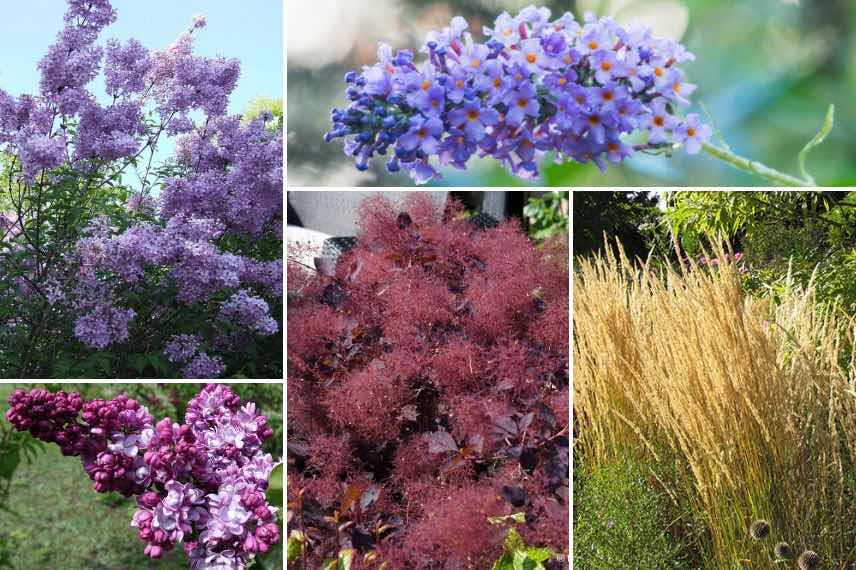
Clockwise: Lagerstroemia ‘Violacea’, Buddleia, Calamagrostis, Cotinus and Syringa ‘Paul Thirion’
Choosing pastel colours for a successful colour pairing
For a very soft scene, choose plants with pastel flowering that blend violet and pink. The pink colour, if pale, pairs very well with violet and indeed creates a charming and refined scene.
For a very natural look in the border, opt for tree mallows, mallows, hollyhocks, in harmony with the pink flowering of hardy geraniums and foxgloves. In the background, a wisteria with cascading mauve clusters will bring as much volume as softness.
For a spring border, pair violet- and white-flowered bulbs, notably with Cyclamen coum, a Spanish hyacinth ‘Rose Queen’, tulips and narcissi.
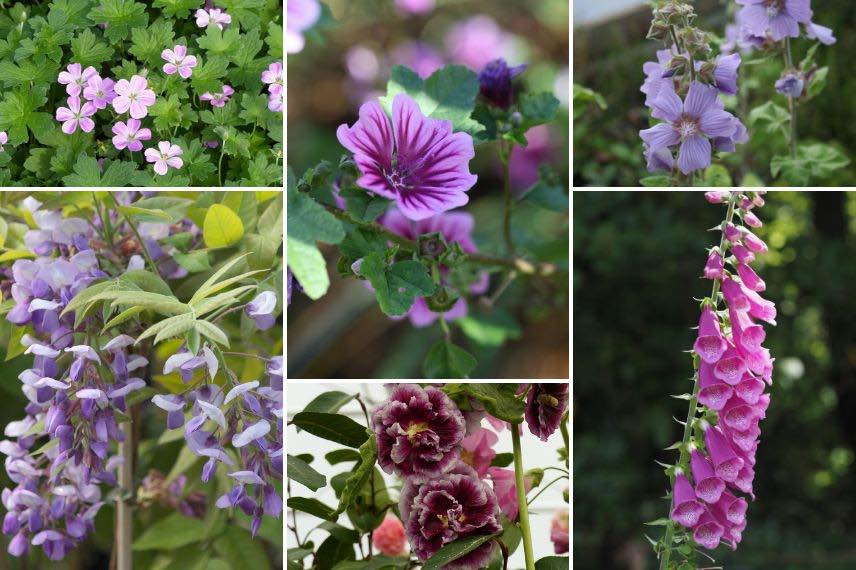
Always clockwise: Geranium, Mallow, Tree Mallow, Foxglove, Hollyhock and Wisteria
Read also
Pairing red or purple flowersPurple with yellow flowers in a complementary colour
Yellow flowers pair beautifully with purple-flowering plants. They are, in fact, complementary colours on the colour wheel, which contrast very well together.
The pairing can create a pastoral scene, perfect for natural-style gardens. For example, pair some green manures to create a beautiful flowering meadow, cultivating mustard with sunny-yellow flowers alongside phacelia, with its distinctive flowers in a soft mauve. You can even add vetches, which will use their neighbours as supports to rise vertically, while revealing their flowers with corollas in a more vivid violet. An arrangement that will improve the soil while proving conducive to pollinators. The whole will create a very soft, fresh spring scene.
In a well-lit plot, pair the handsome spikes of lavender — which carry a distinctly purple hue — with the golden-yellow flowers of St John’s Wort. You can also pair Nepetas with Golden Baskets, Hyssops and Helichrysum, Comfrey and Tansy (in a corner as pretty as it is practical for the garden), or with Buenos Aires Verbena and sunflowers.
In a modern, graphic-inspired garden, ornamental Alliums or purple Alliums will add vertical structure, just as Agapanthus, in combination with yellow Euphorbias and Phlomis russeliana.
Note that purple flowering can also be enhanced by plants with golden foliage.
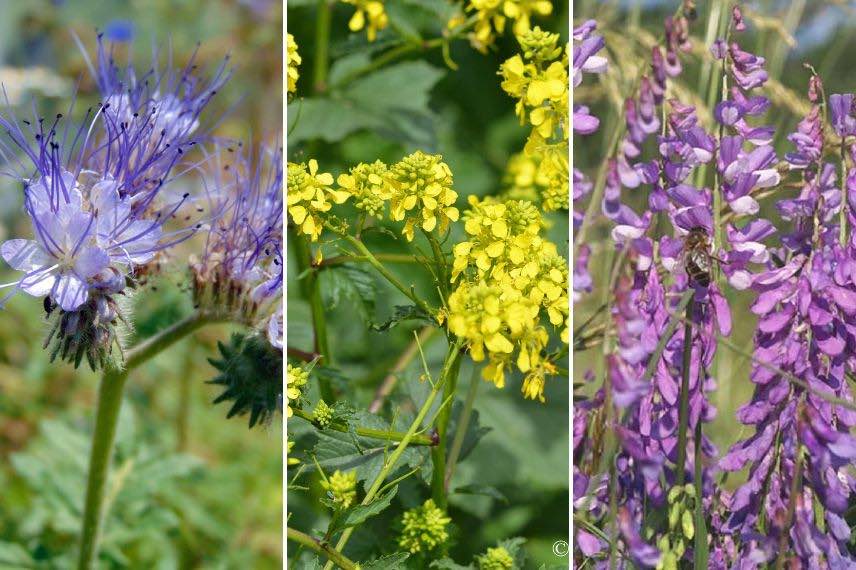
Green manures in a flowering meadow: Phacelia, Mustard and Vetch
Daring to use orange flowers for a more original combination
Pairing orange with purple is a touch bolder, but it allows you to create vibrant, dynamic and less common scenes. A warm colour, it generally adds a touch of exoticism, and orange will contrast very well with bright purple. It should, however, be used sparingly and must not dominate the whole garden, to maintain its interest and avoid creating an overly aggressive overall effect. This is, in fact, an arrangement that can be found within some flowers themselves, such as the handsome Strelitzia, with its bird’s beak topped by bright orange and blue-violet ruffled petals.
In a border, create a pairing with the purple, sophisticated daylilies, complemented by the stunning orange Crocosmias. Purple asters and orange echinaceas will form, for their part, a more cottage-garden mix, but just as dynamic. Crown imperials will stand alongside orange-flowered Kniphofias, while salvias will bloom violet (‘Amistad violet’, ‘Delice Feline’, Salvia nemorosa ‘Caradonna’ woodland sage).
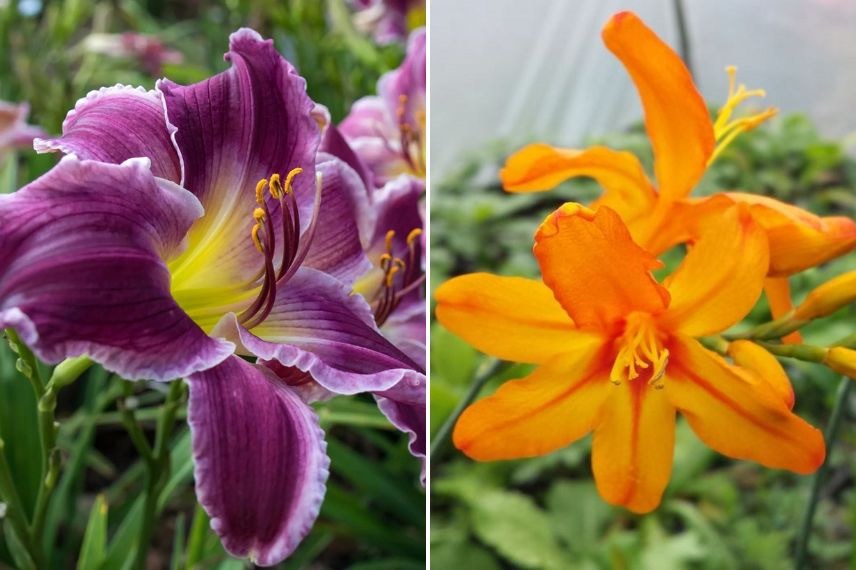
Daylily ‘Indian Giver’ and Crocosmia zambesi
Pairing violet with white for a risk-free wedding
White flowers are certainly the easiest to pair, since they can harmonise with any other colours without risk. Their neutral, bright tone highlights the liveliest colours or the dullest, adds lightness and gives the eye space to breathe.
They are essential for romantic gardens, particularly with roses. You can safely combine roses in a border, such as the clustered-flower rose ‘Pacific Dream’ and a white-flowering ground-cover rose ‘Rigo Diamant’. For a more sophisticated version, opt for the white semi-double flowers of the dwarf rose ‘Schneeküsschen’, with the violaceous flowering of the clustered-rose ‘Minerva’.
In pots, also use the white and violet pairing with, for example, Fuchsia, Petunias and geraniums such as ‘Rozanne’.
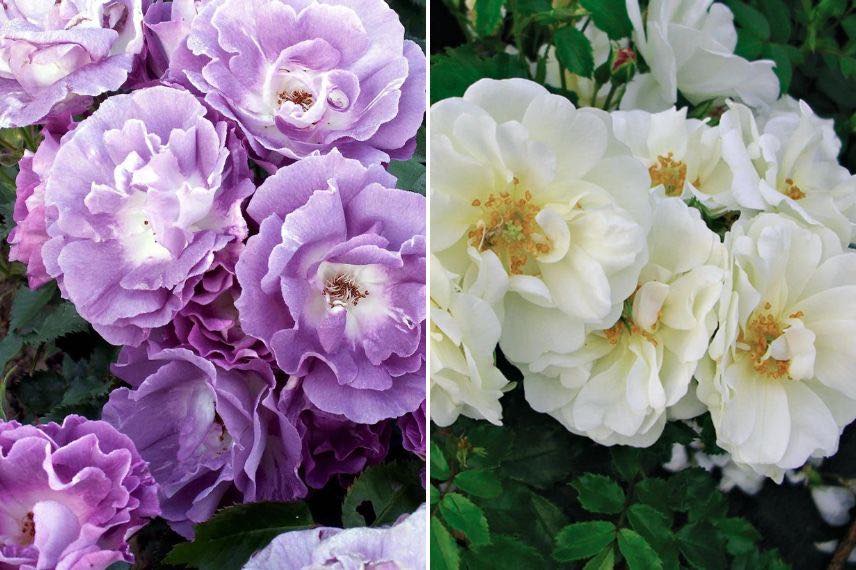
Rose bush ‘Pacific Dream’ and ‘Rigo Diamant’
- Subscribe!
- Contents
Comments