


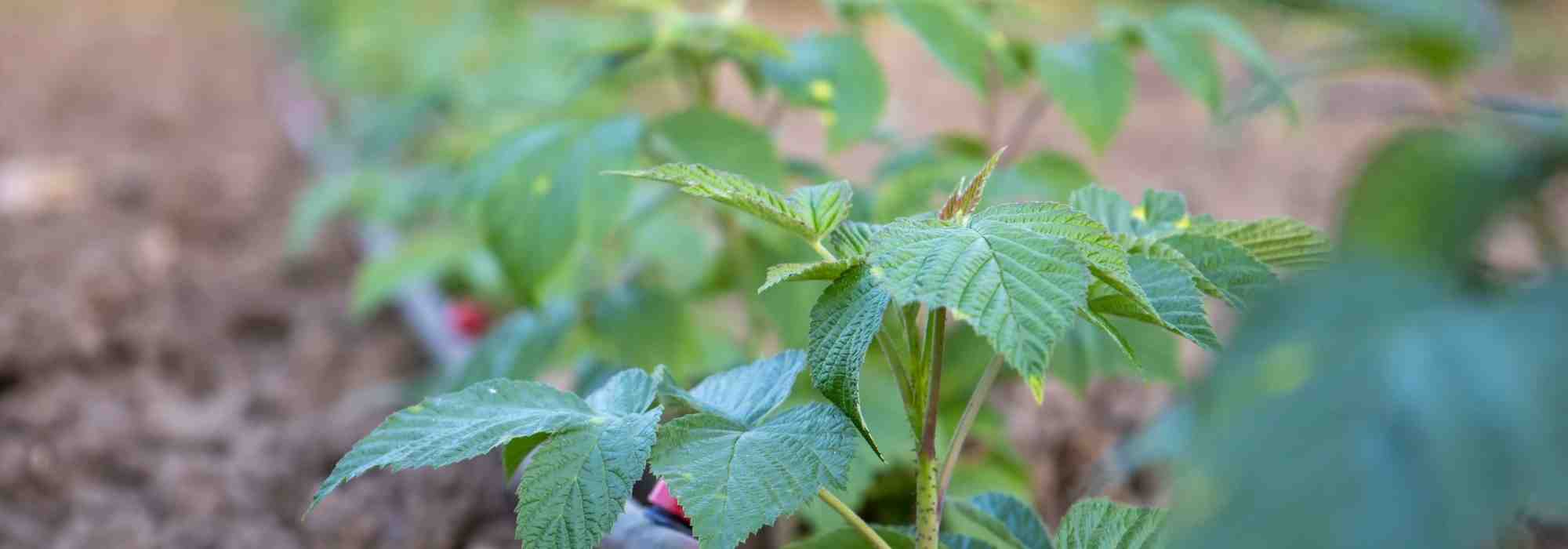
Raspberry leaves: health benefits, uses and properties
All the benefits of raspberry leaves
Contents
Ah, raspberries! This small red berry, with its flavour at once sweet and tangy, can be easily picked directly from the bush. However, raspberries hide another treasure, its slightly tomentose leaves, dried and prepared as a herbal tea. Used since ancient times in phytotherapy for their medicinal properties, rich in nutrients and essential minerals, raspberry leaves offer numerous health benefits, particularly for the wellbeing of the female hormonal system, during the menstrual cycle, pregnancy and childbirth.
This article proposes to explore the medicinal properties and benefits of the raspberry plant, and in particular the leaves, from the display to use in herbal tea and decoction.
For more information : Raspberry plants: planting, pruning and care

What are the nutritional benefits of raspberry leaves?
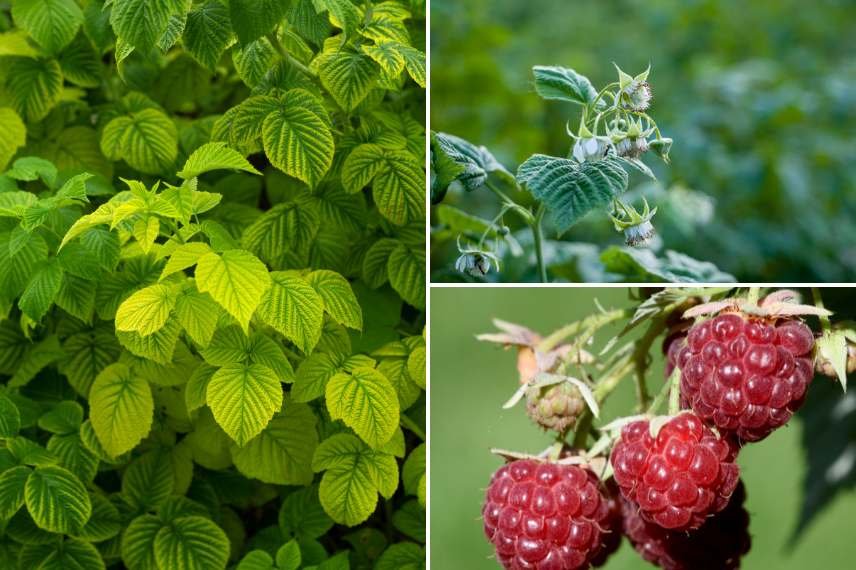
Raspberry is renowned for being particularly rich in minerals, especially magnesium, calcium and iron, not forgetting vitamin C and fibre. But what about the leaves of this shrub (Rubus idaeus), a familiar sight in our gardens and allotments, which also grows wild in the woodland of our mountains, whose medicinal virtues have been known for centuries? Clearly, raspberry leaves also possess notable nutritional benefits:
- They contain essential minerals such as potassium, calcium and magnesium
- They are a substantial source of vitamins C and E, as well as A and B
- They are particularly rich in gallotannins and ellagitannins with an astringent action
- They boast a high content of flavonoids, known for their anti-inflammatory and antioxidant effects.
- Moreover, leaves (and buds) also contain lignans such as fragrine with phytoestrogenic properties.
Read also
Choosing raspberry plantsHow to use raspberry leaves?
In phytotherapy and in herbalism, raspberry leaves are used. Keep raspberries for indulgence! Indeed, only raspberry leaf contains the active constituents useful for relieving many ailments, particularly for women. These leaves are dried and used in a herbal tea. Note that buds are recognised for their beneficial effect in gemmotherapy. As for raspberry seed oil, it is used externally.
From harvest to drying
Raspberry leaf harvest takes place in spring or early summer on the year’s new shoots, before flowering. This yields leaves that are tender on the underside, slightly tomentose and silvery-white. It is recommended to harvest these leaves in the morning on a dry day. Of course, you should set aside damaged leaves, chewed by pests, or wilted. Remember to wear gloves for this harvest, as the leaves can be irritating.
Next, these raspberry leaves must be dried. Beforehand, it is advisable to rinse the raspberry leaves in clean water to remove traces of soil or any insects. They should be wrung out gently with a clean cloth to facilitate drying.
Air-drying can be carried out in the open air, in a well-ventilated and dark room, free from humidity. Raspberry leaves are spread out on slatted racks or in crates, not overlapping too much. Leaves are dry when they crumble easily. They can then be ground into a powder. 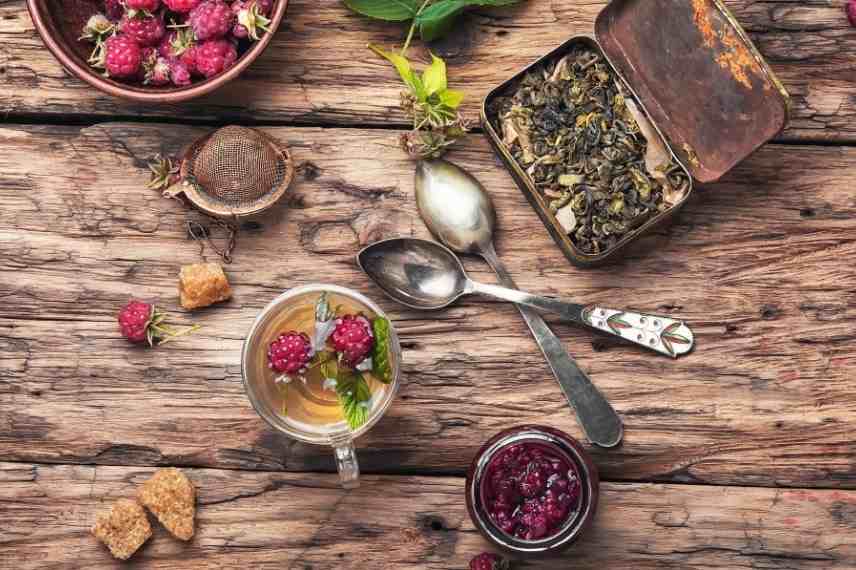
If the weather is damp or you do not have a room for drying the leaves, you can use the oven, set to 50 °C, door ajar. Drying is fairly quick.
Further reading: How to dry raspberry leaves?
Enjoy the benefits of raspberry leaf tea
Raspberry leaves are traditionally used as a herbal tea. To prepare a raspberry leaf herbal tea :
- Put 5 to 6 g of dried leaves in 150 ml of boiling water.
- Let infuse for 10 minutes, covered.
- Strain and enjoy.
This herbal tea can be enjoyed with a spoonful of honey. The infusion can be used cold as a mouthwash to relieve mouth ulcers or gum irritations, or as a gargle for a sore throat. If you wish to prepare a decoction, boil 30 g of raspberry leaves in one litre of water for 10 minutes, then strain.
How many cups of raspberry leaf tea can be drunk per day?
- Drink three cups a day to enjoy its benefits.
What are the health benefits of raspberry leaves for the body?
The raspberry bush is a very interesting shrub for its delicious fruits, but also a medicinal plant useful for our well-being. Widely used in herbal medicine, raspberry leaf tea offers numerous benefits, most of which have been demonstrated by scientific studies. Raspberry leaves are, among other things, valuable for the female reproductive system and have a soothing effect.
The effects of raspberry leaves on the menstrual cycle
If you suffer from a menstrual disorder (dysmenorrhoea, premenstrual syndrome or menorrhagia), raspberry leaves could be a valuable ally. Indeed, this small leaf, prepared as tea, can regulate an irregular menstrual cycle for various reasons, and especially attenuate and relieve menstrual cramps. And this is thanks to the anti-inflammatory and soothing properties of these leaves. This is why raspberry leaves contribute to hormonal balance, so they can be consumed at all key stages of a woman’s life, from puberty to perimenopause and menopause. Some women even use them in cases of endometriosis or uterine fibroids.
In this case, raspberry leaves can be mixed with common yarrow and with feverfew.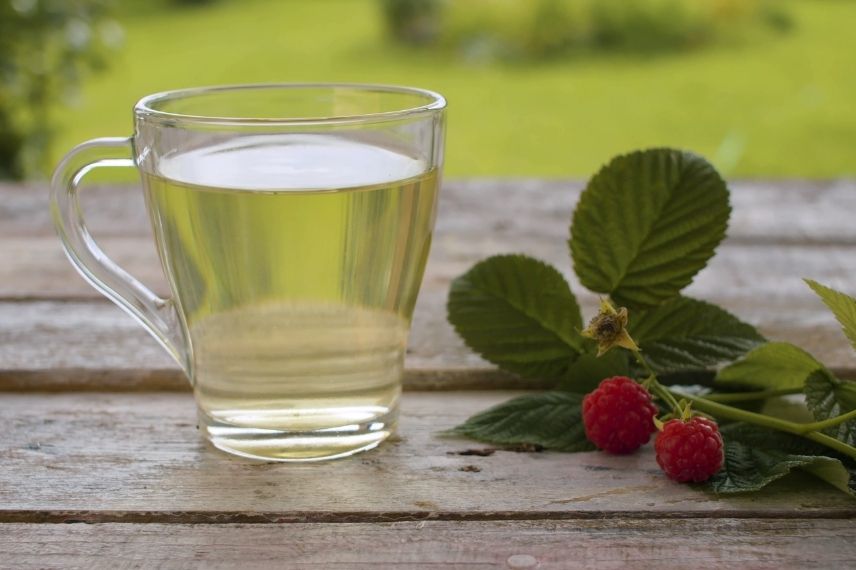
The use of raspberry leaves during pregnancy and childbirth
Raspberry leaves can also be a valuable aid at a key stage in a woman’s life! Indeed, raspberry leaf tea can be consumed to support pregnancy, by strengthening the tone of the uterus, to prepare the body of the pregnant woman for childbirth. And thereby to facilitate labour, as they promote the onset of effective contractions. Raspberry leaves thus act as a support during labour.
Similarly, this raspberry leaf preparation can be drunk in the postpartum period to help tone the perineum. It could also support milk supply during breastfeeding.
That said, one must be very careful: this tea that could ease labour should be taken only in late pregnancy, with caution, ideally in the last month. Do not hesitate to seek the advice of your doctor or midwife. At the beginning of pregnancy, the effects could be largely unfavourable and there may be a risk of miscarriage.
Their usefulness as anti-inflammatory and astringent
The tannin-rich leaves confer anti-inflammatory and antispasmodic effects. These polyphenolic compounds act by reducing inflammation of the mucous membranes and by soothing muscle spasms, particularly in the uterus, but also in the digestive system. For example, they can aid digestion, ease intestinal cramps associated with irritable bowel syndrome or with colic, or generally minor digestive disturbances such as diarrhoea or bloating, and finally relieve stomach pains. Raspberry leaves would also help relieve pain related to arthritis or, more generally, chronic inflammation of the muscles.
Thanks to their astringent effect, the leaves of this plant also help tighten tissues and limit oral infections. Their consumption in decoction or infusion could treat sore throats, tonsillitis, mouth ulcers or gingivitis as a gargle. Used as a compress, they also help to heal minor wounds, small bleeding and bruising and calm skin irritations, redness and couperose.
→ Also read: How can raspberry leaves aid digestion?
What are the contraindications for raspberry leaves?
Although natural, raspberry leaf is not recommended for everyone. It is advisable to seek medical advice from your doctor or midwife before consuming it as a herbal tea or decoction. Indeed, this plant in its dried form contains substances potentially harmful to some people. Its use should therefore be tailored.
Raspberry leaves must not be consumed by a pregnant woman in the early stages of pregnancy. Its action on the uterus could trigger premature contractions. It is generally recommended only from the third trimester of pregnancy, or in the last month.
Similarly, this natural remedy is not recommended for people suffering from chronic constipation. Its astringent effects can worsen the problem.
Finally, as raspberry belongs to the Rosaceae family, it may potentially cause an allergy.
Did you know?
The raspberry plant’s Latin name is Rubus idaeus, which means ‘Ida’s thorn’. This name is said to have arisen from a legend: Zeus’s nurse, the nymph Ida, gathered raspberries to offer to the child. At that time, the fruits were white. But the nymph injured her breast during the harvest, the blood flowed and coloured the fruits red. Since then, raspberries have retained this beautiful colour from dark pink to red.
Among Native Americans, and in Europe since the Middle Ages, midwives used raspberry leaf infusion to prepare women for childbirth. Some legends even say it guaranteed a faster and less painful birth! This plant was also prescribed during periods of hormonal change. It is, therefore, the quintessential plant for women.
In some regions of Europe, it was believed that raspberry leaves had the power to protect against evil spirits. They were sometimes hung at the entrances to houses or under children’s pillows to help them sleep peacefully.
- Subscribe!
- Contents

Comments