


Tansy and its medicinal properties
Our tips to harvest and use it
Contents
Tansy or Tanacetum vulgare is a perennial plant valued for its lovely yellow summer flowering, as well as for its insect-repelling and fungicidal properties (you can make a very useful manure for the garden!). It also has numerous health benefits! Discover the properties of tansy, along with all our tips for harvesting and using it.
And for everything you need to know about its cultivation, feel free to check our complete guide “Tansy: sowing, planting and growing”

A few words about tansy
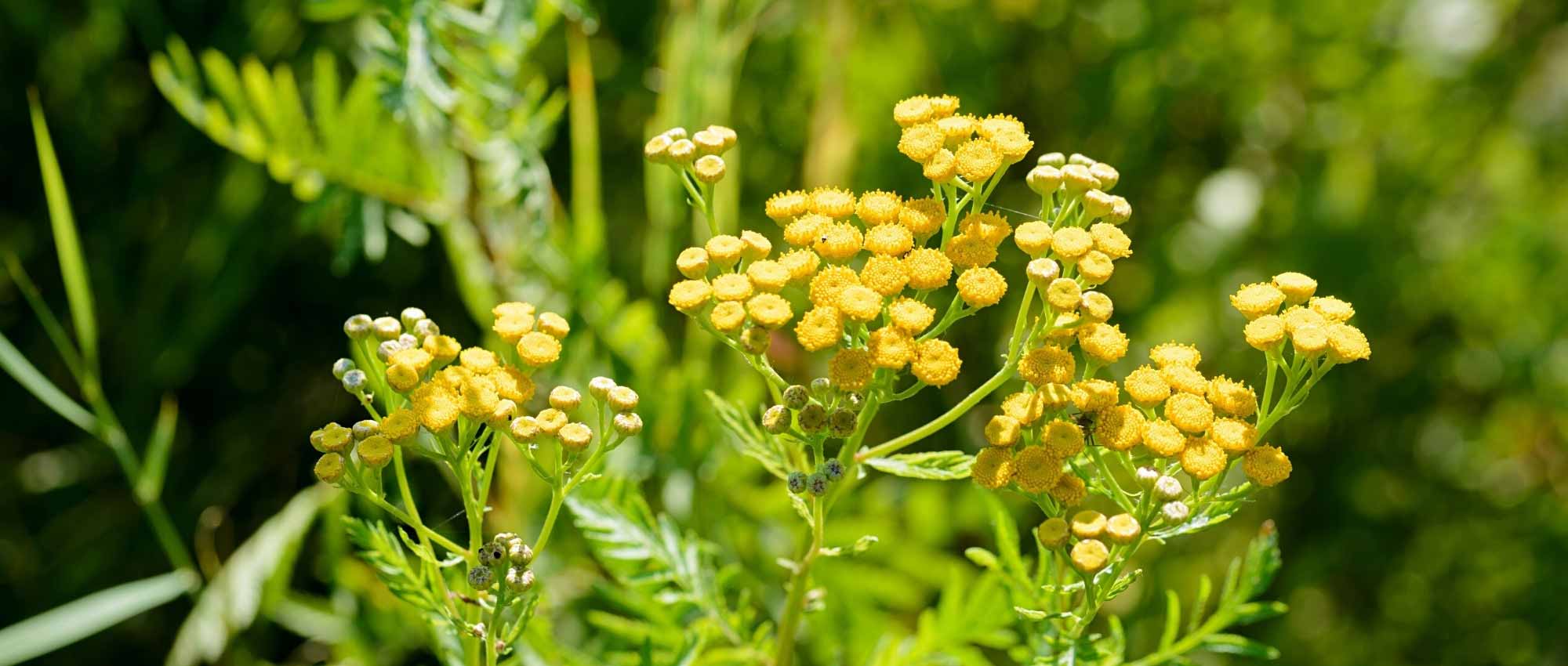
Common Tansy (Tanacetum vulgare) is a perennial herbaceous plant that grows wild in France, particularly along paths, waterways, and railway lines, as well as in meadows. It can be found as far east as Eastern Europe and has naturalized in North America. It forms upright stems, sometimes reaching up to 1.20 m in height, and bears bright yellow flower clusters at the top. It also has finely divided foliage, reminiscent of fern fronds. The leaves are highly aromatic when crushed, due to their high essential oil content.
Tansy has been commonly used for its medicinal properties since antiquity, particularly for its digestive and anthelmintic benefits. Its scientific name, Tanacetum vulgare, comes from the Greek “athanasia,” meaning “immortality,” due to its exceptional longevity.
Read also
Tansy: sowing, planting, and growingHow to harvest tansy?
It is mainly the flower heads that are used for their medicinal properties. We recommend harvesting in the morning (when the active ingredients are more concentrated), on clear days without rain, to facilitate drying. They are harvested at the beginning of flowering, usually in July or even August. The flower heads that are just opening are indeed more concentrated in active ingredients. The tops of the stems, including the flowers possibly accompanied by a few upper leaves, are then picked. Feel free to make several harvests to allow the plant to replenish its reserves.
Tansy leaves can also be used. It is best to harvest them before flowering, that is, in spring, but they can still be harvested until September. The leaves can be added in small amounts to dishes to enhance their flavour.
Tansy can be used fresh or dried. To dry it, we recommend spreading the flowering tops on a large cloth and allowing them to dry in a cool, dry place, away from light. Another technique is to make bouquets and hang them upside down, also protected from light. Once they are thoroughly dry, store them in airtight jars.
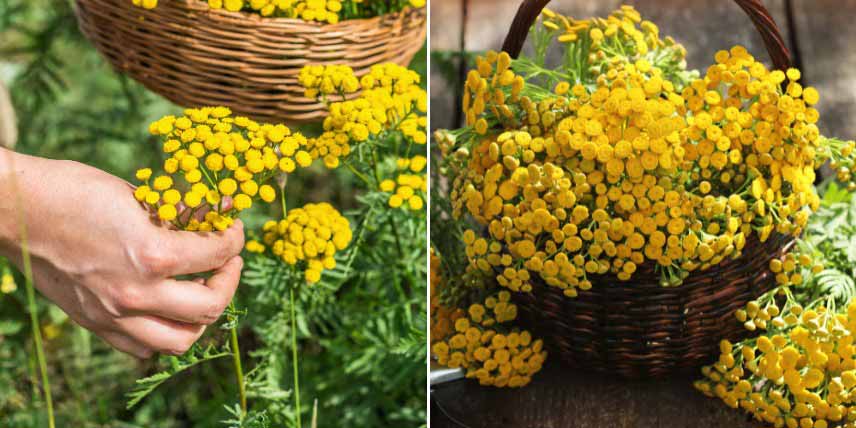
Harvesting the flower heads
How to use it?
The use of tansy can take several forms, depending on individual needs and preferences.
- Infusion: Tansy infusion is the most common form of use. Simply pour boiling water over a teaspoon of dried leaves or flowering tops, let it steep for about ten minutes, and then strain. This infusion can be consumed up to three times a day to relieve digestive issues, menstrual pain, or to soothe the nervous system.
- Decoction: Tansy decoction is particularly recommended for skin disorders. To prepare a decoction, boil the tansy in water for about ten minutes, then let it cool. This decoction can be used as a compress to relieve skin irritations.
- Essential oil: Due to its thujone content, common tansy essential oil should be used with caution. It has anti-inflammatory and anti-histamine properties. There is also annual tansy oil (Tanacetum annuum).
- Tansy leaves can also be added in small doses to dishes to enhance their flavour. Finely chopped, they add a slightly bitter taste to salads, omelettes, desserts, liqueurs, and braised meats. However, caution is advised, as due to their thujone content, tansy leaves become toxic when consumed in excessive amounts.
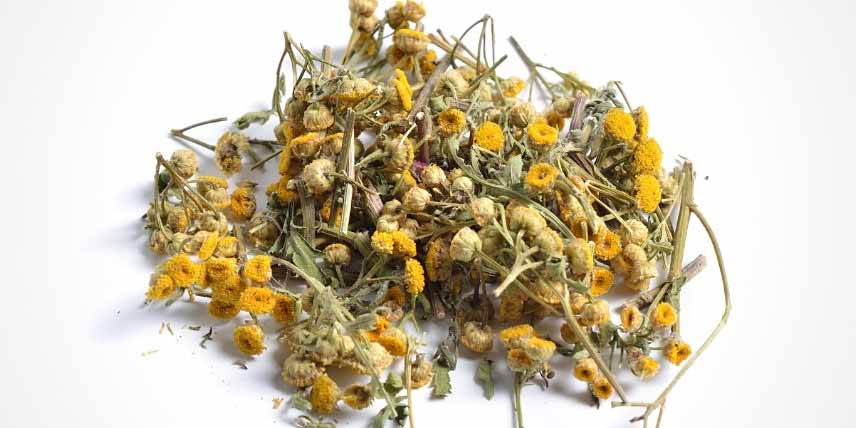 Dried flowering tops
Read also
How to make tansy manure?What are its benefits?
– Digestive disorders: Tansy is recognised for its carminative properties and its ability to stimulate the digestive system. It is useful for alleviating various digestive issues such as flatulence, stomach cramps, bloating, and dyspepsia.
Usage: An infusion of tansy can be consumed after meals to promote good digestion. To prepare, add a teaspoon of dried flower heads to a cup of boiling water, let it steep for 10 minutes, then strain and drink.
– Menstrual disorders: Thanks to its antispasmodic properties, tansy can help relieve menstrual pain. It also aids in regulating the female cycle.
Usage: Prepare an infusion using a teaspoon of dried flowers for a cup of boiling water. Let it steep for 10 minutes, strain, and drink.
– Intestinal parasites: Tansy has a long history of use as an anthelmintic to eliminate intestinal parasites, particularly pinworms and roundworms. This has earned it the nickname “Wormwood.”
Usage: For this purpose, tansy is typically consumed as a decoction. Add a tablespoon of dried leaves to a cup of water, bring to a boil, and let simmer for about 15 minutes. Once cooled, strain and drink.
– Skin conditions: Tansy possesses anti-inflammatory and antifungal properties that can help treat various skin conditions, such as acne, eczema, and fungal infections.
Usage: For topical use, a decoction of tansy can be applied to the skin using cotton or used as a bath for affected areas.
– Inflammations and pain: Tansy has anti-inflammatory properties and can relieve rheumatic pain, sprains, and tendinitis. It may also help soothe dental pain.
Usage: To relieve joint or muscle pain, prepare a decoction of tansy leaves and use it to make warm compresses on the affected areas. To do this, boil a handful of leaves in a litre of water for about 15 minutes. Allow to cool slightly before soaking a clean cloth in the decoction, which you will then apply to the painful area.
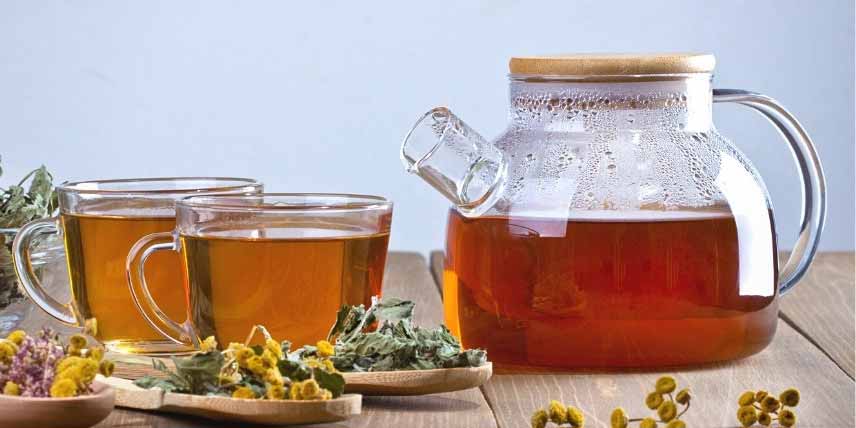
Tansy is primarily used in infusions or decoctions
Precautions for use
Although tansy is generally considered safe when used at therapeutic doses, it can cause side effects such as allergic reactions or digestive disorders. Consumption of tansy is contraindicated in pregnant women, as it may induce uterine contractions.
Furthermore, as mentioned earlier, tansy contains thujone, a substance that can be toxic in large quantities. It is therefore essential to adhere to the recommended doses and not to consume tansy without the advice of a healthcare professional.
- Subscribe!
- Contents
Comments