





























Terraces and balconies: 7 must-have perennials to grow in pots
To enjoy, even if you don't have a garden
Contents
Must-have perennials in every garden. They have the advantage of being perennials and staying in place for many years if growing conditions are suitable. But you don’t necessarily need a garden to enjoy their charm and their wide diversity : many varieties readily adapt to pot culture. You can brighten terraces, balconies, courtyards, patios, or even a simple windowsill. In addition, this will allow the more frost-tender plants to be kept under cover over winter.
Discover here our selection of container perennials, as indispensable as they are easy to grow.

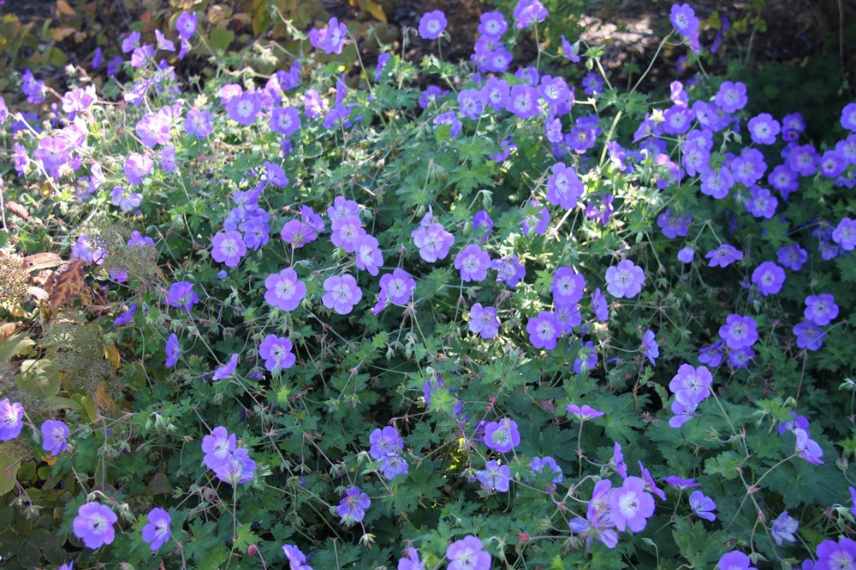
Hardy geranium 'Rozanne'
‘Rozanne’ is a proven favourite among hardy geraniums. For many months, from June to October, this particularly floriferous perennial delights us with carpets of 5 cm-diameter flowers. They are blue, contrasting with a white heart and dark stamens. This bi-colour flowering repeats almost continuously until the first frosts.
The deciduous foliage consists of large apple-green leaves maculated with dark green at their centres.
This geranium makes a pretty ground cover, thanks to its creeping habit with a 50 cm spread and about 30 cm in height. It will look splendid in a planter to brighten a terrace or balcony in summer. Easier to grow than other bi-coloured congeners, it will thrive in full sun as well as in partial shade. Fairly hardy beyond -15°C, it will tolerate a range of soils, though light, organic-rich soils that stay moist are preferred.
For its qualities, this geranium was voted ‘Plant of the Century’ at the Chelsea Flower Show 2013.
To learn all about growing hardy geraniums, explore our guide: Hardy geraniums: Plant, grow and maintain.
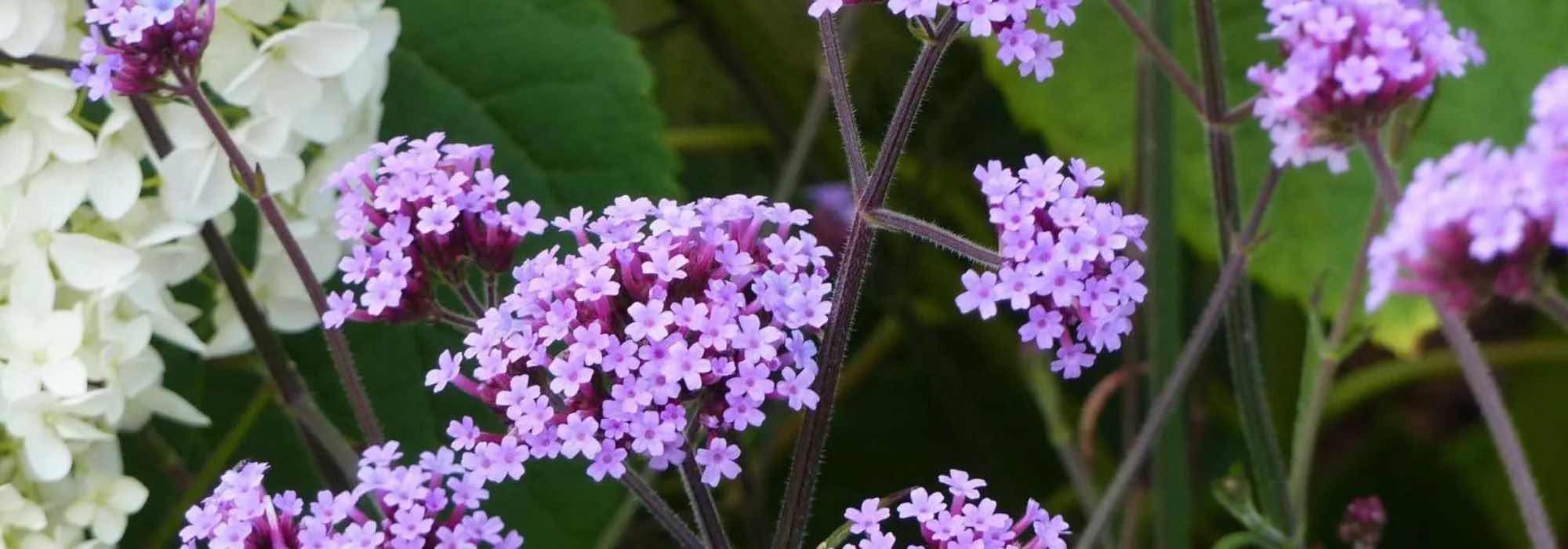
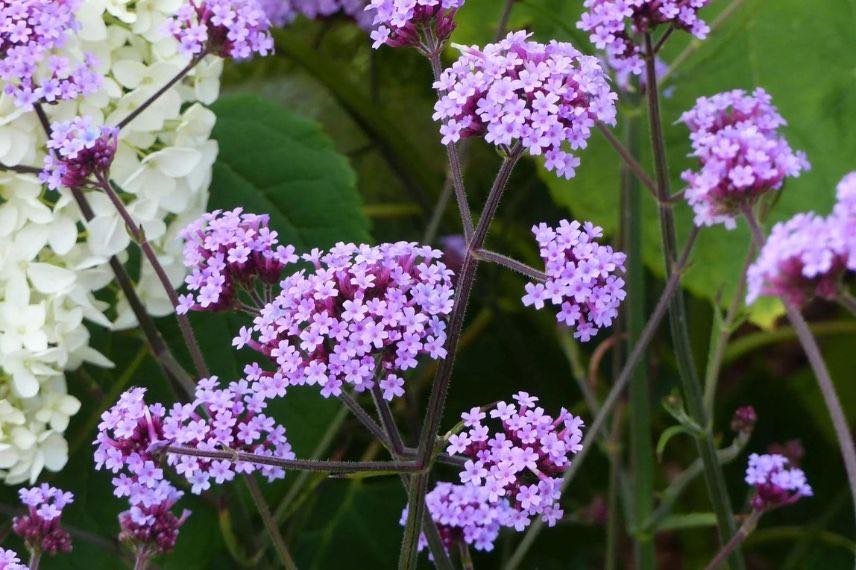
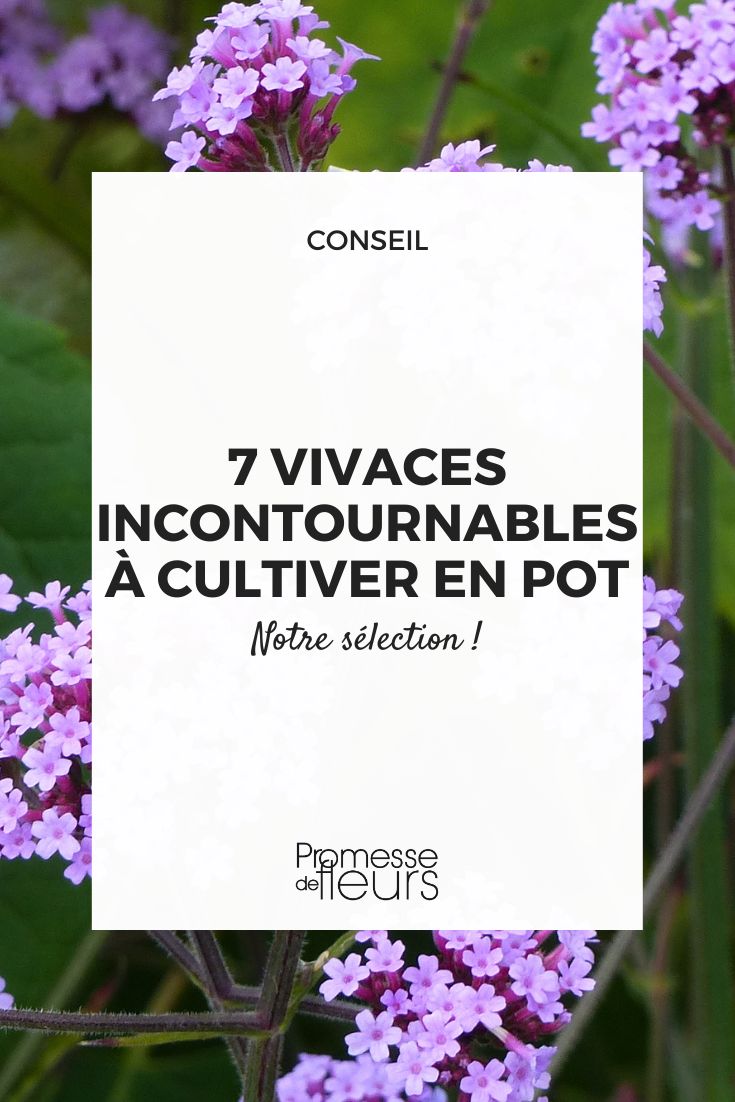
Verbena bonariensis 'Lollipop' - dwarf Buenos Aires Verbena
‘Lollipop’ is an adorable little dwarf verbena that does not exceed 60 cm in all directions. It has retained all the qualities of the type species. Throughout the summer season, it graces us with clusters of small flowers in a soft lavender hue, which continually bloom, adding airiness and undeniable country charm to any setting. It also attracts numerous pollinating insects, including butterflies.
Its foliage consists of long, dentate leaves, which will stay in place if winter is mild.
Hardy and self-sufficient, it requires little care and will tolerate drought. Plant this Buenos Aires verbena in a pretty pot on the terrace or balcony, in full sun. Hardy to -12°C, it can, in any case, be easily brought under shelter in regions with harsher winters. It will thrive in well-drained soil, with no standing moisture. To ensure success with pot culture, we recommend enriching its soil in spring and watering during prolonged drought. If its lifespan is fairly short, it can nevertheless self-seed.
For all you need to know about growing verbenas, discover our guide: Verbena: planting, pruning and care
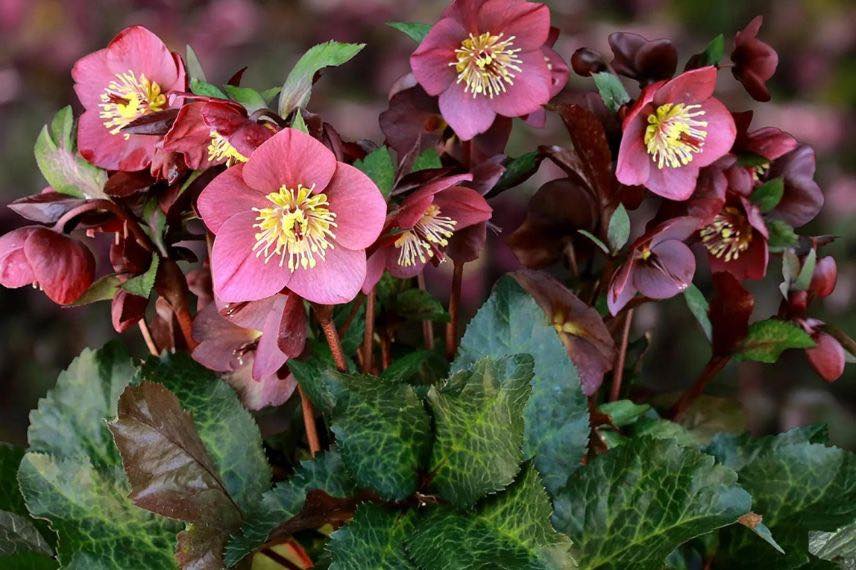
Helleborus x glandorfensis 'HGC® Ice N' Roses® Marbled Megan Marble' - Hellebore or Christmas rose
This hellebore is a hybrid variety that combines the best qualities. If the plant is also known as “the Christmas rose,” it refers to its winter flowering, at a time when most plants are dormant. ‘Ice N’ Roses Marbled Megan Marble’ flowers from December to April. It bears large flowers of 7 cm in diameter, which will bring plenty of light to the short winter days. They are initially chocolate-coloured in bud, then open to reveal a pretty satiny pink, highlighted by a heart of yellow stamens. These flowers appear above evergreen, hardy foliage, decorative in all seasons. The foliage is variegated, dark green veined with light green, also bringing light.
Its compact, bushy habit reaches 30 cm tall and 50 cm wide.
This hellebore, as generous as it is easy to grow, will be perfect in a pot on a balcony or terrace. Simply provide a container large enough—at least four to five times the size of the root ball—to allow it to develop well.
It is a long-lived perennial that requires little maintenance, making it ideal for beginner gardeners. It thrives in all climates and in all soil types, tolerates cold as well as heat and drought. Plant it in shaded or partly shaded positions.
For all you need to know about growing hellebores, read our guide: Hellebores: planting and growing.
Sedum ‘Sunsparkler® Plum Dazzled’ - Orpine
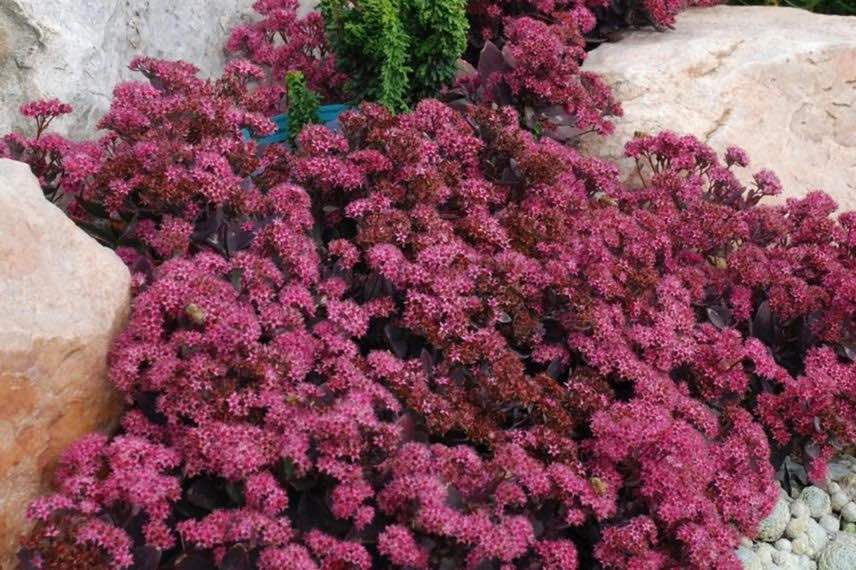
‘Plum Dazzled’ is a hybrid sedum forming a charming cushion of foliage and colour. It’s an ideal choice if you’re looking to create low-maintenance, drought-tolerant container displays, This compact variety stays under 30 cm across. It is attractive in several respects: firstly, thanks to its foliage, a blend of purple and purplish hues. The tough, fleshy leaves are typical of succulents. Then, at the end of summer, it flowers, revealing inflorescences of 8 cm in diameter, comprising numerous small dark pink flowers. They are a delight for pollinating insects.
Grow this sedum in full sun, in well-drained soil, even if rocky. For maintenance, simply prune the faded inflorescences, but dried flowers can stay decorative in winter.
For everything you need to know about growing sedums, discover our guide: Sedum or Orpin: how to plant, grow and propagate them
Heuchera x villosa 'Caramel' - Heuchera - Painter's Despair
‘Caramel’ is a very popular and well-loved variety of Heuchera. As with all these perennials, it offers evergreen foliage that is particularly colourful and ornamental. It is evergreen, which makes it interesting even in winter and will dress terraces or balconies year-round.
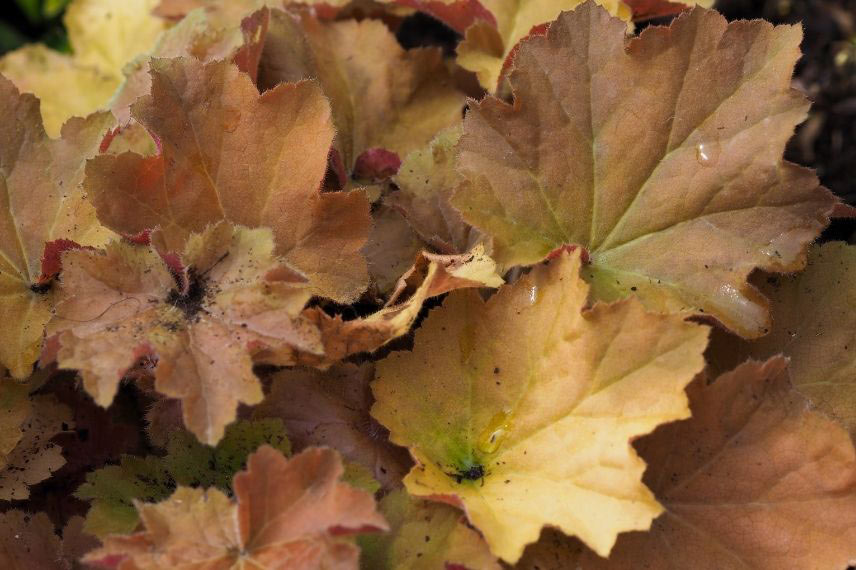
Its undulated, lobed and veined leaves display changing hues over time, for a display that is never dull. They display amber, golden, coppery, orange and caramel tones. They are always very soft and warm, bringing a touch of light to shaded or semi-shaded areas. Their undersides are purplish.
The flowering, light as a feather, takes place between June and July. It consists of spikes of small cream-white bell-shaped flowers.
The habit of this Heuchera is compact, measuring about 40 cm in all directions.
It is a perennial that will require fertile soil, rich in organic matter. It tolerates cold well, as it does heat and drought. Note that watering will inevitably need to be more frequent when grown in pots, as the substrate dries out more quickly.
To learn everything about growing Heucheras, discover our guide: Heucheras: planting, cultivation and maintenance
Agapanthus 'Celebration' – Agapanthus
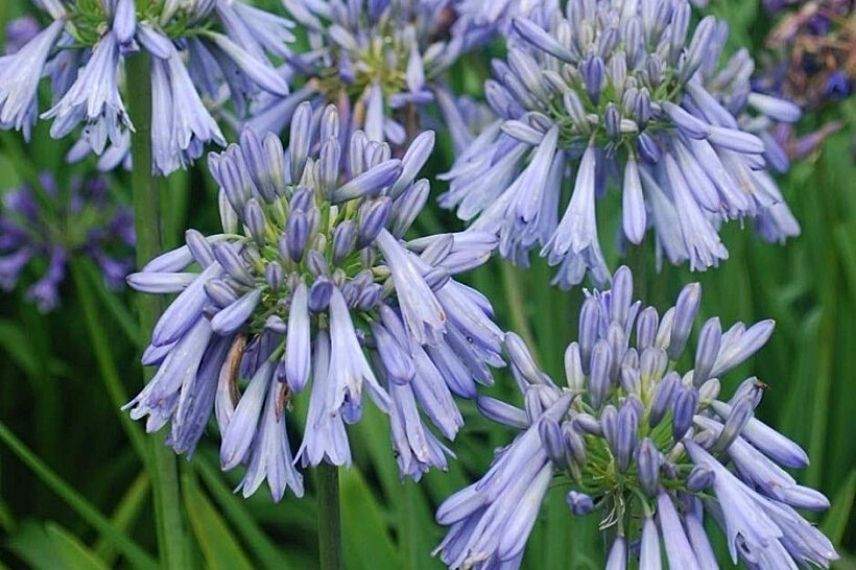
Agapanthus is a perennial ideal for adding structure and verticality in pots. ‘Célebration’ blooms from June to September, offering beautiful umbels of 10 cm in diameter, comprised of delicately pendulous bell-shaped flowers. They display a soft pale blue.
Leaves are long and glossy, in a soft green colour. They are deciduous.
This perennial reaches 70 cm in height with a 50 cm spread.
Hardier than most of its peers, this variety tolerates frosts down to -12°C. Provide it with fairly fertile, well-drained soil that stays cool, in a sunny position. For a striking effect in pots, plant several specimens and water regularly during the growing season.
To learn all about growing agapanthus, read our guide: Agapanthus: plant, grow and care
Salvia greggii ‘Amethyst Lips’ – shrubby sage
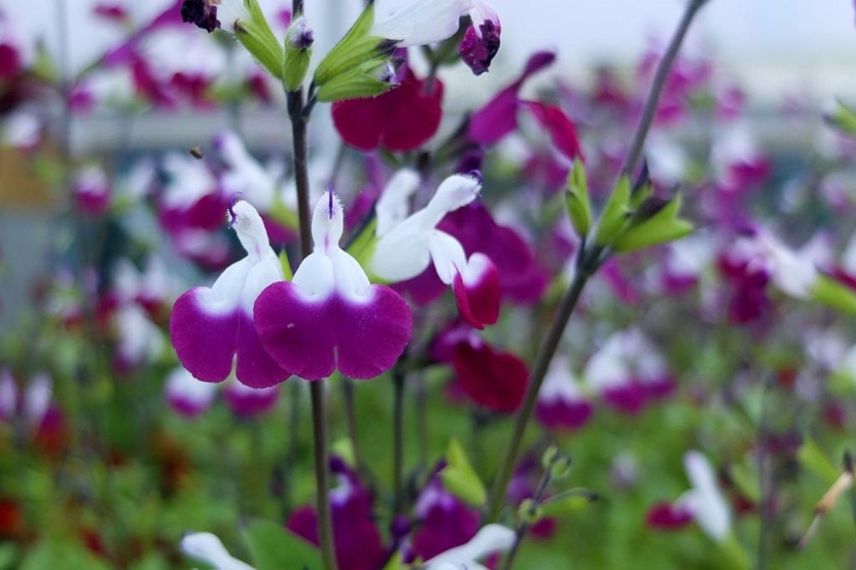
This shrub sage ‘Amethyst Lips’ is a recent variety, which offers us a flowering that varies with temperature: the bilabiate flowers, grouped in spikes about fifteen centimetres long, can be white, purple or bi-coloured. They thus evolve through the summer season and into autumn, for a display that is continually evolving. The hotter it gets, the more the colours lean towards purple. For many weeks, the flowers also provide nectar for pollinating insects.
This aromatic perennial will become a pretty shrub about 70 cm tall by 50 cm wide. It will quickly form a tuft giving off minty and tangy notes, with very green foliage. The foliage is semi-evergreen, depending on the severity of the winter.
Moderately hardy (down to -10 to -12°C), this shrub sage is nevertheless very easy to grow. It will establish easily in a large pot on a sunny terrace or balcony (or shaded in hot climates). Grow it in well-drained soil, even sandy and stony. Fairly drought-tolerant, low-maintenance and little prone to pests and diseases, it does not require any special gardening skills.
To learn all about growing salvias, see our dossier: Salvias, Salvia: planting, pruning, maintenance
- Subscribe!
- Contents
Comments