





























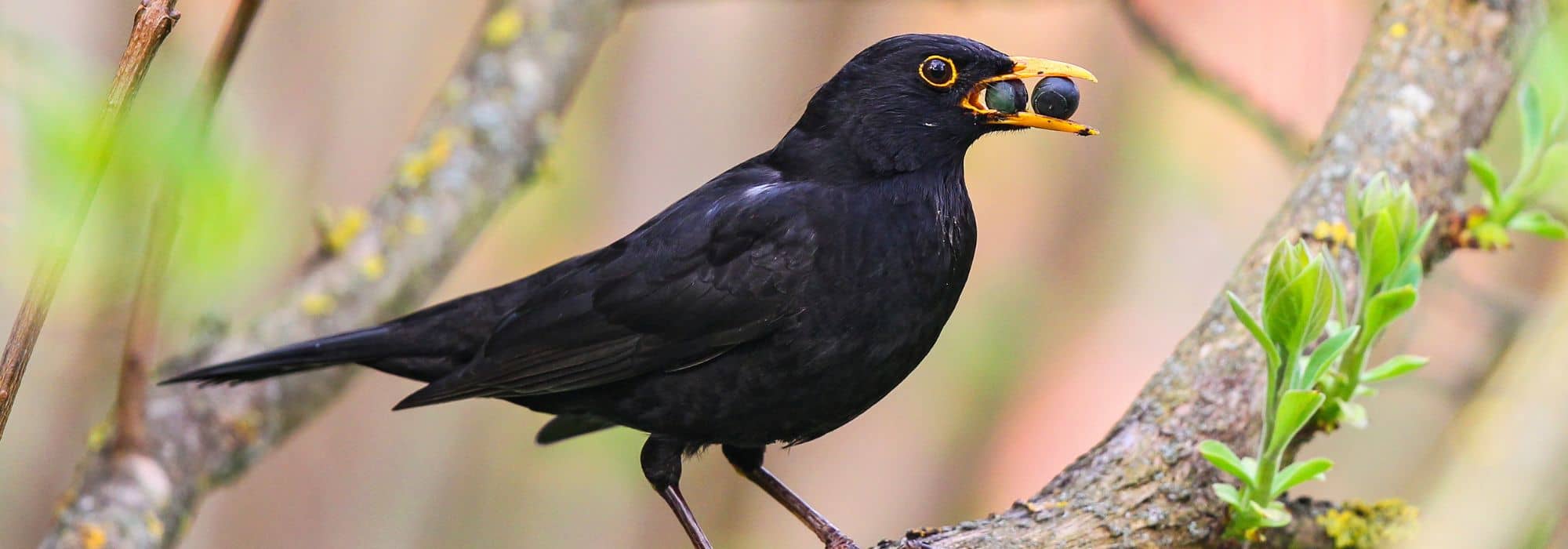
The best berries to attract and feed birds in the garden
And feed them all year round
Contents
Observing the birds in the garden is a real pleasure, especially when they come to feed on your berry-bearing shrubs and bushes. In autumn and winter, these small fruits become a valuable food source for many species. Hence the importance of planting nutritious berry-bearing bushes and trees. Some varieties, in addition to providing food for birds in winter, also offer a refugium during nesting.
But which plants should you prioritise to feed the birds, especially during the cold season? In this article, we will guide you in choosing berry-bearing trees and bushes to feed garden birds.

Why plant bushes and berry-bearing plants for birds?
Berries for all seasons
Creating a bird-friendly garden by incorporating berry-bearing bushes is an excellent way to feed them while enhancing one’s garden. These berries provide a vital food source, especially in autumn and winter when insects become scarce. Small birds, such as blue tits, thrushes and robins, depend on them to survive the cold months.
A refuge for birds
In addition to feeding, these bushes also provide a natural refuge, allowing birds to nest. Some varieties of thorny-branched bushes, such as blackthorn or hawthorn, also form a natural barrier, protecting small birds from predators.
A role in biodiversity
Berry-bearing bushes do not merely offer shelter and food; they also promote biodiversity by attracting a variety of insects during their flowering. For example, common ivy (Hedera helix), which flowers in late autumn, attracts pollinators before bearing its berries in winter. Some insects even form part of birds’ and nestlings’ diets, especially during the nesting season.
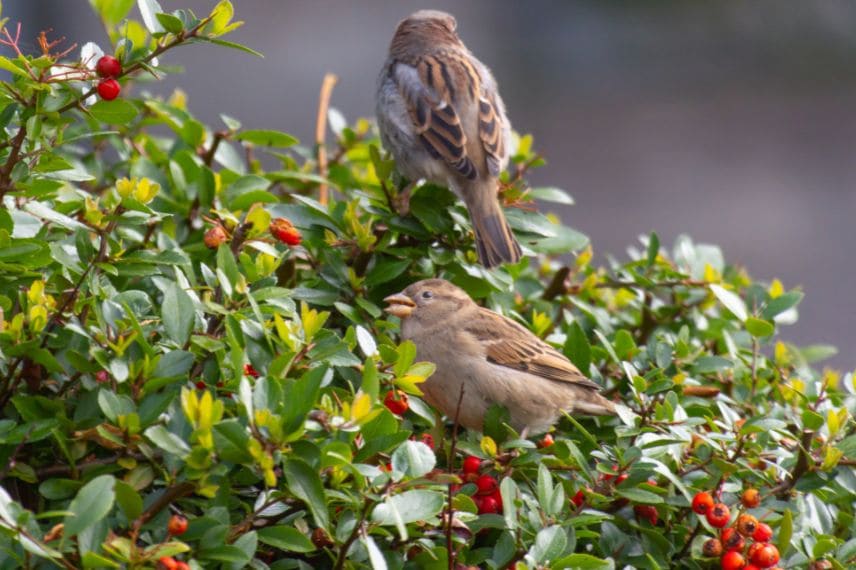
Two sparrows on a Pyracantha bush with red berries
The criteria for choosing suitable berry-bearing plants for birds.
Choosing berry-bearing bushes suited to your garden helps feed birds while supporting biodiversity. To achieve this, several criteria should be taken into account to provide a regular food source and a refuge all year round.
Edible, non-toxic berries for birds
Not all berries are suitable for birds. Some, though ornamental, can be toxic to them, such as those of Lantana or yew. It is therefore important to favour native plants that are known to feed birds safely. We will look at the varieties most suitable in the next paragraph, and feel free to observe the trees and bushes that birds favour during your walks.
Fruiting across several seasons
To prevent birds from having nothing to eat, especially in autumn and winter, vary berry-bearing shrub varieties to provide staggered fruiting. For example, the elder produces fruit in summer, while the holly and the burning bush keep their red or yellow berries through the cold season, attracting birds in winter.
A good fit for climate and soil
Before planting, it is important to choose bushes suited to your garden’s growing conditions: soil type, moisture, exposure. For example, dogwood is perfect for moist soils, while the rowan and the blackthorn resist harsh conditions and cold winds.
Pairing food and shelter
Berry-bearing shrubs can also provide habitat for small birds. To achieve this, you can mix evergreen plants (holly, privet, etc.) with deciduous species (hawthorn, etc.) and thus create a natural hedge where they will find both food and a safe space. In short: favour diversity.
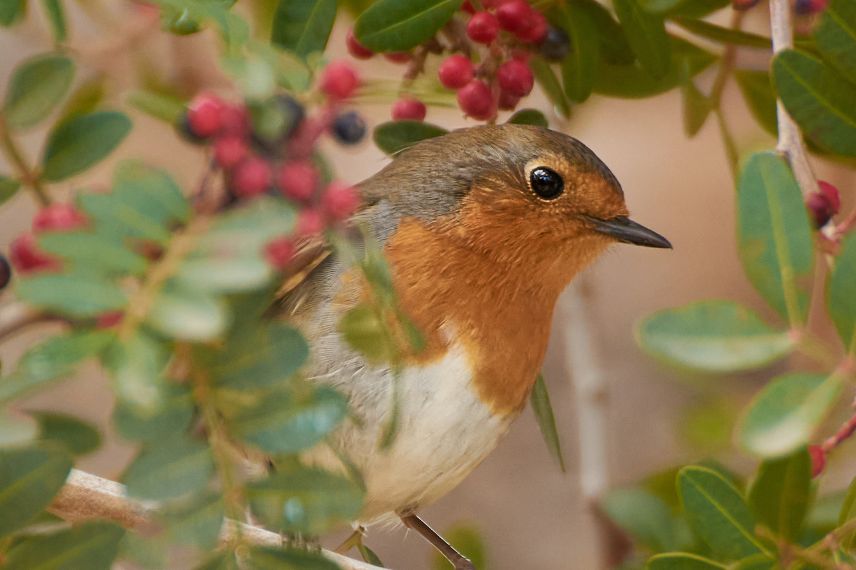
A robin in a rowan tree
The main berry-bearing plants for garden birds
You will have understood that, to feed the birds throughout the months, integrate into your garden a varied selection of berry-bearing plants adapted to the different periods. Some bear fruit in autumn and winter, providing a valuable food source, while others produce fruit in spring and summer, thus complementing the birds’ diet.
Autumn and winter berries: an essential for the birds’ survival
- Rowan (Sorbus aucuparia): Very popular with thrushes, blackbirds and starlings. Its red berries remain available until December, or even longer if the cold does not spoil them. This small tree is hardy to cold and heavy soils, but beware of drought.
- Holly (Ilex aquifolium): Its red berries are a food source for birds in your garden. Its evergreen, dark green, glossy and spiny foliage also offers shelter. It prefers acidic soils and cool, damp sites.
- Hawthorn (Crataegus monogyna, Crataegus laevigata): Its red fruits feed robins, warblers and tits. In spring, this shrub is covered with small white (or pink, depending on the variety) flowers, highly valued by pollinators. Plant in sun or partial shade, in a temperate-climate garden, not too dry.
- European spindle (Euonymus europaeus): Its pink and orange berries attract birds, as well as the eye. It is also prized for its flamboyant autumn foliage. It is hardy and very undemanding regarding soil type.
- Guelder-rose (Viburnum opulus): Its red fruits are enjoyed by small birds. We also love its splendid white spring flowering. An easy-care shrub suited to moist, fresh soils.
- Common ivy (Hedera helix): Produces black berries in winter, feeding thrushes, starlings and wood pigeons. This climbing plant is easy to grow in partial shade or shade.
- Firethorn (Pyracantha coccinea): Its red, yellow or orange berries are sought after by thrushes and tits. It is very hardy and can be planted in all soil types.
- Mahonia (Mahonia aquifolium): Its blue-black berries in winter attract robins and tits. This evergreen shrub is tolerant of drought and cold.
Spring and summer berries: a valuable food supplement
Birds do not feed only in winter. Some shrubs produce edible berries from spring through summer:
- Black elder (Sambucus nigra): Its berries ripen from July and disappear quickly, as they are highly sought after. It requires little maintenance and is easy to grow in all soil types.
- Canada serviceberry (Amelanchier canadensis): Its red-to-black berries are enjoyed by thrushes and starlings. Hardy, it is not particular about soil type, but it dislikes excessive heat and drought.
- Bird cherry (Prunus padus): The small black berries of this tree attract robins and tits. It prefers slightly damp soils, even heavy and compact, and occasionally waterlogged.
- Raspberry and Blackberry (Rubus spp.): These berry-bearing shrubs provide food for birds in summer. They are very easy to grow in most regions.
- Privet (Ligustrum vulgare): Its small black berries feed thrushes and starlings. Easy to grow, it tolerates even salt spray and damp soils, but it dislikes drought and high heat.
- Cornelian cherry (Cornus mas): Robins, thrushes, starlings and warblers all love these berries, especially when they are well ripe in late summer. It is a shrub that will grow anywhere, with no particular requirements and no disease issues.
This list is not exhaustive! Other plants, trees and shrubs such as apples, medlars, fig trees, May berries, cherry trees, currants, blueberries or strawberries also provide a valuable food source for garden birds, if you are prepared to share them.
Precautions: the berries of Holly, European spindle, Privet, ivy, Firethorn and Viburnum are toxic to humans.
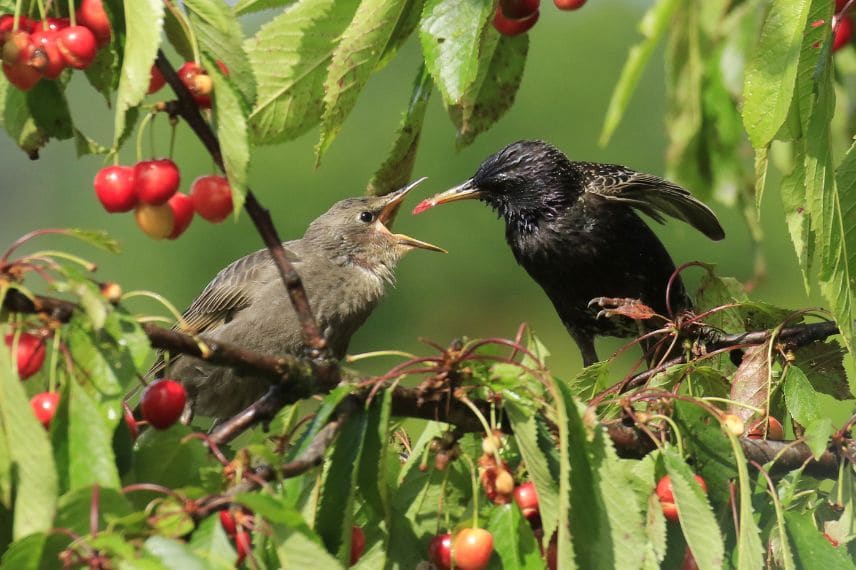
Starlings in a cherry tree
Read also
How to attract birds to your balcony?How can these plants be integrated into a garden that attracts birds?
Create a diverse and natural hedge
Dense hedges provide shelter and protect birds from predators. Prioritise a wide diversity of bushes, and don’t hesitate to pair deciduous and evergreen bushes.
Even better: Prioritise native bushes (local species, such as rowan, European spindle, etc.) to recreate a natural habitat, suited to native birds.
Pair bushes with staggered flowering and fruiting
As we have already mentioned, to provide varied food over several months, plant berry-bearing bushes that fruit in autumn and winter, as well as in spring and summer.
Enhance with water features and nest boxes
Birds need water to drink and to preen their plumage. Install a water feature (such as a small pond or a shallow dish). Refresh the water regularly to prevent the proliferation of bacterium. Also remember to refresh the water dish when the water freezes in winter.
You can also install nest boxes to attract birds and, if necessary, a bird feeder if food becomes scarce in the garden.
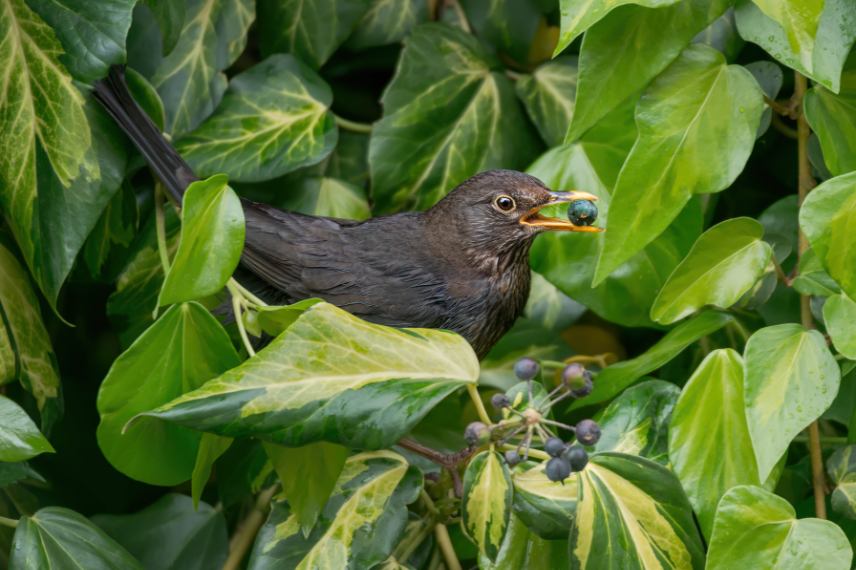
A blackbird is eating an ivy berry
Care and Precautions for Protecting Berries and Birds
To ensure your bird-friendly garden remains a reliable source of food and an effective natural refugium, here are a few practical steps to follow:
Avoid pesticides and chemical products
The use of pesticides and herbicides can be toxic to birds and reduce the number of insects they feed on. Therefore, avoid their use in the garden and favour natural methods such as mulching to protect the soil, and let biodiversity balance itself.
Don’t prune too early, or too hard
Some berry-bearing bushes bear fruit on last year’s wood (raspberry, etc.), and pruning at the end of winter could thus greatly reduce berry production. Likewise, spring pruning risks disturbing the nesting of young birds that settle in hedges and dense shrubs.
When and how to prune?
- Wait until the end of winter (late February to mid-March) to prune certain varieties of bushes. Feel free to check our site for the ideal pruning period, which you will find on each of our plant profiles.
- Prune after fruiting (in autumn and early winter) for those that bear late berries.
- Avoid pruning between mid-March and mid-August to avoid disturbing nesting and to allow young birds to fledge.
- Never prune natural hedgerows heavily (one third of the branches at most) and favour gentle, gradual pruning.
Protect birds from predators
Birds are particularly vulnerable to predators, especially domestic cats. To minimise risk:
- Place feeders and nest boxes high up, out of reach of predators.
- Plant thorny shrubs, such as hawthorn or blackthorn, which provide a secure refugium.
- Avoid clearing hedgerows too much, as they are natural refugia for small birds.
Leave the fruits on the plant as long as possible
Some shrubs such as the rowan (Sorbus aucuparia), common ivy or cotoneaster bear berries that stay on the branches for several months. These fruits are often eaten as a last resort by birds, especially during frosts or when they become soft.
- Subscribe!
- Contents
Comments