





























The best evergreen shrubs for city gardens
Plants that tolerate pollution well and tight spaces
Contents
Urban garden design often starts with plant selection. Beyond the obvious aesthetic considerations, greening an outdoor space in the city also helps create a refreshing, eco-friendly haven. Plants help combat urban heat islands, thanks to the evapotranspiration of their foliage. They also provide essential shade during our increasingly hot summers. Finally, plants favour biodiversity, often under threat in urban areas, and contribute to residents’ well-being.
evergreen shrubs have the advantage of remaining decorative all year round, as they retain their foliage. In a garden where space is limited, they are multifunctional, serving as shade, a privacy screen, or a windbreak. The plants selected must, however, meet several criteria:
- have a modest size and a root system unlikely to damage surrounding infrastructure;
- be suitable for pot culture or confined spaces;
- tolerate heat and drought, which urban concrete can intensify;
- tolerate pollution;
- tolerate soils that are sometimes poor and degraded;
- tolerate low light in some cases.
Here is our selection of evergreen shrubs, ideal for urban gardens, bringing a touch of nature to the heart of the city.

Aucuba: evergreen foliage that brings light to shaded areas
Aucuba is an evergreen shrub native to the undergrowth of the Far East, which thrives in shade. It will therefore be ideal for planting up city gardens or small courtyards that do not get much sun.
This plant is regularly grown in urban green spaces, due to its many qualities. Aucuba tolerates pollution, proves to be not fussy about soil, but very resistant to diseases and frost down to -20°C. It is also an ideal candidate for small seaside gardens, as it withstands sea spray.
Its bright, glossy foliage readily brightens dark spaces. It typically mixes green and yellow, in varying degrees of variegation, splashed or speckled. This is, for example, the case with ‘Variegata’, ‘Golden King’ or ‘Rozannie’.
Spring flowering is discreet, often hidden by the foliage. It consists of small clusters of red-purple flowers. After flowering, female plants may produce colourful and decorative fruits if they are near a male plant.
Most Aucubas do not exceed 3 metres in height, which makes them easy to grow in small spaces, whether in pots or in areas with little soil; you can easily incorporate them as a hedge or at the back of a border.
For more information, see our full guide: Aucuba: planting, pruning and care.
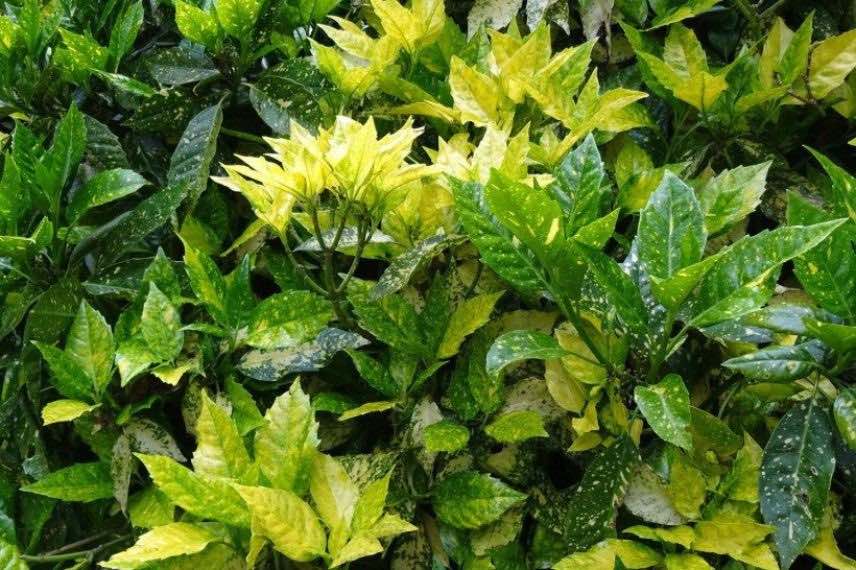
A beautiful variegated specimen of Aucuba japonica in spring
Read also
7 shrubs for a city gardenSarcococca: an adorable shrub that flowers in winter
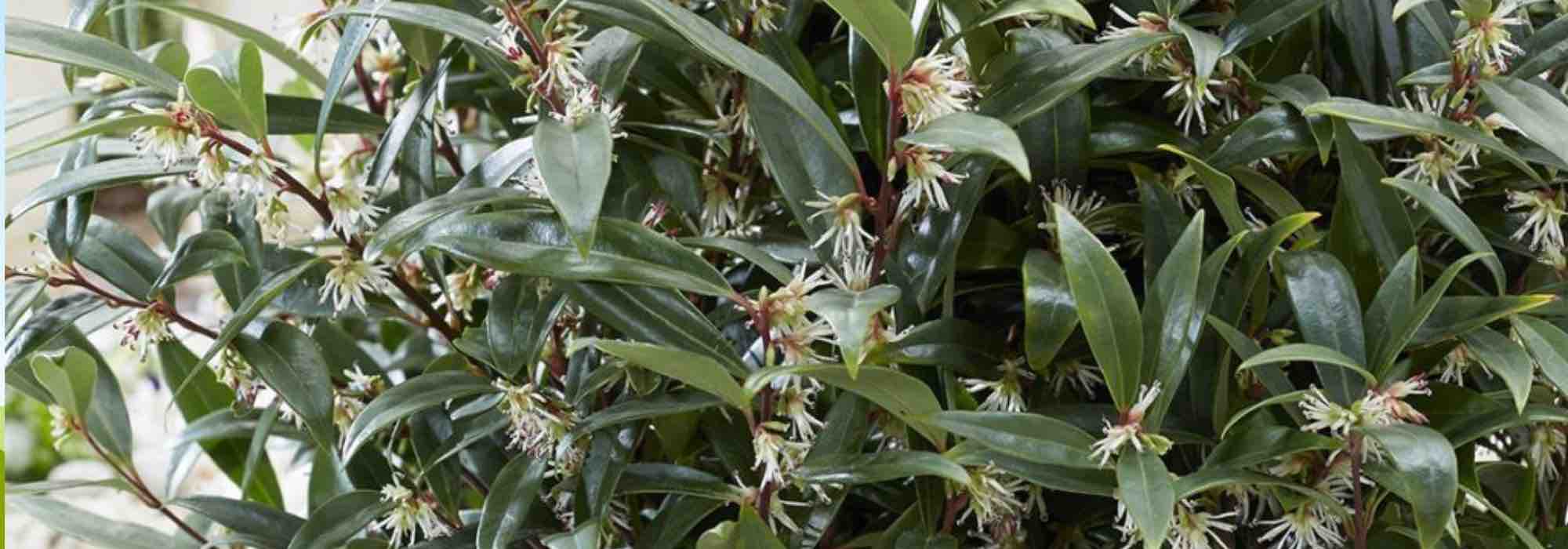
Sarcococca is one of our favourite shrubs, as it combines several advantages. First and foremost, a shade-loving shrub that tolerates occasional drought. It offers lovely glossy evergreen foliage, giving it the charming appearance of a miniature olive tree. In winter, it graces the garden with its small white or pink flowers, diffusing a sweet fragrance.
For example, discover the Sarcococca hookeriana ‘Purple Gem’ with its dark-red new shoots and white-pink flowering. Also opt for the Sarcococca hookeriana ‘Fragrant Valley’, which forms an adorable compact shrub, exuding a hyacinth fragrance.
To top it all, Sarcococca is among those hardy shrubs that tolerate difficult conditions: pollution, cold (hardy to around -15 to -20 °C), lack of maintenance or root competition. Its only drawback? Growth is rather slow.
In terms of habit, these shrubs barely exceed 2 metres in height, which is why they are ideal candidates for small spaces. In a town garden, Sarcococca will thrive in a pot or in a shaded border.
For more information, do not hesitate to consult our page: Sarcococca: how to grow and prune it?
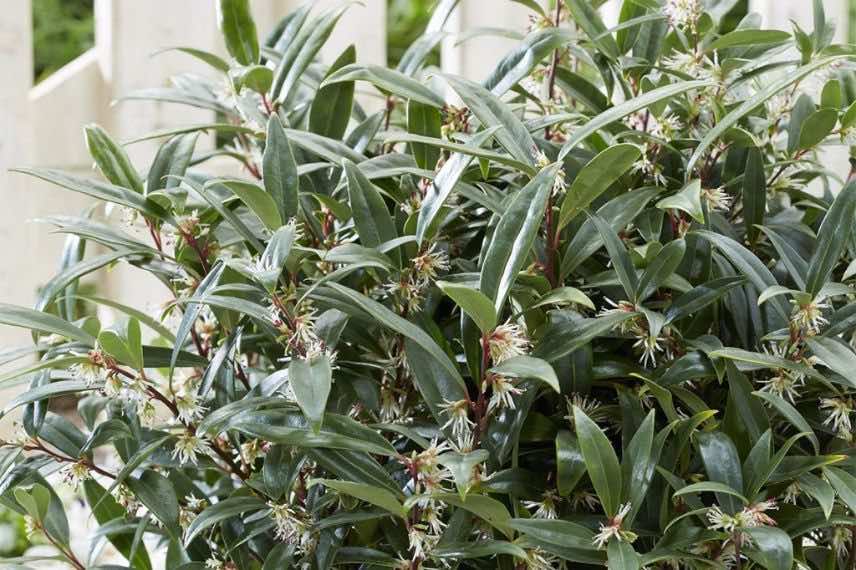
Sarcococca hookeriana ‘Purple Gem’
Mexican orange tree: as attractive as it is easy to live with
The Mexican orange (Choisya ternata) is one of the most popular shrubs in gardens everywhere, rightly so!
Its evergreen foliage looks lovely in all seasons. It can be a classic green colour, or a bright golden-yellow colour, even more luminous, as seen with ‘Goldfinger’, ‘Sundance’ or ‘Aztec Gold’.
Its scented flowering in late spring is just as delightful. It consists of bouquets of starry white flowers, exuding notes of orange blossom. This flowering can be repeat-flowering in autumn.
Its compact form and modest dimensions, not exceeding 3 metres in height, make it ideal for small spaces. It will fit easily in a hedge or in a pot.
Hardy to -15°C, relatively resistant to disease, tolerant of pollution, sea spray and occasional drought, the Mexican orange is a genuinely easy-to-grow shrub.
For more information: Mexican orange, Choisya: planting, pruning and care.
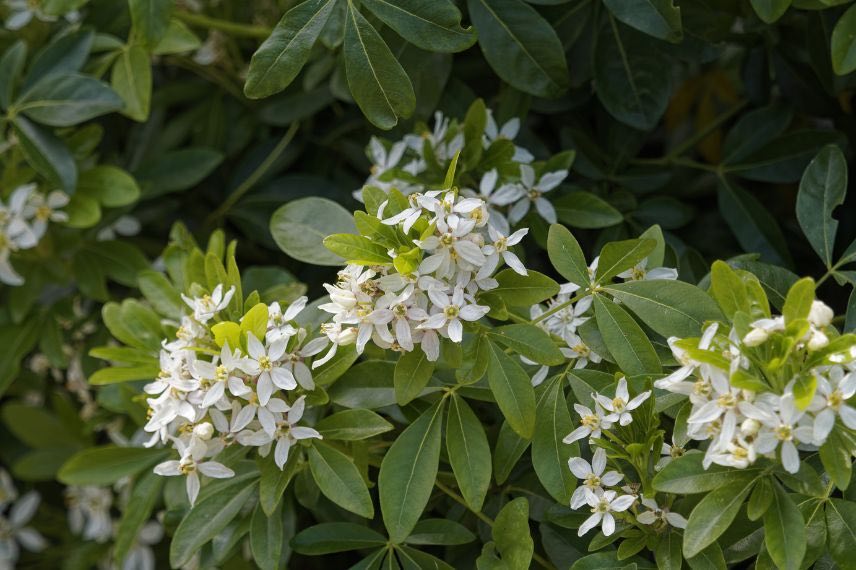
The Choisya ternata and its scented flowering with notes of orange blossom
Read also
6 fruit trees for urban gardensElaeagnus: an adaptable shrub ideal for urban gardens
If the Elaeagnus are such good candidates for urban gardens, it is thanks to their ability to withstand conditions that can be harsh: pollution, strong winds, inclement weather or frost. They tolerate the poorest and sandiest soils, endure heat and drought, resist diseases. Their tolerance of salt spray also makes them suitable for coastal gardens. Finally, these sturdy shrubs have the advantage of tolerating pruning, which makes it easy to keep their silhouette under control.
Beyond their attributes, Elaeagnus are beautiful evergreen shrubs with bright foliage, which can be green, silver or variegated. The leaves are lanceolate, leathery and generally undulated along their margins. For example, try the Elaeagnus ebbingei ‘Eleador’, with golden-yellow foliage splashed with dark green. The Elaeagnus pungens ‘Hosuba Fukurin’ in turn produces variegated foliage, green margins edged with cream.
The flowering (spring or autumn depending on the variety) is discreet, lightly scented. It gives way to small decorative edible fruits, though they will mainly delight the birds.
Elaeagnus will thrive in full sun or partial shade. It is perfect for quickly forming decorative hedging, but will also look very elegant when grown in a pot. It enjoys a sunny or partly shaded position.
For more information: Elaeagnus or Chalef: planting, pruning, maintenance tips
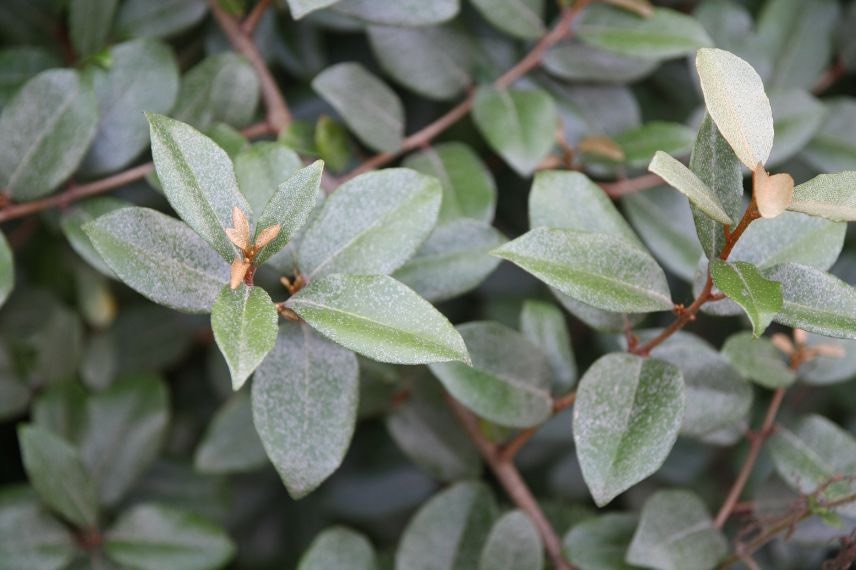
The handsome green-grey foliage of the species Eleagnus ebbingei
Abelia: a floriferous evergreen shrub in a mild climate
If urban gardens face many constraints, they nevertheless have the advantage of offering spaces that are often more sheltered and less prone to winter frosts. Abelias can therefore find there the conditions enabling their foliage to stay evergreen, as in a mild climate.
These shrubs are by no means lacking in ornamental qualities. They reward us first with a generous summer flowering, white or pink, slightly scented. It leaves place to coppery, long-lasting bracts and decorative. The foliage, ovate and pointed, is variable, which makes it just as ornamental. Initially reddish in spring, it becomes green or variegated, before returning in autumn to beautiful, flamboyant colours.
The habit of Abelias does not exceed 3 metres in height, making them good candidates for small spaces. For example, opt for Abelia grandiflora ‘Pisto’, with a compact habit, ideal for small gardens (1 metre all round). Its dark green foliage takes on bronze in autumn. The variety ‘Sunshine Daydream’ (about 1.5 metres all round) offers, for its part, very changeable foliage, evolving from yellow-orange to green, then to reddish, for a display never dull.
Not fussy about soil type, tolerating drought as well as pollution and sea spray, and knowing few diseases, these shrubs are truly hardy. Their only drawback may be their hardiness, which does not tolerate below -10°C. Plant them in sun or half-shade, whether in a bed, hedge or pot.
For more: Abelia : planting, growing and care.
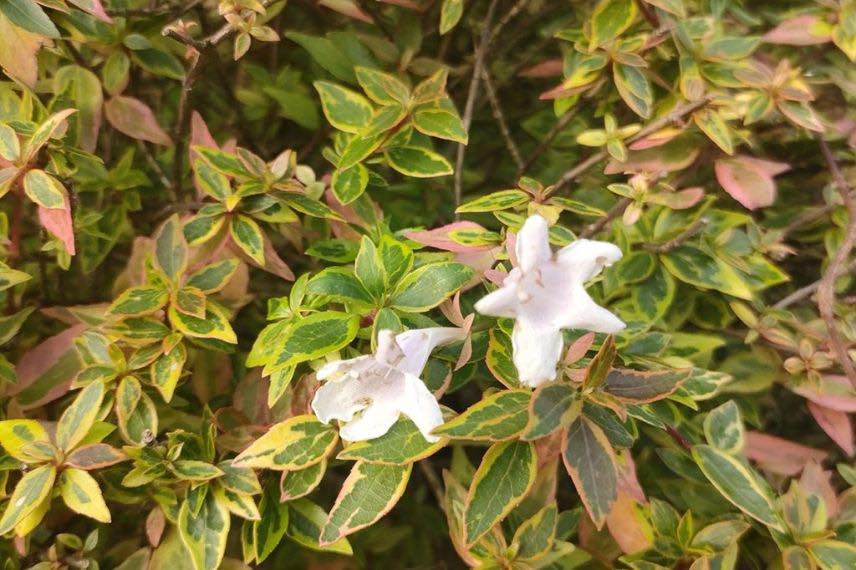
Abelia grandiflora ‘Sunshine Daydream’
Other evergreen shrubs perfect for urban gardens
This list is by no means exhaustive, as there are many other shrubs that make good candidates for greening urban gardens and creating an oasis of cool in the city.
For conifers, choose, for example,Juniperus (junipers), which tolerate even difficult growing conditions, or for small Thuja, equally adaptable.
Add an exotic and graphic note with Fargesias (non-running bamboos), which will help create a handsome screen of greenery in a compact space. The Nandina domestica (heavenly bamboo), with its foliage that changes, will also add a touch of Japanese flair to a small city garden.
To create a defensive hedge in a small space in town, think about Pyracantha or Firethorn, with attractive decorative fruit. Pair it with Berberis, a spiny shrub tolerant of pollution and all soil types.
Also consider melliferous Ceanothus with their blue flowering, as well as Skimmia japonica, Japanese Andromeda, boxleaf honeysuckle (Lonicera nitida) and small varieties of privets (Ligustrum).
In well-exposed urban gardens, taking advantage of a fairly bright position, cultivate robust laurustinus (Viburnum tinus) or Photinia fraseri with attractive coloured foliage.
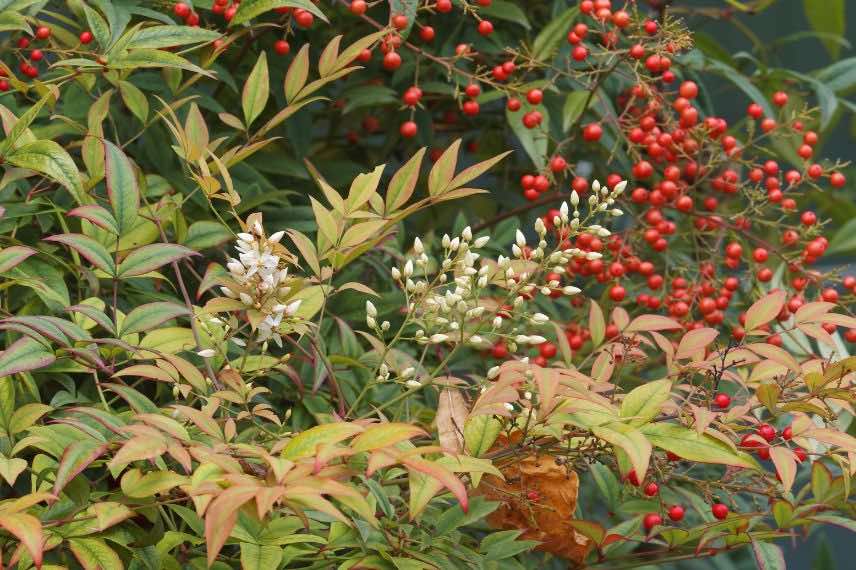
Nandina domestica features light foliage with seasonal colour variation, a white summer flowering followed by bright red berries
- Subscribe!
- Contents
Comments