






























The best orange-flowered annuals for a warm garden
6 flamboyant plants in the garden
Contents
Orange colour in the garden is synonymous with vitality, warmth and joy. This vibrant colour attracts the eye, warms the atmosphere, and creates captivating focal points in the beds. Orange-flowered annuals bring their vitality, offering a very generous and continuous flowering from spring to autumn. In this article, we present six essential annuals that brighten the garden, terrace or balcony with their orange flowers, in fiery hues or softer shades. Whether you’re looking to create a bed in fiery hues, add depth to your borders, or brighten up your containers, these plants will be your allies for a season full of colour.

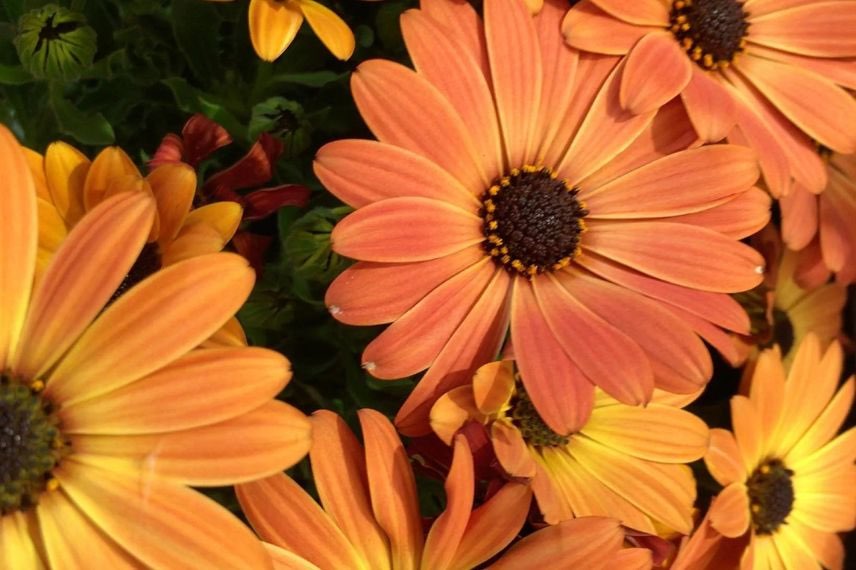
Osteospermum or Cape Daisy Dalina 'Orange'
Osteospermum Dalina® ‘Orange’ stands out with flowers in bright orange with a pale brown centre, representing a new generation of hybrids with prolific flowering.
Osteospermum is a South African perennial sensitive to cold, often grown as an annual in temperate regions. In coastal areas, it thrives as a perennial in rockeries and on dry banks.
The Dalina ‘Orange’ variety is characterised by a compact habit and generous flowering that lasts from May to October. This plant reaches its mature size in a few months, forming a flowering cushion about 35 cm high and 40–45 cm wide. Its flowers, relatively large for the plant’s size, close when light is lacking. They are supported by ramified stems arising from evergreen foliage in winter, in mild climates.
Osteospermums are major assets for dry gardens, sun-exposed terraces and balconies. They pair well with Nepetas, sages, verbenas, lantanas, for living borders and colourful groundcovers.
Read also
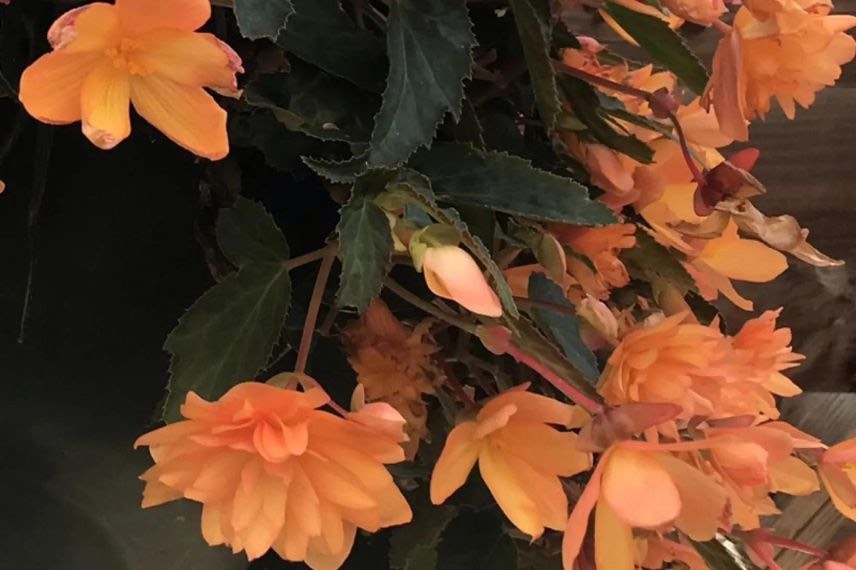
10 Easy Annual Flowers to SowTrailing Begonia Belleconia 'Mango'
Begonia Belleconia ‘Mango’ is characterised by an abundance of large double flowers in salmon-orange colour, blooming over three to four months. Its bushy, trailing habit is ideal for hanging baskets and provides a continuous floral display during the flowering season.
Begonia Belleconia ‘Mango’ is an herbaceous annual plant derived from a selection of recent hybrids. They are prized for their compact, trailing habit, generous flowering and impressive double flowers. The plant reaches a height of 30–40 cm and can cascade up to 1 m, offering lush flowering from June to September. Its flowers, 5 cm in diameter, consist of petals forming a pom-pom, accompanied by a few single flowers in light salmon colour. Leaves, elongated triangular and dentate, are dark green, sometimes with coppery tones.
Begonia Belleconia ‘Mango’ excels in partial shade, whether in the garden, in pots, planters, window boxes or hanging baskets. It can be grown alone or paired with other species such as Bidens in large hanging baskets. These begonias also integrate elegantly into borders, harmonising with lighter flowers.
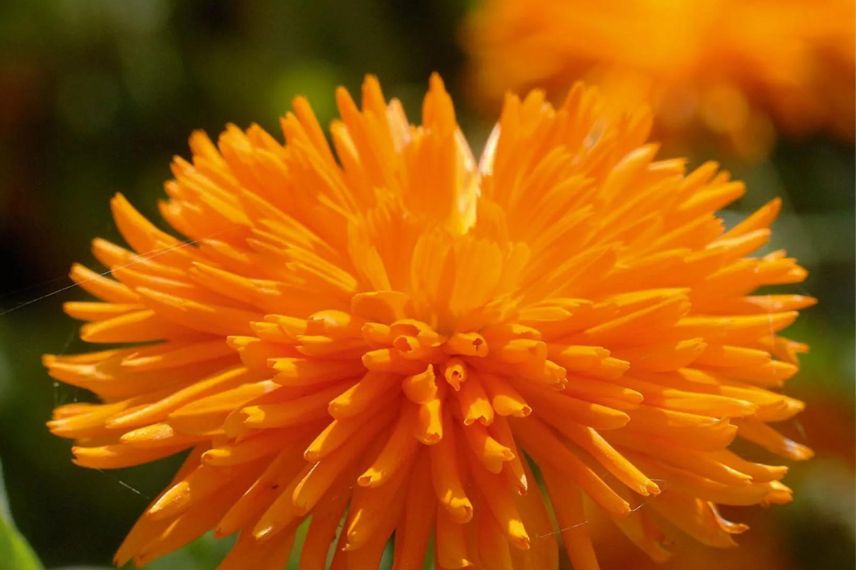
Calendula officinalis or pot marigold 'Porcupine'
Calendula officinalis ‘Porcupine’ is an annual plant that stands out for its bright orange flowers, evoking the wild look of a porcupine. Its double, slightly pointed petals vary in size from the centre to the outer edge, creating a texture reminiscent of a brush. Flowering begins in May and continues uninterrupted until the first frosts, attracting a multitude of insects. This plant is particularly valued for its easy cultivation, making it an ideal choice for beginner gardeners or those who prefer a low-maintenance garden.
Historically present in gardens since the twelfth century, the officinal marigold is renowned for its many virtues. Used as a pigment, it also finds a place in cosmetics, pharmacology and homeopathy thanks to its soothing, astringent, healing and anti-inflammatory properties. Its nickname ‘False Saffron’ comes from its culinary use, where it colours and flavours rice, stews, soups and herbal infusions, not to mention its raw flavour to cheeses, salads and butters. In the vegetable garden, it plays a beneficial role in repelling nematodes and attracting pollinators.
The habit of Calendula ‘Porcupine’ is erect and slightly spreading, with ramified stems giving a bushy appearance. It forms a clump about 45 cm across in all directions and fits perfectly in a border or in a pot, alone or in groups. Its lanceolate, velvety and aromatic leaves contrast with the brightness of its orange flowers. This marigold pairs well with other summer-flowering varieties such as dahlias and heleniums.
Read also
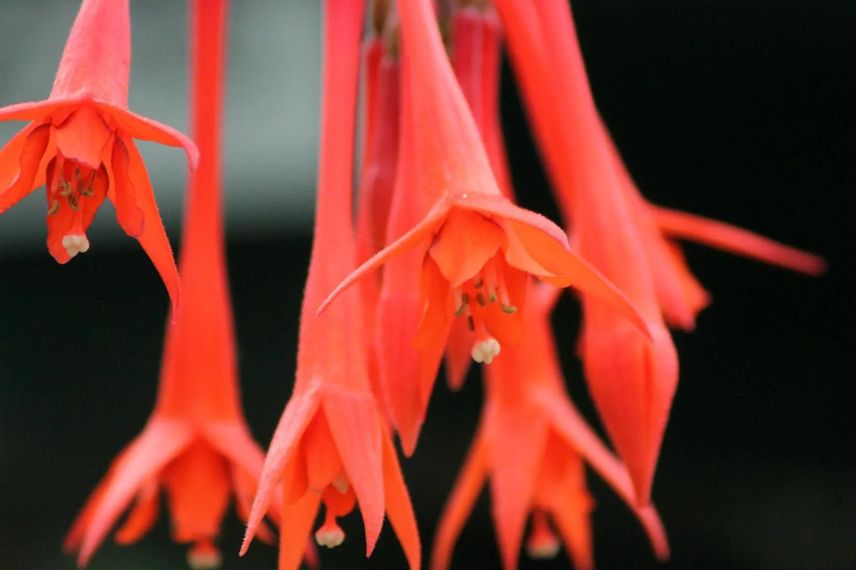
5 annuals for a spring-flowering gardenFuchsia 'Thalia'
The Fuchsia ‘Thalia’, also known as ‘Korall’, is a tender Fuchsia with an elegant appearance, dark olive-green foliage and slender, elongated flowers. This variety grows into a ramified shrub, reaching a height of 50–75 cm and a width of 40–50 cm. Its flowering period extends from spring to autumn, offering a profusion of single, long and pendulous flowers, 4 cm in length, grouped in clusters. These flowers consist of an elongated tube topped by four small sepals and a corolla of delicate petals, with inconspicuous stamens. They are a beautiful orange colour, between coral and scarlet, very vibrant.
Digiplexis or Digitalis hybrid 'Firecracker'
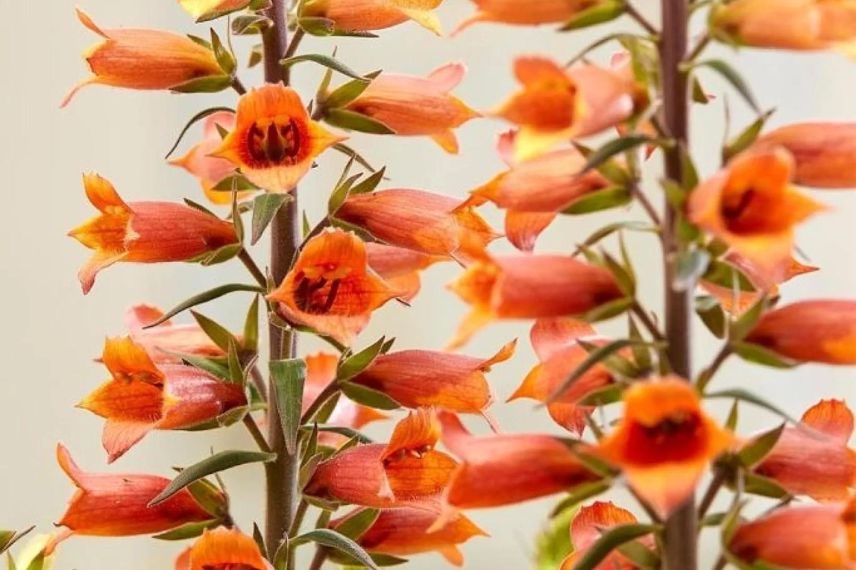
The Digiplexis ‘Firecracker’ is a remarkable foxglove hybrid, outperforming woodland foxgloves in flowering, vigour and longevity, but it is less frost-tolerant than its wild cousins. This spectacular and generous plant lights up summer with its dense flowering stems, bearing large flowers in vivid yellow-orange hues highlighted with pink. It thrives in full sun, in cool, fertile, slightly acidic to neutral, well-drained soil, making it ideal for the garden or in a pot on a terrace.
Cosmos sulphureus or yellow cosmos 'Mandarin'
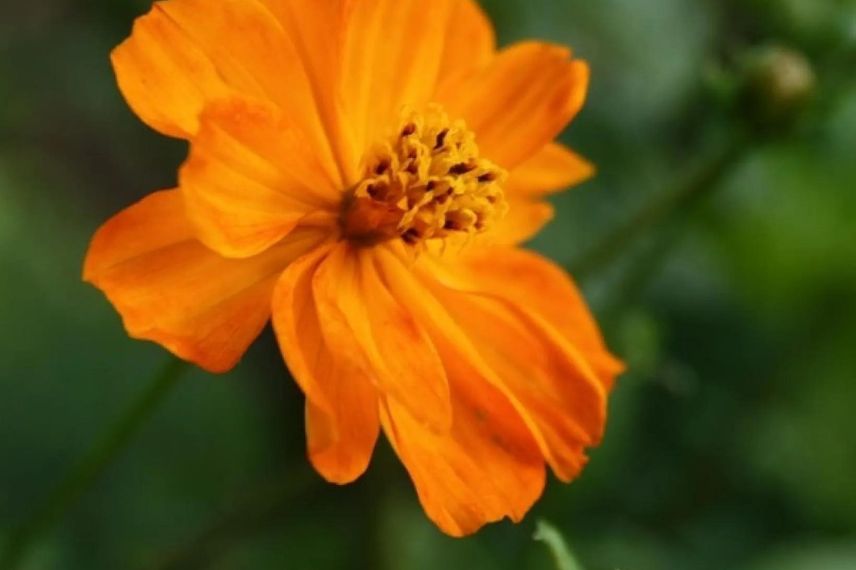
The Cosmos sulphureus ‘Mandarin‘ is an attractive annual with a compact habit, forming a tuft with finely divided leaves, bringing colour and vitality to the garden. Extremely floriferous, it offers a profusion of large, bright orange semi-double flowers throughout the summer and until the first frosts. This plant is perfect for enriching borders and is also suitable for pot culture. Fast-growing and easy to grow, it thrives in cool, well-drained, moderately rich soil in a sunny position.
The Cosmos sulphureus ‘Mandarin’, also known as sulphur cosmos, develops bright green foliage, finely divided into pointed lobes, on long, slender stems, and forms a compact, rounded tuft that does not exceed 30 cm. The flowers, formed from heads composed of fertile central florets and attractive ligulate florets, are a real magnet for insects.
For successful cultivation of Cosmos ‘Mandarin’, favour a sunny spot with cool, well-drained soil, but avoid soils too rich in nitrogen, which favour foliage growth at the expense of flowering. Pair it with poppies, with love-in-a-mist, and with scabious for beautiful colour combinations.
- Subscribe!
- Contents

Comments