





























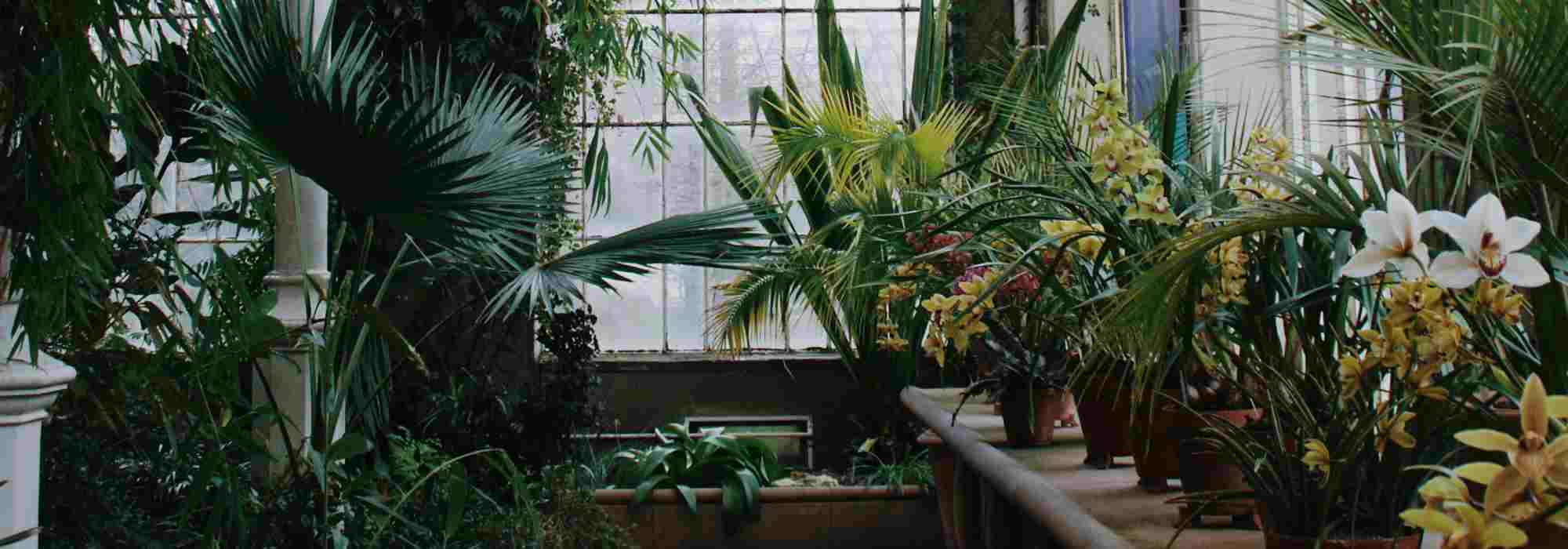
The conservatory: a green haven under glass
A bubble of nature at home
Contents
Do you remember Andie MacDowell in Green Card? She agrees to marry Gérard Depardieu in white so she can rent her dream New York apartment featuring an extraordinary conservatory or winter garden! It’s an understatement to say that this room is the object of desire for enthusiasts of exotic and exuberant plants. While some films use it as a backdrop, like Peter Weir’s romantic comedy from the 90s, a few are lucky enough to have a winter garden in an old house, or have one built, in the style of a traditional greenhouse or a high-tech glass extension attached to the house during a renovation. What are its origins, which plants should be invited, and how can it be used effectively to winter or enjoy the most delicate plants all year round? Let’s take a little tour into the delightful world of winter gardens!
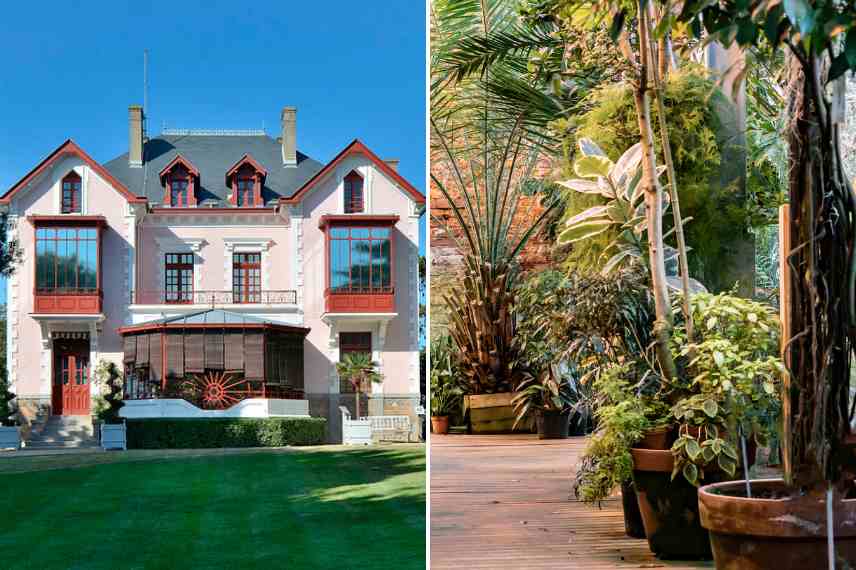
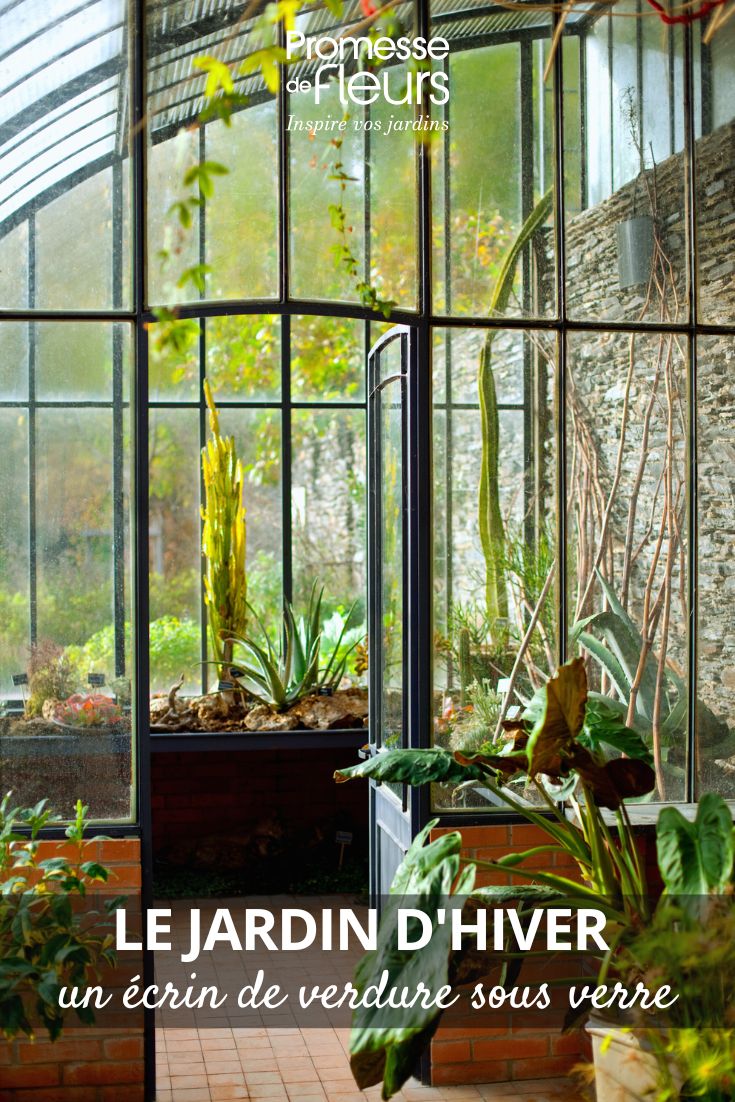
On the left, the winter garden of the Christian Dior Museum in Granville (France), and on the right, a large bright space serves as a shelter for beautiful exotics

The conservatory and its origins
What is a conservatory?
A conservatory is neither a greenhouse (often larger and more utilitarian), nor a veranda (sometimes smaller and less plant-filled), nor even an orangery, which was traditionally reserved for citrus trees and tender plants in a sheltered part of the garden. Instead, it is a clever blend of these structures. The difference is that this type of glasshouse is an integral part of the home, typically leaning against it, and has a strong aesthetic dimension.
Rather than a growing area, it forms a room in its own right, consisting of large glazing on a metal structure that gives it a bright appearance, conducive to the installation of various plants and the establishment of a controlled microclimate. It may open into another room, but it is generally closed off by doors, as it remains inherently unheated, unlike a traditional conservatory. Some conservatories can be heated (especially in colder regions), but traditionally, they are designed to retain solar heat thanks to their glazing.
The conservaotry thus serves as a buffer between the house and the garden, to which it is often accessible. It creates a significant extension of the home, from which one can observe the garden or terrace.
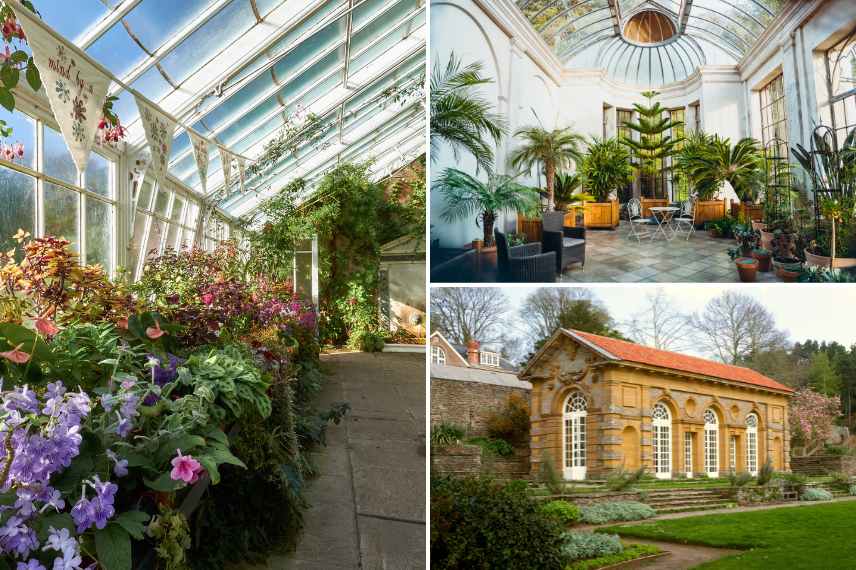
The ancestors of the conservaotry are greenhouses and orangeries
The origins of the conservatory
The heyday of the conservatory dates back to the mid-19th century. Directly inspired by the Belle Époque greenhouses in English and French gardens in the mid-18th century, we see it taking over the most beautiful botanical gardens with their extravagant architecture, made of glass and steel. In France, during the Second Empire, the Winter Garden of the Champs-Élysées (1846-1851), a public glassed-in space, heated… and ticketed, foreshadows the enthusiasm for these bright spaces, before the bourgeoisie integrates them into their private homes.
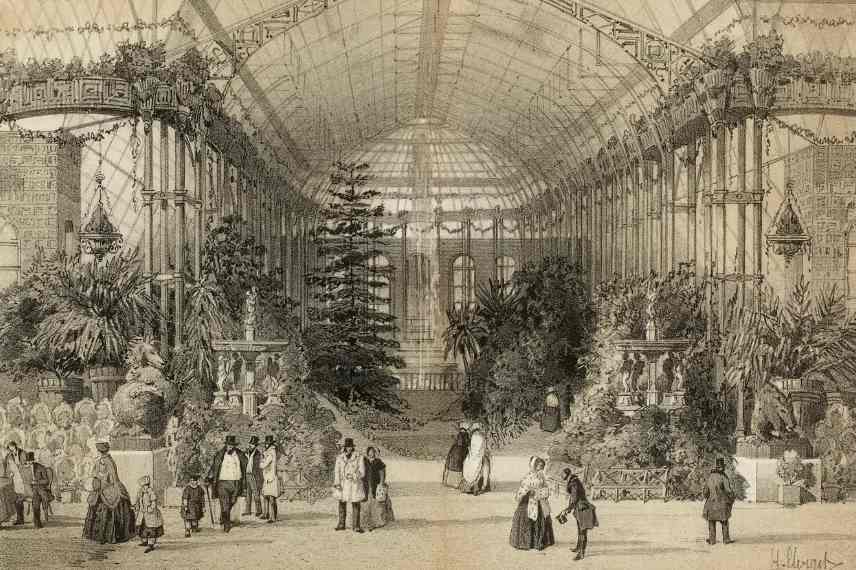
The Winter garden of the Champs-Élysées (engraving from 1848)
Then it was the grand noble houses that became enthusiastic, among the aristocrats who could afford the luxury of such architecture. In 1845, the abolition of the tax on glazing indeed allowed for an increase in this new trend. The greenhouse moved closer to the living space and became the conservatory of the bourgeois house. Some private hotels are known for this unique space, such as the conservatory of the Hôtel de la Païva in Paris (named jardin d’hiver in French).
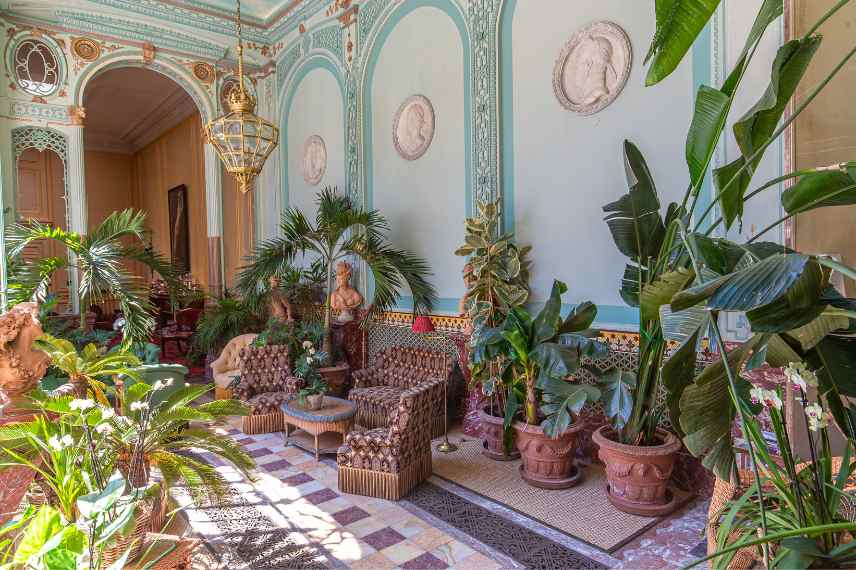
Jardin d’hiver of the Hôtel de la Païva, Paris
In England, conservatories became symbols of social status. These glassed-in spaces, often sumptuously decorated, allowed for the cultivation of plants year-round and provided a reception area for afternoon tea, even in winter. They would showcase multiple plants, evoking a jungle or a fantastical image of tropical forests.
Read also
Ideal indoor plants for a conservatoryThe functions of a conservatory
Heritage of aristocratic greenhouses and orangeries, the conservatory has become a symbol of well-being and reconnection with nature. Its little urban jungle vibe is even completely on-trend!
A distinct room in a house, the conservatory is a cocoon that allows for the gathering of tropical plants, orchids, and tender exotics for the winter, hence its name, while also providing a warm space to enjoy greenery, with light and sunshine streaming in through large windows.
Unlike the outdoor garden that goes dormant in winter, the conservatory remains green, lush, and usable even during the cold months. It creates a microclimate conducive to plant life. There are heated and unheated conservatories.
This room is often designed to be cosy, which we will discuss in the final part. People also come here to relax, read, or have a snack. The conservatory brings nature directly into the home, providing significant benefits, especially in winter when daylight decreases.
Note: Do not confuse this architecturally designed indoor ‘winter garden’ with the completely outdoor winter garden (highly sought after across the Channel), which features stunning winter scenes based on bark, evergreen plants, russet tones, fruiting, and grasses—another fascinating topic I cover here.
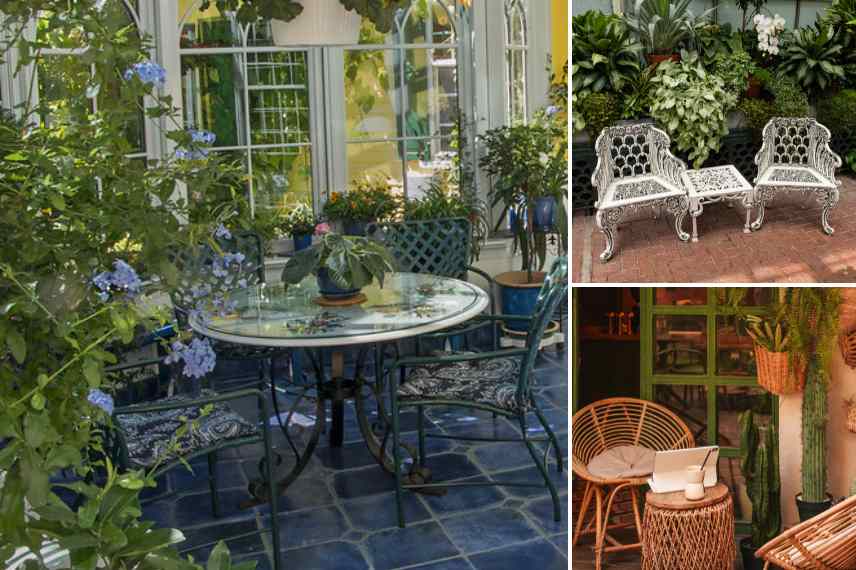
A profusion of plants and furniture create a unique space
What plants to install in a conservatory?
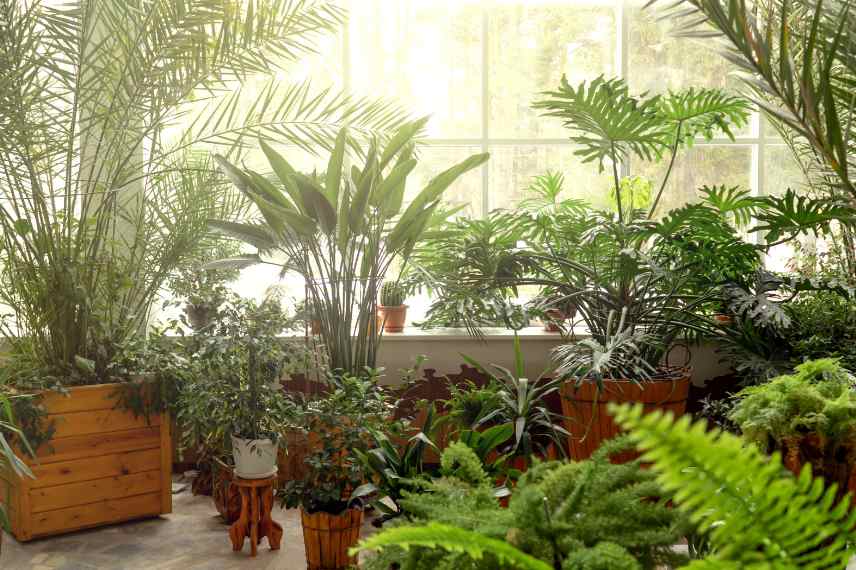
Unlike a greenhouse, plants grow entirely outdoors in the conservatory. This space is not dedicated to their production or cultivation (a function reserved for the greenhouse), but rather to their display, or even their wintering. We always try to accumulate plants to create a lush decor and atmosphere. The conservatory, with its abundance of plants, creates a microclimate conducive to plant life in the depths of winter, with potted plants protecting each other. It goes without saying that the plants that thrive here must be able to tolerate pot culture.
Important: if the conservatory is heated, you will need to consider plants that can withstand it, as many tropical plants require a sufficiently cool temperature to simulate their dormancy period: a maximum of 10 to 12°C.
Three types of plants should be considered:
Tropical plants
Tall plants with large foliage that we use indoors (bird of paradise, Monstera, palms like Chamaedorea or Kentia) coexist with smaller pots. For example, we might include some succulent plants or a Cycas revoluta, a Madeira geranium, or a few orchids (Phalaenopsis, Cymbidium). The advantage of a high roof often allows for the installation of larger plants like Andasonia, banana trees, or other traveller trees.
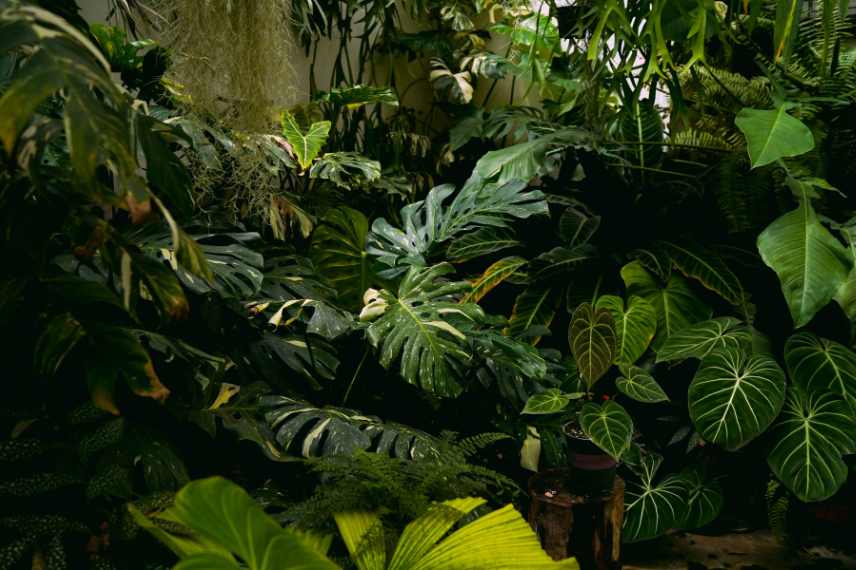
Extravagance of tropical plants in a large conservatory
Succulent plants
Aloes, cacti like Aeonium or prickly pear, agaves, and many other succulent plants. We bring them into the conservatory to protect them from the winter humidity, which, combined with the cold, is often fatal to them.
Climbing plants
The tropical climbers, which are not very hardy, also find an ideal space due to the generally significant height provided by the structure or the sloped glass roof: Tibouchina, tender jasmines like jasmine sambac, passionflowers, Hardenbergia violacea, etc.
***
The conservatory also serves to house plants that cannot survive outdoors in certain regions: plants grown in large pots, which are more sensitive, such as Brugmansia or Polygala, or a tree fern.
→ Check out our articles: How to winter non-hardy perennials?; Protecting Polygala from the cold: our wintering tips; Tibouchina: how to protect it from the cold and ensure successful wintering; Wintering a Cyperus papyrus.
Read also
Wintering plants in a conservatoryHow to arrange it? Where to install it?
The conservatory, unlike the greenhouse, is not a cultivation area and often becomes a space for relaxation. Its ideal exposure is a south-west or south-east orientation to benefit from maximum light in winter (but this greatly depends on the region: a north-west exposure is preferred in very sunny climates). It generally requires shading in summer, which should be considered during installation.
The idea is to make this room a warm and magnificent part of the home. One typically desires a conservatory that is aesthetic, abundant, and unique! Remember that plants are the main feature and furniture is merely an accessory. The style is usually exotic, incorporating some colonial codes such as ceiling fans, the use of wicker and rattan, or exotic woods in the seating. One might prefer a very “cocooning” spirit, or a distinctly Victorian influence with vintage-looking wrought iron furniture, or even a more minimalist Scandinavian style.
In a contemporary project, it can be envisioned as a living space and a unique architectural element, knowing that it is more suited to older atmospheres. Finally, like at Stéphane Marie’s, it can also be complemented by a table for various small indoor gardening tasks.
There are bound to be one or two seats (a bench, a large armchair, or a simple chair) where one can snuggle up surrounded by plants. Add a few cushions, a throw for winter days in unheated conservatories, and perhaps a beautiful kilim-style rug for a more bohemian atmosphere. A small table or high side tables also create a retro vibe and allow for installing trailing plants like indoor ferns. Let’s remember: plants take centre stage, and the furniture only enhances the tropical ambiance.
The conservatory itself comprises various materials: wood, brick, steel or aluminium, and glass. It is often associated with natural or raw materials such as wicker and wrought iron that warm the glazing.
Caring for plants in a conservatory: our tips
Several tips to keep your conservatory thriving all year round!
- Temperature: ideally, it should be between 15 and 25 °C during the day, and 10 to 15 °C at night. Avoid cold drafts and direct heat sources (radiators). In winter, protect sensitive plants by using supplementary heating if frost occurs, especially if the area is unheated and temperatures drop below 5 °C.
- Watering, although significantly reduced in winter, should be monitored and adjusted according to the different types of plants, which may suffer from a lack of moisture. Remember that some tropical plants—often with large leaves—receive regular rainfall.
- Ventilation becomes necessary as spring arrives and warm days begin. You should take out all or part of the plants as soon as the conservatory warms up on sunny days.
- Humidity conditions: a small item will also be very useful in this room: a hygrometer, which allows you to check and control the ambient humidity. Indeed, in a conservatory, you will often need to to recreate a tropical climate (using a humidifier, water basins, misting, etc.). Grouping the plants together greatly facilitates this.
- Rotation: regularly rotate the pots for homogeneous growth, just as you would do elsewhere in the house.
Learn more: How to water indoor green plants?; Taking plants outside in fine weather: all our tips.
- Subscribe!
- Contents
Comments