





























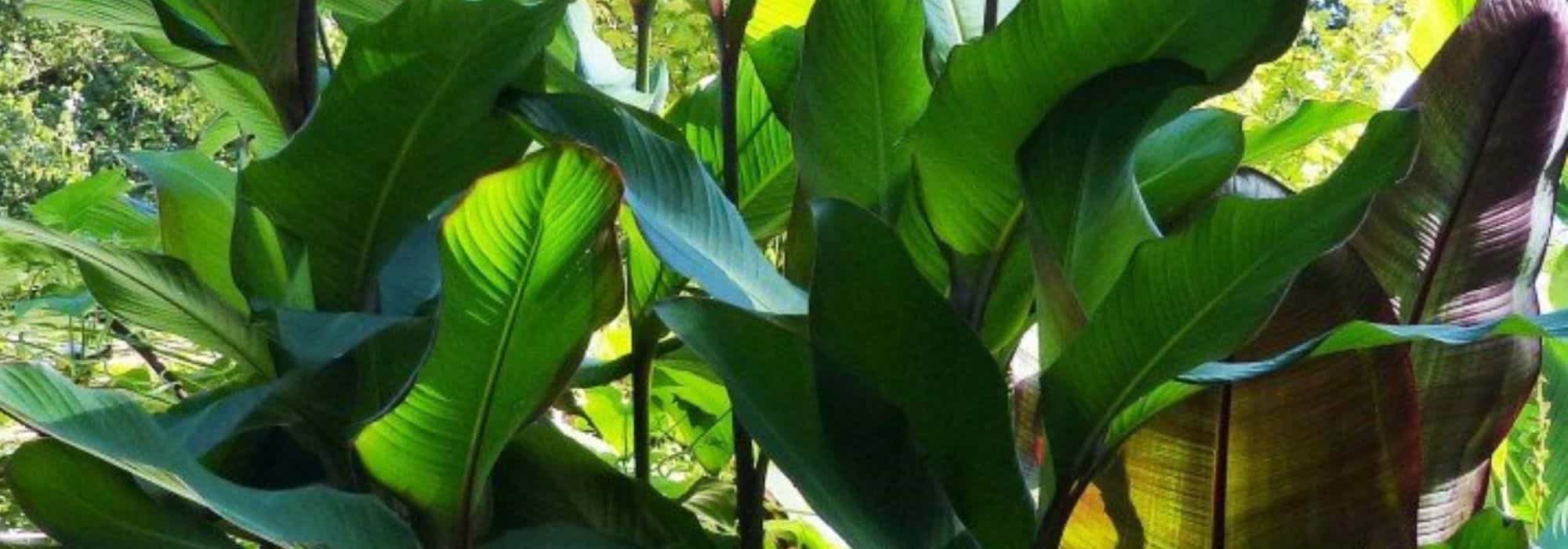
These remarkable plants will make your neighbours jealous!
Our varieties for a unique garden
Contents
The garden is often a reflection of the gardener who created it, but it isn’t always easy to stand out from those in the neighbourhood. You may be looking to add a touch of originality to your garden and impress your neighbours, friends or family, with unique or spectacular plants? Look no further! We have selected for you nine original or rare varieties, which will bring a touch of colour, fragrance or personality to your outdoor space.

Canna musifolia
Canna Musifolia is a spectacular perennial plant, which stands out from other cannas for its impressive size, reaching up to 2.8 metres in height. Its lush leaves, broad and elongated, bronze-green in colour with a purple margin, are particularly striking. They resemble banana leaves, hence its nickname of “banana-leaf Canna”.
It bears orange, almost red flowers in July–August, in mild-climate regions, grouped into dense, compact spikes at the top of the stem. In other, more temperate regions, it will be grown solely for the beauty of its foliage.
The Canna Musifolia is a fast-growing, easy-to-grow plant, which enjoys sun and a rich soil. It adapts to almost all regions and can tolerate temperatures down to -15°C with good mulching. Deciduous, it disappears at the first frosts only to reappear in the following spring.
Perfect for adding height to a border, this giant canna will pair beautifully with Dahlias (notably the variety ‘imperialis’ for its impressive size), a Kniphofia or an agapanthus.
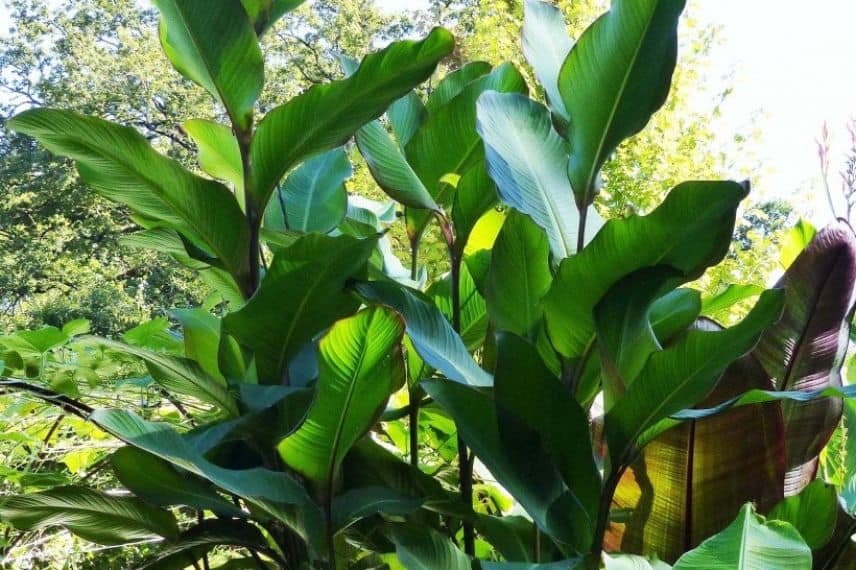
Canna Musifolia
Read also
7 Original Flowering ClematisGiant Ethiopian arum (Zantedeschia aethiopica 'Himalaya')
Zantedeschia aethiopica ‘Himalaya’, or more simply giant Ethiopian arum, stands out for its imposing stature, rising up to 1.20 m for its foliage and up to 2 m for its flowers. This perennial features a handsome, glossy, undulate foliage that is lance-shaped, dark green with white speckles, adding a spectacular touch to the garden.
From May to September, large white trumpet-shaped flowers appear, surrounding a pale yellow spadix. The flowers continue to appear throughout this long period as long as the soil remains sufficiently moist. To thrive, it needs moist, fertile soil and a sunny to partial-shade exposure depending on the climate. Deciduous and hardy down to -7°C; you should protect its stump with a good mulch in winter, or grow it in a large pot to overwinter.
This arum is perfect for edging the margins of water features, contemporary or exotic gardens, alongside the peonies, the daylilies, the larkspur and lovely ferns.
Note: Arums are toxic if ingested and require precautions in a garden accessible to children, such as planting at the back of a border to be out of reach.
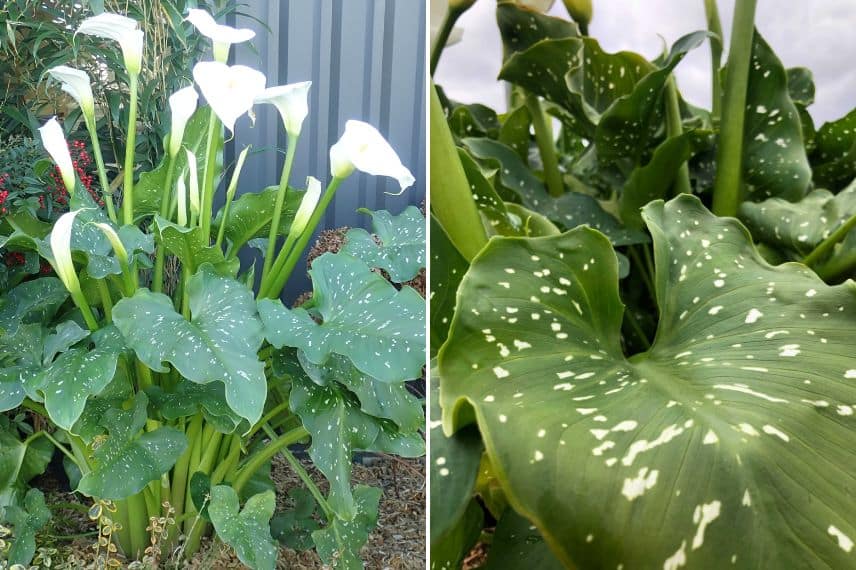
Giant Ethiopian arum (Zantedeschia aethiopica ‘Himalaya’)
Colocasia 'Pink China'
The Colocasia ‘Pink China’, also known as Elephant Ear, stands out from other varieties for its good hardiness and its ability to withstand temperatures well below -12°C.
This prolific variety, native to tropical regions, is characterised by its bright pink petioles and its large green leaves with bluish tints and slightly pruinose.
Ideal for cool, damp climates, this Colocasia reaches a height of about 1.25 metres, with a spread of 90 cm at maturity, offering elongated heart-shaped foliage.
Along with its beauty, this perennial is easy to grow, in the ground or in a pot, preferring cool, moist soils as well as sunny to semi-shaded positions. It fits perfectly into an urban garden, on a terrace or near a water feature, and pairs harmoniously with cannas, arums and banana trees.
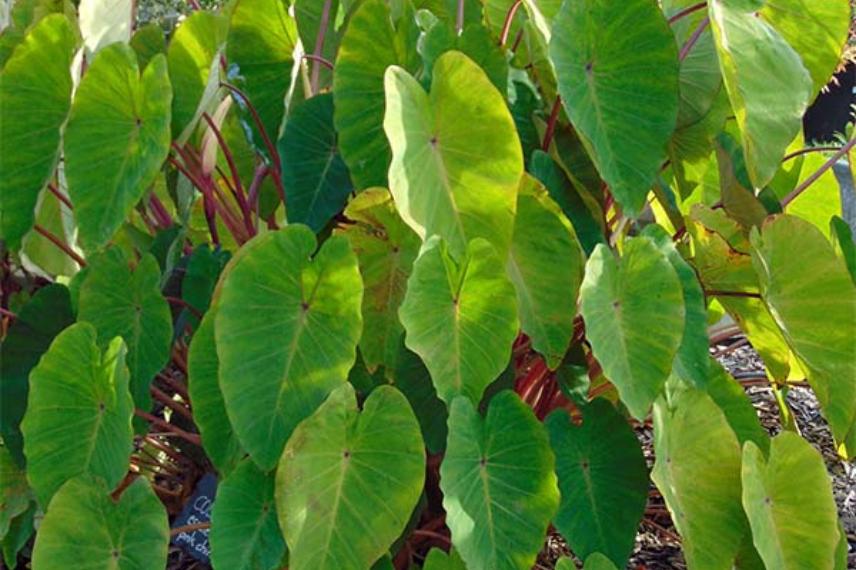
Colocasia ‘Pink China’
Read also
Amaryllis: 9 original varietiesAgapanthus hybrid 'Fireworks'
Agapanthus ‘Fireworks’ is a remarkable variety that stands out for its spectacular two-tone umbels, with trumpet-shaped flowers, blue at the base turning to pure white at the tip.
This plant, semi-evergreen and relatively hardy, tolerates temperatures down to -10 to -12°C. Its flowers form large umbels in summer (June to August) on short, sturdy stems that resist wind well. Compact and floriferous, it reaches about 60 cm in height and thrives with linear, glossy dark-green foliage.
Perfect for planting along a terrace border or in a bed, it is also well suited to container culture on a balcony or terrace. Agapanthus ‘Fireworks’ adapts easily to full sun in ordinary, well-drained soil, not becoming too dry in summer.
It blends well into exotic-plant borders as well as more minimalist schemes, pairing harmoniously with other agapanthus varieties as well as Kniphofias, daylilies, grasses and Cannas.
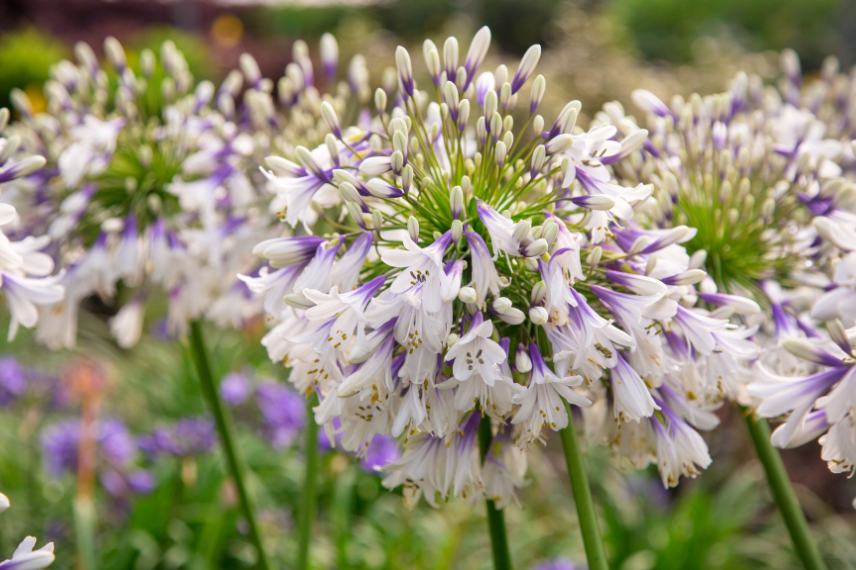
Agapanthus ‘Fireworks’
Cornus florida 'Urbiniana'
The Cornus florida ‘Urbiniana’, also known as Mexican flowering dogwood, is a rare species native to the montane forests of eastern Mexico. What makes it distinctive is its spring flowering, which is characterised by small green flowers discreetly surrounded by white bracts, curved and attached at their tips, resembling Chinese lanterns.
This small tree, which can reach up to 8 metres tall, is prized for its slender habit. In autumn, the foliage of this Cornus turns to stunning burgundy-red hues before falling, thereby prolonging its decorative appeal.
Suitable for small gardens, the ‘Urbiniana’ dogwood thrives in cool, acidic soil where it enjoys a sunny position, sheltered from strong winds and late frosts. Its medium hardiness allows it to withstand temperatures down to -12°C.
This dogwood is ideal for a variety of garden styles, from the white garden to contemporary, including the English cottage garden and small urban gardens. For a harmonious display, it can be paired with a Hydrangea paniculata ‘Great Star’ as well as other white or pink perennials and ericaceous shrubs.
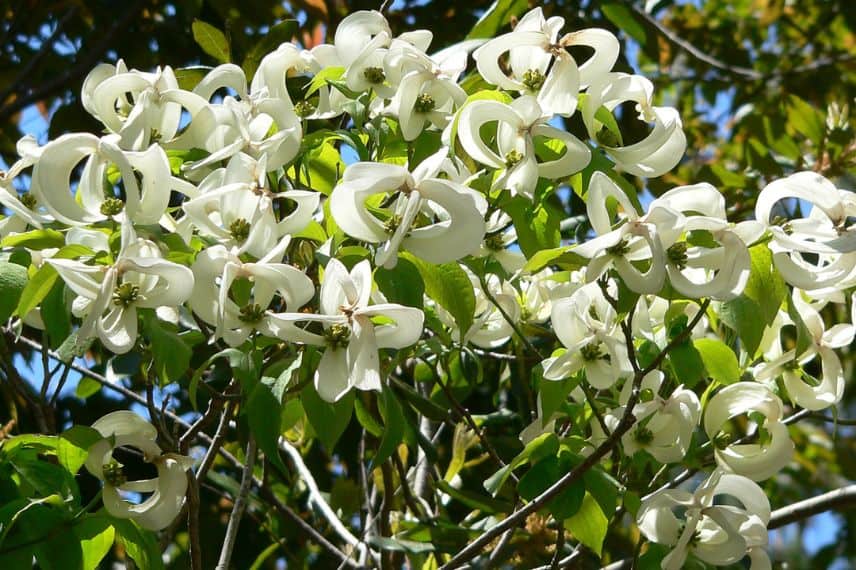 Cornus florida ‘Urbiniana’
Hollyhock 'Chater's Double Salmon' (Alcea rosea 'Chater's Double Salmon')
Alcea rosea ‘Chater’s Double Salmon’ is a hollyhock variety that captivates with its romantic and abundant flowering. Throughout the summer, tall flowering spikes rise, topped with very double, undulated pom-pom flowers in a soft salmon-pink shade, both gentle and warm.
In addition to its visual appeal, this hollyhock also attracts bees and butterflies thanks to its extended flowering from June to September.
The flowers are then followed by seed-bearing fruits that self-seed wherever they please, adding a wild and natural look to the garden.
Reaching well over 2 metres in height, this perennial plant, often grown as biennial, is perfect for the back of borders or for brightening the walls of walled gardens.
Very easy to grow, it thrives in poor, stony, or clay soils. It is also drought-tolerant and prefers hot, sheltered spots away from strong winds, such as leaning against a wall or a hedge.
Perfect for English cottage or country gardens, the soft shade of this variety pairs well with plants in dark or light tones. It can be paired, for example, with yarrow and Agastache ‘Summer Sunset’.
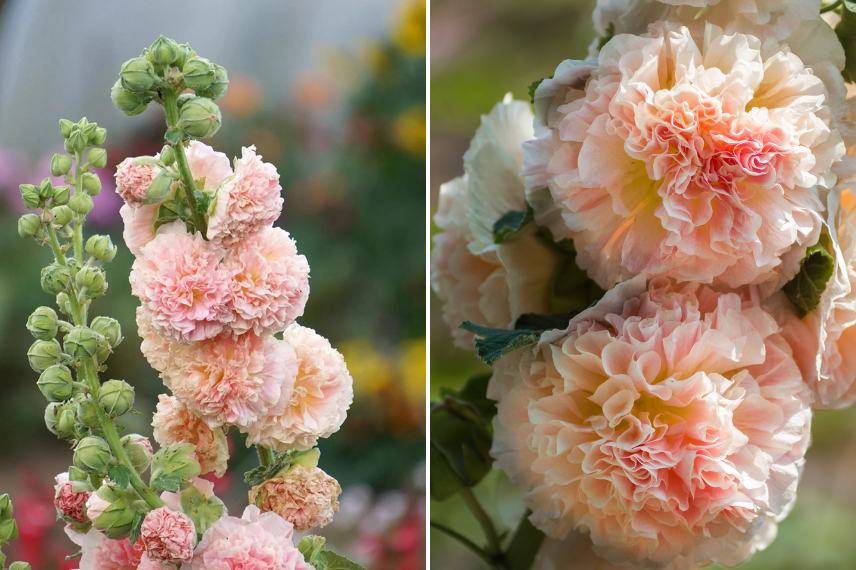 Alcea rosea ‘Chater’s Double Salmon’
Clematis 'Taiga'
Clematis ‘Taiga’ is a relatively new variety, awarded at Plantarium 2016 for its spectacular flowering. From summer to autumn, this variety produces large, very double flowers, whose structure resembles cactus dahlias. This climbing, perennial plant reaches a maximum height of 2.5 metres and spreads over about 1 square metre. Its short, reddish stems support deciduous leaves, green, sometimes tinged with purple.
The flowers open gradually in three stages from a pale green central bud, evolving towards incurved blue-violet petals which end in green tips. Then, gradually, the flowers take on purple and cream-pink tinges.
Thanks to its compact size, Clematis ‘Taiga’ is ideal for small gardens, exterior walls, pergolas, or even in pots on balconies or by front doors. Easy to grow, it prefers a sunny to partly shaded location. As with all clematis, its roots should be shaded, ideally by groundcover plants, such as hardy geraniums. This clematis adds a touch of originality, proving robust and easily adaptable to a range of environments.
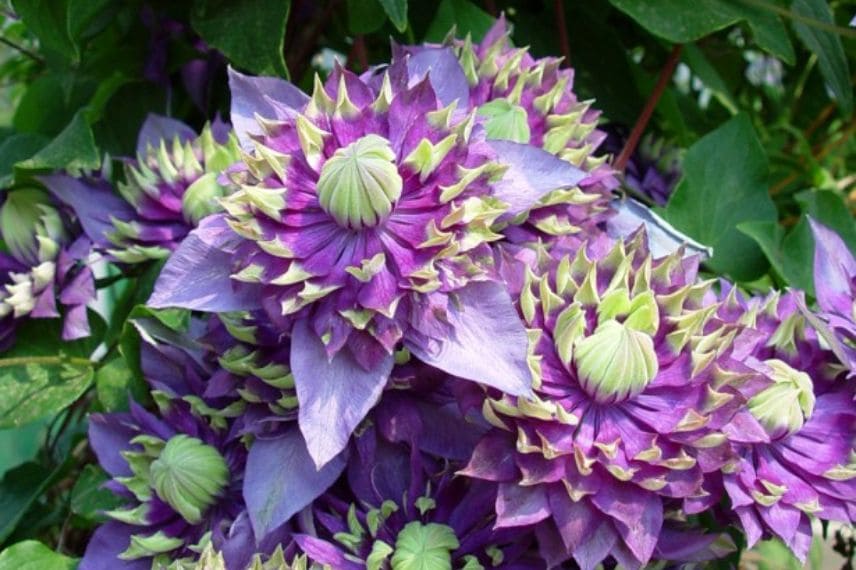 Clematis ‘Taiga'</caption]
Hemerocallis 'Destined to See'
The Hemerocallis ‘Destined to See’ is a remarkable new variety that distinguishes itself by its large fragrant flowers and long flowering period. The cream-white petals of this perennial are beautifully accented by a violet eye and a chartreuse green throat, all framed by crinkled margins outlined by a fine purple edging. Each sturdy stem can produce up to 12 buds, ensuring abundant flowering from July to August.
This plant forms a clump reaching 75 cm in height with a 50 cm spread. Its linear and evergreen foliage provides a green backdrop year-round. Resistant and easy to grow, Hemerocallis ‘Destined to See’ adapts well to both partial shade and sun and can withstand temperatures as low as -29°C. The edible flowers add a touch of colour and flavour to salads and desserts.
Perfect in borders, this variety is also ideal for large pots on balconies and terraces, bringing serenity and beauty wherever it is planted. Pair it with other summer-flowering bulbs and add a touch of movement or lightness by incorporating a grass with a soft habit.
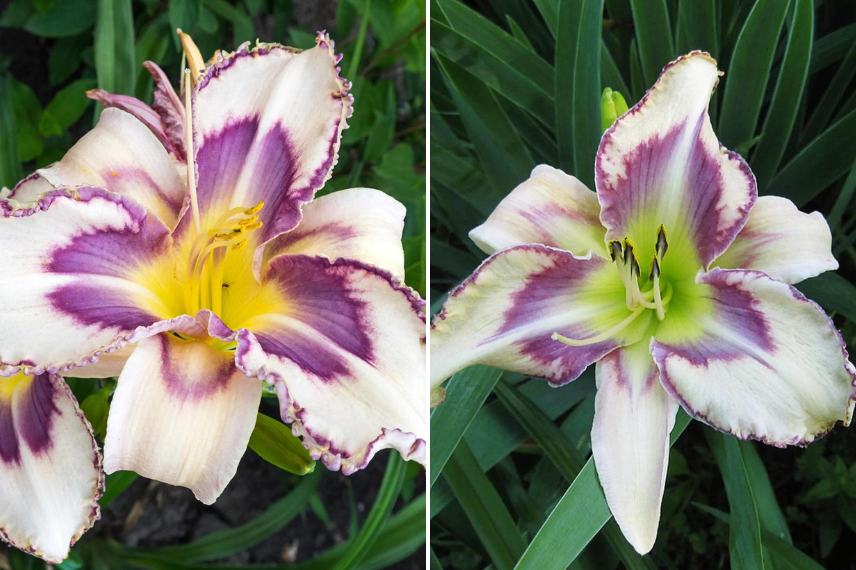
Hemerocallis ‘Destined to See’
Echium fastuosum (candicans) - Madeira viper's-bugloss
Echium fastuosumEchium fastuosum, also known as Echium candicans or Madeiran viper’s-bugloss, is a hardy perennial plant with an exotic and spectacular appearance, native to Madeira. It grows rapidly over two to three seasons into a broad shrub 1.5 m tall by about 3 m wide.
Its greenish-grey villous foliage is topped in spring by magnificent dense flower spikes, ranging from sapphire blue to blue-violet, attracting an abundance of pollinating insects.
Although not particularly hardy, this viper’s-bugloss withstands temperatures down to -2°C, provided the soil is perfectly drained. As you will have gathered, Madeiran viper’s-bugloss is grown in warm climates or in very large pots that can be moved indoors in winter. It enjoys sunny exposures and poor, calcareous, and arid soils, making it ideal for seaside gardens and large rockeries.
Its ability to reseed spontaneously and its 5–7-year lifespan make it a durable, low-maintenance addition for Mediterranean gardens. It pairs harmoniously with plants such as bushy salvias or an Aloe arborescens to create colourful, drought-tolerant displays.
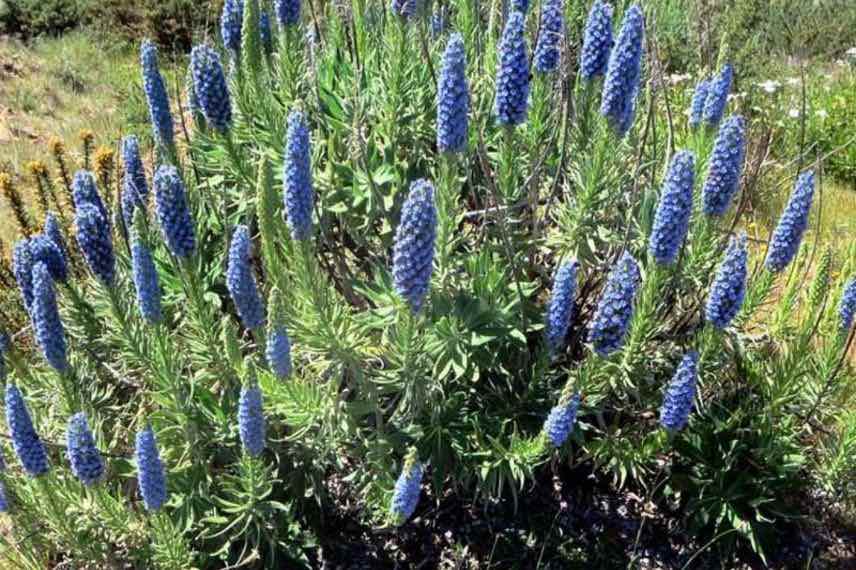
Echium fastuosum
- Subscribe!
- Contents
Comments