





























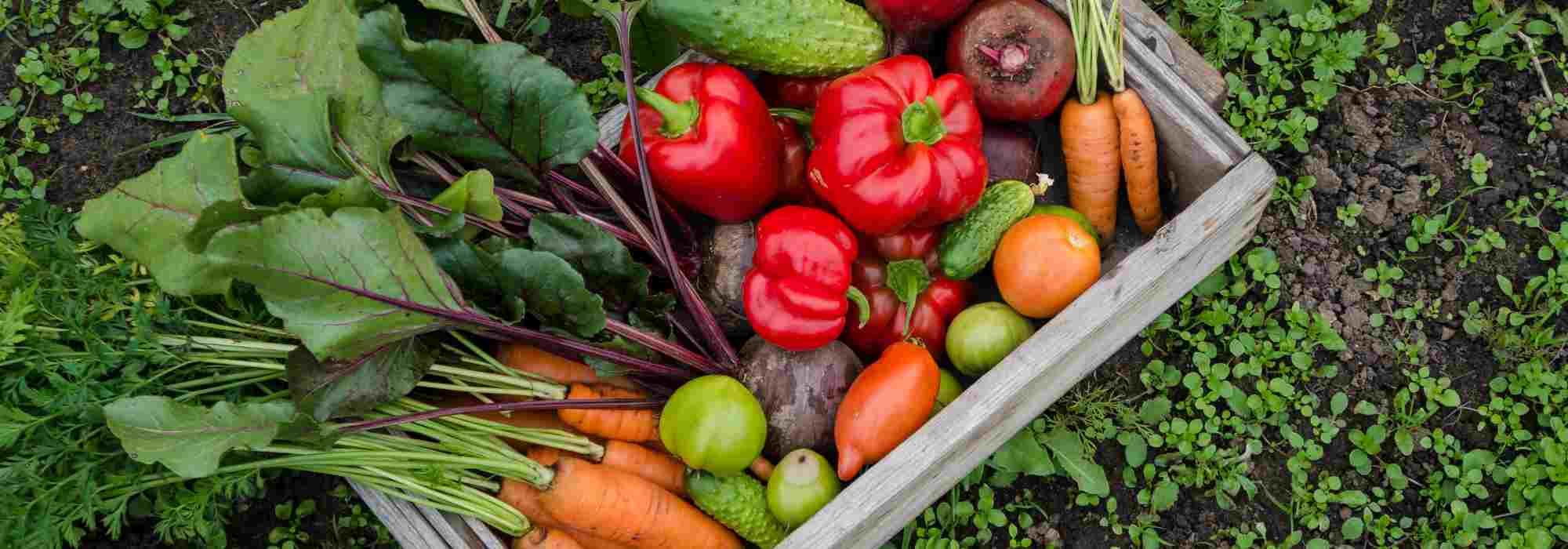
Growing a vegetable garden without water: utopia or reality?
Our tips for a productive vegetable garden with little to no watering (or almost none)
Contents
Whoever grows their own vegetable garden or takes an interest in gardening will almost certainly have watched videos online in which gardeners or market gardeners produce their vegetables without watering throughout the entire summer. Logically, these videos are striking as climate change and climate disruption gain ground year after year, decade after decade. Summer after summer, heatwaves follow one another, and drought is spreading everywhere, including in regions traditionally less affected. They are especially striking because all gardeners often despair at their vegetables or fruit, completely scorched by the sun. But what should one think of these videos? Can the methods and cultivation techniques promoted by these gardeners or market gardeners really be applied, such as Pascal Poot, Thierry Belsack or Marc Mascetti?
Discover all our tips for growing your vegetable garden without water, or with barely any water, in the style of these “stars” of the online gardening world, but adapting to your soil, your region, and your possibilities… That said, we still encourage you to expand your rainwater-harvesting systems to provide a reliable supply of water for dry, hot summers.

Is it possible to grow your vegetable garden without water?
Cultivating a vegetable garden without water is, in my humble opinion, a ‘lie’, or rather a publicity stunt to generate buzz on social media. Indeed, Whichever region this vegetable garden is located in, it will always benefit from a few summer storms that will nevertheless water the soil. This rain, even when scarce, will always be welcome in a garden. That is why it is essential to install rainwater harvesting systems in your vegetable garden to build reserves from spring. And even the slightest storm will fill these tanks again.
Nevertheless, the advice of Pascal Poot, seed producer based in Hérault, Thierry Belsack, owner of Potager d’antan in the Puy-de-Dôme, and Marc Mascetti, a market gardener in Essonne in the Île-de-France region, is not without interest. Provided you take a balanced view. Indeed, each of these gardeners has adapted to their soil, climate and region… which is not necessarily the same as yours. Thus, it will be much easier to reduce or stop watering in clayey or marly soils, which retain water more easily than sandy soils. Next, The rainfall varies considerably from one region to another. So these tips may hold for a particular locality, but it’s difficult to make a generalisation.
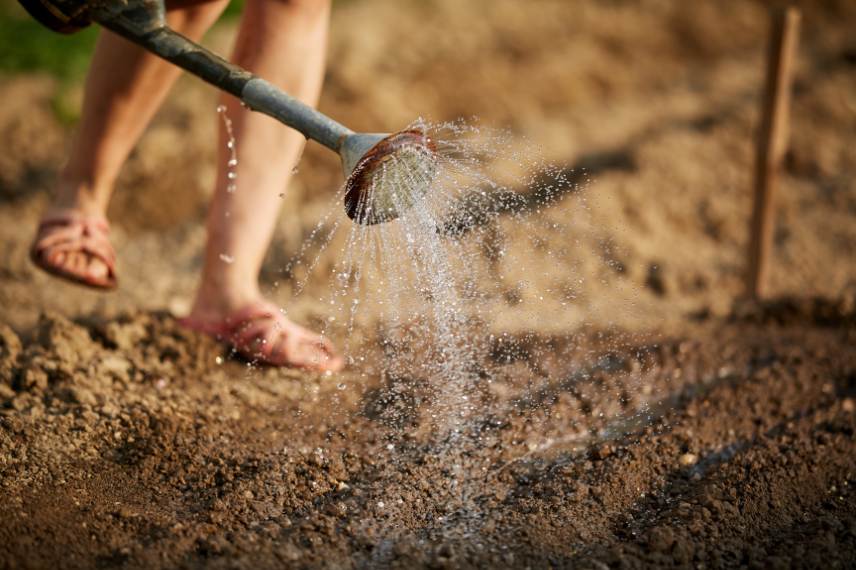
Growing vegetables in your vegetable garden without water — is it really possible?
Finally, and above all, these gardening methods require time and patience. It would be vain to think that, this summer, by depriving your vegetable plants of water, you will obtain magnificent and delicious vegetables. You will indeed need time to enrich and structure your soil so that root systems can develop there in order to access water and nutrients. And also a little time to harvest your own seeds, then sow them in your vegetable garden year after year, before these seeds acclimatise to your local conditions. Finally, forget the idea of treating your vegetables as ‘lazy’ because I’m not sure they understand and accept your point of view. And rest assured, you are not by any means a lazy person either!
Nevertheless, it is perfectly possible to pick up a few ideas and tips from either of these specialists to adapt them to your own vegetable garden. A matter of common sense!
Shade and protect your vegetable garden to reduce water needs
In a sun-blasted vegetable garden, the soil dries out very quickly and some vegetable plants, such as lettuces and radishes, will have great difficulty developing. Other vegetables may suffer from water stress due to excessive evapotranspiration. In short, during heatwaves and under a blistering sun, vegetables suffer, stagnate or halt their growth.
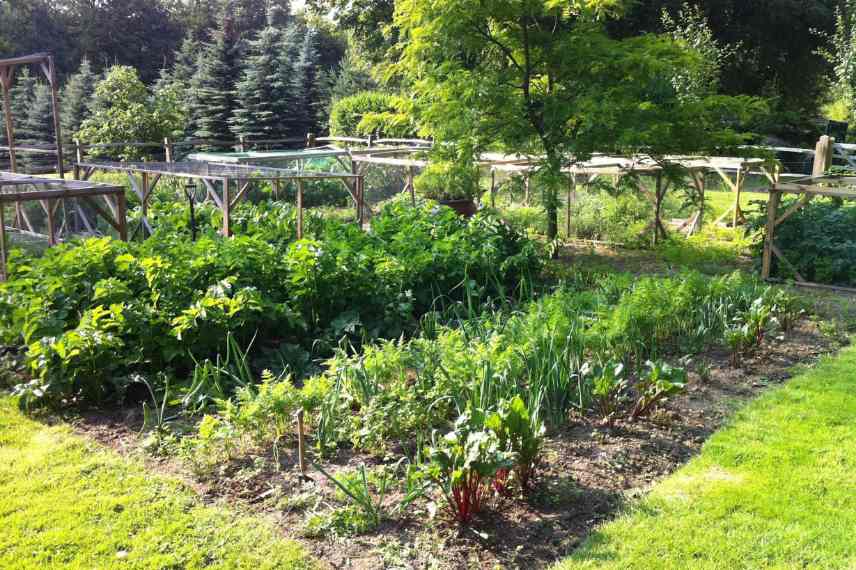
Shade helps vegetables withstand the heat, as evapotranspiration is lower
That is why it may be wise to provide some shade for the vegetable garden to limit the heat and thus water use. And this can be temporary or permanent. The solutions are varied: installation of artificial structures such as shade sails, parasols, stretched fabrics, creation of a pergola or an arbour, possibly covered with a cane screen, or hardy, drought-tolerant plants such as a vine or a five-leaf akebia (Akebia quinata), or further planting of annuals that grow tall (a sweetcorn, sorghum, Jerusalem artichoke, sunflower…). In the longer term, one can also consider planting deciduous-leaved shrubs or fruit trees to form a hedge. You can thus favour native species whose fallen leaves will feed the soil in autumn. Planted as a hedge, these shrubs will also help to shield the soil from drying winds.
For more information, I invite you to consult my article: Shading the vegetable garden and its vegetables in summer. All the tips for creating shade in the garden during a heatwave.
Prepare, enrich and aerate the soil
A poor soil will not retain rainwater, which will run off and raise the groundwater table to the detriment of your vegetables. By contrast, a rich and fertile soil becomes more permeable and retains water more easily. Therefore, to limit water needs, you must absolutely enrich your soil. Hence, in living soil, a thriving microbial life develops that works for you by feeding on and transforming the organic matter you add into humus. All this activity thus enables vegetable plants to draw from this fertile soil everything they need, water and nutrients.
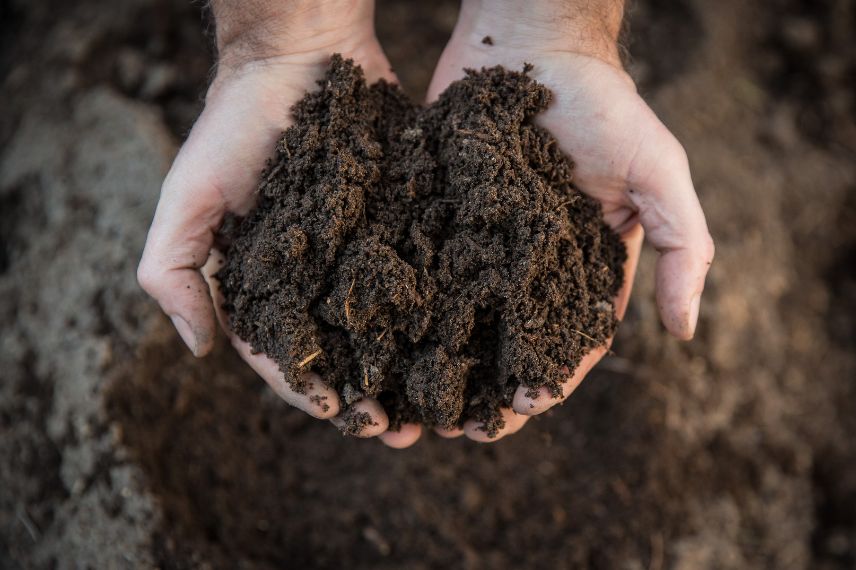
A rich, loose and well-aerated soil is a guarantee of water savings
That is why, to limit watering as much as possible, you need a rich and living soil, loose and aerated. That is why it is essential to work the soil gently to decompact it in order to promote the penetration of even the slightest drop of rain. To aerate the soil, the use of a biofork (or grelinette®) is ideal, but fork cultivation can also be very beneficial. And to enrich it, compost aplenty! The addition of manure can also be recommended, just as sowing green manures has its merits.
For more information:
- How to naturally improve yields in your vegetable garden? All our tips to enrich your vegetable garden
- When and how to use manure in the vegetable garden?
- Green manures: everything you need to know!
Read also
Watering the vegetable garden: our tipsMulch generously to retain moisture
Mulching! The key to the fight against drought. We can never praise enough the advantages of mulching, whose main function is to maintain a certain level of moisture, and thus to limit, or even remove, the water inputs. Provided that a thick layer is formed from a mulch based on organic materials recovered from within the vegetable garden or ornamental garden. Thus, Thierry Belsack, the gardener from Puy-de-Dôme, covers his soil with a thick layer of mulch from September onwards.
This mulch consists of various organic and natural wastes such as lawn clippings, hay and straw, dead leaves, green waste from vegetable crops, twigs and shredded branches from pruning fruit trees, free from diseases, and from shrubs. It is also possible to include adventive weeds that will be pulled up before seeding and left on site, or nettle or comfrey shoots that will have the merit of giving the soil a boost.
To be fully effective at limiting evapotranspiration, this mulch must be carefully balanced between dry, carbon-rich materials and moist, nitrogen-rich materials. This protective and beneficial layer is at least 40 cm thick and spread from September to October. It is continually enriched by additions of organic matter. Winter then does its work. When spring comes, simply move aside this layer of mulch to sow or even plant vegetables.
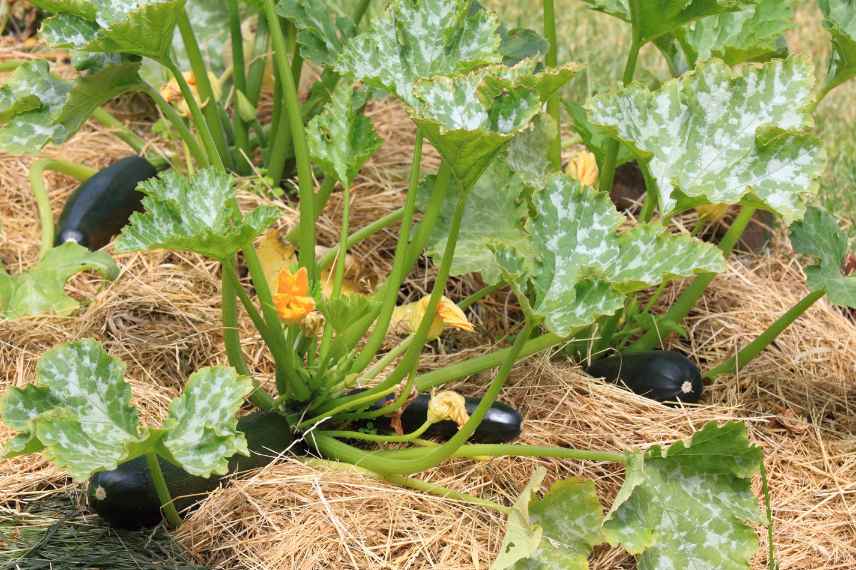
Thick mulch helps retain soil moisture
This thick mulch has the merit of considerably reducing surface evaporation. Under the mulch, the soil remains moist, loose and airy. Likewise, this layer of accumulated organic matter will promote soil life, making it more permeable. The slightest shower is then stored and available for the vegetables.
Further reading:
Select water-efficient vegetable plants.
Logically, to grow a water-wise vegetable garden, you should avoid the most water-hungry vegetables such as cucumbers, melons and watermelons, aubergines, the courgettes and squashes, the radishes, lettuce, the tomatoes… This is also an opportunity to try other vegetables such as chickpeas, Jerusalem artichokes, purslane or Peruvian oxalis. But it is still difficult to skip a good ratatouille in summer!
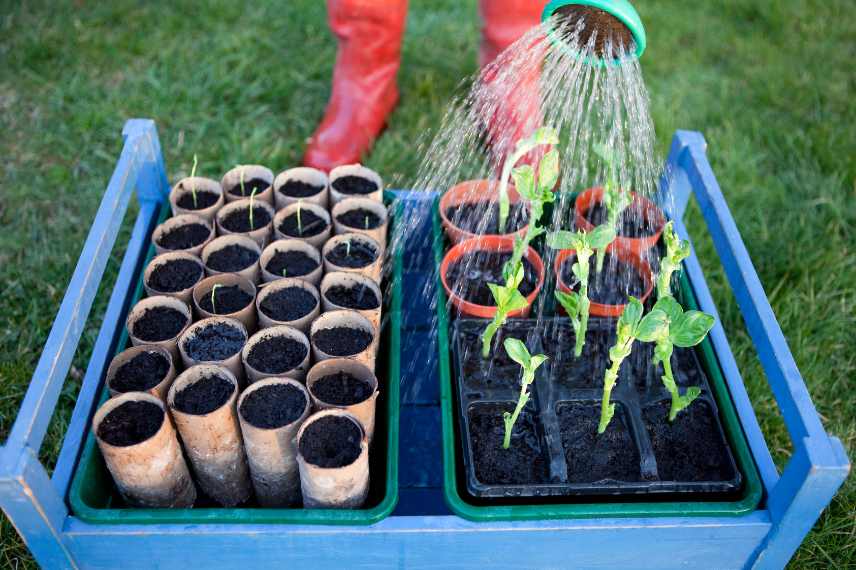
Doing your own seed sowings allows you to grow your vegetables with less water
That is why some gardeners, social media enthusiasts, make their own seed sowings of vegetable seeds, by favouring the regional varieties or heritage varieties of vegetables and banning F1 hybrid seeds, not true-to-type. From year to year, the seeds are harvested to be sown in the following season. Thus, vegetable varieties adapt themselves to climatic conditions, the soil, and the terroir…
By contrast, seed sowings are watered regularly. Then the seedlings are transplanted into open ground with a good mulch, and watered well one final time. And then, all that remains is to watch them grow… or so. And to wait for a little rain… or so.
- Subscribe!
- Contents
Comments