





























Top 10 ornamental grasses for heavy clay soil
Our selection
Contents
In the garden, soil type largely dictates plant choices. Fancy a swathe of soft, light grasses swaying in the breeze? But unfortunately, your garden and you have feet planted in sticky, spongy, heavy soil, and almost unforgiving. Don’t panic*! (no pun intended…): there are plenty of grasses perfectly suited to these conditions. In this practical guide, you’ll discover a selection of grasses that flourish not only in heavy, clay soils, but also add texture, colour and dynamism to your garden.
Oliver’s little note : grasses, in botanical terms, refer to plants in the Poaceae family (wheat, barley, maize, Miscanthus, Pennisetum, Stipa…). But in gardening terms, grasses cover a broader area: including members of the Poaceae family, but also Juncaceae (rushes and woodrushes), Cyperaceae (Carex and other sedges) or Acoraceae, in the case of Acorus. So, for purists among us, don’t get your hair standing on end; for the garden we tend to cast a wide net (but that doesn’t mean you should go messing with botanical classification!).
*Panic is also the name of a grass. This little joke is, alas, appreciated only by a small number of seasoned gardeners. You have been warned.

The challenges of heavy soil for grasses
The problem with heavy, clay soil lies mainly in its poor drainage and tendency to compact easily. This type of soil retains water for longer, which can lead to waterlogging and, consequently, a lack of oxygen for the plant roots, including grasses. This can cause root diseases, or even plant rot.
In addition, clay soils are often more acidic, which can limit the availability of essential nutrients for grasses. The compact texture of this type of soil also makes root development difficult, which can lead to shallow rooting and therefore greater sensitivity to temperature and moisture fluctuations.
The lack of drainage and soil compaction can also make soil cultivation more arduous, requiring regular amendments to improve its structure. Gardeners often need to invest extra time and resources to condition the soil before even thinking about planting.
However, it is entirely possible to grow grasses in heavy, clay soils by selecting suitable species.
Read also
Grasses: which variety to choose?Miscanthus
Miscanthus, also known as Chinese reed, eulalia, or elephant grass, is an ornamental grass that has the merit of adapting to a wide range of soil conditions, including heavy and clay soils. This grass is particularly valued for its resilience and versatility. It can therefore be an ideal option for gardeners who have to work with less-than-perfect soil.
Among the Miscanthus varieties that stand out, one can cite the Miscanthus sinensis ‘Gracillimus’, renowned for its fine leaves and elegant habit. There is also the Miscanthus sinensis ‘Morning Light’, prized for its variegated foliage that beautifully catches the light. These varieties have the ability to thrive in heavy, clay soils, although like all grasses, they will appreciate a well-amended and well-drained soil.
One of the advantages of Miscanthus in heavy, clay soils is its ability to improve soil structure over time. Its deep roots help to aerate the soil, which can benefit other plants grown nearby. Moreover, its tolerance of nutrient-poor soils makes Chinese reed an ideal grass for these challenging soils.
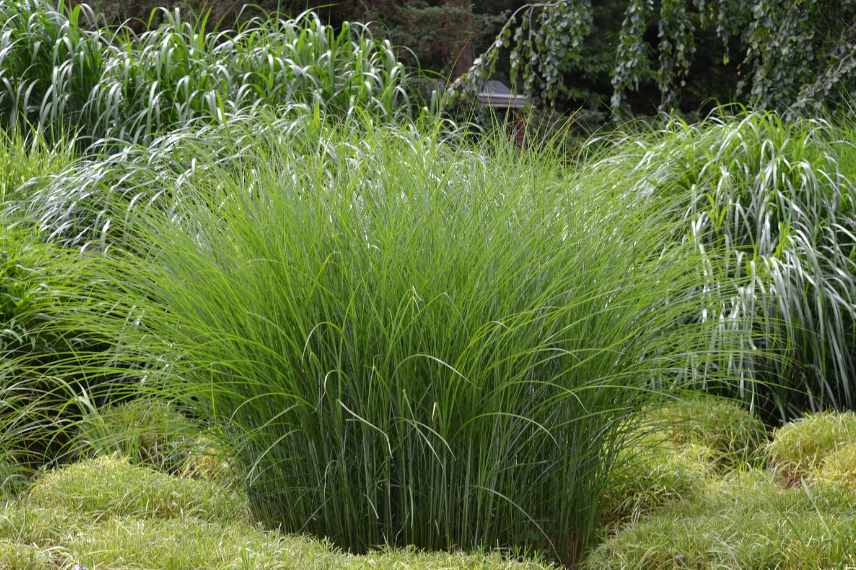
Miscanthus sinensis ‘Gracillimus’
Acorus
Acorus calamus, often referred to as the sweet-scented flag or calamus, is another remarkable plant for gardens with heavy clay soils. Adapted to wet conditions and even marshy sites, this plant finds a perfect fit in environments where drainage is a challenge. Acorus gramineus or Japanese sweet flag, in particular, is a species that stands out for its great adaptability. With its strap-shaped foliage and tolerance of shade, this species proves to be an excellent choice for gardens with wet areas or clay soils.
Acorus gramineus ‘Ogon’, with golden, bright foliage, is particularly attractive and can add a splash of colour to your garden. The contrast it creates with darker-leaved plants can be visually striking. Moreover, this variety is appreciated for its low-maintenance nature, making it accessible to gardeners of all levels.
One of the most notable qualities of Acorus in heavy, clay soils is its ability to improve soil quality. Its roots help break up compaction, thereby promoting better movement of water and air. This can benefit not only the Acorus itself, but also other plants in the garden.
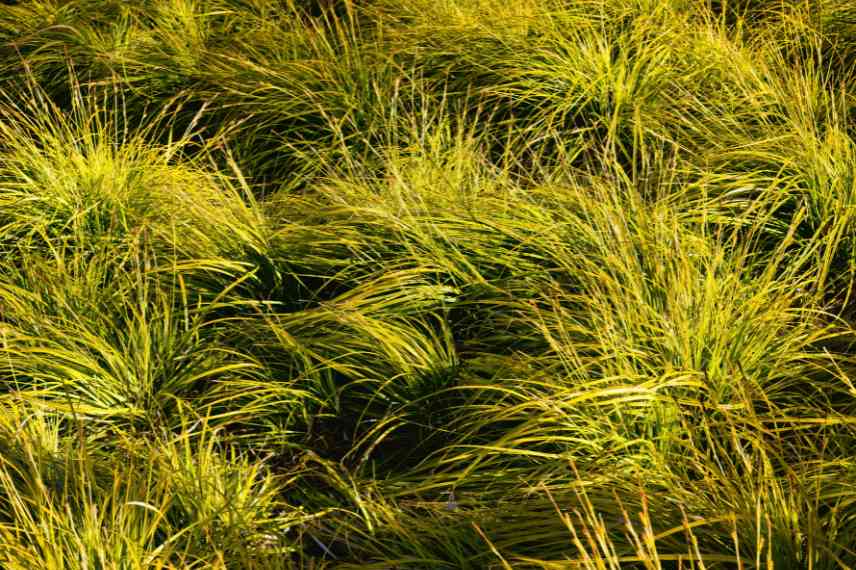 Acorus gramineus ‘Aiton’
Read also
6 grasses for a North-facing gardenThe Feather reed grass
The Calamagrostis brachytricha or feather reed grass is an ornamental grass that stands out for its robustness and ability to adapt to a range of soil conditions, including heavy and clay soils. Native to Asia, this plant offers a fine texture and silvery or pink plumes that form in late summer and last all winter. In addition, Diamond Grass derives its name from the unique way its feathery inflorescences catch the light in dew or after rain.
Unlike some other grasses, Calamagrostis brachytricha is relatively tolerant of soil types. This grass prefers well-drained soils, but its tolerance of heavier, clay soils makes it a viable option for gardens facing such a challenge.
One of the standout features of this grass is its dense green foliage, which creates a striking contrast with the plumes when they appear. Diamond Grass also adds an interesting dynamic to the garden with a height of up to around one metre, giving a sense of volume and depth to the space.
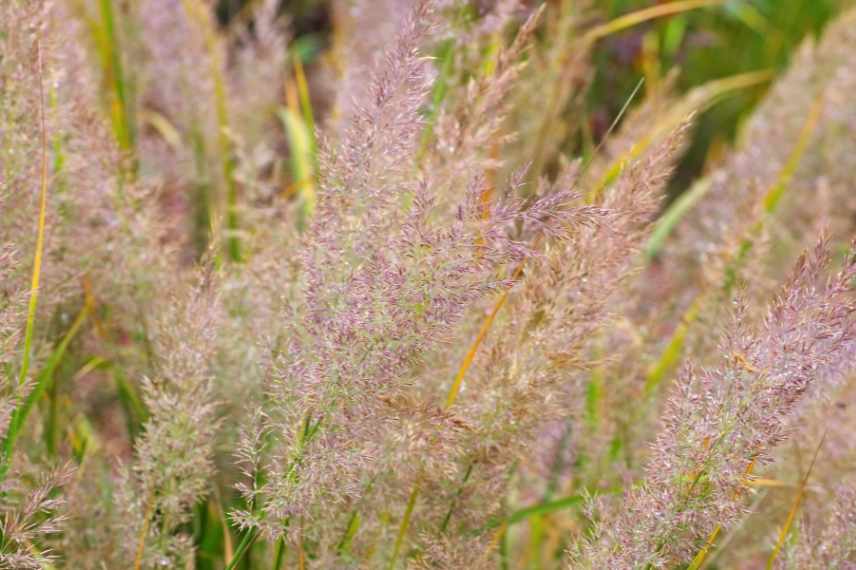
Calamagrostis brachytricha
Tufted hair grass
The tufted hair grass, by its Latin name Deschampsia cespitosa,is a perennial grass well suited to heavy and clay soils. Native to Europe, including France and Belgium, this grass is appreciated for its tufted habit and evergreen foliage. It offers light and airy inflorescences, often gold- or silver-coloured, which provide a fascinating visual contrast in the garden.
Resistant to varied climatic conditions and soils less than ideal, the Canche cespiteuse is a durable option for those looking to enhance gardens in clay soils, in sun or in partial shade. It is particularly valuable in gardens where drainage may pose a problem, as it is fairly tolerant of moisture and poorly drained soils, even in winter. In addition, this grass can help stabilise the soil.
Among notable varieties, Deschampsia cespitosa ‘Goldtau’ stands out for its golden inflorescences that add a bright touch of colour to any garden. Its ornamental appearance combined with its robustness makes it an ideal candidate for gardens where conditions are challenging.
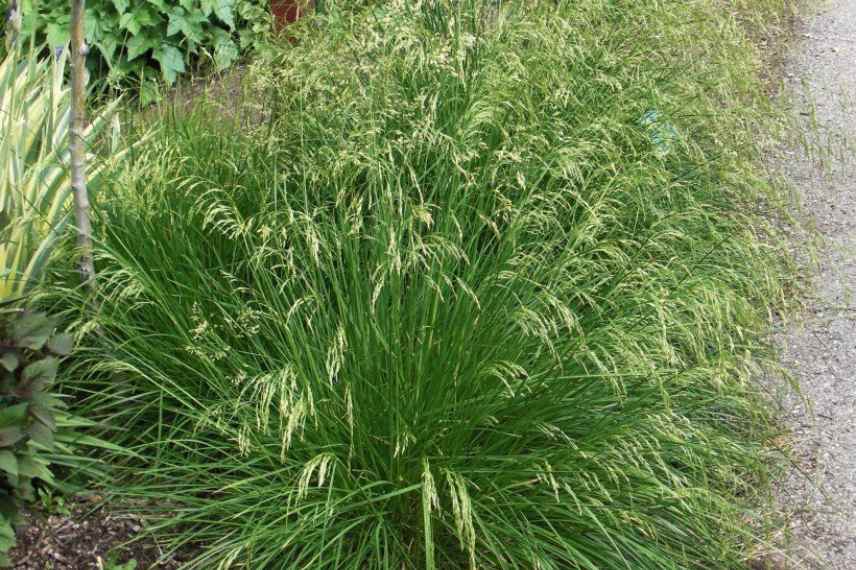
Deschampsia cespitosa ‘Goldtau’ (©Andrey Zharkikh)
Japanese grass
Hakonechloa macra, often called Japanese forest grass, is an ornamental grass distinguished by its delicate foliage and a trailing habit. Native to the mountainous regions of Japan, this grass generally prefers moist but well-drained soil. However, it can adapt to a range of soil conditions, including slightly heavy and clay soils, especially if steps are taken to improve drainage, such as adding compost at planting.
Hakonechloa macra ‘Aureola’ is a particularly popular variety with its variegated green and gold foliage. It can add a touch of light to shaded areas in a garden and pairs well with plants with darker foliage.
Japanese forest grass is often used for its texture and its ability to create a sense of movement in the garden thanks to its trailing habit. This grass is therefore ideal for adding an interesting dynamic to a garden, while bringing a small Japanese-inspired touch.
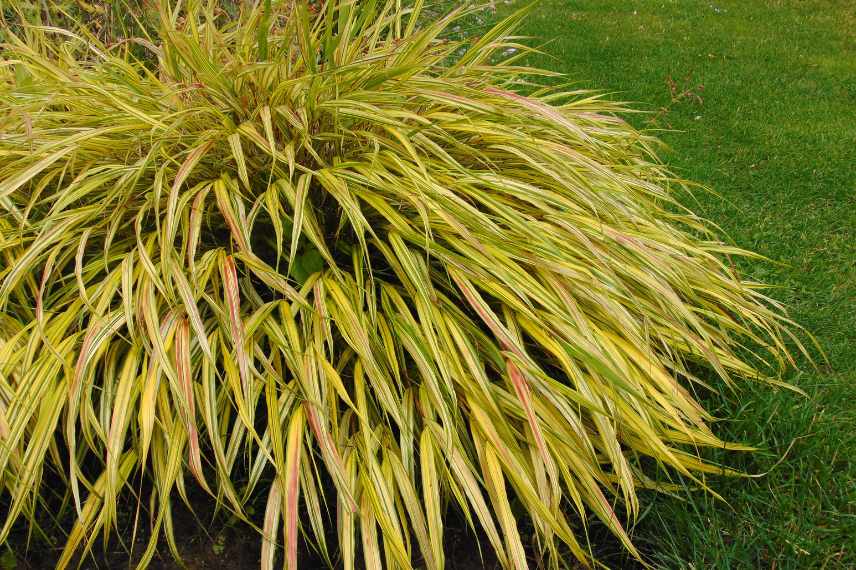
Hakonechloa macra ‘Aureola’
Chasmanthium
Chasmanthium latifolium, better known as Northern sea oats, is an ornamental grass that tolerates a range of soil conditions, including heavy, clay soils. This grass is native to North America and enjoys full sun or partial shade. One of its most distinctive features is its spatulate inflorescence, which hangs gracefully on flexible stems, creating a unique visual effect. The foliage of this species often turns a golden colour in autumn, adding seasonal interest to the garden.
The Chasmanthium latifolium ‘River Mist’ is an interesting variety for partial shade, thanks to its broad green leaves variegated with white.
Medium-sized (60 cm), Northern sea oats is often used in a bed or as a border plant, but it is also attractive as a solitary plant thanks to its unique appearance. It can be an excellent option for those looking to diversify their garden while taking into account the challenges posed by heavy, clay soils.
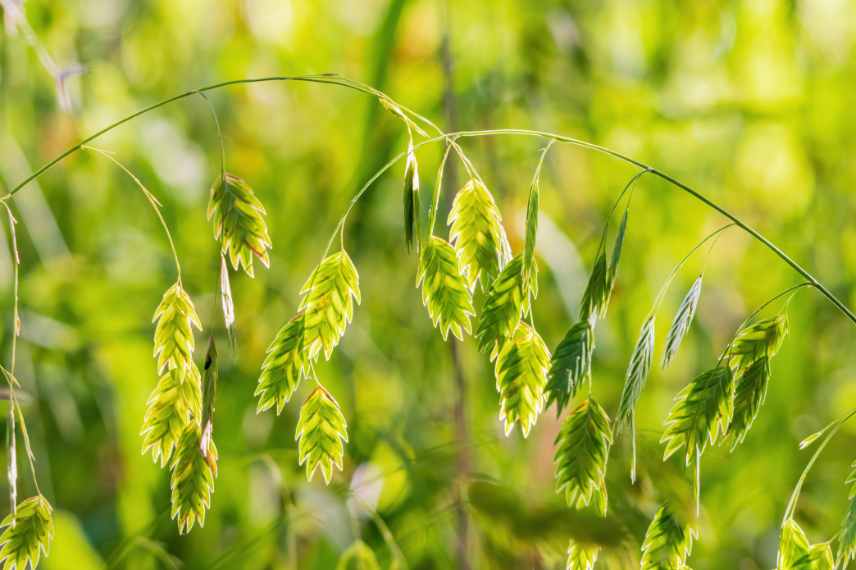
Close-up on the inflorescence of Chasmanthium latifolium
The Indian grass
Sorghastrum nutans, commonly known as “Indiangrass” or Indian sorghum, is a perennial grass that can prove to be an excellent choice for heavy, clay soils. Native to North America, this grass is also valued for its golden plumes and bluish-green foliage, which add a touch of colour to any garden.
The variety ‘Sioux Blue’ is particularly notable for its blue-green foliage and tall inflorescences, making it an attractive addition for those looking to add height of 1.2 m and structure to sunlit borders.
Sorghastrum nutans is often used in meadow-style gardens or ecological restoration projects, due to its tolerance of a wide range of soil conditions and its low maintenance requirements.
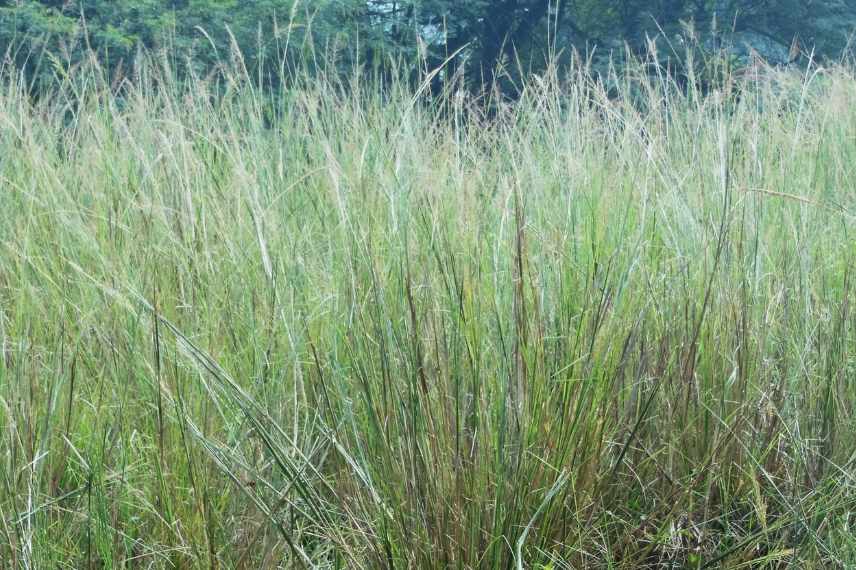
Sorghastrum nutans
Luzula
Luzula is a grass belonging to the Juncaceae family and offers a wide range of options for the garden, including for those with heavy, clay soils.
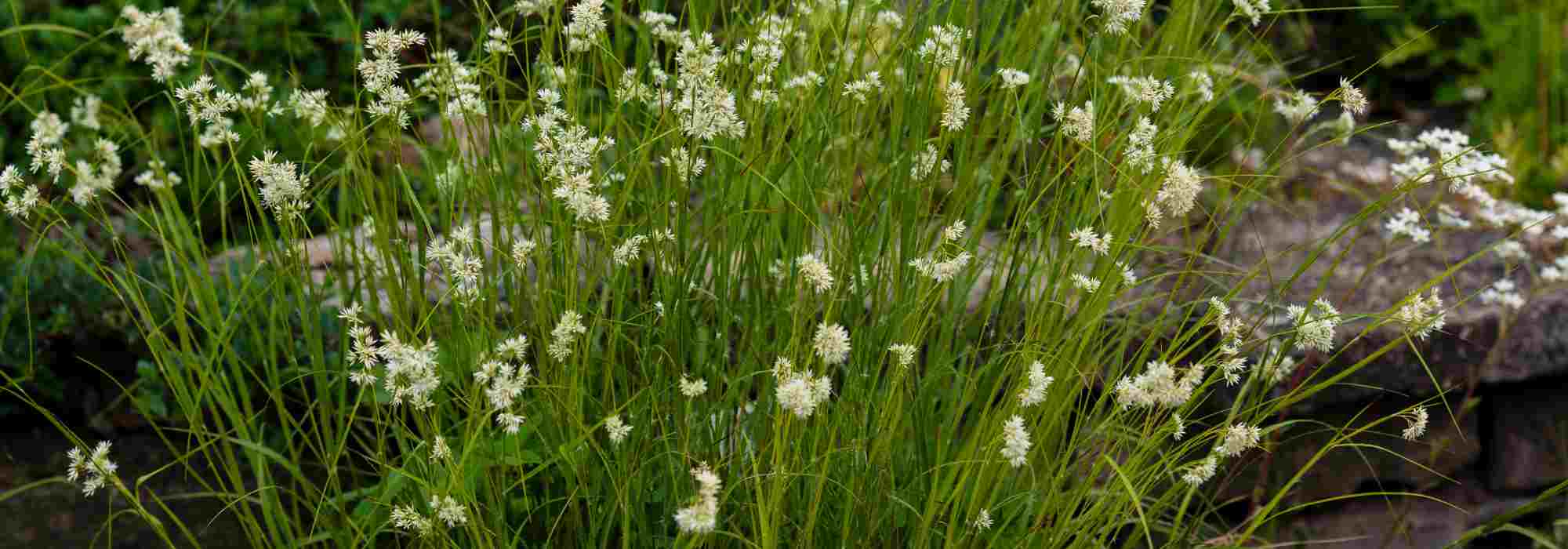
The Luzula nivea, or white woodrush, for example, is well known for its tolerance of moist and clay soils. Its dark green foliage and its delicate white flowers make it an attractive option for shaded areas, and it is often used as a woodland plant or as a groundcover. Well suited to heavy soils, this species can add texture and colour to your garden. If you like native plants, also consider Luzula sylvatica (the woodrush), perfect for growing in dry shade beneath trees.
Another advantage of Luzula is its low maintenance requirements, making it an excellent option for gardeners seeking plants that require little care. Its ability to establish itself in challenging soils and its aesthetic appeal make Luzula a valuable addition to any garden.
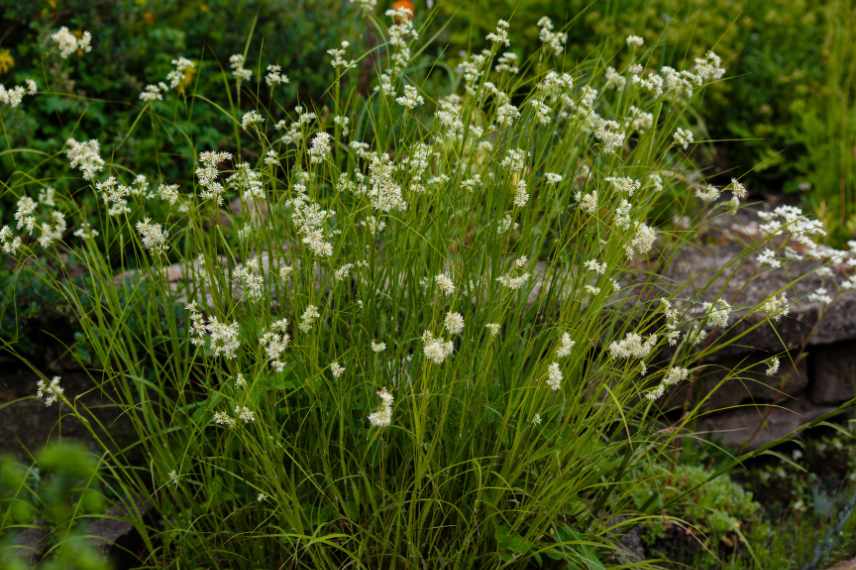
Luzula nivea
Common reed
The Phragmites australis, commonly known as the common reed, is an emblematic perennial grass of wetlands in almost all regions of the world. But it is also a plant that adapts well to heavy, clay soils, as long as they remain moist. This plant is well known for its vigour and its ability to colonise large areas. It is therefore ideal for wetland restoration projects and bank stabilisation. Its tall foliage and fluffy plumes (nearly 3 m tall when flowering) also make it an attractive ornamental plant for the garden.
Although Phragmites australis is sometimes criticised for its invasiveness, calmer varieties such as Phragmites australis ‘Variegatus’ can be chosen. This variety features attractive variegated foliage.
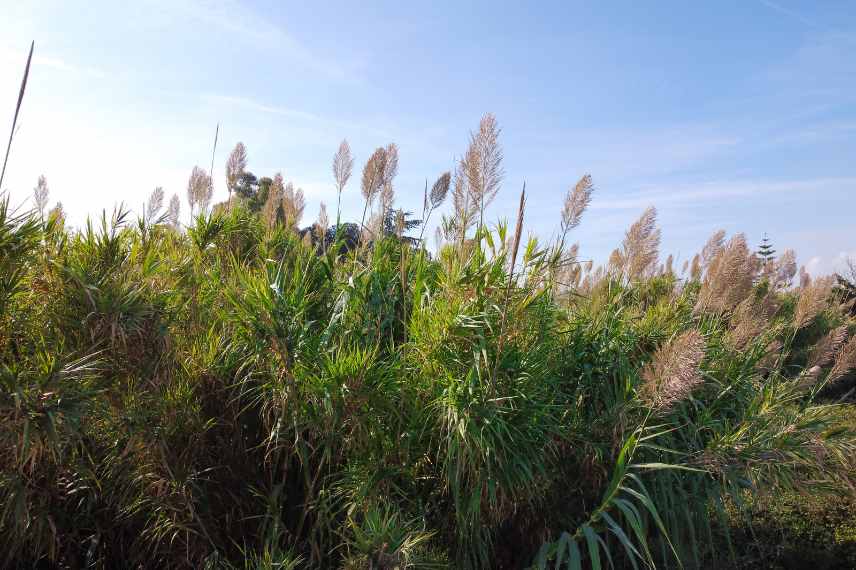
Phragmites australis
Carex
Carex, also known as sedges, are evergreen perennials in the Cyperaceae family. They are particularly valued for their versatility and their ability to adapt to a range of soil conditions, including heavy, clay soils. These plants are generally used for their evergreen foliage, which adds texture and colour to the garden year-round.
The Carex morrowii ‘Irish Green’ is a variety that thrives particularly well in heavy soil, offering bright green foliage that can brighten shaded areas of the garden. This Carex is often chosen for its compact habit (30 cm across) and its low maintenance requirements.
As for sedges, Carex pendula is a native species perfectly suited to heavy, clay soils. This plant draws attention with its pendulous inflorescences and dense foliage, making it ideal for borders or even as a solitary plant.
- Subscribe!
- Contents
Comments