


Top 5 purple-flowered crocus varieties for a colourful garden
Plant beautiful crocuses in the garden, on the terrace or balcony.
Contents
Crocuses are small bulbs among the first to flower in late winter. They produce a pale, delicate flower and fine foliage, heralding the coming spring. These are also autumn bulbs, starting with the famous Crocus sativus, the saffron crocus, which offers a lovely purple flower. The crocuses settle in well-drained soil, in sun or light shade and eventually form beautiful carpets of white, mauve, violet, yellow or orange flowers. Discover our selection of spring- and autumn-flowering crocuses with mauve-coloured flowers to brighten your garden with reliable and colourful flowering.

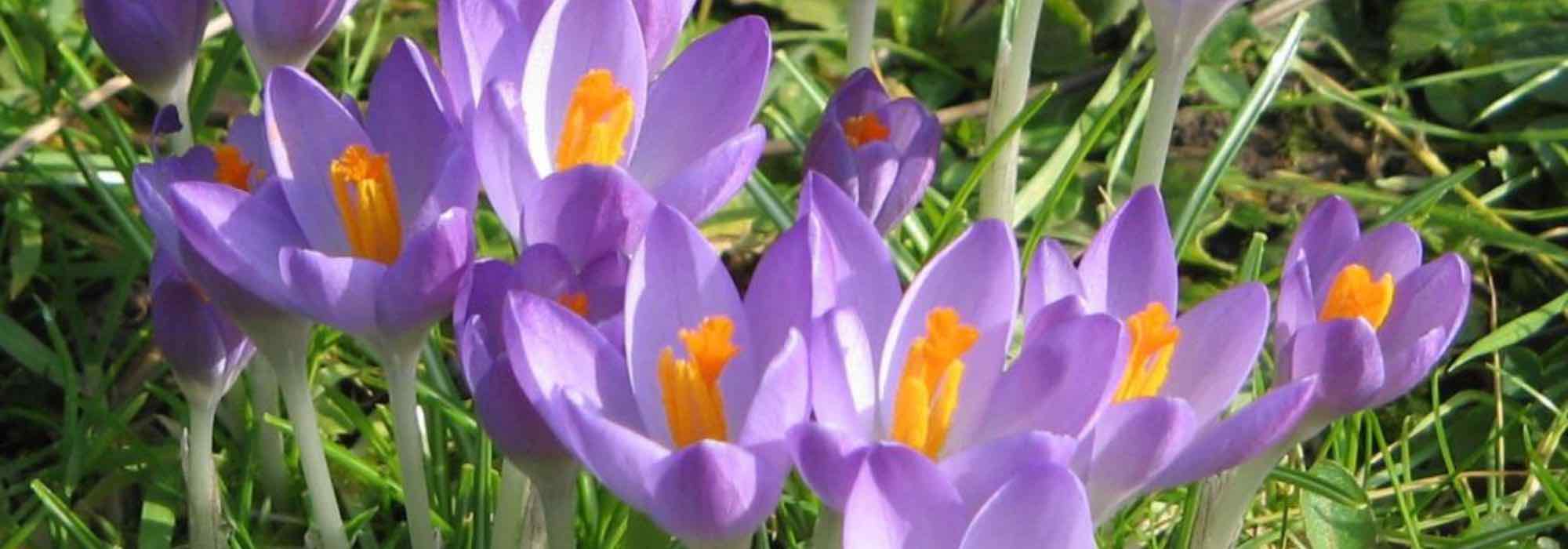
Crocus tommasinianus 'Barr's Purple'
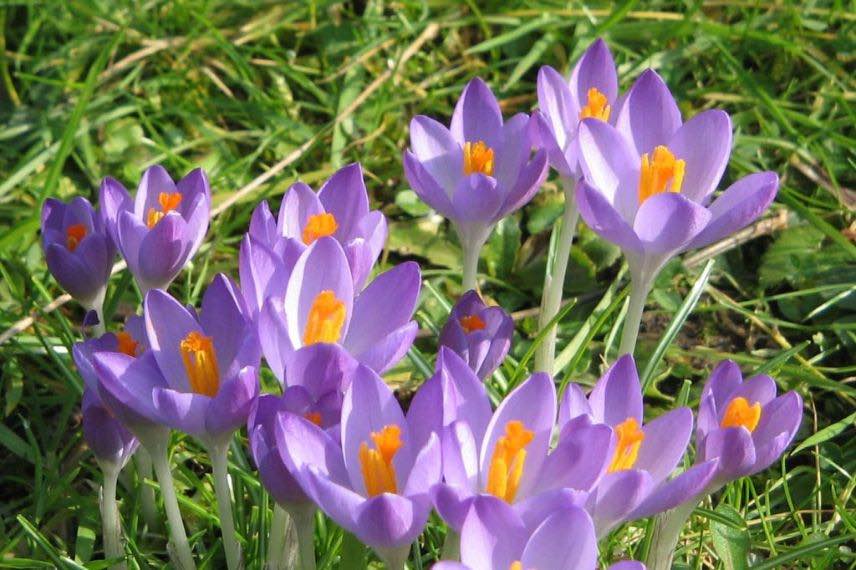
Let’s start with the Crocus tommasinianus ‘Barr’s Purple’, a very pretty variety from the early-flowering species tommasinianus. Unpretentious, yet refined, its goblet-shaped flowers in amethyst colour are adorned with silvery reflections on the outer surfaces of the corollas. They open into stars, in February or March depending on the climate, with a heart of golden-yellow stamens and a very slender white tube at the base. Varieties derived from the Crocus tommasinianus are among the most reliable crocuses, those that will naturalise easily in well-drained soil, in a rock garden as well as in borders or the front of borders, at the foot of deciduous shrubs, in sun or partial shade.
Easy to grow, even in dry, poor soil, plant Crocus tommasinianus ‘Barr’s Purple’ in large numbers in a lawn, provided you wait at least five to six weeks after flowering before mowing.
Create a dense soliflore carpet or add other crocus varieties and other early spring bulbs, such as snowdrops, chionodoxas, the narcissi and the tulips. On a terrace or balcony, you can also compose a pretty pot of crocuses either on its own or mixed with the same other spring flowers.
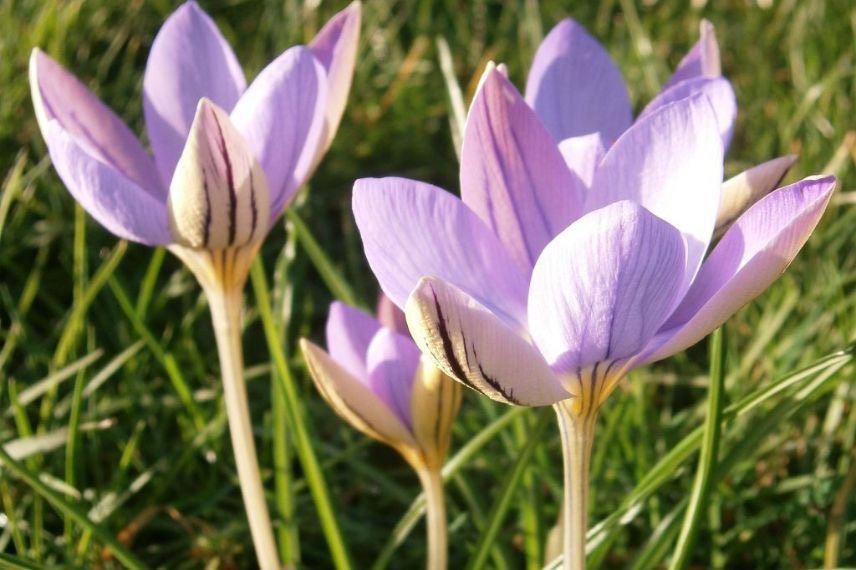
Crocus imperati 'De Jager'
The Crocus imperati ‘De Jager’ is a collection plant, a pretty delicacy, with flowers as if washed with watercolour, in lilac mauve. On the outside, three petals are tinted with chamois yellow and striped with purple. Its narrow cup-shaped flower, above slightly translucent stems, reveals, in fine weather, an orange heart of stamens. The botanical species Crocus imperati is a Mediterranean species, native to western Italy, south of Naples and Capri, where it grows in light woods and dry, warm lawns.
The Crocus ‘De Jager’ requires a perfectly drained soil like all crocuses, but also a particularly sheltered location. It flowers very early, in January or February, provided it is not exposed to frost. It is, in fact, easier to grow in a Mediterranean garden. Plant it in a dry garden among Sedums or other succulents, an ornamental oregano ‘Kent Beauty’ and a creeping rosemary.
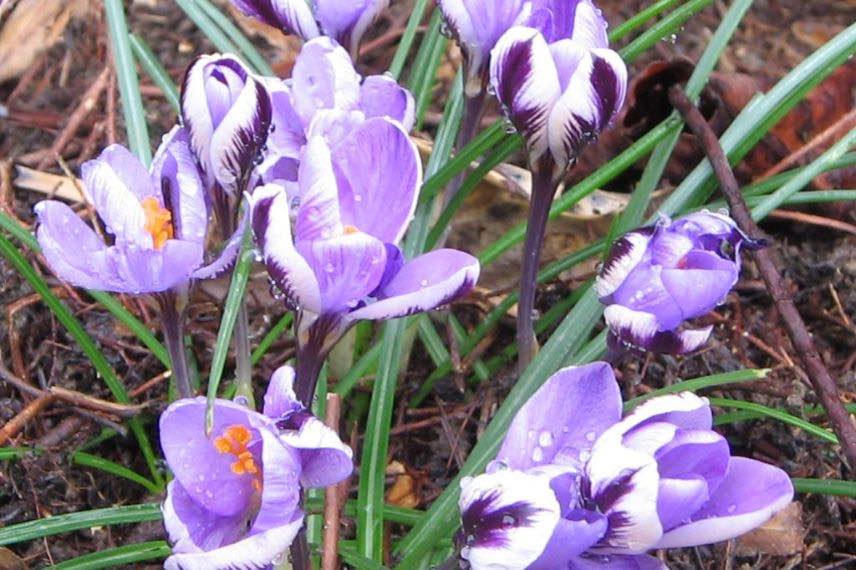
Crocus minimus
The Crocus minimus is a delightful little crocus with modest-sized flowers. Bluish mauve in colour, their outer surfaces are enhanced by a feathery pattern in purple-violet. The throat is pale yellow, bearing yellow-orange stamens and a red feathery style. This botanical species, closely related to Crocus corsicus, is native to Corsica and Sardinia, where it is found in woods and on slopes, up to 1,800 m in altitude. It flowers in March and April.
Plant this Crocus in fairly cool soil that is not too calcareous or acidic, in a rockery that isn’t too dry or in an Alpine garden. Pair it with Corsican hellebore with pistachio-green flowers, creeping dwarf conifers and alpine plants.
Crocus sativus
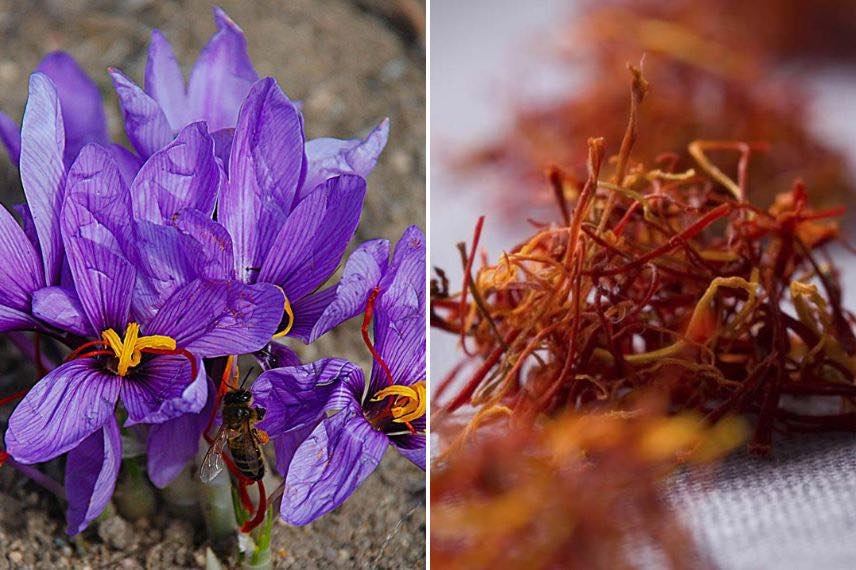
Crocus sativus is the Latin name for the rare and precious saffron, whose dark orange, highly aromatic stigmas grow inside the crocus and are harvested in October. Yes, this crocus is an autumn-flowering plant, very ornamental to boot, with flowers of intense lilac colour, veined with purple, and golden-yellow stamens and its famous red stigmas. Its flowers are larger than those of spring crocuses, measuring up to 10 cm in diameter. Unlike most crocus species, they stay open even in the dark.
Plant Crocus sativus in full sun, in the vegetable garden or the ornamental garden. If you wish, harvest the saffron stigmas daily during the flowering period to dry them. Surround it with low-growing plants such as the handsome Stachys byzantina or Phyla nodiflora, or perhaps Cerastostigma plumbaginoides, with the lovely blue flowering late in summer on green foliage tinged with red.
Crocus karduchorum
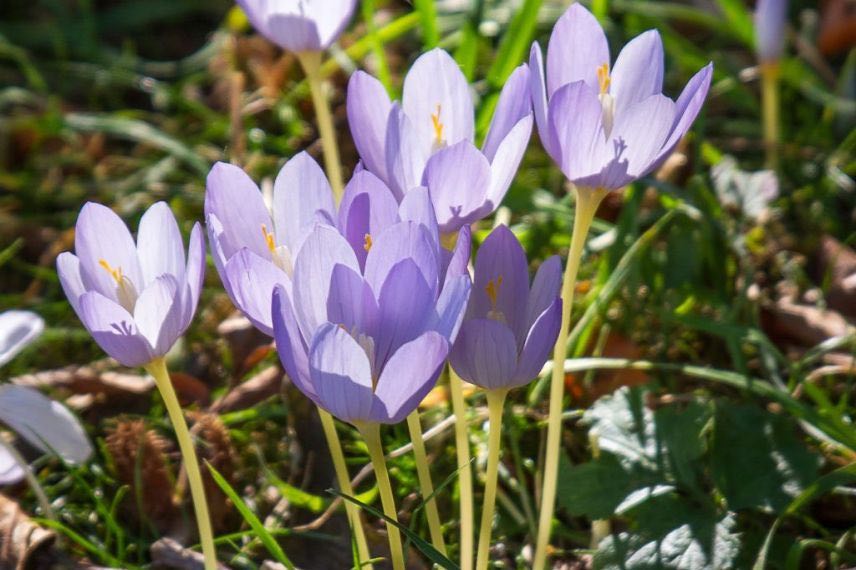
The Crocus karduchorum is another autumn crocus, a rare botanical species native to the Lake Van region, in the easternmost part of Turkey, where it grows in stony, acidic soils, under oaks and in scrub, at altitude. It bears flowers pale mauve with a pink-tinged hue, finely veined with purple, white throat and a very fine white style on pale yellow stamens. The foliage appears from the soil after flowering, it persists through winter and withers at the start of spring. This species was named in 1859 and has received an Award of Garden Merit from the Royal Horticultural Society as early as 1928.
Unlike other crocuses that are rarely cultivated, it is relatively easy to establish in non-calcareous, well-drained soil, loamy or humus-bearing. Its September–October flowering in soft tones accompanies, in a raised border, other late-season bulbs such as the Cilician Colchicum and the Cilician Cyclamen, against a backdrop of silvery-grey flowers of the Anaphalis margaritacea ‘Neuschnee’.
- Subscribe!
- Contents

Comments