





























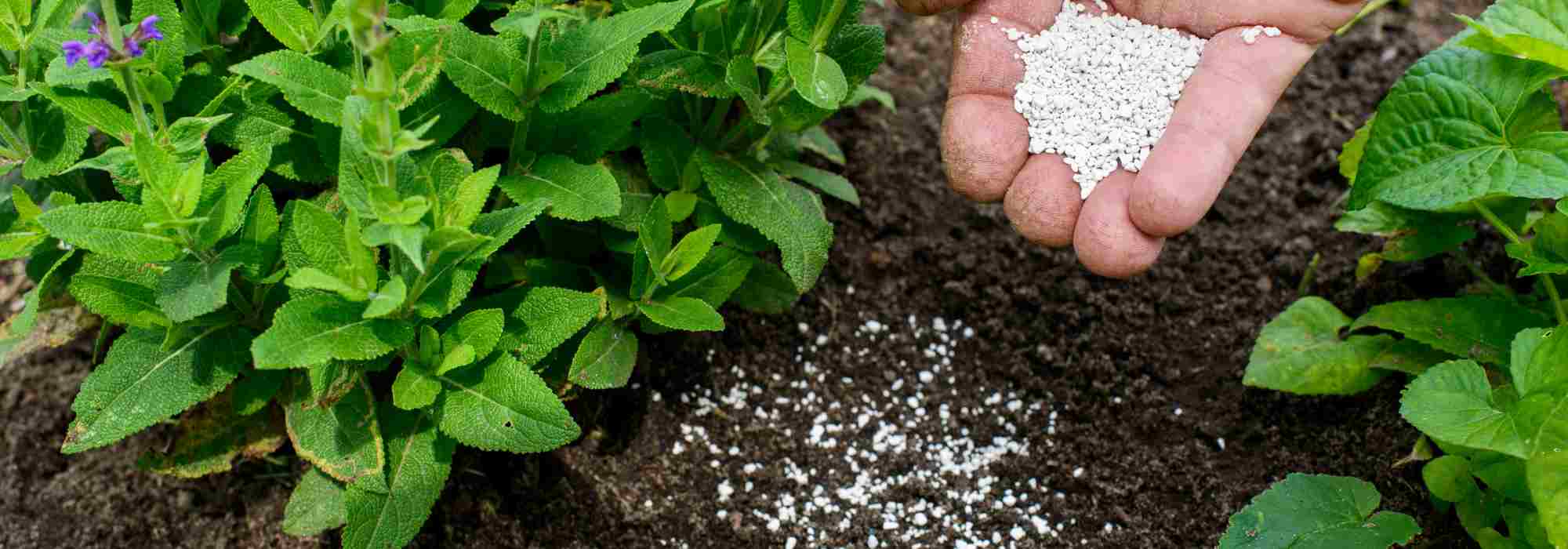
Universal or specific fertiliser: how to tell them apart?
Which one should I choose and why?
Contents
Feeding your plants is crucial to ensure their health and optimal growth. But with the abundance of options available, how do you navigate between a general-purpose fertiliser and a specific fertiliser? These two categories of fertiliser have advantages and disadvantages, depending on the needs of your outdoor or indoor plants. This guide aims to separate fact from fiction and help you make the best choice for your garden. You will find practical advice, comparisons and tips to optimise the fertilisation of your plants. Don’t let doubt overwhelm you any longer: discover how to choose the right fertiliser and thereby maximise the potential of your garden.

What is a fertiliser?
Fertiliser and soil amendment are two terms often used in gardening, but they do not mean the same thing and their objectives differ. So, what exactly is a fertiliser and how does it differ from an amendment?
A fertiliser is a substance added to the soil or applied directly to plants with the aim of providing essential nutrients for their growth and development. Fertilisers generally contain three primary macronutrients: nitrogen (N), phosphorus (P) and potassium (K), commonly referred to by their NPK formula. These elements are indispensable for photosynthesis, flowering and fruiting. Fertilisers can be organic in nature, coming from plant or animal matter, or inorganic, derived from minerals.
By contrast, a soil amendment is an organic or mineral substance added to the soil to improve its structure and its chemical, physical or biological properties. Unlike a fertiliser, an amendment is not intended to feed plants directly, but rather to create a soil environment favourable to their growth. Common amendments include lime, compost and manure.
The purpose of adding a fertiliser is therefore specific: it provides plants with the nutrients they need to thrive. A good supply of fertiliser can improve the quality of flowering, increase yields of fruits and vegetables, and strengthen plants’ resistance to disease and pests.
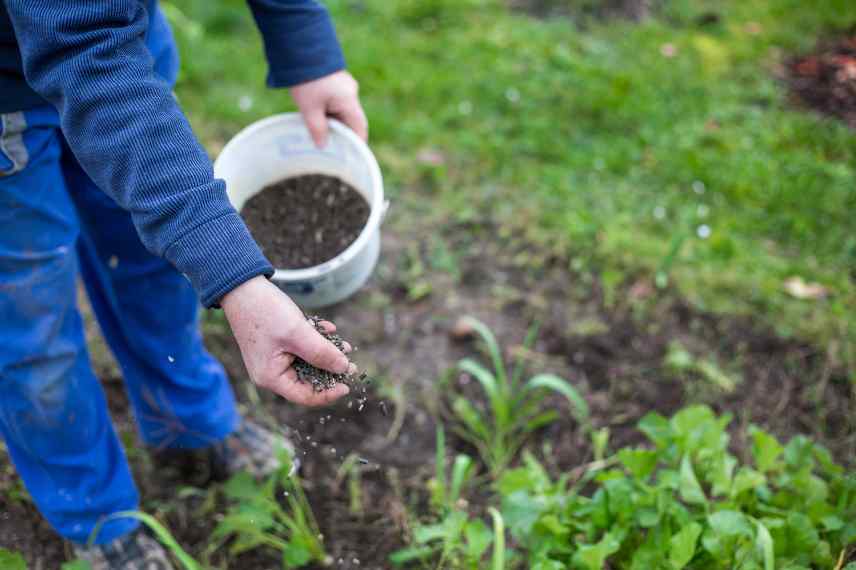
The 3 main types of fertiliser
Choosing a fertiliser can be complicated given the wide range available. However, fertilisers can be categorised into three main families: organic fertilisers, mineral fertilisers and organo-mineral fertilisers. Each of these types has specific advantages and disadvantages that may influence your decision depending on your gardening needs. Whether you have a vegetable garden, flower beds or fruit trees, knowing these different categories will help you choose the most appropriate fertiliser to feed and maintain your outdoor plants.
- Organic fertilisers are derived from natural materials such as manure, compost or seaweed. Their main asset lies in their composition, which is rich in organic matter, improving soil structure and stimulating biological activity. Nutrients are released slowly, thereby reducing the risk of “burn” to plants caused by over-fertilisation. These fertilisers are often recommended for organic gardens and are generally well suited to plant needs in the long term.
- Mineral fertilisers, also known as synthetic fertilisers, are produced from minerals that are extracted or chemically synthesised. These fertilisers contain high concentrations of essential nutrients such as nitrogen, phosphorus and potassium. Their action is rapid and precise, which can be useful for effectively correcting nutrient deficiencies. However, their excessive use can cause imbalances in the soil and affect microbial life.
- Finally, organo-mineral fertilisers represent a compromise between the first two categories. They are made up of both organic matter and minerals. The aim is to combine the best of both worlds: a gradual release of nutrients thanks to the organic matter and a fast, targeted action provided by the mineral elements. This type of fertiliser is often chosen for its versatility and effectiveness on different types of plants and soils.
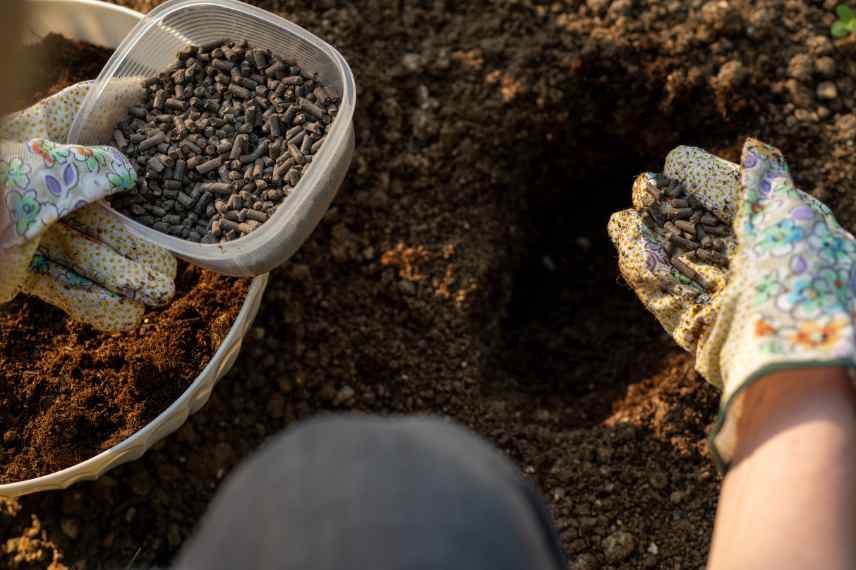
Organic fertiliser in granular form made from poultry manure for the vegetable garden
Which kind of information should I read on labels?
The first thing to consider is the NPK formula. These are the three numbers you will generally find on the label, separated by dashes (for example, 10-10-10). These numbers represent the percentages of nitrogen (N), phosphorus (P) and potassium (K) present in the product. Nitrogen is essential for the growth of leaves, phosphorus for the roots and flowering, and potassium for the overall resilience of the plant. Depending on the specific needs of your plants, you will choose a formula with different proportions of these elements.
The label will also indicate whether the fertiliser is organic or mineral (synthetic). Organic fertilisers are often milder and release nutrients more slowly, which can be beneficial for certain plants. Mineral fertilisers act more quickly, but can be more likely to burn plants if used incorrectly.
Another point to check is the presence of micronutrients such as iron, zinc or copper. These elements are needed in small quantities, but are still essential to the well‑being of the plant.
Also pay attention to the application instructions. Some formulations require dilution in water, while others can be applied directly to the soil. Recommendations regarding the frequency and season of application should also be taken into account to achieve the best results.

Read carefully the information provided for each fertiliser
Read also
Garden fertiliser: how to choose it?What is an all-purpose fertiliser?
The distinctive feature of a universal fertiliser lies in its balanced formula of nitrogen (N), phosphorus (P) and potassium (K), the three macronutrients essential to plant growth. This means that this type of fertiliser can stimulate the development of leaves and stems as well as roots, while promoting flowering and fruiting. It is therefore a versatile option, particularly suitable for gardeners who want to simplify their fertilising routine.
Here are some examples of uses for a universal fertiliser :
- Indoor plants: Indoor plants that do not require very specific care, such as philodendrons or ficus, can benefit from a universal fertiliser.
- Flowering plants: Many flowering plants such as pelargoniums, petunias or roses can respond well to a universal fertiliser.
- Shrubs and trees: Decorative bushes and some ornamental trees can also benefit from universal fertilisation, particularly if the soil is relatively poor in nutrients.
- Vegetables: Vegetables such as lettuce, carrots and tomatoes can be fed with a universal fertiliser, although a specific fertiliser may be more suitable for optimal yields.
- Climbing plants: Vines and climbing plants such as clematis or wisteria can also benefit from the application of a universal fertiliser to stimulate their growth.
- Lawn: Although specific fertilisers for lawn are available, a universal fertiliser can be used for a less demanding lawn.
However, although convenient, a universal fertiliser is not always the best option for all plants or all soils. Certain types of plants, such as orchids or cacti, for example, have very specific nutritional needs and may require a specialised fertiliser. Likewise, if your soil shows deficiencies or excesses in certain elements, a more targeted fertiliser may be necessary to rebalance its properties.
The case of specific fertilisers
Specific fertilisers are often developed for plants with very precise nutritional requirements. For example, you will find specific fertilisers for orchids, rose bushes, cacti, or even for vegetable crops such as tomatoes. These fertilisers contain concentrations of macronutrients like nitrogen, phosphorus and potassium, but also micronutrients such as iron, calcium or magnesium, adapted to the particular needs of each plant type.
The objective of these targeted fertilisers is to provide all the nutrients necessary for specific stages of the plant’s life cycle, whether for flowering, fruiting or for the growth of leaves and stems. For example, a tomato fertiliser may contain higher levels of calcium to prevent disorders such as blossom end rot, while an orchid fertiliser will be formulated to promote abundant and long-lasting flowering.
The different kinds of specific fertilisers
- Fertilisers for orchids : Rich in potassium and phosphorus, this fertiliser will help produce long-lasting and spectacular flowering.
- Fertilisers for rose bushes : With a balanced supply of nitrogen and magnesium, this fertiliser aims to favour a beautiful flowering while strengthening the plant’s resilience.
- Lawn fertilisers : High in nitrogen, this fertiliser stimulates rapid growth of the lawn and encourages a vibrant green.
- Fertilisers for tomatoes : Often rich in calcium, it helps prevent blossom end rot and promotes healthy fruiting.
- Fertilisers for citrus trees : Suited to the specific needs of citrus trees, it generally contains more magnesium and iron to support fruiting.
- Fertilisers for bonsai : Formulated to support controlled growth and good root formation.
- Fertilisers for palms : Rich in magnesium and iron, this fertiliser is adapted to the specific needs of palms, notably for leaf colour and vigour.
- Fertilisers for cacti and succulents : Low in nitrogen and rich in phosphorus and potassium, this fertiliser encourages flowering without stimulating excessive growth.
- Fertilisers for leafy vegetables : High in nitrogen, this fertiliser is perfect for the rapid development of leaves in crops such as lettuce or spinach.
- Fertilisers for root vegetables and potatoes : Well balanced, but very high in potassium to produce attractive root vegetables (parsnips, carrots, beetroots, radishes…).
- Fertilisers for aquatic plants : Specially designed for the needs of aquarium or pond plants, often in the form of tablets to insert into the substrate.
- Fertilisers for indoor plants : Formulated for lower light conditions and the different nutritional needs compared with outdoor plants.
- Fertilisers for fruit trees : Balanced in macronutrients and often enriched with micronutrients such as boron or zinc for improved fruiting.
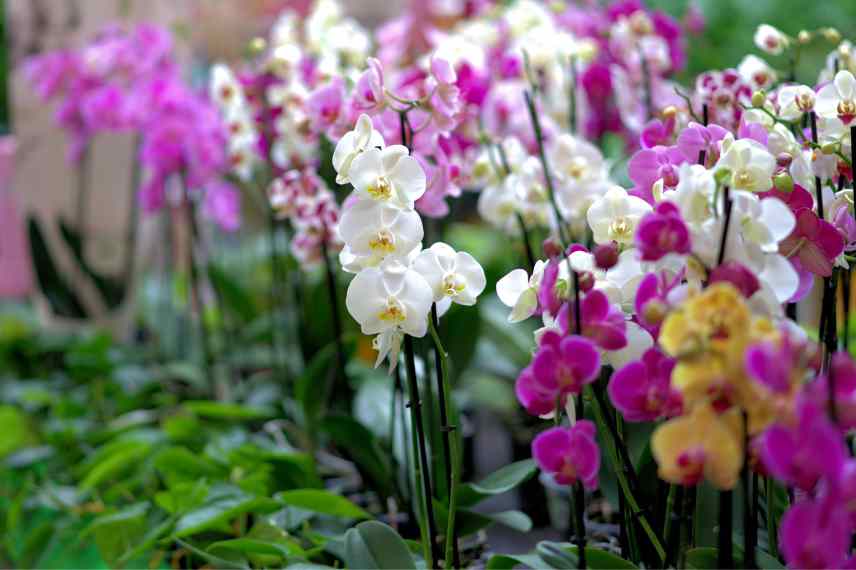
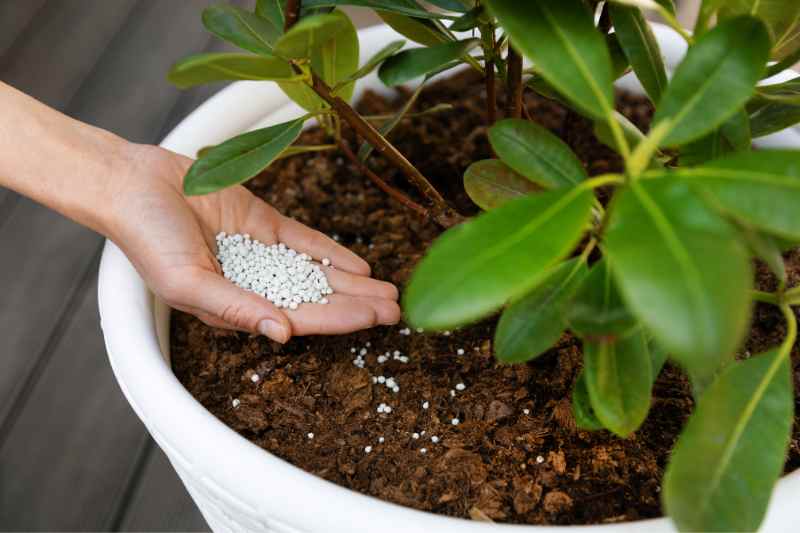
A specific fertiliser can be useful to support very long flowering indoors
Mistakes to avoid when applying fertiliser
Improper use of fertilisers can have harmful consequences, ranging from nutrient deficiencies to plant burns. Here are some common mistakes to avoid.
Over-application : One of the most frequent mistakes is over-application. Too much fertiliser can lead to a build-up of salts in the soil, which can cause burns at the level of the roots. It is therefore crucial to follow the dosage instructions on the fertiliser packaging.
Mauvais timing : Applying fertiliser at the wrong time, for example during a dry spell or just before a cold snap, can stress plants and reduce their ability to absorb nutrients.
Ignoring soil pH : Soil pH influences nutrient availability. Using a fertiliser without knowing the pH of your soil can cause nutrient lock-ups, making certain elements inaccessible to plants.
Inappropriate use : Using a fertiliser formulated for a specific plant that does not have those particular needs can cause nutritional imbalances. For example, a nitrogen-rich fertiliser intended for the lawn may not be suitable for plants with flowers, which often require more phosphorus for flowering.
Neglecting micronutrients : Focusing only on macronutrients such as nitrogen, phosphorus and potassium can lead to deficiencies in micronutrients such as zinc, iron or manganese, which are also essential to the growth of plants.
Uneven application : An uneven distribution of fertiliser can lead to uneven growth, with some areas receiving too many nutrients and others not enough. Use a spreader to ensure an even application.
Ignoring the instructions : Each fertiliser has specific instructions regarding the method and the frequency of application. Ignoring these instructions can not only be ineffective, but also potentially harmful to your plants.
- Subscribe!
- Contents
Comments