





























What are native cultivars (nativars)?
Discover their origins, their benefits and how to incorporate them into your garden
Contents
Nativars, are you familiar with them? A fusion between native plants and cultivars, nativars represent a significant advancement in the gardening world. These selected varieties offer an attractive combination of natural robustness and enhanced characteristics. Well-suited to modern ecological and aesthetic challenges, nativars enrich our gardens with diversity, while helping to preserve ecosystems and local wildlife. Discover with us their origin, benefits, and how to integrate them harmoniously into gardens.

What is a nativar? Definition and origin
Native nativars are a relatively recent innovation in gardening. Born in the 1980s and 1990s, this term combines “native”, referring to native species native to a region, and “cultivar”, which denotes a plant selected for its specific characteristics and reproduced consistently.
The emergence of nativars coincides with a shift in attitudes towards gardening and ecology, at a time when gardeners and horticulturists are beginning to recognise the importance of preserving native species to sustain local wildlife.
Native nativars originate from a rigorous selection process, where horticulturists select native specimens with unique or desirable characteristics. These characteristics can include, for example, abundant flowering, larger flowers, a colour, a size or a particular shape, or better resistance to diseases and difficult climatic conditions. They also retain the adaptability and resilience of their native ancestors, which makes them particularly suited to local climatic and ecological conditions.
In summary, nativar varieties are the result of a quest for balance between conserving native species and improving horticultural characteristics. These plants are both environmentally friendly and visually appealing. They typically exhibit characteristics slightly different from wild varieties.
Advantages and Disadvantages of Nativars
Nativars, as a bridge between native species and cultivated varieties, certainly offer benefits, but also some concerns.
Benefits of nativars
- Improved aesthetics: nativars are often selected for their beauty that is superior to that of local plants. With larger flowers, more vibrant colours and distinctive shapes, they bring a touch of brightness and diversity to the garden. This aesthetic improvement helps diversify borders and plantings.
- Adaptability and resilience: inheriting the robustness of their native ancestors, nativars are generally well adapted to local climatic and ecological conditions. This adaptability results in greater resistance to diseases, parasites and climate variations, thereby reducing the need for maintenance and treatments.
- Contribution to biodiversity: by incorporating nativars into your garden, you contribute to the preservation of local biodiversity. These plants can provide habitats and food resources for wildlife, including pollinators, birds, other wildlife and, consequently, the maintenance of ecosystems.
Disadvantages of nativars
- Impact on local wildlife: a nativar introduced into an ecosystem different from its origin may not offer the same ecological benefits (a source of food or habitat), or even disrupt the local balance (for example with invasive plants). However, nativars are often selected for their advantages, but also to reduce their drawbacks. No cause for concern; studies are being conducted to monitor the long-term effects of nativars on gardens and ecosystems. And when a nativar becomes problematic, it is generally prohibited from being marketed.
- Risk of reduced genetic diversity: as nativars become more popular, there is a risk of reducing the variety of native plants. This can make gardens and ecosystems less resistant to environmental changes. It is therefore recommended to plant both nativars and native species in your garden.
- Ecological balance: even if nativars are selected to adapt to local conditions, they can sometimes behave differently from their native parents. For example, the shape of the flowers can make nectar access more difficult for some pollinators, or, conversely, easier.
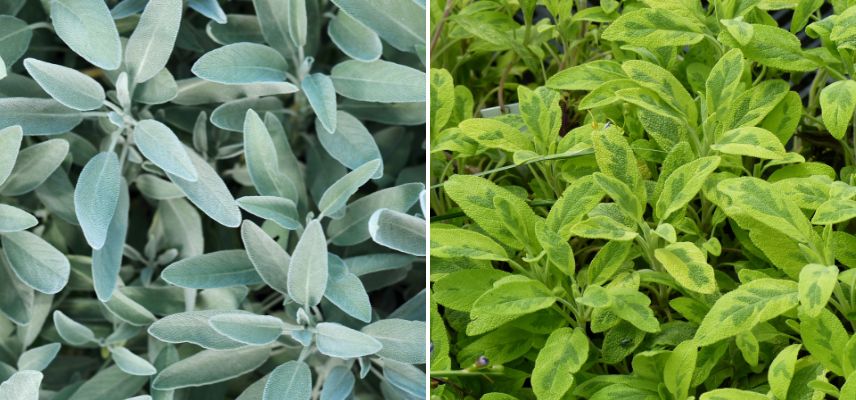 Common sage and Common sage ‘Berggarten Variegated’
Incorporate native cultivars into the garden.
The integration of nativars into a garden should be undertaken with discernment to maintain ecological and aesthetic balance. If your concern is to preserve biodiversity, we recommend adopting a measured approach, planting 1 nativar plant for 4 native plants. Thus, a proportion of around 20% of nativars, following the recommendations of Mary Phillips (National Wildlife Federation), to maintain a meaningful presence of native plants. They are essential for supporting local ecosystems and wildlife and for maintaining the genetic diversity of native species.
To create a harmonious garden, consider a display where nativars complement rather than dominate. Choose nativars that adapt well to your region and that offer ecological benefits, such as attracting pollinators or resisting local diseases. By judiciously pairing nativars with native species, you will contribute to a display that is both beautiful, resilient and environmentally friendly.
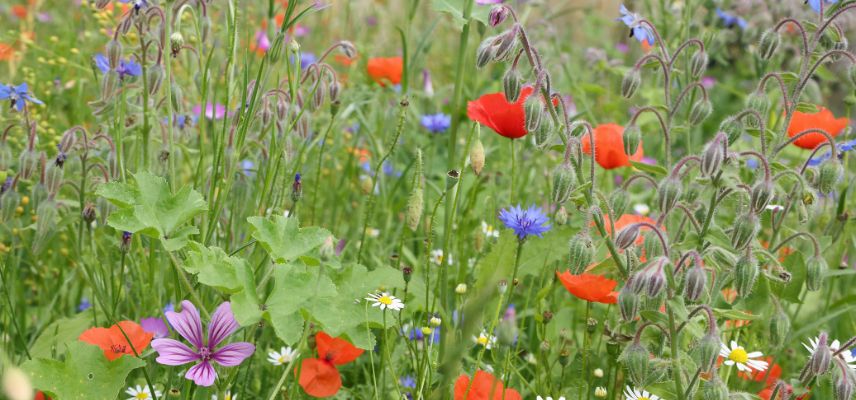
Annual flowers also contribute to biodiversity maintenance
Introduction to some common nativars
Here’s a small selection of popular native cultivars in our regions, each with its unique characteristics and tips for effectively integrating them into different gardening contexts:
The Cytisus scoparius ‘Goldfinch’
The broom Cytisus scoparius ‘Goldfinch’, with its striking bi-colour yellow flowers, is a sight not to be missed in spring. This variety is distinguished by its shades of yellow and red, bringing an explosion of colour to the garden.
Usage tips: Ideal for slopes, informal hedges or borders, ‘Goldfinch’ prefers well-drained soil and a sunny aspect. This hardy plant requires little maintenance and is particularly suited to dry or rocky gardens. Its rapid growth and abundant flowering make it a perfect choice for an immediate visual impact.
Dame’s Rocket Hesperis matronalis ‘Alba Plena’
Dame’s Rocket Alba Plena is a charming variety with its double white flowers, releasing a soft, pleasant fragrance in the evening. This plant brings a touch of elegance and freshness to the garden, especially in spring and early summer.
Usage tips: Perfect for borders, beds or as a woodland plant, Alba Plena thrives in rich, moist soils, in partial shade or full sun. It is ideal for creating contrasts with plants bearing darker flowers. Easy to grow and hardy, it often self-seeds, providing generous flowering year after year.
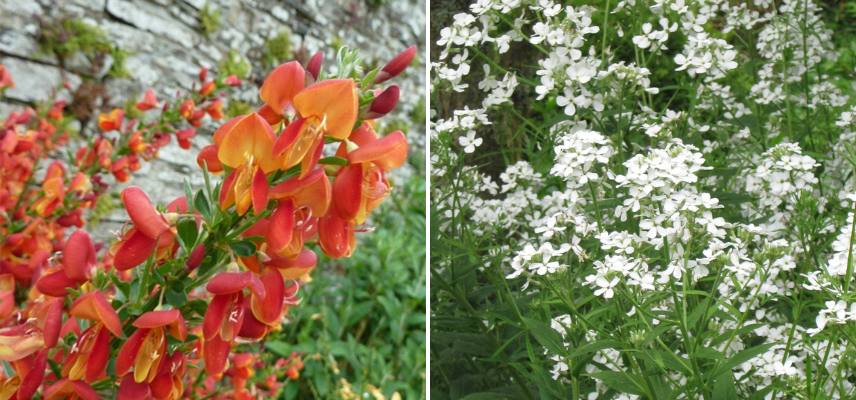 Cytisus scoparius ‘Goldfinch’ and Hesperis matronalis ‘Alba Plena’
Iris pseudacorus ‘Plena’
The marsh iris ‘Plena’ is a lovely variety with its double golden-yellow flowers, which add a dramatic dimension to the wetter areas of the garden. Its lush blooms and slender foliage create an attractive focal point, particularly along the water’s edge.
Usage tips: Ideal for pond margins, stream banks or damp areas, ‘Plena’ thrives in constantly moist soils or even submerged. This hardy and easy-to-care-for plant brings a bright colour and architectural interest to the aquatic garden. It is also hardy in winter conditions and requires little maintenance once established.
Salvia nemorosa ‘Caradonna’
Salvia ‘Caradonna’ stands out with its dark purple stems contrasting beautifully with its blue-violet flowers. This variety adds intense colour and an elegant vertical structure to the garden, flowering from spring to summer.
Usage tips: Perfect for borders, edges or gravel gardens, ‘Caradonna’ prefers well-drained soils and a sunny position. This perennial is valued for its long flowering period and its ability to attract bees and butterflies. It is also easy to care for, drought-tolerant once established, and can be pruned after the first flowering to encourage a second flush of blooms.
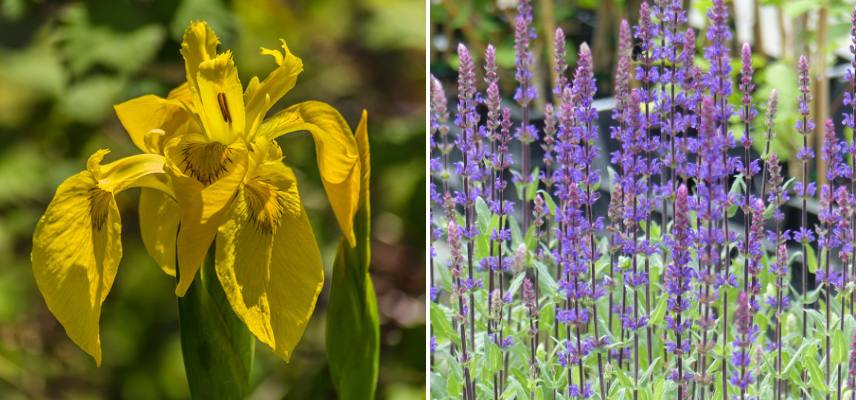 Iris pseudacorus ‘Plena’ and Salvia ‘Caradonna’
Lavandula angustifolia ‘Hidcote’
Lavender ‘Hidcote’ is a popular variety for its deep purple flowers and intense fragrance. Compact and elegant, it is ideal for neat borders or fragrant beds in gardens of all sizes.
Usage tips: Perfect for dry and sunny gardens, ‘Hidcote’ prefers well-drained soils and full sun. It attracts bees and butterflies, while being easy to maintain. Additionally, ‘Hidcote’ is often used for dried lavender production, thanks to its intense colour and lingering fragrance.
The Saponaria officinalis ‘Rosea Plena’
Saponaria officinalis ‘Rosea Plena’ is a charming variety with its delicate double pink flowers, evoking sweetness and romance. This perennial offers generous flowering and dense foliage, adding colour and texture to the gardens.
Usage tips: Ideal for borders, beds or as a groundcover, ‘Rosea Plena’ prefers rich, well-drained soils, in sunny to semi-shaded locations. It is easy to grow and low-maintenance. This soapwort is particularly valued for its long flowering season and its ability to spread, forming an attractive floral carpet. It is also hardy to a range of weather conditions and can adapt to various garden styles.
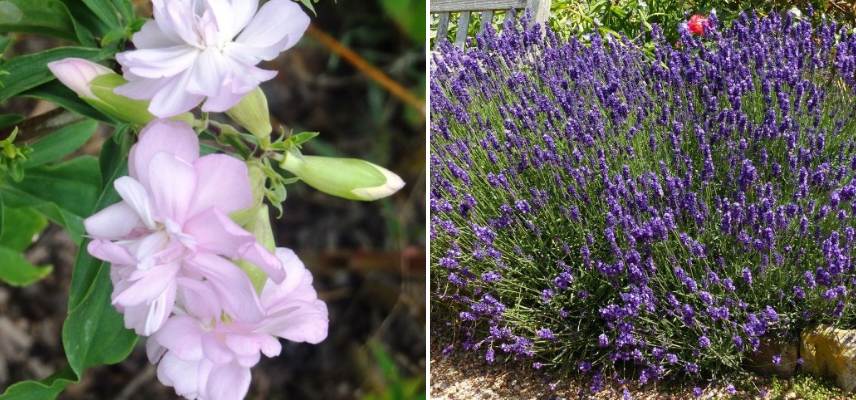 Saponaria officinalis ‘Rosea Plena’ et Lavandula angustifolia ‘Hidcote’
- Subscribe!
- Contents
Comments