


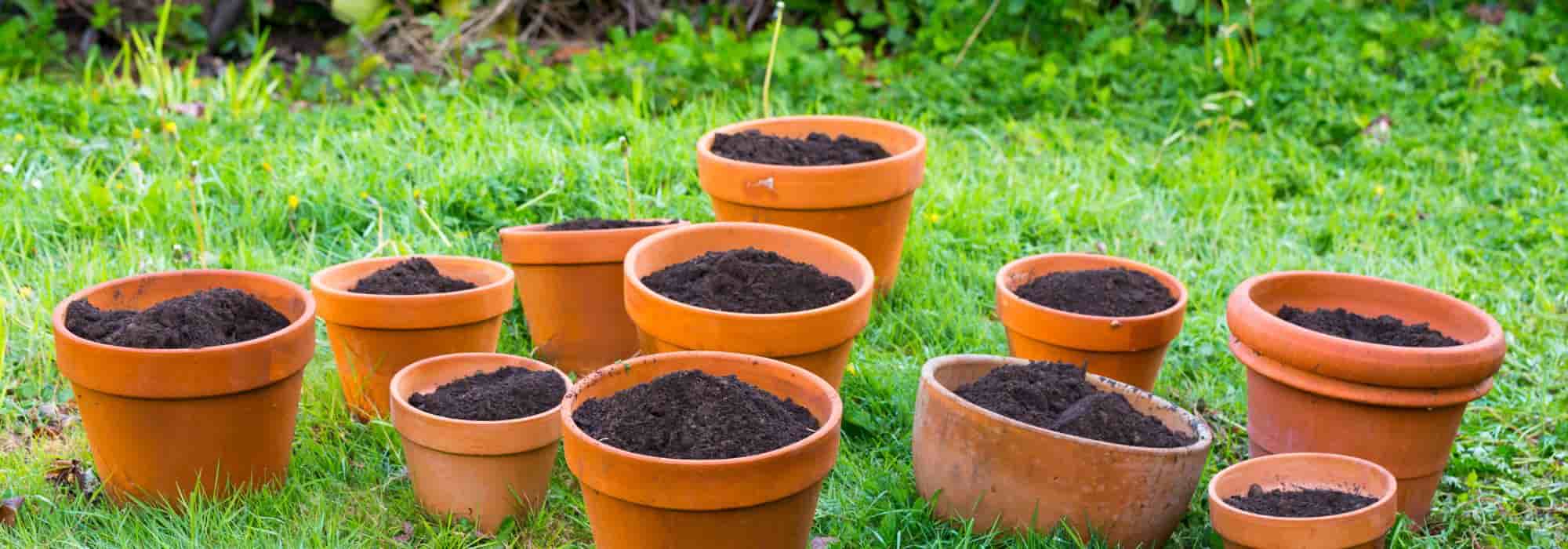
What should I do with the soil and potting compost from old flower pots?
Our tips and advice to reuse used soil and potting compost
Contents
You’ve just repotted or refreshed the soil in your pots and you’re wondering what to do with the old potting compost? Or you have old flower pots abandoned with soil and spent potting compost? Rather than throwing them away, why not recycle them? Indeed, even when depleted, they can still be useful in the garden! Follow us, we’ll share our tips and tricks to give the soil and potting compost from your old pots a second life, for sustainable gardening.

Why is it necessary to refresh the soil and potting compost in pots?
Your beloved plants draw all their nutrients from the potting soil in their pot. So much so that over time, the potting soil becomes depleted and there is not much left for the roots… And even though top-dressing with surface compost and fertilisers helps slow this depletion, there comes a time when it’s better to refresh the potting soil. Otherwise, your plant will sulk, bloom less (or not at all)… and in the worst case could bow out. That is why it is necessary to refresh the potting soil, typically every two years, to provide your plants with a substrate that is once again rich in nutrients.
And the same goes for the soil in your pots and planters of annuals. After the growing season, the potting soil accumulates dead roots and becomes depleted of nutrients. For annuals, the potting soil should be refreshed with every new planting.
Finally, diseased plants or those harbouring parasites may have contaminated their potting soil. By regularly renewing their substrate, you reduce the risk of proliferation of these pests and also limit the spread of fungal diseases. We will see, in the final chapter, what to do with the substrate of diseased or parasitised plants.
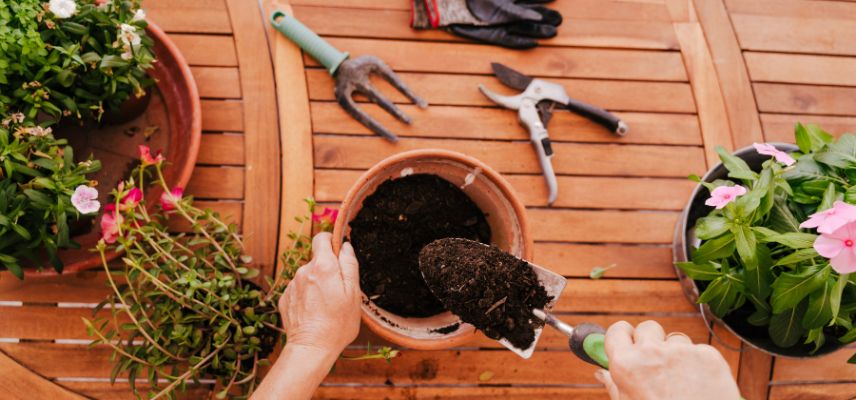
Right, off to the compost heap with the old potting compost!
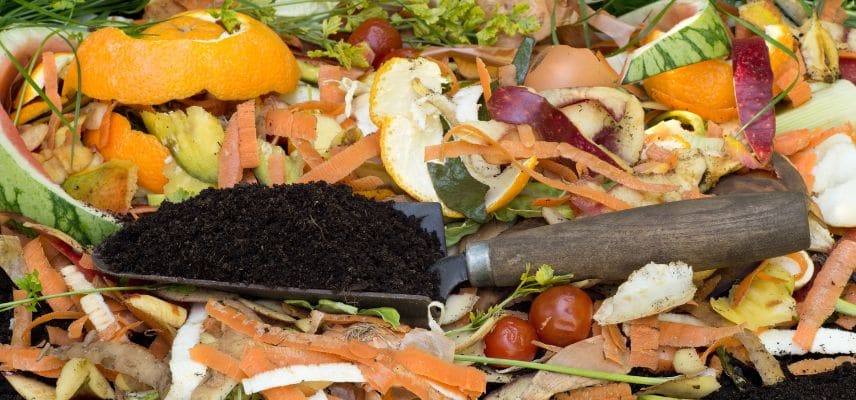
The simplest and quickest method is to add your old potting compost to the compost heap. Break up or crumble the root ball to aid decomposition. Even when depleted, this old potting compost still contains certain nutrients, notably those that your plant has used the least, which can enrich the compost.
Thanks to its fine, homogeneous texture, used old potting compost yields a well-aerated, easy-to-work-with compost, ideal for both your garden fork and for improving soil structure.
Additionally, it can be regarded as a carbon input, perfect for balancing the compost.
As a reminder: for good compost, you need two-thirds carbon-rich materials, known as brown (like our famous old potting compost, fallen leaves, dried hay, etc.) and one-third nitrogen-rich materials, known as ‘green’ (such as vegetable peels, grass clippings, etc.). For more information, read our article: “Succeed at composting in 5 steps“.
Add the old potting compost to the mulch
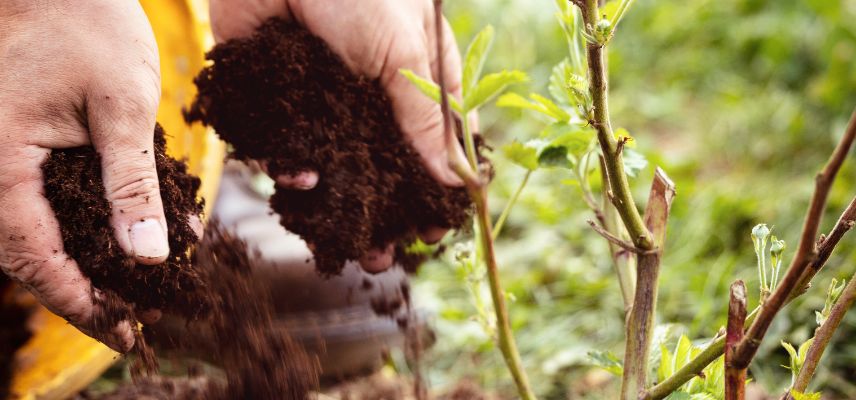
Your old potting compost can also be spread directly at the bases of your other plants, with (or beneath) your mulch. As noted above, even if it is depleted, this old potting compost still contains a few nutrients that can be useful to other plants. As it decomposes, it releases organic matter into the soil, enriching its humus content. This nourishes beneficial micro-organisms and improves soil fertility.
In addition, it improves soil structure, making it more crumbly and well-aerated, which facilitates water infiltration and root oxygenation. And well-structured soil promotes healthy root growth for your plants.
Ingrid’s tip: you can scratch the soil to help incorporate the old potting compost. Don’t hesitate to mix two-thirds old potting compost with one-third well-rotted compost to meet your plants’ needs.
Read also
How to choose good compost?Reuse of old potting compost for potted plants
To save money, you can also mix old potting mix with fresh potting mix, in a 50/50 ratio for your new potted plants. Remove any remnants of the old roots and ensure the mix is well aerated and light to promote the plant’s root growth.
If you can, also add one or two handfuls of well-rotted compost, depending on the size of the container.
Some plants tolerate recycled potting mix better than others: perennial plants that are not very demanding (campanulas, lavenders, etc), robust indoor plants (Pothos, Philodendrons, etc) and the aromatic herbs (Basil, Thyme, etc) grow well in a blended potting mix. These plants have modest soil requirements and benefit from nutrients added by the compost or fresh potting mix.
Note: Even if the recycled potting mix is enriched, it may require additional nutrient inputs in the form of fertiliser over time. As always, keep an eye on your plants for signs of nutrient deficiencies. Yellowing leaves, slowed growth or leaf spots may indicate that the potting mix needs to be enriched further or that adjustments are necessary.
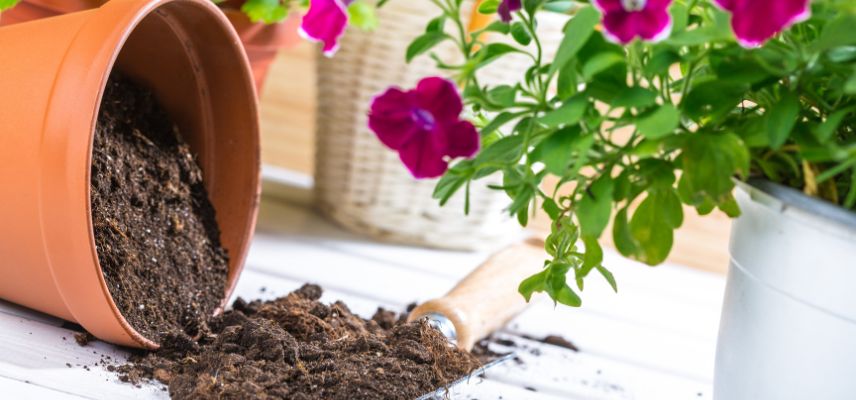
And what should be done with potting compost from diseased or parasitic plants?
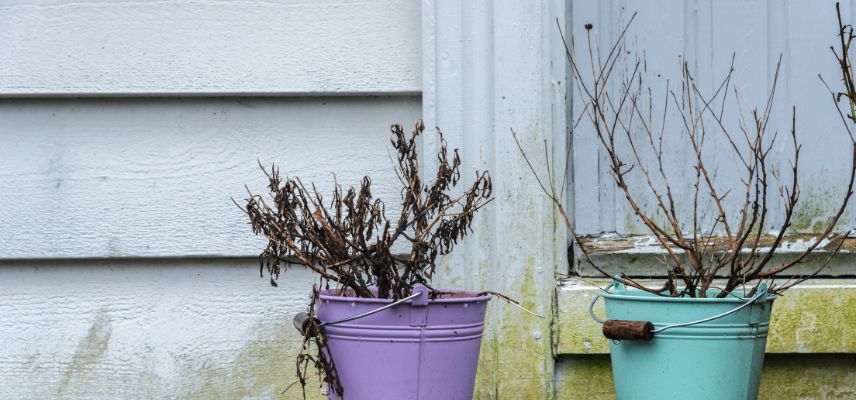
We’ve just looked at what can be done with old potting compost from our pots when a plant is healthy or an annual plant, but what about a diseased or parasitic plant? In this case, reusing the compost as is could spread the disease or pest eggs to other plants or to the new container. We recommend not reusing soil from a diseased plant to repot another healthy plant.
However, it is possible to treat the potting compost before composting, to reduce contamination risks. To do this, spread the compost on a surface (tarpaulin, crate, tray, etc.) and let it dry in the sun for several days, making sure to turn it regularly so that all parts are exposed to light and heat. If the weather is favourable (i.e., hot and dry), drying can be faster.
Some gardeners prefer to sterilise this diseased soil by heating it to 70–80°C for at least 30 minutes.
Note that if you are a master of composting and can raise your compost temperature (at least 60°C), you can compost old potting compost directly. For others, you must either dry it or sterilise it before composting. And as a last resort: dispose of this used soil in a corner of the wild garden (if possible) or with your local green waste collection.
And remember to clean your pot with soapy water and disinfect it with diluted white vinegar (100 ml of vinegar per litre of water) to eliminate pathogens.
- Subscribe!
- Contents
Comments