





























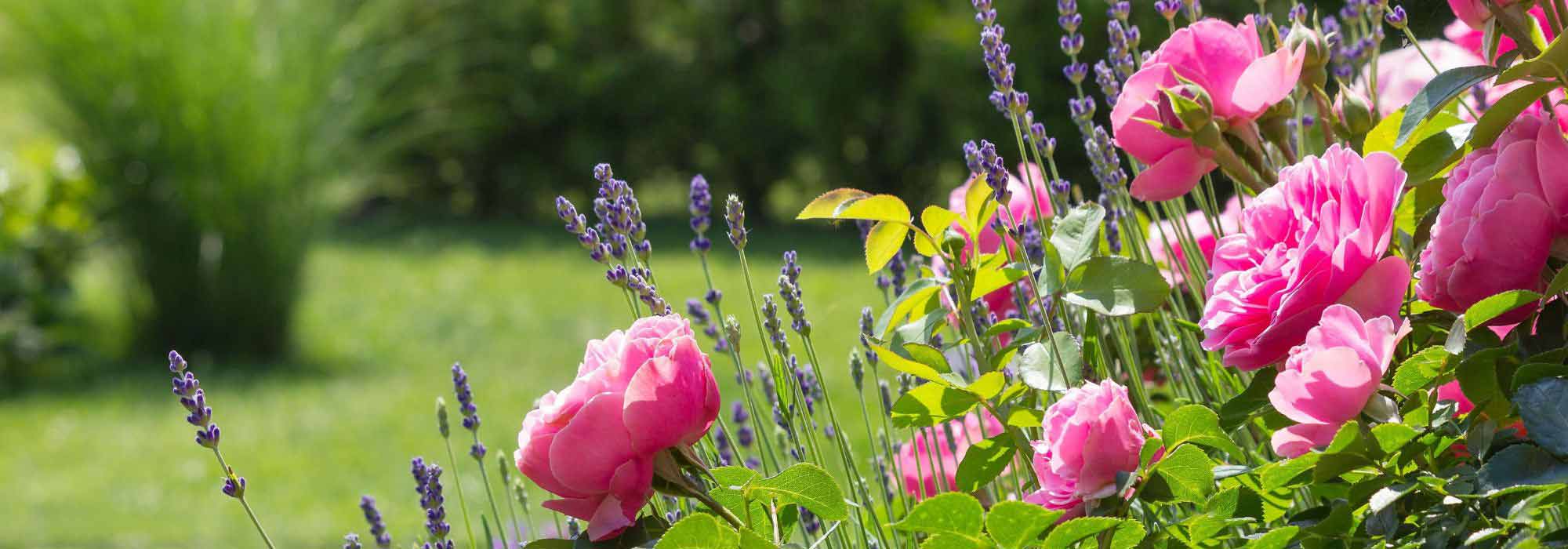
What to do in the garden in August?
despite the heatwave and drought
Contents
It’s hot! Temperature records are being broken, and everyone is affected, with heatwaves now reaching areas previously spared. But despite the heat, inactivity is not an option in the garden in August: harvests are reaching ripeness, pruning and cleaning are necessary to enjoy beautiful flowerbeds, we monitor the plantings to control pest populations, and watering is inevitable.
Fortunately, we can rely on lovely summer evenings to enjoy some rest, complemented by the harvests from the vegetable patch and orchard… before heading out the next day full of good intentions to prepare a garden and vegetable patch that will be just as productive in autumn. So what exactly should you do in the garden in August? Follow our tips.

On the side of trees, shrubs, and fruit plants
Heatwaves put garden plants to the test; follow our recommendations for watering a garden during a heatwave.
Ornamental Trees and Conifers
- Continue to water generously, but at intervals, newly planted trees and conifers, ensuring to reshape the watering basins at the base.
- For large conifers like pines and cedars, while the sowing technique is preferred, propagation by cuttings can be used for firs (preferably dwarf), yews, chamaecyparis, thujas, cryptomerias, cypresses, or junipers. The best time to take cuttings from conifers is at the end of summer: August is therefore ideal.
Fruit Trees and Berries
- Train the shoots of fruit trees grown as espaliers or fans.
- Continue harvesting summer fruits. Remember to collect any fallen, wormy fruits to prevent the proliferation of codling moths and make delicious compotes!
- Are your raspberry bushes producing abundantly? Harvest the fruits and make delicious raspberry jams.
- To prevent breakage, consider propping up the heavily laden branches of your trees.
- Common in nectarines and peaches, leaf curl is caused by a fungus that typically appears after a cool, rainy spring. Monitoring should occur between May and August to prevent any attacks. Read our dedicated article to learn how to prevent and treat this disease.
- Graft fruit trees such as peach, plum, apple, pear, apricot, quince… Follow the advice in our guide on how to graft trees.
Shrubs
- It’s time for semi-ripe cuttings! An opportunity to propagate ceanothus, oleander, callistemon, heather, aucuba, caryopteris, hibiscus, abelia, lantana, rockroses, mock orange, or even eleagnus to name a few. Enjoy yourself and multiply your favourite shrubs. For this, find Alexandra’s advice in the guide “Cutting: everything you need to know about different techniques and our advice“.
- Remember to water regularly newly planted shrubs to help them settle in the garden and develop their root system.
- In August, prune certain spring-flowering shrubs to encourage branching and the growth of new shoots, balance the branches, and reduce them if necessary. For more details, see our article on pruning spring-flowering shrubs. For example, you can prune laburnum, mock orange, deutzia, osmanthus delavayi, berberis darwinii, rockroses, rosemary, leptospermum, bay laurel, boxwood, weigela, and photinia.
Hedges
- Now is the time to trim conifer hedges, as well as evergreens that can be tidied up with a light trim, such as oleanders or photinias, so that new shoots can redden in September.
- Continue to water hedge shrubs planted this year if they show signs of water stress. Generous and spaced watering will encourage deep rooting.
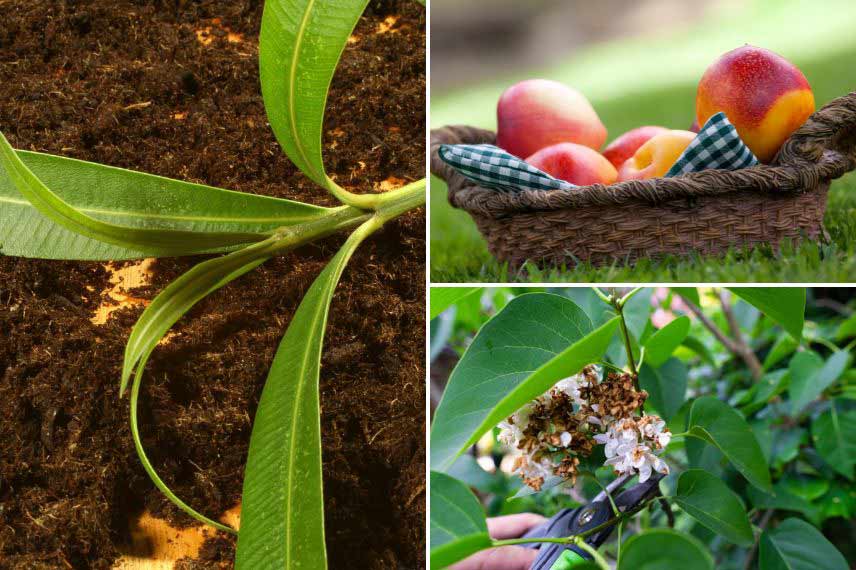 Take cuttings from shrubs, harvest summer fruits, and prune spring-flowering shrubs.</caption]
Read also
What to do in the garden in July?Perennials, bulbs, climbing plants and bamboos
With summer watering and rain, the saucers under plants fill with water. Empty them to limit the presence of mosquitoes near the house. In the garden, do you feel the urge to immortalise your floral compositions? Thanks to Virginie, you will discover 10 tips for ruining photos of your garden and flowers!
Perennials
- Remove faded flowers from your perennials daily, for aesthetic reasons but also to encourage them to produce new blooms.
- When perennials dry out, organise a collection of seeds and inflorescences, to reseed or make dried bouquets!
- Prune the lavenders, Helichrysums, and santolines after flowering.
- As with shrubs, mid-summer is ideal for semi-woody cuttings. Many perennials can also be propagated this way.
Bulbs
- Continue to divide iris rhizomes. This operation can be done between July and October depending on the region. This is the best planting time for Iris germanica or garden iris (from July to September), when they are in full summer dormancy; this way, they will root well before winter.
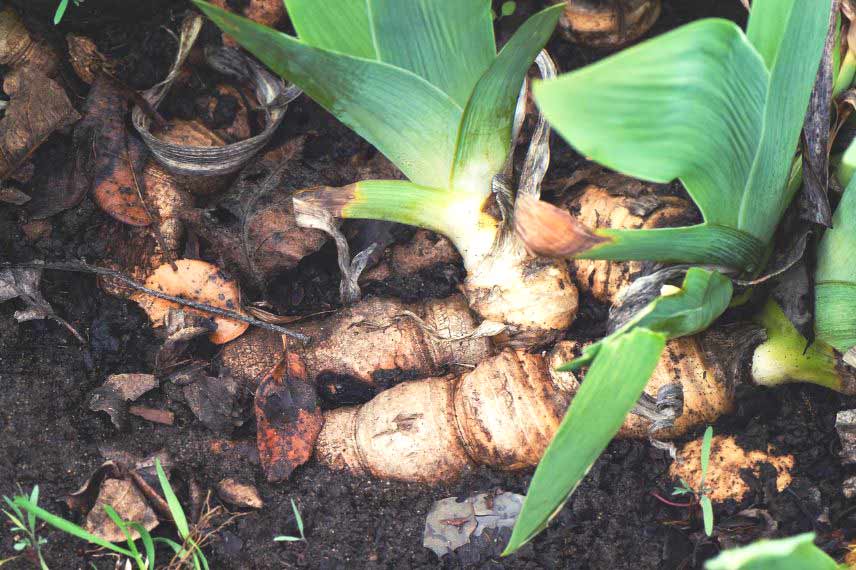
Plant new varieties of bearded iris
- Now is the time to plant autumn bulbs such as autumn crocus, colchicums, Naples cyclamens, and nerines.
- Cut dahlia flowers to encourage new blooms. Don’t wait for the flowers to fade and take the opportunity to create lovely bouquets. You can also propagate dahlias.
Climbers
- Take cuttings of trumpet vine, honeysuckle, hops
- The growth of climbing plants accelerates with the long summer days: regularly check their training. Fast-growing, both perennial and annual climbers, such as sweet peas or ipomoeas, happily intertwine with bushy climbers.
Bamboos
- Whether in pots or planted in the garden, bamboos suffer from drought. Discover our tips on how to properly water a bamboo in a pot.
Roses
Pick some of your beautiful roses to prepare rose petal jelly!
- Remove faded roses daily
- propagate your favourite roses by taking cuttings following our advice.
- If your roses are yellowing, it may be due to chlorosis on rootstocks poorly suited to your soil type. Don’t panic, an anti-chlorosis treatment will solve the problem.
- Are your roses showing signs of pests or diseases? Learn how to intervene with our recommendations on diseases and aphids and other rose pests.
- In case of drought, water the roses at the base, taking care not to wet their foliage
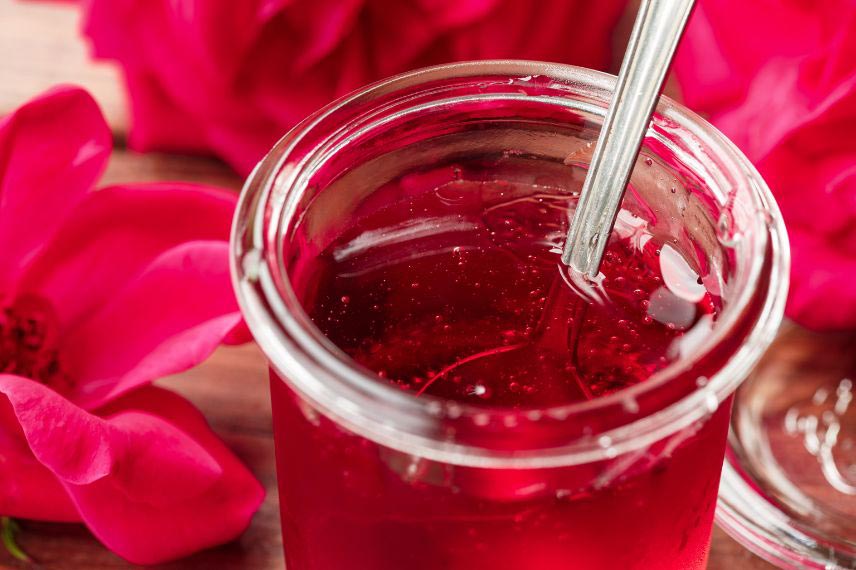
Enjoy the abundance of roses to try making rose petal jelly
Read also
What to do in the garden in September?Annuals and potted plants
- Take cuttings from scented, ivy-leaved or zonal following our tips
- Harvest seeds from non-hybrid annuals that you wish to see in your garden next year: Ipomoeas, nasturtiums, sweet peas, lavateras…
- Geraniums and various potted plants and window boxes have bloomed profusely since the beginning of summer. To enjoy beautiful flowering this August and into autumn, regularly remove faded flowers, water them regularly and provide fertiliser
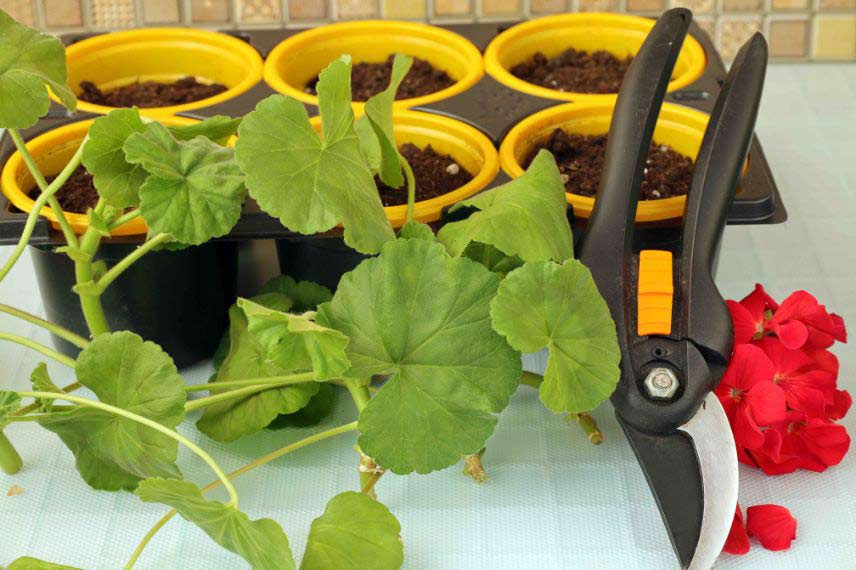
Take cuttings from scented Pelargoniums
In the vegetable garden
In August, we stock up on vitamins thanks to the fruits and vegetables from the garden! Try the delicious zero waste strawberry tops syrup recipe. Also, harvest the tomatoes that are now plentiful and head to the kitchen: Ingrid shares her secrets for making a proper gazpacho.
Vegetables to plant in August, sowing and tasks to do
- Dry weather tends to cause basil to flower, to delay this phenomenon, pinch off the flower spikes to encourage the production of new leaves.
- Cabbages (broccoli, cauliflower, kohlrabi, Chinese cabbages), leeks, celery… August is a good time to prepare the vegetables that will fill the autumn and winter baskets.
- To avoid leaving the soil bare as you harvest, sow new vegetables like lamb’s lettuce, spinach, or black radish. You can still enjoy them before winter.
- Sow white onions and black radishes.
- It’s already time to prepare for the next season: let flowers develop on some lettuces, basil, coriander, or marigolds: you will be able to harvest the seeds to sow next spring.
- Continue sowing seasonal salads to stagger your harvests.
- If you prune them, keep removing the suckers from your tomato plants.
- Harvest all vegetables, weed and hoe the potatoes, beans, and leeks.
- Rake between the rows of vegetables after rain or watering.
- Multiply strawberries by runners, separating them from the mother plants: as soon as roots appear at the base of the young plants, replant the rosettes immediately to expand your crop or share them! How to renew your strawberry patch? Follow all our tips!
- Propagation of herbs is done in summer, from July to September, on semi-woody or semi-hardened stems. Take cuttings of rosemary, Helichrysum, Agastache.
- Transplant winter escarole chicories.
- Harvest the grain beans and hang them on a north-facing wall.
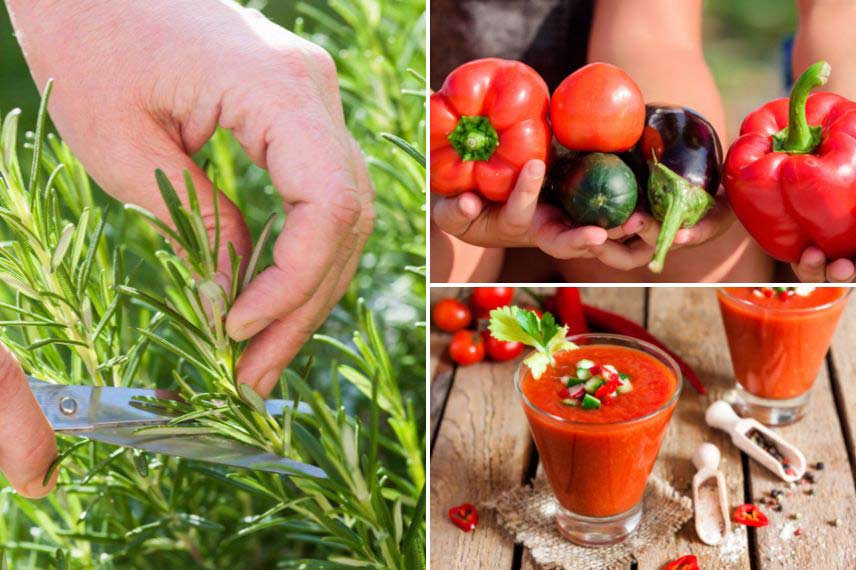 Take cuttings of rosemary, harvest summer vegetables, and enjoy a refreshing gazpacho!</caption]
Lawn and various works
Lawn and Flower Meadows
- The hotter it gets, the less you should mow! Additionally, tall herbs help regulate soil temperatures better and retain some moisture.
- Mowing is therefore less frequent, but grass clippings are still very useful for mulching your plants.
- Don’t waste water and let your lawn yellow; it will green up again with the first rains.
In the Ornamental Garden
- Inspect the garden, terrace, and the surroundings of the house every week, as well as the bacon to empty any water that may stagnate. This simple action will prevent the proliferation of mosquitoes.
- To prepare for winter, install insect hotels that will provide shelter when the cold returns. Our tutorial explains how to proceed. You can place several in the garden.
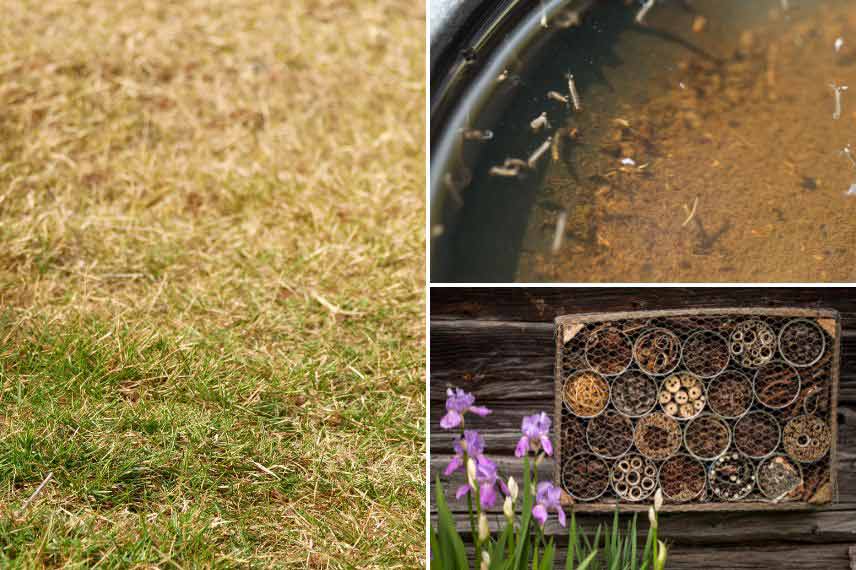 Even if the lawn yellows, water is too precious to waste on it! Be vigilant about stagnant water where mosquito larvae can quickly proliferate, and enjoy the holidays to create beautiful – and useful – insect hotels with the children.</caption]

- Subscribe!
- Contents

Comments