





























What to do in the garden in January?
New Year's resolutions!
Contents
A year has drawn to a close and a new one begins… Even though it starts with record mildness for a month of January, this first month of the year is normally the coldest of the year. In the heart of winter, most plants are resting to better thrive in spring. This might be the time to make good resolutions to implement in the garden for this new year: creating a vegetable patch for healthy harvests straight from the garden, establishing no-mow areas and maintenance-free zones to promote biodiversity, or setting up a new compost to both reduce waste and enrich your soil. One can also learn from the last particularly dry and hot seasons to replace plants that did not survive with more resilient plants, plant trees, green the surroundings of the house, or add greenery to the balcony. In short, take a moment to plan your future gardening tasks!
However, if the weather permits, a few hours spent in the garden will do wonders to shake off the excesses of the festivities and pamper your little piece of nature. Discover what to do in the garden this January.

On the side of trees, shrubs, and fruit plants
For your plantings, the bare root planting season is not over, but you can also plant trees and bushes sold in pots. Just avoid planting tender plants, for which it is better to wait until spring. To plan your plantings, consider using our Plantfit app!
Ornamental Trees and Conifers
- Prune your trees, outside of frost periods. Be cautious with cavity trees or those with peeling bark: small protected mammals (bats, squirrels, dormice) may shelter there for the winter.
- Plant trees sold in containers as well as those offered bare root, avoiding frost periods and waterlogged soils.
- Christmas is over, and if you bought a tree with roots, it needs to be replanted very quickly by following the advice in our tutorial.
- During this winter period, the trunks of tender trees can be protected with a straw sleeve during severe frosts.
- When it snows, gently shake the branches of evergreen trees regularly to prevent them from breaking.
- Sun tree, symbol of the Mediterranean, the Mimosa offers its fragrant bouquets of bright yellow flowers in the heart of winter. To enjoy its scent, adorable pom-poms, and sunny colour at home all year round, you can dry its flowers to make a dried bouquet: Discover through our tutorial three easy methods to dry mimosa.
Fruit Trees and Small Fruits
- Plant fruit trees and bushes if the soil is not frozen, whether bare root or in pots. Avoid the most tender species for which it is wiser to wait until spring.
- The ideal pruning period for fruit trees extends from January to mid-March, before the sap rises. At this time, the aim is to let more light into the tree; the green pruning in June will affect fruiting. Outside of frost periods, prune pip fruit trees: apple trees, pear trees, quince trees in free-standing or trained forms.
- Once the harvest of persimmons is done, prune the persimmon trees. This pruning is not necessary every year, but about every other year. It involves thinning out the necessary branches, removing branches that have appeared on the trunk, and eliminating those that grow inward.
- Prune medlar trees (Mespilus germanica) after fruiting.
- Take advantage of your pruning work to remove any now unnecessary stakes or loosen the ties of young trees.
- Remove mistletoe from fruit trees.
- Multiply currant bushes and blackcurrant bushes by taking cuttings of dry wood.
Shrubs
- If the weather is favourable, plant shrubs bare root or in containers, as well as hedge shrubs.
- Transplant shrubs that need to be moved.
- Between December and March, prune shrubs that flower in summer or autumn.
- Take advantage of your pruning work to take cuttings of dry wood and multiply your favourite varieties. Follow our video advice for this:
- Cut a few branches of forsythia and place them in a vase indoors: they will bloom in a few days thanks to the warmth.
- Remember to gently shake off the snow that weighs on the branches of your evergreen shrubs and conifers.
- Protect your most tender shrubs by sheltering them with a winter cover or a canopy of canes placed all around them. Remember to ventilate them from time to time.
- Protect the base of your Camellias by covering them with straw or leaves that decompose slowly.
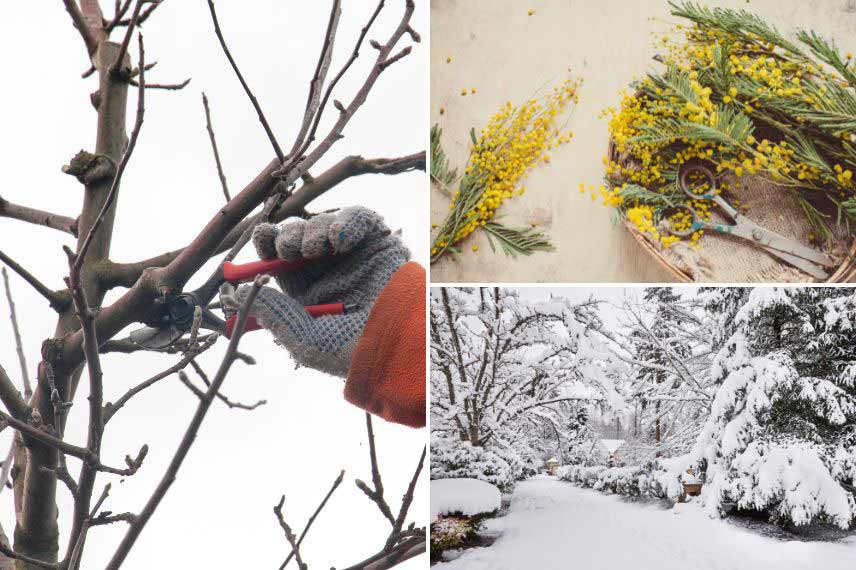 In January, prune fruit trees, make wattle bouquets in mild regions, and clear the snow accumulating on evergreens in cold regions.
Read also
What to plant in winter?Perennials, bulbs and climbing plants
Perennials
- Start designing future flower beds, imagining your next plantings
- Prepare your orders for perennials: we offer you the option to choose the date you wish to receive your plants! If you live in a region with a harsh climate, keep your perennials to plant under a frame until March
- Take advantage of sunny days to reshape your perennial beds: limit the spread of those that may become too invasive, such as crocosmias or asters, plant to fill gaps or replace those that did not survive. If a plant is out of place, transplant it; simply dig up the root ball gently with a spade and replant it immediately. Remember to mulch the base after watering
- Plant the perennials offered as bare roots or in pots, as well as ornamental grasses… this might be the perfect opportunity to create a lovely grass hedge
- Cutting the leaves of Oriental hellebores enhances their flowering. You can do this just as the flower buds emerge 5-10 cm above the ground, between December and mid-February, depending on the year and region
- Derived from a cross between a Christmas rose (Helleborus niger) and a hybrid hellebore (Helleborus x hybridus), the Helleborus lemperii has made its debut in our catalogue. These new hellebores showcase a beautiful variety of colours in January, with white, cream, pale pink, or deeper flowers, notably standing upright; a great way to renew and enrich your collections!
- Spread dead leaves or a good layer of straw over the perennial beds to protect them from the cold. Be cautious with those that, like the arum for example, dislike winter moisture: turn a bucket or basin upside down over them to keep their roots dry
Bulbs
- First to bloom among early-flowering bulbs between January and March, the Snowdrops, with their name so evocative of the transition from winter to spring, begin to show their lovely flowers white delicately tinged with green
- If you have delayed planting your bulbs, you can still do so in early January. Prefer late varieties such as Alliums, Eremurus (Foxtail Lily) or Lilies that will bloom in summer. Bulbs planted late in winter will bloom later and will also flower for a shorter period in the first year, but will establish properly for subsequent years
Climbers
- Plant climbers if you live in a region where frost is minimal or provided you plant avoiding frost days and waterlogged soils. Remember to protect their base from severe frosts with a thick mulch. We give you 5 excellent reasons to invite ivy into your garden!
- During winter, wisteria is in a dormant state. Take this opportunity to give it a balanced shape: outside of frost periods, cut back each branch that is growing a bit too outward or in the wrong direction to three buds. Remove any shoots that may develop at the base of the trunk
- Carry out winter cleaning pruning of kiwis by following our advice: using pruning shears or loppers, cut back dead or damaged branches. Then, remove the shoots that bore fruit the previous year, leaving 2 to 3 buds above the last fruit
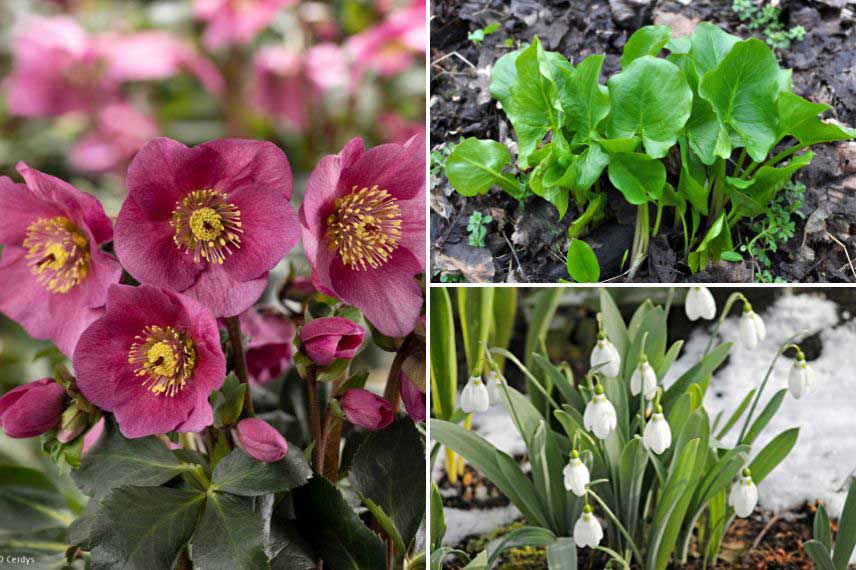
Helleborus lemperii ‘Lenia’, Arums with a good layer of leaves at the base and snowdrops
Roses
- Plant bare root roses (until the end of March) and potted ones, avoiding frost periods. If it’s too cold, wait for a thaw by heeling in the bare roots in. Dress the roots by slightly shortening them and cutting any damaged ones, then coat them before planting the roses. After choosing a sunny location, prepare the soil a few days in advance to properly loosen and aerate it before planting. Plan to amend with well-rotted manure or compost.
- Transplanting roses can be done until March, during their dormant period.
- Check the ties of climbing roses.
- Collect the last leaves remaining at the base of your roses and dispose of them at the waste disposal site to eliminate any potential pests and diseases.
- Between Christmas and the end of January, carry out winter pruning of roses.
Read also
What to prune in winter?Annuals and potted plants
- Even if the weather is mild, keep protections for the most delicate plants. If, despite your precautions, some of your plants have suffered from the cold, find our expert advice to understand why a plant has frozen and what to do!
- After 15 January, sow the first petunias and begonias in trays and at home.
- Prepare your orders for annuals as young plants (plug plants) or seeds; you can choose the date you wish to receive them.
- At the end of the month, if the weather is mild, plant primroses and pansies in your containers and window boxes.
- Prepare the soil in the areas that will receive your annuals and rake the beds of biennials to aerate the soil.
- If a sharp frost occurs, move containers, pots, and window boxes closer to a sheltered wall.
- If you wish to keep your Amaryllis bulb and make it flower again next year, pruning is necessary. After flowering, cut the faded flowers to 2 or 3 cm above the bulb to prevent seed formation. Allow the foliage to develop and feed with flowering plant fertiliser twice a month. This will help the bulb replenish its reserves. Water moderately and avoid letting water stagnate in the saucer. Place your Amaryllis in a cooler environment. After flowering, you can also move it outside once the risk of frost has passed, in a sheltered and shaded spot.
- Take your wintered plants (citrus trees, cacti…) out of shelter for a few hours during the day, if it is not freezing, to let them bask in the sun.
- In dry weather, remember to monitor the watering of your potted plants.
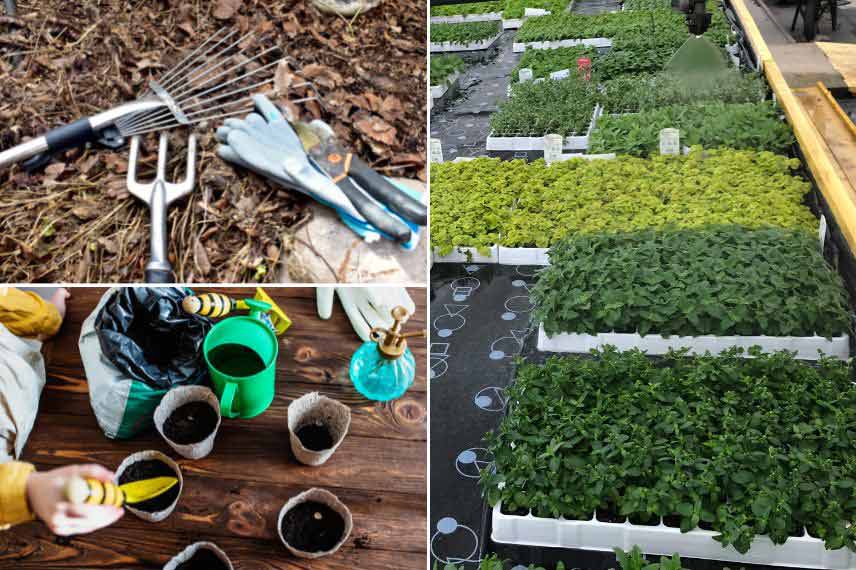 Rake the beds of biennials, start sowing petunias and begonias, and plan your orders for plug plants.
In the vegetable garden
Plan your vegetable seed orders to grow your own healthy and tasty vegetables while saving money!
Vegetables to plant in January, sowing and tasks to do:
- Check the expiry dates of your vegetable seeds to organise your seed purchases.
- It’s time to buy beaks of pink garlic for planting in the vegetable garden by the end of January – early February
- It’s also the time to plant bulblets of pink shallots, red onions, and sow white onions whose foliage is perfect for enhancing summer salads, much like chives. Find our best tips for planting garlic, shallots, and onions correctly!
- When to buy potatoes? Plants are often available from January. The first advantage of buying your potatoes early is having a choice of variety: early potatoes, late ones, blight-resistant, or original and colourful, there will be something for everyone.
- The germination of potatoes takes between 4 to 6 weeks. Therefore, you should start chitting your tubercles a month before the planting date, as generally, “early” potatoes are planted under cover (cold greenhouse or forcing tunnel) from February in mild climate regions and until early April in cooler areas. Consequently, chit “early” potatoes between January for southern regions and February/March for northern regions. Find our tips for chitting potatoes.
- During severe frosts, protect leeks with a good layer of straw or leaves. If the leek miner invades them, pull them up, do not compost them, and do not leave diseased leeks in the soil.
- Sow carrots under frames. Mix in some seeds of radishes: they will germinate quickly, and you can consume them before the carrots take up all the space.
- In the south, try sowing broad beans. In windy areas, it is advisable to stake them so that, when laden with pods, they do not topple over at the first gust of wind. In terms of companion planting, broad beans are good neighbours, particularly as they have the ability to fix nitrogen in the soil. They can increase the yield of cabbages and lettuce.
- Sow spring lettuces under cover.
- Prepare trenches for planting asparagus in spring.
- It’s also time to clean your pea or climbing bean supports.
- Harvest lamb’s lettuce, parsnips, leeks, wild chicory, cabbages, endives, salsify, and Jerusalem artichokes.
- Dig and crumble the soil in the frames while waiting for the first sowings of early crops, which will take place next month.
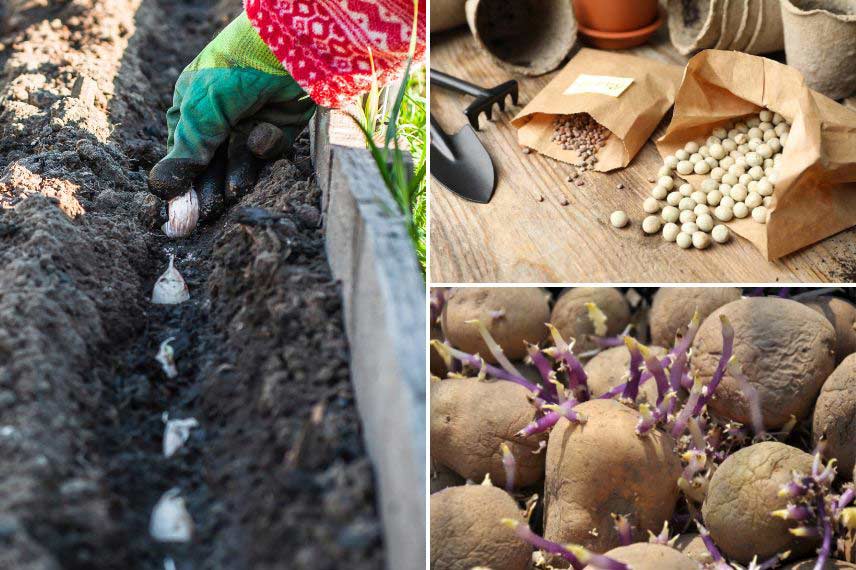 Plant pink garlic at the end of the month, check your seed stocks, and start chitting early potatoes in southern regions.
Lawn and various works
Lawn and Flower Meadows
- Continue collecting leaves from the lawn
- Avoid walking on the lawn if it is frozen or covered in snow. Also, try not to walk in the same spots when it rains, especially on heavy ground
Various Tasks in the Garden
- To prevent your plants from freezing in your greenhouse, check out our best tips for retaining heat in a greenhouse during winter and discover how to protect your garden from frost with makeshift solutions
- Wood ash is rich in mineral elements (calcium, potash, and trace elements). Incorporate it into your compost heap (a few handfuls from time to time), taking care to mix it thoroughly to benefit your garden later
- Find time to clean and repair your gardening tools in preparation for spring. Scrub rusty blades with a wire brush and coat them in oil: this will extend their lifespan
- Clean and disinfect trays, pots, and supports for use in spring
- Gather bundles of twigs in small corners of the garden: they will serve as natural shelters for insects or hedgehogs
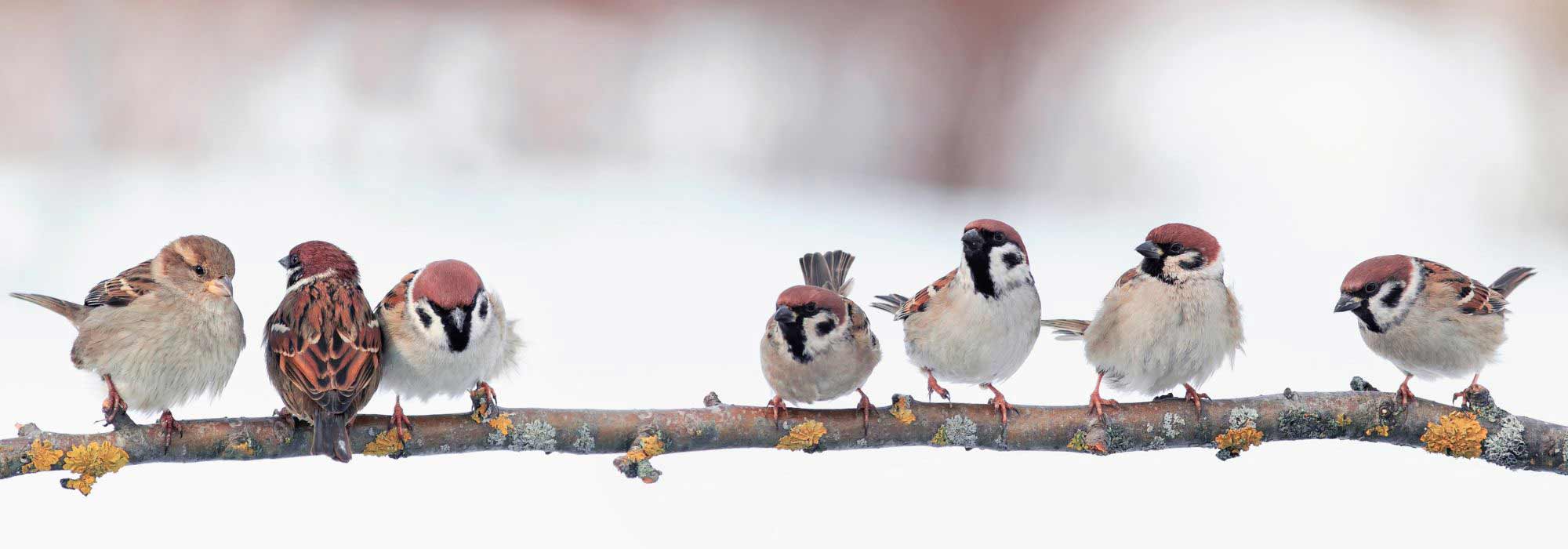
- Remember to feed the garden birds while avoiding salty foods. Don’t forget to place water dishes to hydrate them
- Ensure your chickens are well protected from the cold
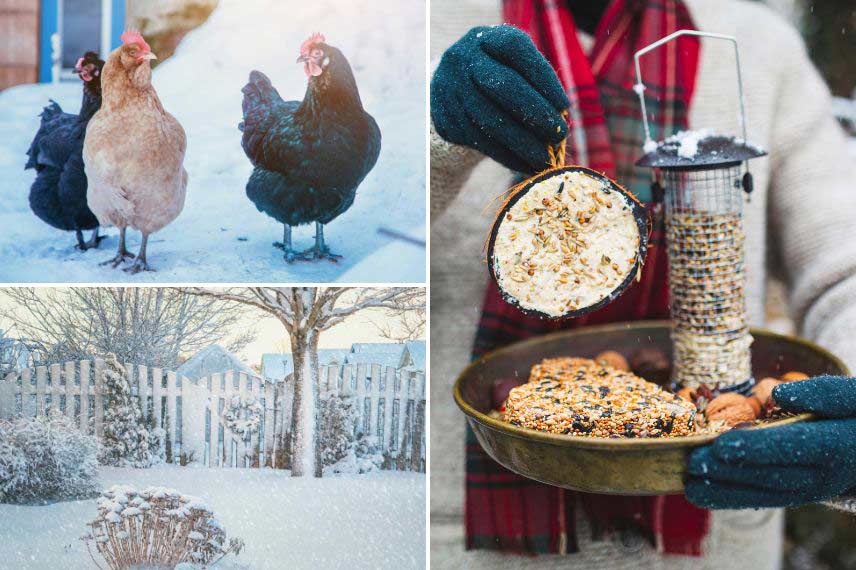
By the Pond
- Gently break the ice that may have formed on your pond or melt part of it by placing a container filled with very hot water.

- Subscribe!
- Contents

Comments