





























What to do in the garden in winter with children?
Ideas to keep them busy during the cold season
Contents
Now the garden has donned its winter coat, forcing you to admire it through the window rather than stroll around for hours. In these conditions, it’s not easy to find ways to keep the children occupied. However, some activities allow you to invite nature into the home. Discover our workshop ideas to keep children entertained in winter and in the garden.

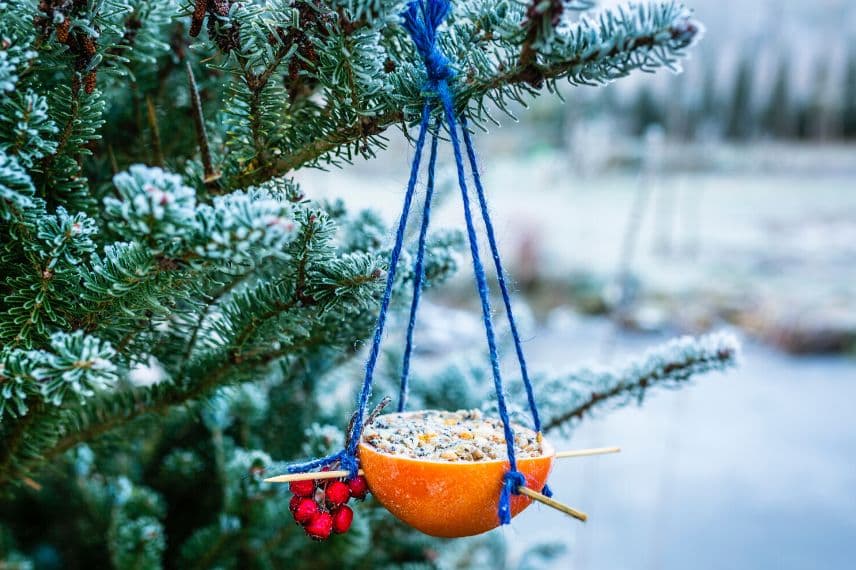
Making bird feeders
When winter sets in, it becomes very difficult for garden birds to find food. Indeed, insects have gone into hiding to survive the winter. The fruits, so plentiful in summer, become scarce. Frost and snow make the situation even more challenging, especially in regions with harsh winters. It’s not easy for small birds to feed! To help our feathered friends get through the winter, there’s nothing better than making bird feeders yourself. It’s a fun and easy activity for children.
For younger ones, you can simply use a container, such as a cup, an empty coconut, a half orange, or even a half apple, into which you can add a mixture of seeds and vegetable fat.
For older children, you can create a feeder using a bottle, a juice carton, a tin can, or even wood from a pallet. Don’t hesitate to place your feeder in a visible spot, from the window of your home, so you can observe the birds.
→ Find our DIY bird feeder ideas in our article: “DIY: Bird feeders” and our tutorial: “Make a hanging seed feeder for birds in winter”
Create an outdoor ice decoration
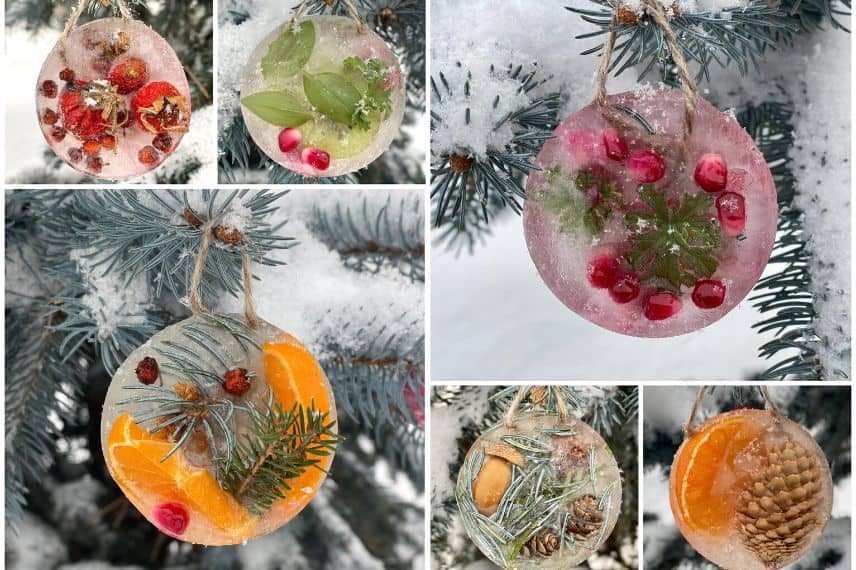
The advantage of cold weather outside is that you can create beautiful ice decorations to adorn the garden. All you need is some water, an ice cube tray or cake moulds, and a few natural decorations that you can gather from the garden: ornamental apples, rose hips, or Berberis berries, and pine cones. Take the opportunity to teach your child to recognise the different berries. Place the decorations in the moulds, pour in some water, and let the cold do its work. This final step even allows the child to understand the transformation of water into ice. Then place your ephemeral ice decorations on the ground or hang them in the trees and admire the result.
→ Find our complete tutorial on how to create an outdoor ice decoration
Make a lawn head
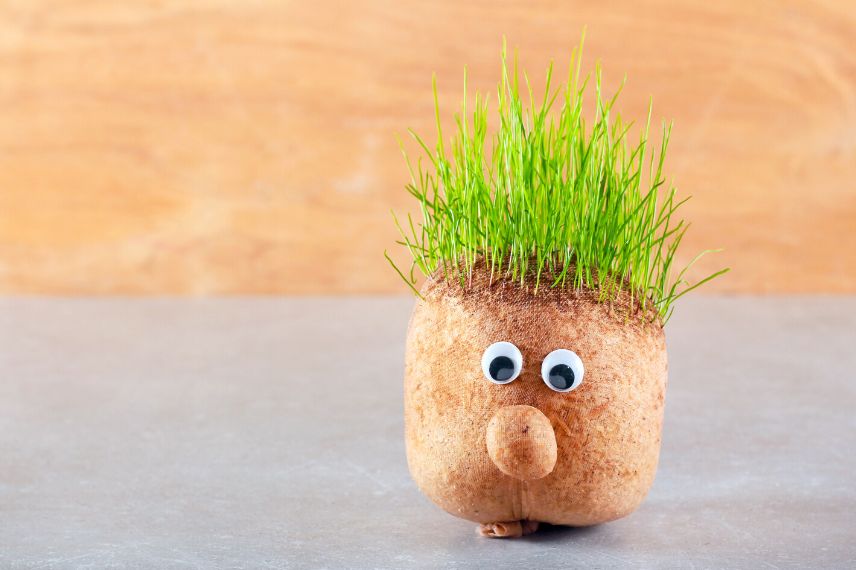
Cold winter weather and frost sometimes prevent us from stepping on the lawn in the garden. Why not invite the herb indoors by creating a lawn head? This funny little figure, also known as a “growing head,” is easy to make with your child and allows them to observe the development of the herbs daily, from seed to long, shaggy shoots. It’s a great way to understand plant development, share your love for gardening and pruning, or perhaps just give them the feeling of being a hairdresser for a day?
Create a plantable ribbon
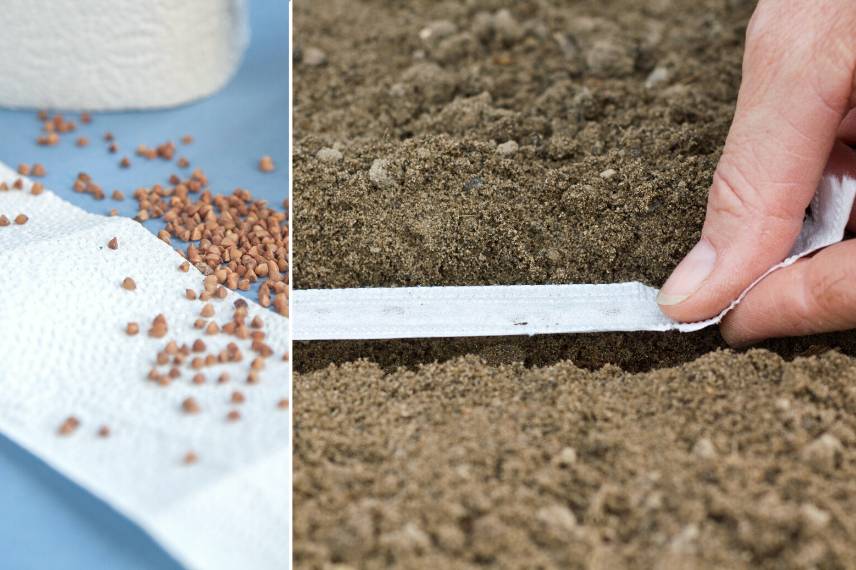
While waiting for spring to return, you can prepare your seeds by making seed ribbons with your child during winter. In terms of materials, you won’t need much: a toilet roll and a few seeds will suffice! Don’t hesitate to involve your child by asking what they would like to use as seeds: annual seeds for a lovely flower bed or perhaps vegetable seeds (radishes, carrots, salad) for the foodies? In spring, help your budding gardener to place their ribbon in the vegetable patch or in a planter, cover it with soil, and take care of their sowings.
→ Find our complete tutorial on how to make a seed ribbon.
Growing bulbs
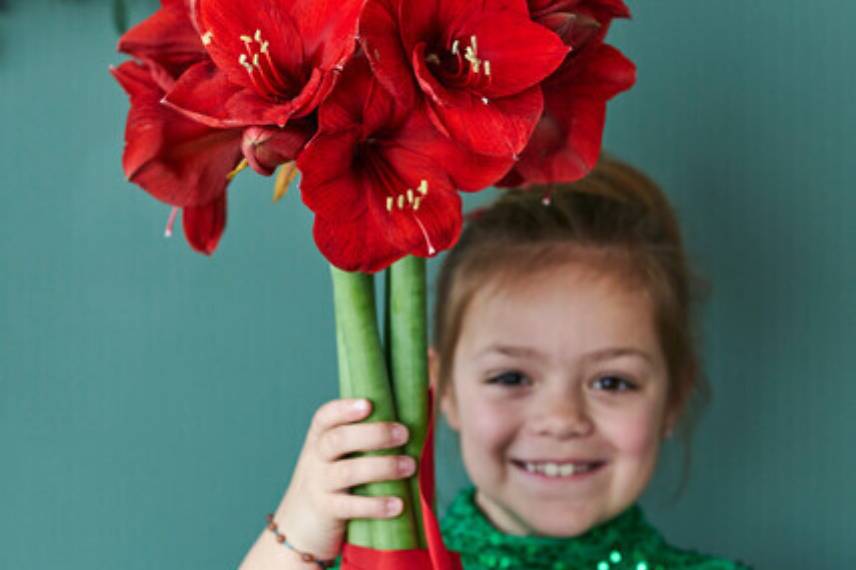
If the frozen soil prevents planting in the garden, it is very easy to plant bulbs in pots at home with your child. Moreover, growing bulbs at home allows you to introduce your child to gardening and observing plant growth. You can choose between an Amaryllis bulb for its large trumpet-shaped flowers, a hyacinth for its fragrance, or Muscari for their small size. Once planted, you can let your child take care of their plant independently, depending on their age, of course. Additionally, these bulbs can also make an excellent gift to prepare for loved ones.
→ Discover our tutorial on growing an Amaryllis with children.
Sowing vegetable seeds at home
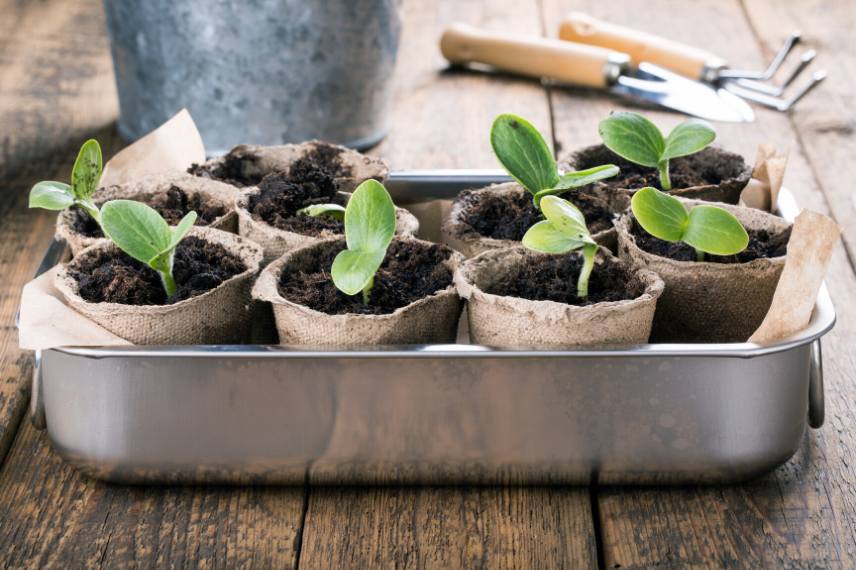
Winter is the perfect season to sow your seeds indoors, preparing your vegetable garden. Indeed, some tender vegetable plants require a good temperature, between 15 and 20°C, to germinate. For example, tomatoes are sown in pots indoors from February to early April, depending on the region. The same goes for salad, aubergine, courgette, and cucumber seeds. And there’s nothing better than sowing with your child. This first step is easy to carry out; you just need to have pots, potting soil, and the famous vegetable seeds on hand. Once your sowing is done, place the pots behind a bright window. Your child will then be able to observe the growth of their plants, from germination until the plant reaches several centimetres in height. This activity can even continue in spring with planting in the garden, followed by harvesting and tasting in summer.
Making Christmas decorations
At the end of autumn and at the very beginning of winter, one of children’s favourite activities is preparing for Christmas. For this great occasion, there are plenty of nature activities to do with your children. For example, you can make a lovely Advent crown by the end of November, using pine cones, Thuja branches, and four candles. Then, you could make a Christmas crown with hips or with natural decorations. And why not create a Christmas tree from dogwood to replace the traditional Christmas tree (beware, your children may oppose this) or to place on a sideboard or as a centrepiece? To decorate it, use garlands made from dried orange bark and amber apples to scent the home. And to send your wishes, nothing beats making a beautiful plantable card.
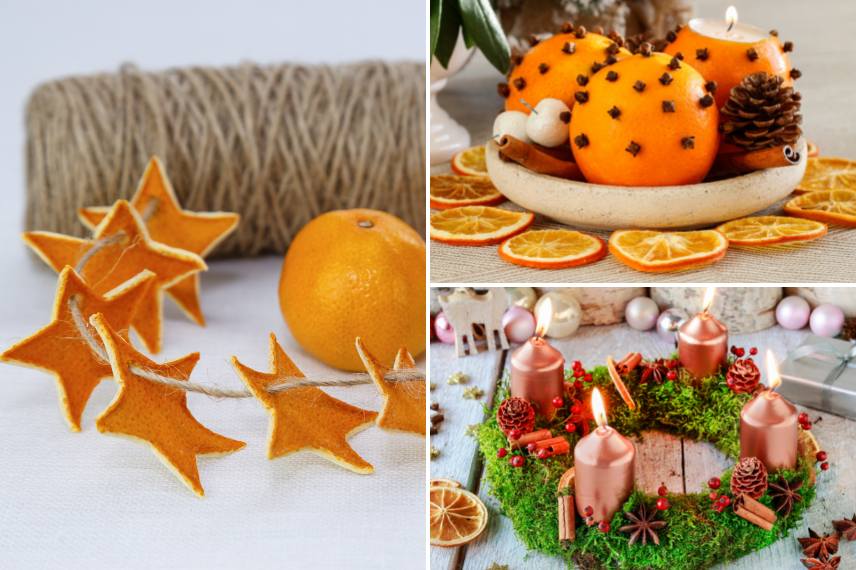
Garland made from dried orange bark, amber apple, and Advent crown
Preparing a mini vegetable garden
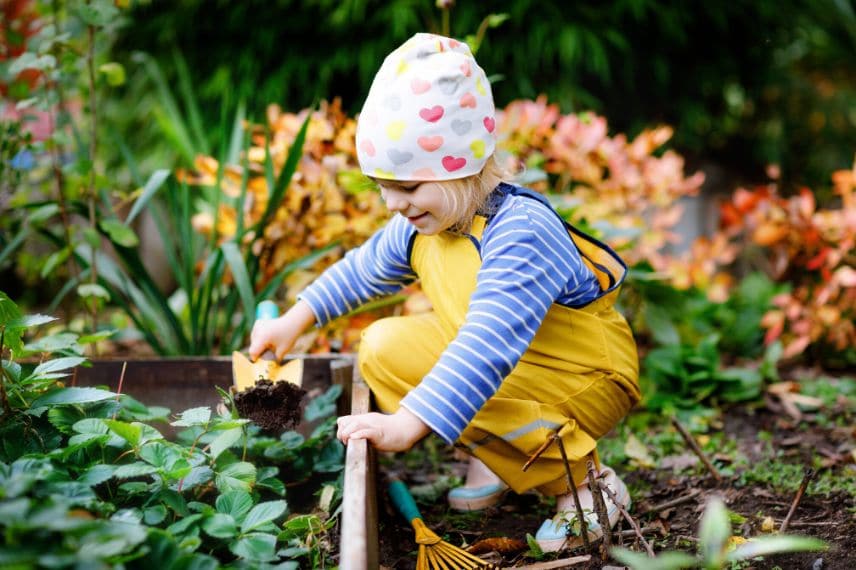
When gardening with our children, they almost all (with great confidence, I might add) ask: “I want my own vegetable patch (or garden) too!” And winter is the ideal season to help them prepare their little garden space with minimal effort. First, after ensuring they are warmly dressed, mark out their area together using wooden boards, large tree branches, or a simple border. For younger ones and beginners, it’s best to start small: a square of 1 m by 1 m will be sufficient. You can expand it in the following years depending on their age or interest.
Next, there’s no need to weed; simply lay large pieces of untreated brown cardboard on the ground, covering the entire area, with as few markings as possible. Water the cardboard thoroughly to moisten it. Place a stone, a brick, or a log on top to keep the cardboard in place. Then wait until spring, when you will discover a small patch (almost) ready to welcome the seeds and plants of your little gardener.
→ To learn more, read our two articles: 7 tips for starting a garden with children and What to do with cardboard in the garden?
Playing chef after gardening
When it’s cold, whether you’ve just returned from a garden excursion or stayed by the fire, there’s nothing better than preparing some sweet treats to enjoy at snack time. For example, you can make delicious rose hip jam to spread or use the precious little berries to make a winter herbal tea. To accompany it, you could prepare candied citrus peels or chocolate-covered dried fruits for the adults. To warm up, nothing beats making baked apples, which will teach how to peel fruits. As a meal, you can also harvest vegetables from the garden with your child, then whip up delicious soup with pumpkin, leek, or cabbage. And why not sprout some seeds (lentils, quinoa, cress,…) ? All these recipes will help your child learn to identify fruits and vegetables, use kitchen utensils, follow a recipe, and most importantly, discover new flavours.
→ Find all our recipe ideas here.

Pumpkin soup, baked apple, and candied orange peels
- Subscribe!
- Contents
![[shortcode identifiant="title"]What to Do in the Garden with Children in Winter[/shortcode]
Winter is a great time to involve children in gardening activities. Despite the cold weather, there are still plenty of fun and educational tasks to do in the garden. Here are some ideas to keep your little ones engaged:
1. [shortcode identifiant="list" items="Make bird feeders, Observe winter wildlife, Plant winter vegetables, Create a winter garden display, Collect twigs and pine cones for crafts"].
2. [shortcode identifiant="title"]Making Bird Feeders[/shortcode]
Winter can be tough for birds to find food, so making bird feeders is a great way to help them out. You can use {glossary}sunflower seeds{/glossary}, {glossary}peanuts{/glossary}, or {glossary}suet{/glossary} to attract a variety of birds to your garden.
3. [shortcode identifiant="title"]Observing Winter Wildlife[/shortcode]
Take some time to observe the wildlife in your garden during winter. You can spot birds, squirrels, and other creatures that are active during the colder months. It's a great opportunity to teach children about the importance of biodiversity.
4. [shortcode identifiant="title"]Planting Winter Vegetables[/shortcode]
Winter is the perfect time to plant some {glossary}winter vegetables{/glossary} like {glossary}kale{/glossary}, {glossary}carrots{/glossary}, and {glossary}broccoli{/glossary}. Children will enjoy watching the vegetables grow and eventually harvesting them for a tasty winter meal.
5. [shortcode identifiant="title"]Creating a Winter Garden Display[/shortcode]
Encourage children to get creative by making a winter garden display. They can arrange {glossary}evergreen branches{/glossary}, {glossary}berries{/glossary}, and other winter plants in pots or vases to decorate the garden.
6. [shortcode identifiant="title"]Collecting Twigs and Pine Cones for Crafts[/shortcode]
Gather twigs, pine cones, and other natural materials from the garden to use in craft projects. Children can make {glossary}bird nests{/glossary}, {glossary}decorations{/glossary}, or even {glossary}potpourri{/glossary} using these items.
By involving children in these winter gardening activities, you can instil a love for nature and gardening from a young age. It's a great way to spend quality time together outdoors, even during the colder months.](https://en.promessedefleurs.eu/blogwp/wp-content/uploads/2022/12/que-faire-au-jardin-en-hiver-avec-les-enfants-1.jpg "[planteglossary id=\"hortensia\"]s in winter can be a fun and educational activity for children. You can also engage them in planting [planteglossary id=\"bulbe\"]s such as [planteglossary id=\"tulipe\"]s or [planteglossary id=\"jonquille\"]s in pots for a colourful spring display. Another idea is to create a bird feeder using recycled materials to attract birds to the garden during the colder months. Additionally, you can involve children in pruning [planteglossary id=\"arbuste\"]s and trees, teaching them about the importance of winter maintenance for plant health. Lastly, building a small winter shelter for insects can be a great way to show children the importance of biodiversity in the garden.")
Comments