





























Why choosing old and local grapevine varieties for your garden?
Table grapes, a heritage worth protecting
Contents
Table grapes have been grown and enjoyed for millennia, long before the advent of modern viticulture dedicated to wine. However, with the globalisation of markets and the emergence of modern high-yielding varieties, many ancient and local table grape varieties, once commonly grown in France and in other regions of the world, have gradually been abandoned. These varieties, which were once the pride of many terroirs, have often faded in the face of more standardised grapes, selected for their resistance, their ability to travel and their commercial appeal.
These ancient varieties, despite their rich flavours and natural adaptation to the terroir, are today at risk of disappearance. Their diversity, which brings a wide range of flavours and aromas, is nevertheless essential for agricultural biodiversity. Moreover, they play a key role in the transmission of traditions and culinary heritage. In an era where the authenticity and sustainability of food are increasingly valued, these ancient varieties offer an opportunity to rediscover a forgotten heritage and to support a more sustainable and local agriculture.
Let’s explore the different ancient and local varieties of table grapes and their history!

Ancient varieties of table grapes: a heritage to protect
Table grape cultivation dates back thousands of years. The first domesticated vines were intended for direct consumption long before they were used for wine production. In Europe, the Romans helped to spread these varieties across the Empire, but each region developed its own local varieties adapted to the climate and the tastes of its inhabitants.
Varieties such as Chasselas or Muscat have a long history. For example, the Golden Chasselas of Moissac, a very ancient French variety, has been cultivated in the southwest since the 17th century and was protected by an AOC in 1971 to preserve this local richness.
Modern table grape varieties, such as Thompson Seedless, were developed to meet the needs of mass production: disease resistance, long shelf life, seedlessness and ease of transport.
However, this standardisation has often led to a loss of flavour diversity.
Ancient varieties possess a broader genetic diversity, which can make them more resistant to the specific environmental conditions of their regions of origin. Local grape varieties are often better adapted to terroir, rainfall patterns and local temperatures, which reduces the need for chemical treatments.
Despite their richness, ancient table grape varieties are increasingly rare. The industrialisation of agriculture and globalisation have favoured more standardised and profitable varieties. Many ancient varieties are in decline, because they do not meet mass production criteria (fragility, lower yields).
However, growing interest in local, organic and tasty foods is helping to revive these varieties. Local initiatives aim to safeguard and promote ancient grapes in local markets, fostering biodiversity and respect for cultural traditions.
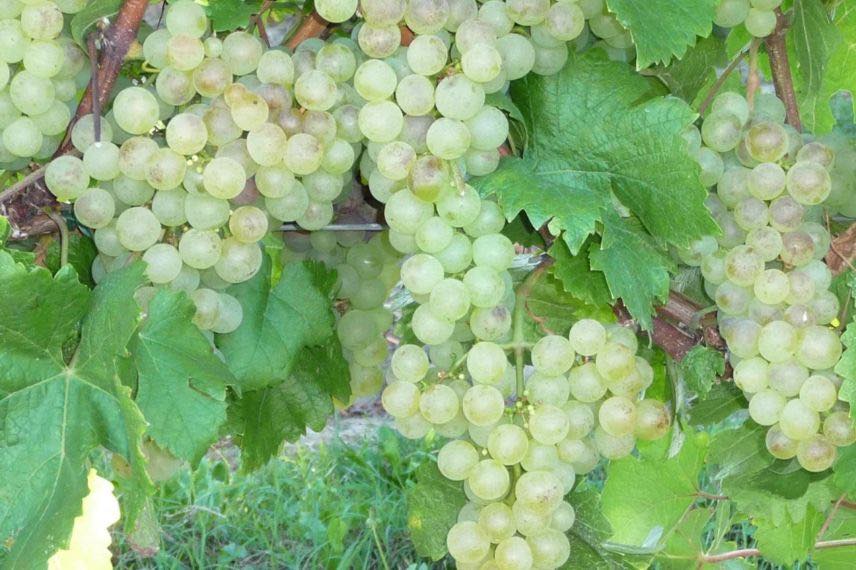
Chasselas table grape, an old variety well known in France
Why having local table grape varieties fallen out of favour?
The decline of local table grape varieties is mainly due to the standardisation of the global market.
This standardisation has progressively marginalised local and older varieties, often less productive and more fragile.
Consumers have thus become accustomed to standardised table grapes, often seedless, and with uniform aesthetic characteristics, favouring mass-market purchases at the expense of flavour diversity.
Local table grape varieties generally have a shorter shelf life.
Indeed, grapes from older varieties may have thinner skins and juicier flesh, which makes them more difficult to transport and to store without deteriorating.
They are therefore better suited to local and immediate consumption, unlike modern varieties selected to withstand long supply chains.
This sensitivity to transport conditions has reduced their appeal to major distribution chains, which favour varieties able to withstand long distances while remaining visually attractive.
The advantages of old table grape varieties
Flavour diversity
While modern grapes are often selected for their sweetness, heritage varieties stand out for more complex and varied aromas, ranging from floral notes to musky or spicy flavours.
Grape enthusiasts can thus rediscover forgotten flavours, unique to each region and to each terroir. These heritage varieties are not just sweet: they offer varied textures, ranging from crisp firmness to juicy tenderness, thereby providing a depth of flavour that modern varieties often cannot match.
Terroir adaptation
One of the main advantages of heritage varieties lies in their natural adaptation to the local terroir. These grapes, cultivated for centuries in specific regions, have become perfectly acclimatised to local climatic and geographical conditions. For example, the Moissac Chasselas is ideally suited to the climate of south-west France, while Muscat of Alexandria thrives in Mediterranean environments.
Thanks to this adaptation, these heritage varieties are often more resistant to local climatic conditions and diseases, reducing the need to use pesticides or chemical interventions. This natural resistance makes them ideal candidates for a more sustainable and environmentally friendly agriculture.
Biodiversity and genetic preservation
The cultivation of heritage table grape varieties contributes to the preservation of agricultural biodiversity. The dominance of modern varieties has led to genetic erosion, with a reduction in the diversity of cultivated plants. Conserving heritage varieties not only preserves unique flavour heritage, but also ensures genetic diversity essential for the future resilience of grape cultivation.
Indeed, this diversity is crucial in meeting the challenges posed by climate change and the emergence of new diseases. Heritage varieties offer a reservoir of unique genetic traits, such as natural resistance to certain diseases or drought tolerance, which could be exploited to develop more robust varieties in the future. The conservation and promotion of these varieties are therefore not only a matter of taste but also of long-term food security.
Typicity and authenticity of local products
Heritage and local grape varieties are closely linked to the history and culture of a region. They embody the terroir’s identity and add a dimension of authenticity to local products.
This attachment to the terroir gives heritage grapes added value in the market. They meet the growing demand from consumers for local, authentic and sustainable products. More and more people are seeking foods with a story, as opposed to standardised fruits lacking character. This typicity is a commercial asset for producers who choose to turn to heritage varieties, despite sometimes lower yields.
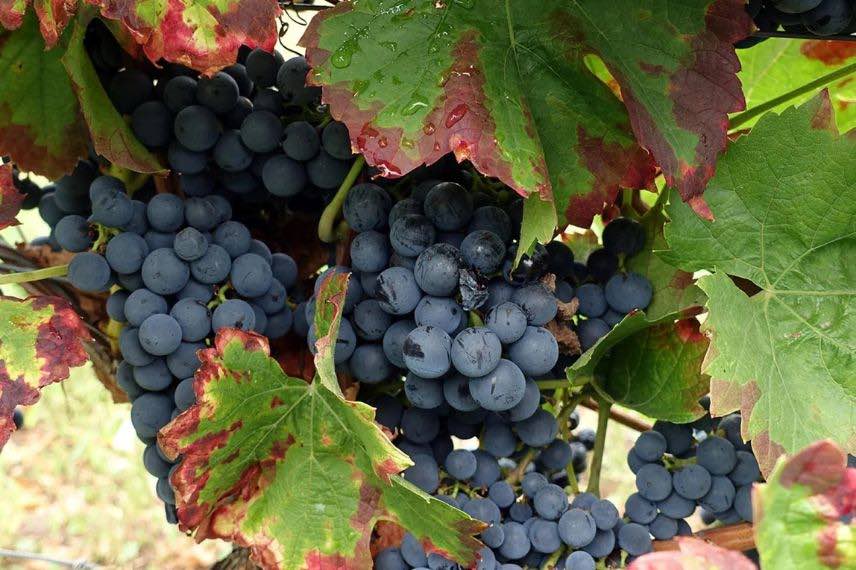
Alphonse Lavallée table grape
Read also
Vine: planting, pruning and careSome old, local varieties of table grapes
France, with its rich agricultural heritage, has preserved several ancient table-grape varieties that are still cultivated. Here are two emblematic examples well known to French consumers:
- Chasselas doré : Chasselas doré is one of the oldest table-grape varieties in France, cultivated for centuries in the Moissac region in the southwest, widely known and appreciated in France. This grape is distinguished by its small golden clusters, its sweet and juicy berries, as well as its thin skin. It is recognised for its delicate flavour and lightness. The Chasselas doré benefits from the Appellation d’Origine Contrôlée (AOC), guaranteeing its origin and quality. It is a symbol of Moissac’s terroir.
- Muscat de Hambourg : this grape, produced in Germany in 1860, with dark purple grains and a musky flesh, is another ancient variety highly prized. Cultivated mainly in Mediterranean regions, it offers a sweet and very perfumed flavour.
Less well known, here are a few other varieties to grow in your garden:
- Alphonse Lavallée : this grape is an ancient variety with large black berries. It is particularly appreciated for its juicy and crunchy flesh, and its sweet taste. This variety is often sold in organic shops.
- Pied de Perdrix : an old variety originating from Béarn, perfectly pleasant as a table grape for its sweet, golden and pink-tinged berries when ripe.
- Madeleine Royale : this is an early variety from the southwest of France, generally harvested from July. The berries of Madeleine Royale are white to pale golden, small in size, but very sweet and juicy. It is particularly valued for its early ripening, allowing you to enjoy table grapes from the start of the season.
- Dattier de Beyrouth : ancient variety with long and golden berries, which is distinguished by its firm and crisp texture, as well as its sweet flavour. Well suited to hot climates, the Dattier de Beyrouth is often grown in Mediterranean regions where summers are hot.
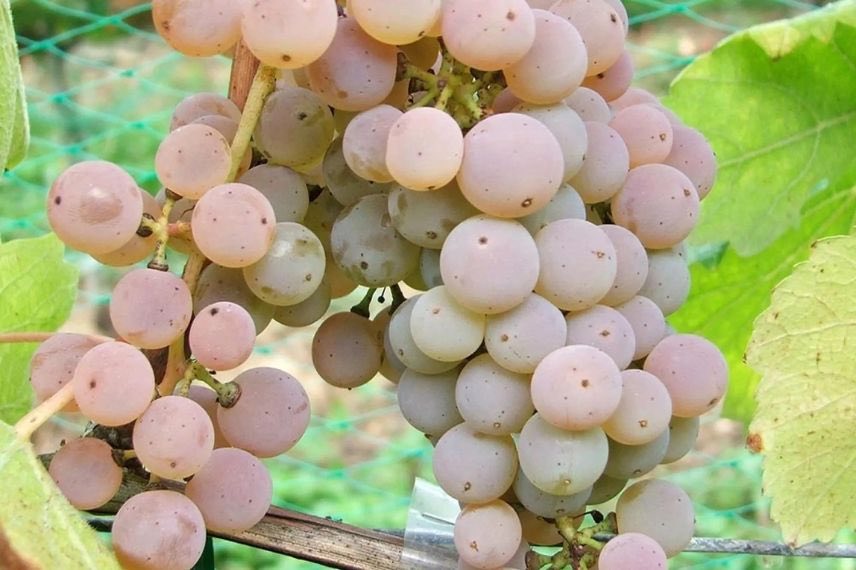
Pied de Perdrix table grape, with white-pink berries
Challenges and prospects
Ancient table grape varieties, adapted to local terroir for centuries, present advantages in the face of climate change. Unlike modern varieties, often fragile outside optimal conditions, ancient vine varieties have developed natural resistances to diseases and local climate fluctuations. For example, some varieties may better withstand drought or temperature fluctuations, giving them real potential for sustainable agriculture.
However, climate change, by altering growth conditions, could also pose new challenges for some of these varieties, requiring adjustments in agricultural practices or additional efforts to preserve them. Research in the field of sustainable agriculture, particularly around the resilience of ancient vine varieties, could offer solutions to protect these genetic treasures.
- Subscribe!
- Contents
Comments