





























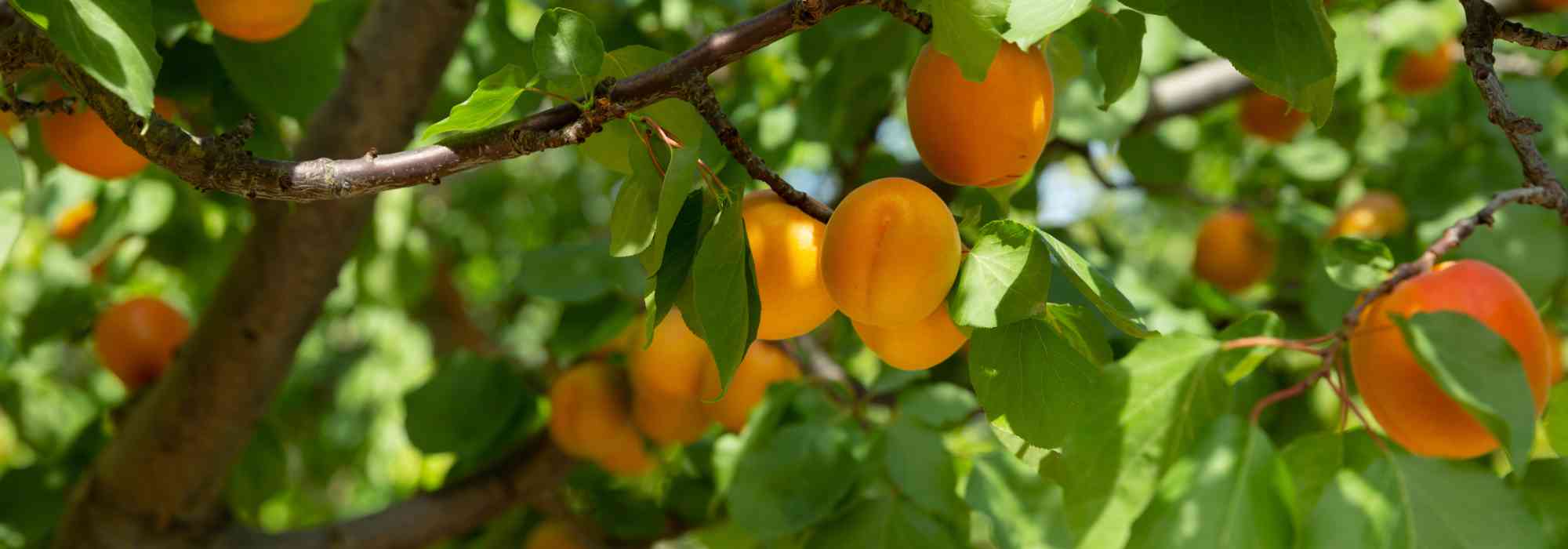
My apricot tree isn't bearing fruits? Why?
Best practices for an abundant apricot harvest!
Contents
The apricot tree (Prunus armeniaca), prized for its sweet, juicy fruits, is prone to being fickle when it comes to bearing fruit. There are many and varied reasons for this lack of fruit, ranging from climatic conditions to nutritional deficiencies, including diseases and parasites. Late-spring frosts, excessive heat in summer, poor pollination, or an unsuitable pruning can all contribute to this problem. To understand and address this phenomenon, it is essential to adopt appropriate cultural practices and to monitor the tree’s health closely throughout the year.
Discover in this care sheet the main factors that influence your apricot tree’s fruiting and the solutions to ensure a plentiful and high-quality harvest.
→ For everything you need to know about apricot trees, read Apricot tree: planting, pruning and care.

Climatic conditions
Late frosts and excessive heat
In spring, temperatures must be high enough to promote flowering and pollination. Late frosts can damage flowers, preventing fruit set. In summer, temperatures that are too high can also harm fruiting. Excessive heat (above 35°C) can cause water stress, reducing both the quantity and the quality of the fruit.
Some varieties flower late, which limits the risk of damage from spring frosts. This is the case for the famous Polish apricot tree, but we offer a full selection of apricot trees suitable for cultivation in the northern half of France.
Solutions to protect your apricot tree
To protect the apricot tree from late frosts, it is advisable to choose a sheltered planting site, preferably on a south-facing slope to benefit from heat and avoid frost pockets. If frost is forecast, cover the trees with fleece can provide effective protection.
In summer, to combat excessive heat, it is essential to ensure regular and adequate watering, especially during droughts. Mulch at the base of the tree can help conserve soil moisture and keep soil temperatures cooler. Finally, installing shade cloth can also help protect the apricot tree from the adverse effects of summer weather.
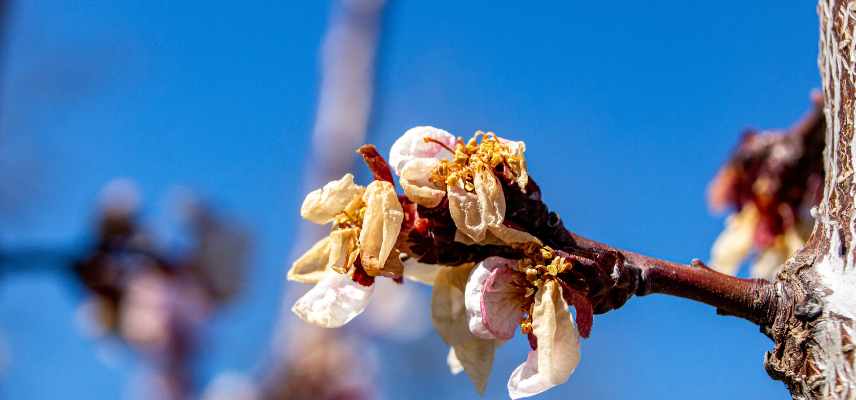
Flowers or buds affected by a late frost will no longer bear fruit.
Read also
Apricot tree: planting, pruning and carePossible deficiencies
For optimal fruiting, the tree needs a balanced feeding of macro- and micronutrients. The three main nutrients – nitrogen (N), phosphorus (P), and potassium (K) – are essential. Nitrogen is crucial for vegetative growth, phosphorus for root development and flowering, and potassium for fruit formation and quality.
- Nitrogen (N): A nitrogen deficiency results in pale or yellowish foliage and slow growth. The lower leaves may yellow and drop prematurely. Lack of nitrogen also affects flowering and fruit formation. Solution: Well-decomposed compost and manure are excellent sources of nitrogen.
- Phosphorus (P): Signs of phosphorus deficiency include stunted growth and leaves with reddish or purple colouring. Flowering may be delayed, and root development is often insufficient, which weakens the tree. Solution: Bone meal is rich in phosphorus.
- Potassium (K): A lack of potassium is manifested by brown and curled leaf margins, and increased susceptibility to diseases. Potassium deficiency affects fruit quality, which may be smaller, less sweet and less juicy. Solution: Wood ash is a good natural source of potassium.
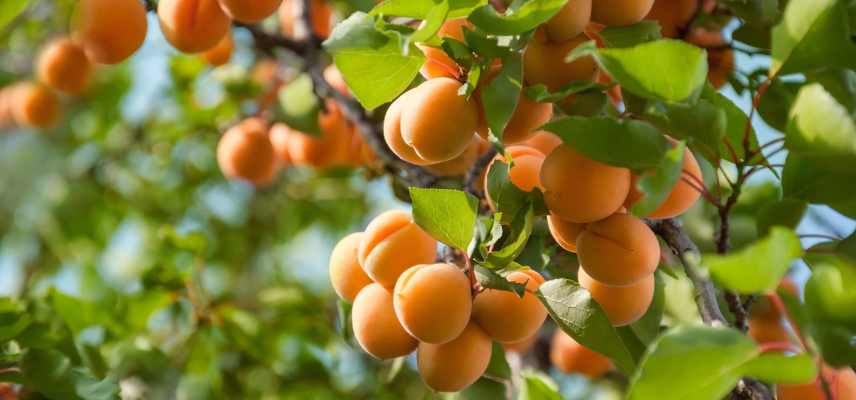
To bear fruit well, an apricot tree must have access to essential nutrients.
Diseases and parasites
Common diseases affecting fruiting
Diseases can severely affect an apricot tree’s ability to fruit. Here are the most common ones:
- Moniliosis – Also known as brown rot, moniliosis is caused by a fungus that attacks flowers, shoots and fruit. Symptoms include brown spots on fruit that eventually rot. Flowers and young shoots can also wilt and die. This disease spreads particularly during damp and wet periods. Control: nettles manure is effective as a preventive treatment.
→ To learn more about this fruit tree disease, read Moniliosis: identification and treatment.
- Powdery mildew : Powdery mildew is a fungal disease that manifests as a white, powdery felt on leaves, shoots and fruit. It leads to a reduction in photosynthesis, weakens the tree and affects fruit quality. Infected fruits may develop crusts and become deformed. Control: spraying a preparation based on a teaspoon of bicarbonate of soda dissolved in 1 litre of water or a treatment with skimmed milk diluted in water are effective against powdery mildew.
→ Worried about powdery mildew? Read Powdery mildew or white disease: prevention and treatment.
Oliver’s tip : Remove and destroy mummified fruits and diseased parts of the tree to reduce sources of infection. Regular pruning also helps promote good air circulation and limit humidity near the fruits.
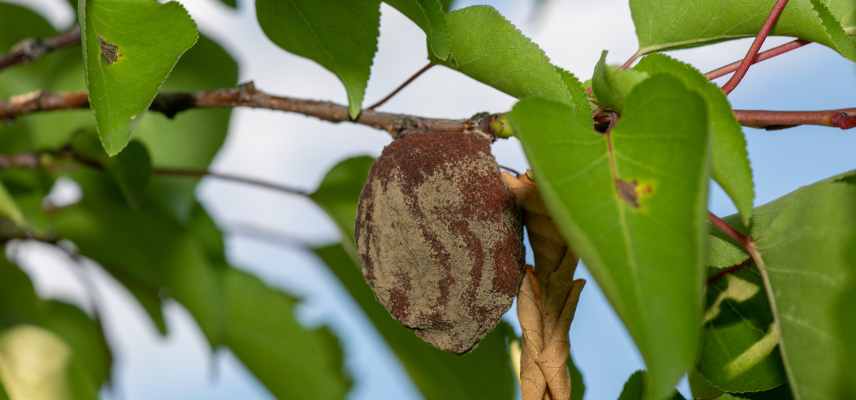
Apricot affected by moniliosis.
Identification of pests
Pests can also hinder fruiting by weakening the tree:
- Aphids : These small sap-sucking insects cluster often on new shoots and leaves. Aphids excrete honeydew, which promotes the development of sooty mould, a black mould. Symptoms include deformed and sticky leaves, and slowed growth. Control: let nature take its course (the larvae of ladybirds and hoverflies will gladly help against aphids). Otherwise a good shower should be enough to dislodge a large number of aphids.
→ Tired of aphids? discover all our tips in our advice sheet Aphids: control, treatment and prevention.
- Scale insects : Scale insects are insects that attach to branches and leaves, forming clusters of small white or brown shells. They suck sap from the tree, weakening its vitality and reducing its ability to bear fruit. Scale insects also excrete honeydew, so there is a risk of sooty mould. Control : Remove scale insects manually with a soft brush.
→ Scale insects are fascinating creatures. Indeed! Find out more by reading Scale insects: identification and natural treatment.
Read also
Apricot tree: the best varietiesApricot tree pruning
Pruning of the apricot tree helps regulate the tree’s growth, optimise light and air penetration, and prevent diseases. Here are some pruning techniques to promote fruiting:
- Formative pruning : carried out in the early years after planting, it aims to give the tree a solid, well-balanced structure. We generally select a goblet or vase shape, which allows good aeration and better exposure to light. This pruning involves removing side branches that are too low and promoting the growth of main branches that are well spaced.
- Fruiting pruning : this pruning is carried out in winter, when the tree is dormant. It consists of shortening the previous year’s growth to stimulate the production of new fruiting shoots. It is important to keep twigs bearing flower buds and to remove shoots that grow toward the inside of the tree or cross each other.
- Rejuvenation pruning : it aims to rejuvenate the tree by removing old or unproductive branches. This pruning stimulates the growth of vigorous new branches and facilitates a better distribution of fruit.
Please note : Prune at the right time (autumn or late winter), do not prune when it frosts, avoid severe cuts and use clean, well-sharpened cutting tools!
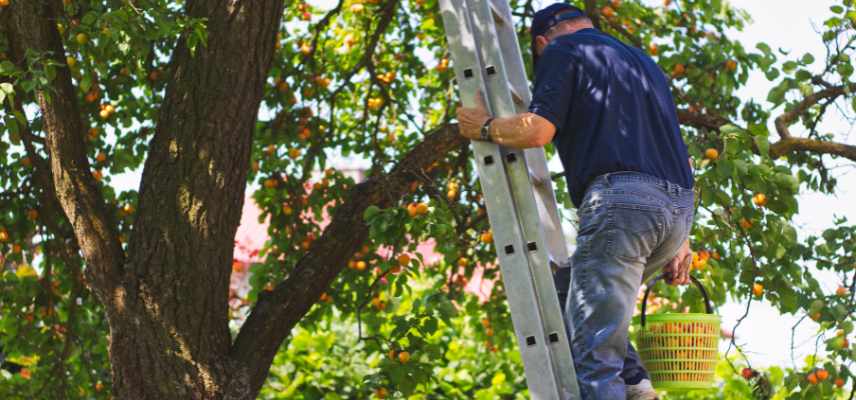
Well pruned, the apricot tree is fruit-bearing.
The age of the apricot tree
The age of the apricot tree has a direct influence on its ability to bear fruit. A young apricot tree may take several years before producing fruit, while an aged apricot tree may see its production decline over time.
Indeed, a young apricot tree, aged 1 to 3 years, first concentrates its energy on the growth of its root system and its foliage. Flowering and fruiting may be sporadic or absent during the first years. During its youth, remember to water it regularly, but not excessively.
An aged apricot tree, often over 20 years old, may see its fruit production fall due to the tree’s fatigue, deterioration of its structure and competition between branches. To revitalise an old apricot tree and improve its fruiting, specific care is required:
- Rejuvenation pruning : perform a rejuvenation pruning in autumn or late winter to remove dead, diseased or too-old branches. This pruning promotes the growth of new vigorous shoots and stimulates fruit production. It is advisable to prune around a third of the branches each year to avoid excessive stress.
- Soil amendment : apply well-rotted compost or manure around the tree to enrich the soil with essential nutrients.
- Watering management : ensure adequate watering, especially during drought periods.
- Monitoring of diseases and pests : old apricot trees are more susceptible to diseases and pests. Regularly monitor the tree and apply preventive and curative treatments as needed.
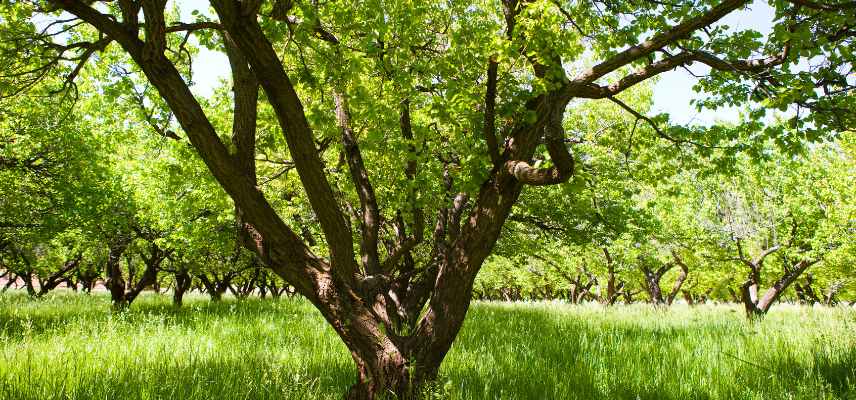 Older apricot trees often produce slightly less fruit.
Poor pollination
No insects, no fruit! Without adequate pollination, apricot flowers cannot set fruit, leading to a poor harvest, or even none at all. If it is too cold during flowering (March–April), not only may the flowers be damaged, but also insects will be scarce to visit the flowers.
But a single apricot tree will bear little fruit (or none at all!). Planting a diversity of apricot varieties is an important factor in ensuring good pollination and an abundant harvest. Although most apricot trees are self-fertile, some varieties are self-sterile (for example: NJA19 apricot), meaning they cannot pollinate themselves and require the presence of another compatible variety for cross-pollination within 100 m of it.
That said, even self-fertile varieties can benefit from cross-pollination, which improves the quality and quantity of the fruits. Plant several compatible apricot varieties (that is, varieties flowering at the same time) in close proximity can therefore increase the chances of successful pollination and improve overall yield.
Oliver’s little note: bees and other pollinating insects will visit the apricot tree’s flowers if your garden is welcoming to them. Plant melliferous flowers and plants around the apricot tree, forget the biocides and let Nature in!
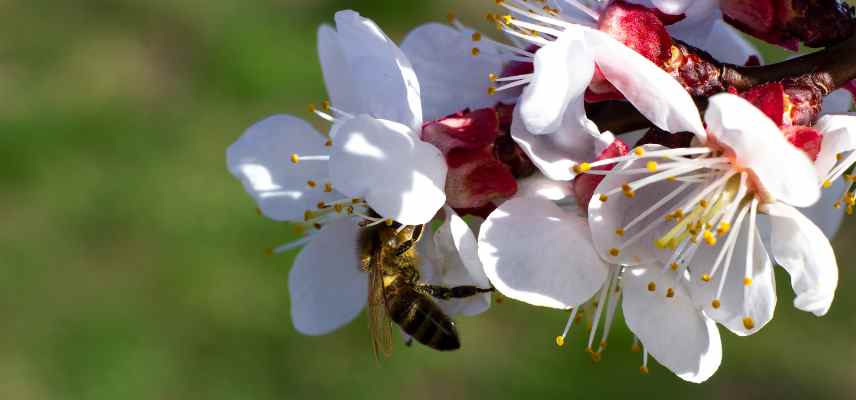
No pollinators… no fruit!
The phenomenon of alternation
Alternate bearing, or biennial bearing, is a common phenomenon in apricot trees, where the tree produces an abundant harvest one year, followed by a low harvest the following year. This cycle can be attributed to several factors:
- Energy resources: a year of high production depletes the tree’s nutrient and energy reserves, leaving it weakened and less able to produce an abundant flowering the following year.
- Pruning and management: inadequate pruning or a lack of care can exacerbate the biennial bearing phenomenon. If the tree is not properly pruned, it may produce too many fruits in one year and too few in the next.
- Environmental stress: adverse weather conditions or water stress can trigger alternate bearing by disrupting the tree’s normal growth.
To reduce this biennial bearing somewhat, prune in a way that opens up the tree’s branches. But we will also green pruning and thin the fruits to obtain larger and tastier fruits. Finally, proper fertilisation and regular watering should also help to limit biennial bearing.
- Subscribe!
- Contents
Comments