





























I tested around twenty varieties of raspberry bushes in my garden in Lower Normandy, and then my family and I indulged in our love for sweets. ^^ We tasted, baked, re-tasted, compared, and of course, took notes. Discover our 5 favourite raspberries, selected based on several criteria and a variety that left us a bit disappointed.
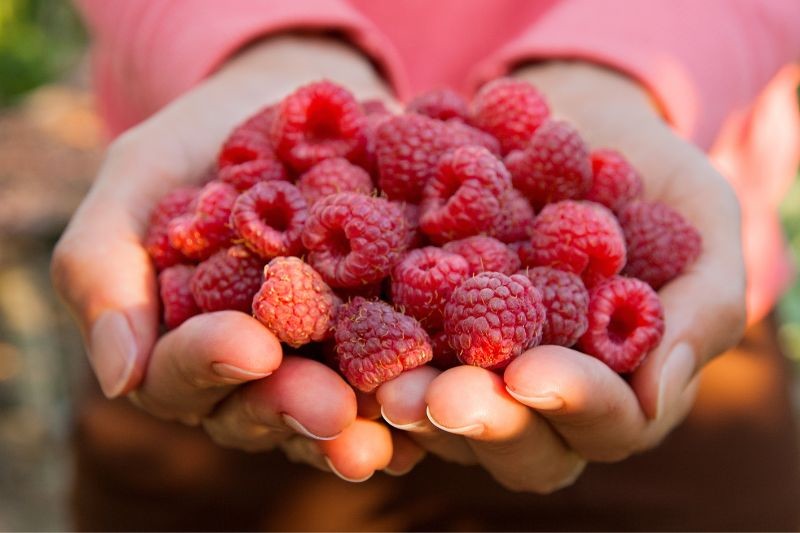
Our selection criteria
1- Taste
This is obviously an important criterion! Raspberries can be more or less acidic or sweet, and their flavours can be more or less pronounced, sometimes with hints of blackberries ('Black Jewel'). Red raspberries are often the most aromatic, while yellow raspberries tend to be milder and sweeter.
2- Cultivation and care
Some varieties produce long canes that need to be managed, but there are smaller, even dwarf varieties ('Rustica', 'Ruby Beauty'...) that do not require staking and can be easily grown in pots on a terrace or balcony. Others are more resistant to diseases or pests like the raspberry borer. Finally, thornless varieties ('Glen Ample', 'Autumn Amber', 'Versailles') allow for easier harvesting.
To learn more about staking, read our article: How to properly stake raspberry bushes?
3- Use of the fruit
Depending on the firmness of the raspberries, they are used differently. The firmer ones are best enjoyed fresh or are more suitable for baking, while the others can be used in jam, jelly, or syrup.
4- Everbearing and non-everbearing varieties
Everbearing varieties produce twice a year (once at the end of summer and again in June-July the following year), while non-everbearing varieties only offer a single, abundant harvest in early summer. It is possible to mix both to extend the enjoyment.
5- Productivity
Some varieties are more productive than others, but you will need to wait three years of cultivation to achieve the abundant harvests you desire.
Note that it is possible to mix several varieties to improve production.
Our Top 5
Raspberry 'Marastar': the largest fruits - 19/20
This raspberry bush gave us the largest fruits! We enjoyed their flavour as well as their firmness. This is undoubtedly the best raspberry bush, both for baking and for table consumption.
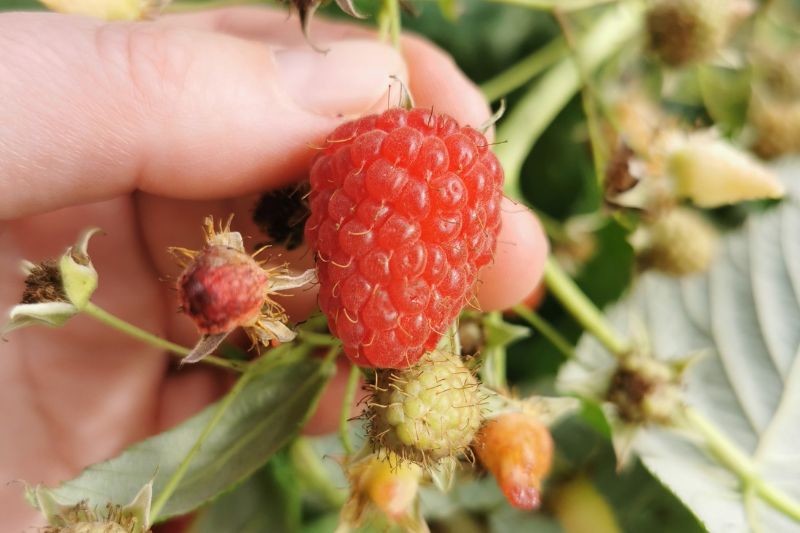
Blackberry Raspberry 'Buckingham Tayberry': a delicious blackberry aroma - 17/20
Halfway between a blackberry and a raspberry, this variety produces large, elongated fruits with a subtle aroma. It is a climbing and productive variety. It is undoubtedly the most original of all.
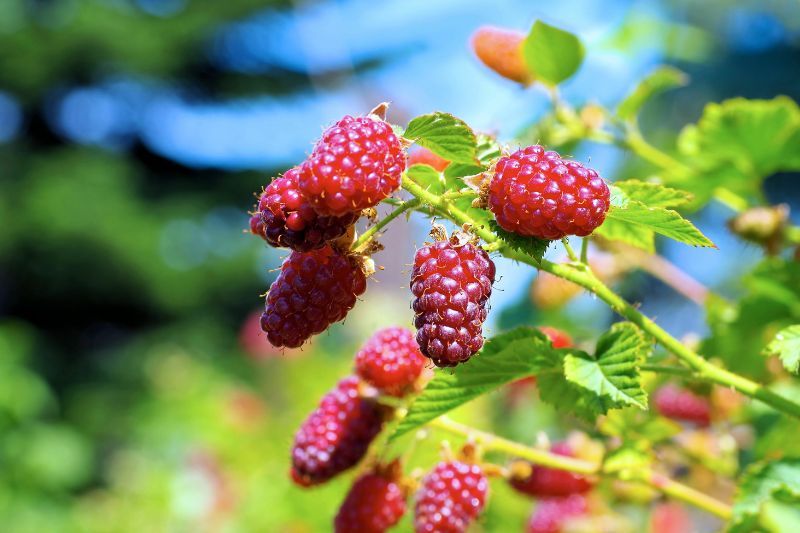
Raspberry 'Black Jewel': astonishing black fruits - 16/20
This raspberry bush surprised us all with the colour of its fruits, which have pronounced blackberry aromas. With a firm texture, the fruits are also perfect for baking. Finally, it is a low-running variety.
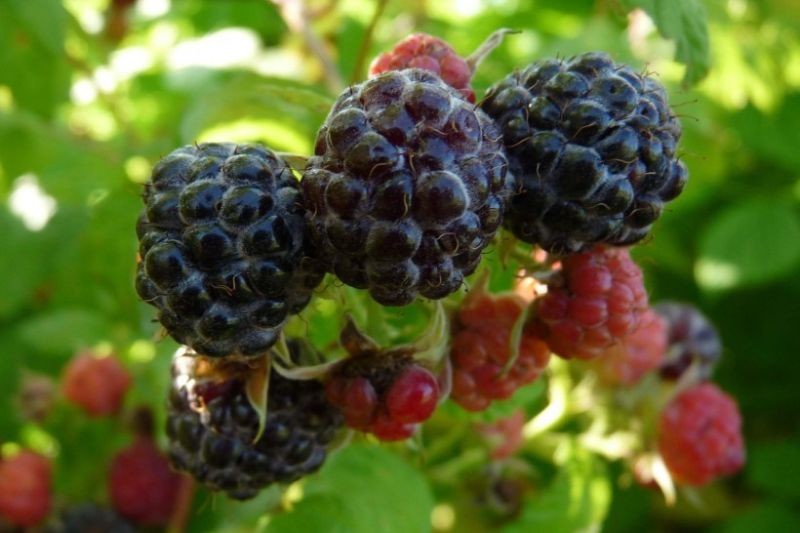
Raspberry 'Fall Gold': the children's favourite - 14/20
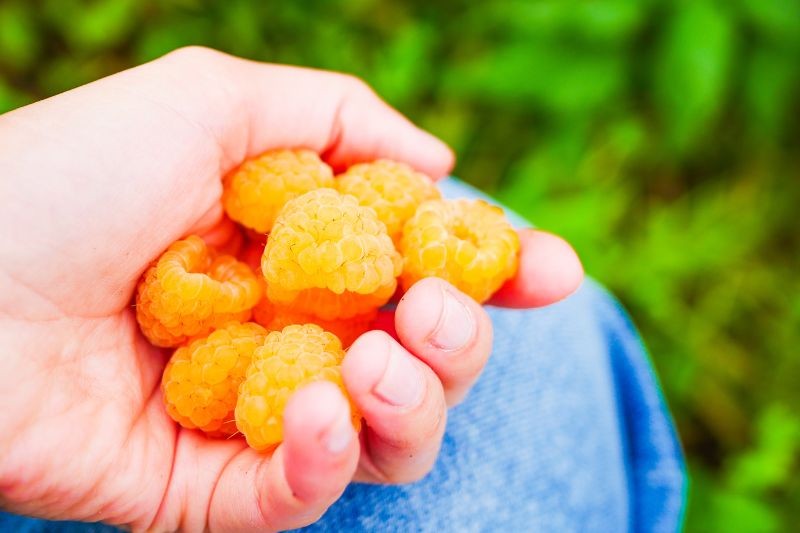
Its yellow raspberries are not acidic and are a hit with sweet-toothed individuals. It's impossible to visit the garden without snacking on its fruits along the way. It impressed us with its vigour and productivity. However, it is very suckering and requires a large growing area.
Raspberry 'Autumn First': perfect for jam - 14/20
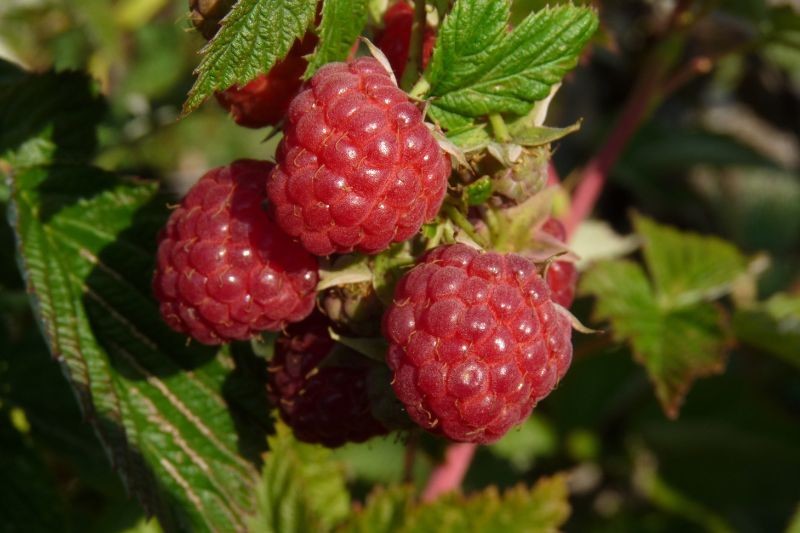
This variety is the most productive, it is well everbearing and early. It produces very aromatic fruits. For us, it is the best for making raspberry jams, jellies, or syrups.
The least impressive student
Raspberry 'Groovy': ornamental - 9/20
We appreciated this variety for its ornamental character. Its golden foliage is incredible and fits very well into a flowerbed. While it holds up well and does not require staking, it produces too few fruits for our taste, unfortunately!
Caring for raspberry bushes
To maintain my raspberry bushes, I add a good layer of homemade compost every autumn. In spring, I supplement with a special fertiliser for small fruits and then I cover the soil with mulch (shredded material, dried grass clippings, or fallen leaves in autumn) to retain moisture.
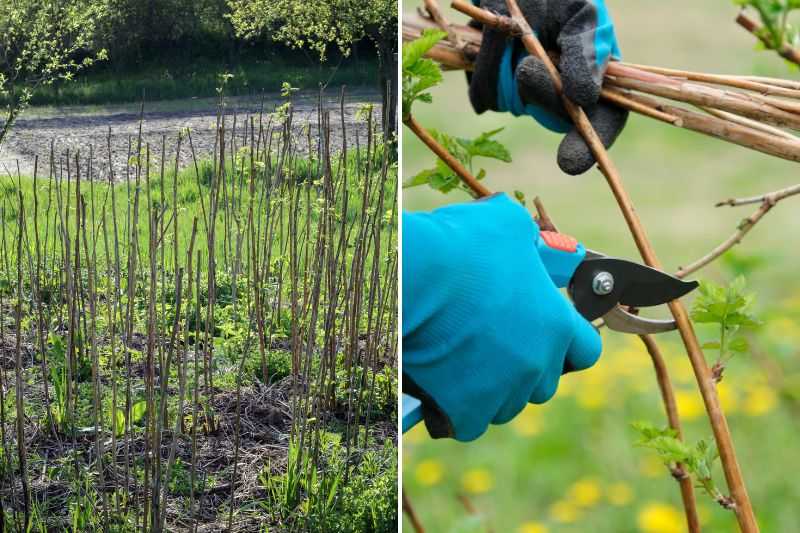
Equipped with a pair of gloves and armed with a pruning shear that is clean and well-sharpened, I always take care to remove dry, weak, or diseased stems and then I remove the suckers using a spade.
As for pruning, it's simple:
- For non-everbearing raspberries: I intervene after the harvest, but it can also be done in winter. I remove all the canes that have fruited, the weakest suckers that will yield nothing, and I keep 8 to 10 shoots per clump.
- For everbearing raspberries: In August, I completely remove the canes that have fruited twice, then in winter, I prune about 1/3 of the canes that fruited the previous autumn, ensuring harvests for the next summer.
To learn more about maintenance, check out our complete guide on raspberries as well as Ingrid's tips: pruning raspberries will hold no secrets for you.
List of tested raspberry varieties
- 'Autumn Amber'
- 'Black Jewel'
- 'Blissy' or 'Autumn Bliss'
- 'Bohème'
- 'Buckingham Tayberry'
- 'Raspberry Delight'
- 'Fall Gold'
- 'Glen Ample'
- 'Golden Everest'
- 'Groovy'
- 'Heritage'
- 'Magnific Delbard'
- 'Malling Happy'
- 'Malling Promise'
- 'Marastar'
- 'Meeker'
- 'Little Sweet Sister'
- 'Ruby Beauty'
- 'Paris'
- 'Rustica'
- 'Versailles'
- 'Willamette'
- 'Zeva'
The choice was really difficult as other varieties were also excellent, such as 'Malling Promise', 'Heritage', or 'Versailles' for example.
And you, what are your favourites? Let us know in the comments.

Comments