





























Cut-and-come-again lettuces, are you familiar with them? Among the many types of lettuces, butterhead varieties appeal to many gardeners, both for their generous look, crunch and the thickness of their leaves. But once harvested, you have to sow them again... unlike the one I’m going to tell you about today!
Cut-and-come-again lettuces are well represented by lettuces, in particular by the Oak Leaf but also by the various varieties that make up the mescluns. This type of lettuce does not form a head: its leaves, smooth or curly, rather fine, are grouped into rosettes, more or less tightly packed. Although visually somewhat less attractive (though...), they offer many advantages and deserve a place in the vegetable garden.
-
Les salades à couper poussent… et repoussent vite
As their name suggests, these lettuces are cut. They are harvested without pulling up the root but simply by trimming the leaves. But where they are particularly interesting (and productive) is that they regrow, and quickly. Not indefinitely, certainly, but two or three times, at least. Harvesting is carried out as needed, from the young-leaf stage or later, at ripeness.
-
Elles se sèment toute l’année ou presque !
These small lettuces are easy to grow and can be sown almost all year round: generally under cover, from October to February and outdoors from March to September.
You can sow them as you please: in plug plants or in pots for lettuces (which will spare them from being nibbled by slugs and snails) or directly in the ground, in rows or broadcast, especially for mescluns.
-
De la verdure à cultiver partout : au potager ou en pot
Less bulky than lettuces or butterhead chicory, cut-and-come-again lettuces also have the advantage of being able to be grown almost anywhere. They can be planted on their own, in a space dedicated to the vegetable garden, but can also intersperse between the rows of other vegetables (they are generally good neighbours) that will shade them in summer.
They are perfect for anyone with little space in the garden or no garden at all! They will take up little space in a small raised bed and can even be grown indoors in winter, then on a balcony or windowsill, in pots, in planters and even in a vertical garden.
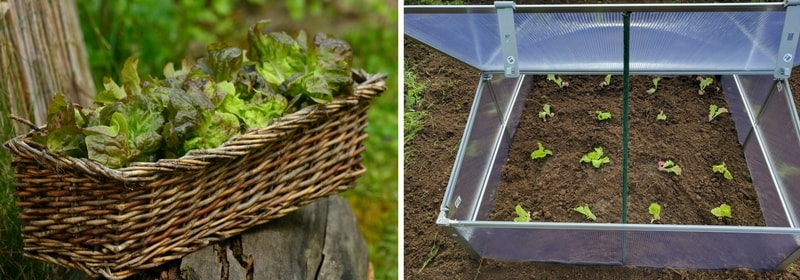
In a planter or under a frame, in winter: cut-and-come-again lettuces are easy to grow
-
Les salades à couper : un large choix
With green, pale or purple leaves, smooth or curly, these lettuces come in a wide range of colour, texture and flavour. It’s simple, there’s something for everyone! Among the best-known varieties are lettuces, represented by Oak Leaf, the Salad Bowl (red or green) and the superb Lollo Bionda and Lollo Rossa.

Cut-and-come-again lettuces: Blonde Oak Leaf - Lollo Rossa - Red Salad Bowl
If you particularly enjoy the variety and practicality of seed mixes, go for mescluns. In addition to being a "one-stop" option, they offer flavours often distinctive that are unrivalled for lifting summer dishes.
Among my favourites are:
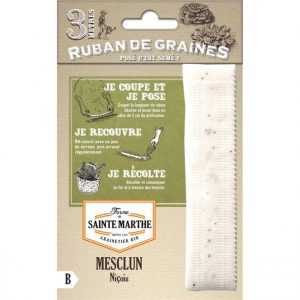 |
The mesclun niçois bio (Ferme de Sainte Marthe). Composed of lettuces, chicory, spinach, rocket and chervil (among others!), it’s a rich blend that allows you to compose the traditional Provençal mesclun. Presented as seed tape, it is very quick to sow and largely eliminates the chore of thinning. Sowing: March to July |
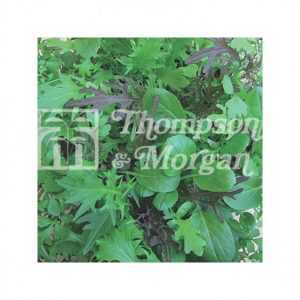 |
The Speedy Mix (Thompson & Morgan) offers, in one packet, a nice assortment that grows rapidly. It is made up of rocket, watercress and oriental mustard, and provides a pleasantly spicy flavour. Sowing: March to September. |
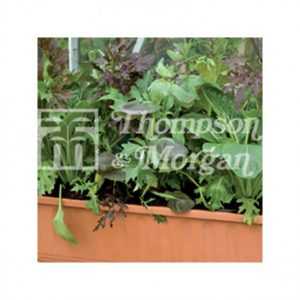 |
The assortment “The Good Life Mix” (Thompson & Morgan) is perfect for growing under unheated shelter in late autumn and winter. It is made up of rather rare varieties (Komatsuna, Mizuna, Mustard, Pak Choi), delicious and ideal for harvesting young shoots. Sowing: March to October |
And you, do you grow these cut-and-come-again lettuces in the vegetable garden? Which varieties are your favourites?

Comments