





























Thistles, as a whole, are often associated with the field thistle (Cirsium arvense), a species more feared than appreciated. Consequently, they are relatively rarely planted in gardens. However, ornamental thistles are low-maintenance, easy to grow, and, above all, they are unmatched for adding interest to a somewhat flat flowerbed, even into winter thanks to the striking structure of their inflorescences that last for many months.
Here are our favourite "thistles" along with some ideas for pairing them.
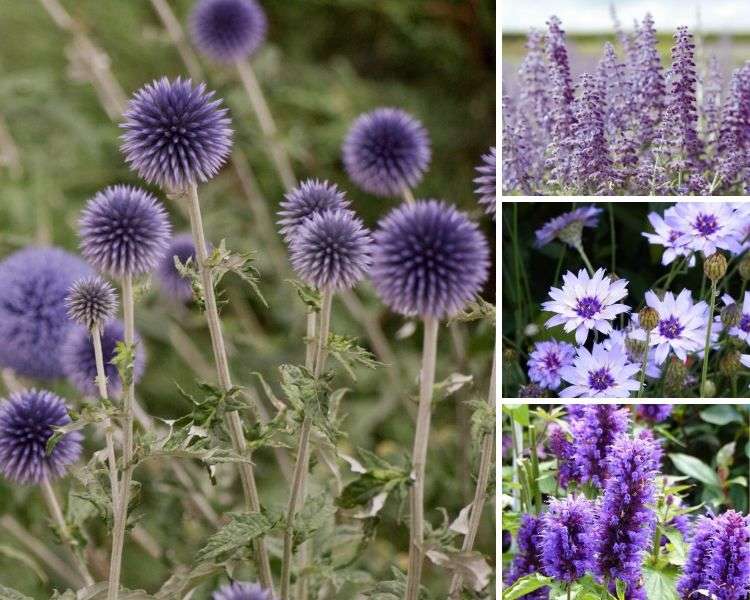
Echinops ritro, Globe Thistle or Azure Globe
Hardy and unassuming like a camel, this perennial thistle is distinguished by its blue flowering, which is remarkable from a distance. It features green foliage with silvery highlights, spiny, from which small globe-shaped flowers emerge from July to September.
- Growing conditions: in full sun in any well-drained soil, even poor or dry - hardiness: -20 °C
Echinops are easy to pair, particularly in summer beds where perennials and grasses mingle. They are also perfect for creating a lovely blue colour scheme, here with Echinops ritro, Perovskia Lacey Blue, Catananche caerulea, and Agastache Blue Boa.
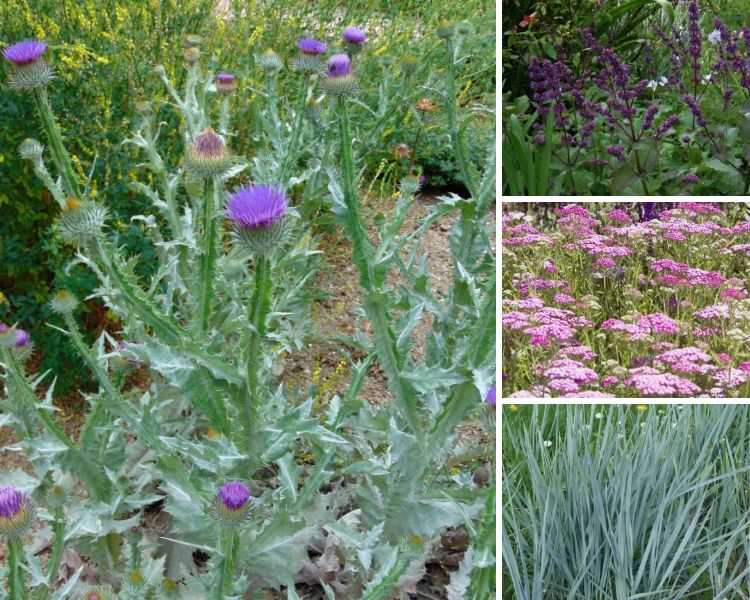
Onopordum acanthium, Cotton thistle
Monumental, the Onopordum acanthium (or nervosum) is a biennial plant that produces large purple-pink flowers reaching up to 2 metres high in July. They are perched on a hairy stem, which is adorned with greyish foliage armed with formidable thorns. Its growth is simply astonishing as it requires very little.
- Growing conditions: in full sun in any soil, even dry and calcareous - hardiness: -15 °C
More than just a companion, Onopordum acanthium is a standout. With its tall stature and graphic silhouette, it easily steals the show from surrounding plants. Nevertheless, to highlight it, feel free to pair it with Salvia verticillata Purple Rain, Achillea millefolium Lilac Beauty, and Elymus magellanicus.
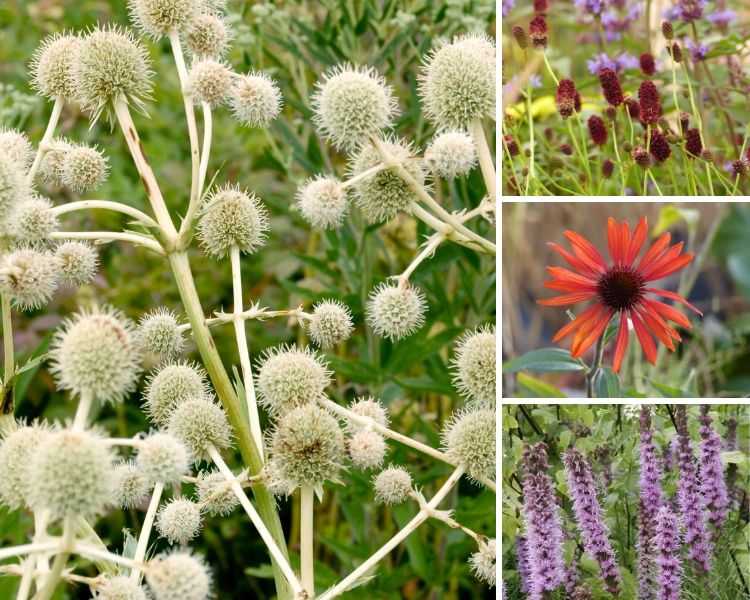
Eryngium yuccifolium, Yucca-leaved eryngium
Simply charming, this American eryngo is distinguished by its somewhat waxy, long leaves with sharp tips, as well as by its flowering. Carried on branched stems, its flowers appear in July, they are numerous, spherical, and a lovely greyish white. In a flowerbed, it is an excellent graphic plant that quickly forms a clump 1.5 metres high and 60 centimetres wide, ideal for adding a touch of white to summer beds.
- Growing conditions: in full sun in well-drained soil - hardiness: -15 °C
The yucca-leaved eryngo is the perfect plant to enliven a somewhat "flat" flowerbed. The shape of its flowers contrasts beautifully with vertically-oriented plants like agastaches, salvias, liatris, or other American perennials like echinaceas, heleniums, or the lovely Canadian Burnet. Here it is paired with Sanguisorba Red Thunder, Echinacea Hot Summer, and Liatris spicata.
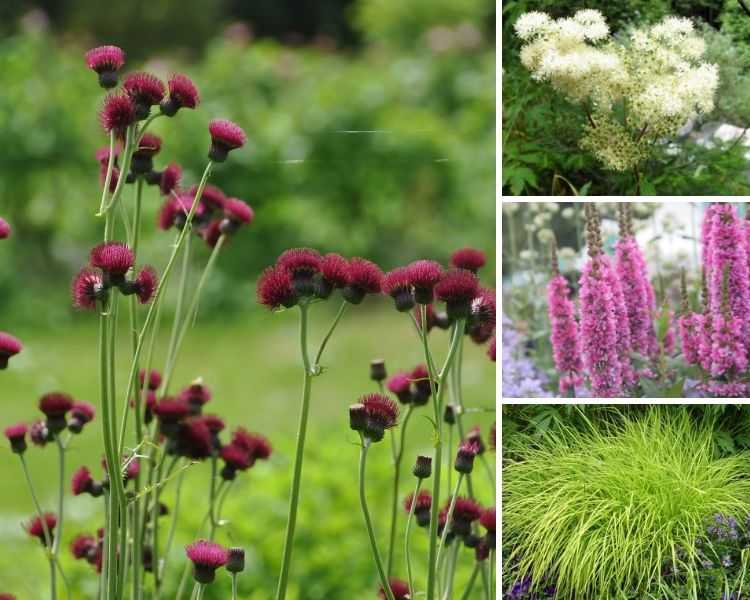
Cirsium rivulare Atropurpureum, River thistle
This thistle, perfect for heavy and moist soils, is appealing due to its purple-red flowering that begins in June. Its flowers, about 3 cm in diameter, are borne on tall branched stems that can reach a height of one metre. Graphic yet somewhat wild, this river thistle is a blessing for waterlogged soils and also for pollinating insects as its flowers are melliferous.
- Growing conditions: in full sun or partial shade in fairly rich, cool to moist soil - hardiness: -15 °C
Versatile, this thistle suits all styles of gardens: modern, English, or natural. It pairs well with Astrances, Japanese Anemones, Astilbes, Veronica, and with all grasses suited to cool or moist soils like Carex, Deschampsias, and Molinies. You can also combine it with Filipendula ulmaria, Lythrum salicaria Robert, and Carex elata Aurea.
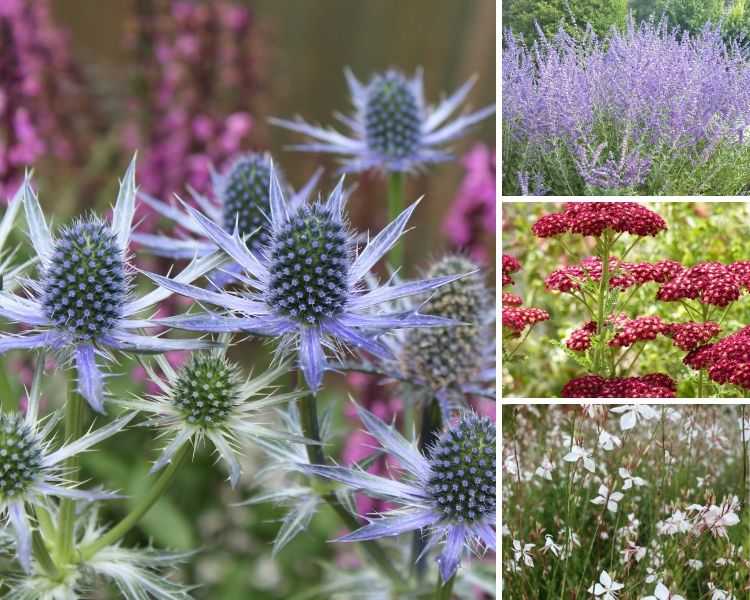
Eryngium Jos Eijking®, Blue flower eryngium
The Eryngium Jos Eijking® is a magnificent blue thistle that shines with its cobalt blue hue but also with the graphic nature of its conical inflorescences crowned with finely cut bracts. Its average height (70 cm tall and 30 cm wide) is more than compensated by its colour, which ensures an extraordinary presence that will undoubtedly attract all eyes in the garden.
- Growing conditions: in full sun in well-drained soil, even dry - hardiness: -15 °C
Stunning in a flowerbed where all shades of blue are represented, this eryngo will shine even brighter if you add a touch of bright yellow (with Crocosmia Buttercup, for example).
For a calmer and more restful atmosphere, opt for white with Gaura lindheimerii, blue with Perovskia Blue Spire, and elevate it all with a note of Achillea Red Velvet.
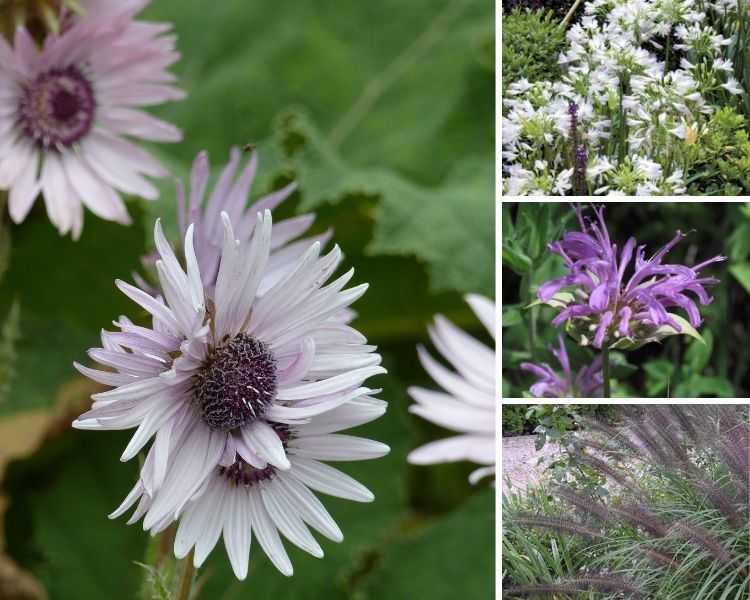
Berkheya purpurea, Purple African thistle
Large daisy-like mauve flowers with a purple centre perched on threatening spiny stems… here is the Berkheya purpurea! Curious, this perennial native to South Africa is quite hardy and particularly interesting in well-draining soil, though not too dry. We love it for its originality but especially for its 10 cm diameter flowers and its silvery-grey, downy foliage.
- Growing conditions: in full sun in well-drained soil but not too dry - hardiness: -10 °C
Perfect for a gravel garden, Berkheya pairs well with many perennials, but why not combine it with agapanthus (also native to South Africa) like Agapanthus Enigma, Monarda fistulosa Menthifolia, and to echo its dark heart, Pennisetum alopecuroides Black Beauty.
What about you? Do you have any thistles in the garden? What are your favourite varieties? Let us know in the comments!


Comments