





























In a garden, aromatic plants are often gathered in the same spot. This is convenient for harvesting, but one can also view things from another perspective. Indeed, the flowers and foliage of some of these plants are so ornamental that they integrate perfectly into flower beds.
A wide range is available to us: mints, fennel, rosemary, orach, chives, hyssop, oregano, sages, thyme, lavenders, sorrel, etc. Obviously, this list is not exhaustive. I would like to introduce you to my favourite plants and my preferred combinations.
1) Purple: the embodiment of elegance
Purple foliage brings elegance and originality to the garden. Notably, we can distinguish:
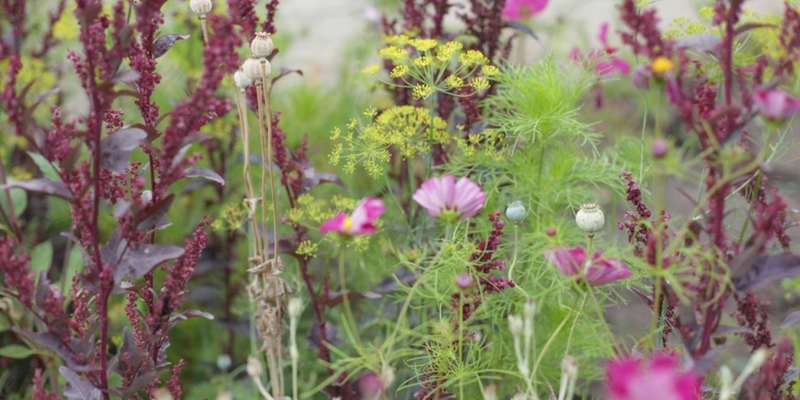
- The red orach (Atriplex hortensis rubra), perfect both in salads and in flower beds where it adds a lovely touch of whimsy. In the garden, it is ideal for creating dynamic colour reminders in the beds.
-
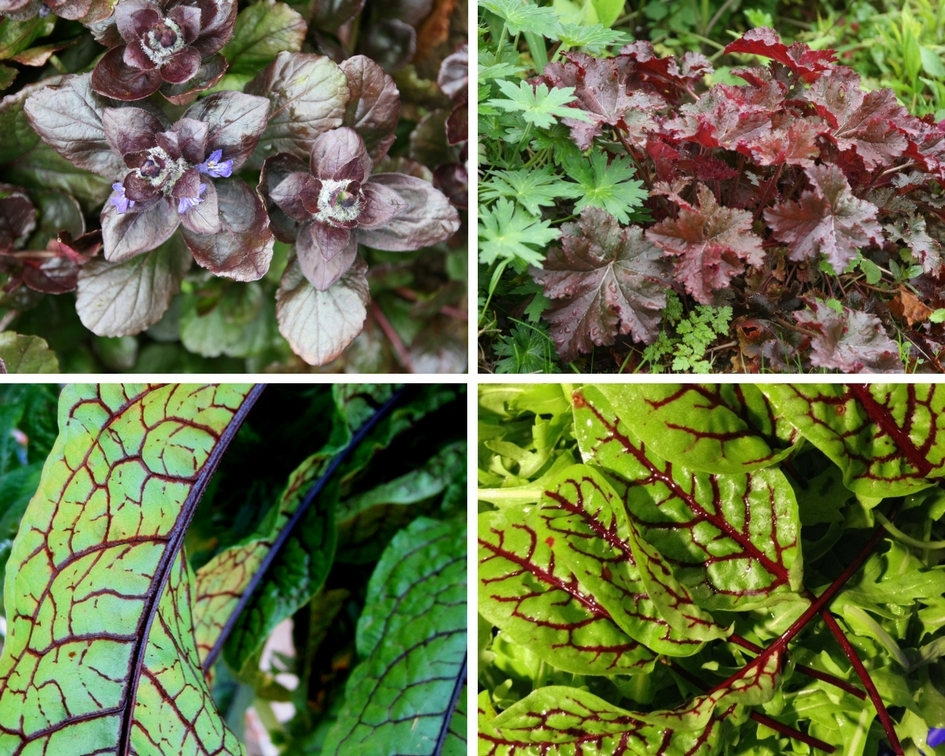
Some varieties of sorrel are equally impressive, just look: Rumex ‘Purpurea’ or Purple Sorrel with reddish-purple foliage and 'Sanguineus’ with green leaves veined in red are particularly attractive. In my garden, the latter pairs wonderfully with Heuchera 'Purple Petticoats' and Ajuga reptans ‘Black Scallop’.
-
Medicinal sages exhibit various foliage variations. Salvia officinalis ‘Purpurescens’ stands out with its young shoots of a purplish hue. When paired with lavender and wormwood (‘Powis Castle’ for example), it creates a stunning effect.
2) Yellow and gold, perfect for breaking monotony
I really enjoy the vibrancy of yellow foliage. Some even flirt with fluorescence in spring, like that of the Golden Oregano or Origanum vulgare ‘Aureum’.
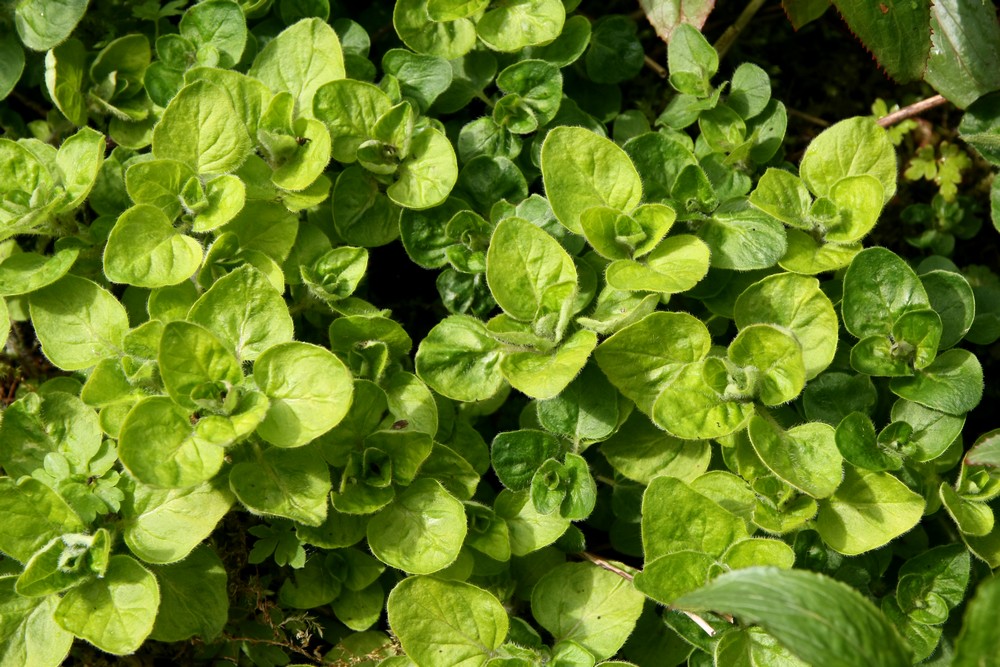
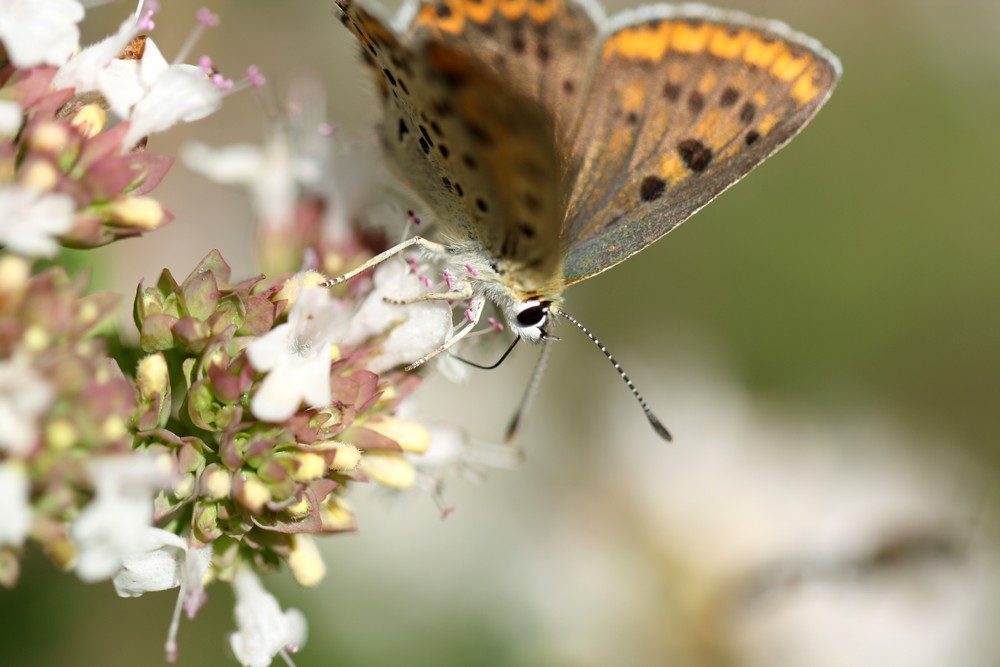
Note that although oregano is native to the Mediterranean basin, my Ardennes garden hosts both the standard species and the golden variety (in a clayey, poorly drained bed, and its hardiness somewhat challenged) and they thrive beautifully. They have even spread freely for years. Nature's ways are inscrutable! I would also add that the flowers are visited by many small butterflies.
In the same category, we find thyme, Thymus citriodorus ‘Aureus’. Its tiny golden leaves are a delight, complemented by a lovely lemony fragrance.
3) Bright variegateds
Among those that play the variegated card, we note the beautiful presence of Origanum vulgare ‘County Cream’ and Thymus microphylla ‘Variegata’ with cream-edged foliage.
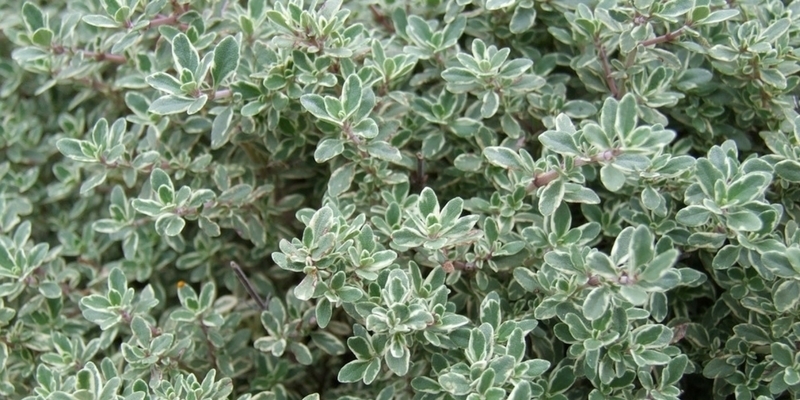
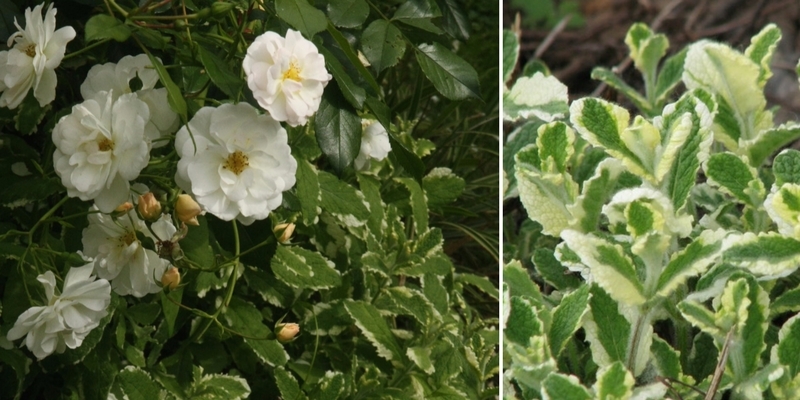
If you prefer yellow, you will be charmed by Thymus citriodorus ‘Variegated’, a variety of lemon thyme with small leaves, as well as by certain sages such as ‘Icterina’ with green leaves edged and variegated in yellow. Want more colour and contrast? Turn to Sage ‘Tricolor’ with foliage marginate in green, pink, and white, or to Mentha suaveolens ‘Variegata’ with beautiful white variegations on a green background.
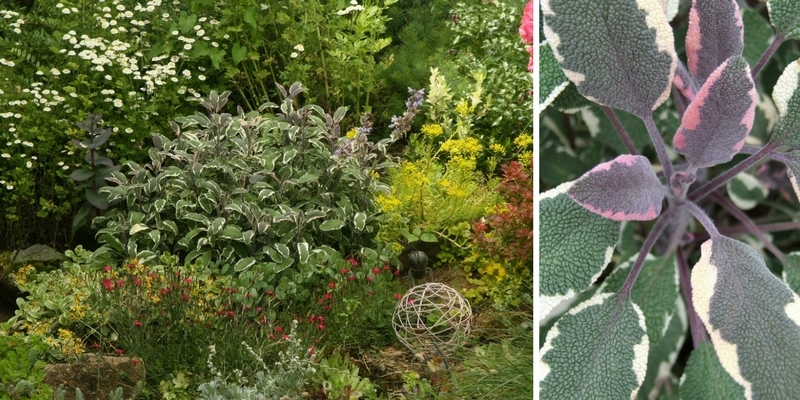
I know, mints have a bad reputation, and planting them in a flower bed might seem risky. They are known to be invasive, but they are merely wanderers. Equipped with their little bundles, they roam between plants, and young shoots emerge where there is space. In other words, if they have competition, they will be more docile. The choice is vast for this family, especially regarding the scents emanating from the leaves: green mint, Moroccan, peppermint, chocolate, bergamot, crisped, lemon... Don't deprive yourself!
4) The greys, perfect for highlighting other plants
Santolines (Santolina chamaecyparissus) are distinguished by their fineness and the beautiful silver colour of their foliage. The variety ‘Edward Bowles’ offers an elegant grey-green combination and cream-white flowers that pair wonderfully with nepeta, stipa, white yarrow, and some Allium sphaerocephalon. Santoline flowers are also very melliferous. The tufts can be easily pruned into balls, providing structure in the garden.
5) Graphics for a touch of lightness
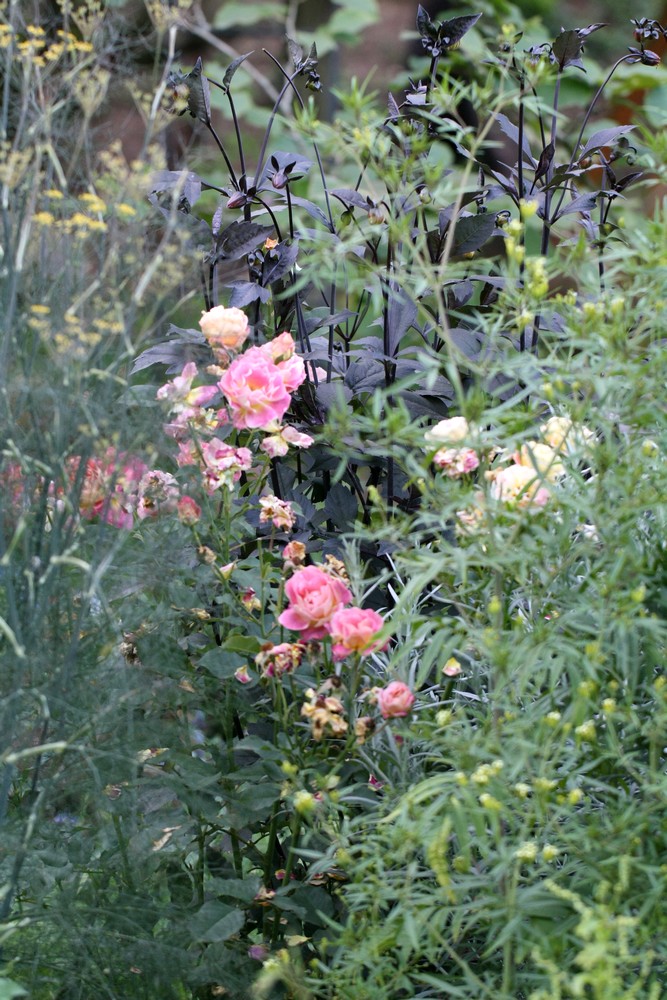
In life as in flower beds, we always need a bit of lightness. The green fennel (Foeniculum vulgare) or the bronze variety (Foeniculum vulgare ‘Giant Bronze’) form beautiful "mists". Their airy appearance is perfect for lightening a generous floral composition. Here, accompanied by the rose ‘Prieuré de Saint-Côme’, the dahlia ‘Twinings after Eight’, and Tagetes minuta.
Why not try it with Lysimachia purpurea ‘Beaujolais’ and the purple orach mentioned earlier: the union is divine as well.
Note that you will still need to choose them carefully based on the conditions you can offer them. It is evident that thyme, in clayey and poorly drained soil, will not last long, just as chives and parsley will struggle to thrive in dry soil. Pay attention to exposure as well! Finally, be aware that some of these aromatics are annuals but self-seed like orach, for example.
And you, do you grow any of these beautiful aromatics with atypical foliage or unique colourful inflorescences? Which are your favourites?

Comments