





























Perennials are gradually waking up, and some early-season bulbs are already in full bloom... The first signs of spring are in the air, and with them, the desires unique to gardeners are rekindled: getting hands back in the soil, starting new plantings... there's no shortage of ideas as winter comes to an end! This is why beginner gardeners may sometimes feel a bit overwhelmed by the extent of the work to be done. Here are some tips and methods to kickstart your garden layout:
1. Make a plan of the existing layout
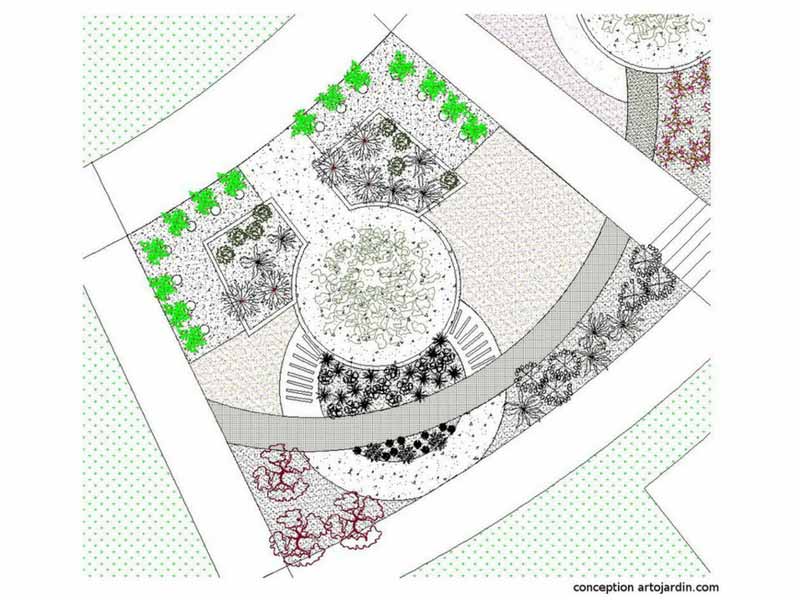
Often, making a plan is not the first thing that comes to mind for beginners: it seems too tedious, too restrictive, and there are many obstacles. The plan often comes late, to note the already established beds, pin down the different species... and that's a shame!
Indeed, with a plan, everything seems clearer: what needs to be highlighted and what should be concealed. The survey can be done with a tape measure, but the simplest way is to directly use the cadastral map of your land.
The surveys are incredibly precise, and the house is already in place, along with any outbuildings. You can then reproduce the plan to scale on a separate sheet or using specialised software.
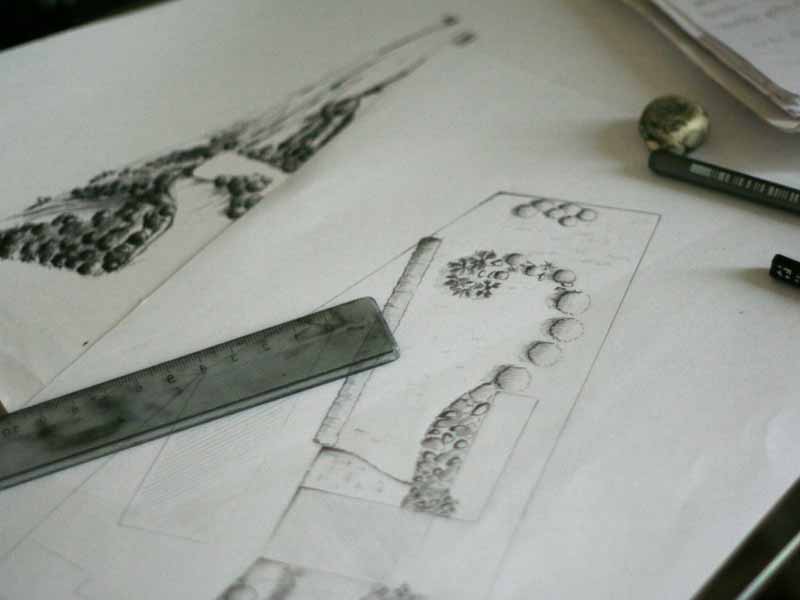 Drawing a scaled plan
When creating the plan, be sure to indicate the doors and windows of the buildings, as this is very important for future layout since it’s about highlighting the views, not planting a large tree that could spoil the panorama of the Vercors massif…
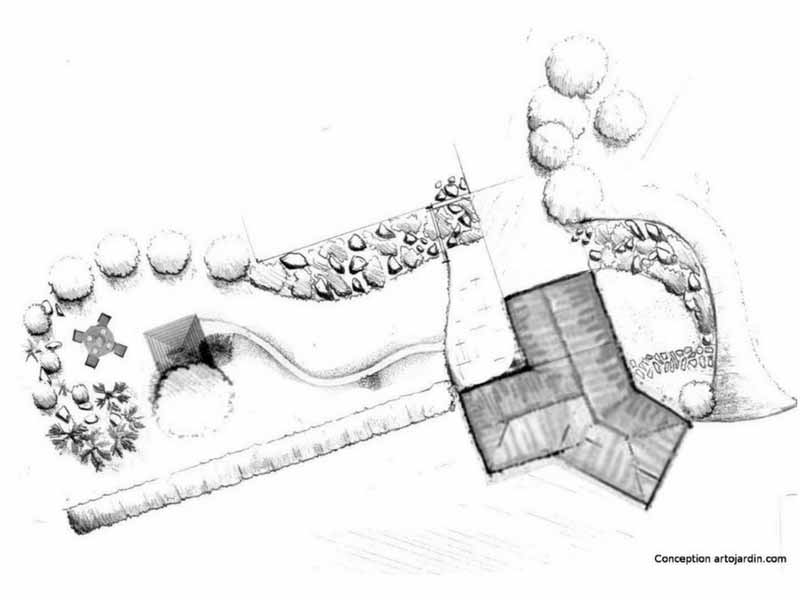
Plan for a garden layout
2. Note the existing plants
During this second step, you will decide and note:
- the plants you wish to keep,
- those you would like to move,
- and those you no longer want.
Then list the plants you have chosen to keep, classifying them by type (trees, bushes, perennials…), and indicate their characteristics (soil, flower colour...).
This inventory will provide you with a clear overview and help avoid mistakes in future design. It will also prevent you from buying duplicate plants...
3. Choose a design theme
This is one of the most important points: a beautiful garden is a balanced, homogeneous, and coherent garden.
So be careful not to mix too many different atmospheres: a clear theme is essential to ensure the overall coherence of the layout. This can be chosen based on affinity (if you are a fan of zen gardens, for example), to enhance a context (a lovely stone building) or to highlight a colour.
For instance, in some of my contemporary projects, I pay attention to the colours chosen by my clients for their furniture (or the colour of the window frames...), and I ensure these tones are reflected in my designs, in the choice of materials, and even in the selection of plants...
4. Organise the plan by atmosphere
With the chosen design theme, you need to determine the "landscaped rooms" you want in your garden: vegetable patch, terrace, swimming pool, or pond?
Everything is possible, as long as there is enough space. Classify these atmospheres based on their purpose (play, relaxation, meditation, dining, decor…). The landscaping touch will then follow quite naturally, according to your preferences: a naturalistic path could lead to a slightly romantic terrace, for example.
Be careful not to think too big: if you try to include too much, without proper arrangement, the garden can quickly feel cramped. This brings me to the next point: the pathways between spaces.
5. Focus on the coherence and fluidity of the pathways
A pleasant pathway, viewed from the plan, can be quickly identified: harmonious curves, stops at viewpoints, and continuity between passages. Even in a small garden, if the pathways are well designed, the experience will be very positive.
Changes in rhythm (established by changes in materials, for example), stops (a bench), and viewpoints (designing a surprise element, like a mirror) are all elements that will create the illusion that the garden is larger than it actually is. One or more freehand sketches, if you feel capable, can give you an overview: it’s sometimes clearer and complements the "top-down" plan well.
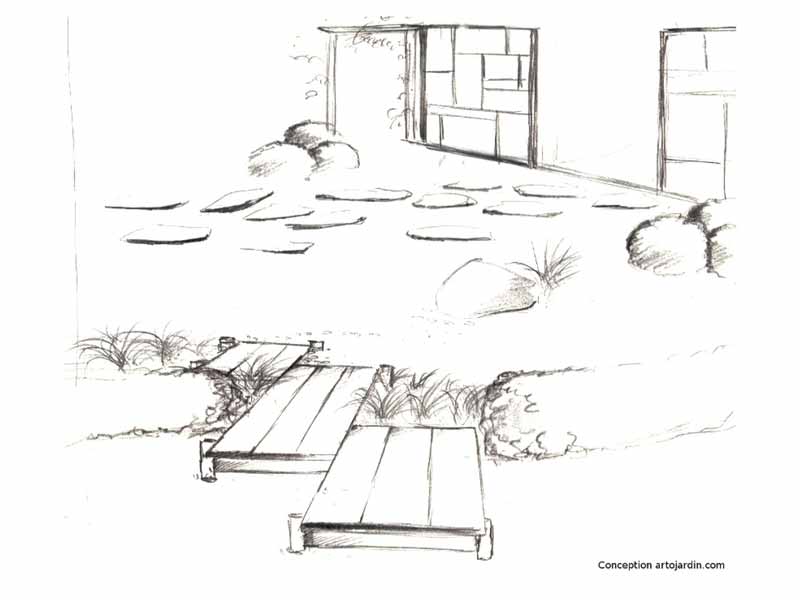
Quick black and white sketch of a "zen" layout
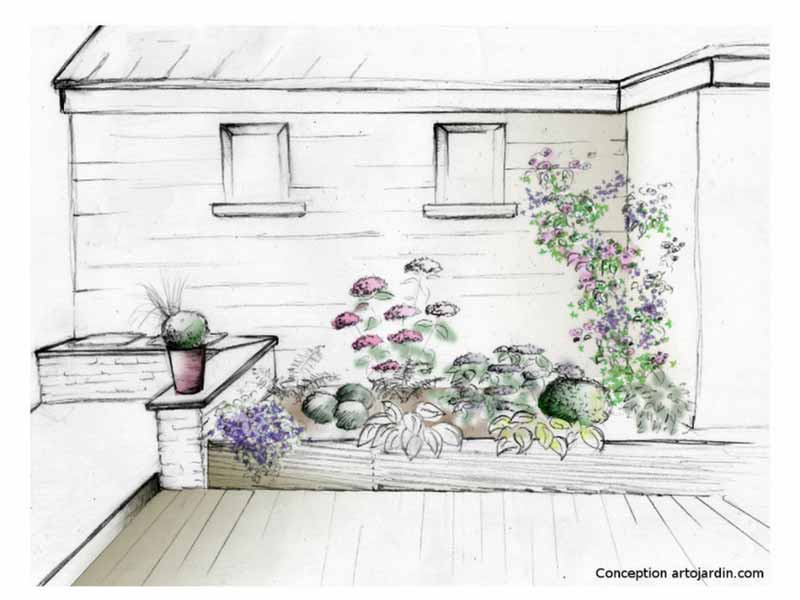 Coloured sketch of a flowering bed
6. Make a list of desired plants
This is the most anticipated moment: the time to indulge in your wish list! Personally, I have a list as long as my arm of plants I dream of acquiring one day... If you are truly starting out in this area, the best approach is to browse specialised sites, like that of the nursery, and especially to explore gardening blogs. There are many, some of which are full of real treasures. It’s the perfect opportunity to see what a plant looks like "in real life". It also allows you to imagine combinations, and above all, to build your own visual identity: putting images to what you love and discarding what you definitely don’t like helps define the gardener and creator you will become, quite simply.
A detailed plan of the plants can then help prioritise and harmonise future beds, which is key to a successful layout...
 Computerised plan of a playful vegetable garden
7. Create a budget...and prioritise!
Yes, a garden can be expensive; plant enthusiasts won't disagree with me.
Between materials, furniture, and impulsive purchases at plant fairs... the costs can quickly add up! The ideal is to create a global budget by area of layout, to determine where you want to focus the first changes.
And above all, you need to define your wishes: do you want a garden that is pleasant overall as quickly as possible? In that case, you should focus on the general structure, and less on the plantings, which will come gradually.
Do you prefer to develop a specific area to host your friends and enjoy a pleasant moment? You can then concentrate on that particular point, and thus in a more thorough manner.
8. Create a timeline
This is of course relevant if you have a specific desire regarding your layout (a terrace before summer, for example). In this case, it’s best to rank tasks by order of priority and define the time to allocate to each of them. Keep in mind that the ideal planting period is in spring and autumn, so the rest of the work will depend on that.
9. Ask for help
And yes, because gardening is primarily a passion, and often one hesitates to ask for assistance. However, moving a pile of paving stones from one end of the garden to the other is much easier with two people, as you can imagine... It’s also more enjoyable, and it boosts morale. Getting help avoids unnecessary discouragement, which can sometimes make you want to give up entirely. Believe me, I know what I’m talking about... So, don’t hesitate: call on your friends (the promise of a barbecue at the end of the project is always tempting) or get help from a professional gardener, at least for the ground preparation. Also, check around you: many young people will be happy to lend a hand when it comes to spreading several cubic metres of mulch.
10. Above all, enjoy yourself!
Finally, the key word in this story: pleasure. You love being in the garden, you love plants, colours, and scents. So do everything without constraint, keeping in mind, above all, that a garden takes time. But that time is filled with passion, and watching your garden grow and come to life is the greatest reward!


Comments