Mahonia x media Charity
Mahonia x media Charity
Mahonia x media Charity
Mahonia x media Charity

Mahonia x media Charity
Mahonia x media Charity
Mahonia x media Charity
Oregon grape, Mahonia
Beautiful specimen, I can't wait for it to grow a bit more. Very nice and as described.
Mica, 30/12/2025
Back-to-school special offer!
Get €10 off for every €50 you spend! And get up to €40 off on a single order.
How does it work?
1. Shop your favourites
Add your favourite plants to your basket. For every €50 you spend (excluding delivery charges, store credit and the plastic-free option), you’ll receive a €10 voucher.
€50 spent = €10 voucher
€100 spent = €20 voucher
€150 spent = €30 voucher
€200 spent = €40 voucher
2. Place your order
Once your basket reaches one of the spending thresholds, place your order. You can even choose your delivery date!
3. Receive your voucher
As soon as your order has been shipped, you’ll receive an email containing your personal voucher code and its value.
4. Use it on your next order
Your voucher is valid for 90 days from the date you receive it. It can be used once only, on a new order worth at least the value of the voucher, excluding delivery charges.
Please note: Vouchers can be combined with other offers, but cannot be split or refunded.
Home or relay delivery (depending on size and destination)
Important: You may be charged customs duties by your country’s customs authorities upon delivery.
Schedule delivery date,
and select date in basket
This plant carries a 24 months recovery warranty
More information
We guarantee the quality of our plants for a full growing cycle, and will replace at our expense any plant that fails to recover under normal climatic and planting conditions.

Would this plant suit my garden?
Set up your Plantfit profile →
Description
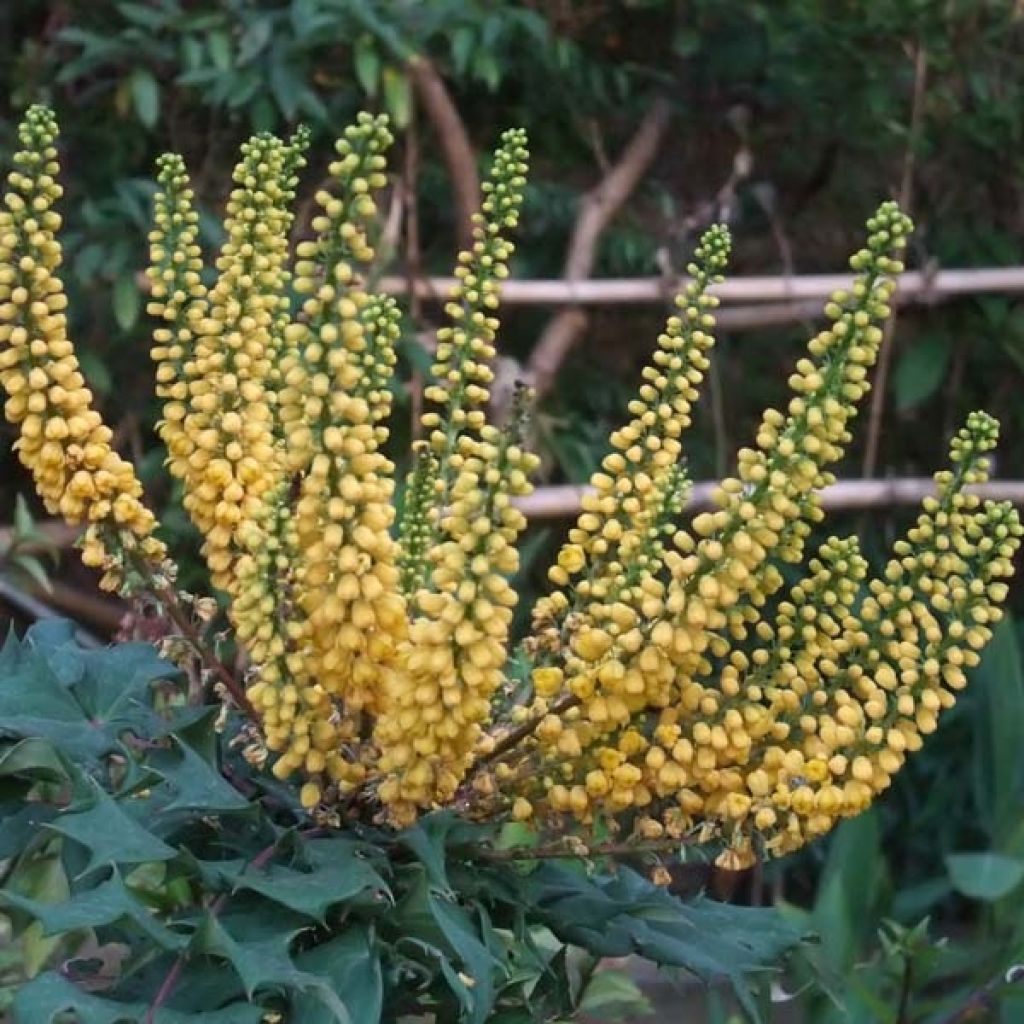
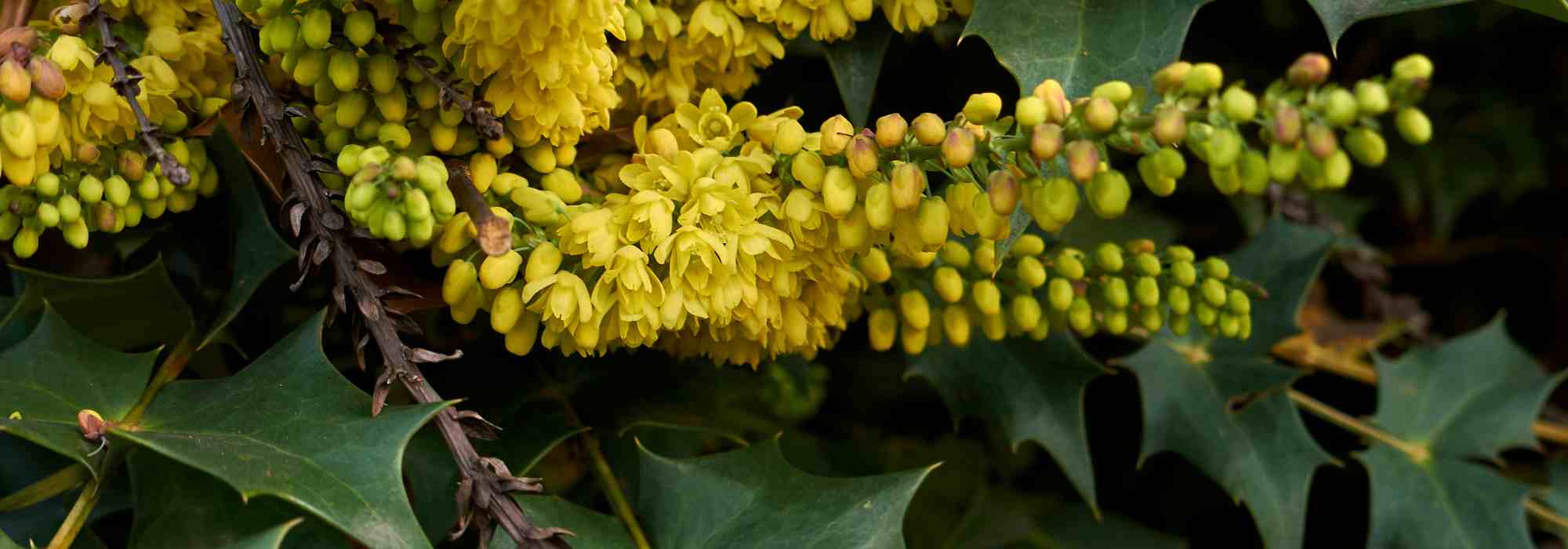
Mahonia x media 'Charity' is a classic in gardens that are a little shaded, appreciated for its beautiful and long yellow and fragrant winter flowering. This large bush also has a very particular habit that gives it an exotic and impressive appearance throughout the year. Its long, evergreen and shiny leaves are divided into spiky leaflets. This highly structured plant will bring colour in winter and a verticality that could be described as a bit daring to any setting.
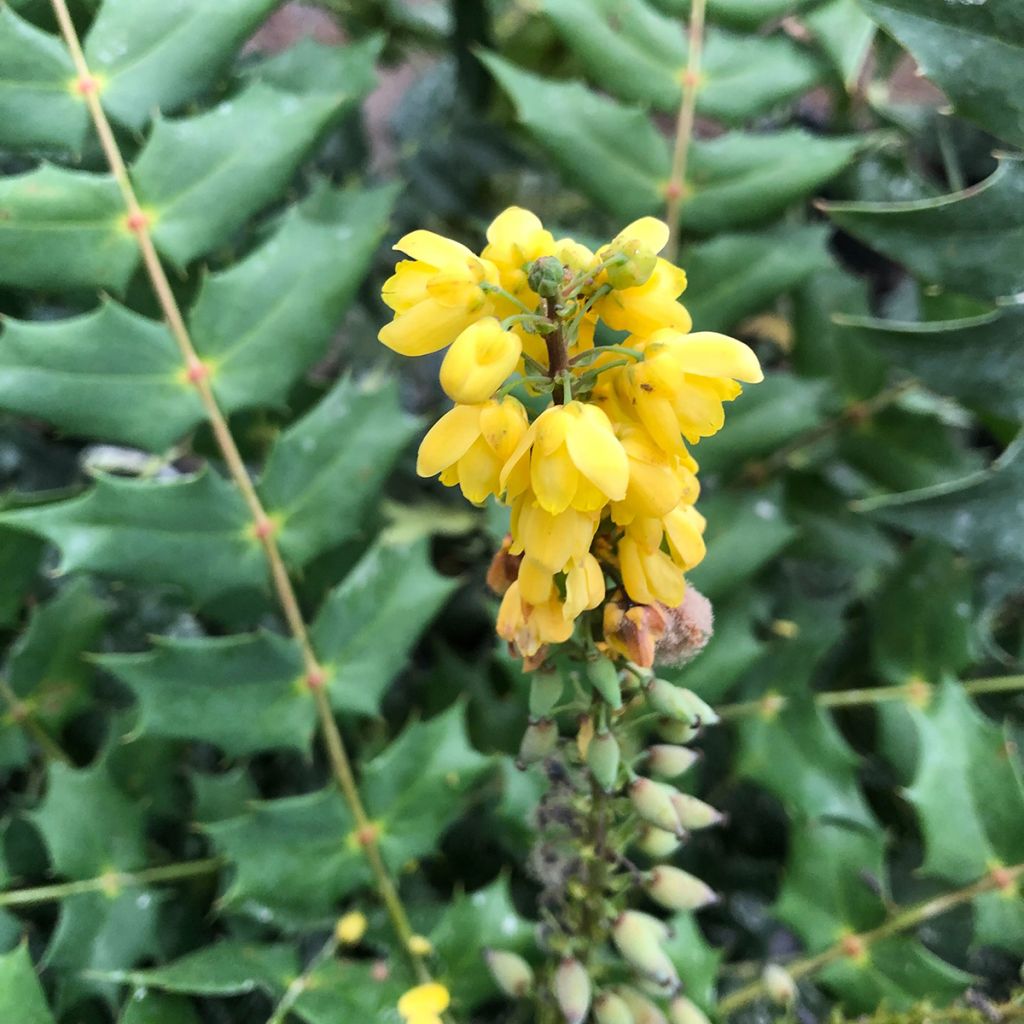
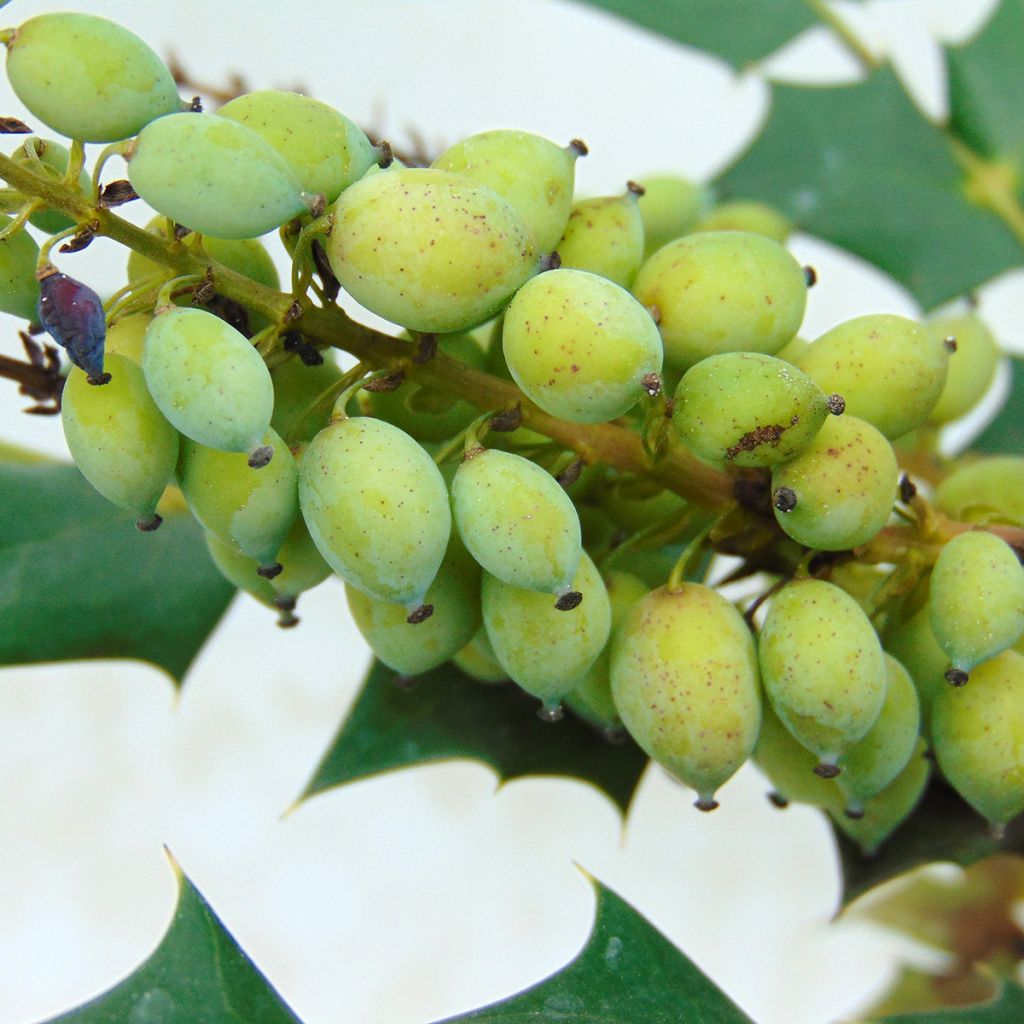
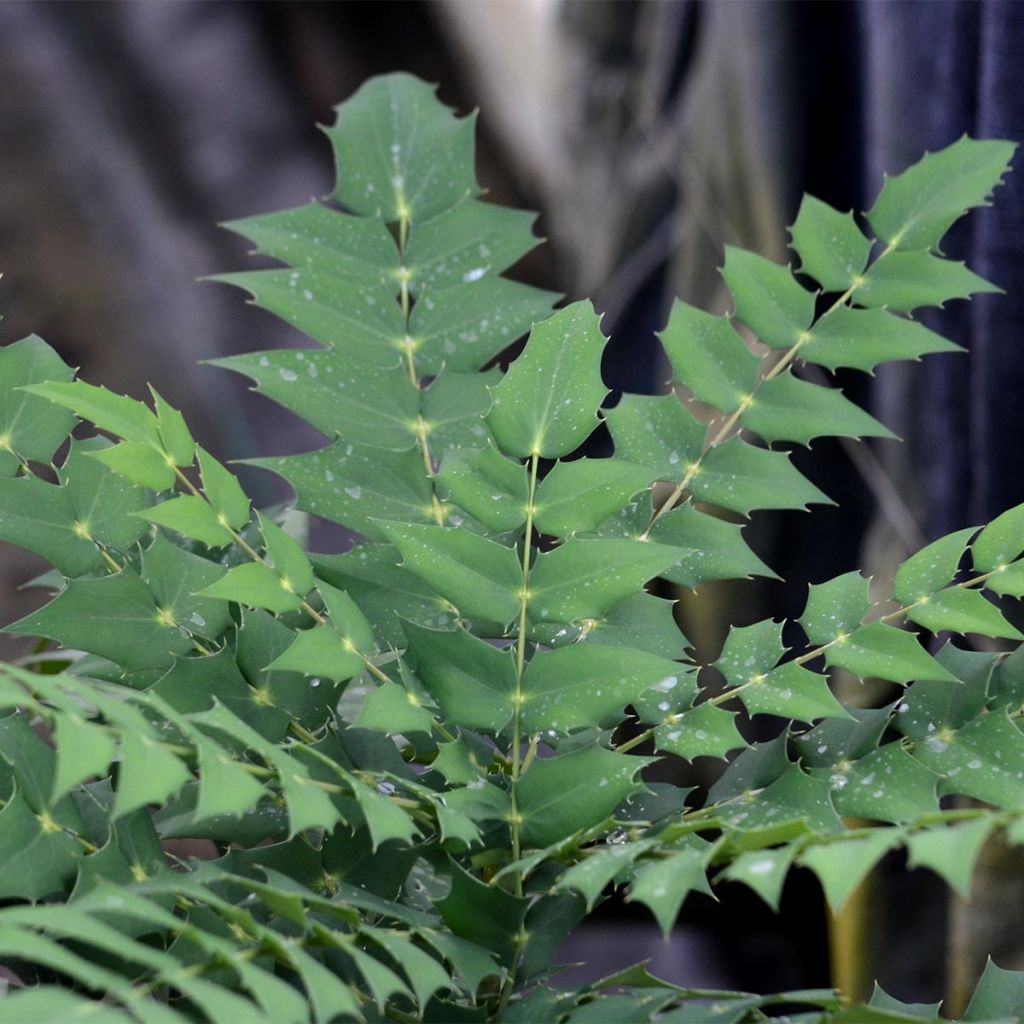
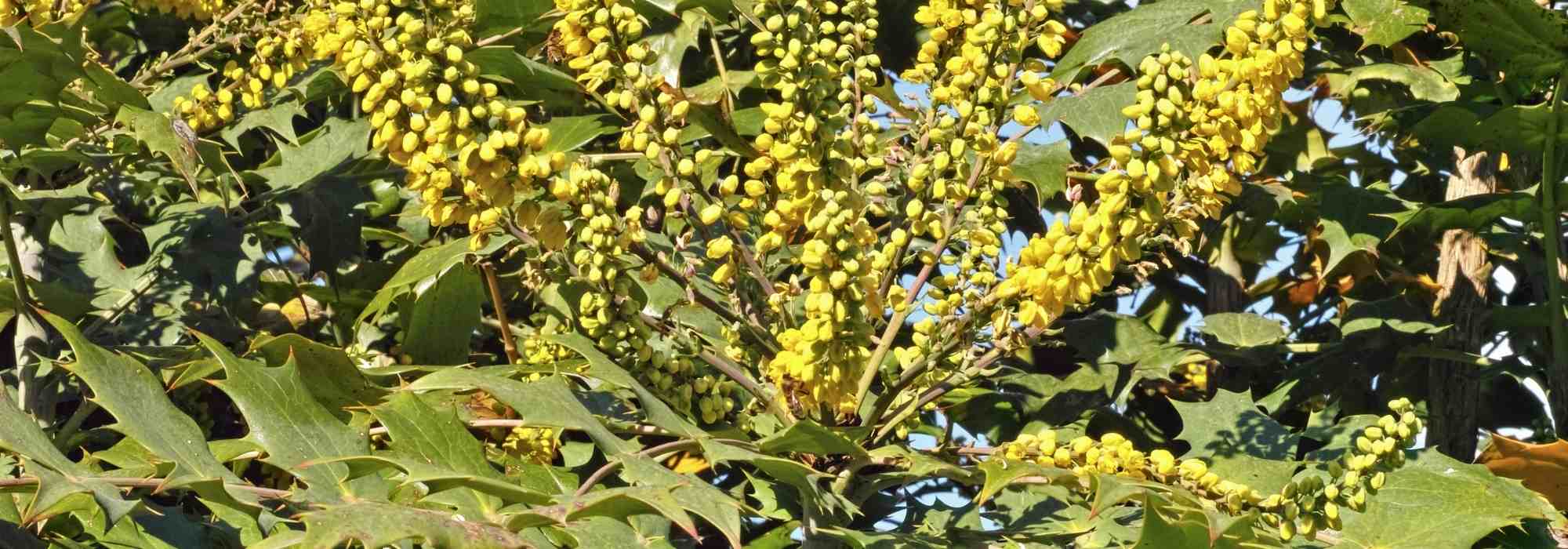
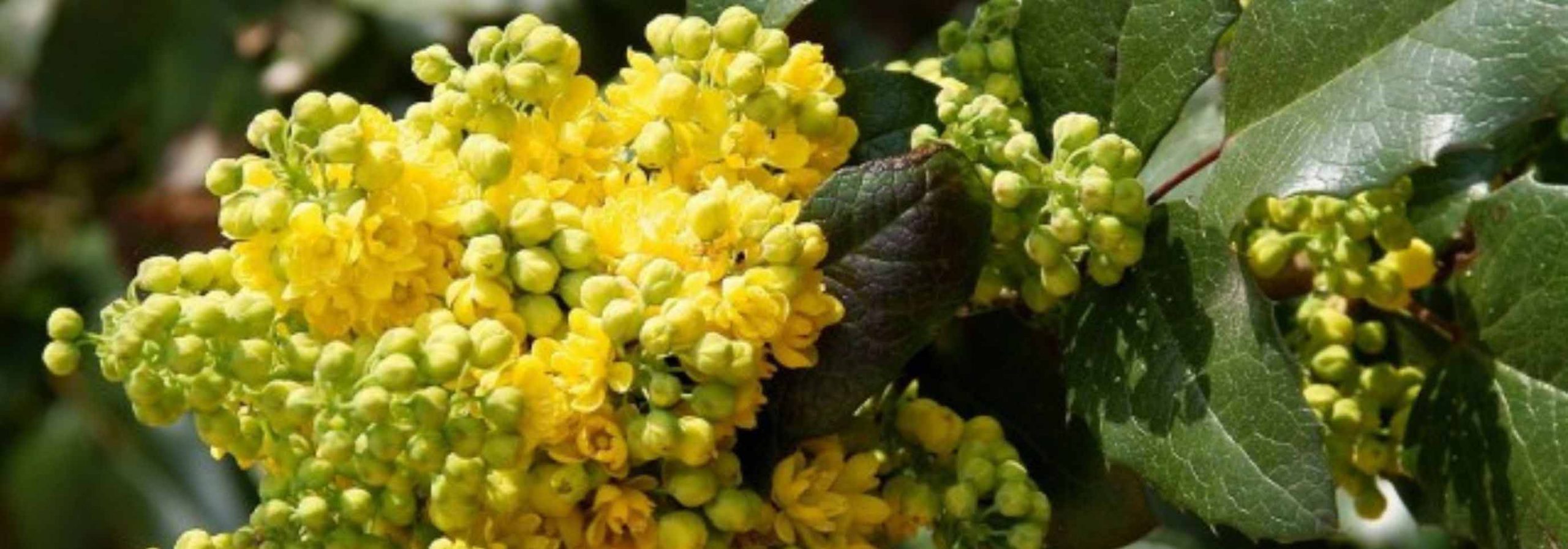
Mahonia 'Charity' belongs to the family of Berberidaceae. This cultivar is probably the result of hybridization between Mahonia japonica, a small plant, and M. lomariifolia 'Takeda', a much larger one. Both these bushes originate from Japan and China. 'Charity' eventually forms a beautiful bush about 3-4m (9ft 10in-13ft) in all directions. Its growth, quite slow during the first years, then accelerates. Growing on a single trunk that tends to become bare over the years, this Mahonia has an erect, weakly spreading habit, supported by sparsely branched branches. The evergreen foliage is composed of long leaves arranged in rosettes on the stems. Measuring 30 to 40cm (11.8 to 15.7in) in length, they are divided into 21 leaflets arranged in an opposite manner along the central vein, on an almost horizontal plane. Each leaflet, lanceolate in shape, has a tough texture and a spiny and undulate edge. The colour of the young foliage is a fairly light green, darkening in summer, before sometimes taking on more purplish hues in winter. The flowering, long in the heart of winter, extends from the end of autumn (December) to the heart of winter (January-February). The inflorescences are semi-erect to slightly arched, assembled in rosettes at the ends of the young stems. These clusters, measuring up to 20-30cm (7.9-11.8in), are composed of numerous small campanulate flowers of a bright lemon yellow. They are nectar-rich and visited by bees and bumblebees. Their scent is somewhat reminiscent of lily of the valley, but lighter. The flowers give way to small blue berries covered in bloom, decorative and weakly toxic to humans, but appreciated by birds.
A true winter sun, mahonia becomes the focal point in the garden when other plants are dormant. It can replace, for gardeners in cold regions, the southern mimosa, proportionately, both in the garden and in bouquets. Its original, graphic, and highly structured habit adds character to a large slightly shaded planting. For example, associate it with ferns, the blue flowers of Hepaticas or wood hyacinths. To hide the slightly bare base of the bush, consider perennial geraniums or white germander, which is evergreen and really undemanding. A group of 3 subjects placed in a triangle will create a quite spectacular grove. If it is placed at the corner of a terrace or a porch, it will fragrance the air and bring colour close to the house during the gloomy days of winter. This Mahonia can also be used in the composition of an informal or defensive hedge.
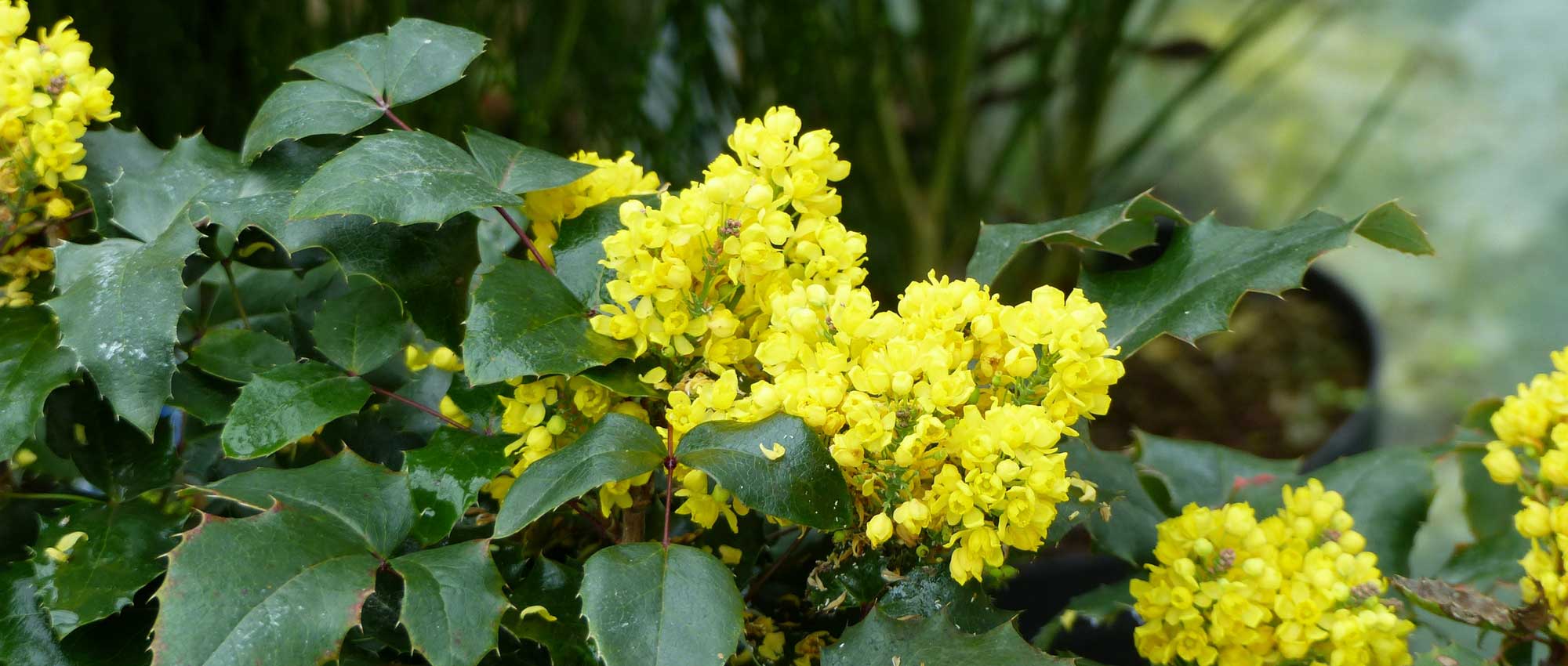
Mahonia x media Charity in pictures
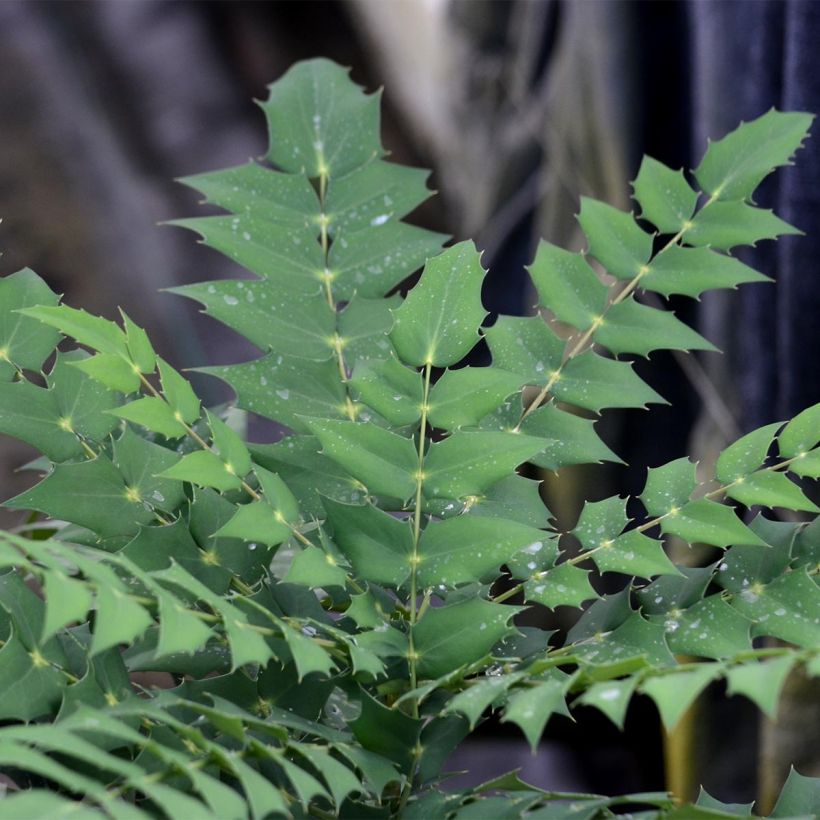
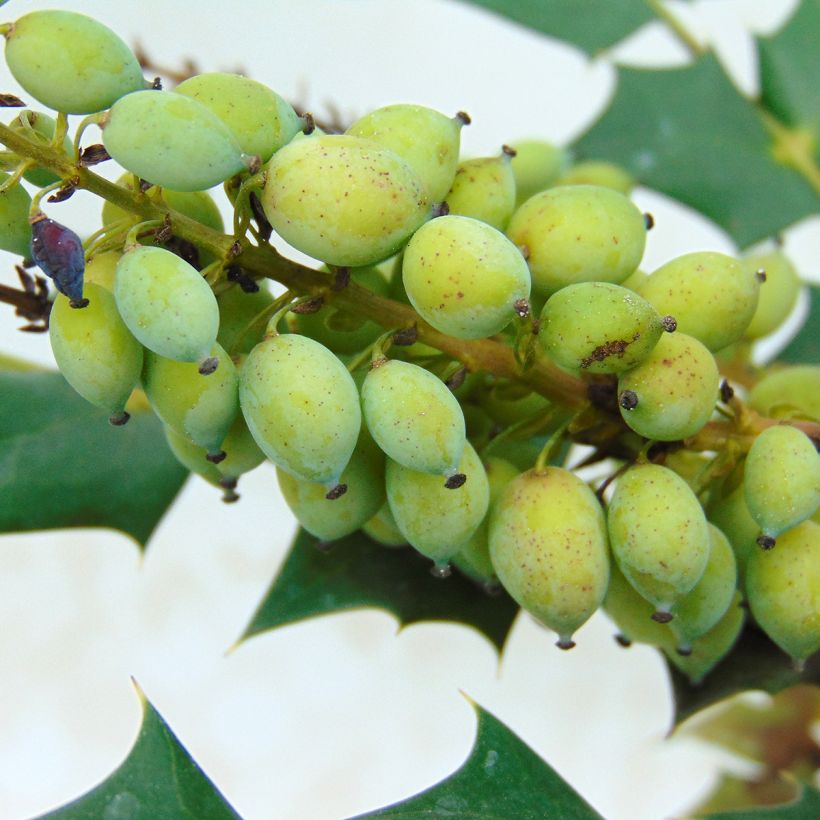
Plant habit
Flowering
Foliage
Botanical data
Mahonia
x media
Charity
Berberidaceae
Oregon grape, Mahonia
Cultivar or hybrid
Planting and care
Plant Mahonia ideally in partial shade or shade (it tolerates the sun in our regions that are not too hot), in well-loosened soil. It is tolerant of the nature of the terrain, preferring it to be slightly acidic but also accepting slightly chalky soils. Once well rooted, it can withstand dry summers (in the shade). Mahonia 'Charity' is hardy (-15 °C). It does not appreciate excess water. Therefore, it requires proper drainage: about twenty centimetres at the bottom of the pit. Add compost to the garden soil, and possibly a little sand; be aware that this bush has a rather imposing habit: up to 4m (13ft) in height and width. Leave enough space for its installation! To promote branching, pinch the young shoots in spring.
Planting period
Intended location
Care
Planting & care advice
-
-

-

-

-
-
-

-
-
, onOrder confirmed
Reply from on Promesse de fleurs
Recently viewed products
Haven't found what you were looking for?
Hardiness is the lowest winter temperature a plant can endure without suffering serious damage or even dying. However, hardiness is affected by location (a sheltered area, such as a patio), protection (winter cover) and soil type (hardiness is improved by well-drained soil).

The flowering period indicated on our website applies to countries and regions located in USDA zone 8 (France, the United Kingdom, Ireland, the Netherlands, etc.)
It will vary according to where you live:- In zones 9 to 10 (Italy, Spain, Greece, etc.), flowering will occur about 2 to 4 weeks earlier.
- In zones 6 to 7 (Germany, Poland, Slovenia, and lower mountainous regions), flowering will be delayed by 2 to 3 weeks.
- In zone 5 (Central Europe, Scandinavia), blooming will be delayed by 3 to 5 weeks.
In temperate climates, pruning of spring-flowering shrubs (forsythia, spireas, etc.) should be done just after flowering.
Pruning of summer-flowering shrubs (Indian Lilac, Perovskia, etc.) can be done in winter or spring.
In cold regions as well as with frost-sensitive plants, avoid pruning too early when severe frosts may still occur.
The planting period indicated on our website applies to countries and regions located in USDA zone 8 (France, United Kingdom, Ireland, Netherlands).
It will vary according to where you live:
- In Mediterranean zones (Marseille, Madrid, Milan, etc.), autumn and winter are the best planting periods.
- In continental zones (Strasbourg, Munich, Vienna, etc.), delay planting by 2 to 3 weeks in spring and bring it forward by 2 to 4 weeks in autumn.
- In mountainous regions (the Alps, Pyrenees, Carpathians, etc.), it is best to plant in late spring (May-June) or late summer (August-September).
The harvesting period indicated on our website applies to countries and regions in USDA zone 8 (France, England, Ireland, the Netherlands).
In colder areas (Scandinavia, Poland, Austria...) fruit and vegetable harvests are likely to be delayed by 3-4 weeks.
In warmer areas (Italy, Spain, Greece, etc.), harvesting will probably take place earlier, depending on weather conditions.
The sowing periods indicated on our website apply to countries and regions within USDA Zone 8 (France, UK, Ireland, Netherlands).
In colder areas (Scandinavia, Poland, Austria...), delay any outdoor sowing by 3-4 weeks, or sow under glass.
In warmer climes (Italy, Spain, Greece, etc.), bring outdoor sowing forward by a few weeks.
Shipping country and language
Your country of residence may be:
Your country of residence is:
For a better user experience on our website, you can select:
Your shipping country:
-
 Austria
-
 Belgium
-
 Bosnia & Herzegovina
-
 Bulgaria
-
 Croatia
-
 Cyprus
-
 Czechia
-
 Denmark
-
 Estonia
-
 Finland
-
 France
-
 Germany
-
 Greece
-
 Hungary
-
 Iceland
-
 Ireland
-
 Italy
Italy
-
 Latvia
-
 Liechtenstein
-
 Lithuania
-
 Luxembourg
-
 Malta
Malta
-
 Netherlands
-
 Poland
-
 Portugal
-
 Romania
-
 Serbia
-
 Slovakia
-
 Slovenia
-
 Spain
Spain
-
 Sweden
-
 Switzerland
Language:
-
French
-
 English
-
Spanish
-
Italian
-
German
-
Portuguese
-
Dutch
-
Finnish
My Account
Hello
My wish lists
My cart
Log in / Register
Existing customer?
This form is protected by reCAPTCHA - the Google Privacy Policy and Terms of Service apply.
New customer?
Create an account to track your orders, access our customer service and, if you wish, make the most of our upcoming offers.