




























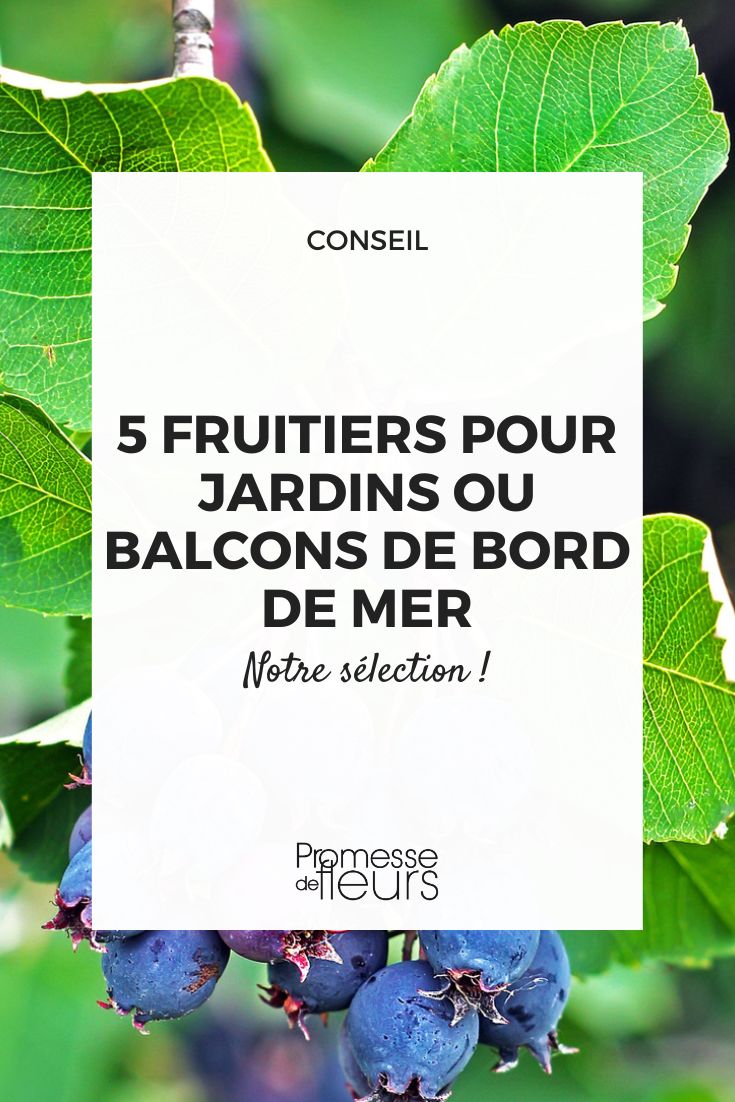
5 fruit trees for seaside gardens or balconies
Our selection of suitable fruit trees
Contents
Plants that are grown by the sea or ocean must adapt to challenging growing conditions, which can be harsh: strong winds, salt-laden spray, as well as sandy or stony, well-draining soil that is low in nutrients.
Conversely, plants often benefit from mild temperatures even in winter, and sometimes a lot of warmth and sunshine. To plant fruit trees or bushes in the garden, it is essential to choose species or varieties that can withstand these conditions. Here is our selection of 5 fruit trees to grow by the sea, either in the ground or in pots.

The fig tree: an iconic fruit tree of the Mediterranean, but one that can also thrive elsewhere
The fig tree (Ficus carica) is part of the Mediterranean coastal landscapes: from Spain to Greece, including Provence, Italy, and Tunisia, this bush has been cultivated for millennia. It thrives in sunny locations, in deep soils, even stony and low in nutrients. Its twisted silhouette can adapt to strong sea winds, while its natural drought resistance, once well established, makes it an ideal candidate for coastal gardens in southern France.
Valued for its sweet fruits, which can be purple or green, it also offers attractive ornamental foliage, consisting of deeply lobed leaves that give it an exotic appearance. Deciduous, these leaves disappear in winter.
There are self-fertile varieties, ideal for small spaces, as they do not require at least one male and one female plant. Unifera fig trees produce one harvest per year at the end of summer, while biferous varieties offer two fruiting periods in the year. In the coastal regions north of the Loire, such as Brittany, it is advisable to choose the former varieties, which are less sensitive to cool autumns and late frosts.
Choose from the many fig trees available:
- ‘Goutte d’or’, a self-fertile variety from France, producing sweet fruits with a golden-yellow skin;
- ‘Dauphine’, an early fig tree offering a first harvest as early as July;
- ‘Nazareth’, which rewards us with large fruits that have a green skin;
- the variegated fig tree, with astonishing fruits that blend green and yellow, offering very fragrant red flesh;
- ‘Madeleine des 2 saisons’, suitable for the wetter regions of the Atlantic Ocean.
Dwarf varieties with small growth, such as ‘Figality’ and ‘Gustis Ficcolino’ can also be grown in pots, to provide shade on a terrace or balcony by the sea.
To learn more: “Fig tree, ficus carica: planting, pruning, and maintenance.”
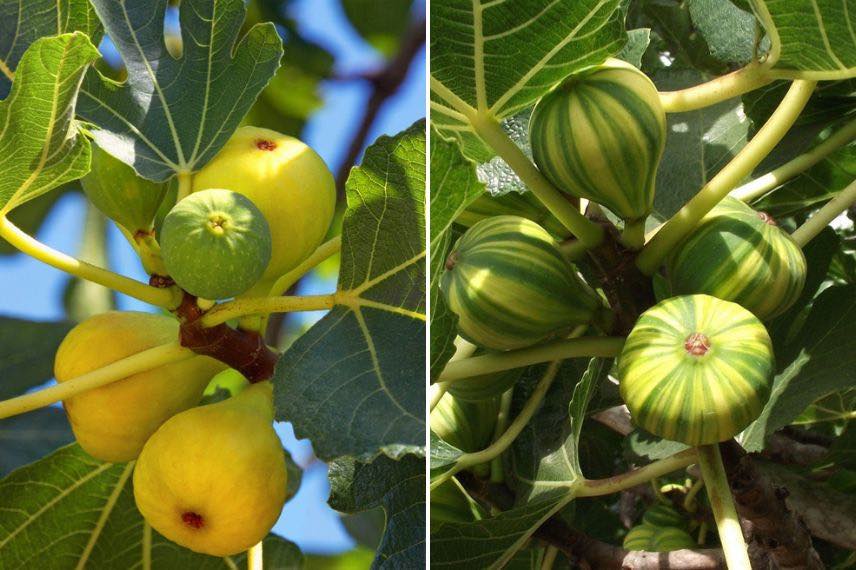
On the left, the fig tree ‘Madeleine des 2 saisons’, suitable for the Atlantic coast, and on the right, the ‘Panachée’ variety, which produces a single harvest, a better choice for northern regions
Read also
Coastal garden designAmelanchier: a shrub with underrated fruits, ideal for the Atlantic coast
The amelanchier is primarily grown in gardens for its stunning and early spring flowering, followed by the vibrant colours its leaves take on in autumn before they fall.
However, its edible fruits are not to be overlooked, despite their lack of popularity. They are, in fact, highly appreciated and consumed in Canada, where they are known as “little pears.” These sweet berries, resembling blueberries, appear in summer after flowering. Initially red, they then turn dark purple, and finally a lovely bluish-black. They can be enjoyed raw, dried, or cooked in pies, jams, chutneys, sauces, and more.
The amelanchier is one of those easy-going plants: it tolerates sea spray, is robust, hardy, and adaptable to soil type, as long as it is well-drained. However, near the coast, it will prefer sheltered spots from drying winds, such as behind a wall or a windbreak hedge.
Fearing only excessively hot and dry summers, it is better suited to the wetter gardens of the Atlantic coast. Position it in sunny exposure north of the Loire and in partial shade in the south.
Consider, for example:
- the Amelanchier alnifolia ‘Saskatoon Berry’, a reliable choice;
- ‘Smoky’ which can be grown in pots or containers, thanks to its modest size and slow growth;
- ‘Obelisk’, an amelanchier with alder-like leaves, notable for its narrow and upright silhouette.
To learn more, see “Amelanchier: planting, pruning, growing” and “How to harvest and store amelanchier fruits?”.
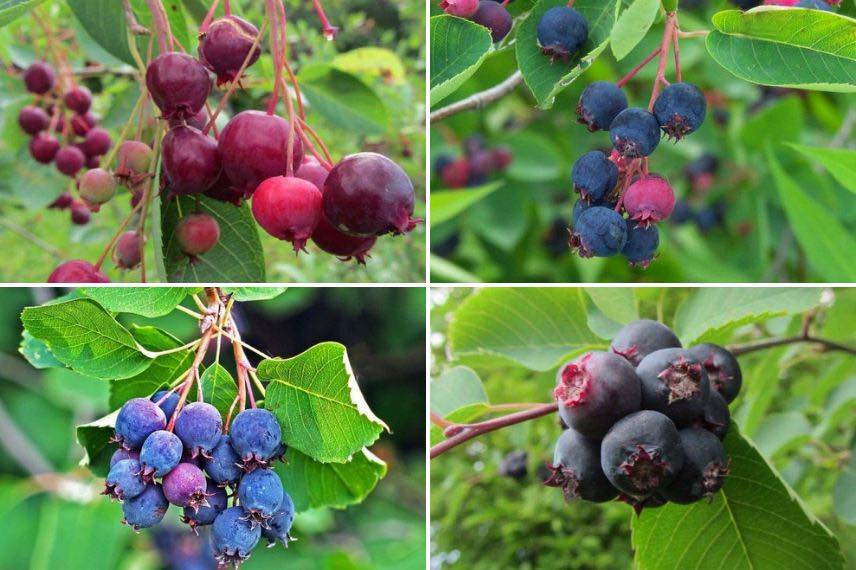
The good fruits of Amelanchier: Amelanchier laevis ‘Ballerina’, amelanchier lamarckii, ‘Amelanchier alnifolia Smoky’ and ‘Saskatoon Berry’
Citrus trees: iconic fruit trees of Mediterranean gardens
Orange trees, lemon trees, mandarin trees… fruit bushes that evoke warmth, sunshine, and the south of France! In part of the Mediterranean region, citrus trees indeed find favourable conditions for their development. They can thus be grown in the ground on the Côte d’Azur (the famous “orange zone”), but also in Corsica. Some species, such as the bitter orange tree (Citrus aurantium), can even be cultivated in a broader southern area.
In other coastal regions subject to more severe frosts, the fruits will unfortunately often be destroyed by the cold, leading to unpredictable yields. However, it is entirely possible to opt for pot cultivation, if you have a suitable place for wintering (veranda, greenhouse…). For example, try the ‘Nagami’ kumquat, the ‘Keraji’ mandarin tree, or the ‘Meyer’ lemon tree.
This way, you can enjoy their waxy and fragrant flowering, followed by their vitamin-rich and tangy fruits. Their evergreen foliage also has the advantage of remaining decorative all year round, adding a touch of exoticism.
Loving warmth and sunshine, citrus trees will thrive in well-drained sandy soils, but regularly amended (enriched with organic matter). Once established, they can occasionally tolerate drought, but will prefer to grow in cool (slightly moist) soil.
To learn more: “Lemon trees, orange trees, and other citrus: how to plant and grow them in pots or in the garden.”
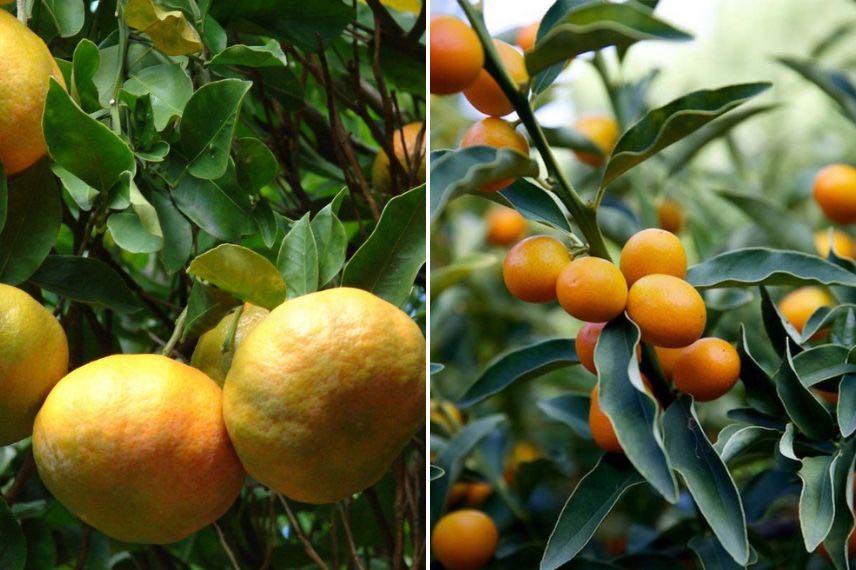
The mandarin tree and kumquat are easier to grow outside the orange zone than the lemon tree and orange tree
Read also
Creating a vegetable garden by the seaThe mulberry: the tree that produces blackberries
If we are well acquainted with brambles from the Rosaceae family, which produce, among other things, wild blackberries, the fruits from the tree are significantly less popular. However, mulberries Morus also produce delicious sweet and tangy little fruits. They have the advantage of growing on a plant that is thorn-free.
The white mulberry Morus alba has been extensively cultivated in the south of France for silk production (sericulture), as its leaves are the only food source for the silkworm (Bombyx mori). Today, many mulberries can still be seen, from the Midi to the Atlantic coast.
But its fruits, appearing at the end of spring, deserve to be discovered, just like the juicy and sweet ones from the cultivar ‘Giant Fruit’. The black mulberry Morus nigra also produces edible fruits but requires a lot of space to grow.
For small seaside gardens, or balconies and terraces, opt for the dwarf variety Morus rotundiloba ‘Mojo Berry’, which has a quick and generous fruiting.
Morus have the advantage of quickly stabilising soils, thanks to their root system. They thrive in well-drained, even sandy soil. These trees tolerate salt spray and wind, but will also withstand drought and heat once established.
Note: some species or varieties are sterile (Morus alba ‘Fruitless’). They are used as ornamental or shade trees in the garden, but to avoid the mess caused by the fruits. If you wish to grow a Morus for consumption, be sure to choose the right variety.
To learn more: “Mulberry, Morus: planting, pruning, and care”
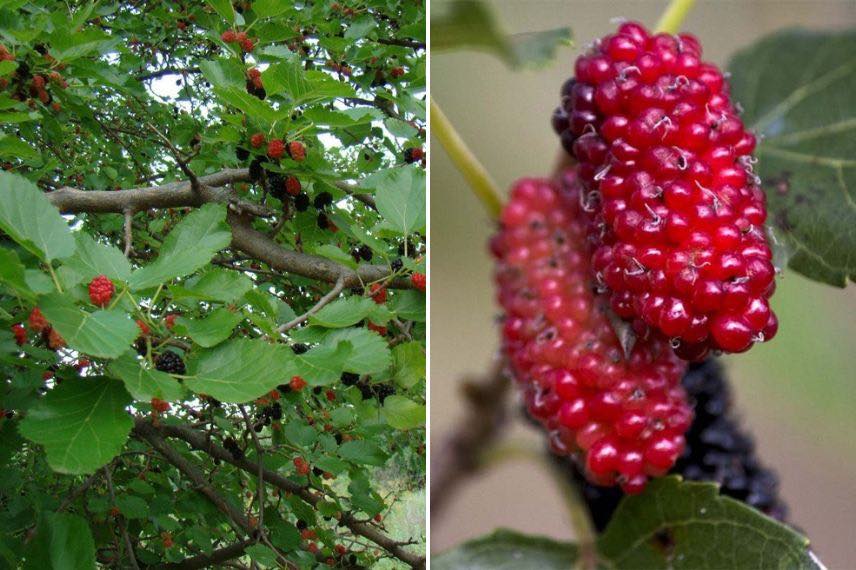
Morus nigra and fruits of the variety ‘Giant Fruit’
Jujube tree: for warm, dry seaside gardens
The common jujube (Ziziphus jujuba) is a bush native to China, which produces edible fruits known as jujubes or Chinese dates in early autumn. They are oval-shaped, with a slightly sweet and tangy flavour. It was once a common sight in Provençal orchards.
The cultivars ‘Abundance’ and ‘Li’ have the advantage of being low in thorns, while offering quick fruiting and generous yields.
It is an ideal candidate for seaside gardens, as it is resistant to both sea spray and saline soils. It prefers dry, well-drained soils, even poor and calcareous ones, but requires warmth to bear fruit. The jujube will therefore be more suited to coastal gardens in the south of France.
To learn more: “The jujube: planting, pruning, and caring for.”
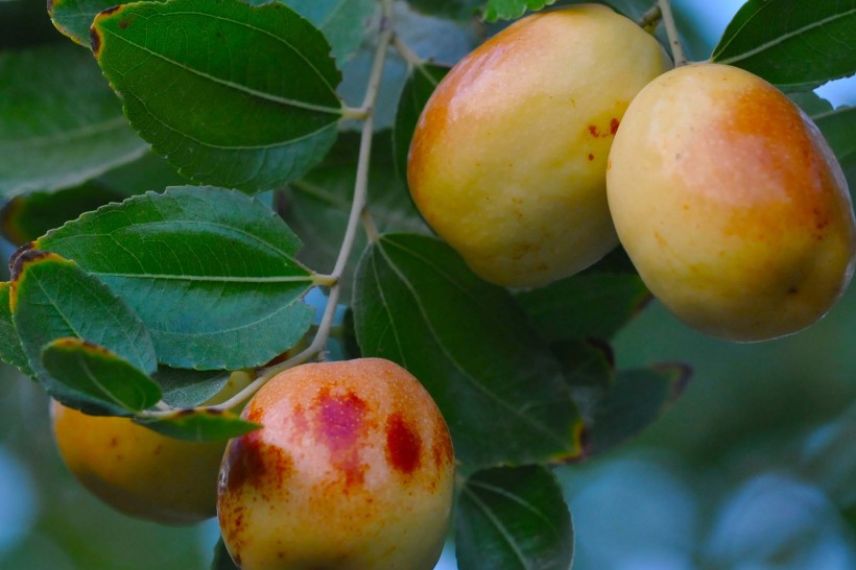
The fruits of the jujube
Other edible fruits that tolerate coastal conditions but are primarily used for their ornamental qualities
The olive tree, the myrtle, the oleaster, the strawberry tree or even the sea buckthorn are excellent candidates for coastal gardens or terraces, as they withstand maritime conditions well.
However, they are generally not cultivated for their fruits, even though they are quite edible. The olive requires a long and tedious process to be consumed; the oleaster, strawberry tree, and sea buckthorn produce fruits that are rather tasteless, which are more suitable for making jams or chutneys; the small berries of the myrtle, on the other hand, are mainly known for their use in the production of mirto liqueur, particularly appreciated in Corsica and Sardinia.
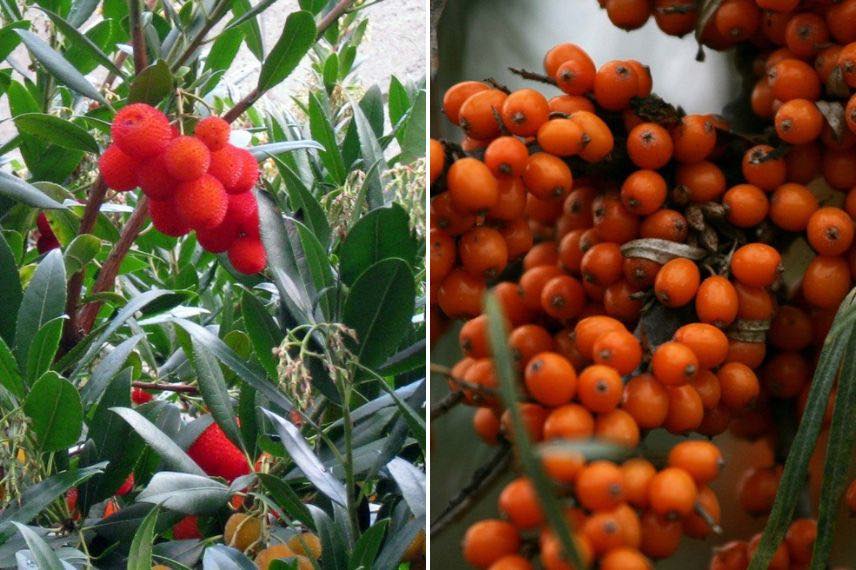
The fruits of the strawberry tree and sea buckthorn
- Subscribe!
- Contents
Comments