Amelanchier alnifolia Obelisk
Amelanchier alnifolia Obelisk
Amelanchier alnifolia Obelisk
Amelanchier alnifolia Obelisk
Amelanchier alnifolia Obelisk
Amelanchier alnifolia Obelisk
Amelanchier alnifolia Obelisk
Amelanchier alnifolia Obelisk
Saskatoon serviceberry, Western serviceberry, Alder-leaved serviceberry, Pacific serviceberry, Dwarf shadbush, Chuckley pear
Properly shaped plant. Meets my expectations.
Pierth, 31/01/2026
Back-to-school special offer!
Get €10 off for every €50 you spend! And get up to €40 off on a single order.
How does it work?
1. Shop your favourites
Add your favourite plants to your basket. For every €50 you spend (excluding delivery charges, store credit and the plastic-free option), you’ll receive a €10 voucher.
€50 spent = €10 voucher
€100 spent = €20 voucher
€150 spent = €30 voucher
€200 spent = €40 voucher
2. Place your order
Once your basket reaches one of the spending thresholds, place your order. You can even choose your delivery date!
3. Receive your voucher
As soon as your order has been shipped, you’ll receive an email containing your personal voucher code and its value.
4. Use it on your next order
Your voucher is valid for 90 days from the date you receive it. It can be used once only, on a new order worth at least the value of the voucher, excluding delivery charges.
Please note: Vouchers can be combined with other offers, but cannot be split or refunded.
Home or relay delivery (depending on size and destination)
Important: You may be charged customs duties by your country’s customs authorities upon delivery.
Schedule delivery date,
and select date in basket
This plant carries a 24 months recovery warranty
More information
We guarantee the quality of our plants for a full growing cycle, and will replace at our expense any plant that fails to recover under normal climatic and planting conditions.

Would this plant suit my garden?
Set up your Plantfit profile →
Description
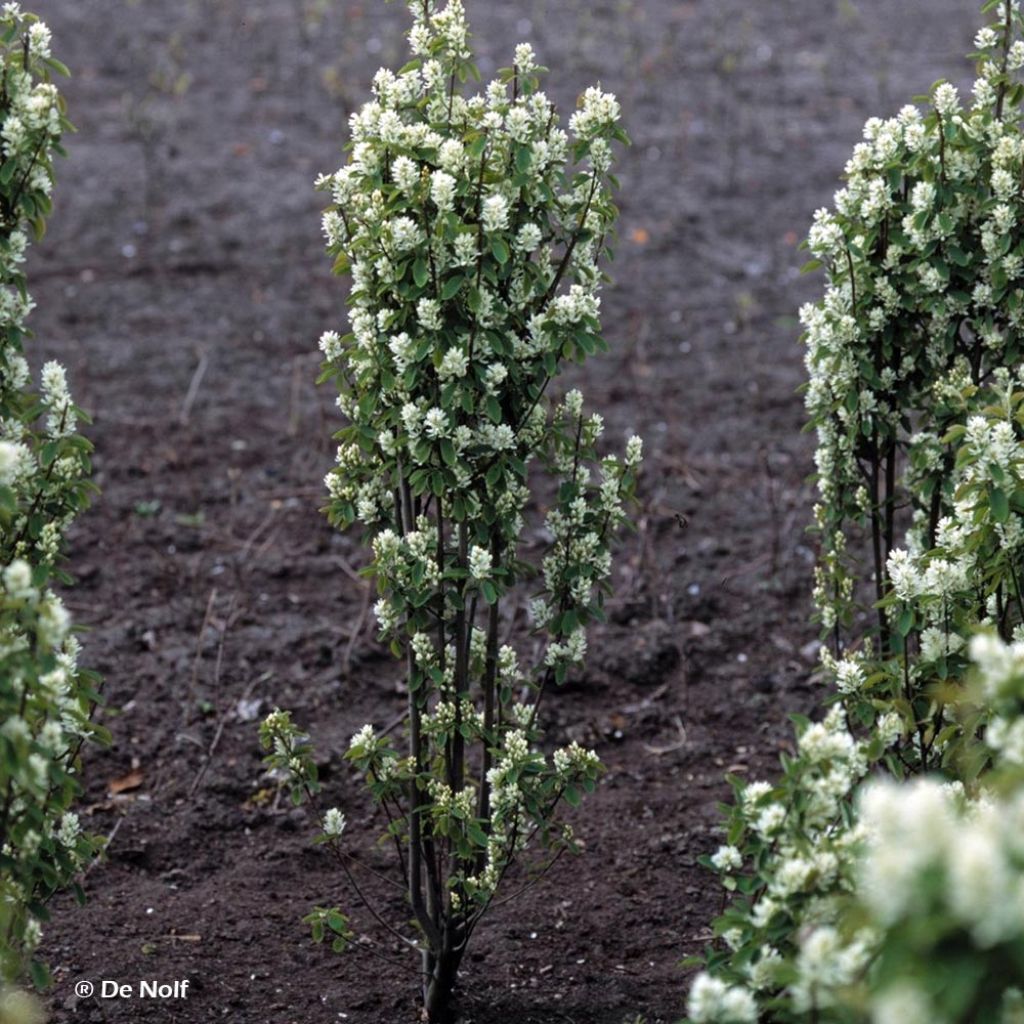
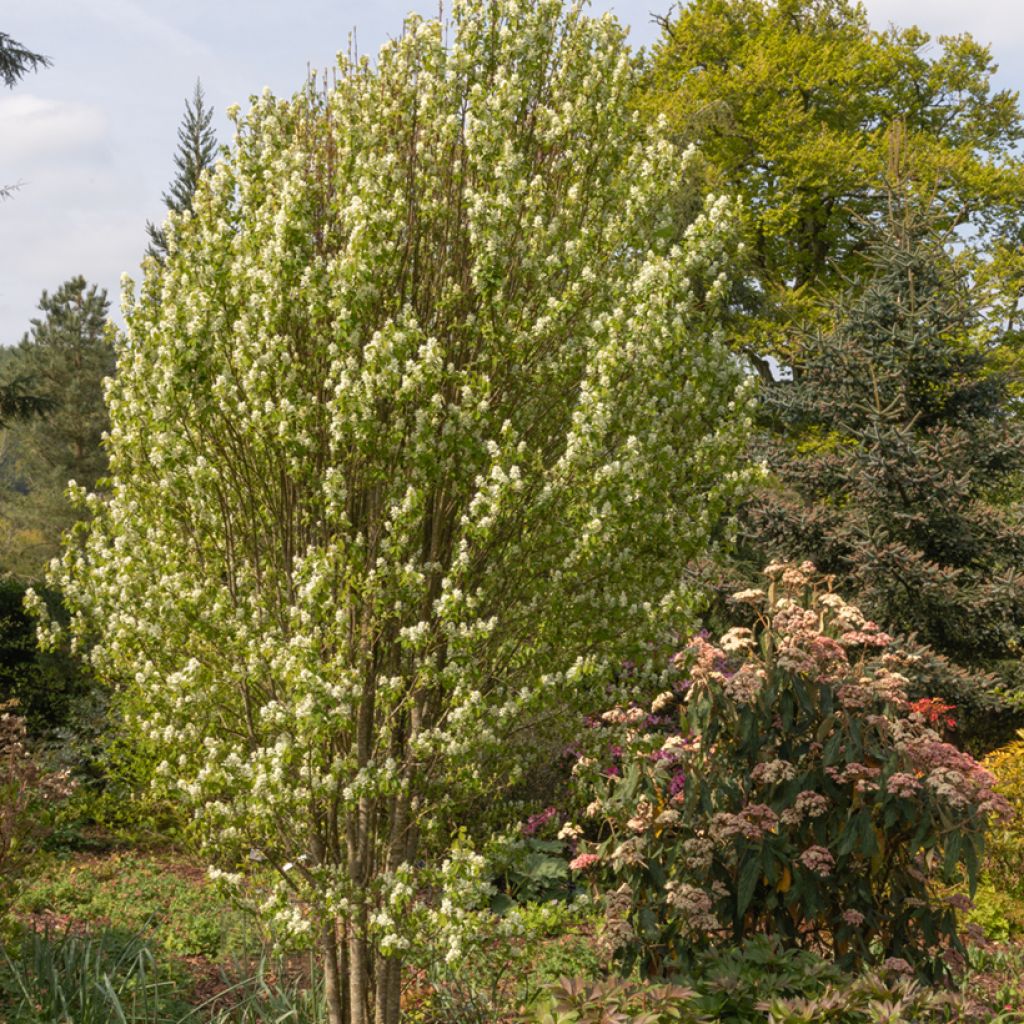
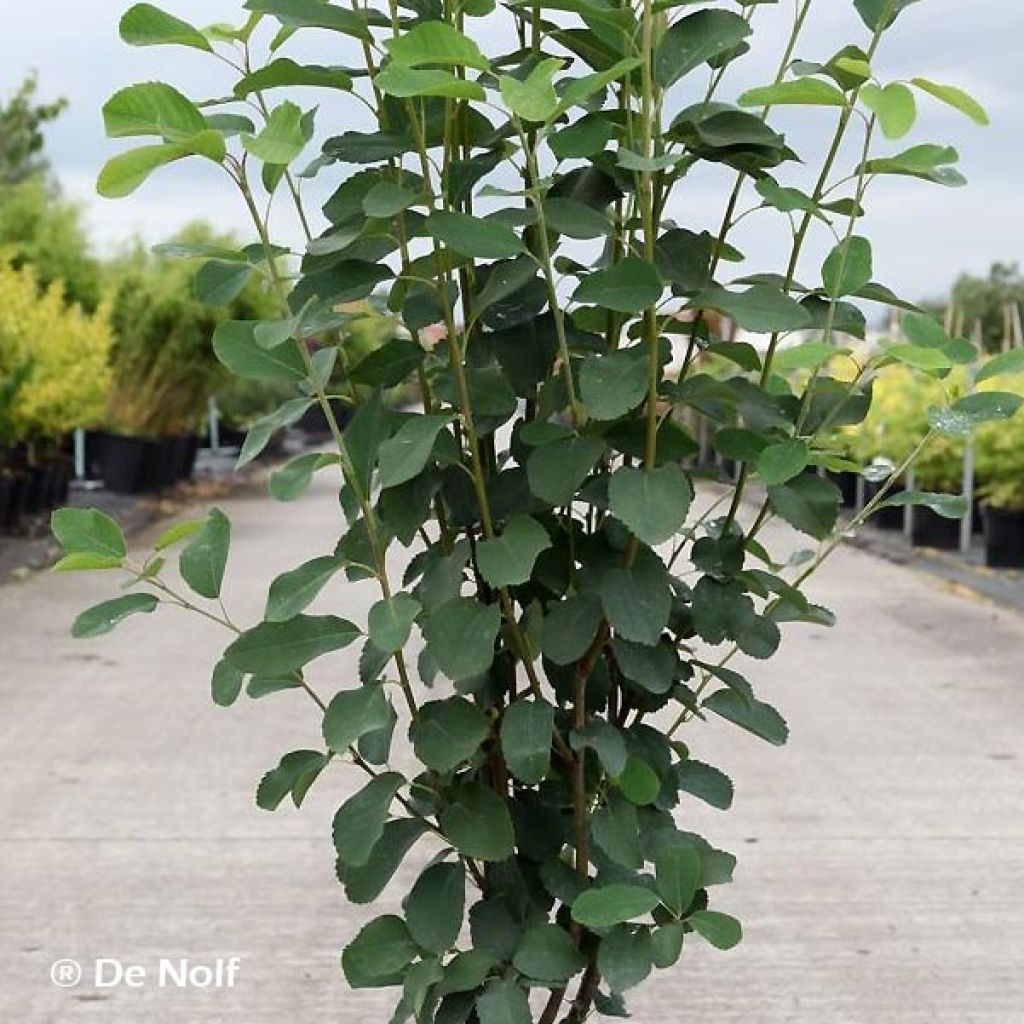
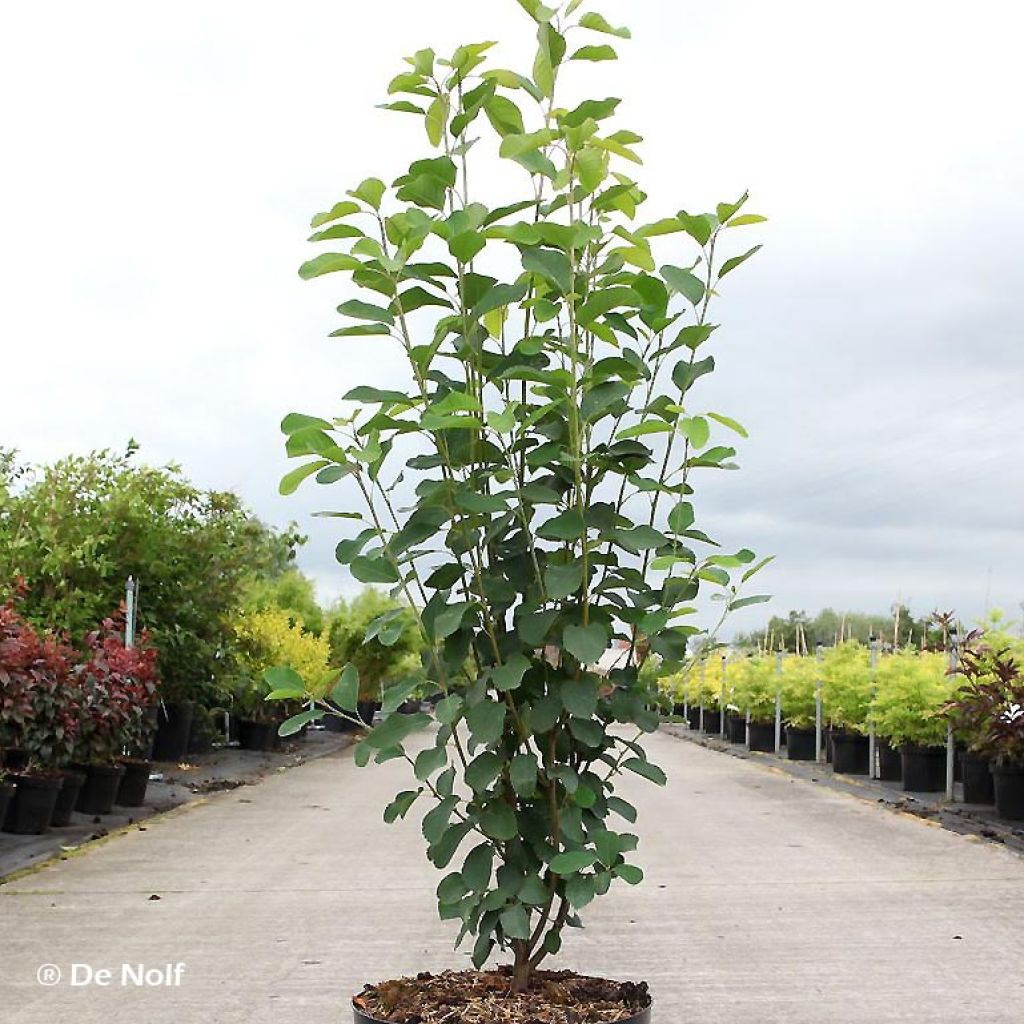
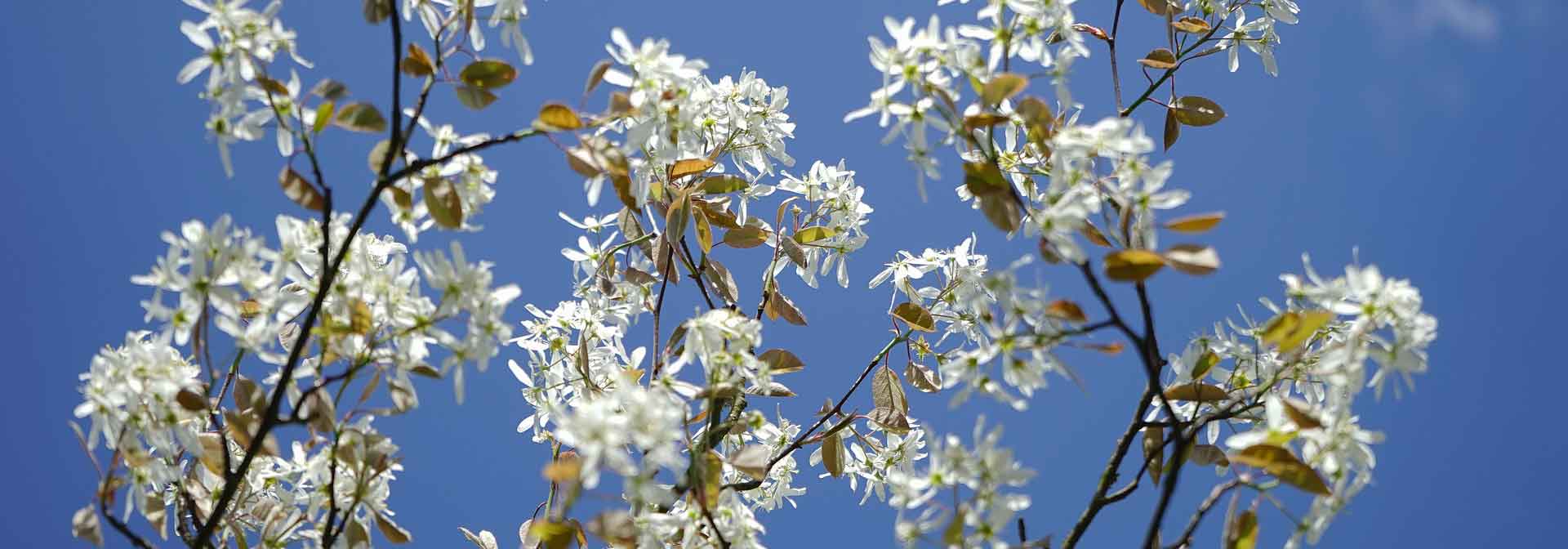
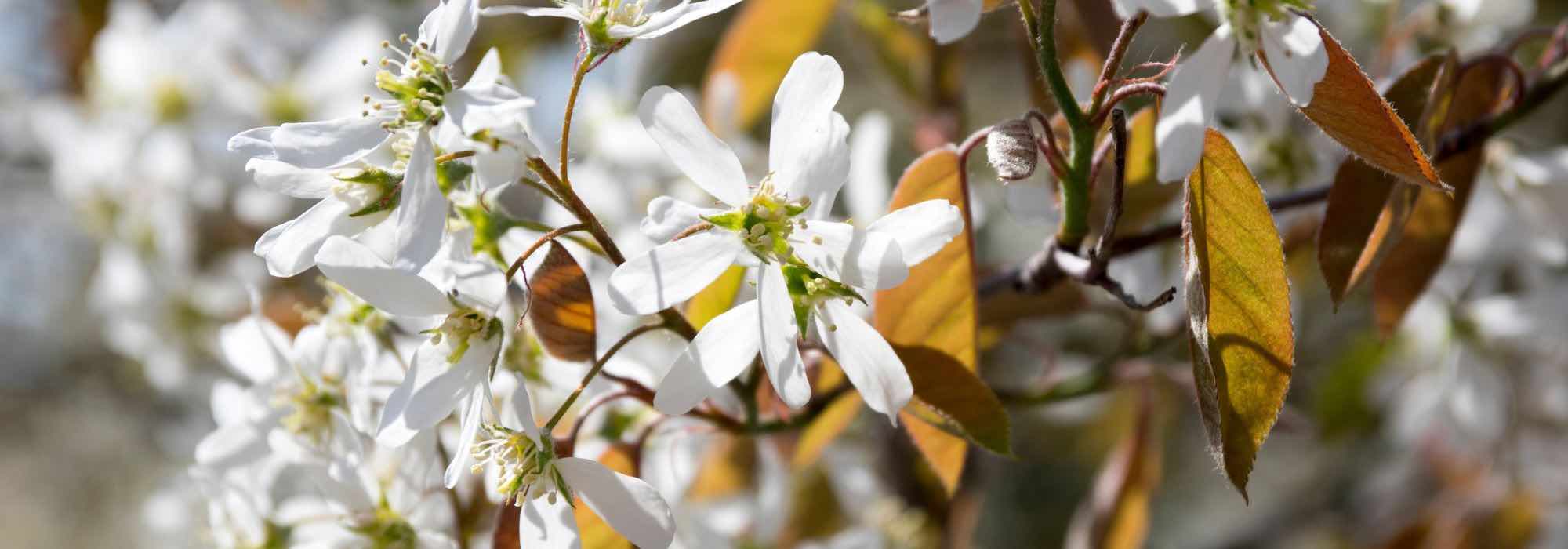
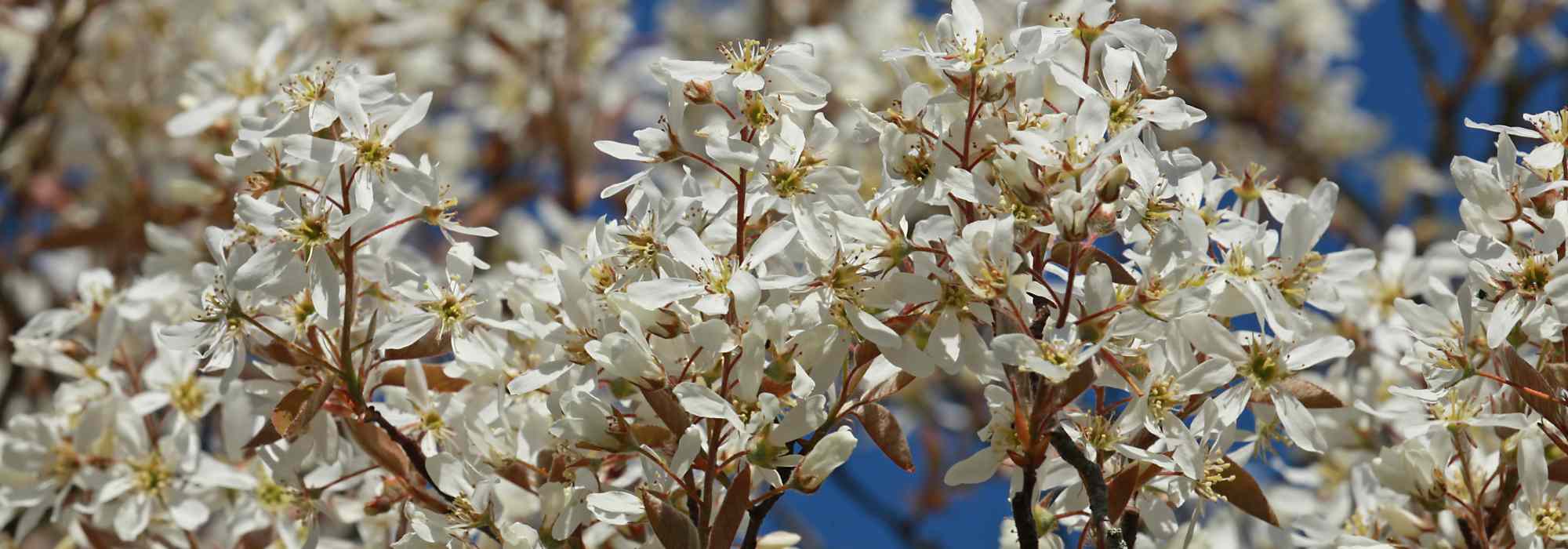
The 'Obelisk' Amelanchier is a variety of alder-leaved Amelanchier that is interesting for its naturally fastigiate growth, which is very graphic, rarely exceeding 5m (16ft 5in) in height and only 1.5m (4ft 11in) in width at maturity. This small fruit tree is both delicious and ornamental, producing a abundant white spring flowering from a young age that almost covers its branches. Then come the leaves, which are a beautiful bluish-green colour, and finally, in early summer, the clusters of black-blue fruits, juicy, sweet and aromatic, both tasty and nutritious. Amelanchiers are easy-to-manage shrubs or small trees that are very rewarding. 'Obelisk' is no exception to this rule, and its narrow habit is perfect for small gardens.
Native to North America, Amelanchier alnifolia is a sturdy shrub in the large Rosaceae family, spared by most parasites and resistant to extreme cold. In nature, it can be found along watercourses as well as in much less favourable environments, such as windy rocky slopes. It is a plant that prefers slightly acidic and cool soil, but it is accommodating and capable of adapting to relatively dry and hot summers once established. This species, A. alnifolia, is one of the few in the genus that can tolerate moderately limestone soils. However, to obtain a good harvest, it is advisable to provide it with fairly fertile soil and water if necessary.
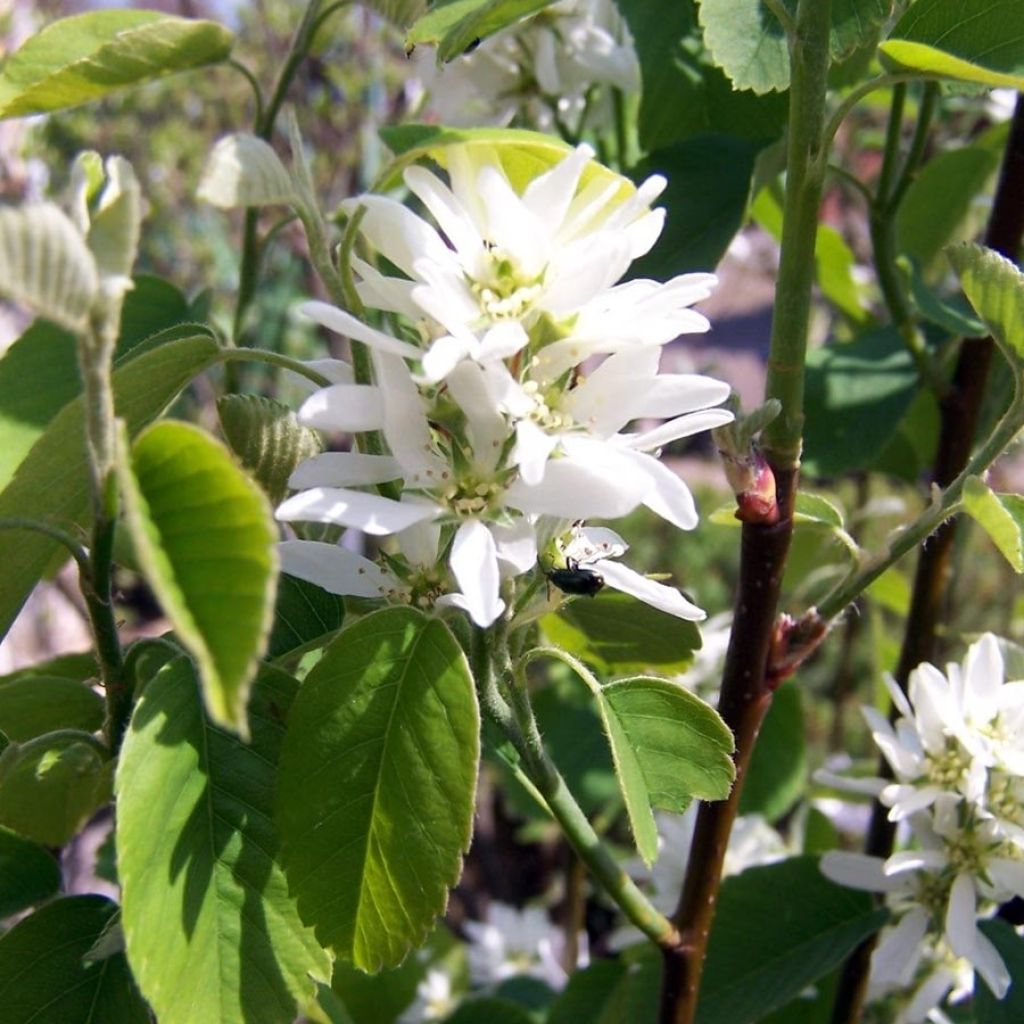
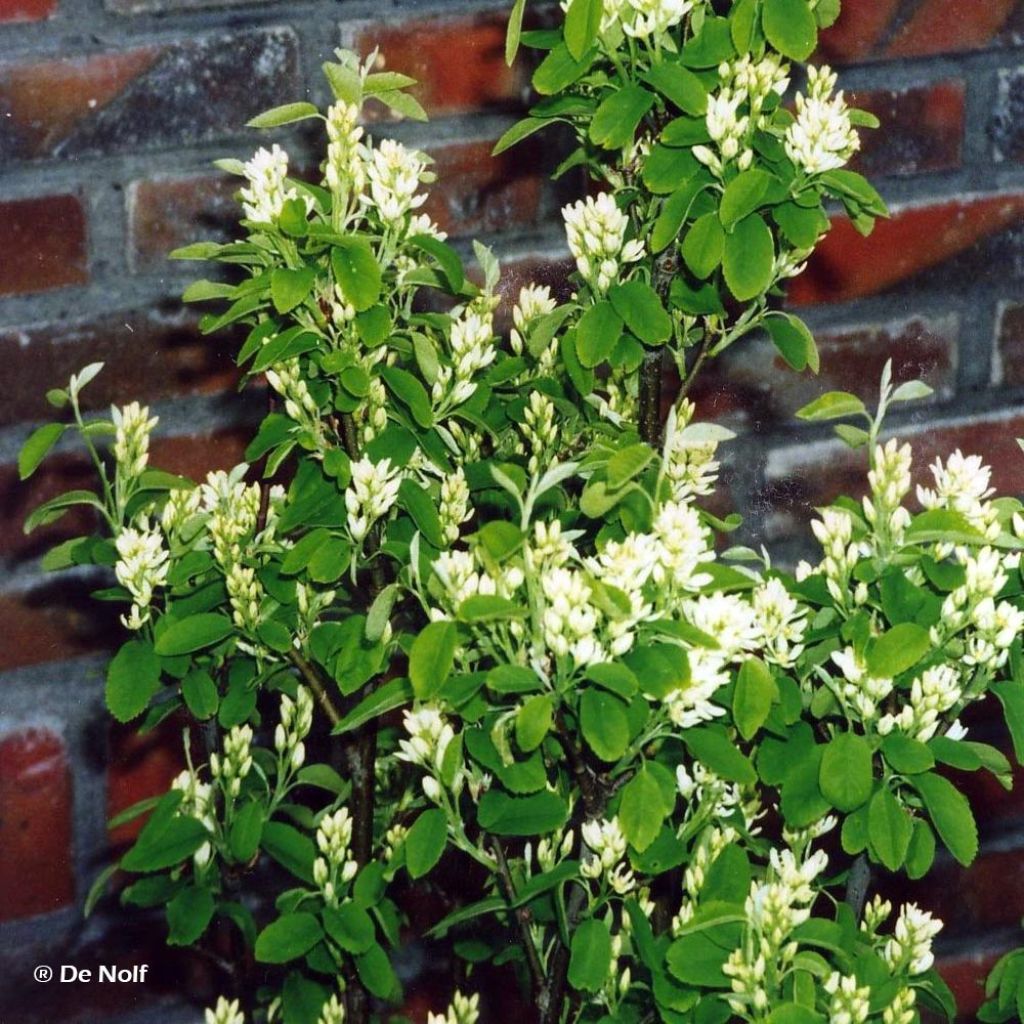
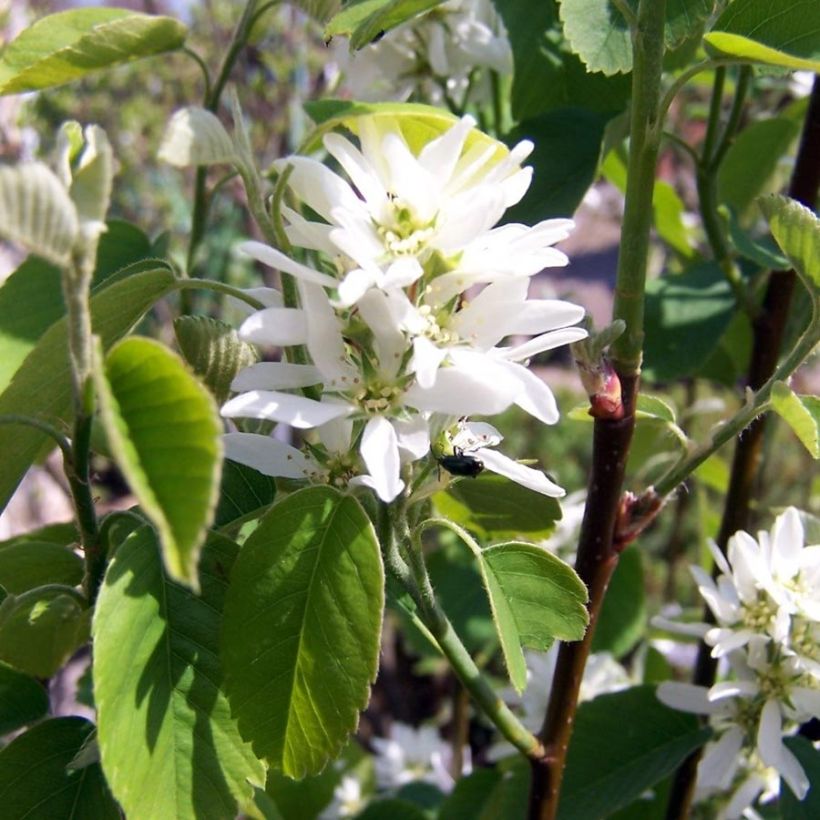
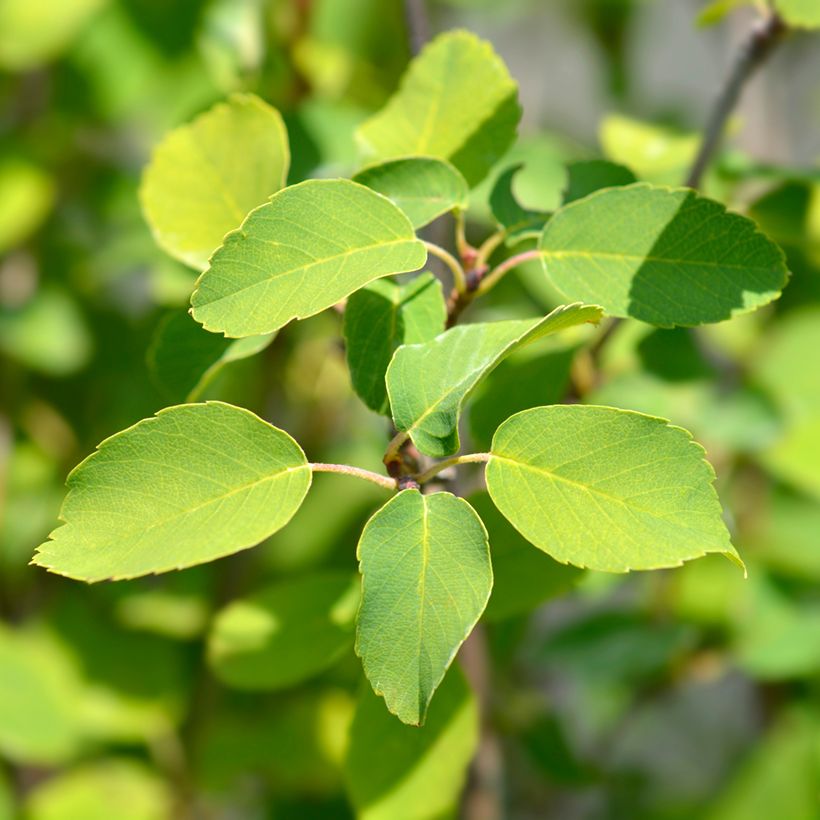
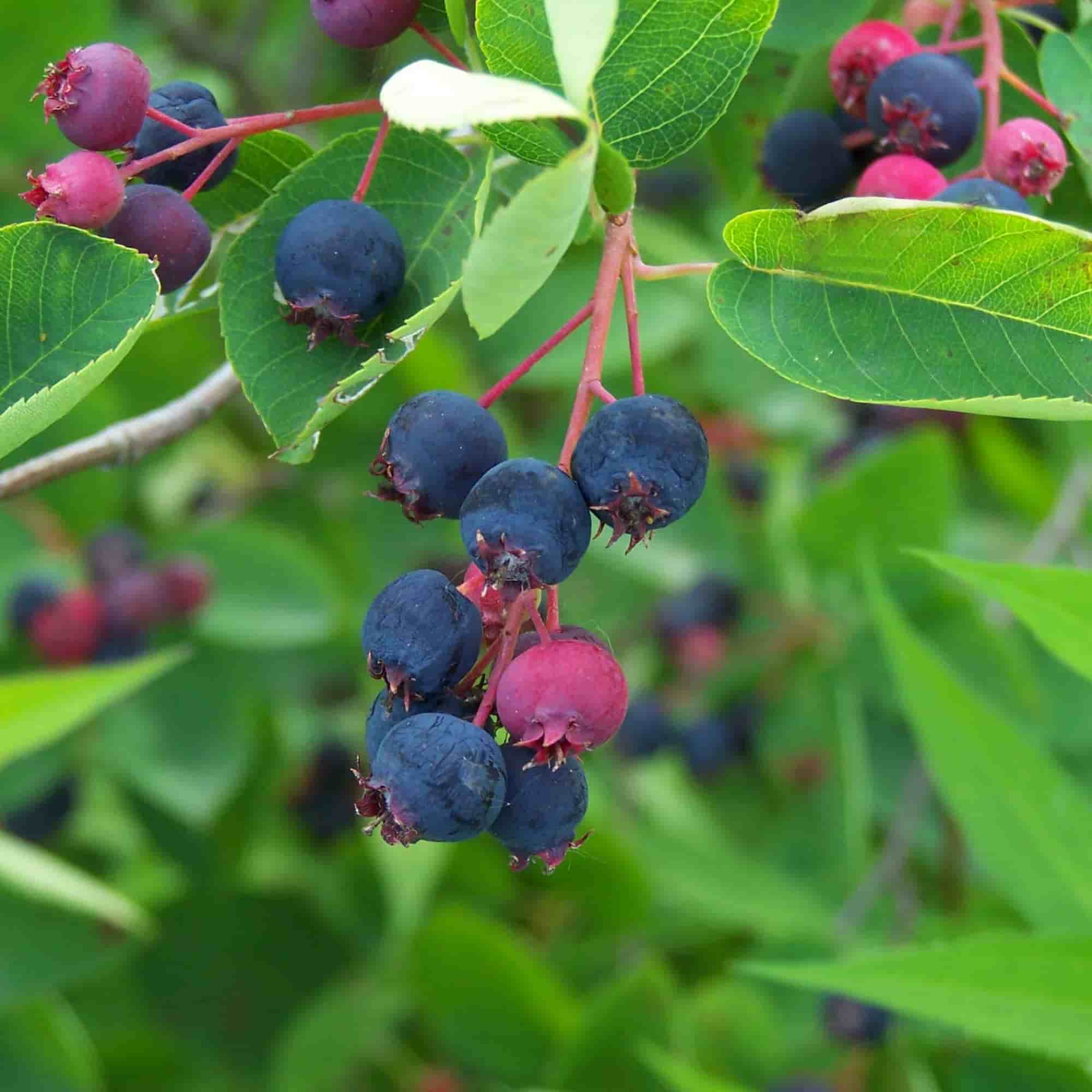
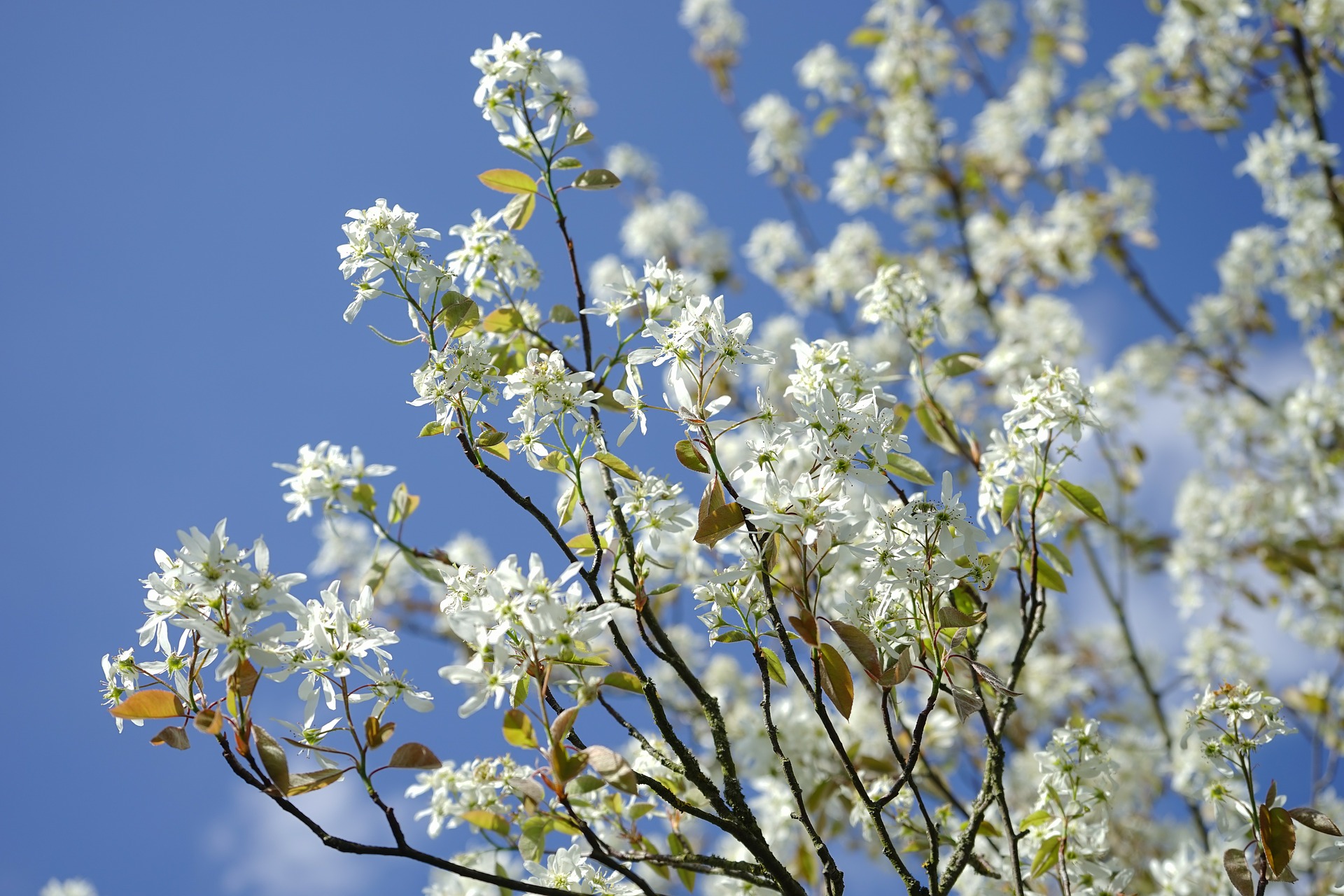
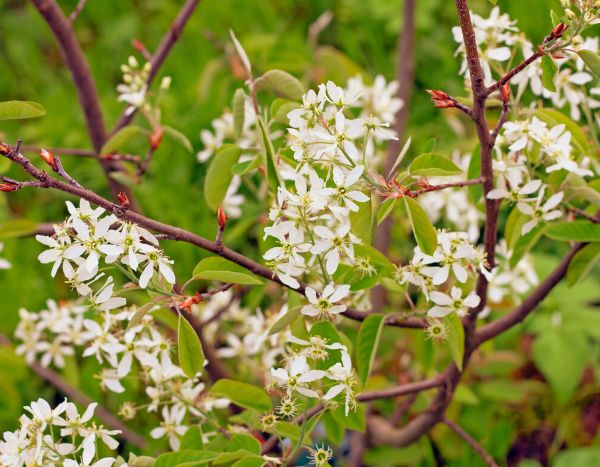
The cultivar 'Obelisk', selected in 1994 at the Kalmthout Arboretum in Belgium, has a columnar, upright and narrow habit. Its branches are tightly packed around the main branches. With a relatively slow growth, the shrub will reach a height of about 5m (16ft 5in) and a width of 1.5m (4ft 11in) at maturity, depending on the growing conditions. The flowering is remarkably abundant in April-May, at the tips of the bare or already adorned young branches, depending on the climate. The white flowers with 5 petals and yellow stamens, 2cm (0.8in) in diameter, are grouped in clusters along the branches. They are followed by edible fruits the size of blueberries, globular, called pyridions. They start off a deep blue and then turn black when ripe, in June-July. Their pleasantly sweet and aromatic flavour and juicy flesh make them suitable for both fresh consumption and cooking, as jam or jelly. The young spring leaves are very hairy, then become tougher. They have a beautiful bluish-green colour and turn yellow in autumn before falling. Measuring up to 6cm (2.4in) in length, they are entire, oval-shaped, with toothed edges, arranged alternately on the branches.
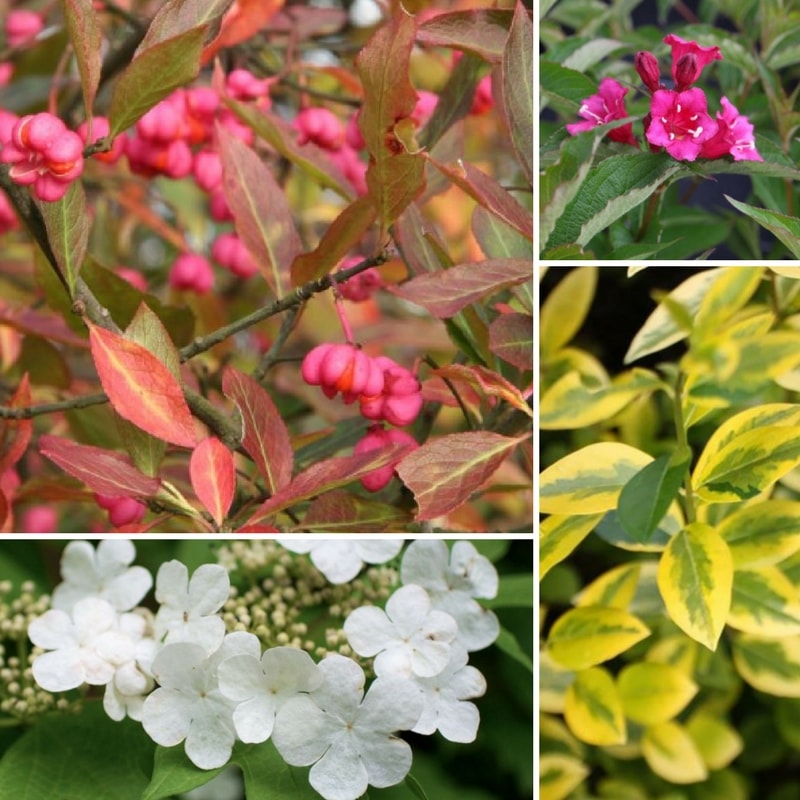
The 'Obelisk' Amelanchier is a sturdy fruit shrub, as undemanding as it is charming, with a small footprint, which deserves a place in a rustic, free or fruit hedge. It is also used as a background for herbaceous borders or in rows along narrow paths. It pairs wonderfully with ornamental apple and cherry trees, deciduous spindle trees, Japanese quince, spring-blooming spiraeas, hawthorns, medlars, prunus and many others. Create a fruit hedge by combining it, for example, with the May berry (Lonicera kamtschatica Sweet Myberry), garden blackberries, currants, gooseberries, cranberries (Vaccinium macrocarpon), blueberries, raspberries, Aronia, Japanese goumi, black elderberries...
Amelanchier alnifolia Obelisk in pictures
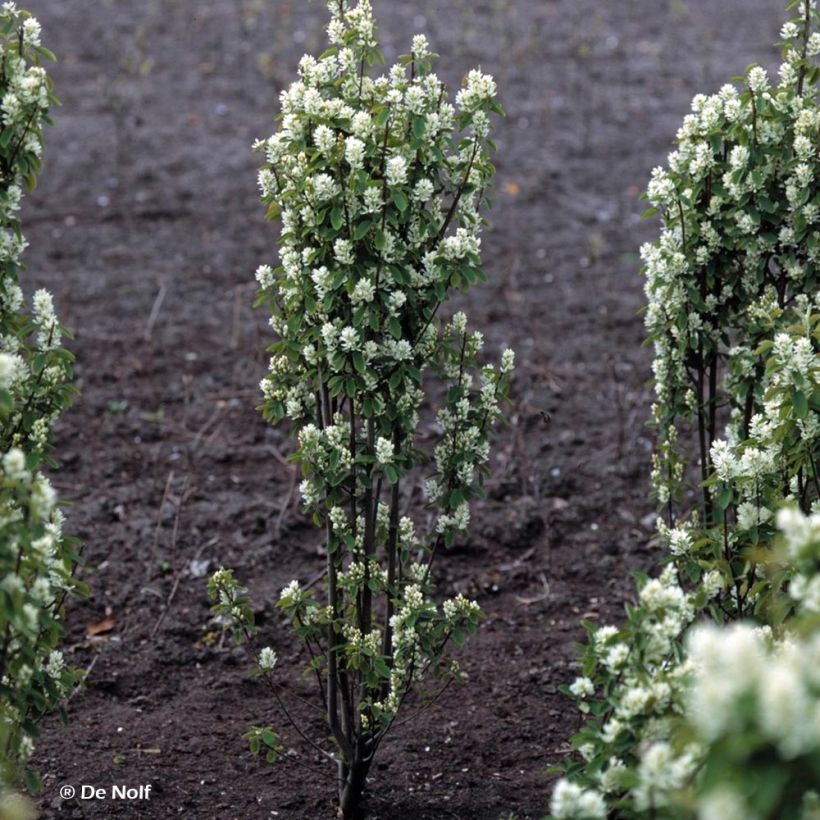
Plant habit
Flowering
Foliage
Botanical data
Amelanchier
alnifolia
Obelisk
Rosaceae
Saskatoon serviceberry, Western serviceberry, Alder-leaved serviceberry, Pacific serviceberry, Dwarf shadbush, Chuckley pear
Cultivar or hybrid
Planting and care
Amelanchier 'Obelisk' can be planted in spring or autumn in any good, well-drained garden soil, slightly dry, fresh or slightly moist, deep, in a sunny or semi-shaded position. It prefers slightly acidic to neutral soils but can tolerate some limestone. Water and mulch to maintain soil moisture. This bush, which does not like overly dry conditions, can however withstand moderate summer drought once well established. Water regularly to help it establish, especially during the first two dry summers. Mulch the soil to maintain some moisture, always after watering your amelanchier abundantly so that its roots do not develop only at the surface of the soil, which would make it more susceptible to water shortage.
Apply well-decomposed compost to the base of your bush every spring.
You can prune the bush from the first year to encourage branching. Beware of powdery mildew! Spray a sulfur-based fungicide as a preventive measure if spring is mild and very humid.
Planting period
Intended location
Care
Planting & care advice
-
-
-
-

-
-
-

-
-
, onOrder confirmed
Reply from on Promesse de fleurs
Recently viewed products
Haven't found what you were looking for?
Hardiness is the lowest winter temperature a plant can endure without suffering serious damage or even dying. However, hardiness is affected by location (a sheltered area, such as a patio), protection (winter cover) and soil type (hardiness is improved by well-drained soil).

The flowering period indicated on our website applies to countries and regions located in USDA zone 8 (France, the United Kingdom, Ireland, the Netherlands, etc.)
It will vary according to where you live:- In zones 9 to 10 (Italy, Spain, Greece, etc.), flowering will occur about 2 to 4 weeks earlier.
- In zones 6 to 7 (Germany, Poland, Slovenia, and lower mountainous regions), flowering will be delayed by 2 to 3 weeks.
- In zone 5 (Central Europe, Scandinavia), blooming will be delayed by 3 to 5 weeks.
In temperate climates, pruning of spring-flowering shrubs (forsythia, spireas, etc.) should be done just after flowering.
Pruning of summer-flowering shrubs (Indian Lilac, Perovskia, etc.) can be done in winter or spring.
In cold regions as well as with frost-sensitive plants, avoid pruning too early when severe frosts may still occur.
The planting period indicated on our website applies to countries and regions located in USDA zone 8 (France, United Kingdom, Ireland, Netherlands).
It will vary according to where you live:
- In Mediterranean zones (Marseille, Madrid, Milan, etc.), autumn and winter are the best planting periods.
- In continental zones (Strasbourg, Munich, Vienna, etc.), delay planting by 2 to 3 weeks in spring and bring it forward by 2 to 4 weeks in autumn.
- In mountainous regions (the Alps, Pyrenees, Carpathians, etc.), it is best to plant in late spring (May-June) or late summer (August-September).
The harvesting period indicated on our website applies to countries and regions in USDA zone 8 (France, England, Ireland, the Netherlands).
In colder areas (Scandinavia, Poland, Austria...) fruit and vegetable harvests are likely to be delayed by 3-4 weeks.
In warmer areas (Italy, Spain, Greece, etc.), harvesting will probably take place earlier, depending on weather conditions.
The sowing periods indicated on our website apply to countries and regions within USDA Zone 8 (France, UK, Ireland, Netherlands).
In colder areas (Scandinavia, Poland, Austria...), delay any outdoor sowing by 3-4 weeks, or sow under glass.
In warmer climes (Italy, Spain, Greece, etc.), bring outdoor sowing forward by a few weeks.
Shipping country and language
Your country of residence may be:
Your country of residence is:
For a better user experience on our website, you can select:
Your shipping country:
-
 Austria
-
 Belgium
-
 Bosnia & Herzegovina
-
 Bulgaria
-
 Croatia
-
 Cyprus
-
 Czechia
-
 Denmark
-
 Estonia
-
 Finland
-
 France
-
 Germany
-
 Greece
-
 Hungary
-
 Iceland
-
 Ireland
-
 Italy
Italy
-
 Latvia
-
 Liechtenstein
-
 Lithuania
-
 Luxembourg
-
 Malta
Malta
-
 Netherlands
-
 Poland
-
 Portugal
-
 Romania
-
 Serbia
-
 Slovakia
-
 Slovenia
-
 Spain
Spain
-
 Sweden
-
 Switzerland
Language:
-
French
-
 English
-
Spanish
-
Italian
-
German
-
Portuguese
-
Dutch
-
Finnish
My Account
Hello
My wish lists
My cart
Log in / Register
Existing customer?
This form is protected by reCAPTCHA - the Google Privacy Policy and Terms of Service apply.
New customer?
Create an account to track your orders, access our customer service and, if you wish, make the most of our upcoming offers.