Morus nigra - Mullberry
Morus nigra - Mullberry
Morus nigra - Mullberry
Morus nigra - Mullberry
Morus nigra - Mullberry
Morus nigra
Black Mulberry
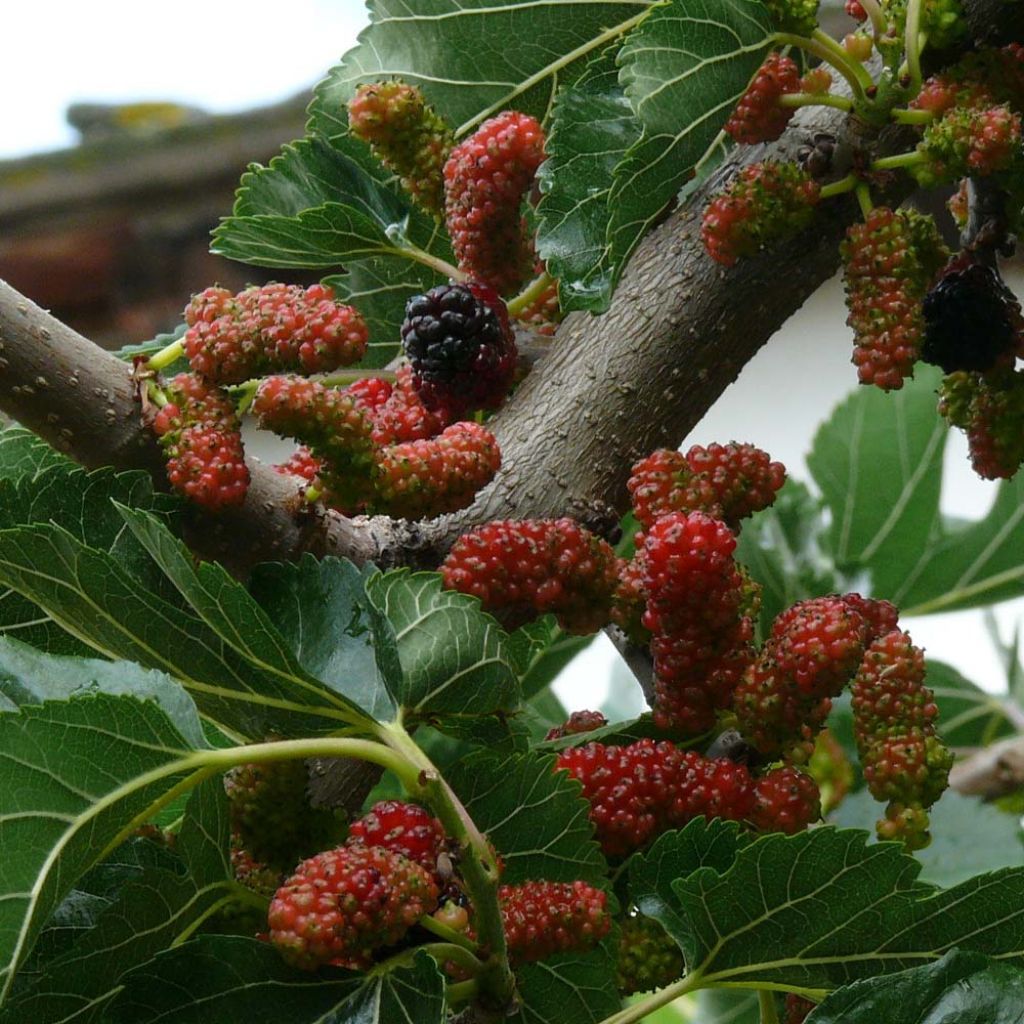
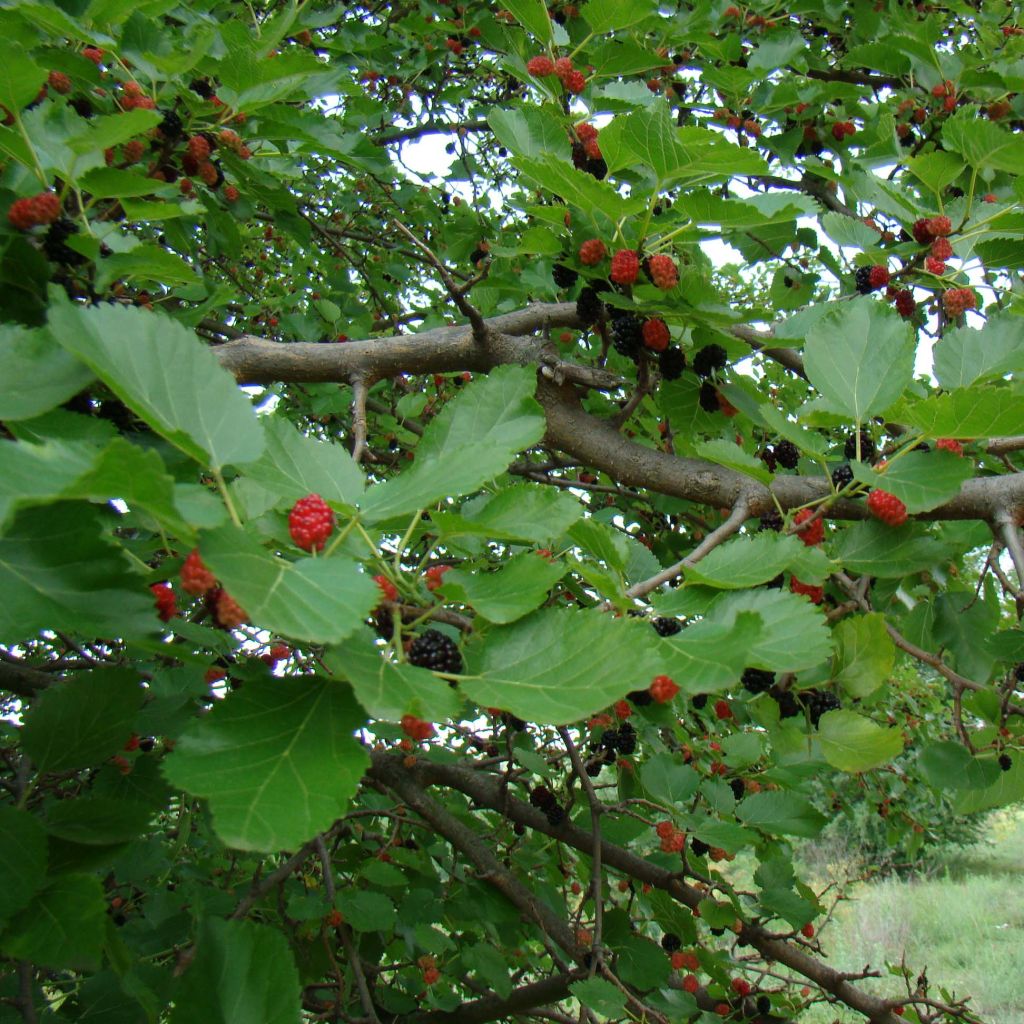
I would like to leave my review of this young plant. It is not a true "Morus Nigra" but a "Morus alba" with black fruits. I informed the customer service, and they are going to contact the supplier. They were very understanding and professional and refunded me for the young plant. For reference: the Black Mulberry (Morus Nigra L.) has buds that are dark brown (almost black), quite large and round (but not triangular like the alba), cordate leaves (heart-shaped), and crucially, the fruits do not have a long peduncle (they are attached directly to the branch and difficult to remove) and are black. It cannot be grown from sowing and is very slow-growing. I hope "Promesse de fleurs" will find a nursery that sells the true Morus Nigra.
Ivan, 24/12/2025
Back-to-school special offer!
Get €10 off for every €50 you spend! And get up to €40 off on a single order.
How does it work?
1. Shop your favourites
Add your favourite plants to your basket. For every €50 you spend (excluding delivery charges, store credit and the plastic-free option), you’ll receive a €10 voucher.
€50 spent = €10 voucher
€100 spent = €20 voucher
€150 spent = €30 voucher
€200 spent = €40 voucher
2. Place your order
Once your basket reaches one of the spending thresholds, place your order. You can even choose your delivery date!
3. Receive your voucher
As soon as your order has been shipped, you’ll receive an email containing your personal voucher code and its value.
4. Use it on your next order
Your voucher is valid for 90 days from the date you receive it. It can be used once only, on a new order worth at least the value of the voucher, excluding delivery charges.
Please note: Vouchers can be combined with other offers, but cannot be split or refunded.
Home or relay delivery (depending on size and destination)
Important: You may be charged customs duties by your country’s customs authorities upon delivery.
Schedule delivery date,
and select date in basket
This plant carries a 24 months recovery warranty
More information
We guarantee the quality of our plants for a full growing cycle, and will replace at our expense any plant that fails to recover under normal climatic and planting conditions.
Would this plant suit my garden?
Set up your Plantfit profile →
Description
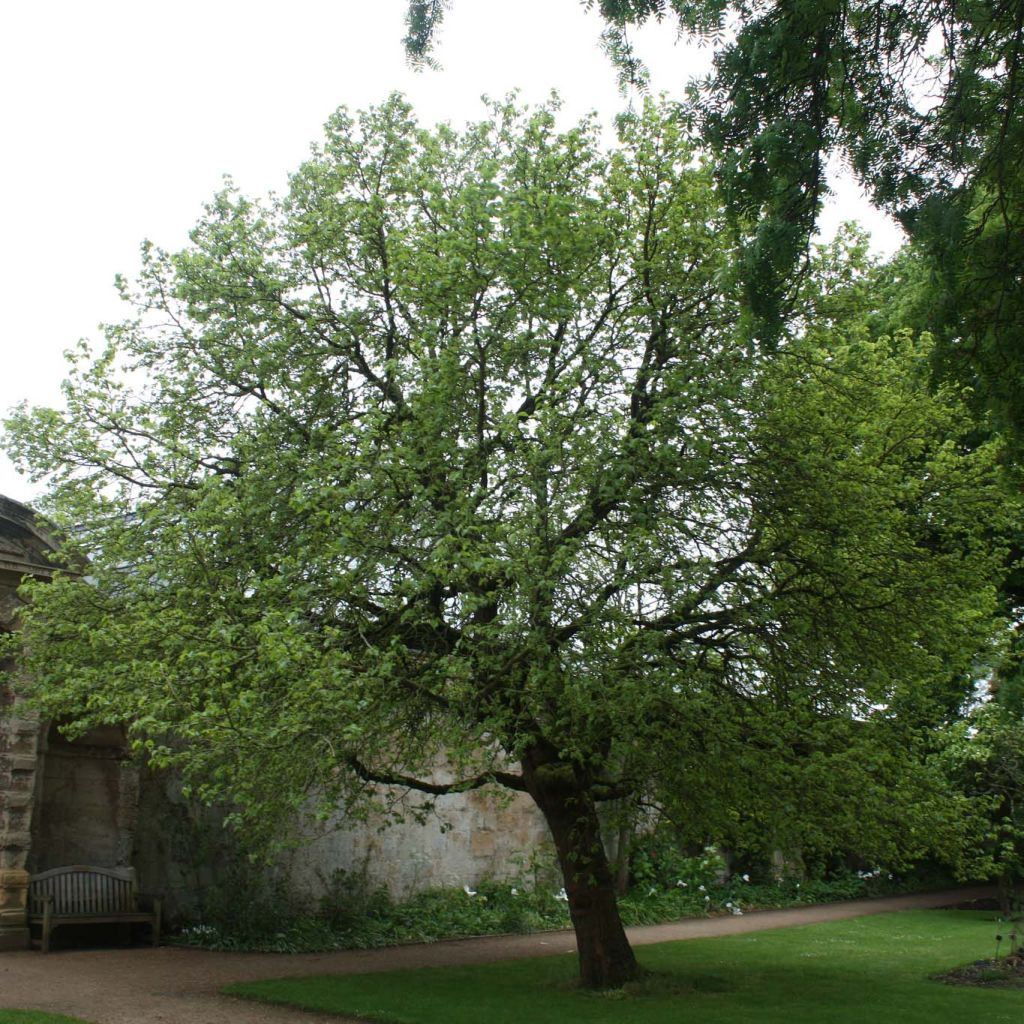
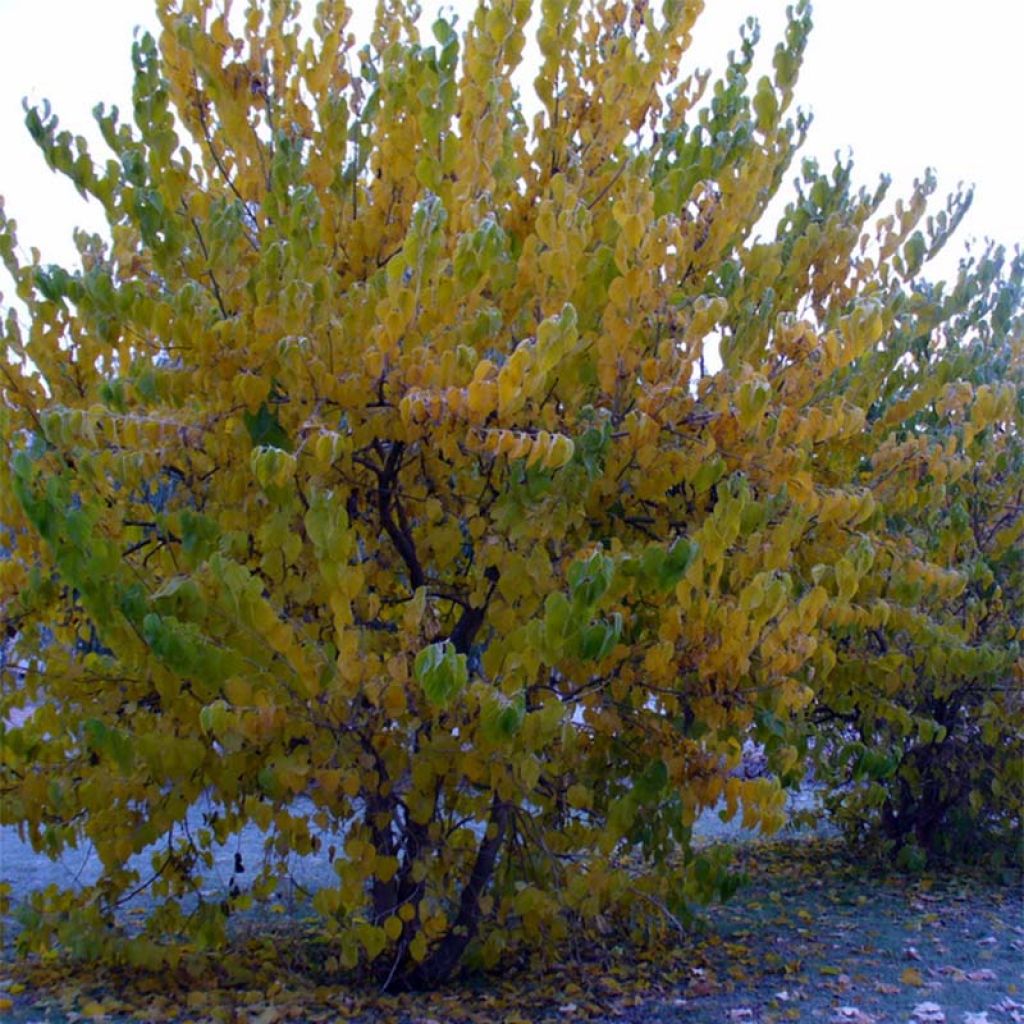
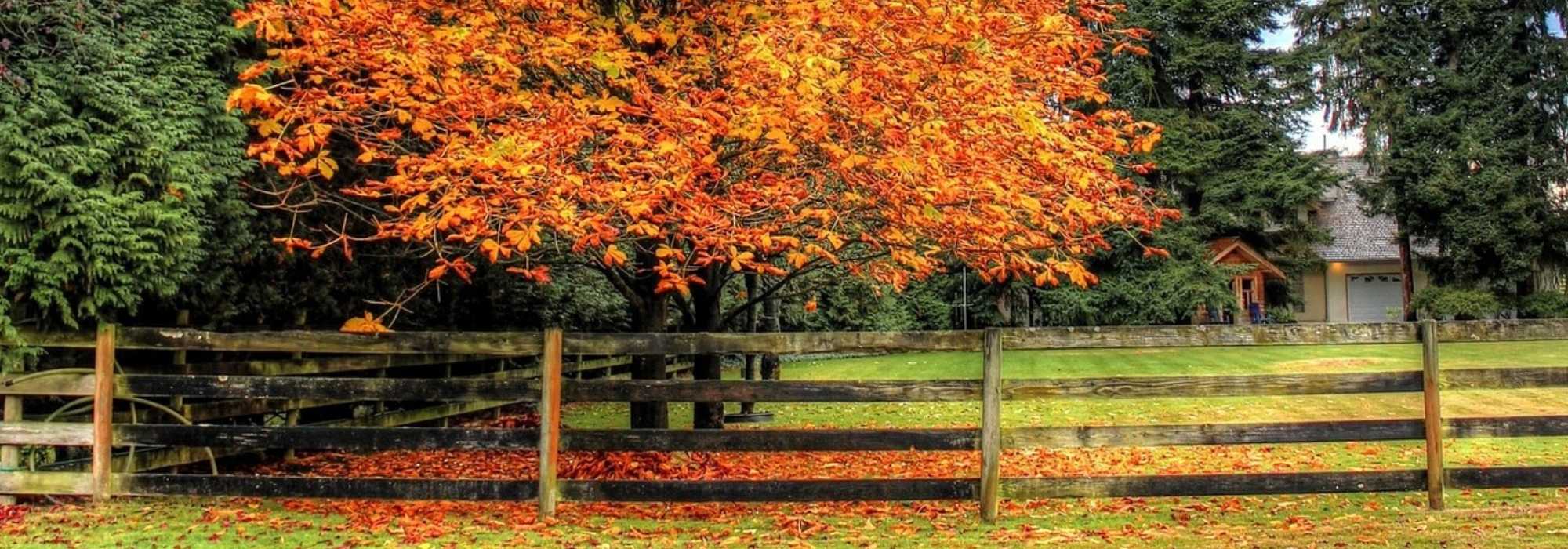
Morus nigra, the black mulberry from the Middle East, is part of those legendary plants appreciated for their aesthetics and fruits, just like the vine, fig tree, pomegranate, and olive tree. An excellent shade tree with a long lifespan, it is perfectly hardy in a protected location. Its dense, deciduous, dark green and luxuriant foliage, turns golden yellow in autumn. Its red-violet fruits, almost black when ripe, have a tangy and fragrant flavour that is appreciated by gourmets and birds. Adopt this mulberry tree in your garden, but place it a little away from the terrace as its fruits stain!
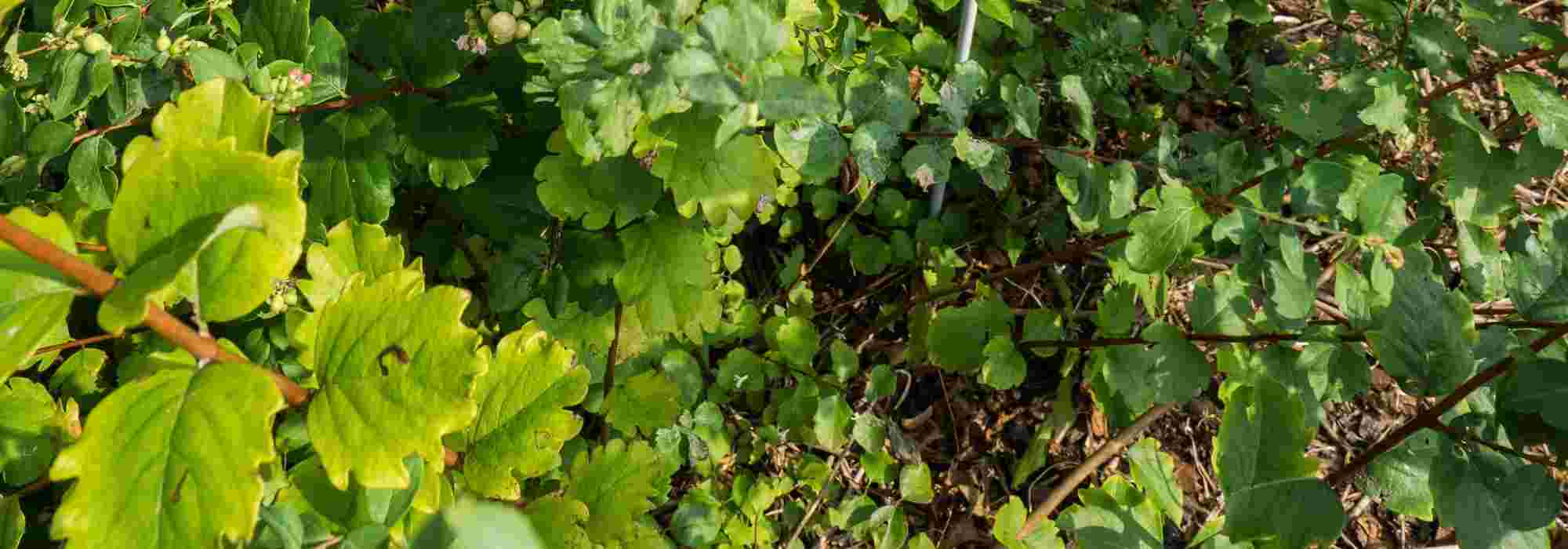
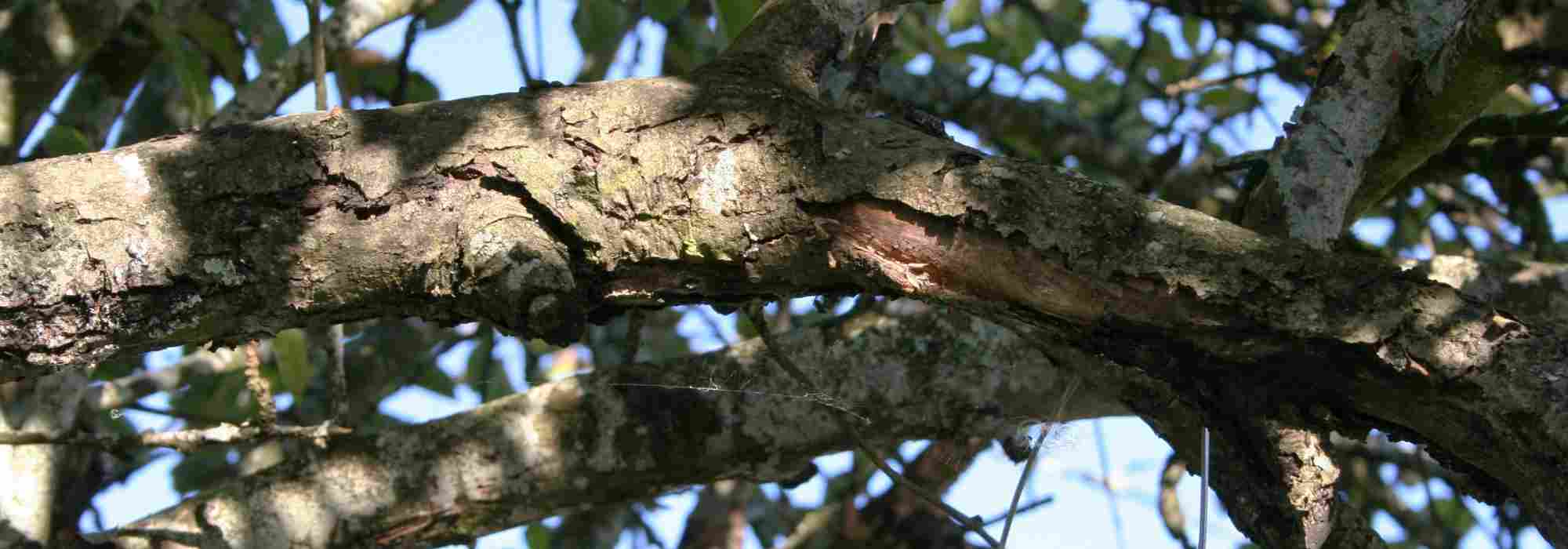
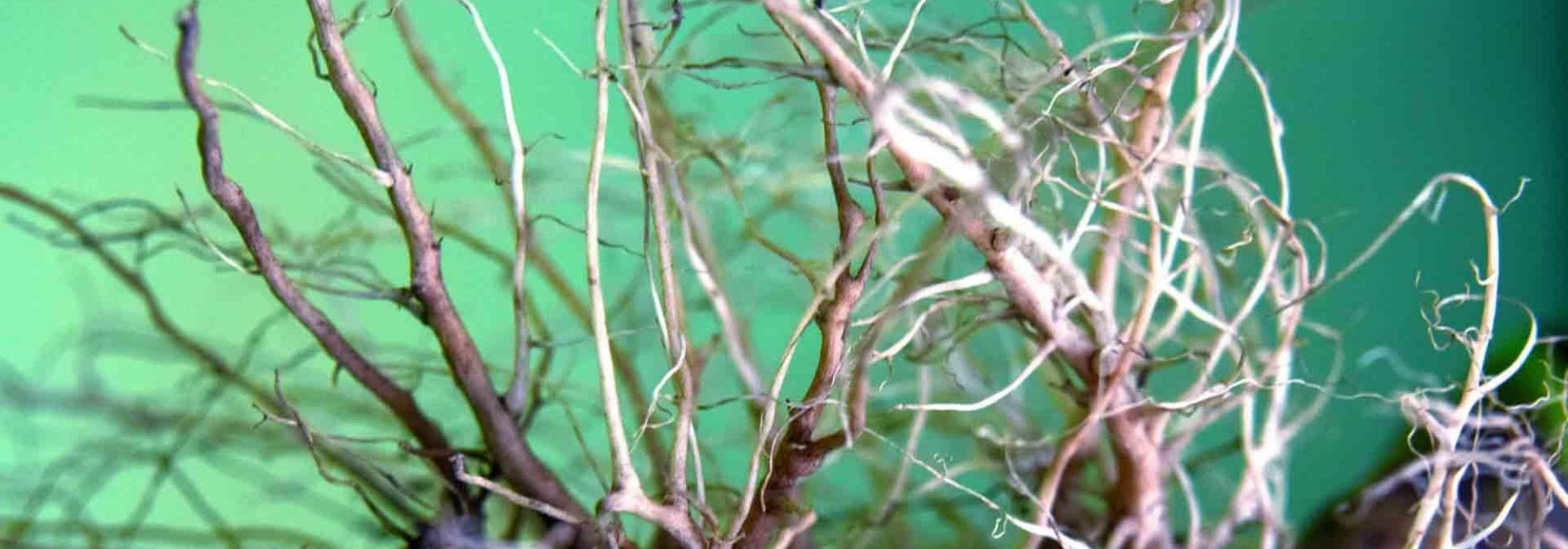
This black mulberry tree belongs to the Moraceae family. It produces latex in its tissues, like all members of its family. Its origins range from the Middle East to Central Asia, but its introduction to the Mediterranean basin dates back to antiquity. This tree, with its sturdy appearance, has a short and thick trunk, which takes on a characteristic knotty and twisted aspect with age. It is topped with a slightly irregular spreading crown if not pruned. Its growth is quite rapid during its first years, then slows down significantly. It can reach 10 to 12m (33 to 39ft) (sometimes up to 15m (49ft)) in all directions. Its light grey bark cracks to become thicker and swollen, and then turns grey-brown. The deciduous leaves are polymorphous, meaning their appearance and size can vary depending on their position on the branches. They measure 6 to 8cm (2 to 3in) in diameter, 10 to 20cm (4 to 8in) in length, and are alternate, petiolate, either entire and heart-shaped, or divided into 3 to 7 more or less deep lobes, with a roughly toothed margin. The rough and dark green lamina on the upper side is pubescent on the underside, which often allows it to be distinguished from the White Mulberry. It turns golden yellow in autumn. The Black Mulberry develops discreet male or female flowers in different locations on the same tree in May-June. In August-September, the female flowers produce ovoid fleshy fruits that are almost black when ripe. They are edible, tangy, juicy, and highly coveted by birds. Its fruits are not attached to the branch by long peduncles, unlike those of the White Mulberry. Its root system, both taproot and spreading, does not tolerate transplanting well. Its strength means that it should be planted at a respectable distance from buildings.
Morus nigra is very hardy and deserves to be planted. With its twisted appearance, it marks the garden with its unique personality, while being truly undemanding. It grows in fertile, well-worked and well-drained soil, even limestone, in a warm and sunny location. It tolerates pollution well but is afraid of the seaside and sea spray. Uncultivated land benefits from its presence, as its leaves gradually enrich the soil every autumn. Traditionally used as a roadside tree, it can also be planted in a fruit hedge, along with blackthorn, mirabelle plum trees, medlar, guelder roses, and dogwood, much to the delight of children and birds. It can make a beautiful specimen, planted in isolation in the middle of a lawn. It is also useful on slopes to combat soil erosion. The fruits of the black mulberry tree can be consumed fresh, in jellies, jams, or syrups.
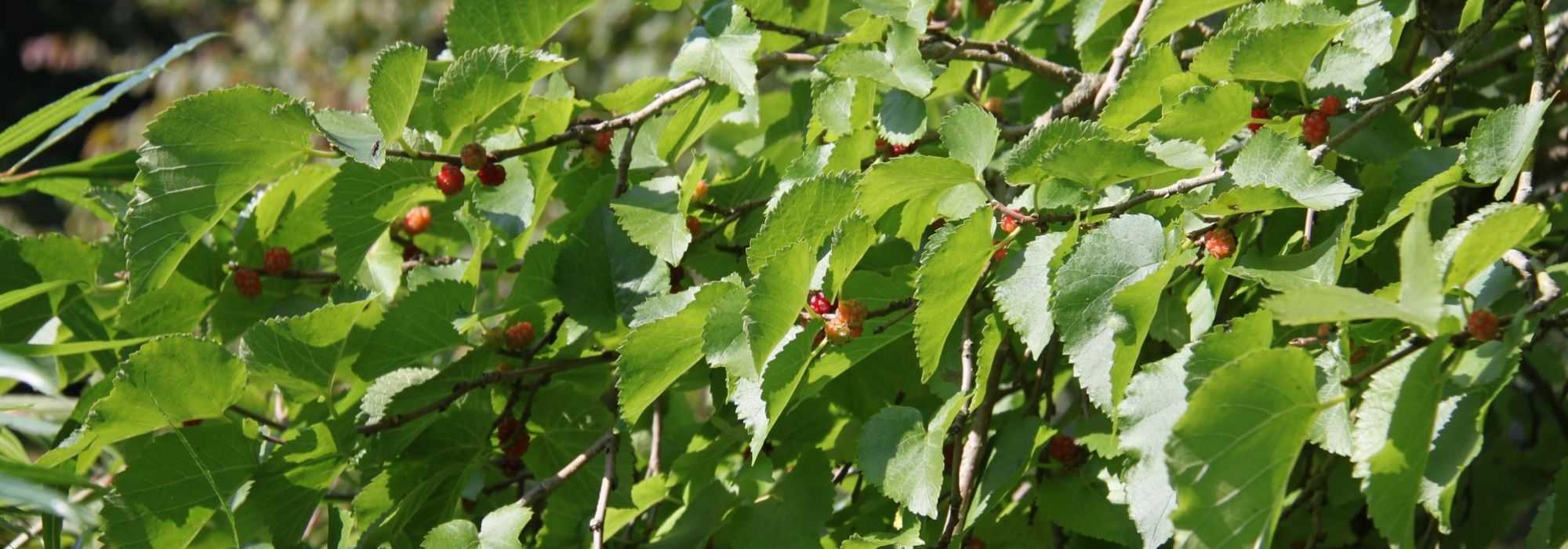
Morus nigra - Mullberry in pictures
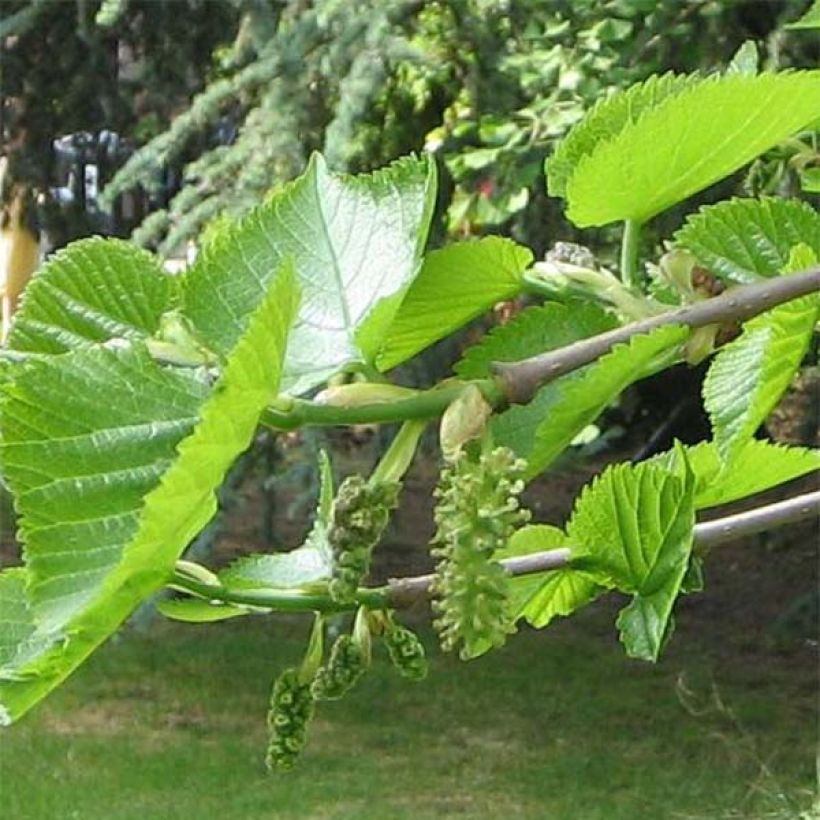
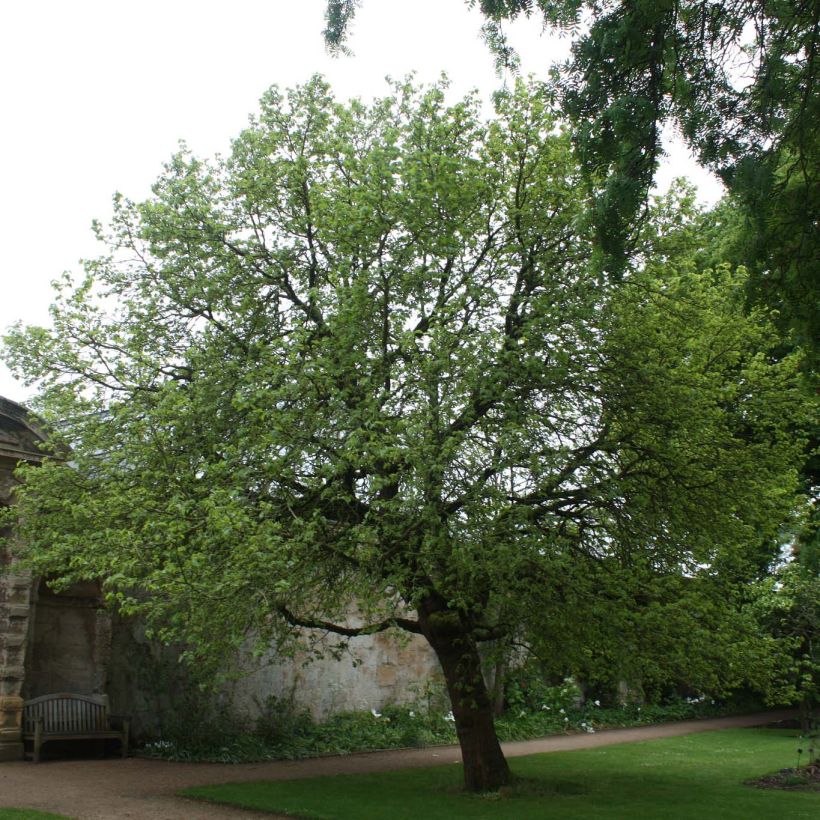
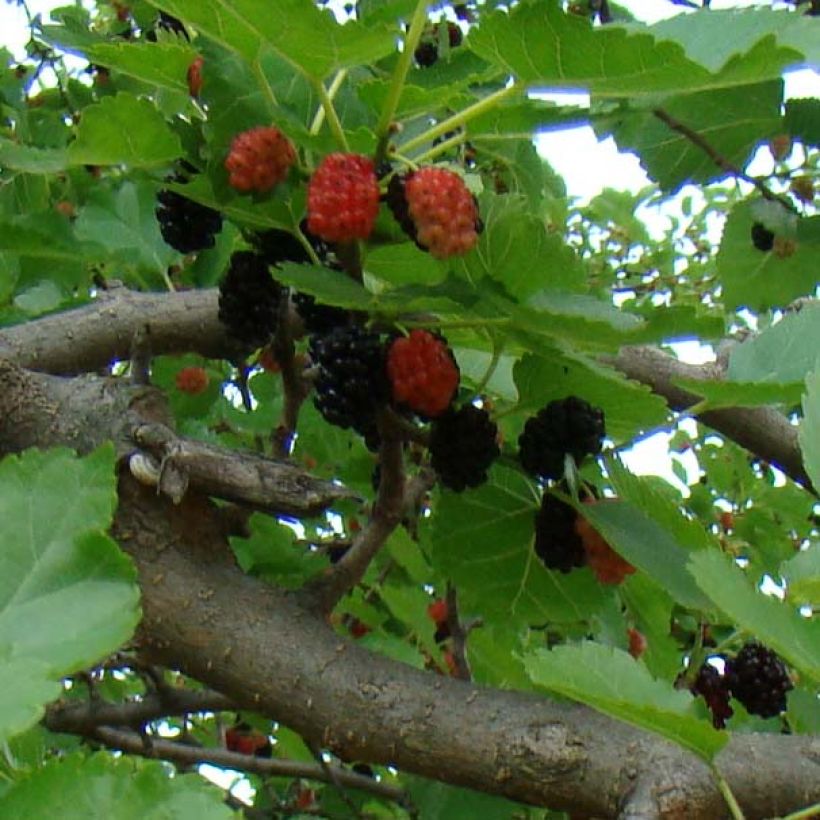
Plant habit
Flowering
Foliage
Botanical data
Morus
nigra
Moraceae
Black Mulberry
West Asia
Planting and care
Plant in spring or autumn in well-drained, rather fertile and deep, ordinary soil, and in full sun. It tolerates the presence of limestone in the soil very well. Be careful not to damage its fleshy and brittle roots during planting. It withstands cold weather very well and tolerates hot and dry summers once established. Avoid severe pruning on this mulberry tree, especially pruning thick branches and old branches. It may be susceptible to rust, canker, or powdery mildew.
Planting period
Intended location
Care
Planting & care advice
-

-
-
-
-
-
-

-
-
, onOrder confirmed
Reply from on Promesse de fleurs
Recently viewed products
Haven't found what you were looking for?
Hardiness is the lowest winter temperature a plant can endure without suffering serious damage or even dying. However, hardiness is affected by location (a sheltered area, such as a patio), protection (winter cover) and soil type (hardiness is improved by well-drained soil).

The flowering period indicated on our website applies to countries and regions located in USDA zone 8 (France, the United Kingdom, Ireland, the Netherlands, etc.)
It will vary according to where you live:- In zones 9 to 10 (Italy, Spain, Greece, etc.), flowering will occur about 2 to 4 weeks earlier.
- In zones 6 to 7 (Germany, Poland, Slovenia, and lower mountainous regions), flowering will be delayed by 2 to 3 weeks.
- In zone 5 (Central Europe, Scandinavia), blooming will be delayed by 3 to 5 weeks.
In temperate climates, pruning of spring-flowering shrubs (forsythia, spireas, etc.) should be done just after flowering.
Pruning of summer-flowering shrubs (Indian Lilac, Perovskia, etc.) can be done in winter or spring.
In cold regions as well as with frost-sensitive plants, avoid pruning too early when severe frosts may still occur.
The planting period indicated on our website applies to countries and regions located in USDA zone 8 (France, United Kingdom, Ireland, Netherlands).
It will vary according to where you live:
- In Mediterranean zones (Marseille, Madrid, Milan, etc.), autumn and winter are the best planting periods.
- In continental zones (Strasbourg, Munich, Vienna, etc.), delay planting by 2 to 3 weeks in spring and bring it forward by 2 to 4 weeks in autumn.
- In mountainous regions (the Alps, Pyrenees, Carpathians, etc.), it is best to plant in late spring (May-June) or late summer (August-September).
The harvesting period indicated on our website applies to countries and regions in USDA zone 8 (France, England, Ireland, the Netherlands).
In colder areas (Scandinavia, Poland, Austria...) fruit and vegetable harvests are likely to be delayed by 3-4 weeks.
In warmer areas (Italy, Spain, Greece, etc.), harvesting will probably take place earlier, depending on weather conditions.
The sowing periods indicated on our website apply to countries and regions within USDA Zone 8 (France, UK, Ireland, Netherlands).
In colder areas (Scandinavia, Poland, Austria...), delay any outdoor sowing by 3-4 weeks, or sow under glass.
In warmer climes (Italy, Spain, Greece, etc.), bring outdoor sowing forward by a few weeks.
Shipping country and language
Your country of residence may be:
Your country of residence is:
For a better user experience on our website, you can select:
Your shipping country:
-
 Austria
-
 Belgium
-
 Bosnia & Herzegovina
-
 Bulgaria
-
 Croatia
-
 Cyprus
-
 Czechia
-
 Denmark
-
 Estonia
-
 Finland
-
 France
-
 Germany
-
 Greece
-
 Hungary
-
 Iceland
-
 Ireland
-
 Italy
Italy
-
 Latvia
-
 Liechtenstein
-
 Lithuania
-
 Luxembourg
-
 Malta
Malta
-
 Netherlands
-
 Poland
-
 Portugal
-
 Romania
-
 Serbia
-
 Slovakia
-
 Slovenia
-
 Spain
Spain
-
 Sweden
-
 Switzerland
Language:
-
French
-
 English
-
Spanish
-
Italian
-
German
-
Portuguese
-
Dutch
-
Finnish
My Account
Hello
My wish lists
My cart
Log in / Register
Existing customer?
This form is protected by reCAPTCHA - the Google Privacy Policy and Terms of Service apply.
New customer?
Create an account to track your orders, access our customer service and, if you wish, make the most of our upcoming offers.