



5 design tips for gardens in windy climates
From the choice of plant varieties to methods of protection against gusts
Contents
It’s not uncommon for the wind to make its way into our gardens: it’s present throughout our territory. But in some regions where it blows hard, its regular, and sometimes incredibly strong, gusts can cause damage, affecting both plants as well as furniture or buildings.
Coastal and ocean-facing gardens, as well as those situated higher up on hillsides, can be particularly exposed to gusts. Obviously, that’s no reason not to enjoy your outdoor space! To make it a pleasant and sheltered space, there are several tips. Here are our tips.

The constraints of gardens exposed to wind
Windy gardens can quickly become unpleasant: garden furniture can be blown away, buildings can be damaged, plants fail to grow upright, suffer regular breakages, or even be uprooted. This can lead to delays or growth problems. The wind can also be cold, desiccating or laden with salt spray, which amplifies temperature extremes and makes growing conditions overall more challenging. Flowering is affected, and the foliage can be scorched.
If your garden is exposed to winds, the first thing to do before considering its layout is to understand its main path (dominant wind direction) and its secondary routes. To measure wind speed or wind pressure in your garden, you can use an anemometer.
Read also
Protecting a very windy gardenChoose the right plants
Not all plants tolerate having to endure the wind’s onslaught, but others are particularly hardy: a boon for very exposed gardens! There is a wide range of species that can cope with gusts and with all kinds of garden styles.
- Trees, such as the holm oak, the common beech, the common holly, the London plane, the hornbeam, the black birch or the Italian poplar.
- Shrubs, such as the serviceberry, the sea buckthorn, the Portuguese laurel, the spring tamarisk, the hawthorn, the Berberis or the Aronia.
- Conifers, such as the Leyland cypress, the Lawson’s cypress, the Araucaria araucana, the Thuja.
- Climbers such as the trumpet creepers, the honeysuckles, the jasmine, the ivy, the wisterias, the passionflowers, the hops or the Virginia creeper. Prefer those with self-supporting attachment systems, not requiring trellising (twining stems, climbing roots, suction cups or tendrils). They will help dress vertical features, but also green up windy slopes.
- Perennials such as the heathers, the brooms, the lavenders, the St John’s-wort, the spurges, the sages, the Santolines, the Sedum or some ornamental grasses. They are ideal for creating massifs, borders or the foreground of hedges.
- In the vegetable garden, consider the various types of cabbage, which generally have sturdy stems and stalks to resist winds (cauliflowers, curly kale, Brussels sprouts, broccoli…). Root vegetables (carrots, radishes, turnips, beetroots) or artichoke, with a tough stem and fuzzy, leathery foliage, can also be good candidates. For fruit trees, favour small fruits like the strawberries or the redcurrants.
Native plants, which grow naturally in a given habitat without human intervention, are naturally resistant to the regional climate conditions. If they are often windy, they will adapt easily.
Mediterranean plants also form part of good candidates for a windy garden, but one that is rather warm and sunny. They indeed have tough foliage, often small in size, to limit evapotranspiration and desiccation. Some are covered with a down or hairs, which provides the same role, while protecting them from the sun’s scorching rays. Finally, they often have a deep and powerful root system, which may consist of a long taproot. This allows them to remain stable even in poor soils and in gusty conditions, while seeking moisture deep in the soil.
You can also choose plants according to their silhouettes: parasol- or coppiced-growth forms will be more wind-resistant than columnar or upright ones (the latter being particularly to be avoided in windy gardens). In the same vein, shrubby plants forming cushions or rosettes, as well as low-growing plants, are generally more wind-tolerant.

Prefer self-supporting climbers such as passionflowers and their tendrils
Don't neglect planting and growing conditions
To maximise the chances of your plants establishing in a windy garden, keep these points in mind.
- Carry out staking or guying of trees and shrubs during the first two years of growth to help them develop properly.
- Prefer root-balled plants to benefit from a well-developed root system.
- Choose young plants, which will have better chances of getting established.
- Avoid planting during storms to give them time to establish before having to contend with the wind.
- Water your plants generously, for at least the first two years of growth. This will allow time for their root system to develop. Prefer deep, infrequent waterings rather than several small, regular waterings, which will encourage roots to develop more near the surface.
- Avoid creating plant corridors at planting time by forming long straight lines in which the wind can easily sweep through. Use shapes and curves to slow its progress.
Read also
How to straighten a tree after a storm?Install a windbreak hedge
A windbreak hedge is a good way to break the wind in a garden in an aesthetically pleasing way. Think carefully about its location and assess the consequences it will have on the rest of the space, such as the shade it will provide. Above all, take into account that the wind could be deflected, to ensure you do not create air currents that are even more harmful. It is commonly thought that a hedge can protect downstream up to ten times its height. For a two-metre-tall windbreak hedge, this equates to twenty metres sheltered from gusts.
To create an effective hedge, turn to plants with fairly dense foliage. The aim is to blend evergreen foliage (which stays year-round) with marcescent foliage (which dies but stays on the plant), and even deciduous. This results in a wind-filtering hedge, but not a completely blocking one. The mix of species is also more aesthetically pleasing (though this is a matter of taste) and helps to better manage any diseases (which would spread much more quickly in a monoculture hedge). Finally, of course choose plants tolerant of winds and your specific growing conditions (soil type, light levels, etc.). You will, for example, have the choice between Elaeagnus, Yews, Cotoneasters, Privets, Photinias, Japanese spindle trees, Viburnums, Oleanders or Escallonias.
Opt for planting in double rows or in a quincunx pattern, to break the wind even further in the garden. Respect planting distances so that all plants can grow properly, but also the legal distances if you install your hedge on the boundary.
For further reading, discover our articles “How and why to create a windbreak hedge?” and Planting trees and shrubs: what does the law say?
Don’t hesitate to vary the heights, by pairing a windbreak hedge with small copses or a bocage hedge within the garden. This also helps diversify habitats and provide effective protection from the wind for local wildlife.

Create a windbreak hedge using dense foliage such as Ligustrum japonicum
Opt for other wind protections
Ideally, you should never block the wind completely (for example by installing a dense, tall masonry wall) to avoid creating depressions and turbulence even greater.
Thus, the protections chosen should ideally be wind-permeable, allowing wind to pass through while reducing its strength and impact.
You can opt for several solutions:
- a lattice fence;
- hazel hurdles;
- heather clumps;
- a trellis or mesh fence covered with climbing plants;
- dry hedges.
For garden dining corners, you can install a parasol to shield yourself from the wind. Choose in this case a sturdy, heavy version, installed on a concrete base or weighted with stones, to prevent any risk of tipping.

Install a wooden lattice fence to filter the wind
Choose the right materials
When growing your plants in the garden, as with seating areas, precautions will also be necessary if you live in a windy region.
- Mulching will be all the more important in a windy garden to limit the risk of soil drying out. But you must ban theorganic mulches that are too light, such as wood chips, buckwheat hulls, hemp flakes, flax flakes or miscanthus flakes, which will quickly be blown away at the slightest gust of wind.
- If you grow plants in pots, choose sturdy containers and adjust their size and height: a bush that is too large can easily sway and end up tipping over in gusts of wind.
- For garden furniture or decorations, again choose heavy, sturdy materials that won’t be at risk of being carried away in a gust or easily breaking. Galvanised steel, fibreglass, concrete or wood will be particularly suitable.
- Avoid windbreak screens, shade sails and outdoor curtains that are too light, as they’re likely to be blown away and damaged in gusts.
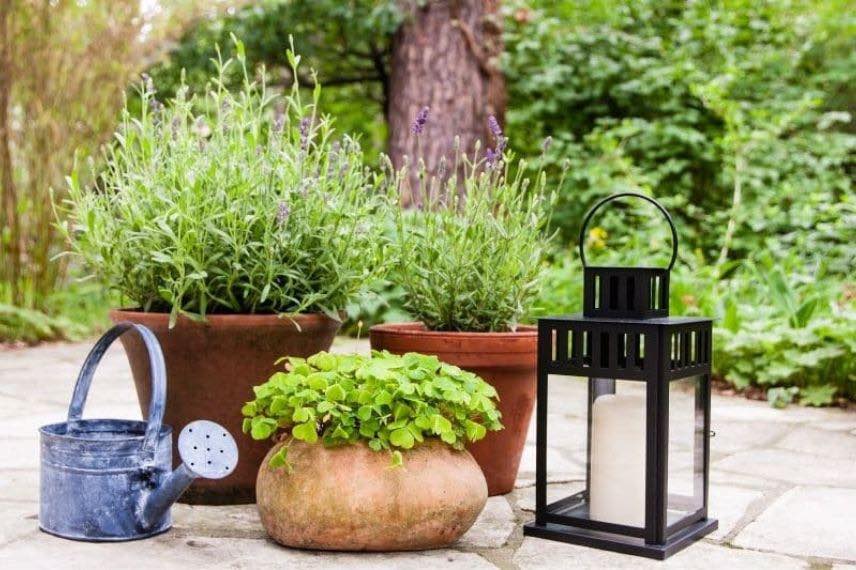
Choose sturdy containers for your potted plants and avoid lightweight decorations like this
- Subscribe!
- Contents

Comments