





























5 variegated cordylines
Bicolour or multicolour, guaranteed effect in the garden as well as in pots
Contents
Cordyline is an exotic perennial, also known as Dracaena, native to New Zealand and the South-West Pacific, whose evergreen foliage, often in very decorative colours, adorns the garden or terrace all year round. With the appearance of a small palm or resembling Phormium, in a fan-shaped tuft of leaves, it is not very hardy but grows well in pots, to be sheltered in winter on a veranda or in a bright, unheated room. In open ground, it is reserved for the mild coastal climates of the Atlantic or the Côte d’Azur. It prefers slightly cool, well-drained soil and is quite drought-resistant once established.
This tropical plant loves sun and warmth, but its variegated forms suffer from scorching sun. It should be placed out of direct sunlight during the hottest hours and seasons. Discover the beautiful variegated varieties in brown, yellow, green, pink, and cream. Their stunning hues are magnificent all year round in this highly ornamental graphic plant.

Cordyline australis 'Torbay Dazzler'
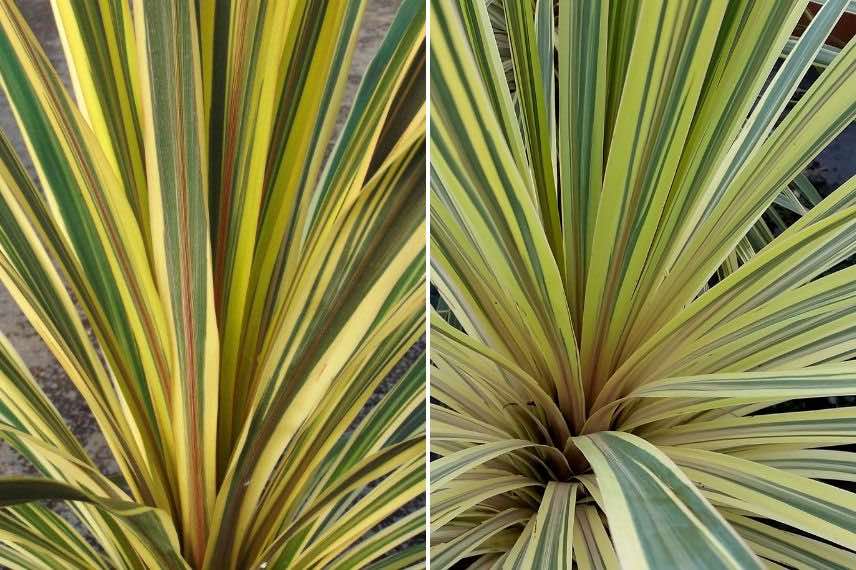
The Cordyline australis ‘Torbay Dazzler’, very bright, offers beautiful variegated foliage in three colours. Its leaves are striated with light yellow, dark green, and brown-red in the centre. For several years, it forms a rosette habit, then over time develops into a small palm with a trunk, sometimes divided, topped with very long leaves measuring up to 90 cm long, gathered in dense tufts. This slow-growing, upright, and narrow variety reaches 2 to 3 m in height and 1 m in width. Its long, narrow, sword-shaped leaves, which are pointed, are slightly arched in older specimens. The plant flowers when mature, between July and September, producing small cream-white flowers borne on large panicles measuring up to 1.60 m long.
Cordylines are excellent coastal plants that do not suffer from wind and salt spray. ‘Torbay Dazzler’ is frost-resistant down to -7° C only. Plant it, for example, with the broad, lush foliage of Cannas like the Canna ‘Picasso’, which has green foliage and yellow flowers as a complement. Also plant agapanthuses, a tender climate sage like the Salvia guaranitica‘Black and Blue’.
Cordyline australis ‘Torbay Dazzler’
Read also
Cordyline : to plant, to grow, to careCordyline banksii 'Electric Star'
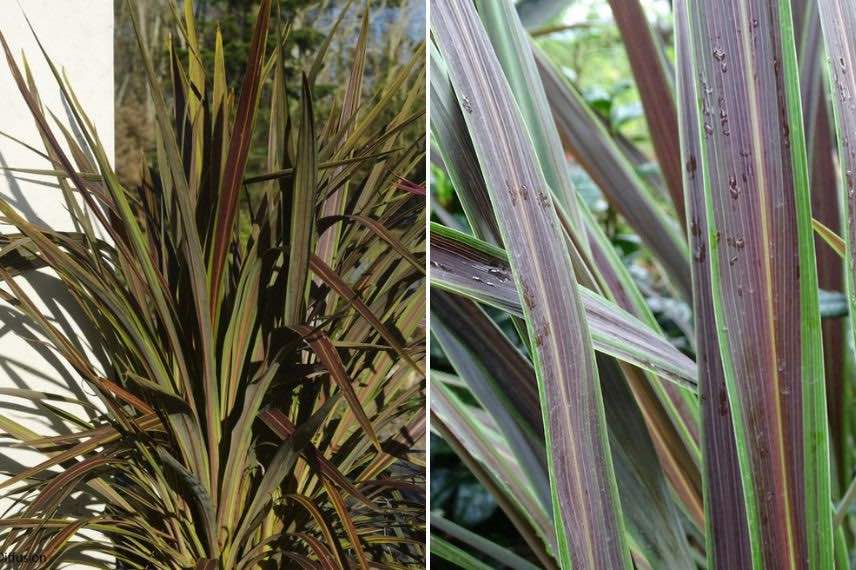
The Cordyline banksii ‘Electric Star’ is a stunning variety with dark foliage, featuring a broad central band of chocolate purple edged with cream-white, green, and apricot. Colourful and contrasting, its hues and shape bring an exotic touch to the garden. It reaches 1.20 m in all directions, forming a leafy tuft without a trunk. It is derived from the species Cordyline x banksii, endemic to New Zealand. It branches very little and does not become bare, unlike Cordyline australis.
‘Electric Star’ flowers in August and September. Hardy down to a maximum of -7° C, this compact cordyline can adorn a pot to be brought indoors for winter protection. In the ground, or in other pots, consider also adding a Pennisetum alopecuroides ‘Red Head’ with beautiful silver-pink to brown spikes and a Carex elata ‘Aurea’ with very bright acid green foliage, contrasting with the dark foliage of the Cordyline.
Cordyline banksii ‘Electric Star’
Cordyline banksii 'Can Can'
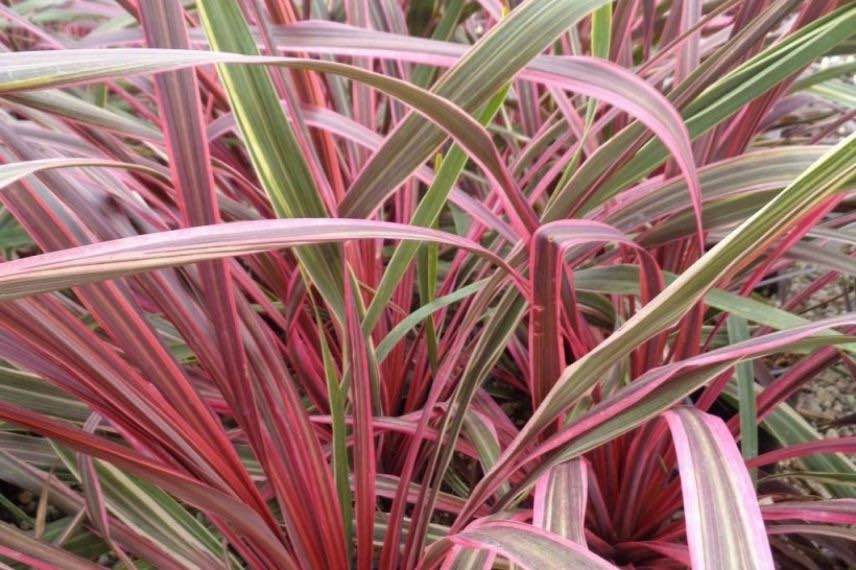
Also derived from Banks’ Cordyline, Cordyline banksii ‘Can Can’ is quite iconoclastic: its leaves blend various shades of dark green, fluorescent pink, light green, yellow, purple, and cream in a swirl of colours. Very compact, it reaches 1 m in height, with a spread of 80 cm at the age of 10 years, and does not exceed 1.5 m in all directions at maturity. It won a silver medal at Plantarium in 2013. Its remarkably colourful foliage is in constant evolution. Young leaves emerge in very bright pink and red tones. Mature leaves transition from a cream colour to a light green shade and then to dark green. Flowering is late: it occurs in September-October on adult plants, with small flowers in brown, pink, and purple tones.
In isolation, it can adorn a pot in all regions. In the ground, it tolerates frosts of -5 to -7° C only. It is therefore reserved for coastal climates. In a border, it is fun to accompany it with foliage and flowers that echo the various tones of its multicoloured foliage. Consider Dahlias, Alliums, Cleomes, and Echinaceas. Choose medium green foliage to complement and harmonise the whole.
Cordyline australis ‘Can Can’
Read also
Combining CordylineCordyline australis 'Sundance'
The Cordyline australis ‘Sundance’ boasts a unique colour, more muted and dark, yet truly beautiful. Its pale green leaves at the centre are edged with bronze. The centre of the rosette appears to be aflame with shades of pink to red, which also lightly striate the rest of the plant. Its flowers in June and July are cream-white, and the resulting fruits are a bluish white, highly favoured by birds. This vigorous variety is large: it reaches 4 m in height and 2 m in width.
Given its size, it can be planted in the ground, either as a specimen or in a border. This lush tropical plant pairs well, for example, with a border of Carex comans ‘Milk Chocolate’ in shades of bronze, light brown, and pink, or Carex flagellifera ‘Bronzita’ with coppery tones.
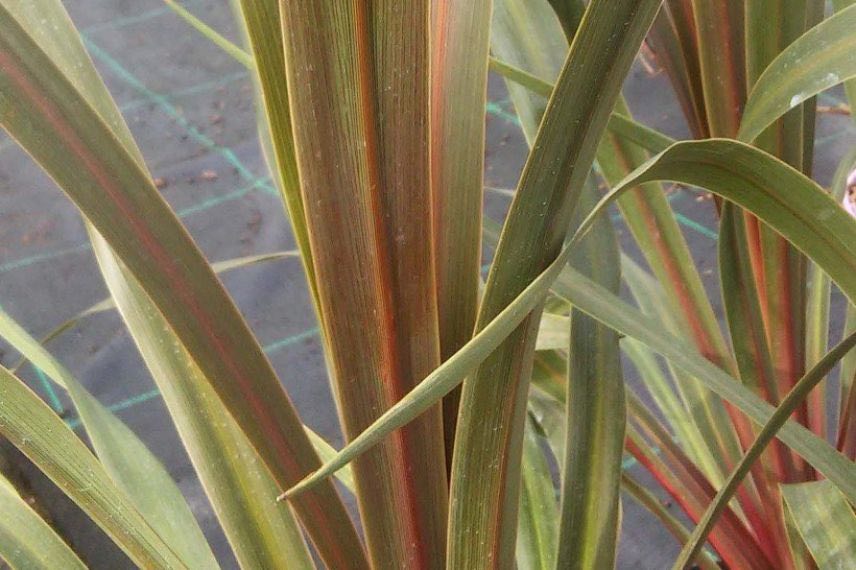
Cordyline australis ‘Sundance’
Cordyline australis 'Chocolate Mint'
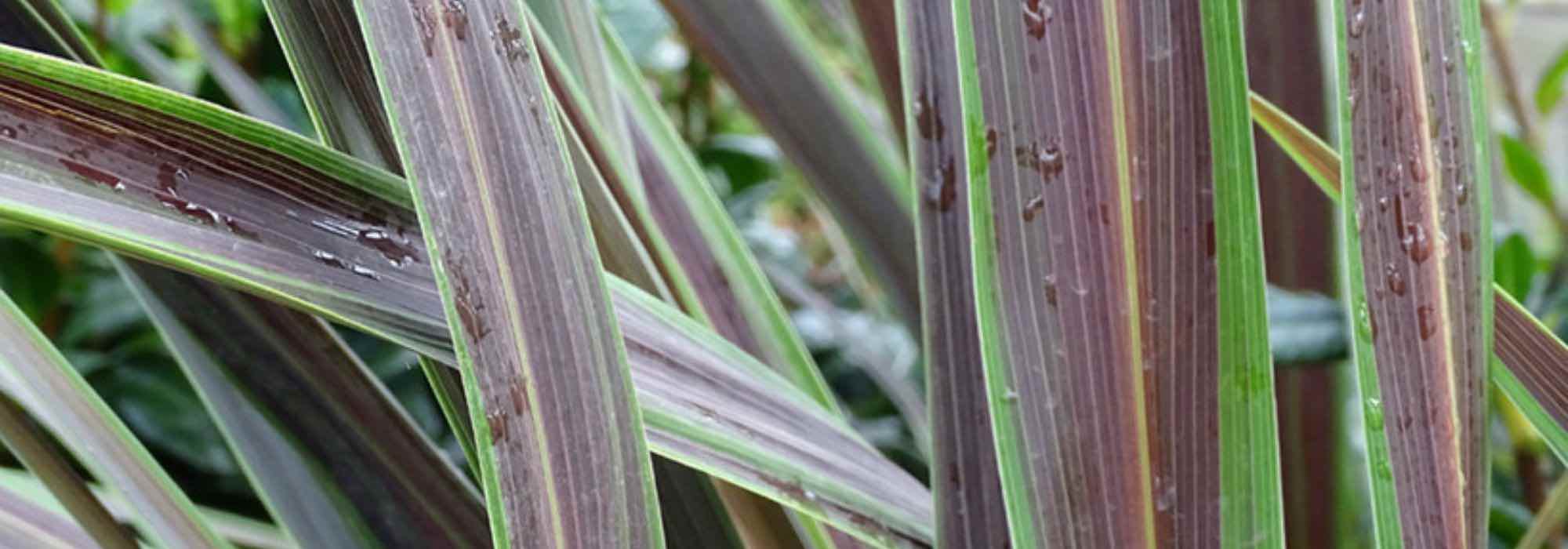
Last on the list, but certainly not the least to shine, the Cordyline australis ‘Chocolate Mint‘, a very original plant, delights us with a blend of mint green and chocolate colour. A fluorescent mint green on the edges and a chocolate-brown tinged with red in the centre. This plant, with its very graphic appearance, is doubly so here due to the contrast of its bright and dark colours. It can reach a maximum height of 2 m over time, with a spread of 1 m.
Hardy to -4°C only, its cultivation in open ground is reserved for mild climates, such as the Côte d’Azur and the most temperate Atlantic coastal areas. It thrives in sandy soil and is drought-resistant once well-rooted. Elsewhere, it can be grown in a pot and wintered in a frost-free conservatory or a bright, slightly cool room. It is perfect for a contemporary garden or to create an exotic scene. In both settings, whether in a pot or in the ground, it can be accompanied by a dwarf bamboo like the Shibataea kumasaca, which has very decorative leaves of a beautiful green.
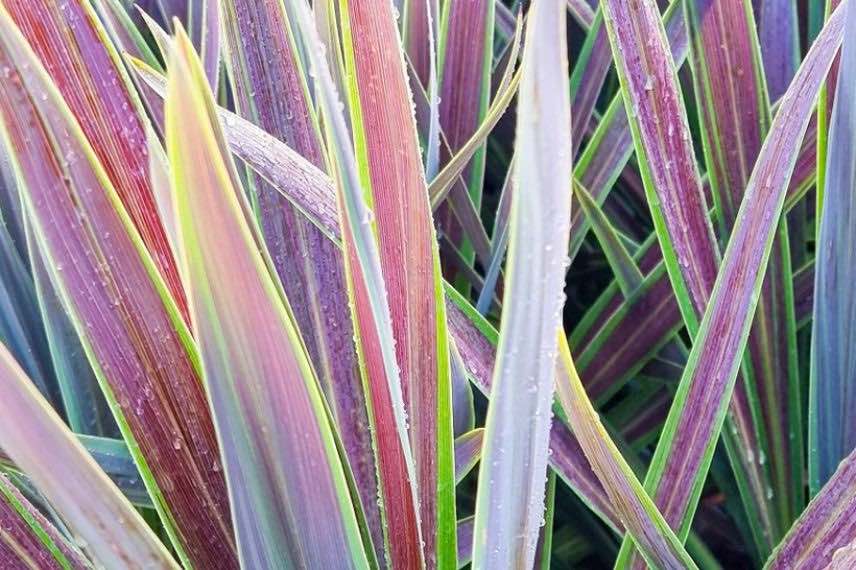
Cordyline australis ‘Chocolate Mint’
- Subscribe!
- Contents
Comments