





























6 climbing plants with late summer flowering
Discover 6 varieties to beautifully close the summer season
Contents
At the height of summer, around August, many flowers fade under the blazing sun. But while some fade away, others, climbing plants flowering in late summer take the opportunity to capture all the attention. They enhance gardens, balconies, and terraces right up to the doors of autumn, even into winter. This allows for an extension of flowering, month after month, without interruption. Neither gardeners nor pollinating insects and butterflies will complain about that.
Discover our selection of 6 climbing plants flowering in late summer, to end the summer season beautifully.

The Trumpet Vine - Campsis grandiflora
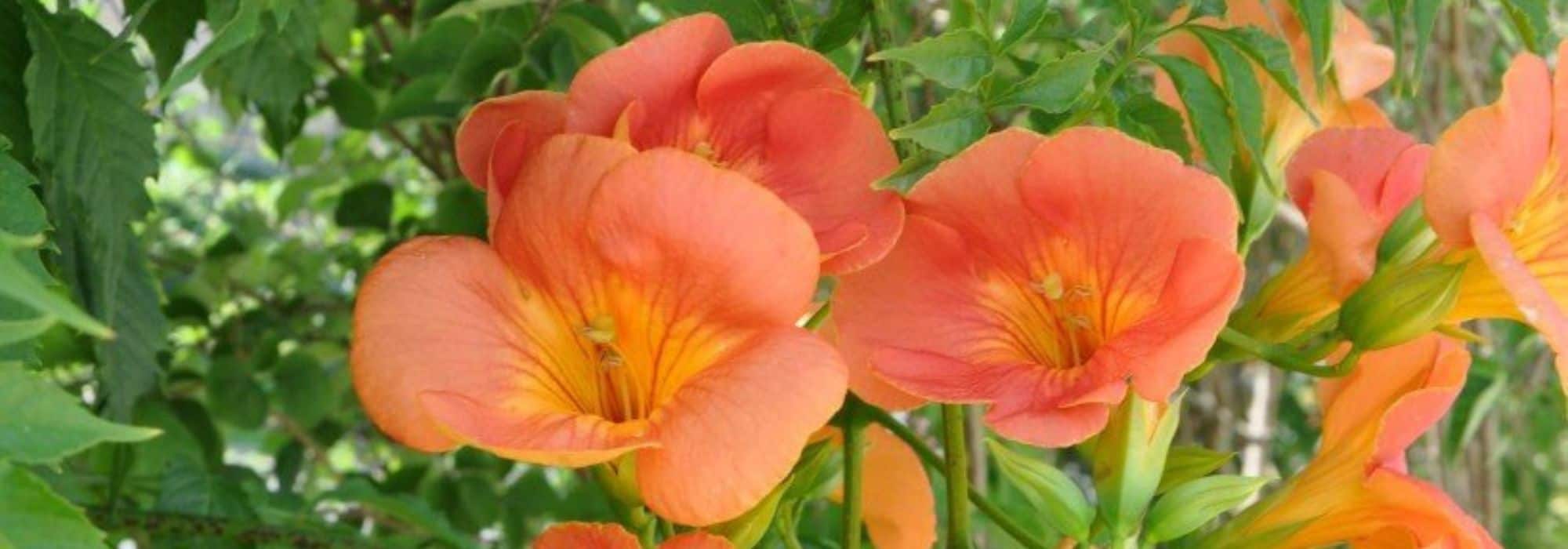
The Campsis grandiflora is a stunning variety of trumpet vine, highly valued for its spectacular flowering. From August to late October, it produces magnificent trumpet-shaped flowers, initially a scarlet red-orange when they bloom, then turning apricot orange at ripeness. This trumpet vine also features attractive deciduous foliage, finely dissected, in dark green shades. Its stems equipped with climbing roots and rapid growth allow it to easily scale the walls of a house, fences, and pergolas. This beautiful climber thrives in a Mediterranean climate where it enjoys warmth and full sun, in poor, even calcareous, well-drained soil.
To keep it company, plant other climbers nearby, such as an Akebia quinata that will flower in spring, a Holboellia latifolia for its evergreen foliage, or a Clematis ‘H.F. Young’ to create a colourful atmosphere.
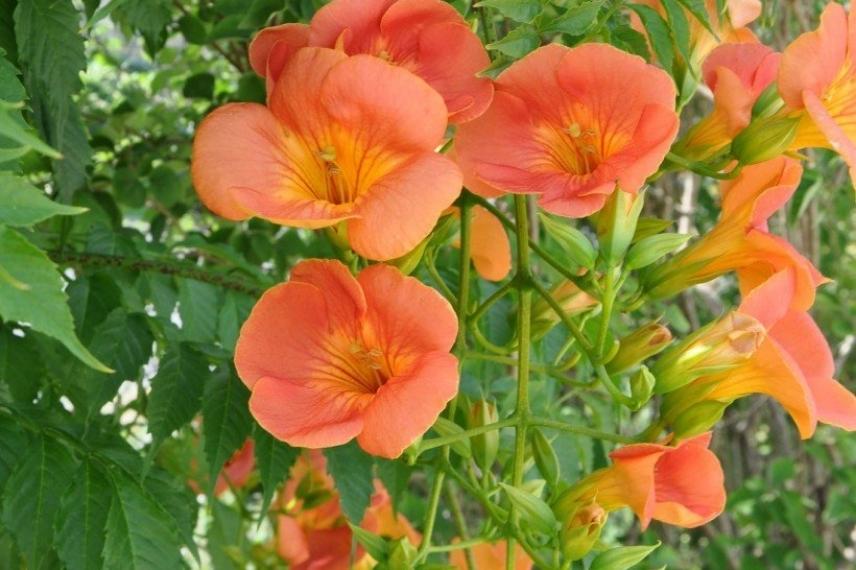
Campsis grandiflora
False viburnum - Pileostegia viburnoides
The Pileostegia viburnoides, commonly known as “false viburnum”, is a lovely climbing plant native to China, yet still rare in cultivation here. Its beautiful evergreen foliage, dark green and leathery, resembles that of the Hydrangea seemanii. At the end of summer, from August to October, it produces large panicles of white, slightly creamy flowers, highly appreciated by pollinators and adding brightness to the garden. Like ivy, its stems are equipped with climbing roots that allow it to ascend walls unaided. In the absence of support, it will serve as a natural groundcover. This unique climber thrives in partial shade, with exposure to the east or west. It prefers rich soil that is always slightly moist, but not excessive.
You can pair the Pileostegia viburnoides with sweet peas or ipomoeas to create a floral display starting in June. At its base, you can plant an Alchemilla, a woody fuchsia, a few hostas, or a Geranium macrorrhizum to create a natural ambiance.
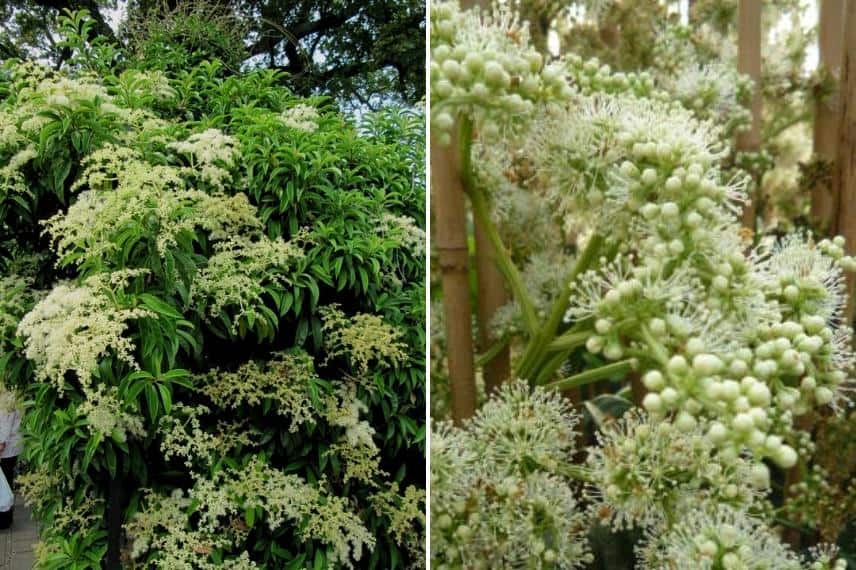
The Pileostegia viburnoides
Discover other Climbers
View all →
Available in 0 sizes
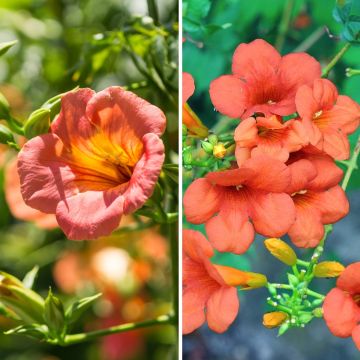
Available in 0 sizes
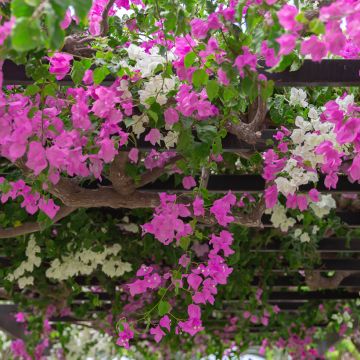
Available in 0 sizes
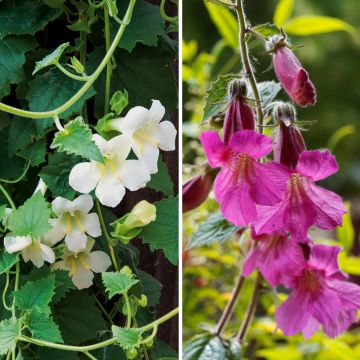
Available in 0 sizes
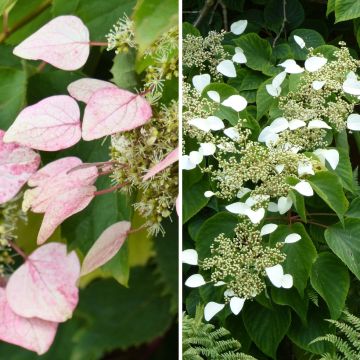
Available in 0 sizes
Available in 1 sizes
Available in 1 sizes
Available in 1 sizes
Available in 1 sizes
Available in 2 sizes
Golden Hop - Humulus lupulus 'Aureus'
Humulus lupulus ‘Aureus’, also known as Golden Hop, is an astonishing climbing plant that has recently made its way into gardens. This perennial re-emerges each spring from its stump and quickly colonises its support, whether it be steel cables, a pergola, a gazebo, or a fence. Its golden foliage rapidly forms a bright green screen. Its highly fragrant hop flowers, pale green in colour, appear in the heart of summer. Easy to grow, hop thrives in all exposures, with a preference for partial shade where it truly excels. Very hardy, it is suitable for regions with harsh winters, particularly north of the Loire. However, it is sensitive to drought and will need consistently moist soil to develop well, whether in the ground or in a large pot or container.
The bright foliage of the Golden Hop will enhance the yellow or white flowers of a climbing rose, and it will create a beautiful colourful pairing with the blue flowers of a Clematis ‘Blue Angel’.
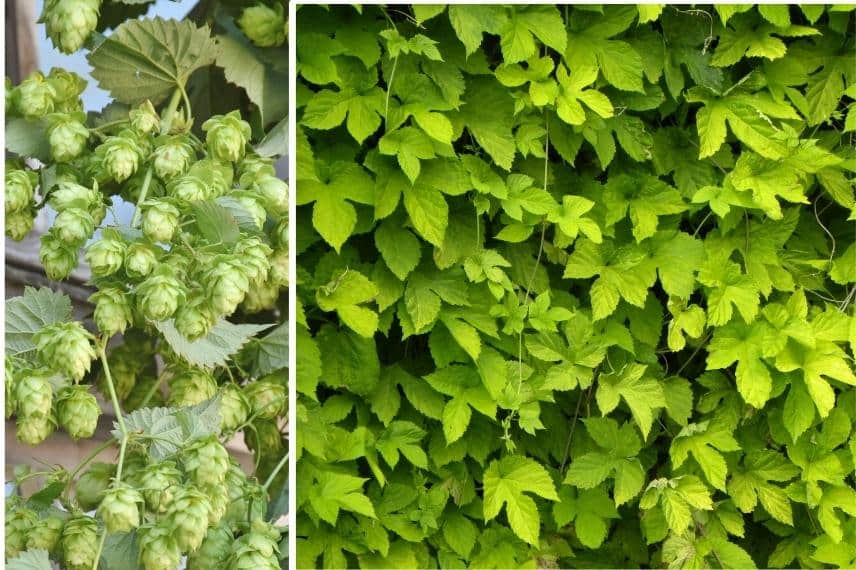
Humulus lupulus ‘Aureus’
Read also
5 common misconceptions about ivyRussian vine - Fallopia aubertii 'Summer Sunshine'
The Fallopia aubertii ‘Summer Sunshine’ is a lovely variety of Russian vine with beautiful deciduous foliage, initially red when young, then golden and bright at ripeness. At the end of summer, it produces tiny white flowers, gathered in panicles and delicately scented. It is worth noting that this variety is slightly less vigorous than the classic Russian vine, making it a bit easier to control its growth. Very hardy, it thrives when planted in full sun or partial shade, in ordinary soil, even calcareous, remaining slightly moist but well-drained. Once well-established, it will tolerate occasional drought.
Its natural silhouette will fit beautifully in a cottage garden, alongside a Clematis henryi with white flowers. At its base, you can plant other wild-looking plants, such as foxgloves, cornflowers, and some grasses.
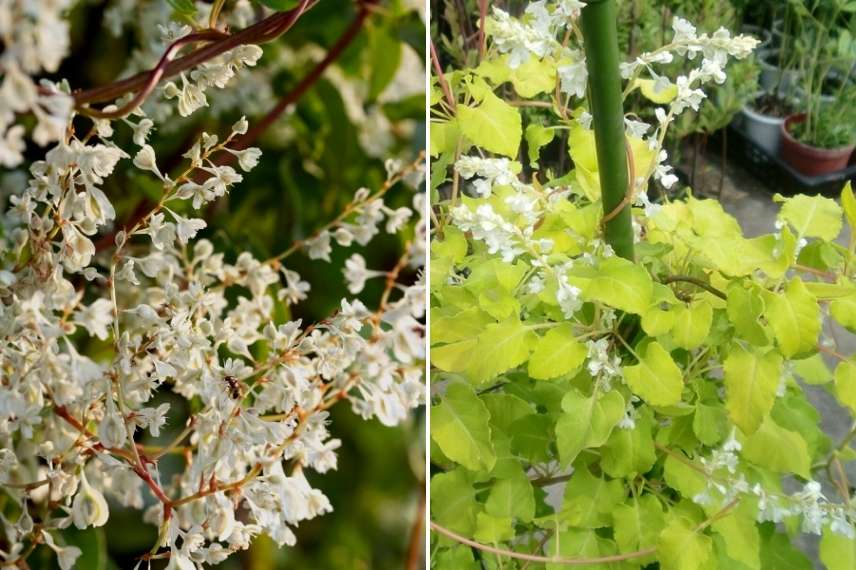
The Russian vine with golden foliage, Fallopia aubertii ‘Summer Sunshine’
Autumn clematis - Clematis terniflora
The Clematis terniflora is a late-flowering variety, blooming from late summer to October. Its semi-evergreen foliage, with bright green and silver hues, is almost hidden beneath an avalanche of small, star-shaped white flowers, sometimes edged with purple and highly fragrant. This beautiful flowering is followed by feathery, silver, ornamental fruits during winter. This clematis is particularly vigorous, hardy, and drought-resistant once well established. Its vigorous growth and voluble stems will quickly cover a large fence, a house wall, or a garden shed. Easy to cultivate, it enjoys full sun and light partial shade, keeping only its base in the shade, in rich, humus-bearing, but very well-drained soil.
The late flowering of Clematis terniflora can be paired with the fragrant flowers of a rambling rose or the foliage of the grape vine. It will also make a successful combination with other clematis with colourful flowers to create a lovely contrast, such as Clematis viticella ‘Mme Julia Correvon’ or the surprising Clematis cirrhosa ‘Advent Bells’ to extend the flowering into winter.
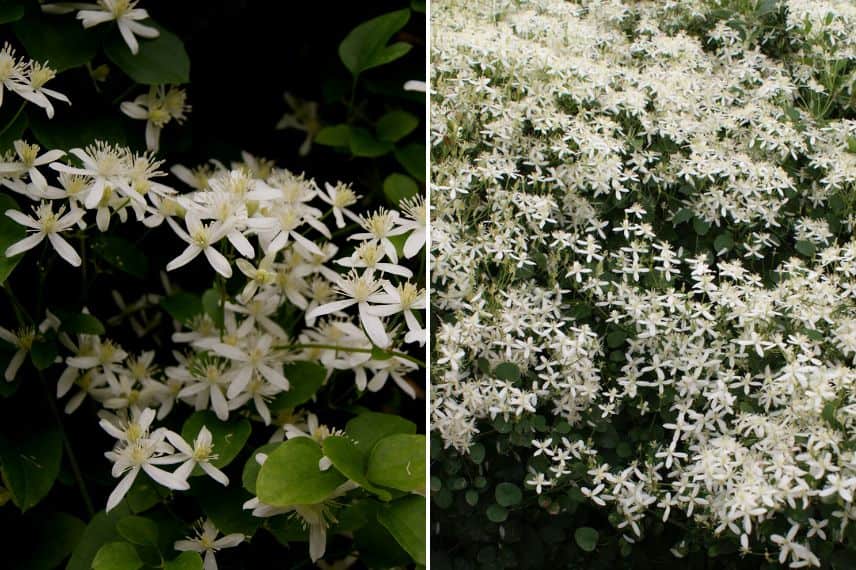
The Clematis terniflora
David Austin Rose 'James Galway'
Like most roses, the variety David Austin ‘James Galway’ offers an abundant continuous summer flowering from June to October depending on the region, or repeat flowering in late summer. Its magnificent, highly double, fragrant flowers have numerous petals arranged in a gradient, ranging from soft pink on the periphery to deep pink at the heart of the flower. Thanks to its long, lightly thorny stems, this rose can be installed on an arch, a pergola, on trellis along a wall, or near a terrace to enjoy its fragrance. This beautiful variety will thrive in full sun or light partial shade, in rich soil, even clayey or very slightly calcareous.
The David Austin ‘James Galway’ rose will be perfect for a flowering or romantic garden, alongside a Clematis ‘Princess Diana’, a Japanese wisteria, a white jasmine, or a vivid pink annual sweet pea.
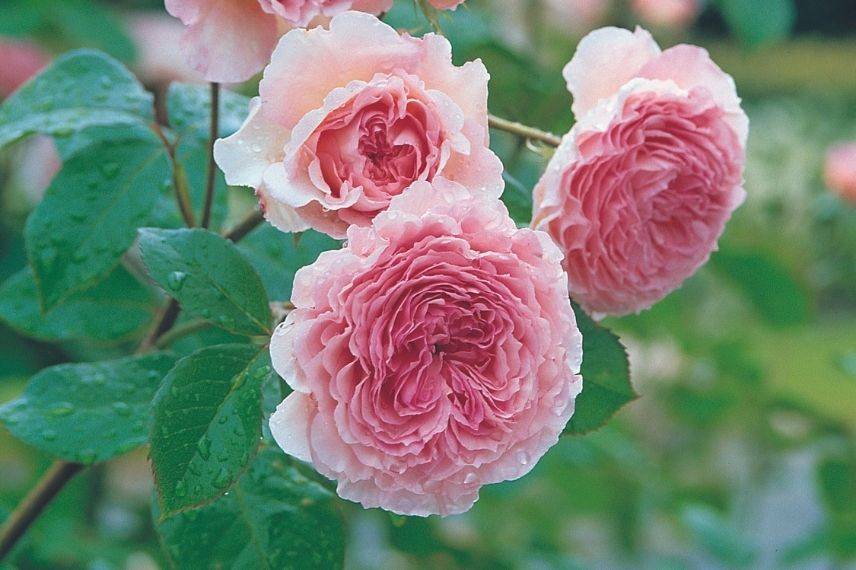
Rosa David Austin ‘James Galway’
- Subscribe!
- Contents

Comments