


























7 Hardy Opuntia to plant almost anywhere in France
to create an exotic or desert atmosphere
Contents
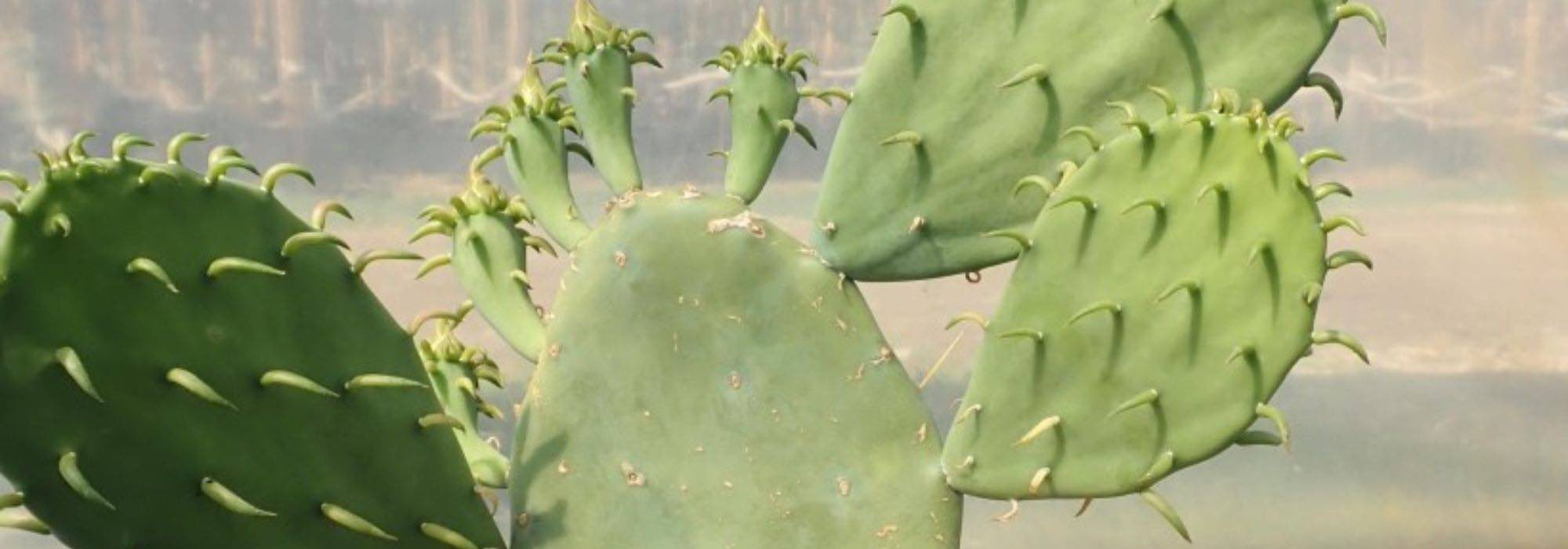
Opuntias, also known as prickly pears, are succulent plants renowned for their drought resistance and ability to thrive with little water. Native to the Americas, they grow in both the United States and Latin America, offering stunning colourful flowers in spring or summer. Opuntias evoke desert scenes that one might wish to recreate in their garden, with the most well-known being the famous Barbary fig. While Opuntias are desert plants, some can also withstand frost, which is interesting for those living in colder regions who wish to plant them in their gardens. This is possible with hardy Opuntias, provided they are placed in full sun, sheltered from cold winds, and in well-drained soil, especially during winter. Discover our selection of the most frost-resistant Opuntias to create an exotic scene almost anywhere in France!

Opuntia cacanapa 'Ellisiana' - Prickly pear cactus, a low-thorn and hardy opuntia.
The Opuntia cacanapa ‘Ellisiana’ features bluish oblong pads, which are notable for being slightly thorny. In summer, from June to August, this prickly pear produces canary yellow flowers that turn orange as they fade. The flowering is followed by the appearance of edible fruits, resembling prickly figs. With a bushy and well-ramified habit, the Opuntia cacanapa ‘Ellisiana’ reaches a height of 1 metre and a spread of 1.20 metres. Hardy down to -15°C, this cactus withstands frost well when grown in very well-drained, stony, sandy, or rocky soil and placed in full sun.
To create a scene reminiscent of a desert, you can plant the Opuntia cacanapa ‘Ellisiana’ in a rockery or dry garden and pair it with other hardy desert plants. Consider the blue nolina with its impressive, highly graphic bluish foliage. Arborescent and hardy down to -12°C, this plant, native to northern Mexico, produces spectacular cream to pale yellow flower spikes in spring.
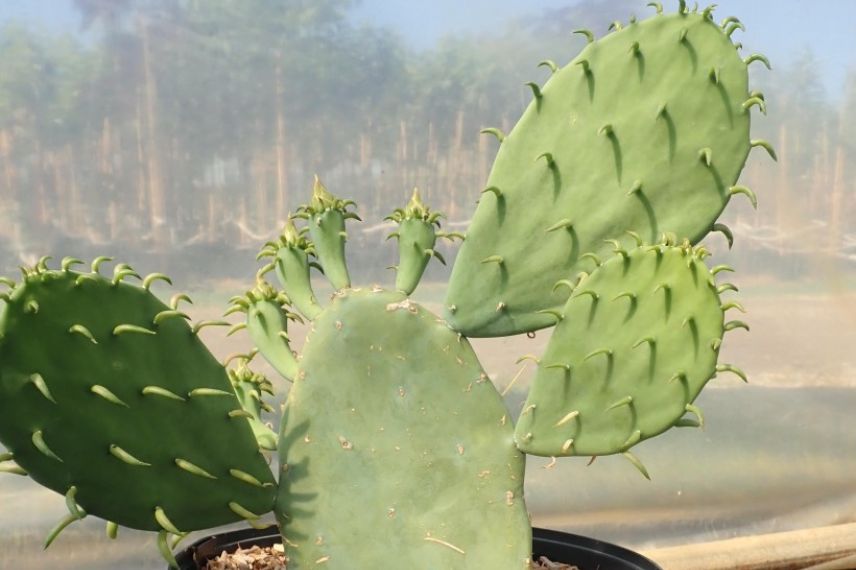
Opuntia angustata, a prickly pear cactus resistant down to -17°C
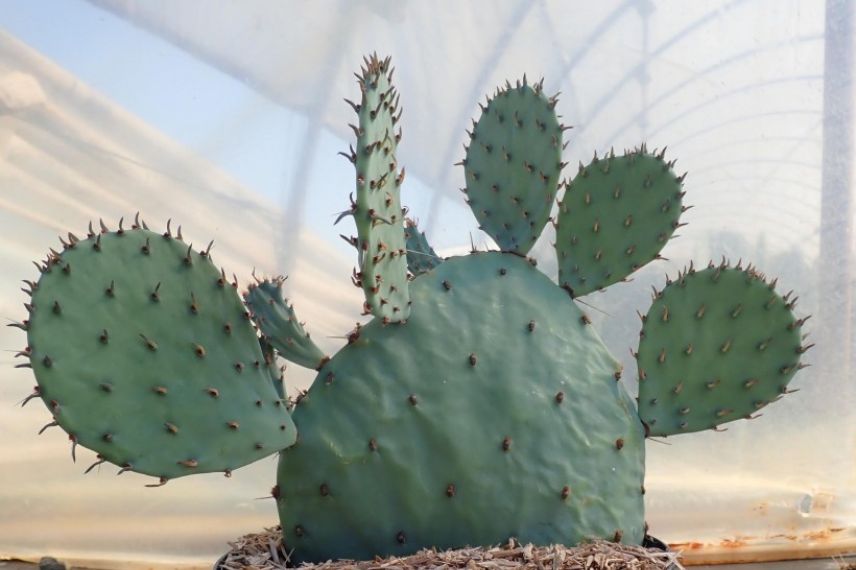
Hardy down to -17°C, the Opuntia phaeacantha var. angustata is a vigorous prickly pear that forms an upright bush as wide as it is tall, measuring 1.30 metres by 1.30 metres. It can be grown in many regions, provided it is well protected from excess moisture in winter and exposed to sunlight. Its ovate pads are very thorny and bear lemon-yellow flowers that turn orange from May to July.
With its size and upright habit, Opuntia angustata can be used as a focal point in a cactus bed. It can be paired with smaller prickly pear cacti such as the Opuntia sanguinicola, as well as small agaves like the Agave havardiana.
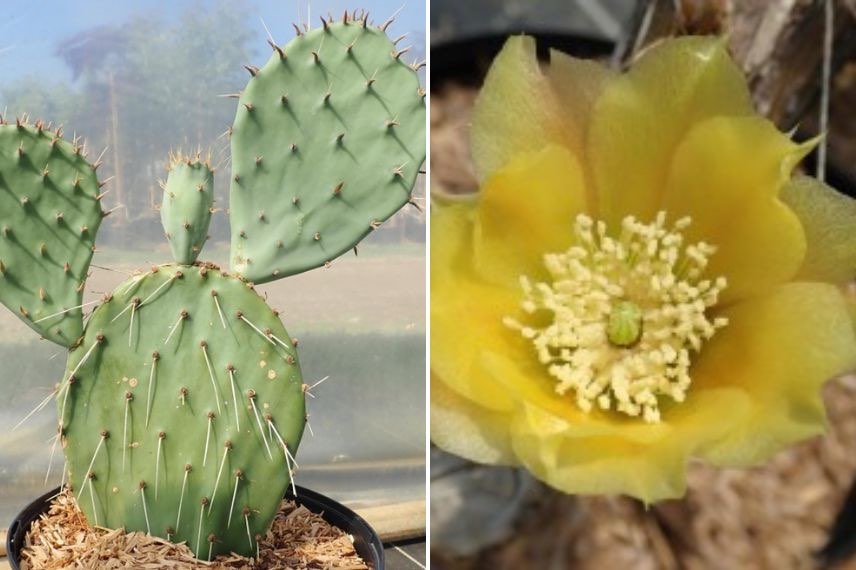
Opuntia engelmannii, a hardy prickly pear cactus down to -18°C
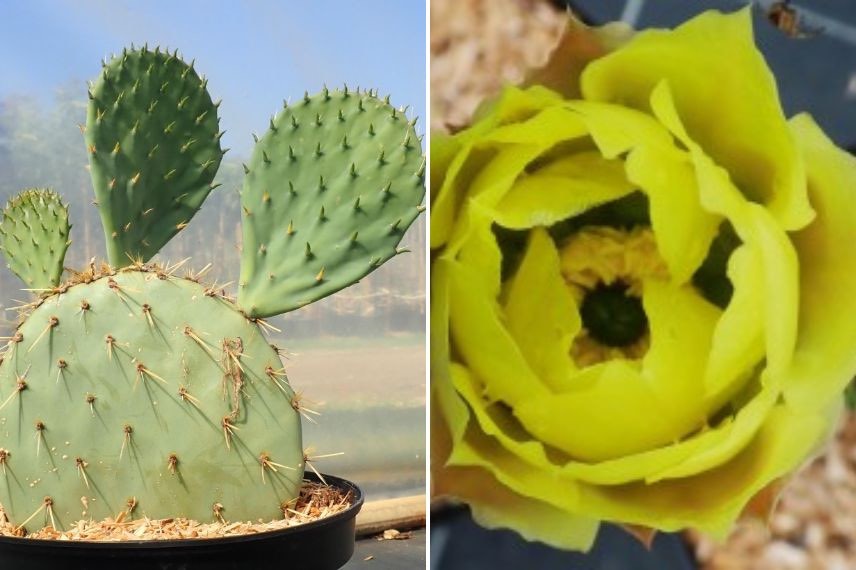
The Opuntia engelmannii is a prickly pear cactus that can be grown almost anywhere in France. Hardy down to -18°C, it adapts to nearly all climates, including those found in mountainous regions. Its grey-green pads are spiny and bear yellow flowers washed with orange from May to July. The flowers open in rounded cups and are adorned with slightly translucent petals. They are followed by decorative, very spiny, and rather tasteless reddish-purple fruits. Growing at a fairly rapid rate, this prickly pear reaches 1 metre by 1 metre at maturity. It should be planted like other Opuntia in full sun, sheltered from winds, and in very well-drained soil.
As it has thorns, it is best to place the Opuntia engelmannii away from children, in a rock garden or on a dry slope. It pairs well with other hardy agaves, as well as cold-resistant cacti like the Cylindropuntia imbricata.
Read also
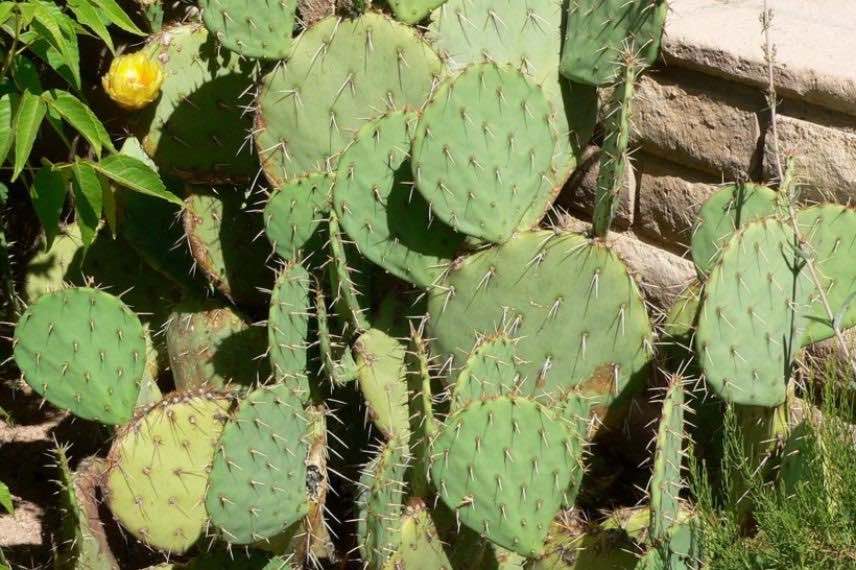
Pairing ideas with OpuntiaOpuntia howeyi, a hardy prickly pear cactus that is highly decorative
The Opuntia howeyi is a hardy prickly pear cactus, capable of withstanding temperatures as low as -18°C. With its fine yellow prickles growing on its large pads, it offers golden reflections and is highly decorative. From May to July, pink flowers appear, turning yellow before giving way to round, purple fruits that are also spiny. This shrubby plant can reach up to 1.20 metres in height and 1.50 metres in width. Its growth is rather slow, as it produces only one generation of pads each year. It thrives in many regions that are not too humid in summer.
Plant the Opuntia howeyi in full sun in a stony, poor, and very well-drained substrate. To highlight its yellow and golden colours, you can plant hardy houseleeks at its base, available in various colours: green, purple, or even variegated. Also consider the orange flowers of Kniphofias Alcazar or Red Hot Pokers, which will add graphic interest and vibrant tones to your cactus bed.
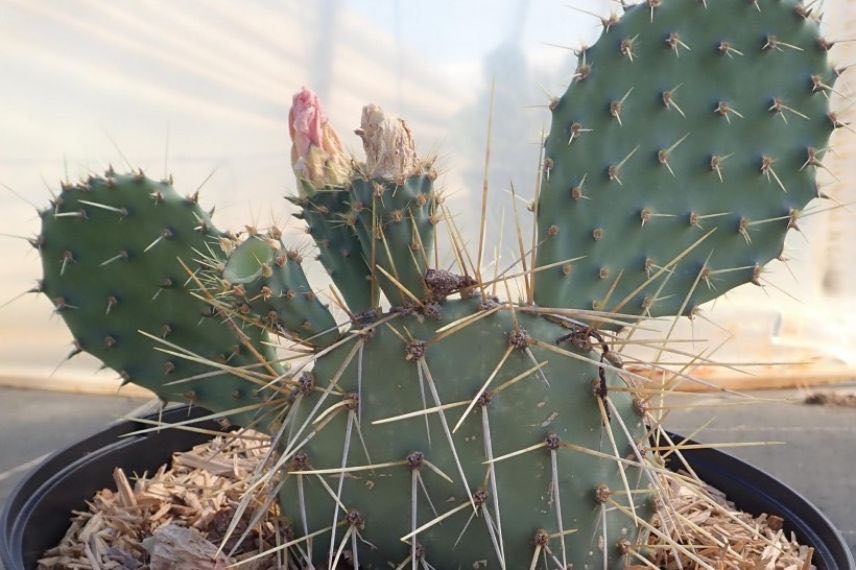
Opuntia engelmannii var. rastrera, a cactus that is hardy down to -20°C.
Hardy down to -20°C, the Opuntia engelmannii var rastrera is one of the most cold-resistant prickly pears and can be grown almost anywhere in France. It adapts to both snow and drought as well as heat. Its appearance is bushy, almost creeping, and it can even collapse under its own weight. The base becomes lignified over time. It grows to a height equivalent to three of its pads at most, reaching 60 cm. However, it is very wide and can attain a span of 2 metres. Its pads are heart-shaped and are adorned with yellow or pale pink flowers in May and June. The flowers fade to orange tones. Flowering is followed by the appearance of fruits, which can be consumed provided that the difficult-to-see thorns are properly removed.
Thanks to its hardiness, the Opuntia engelmannii var. rastrera allows for the creation of exotic scenes even in cold regions. It can be paired with tree euphorbias, as well as agaves and candle cacti in very well-drained and porous soil, always well exposed to sunlight.
Opuntia sanguinicola, a hardy prickly pear cactus down to -20°C
Hardy down to -20°C, the Opuntia sanguinicola has several advantages. It is one of the few varieties of prickly pear that can be planted in ordinary non-stony soil, provided of course that it is well-drained. It forms a fairly low bush of 40 cm at ripeness, with a tentacular appearance, wider than tall. The Opuntia sanguinicola produces relatively spineless, wide, rounded pads adorned with small tufts of decorative cinnamon-coloured hairs. From May to July, it is adorned with yellow-orange flowers with a red centre, which later turn into fruits.
The Opuntia sanguinicola can be placed in an exotic garden alongside stunning Aloe polyphylla with its spiralled spines, which should be planted in a milder climate. You can also pair the Opuntia sanguinicola with the orange flowers of Croscomia ‘George Davison’ and a hardy palm like the Trachycarpus wagnerianus, also known as the Chusan dwarf palm. The scene will be both minimalist and colourful, reminiscent of an imaginary desert.
Opuntia compressa Millevaches - Eastern Prickly Pear, hardy down to -20°C
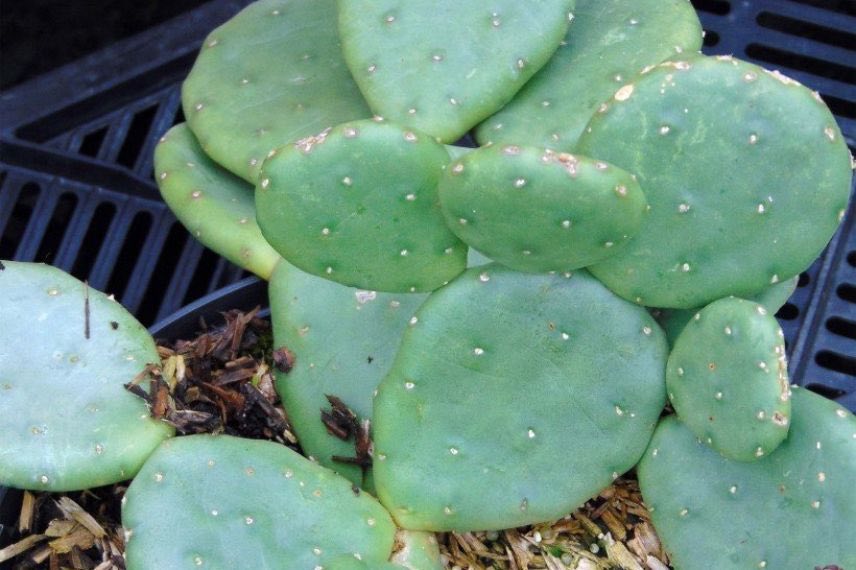
Opuntia compressa ‘Millevaches’ is also one of the hardiest prickly pears, as it can withstand temperatures down to -20°C. This miniature cactus has a prostrate habit, featuring small, rounded, blue-green prickly pear pads that spread across the ground. They are thornless and display cup-shaped lemon-yellow flowers from May to June. The Opuntia compressa ‘Millevaches’ reaches a height of 30 cm at ripeness, making it a perfect plant for small rockeries.
In a rockery, pair the Opuntia compressa ‘Millevaches’ with other miniature succulent plants, such as red houseleek and chocolate purple houseleek. This will create a colourful and highly graphic miniature garden.
For further reading
- Discover our complete collection of Opuntia.
- To deepen your knowledge of young plant frost resistance, you can also read our articles: Understanding plant hardiness and How to determine a plant’s hardiness?
- Subscribe!
- Contents
Comments