





























7 Must-have shrubs for a Forest garden
Resource-rich species that support biodiversity
Contents
In designing a forest garden, carefully chosen shrubs are essential structural elements that contribute to the richness and balance of the ecosystem. Not only do they provide refuge and food sources for a variety of wildlife, but they also serve as a privileged habitat for beneficial insects, these valuable allies of the gardener. Their strategic arrangement can create effective windbreak hedges. Moreover, as their leaves fall, these shrubs enrich the soil: decomposed leaves turn into humus, thereby improving soil fertility and fostering a healthy medium for plants and micro-organisms. Explore our selection of seven must-have shrubs, where each species can transform a simple garden into a true forest ecosystem.

Black elder or Sambucus nigra
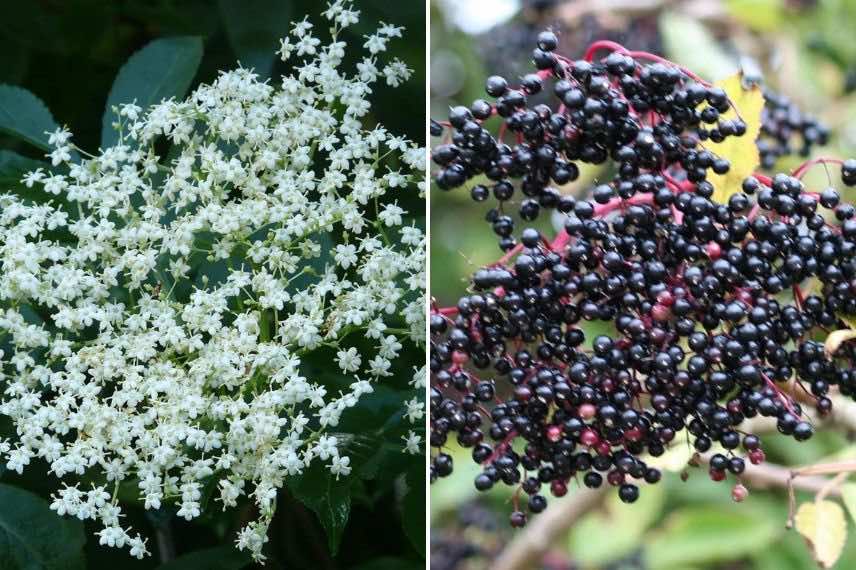
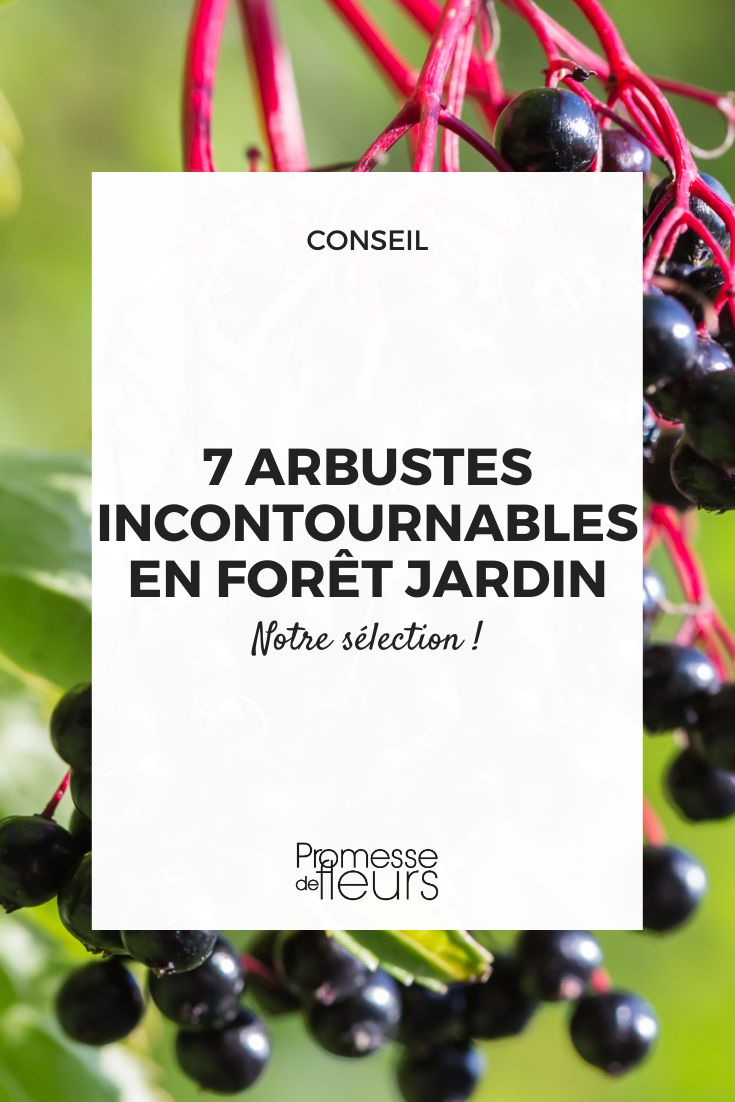
Sambucus nigra, or black elder, is a tall shrub or a small tree very common in our countryside and fallow land. Recognised for its open, wild habit, it often sprouts from the stump and features large deciduous leaves that release a strong odour when crushed. In late spring, it bears broad, flat cymes made up of cream-coloured flowers, decorative and fragrant, that attract a multitude of pollinators. The following fruits, which turn from red to black, are greatly enjoyed by birds and are edible; when cooked, they are used in the preparation of wines, syrups and jams.
Black elder thrives in diverse habitats, from open woods to hedges, through fallow land and coastal dunes. This nitrophilous species is an indicator of nitrogen in the soil. Elderflowers, which appear from May to June, are used in cooking to make delicious syrups with a distinctive flavour. They are also recognised for their medicinal properties, often used in infusion to treat urinary and respiratory infections.
Black elder, with its rounded habit, reaches about 6 metres in all directions. Easy to grow, it can be planted in ordinary, deep soil that isn’t too dry, though it tolerates drought once established. It is preferable to plant it in a sunny position, but it also tolerates partial shade. The elder is very hardy and requires little maintenance.
Very generous and undemanding, planted alongside other meadow species, it helps create a rich and diverse environment, beneficial to local biodiversity. It is among the most visited by wildlife. Its deciduous leaves, once fallen in autumn, are added to compost to speed up its decomposition.
Read also
How to create a forest garden?The male dogwood or Cornus mas
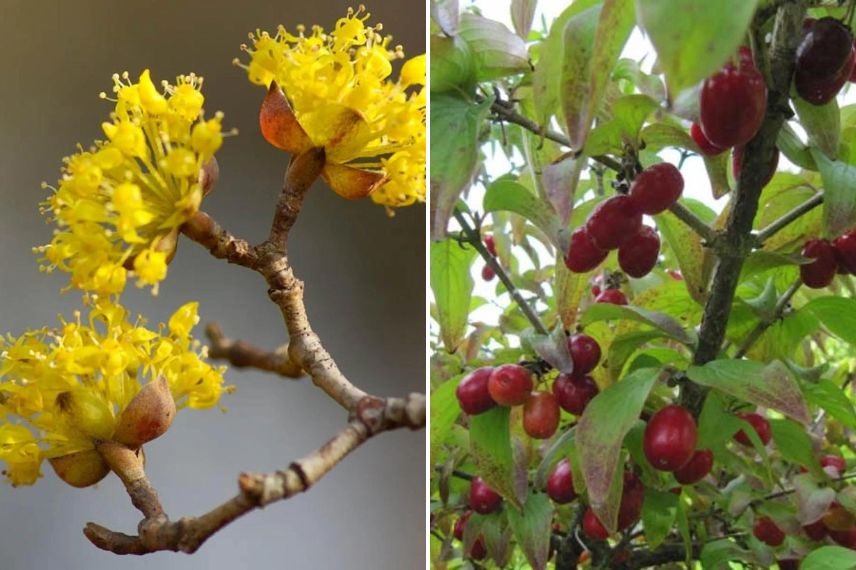
Cornus mas, also known as the male dogwood, is a shrub with many qualities. In late winter and early spring, it bears a bright yellow flowering that heralds the arrival of spring, followed in autumn by edible red berries known as cornels and by foliage that turns purplish-red. This hardy shrub can live for around 100 years.
Native to Europe, the male dogwood is suited to a wide range of climates and soils. It thrives in full sun to partial shade, in calcareous, ordinary or even poor soils, though it also tolerates slightly acidic soils. Its growth leads it to reach a height and width of between 2 and 5 metres, with a characteristic spreading habit.
The flowers of the Cornus mas, bright yellow, appear in small umbels from February or March, even before the leaves appear. The deciduous leaves of the shrub are oval and arranged oppositely on shoots with a square cross-section. In late summer, the shrub’s fruits appear as red, elongated drupes, tasty and tart, perfect for making jams or for drying.
The wood of the male dogwood, dense and hard, has historically been used to make objects such as arrows, javelins or tool handles.
In addition to its ornamental qualities, the Cornus mas is recognised for its important ecological role. Its early flowering provides an essential food source for early bees and other pollinators, while its fruits attract and feed many birds. This species is protected in certain regions, such as Nord-Pas-de-Calais, due to its ecological importance.
Blackthorn or Prunus spinosa
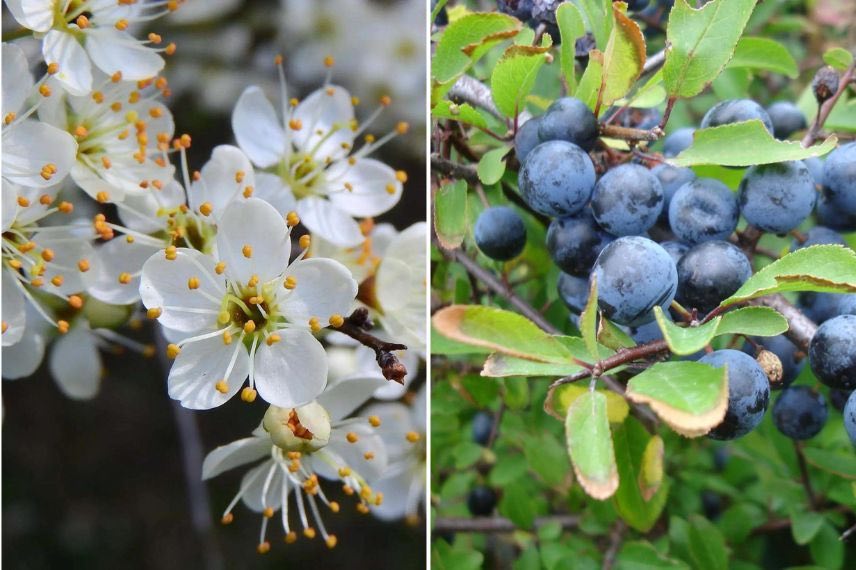
The Prunus spinosa, commonly known as wild blackthorn, is a spiny shrub that stands out in our landscapes and thickets for its robustness and its bushy habit. In spring, it delights with its dazzling white flowering, and in autumn it bears fleshy sloes, black-blue in colour, which become edible after the first frosts.
This pioneer plant, very hardy, thrives on clay-limestone soils and sometimes rocky ground, where it often forms dense and hard-to-reach thickets. With rapid growth, it develops a ramified and spreading crown adorned with thorny branches, reaching about 3.5 metres in all directions at maturity. Its young shoots are pubescent and its deciduous leaves, oval and pointed, have a dentate margin.
The white flowers of the blackthorn, simple and melliferous, appear before the leaves at the start of spring and are followed by fleshy sloes, black-blue in colour, which become edible after the first frosts. These fruits are used to make jellies, jams, liqueurs and sauces. The wood of the blackthorn, very hard and often used in marquetry, as well as its running roots, play a crucial role in preventing erosion and in creating natural barriers.
Easy to grow and extremely hardy, the blackthorn, in addition to its ornamental qualities, is important for biodiversity, offering refuge and food to many birds and serving as habitat for several varieties of butterflies.
Read also
Medicinal plants in a forest gardenCanada serviceberry or Amelanchier canadensis
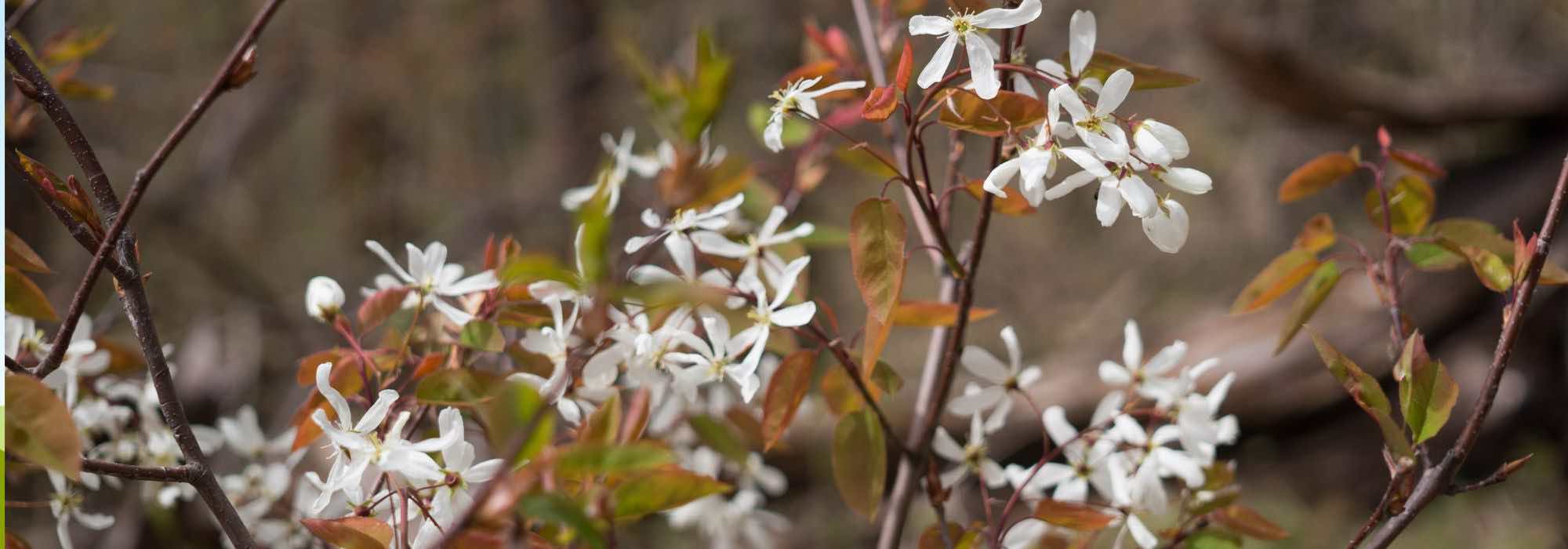
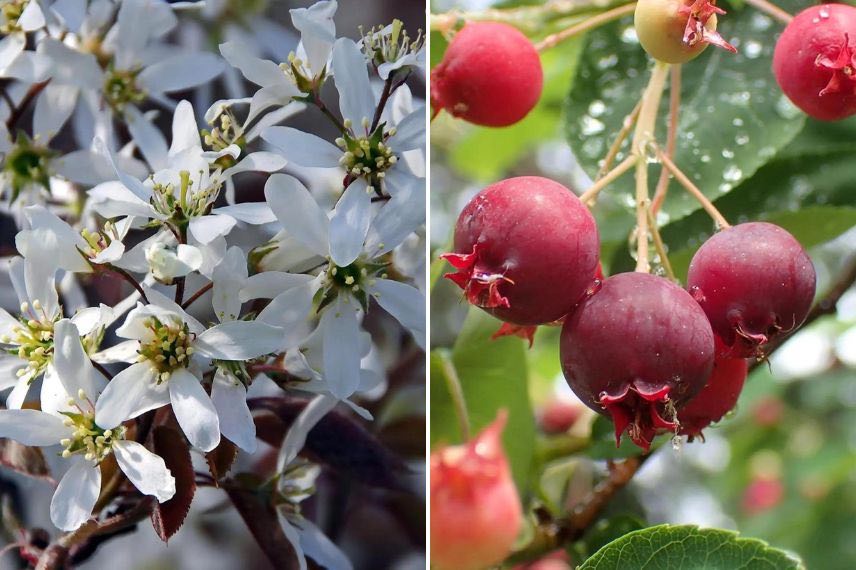
Amelanchier canadensis, also known as Canada serviceberry, is a deciduous shrub that deserves more attention for its ease of cultivation and year-round ornamental interest.
From April, this shrub is adorned with small star-shaped flowers in pure white, soon followed by red berries turning black, much appreciated by birds.
These delicious berries, reminiscent of blackcurrant and blueberry, are rich in vitamin C and can be eaten raw or processed into jams, coulis, pastries or even wines.
The leaves of the Amelanchier canadensis, tough, elliptical and finely toothed, are a dark blue-green colour that in autumn transforms into a spectrum of warm colours ranging from orange-red to purple. They also take on a coppery tint at bud burst.
Native to Canada and the eastern part of North America, this shrub tolerates harsh weather conditions, including cold. It reaches about 6 metres in height with a 3-metre spread at maturity, with an upright habit and sometimes multi-stemmed.
Canada serviceberry is a robust shrub that adapts to a wide range of soils, provided they stay moist. It thrives in full sun or partial shade. It is one of those plants that fix atmospheric nitrogen and return it to the soil.
Here we focus on the Canada serviceberry, but all amelanchier species are interesting. Most have very tasty fruits; check fruit quality or taste them before choosing a variety. For space-saving, Amelanchier spicata and its erect spikes are of interest.
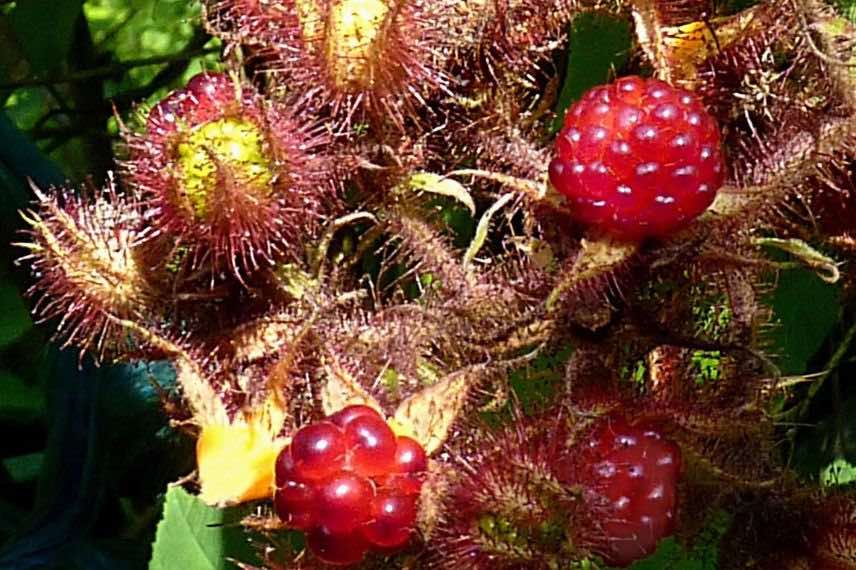
The Japanese wineberry, or Rubus phoenicolasius.
The wineberry, or Japanese wineberry, or Rubus phoenicolasius is a variety of blackberry native to Japan. Appreciated for its ornamental qualities as well as for its fruit, this plant features dark red shoots that form a decorative shrub similar to a sturdy raspberry, covered in hairs and reddish spines. The delicious fruits, bright red when ripe, are prized for their sweet and slightly tart flavour. The harvest period runs from mid-July to the end of August.
The wineberry/Japanese wineberry thrives in ordinary soil, but prefers fertile, well-drained and cool soil. A sheltered, sunny or partially shaded site promotes the growth of its handsome dark red canes in winter.
This climbing, semi-woody shrub can reach 2 to 3 metres in height. Its shoots require support such as a fence, trellis or pergola. Its deciduous, bright green foliage resembles that of a raspberry with dentate leaves and stems adorned with reddish spines. Although the white flowers that appear from May to June are modest, they attract pollinators.
The fruits mature from orange-red to cherry red, from July to August. They are eaten fresh, as jellies, jams, pies, sorbets, syrups and juice, and store well in the freezer.
In summary, it is a hardy, easy-to-grow ornamental plant with delicious fruit, deciduous foliage, which contributes to biodiversity in the forest garden.
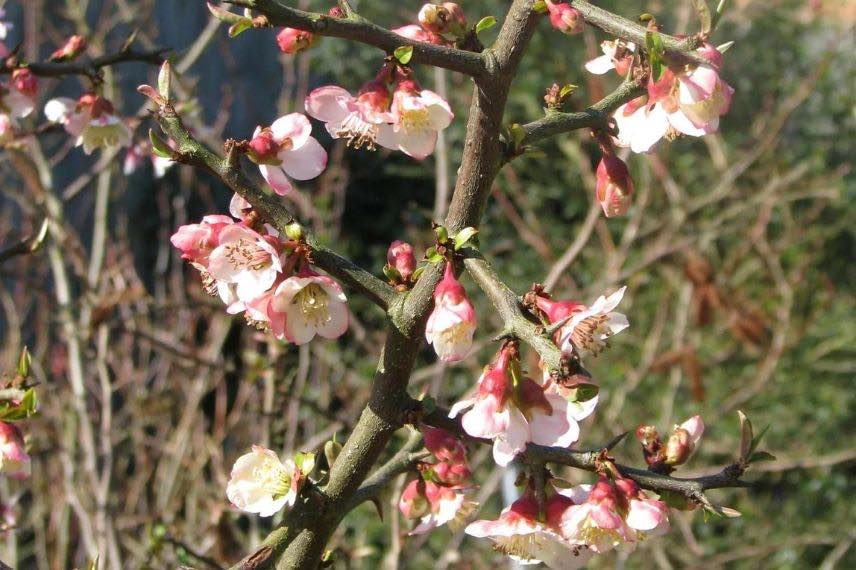
Cathay quince tree or Chaenomeles cathayensis
The Chaenomeles cathayensis, a little-known cousin of the Japanese quince, is native to China. Larger and more vigorous, very thorny, hardy, it covers its naked branches from the end of winter with pink to bright pink flowers, offering a flowering display as ravishing as it is abundant. In October, Chinese quince yields a generous harvest of large, yellow, fragrant and edible quinces, which rival those grown in our orchards. These fruits are prized for making jellies, jams and tarts and are valued in cooking or traditional Chinese medicine.
The Chaenomeles cathayensis is not fussy about soil quality. It grows quickly and can form a large shrub, reaching more than 2 metres in all directions. Its early flowering varies with the climate, extending from early March to April. The flowers, highly attractive to pollinators, feature white petals tinged with pink and a clearly visible yellow centre. The fruits, pear-shaped, turn yellow in autumn and linger on the branches, adding a decorative touch in winter.
Very accommodating, this deciduous shrub delights with its robustness, its early winter flowering ideal for pollinators and its autumn fruits. Note that thorny shrubs are good refugia for birds in winter.
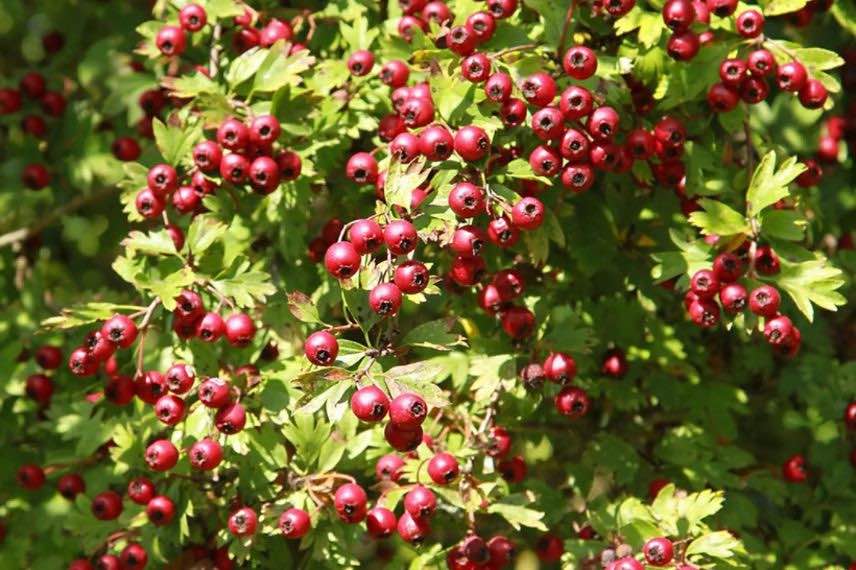
Azarole hawthorn or Crataegus azarolus
The Crataegus azarolus, commonly known as azarole, is a small fruit tree closely related to hawthorn. Little known yet highly rewarding, this tree thrives in Mediterranean regions, standing up well to climate conditions and poor soils. It is prized for its spring flowering and the production of fruits called azaroles or pommettes, which resemble small apples and range from yellow to red at maturity.
Originating from Southern Europe, the azarole is a shrub or small tree with slow growth but very hardy, about 8 metres tall and 5 metres wide in optimal conditions. It is distinguished by its slightly thorny branches and small whitish flowers arranged in corymbs, which bloom in April and are highly prized by bees, but give off an odour often considered unpleasant. In the Mediterranean region, it produces fruits, which ripen in September, are globose, measure 2 to 4 cm in diameter and contain a sweet and tangy flesh very pleasant.
Azeroes are widely cultivated in southern European countries. They are rich in sugars, pectin, vitamins A and C, and antioxidants. They are eaten raw or processed into compotes, jams and jellies. An adult tree can produce up to 25 kg of fruit per year. The deciduous foliage of the azarole is also attractive, with triangular leaves with three or five lobes, slightly dentate, turning a beautiful yellow colour in autumn.
Very adaptable, the Crataegus azarolus can be planted in any soil type, even calcareous and dry in summer, and prefers sunny aspects. The azarole is an aesthetic choice and a beneficial addition for biodiversity, providing food and shelter for many animal species.
- Subscribe!
- Contents
Comments