


7 trees to grow in acidic soil
Suitable trees and our cultivation tips
Contents
A selection of trees adapted to the specific characteristics of your soil is essential for a thriving garden and a harmonious landscape. Acid soils, although presenting a challenge for some plants, offer the opportunity to grow a range of remarkable trees, both for their beauty and for their adaptability to these sometimes demanding conditions. In this article, we present seven exceptional trees that thrive in acidic soil.

Nyssa sylvatica - Black Gum
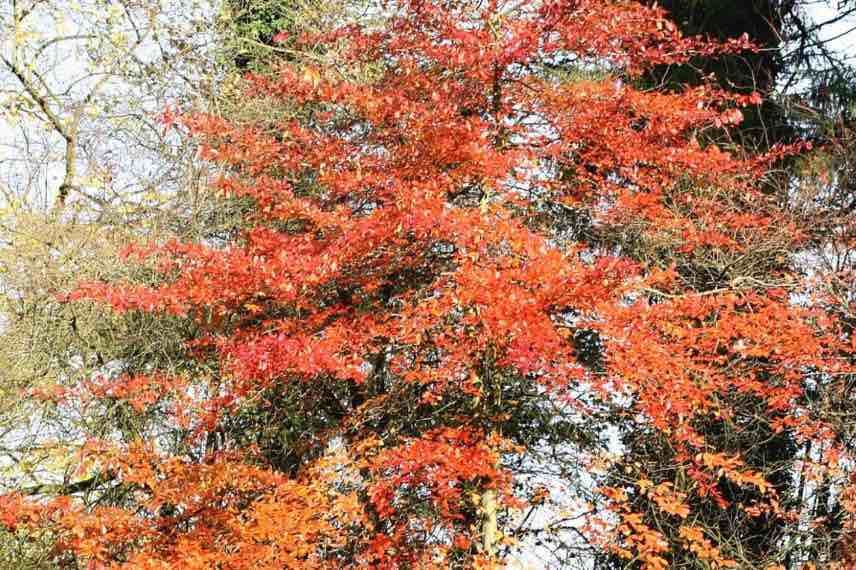
Nyssa sylvatica, also known as Black Tupelo or Tupelo, is a handsome deciduous tree native to the United States noted for its vibrant autumn colour and an elegant pyramidal habit. From September onwards, it takes on a flamboyant palette including yellows, oranges, reds and purples. Its trunk is clad in bark with thick ridges reminiscent of alligator skin on older specimens. It is a tree for large gardens, reaching about 20 m in height and around 23 m in spread.
Plant it in acidic to neutral soil (acid soils enhance leaf colour). It needs cool, moist soil year-round, well-drained in winter and fertile. It can also grow in damp soil provided it is well-drained. It prefers non-Mediterranean regions, but tolerates short summer droughts. Plant it in full sun or light shade; it tolerates wind well. Sensitive to urban pollution, it prefers rural or peri-urban gardens rather than city gardens.
Eucryphia moorei - Moore's Eucryphia
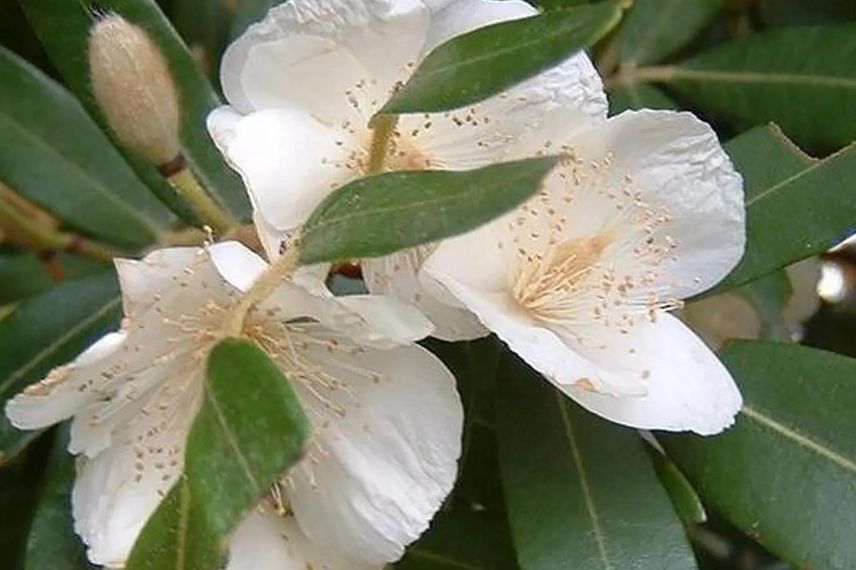
Eucryphia moorei, also known as Moore’s Eucryphia or Pinkwood in its country of origin, is a small evergreen tree native to the moist forests of southeastern Australia. In favourable climates, it can reach 8 m in height and is notable for its abundant white summer flowering, complemented by an elegant, glossy dark green foliage. Delicate to grow and not very hardy, it will only thrive in the ground in gardens sheltered from our Atlantic coast, as it cannot survive below -5°C.
In very mild regions, plant Eucryphia moorei in the ground, in bright partial shade and sheltered from the wind. It prefers humid conditions and soils that are cool, light, acidic to neutral and well-drained. It does not tolerate drought in the soil or in the air, but it withstands salt spray.
Large magnolias
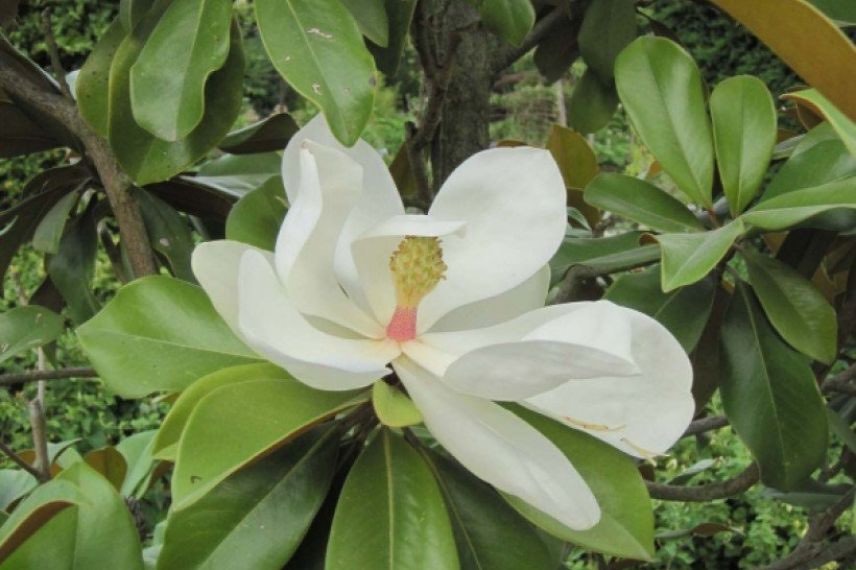
Tall magnolias form trees that reach from 7 to over 15 metres in height, majestic, ideal for ornamenting vast gardens and parks. Among them, the Magnolia grandiflora, or Large-flowered Magnolia, reaches up to 15 metres in height and is renowned for its glossy evergreen foliage and its summer flowering in large white cup-shaped blooms. This tree has given rise to impressive varieties such as ‘Galissonière’ and ‘Goliath’. Other tall magnolias are deciduous and flower in spring. For fans of pink flowering, Magnolia ‘Galaxy’ is an attractive option, as is the hybrid ‘Black Beauty’, with its buds almost black that open to purple-lilac outer petals and almost white inner petals. Large botanical species such as Magnolia macrophylla, with its broad deciduous leaves, also enrich this family of trees.
Most magnolias prefer soils from acidic to neutral, cool, light and rich in humus. They favour sunny or partially shaded, well-sheltered positions.
Read also
10 bushes to grow in acidic soilConifers
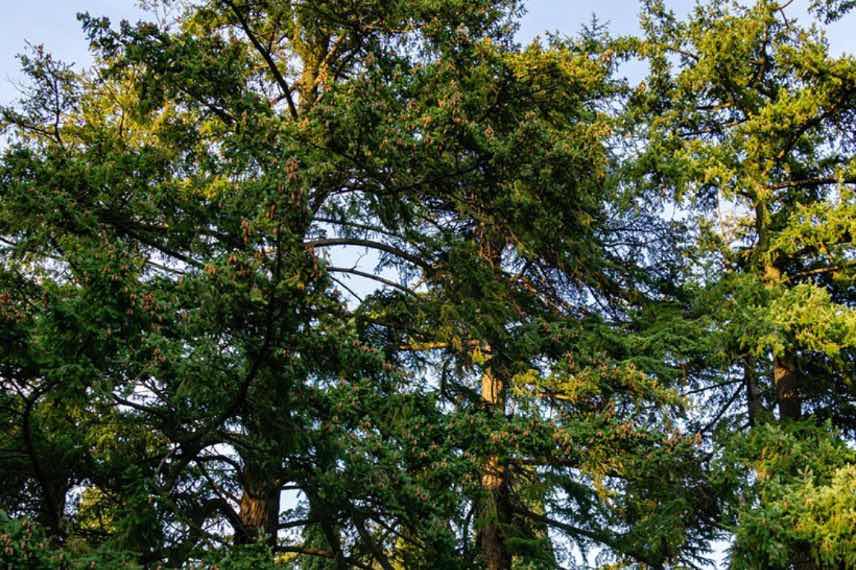
Large conifers are particularly renowned for their gigantism and longevity. In their natural habitat, some species reach impressive sizes. In cooler climates, large conifers maintain more modest dimensions, which makes them suitable for planting as specimens or as borders in large gardens. They typically develop around a single, straight trunk that splits into lateral branches. Their foliage, often evergreen, is needle-like in species such as pines, spruces, cedars and firs, or scaled in cypresses and junipers.
Here are a few species that favour acidic soils. These include Larix or Larches, Sequoia or Western Hemlock or Tsuga heterophylla, Douglas fir or Pseudotsuga menziesii, Picea or spruces.
- Larix dislike arid conditions and clayey, compacted soils, but tolerate waterlogged, poor, acidic soils. They thrive in very sunny spots, not far from water sources.
- Sequoias require, to support their growth, cool, deep, well-drained, and fairly acidic soil, and they prefer a humid climate year-round, hot in summer and fairly mild in winter.
- The Tsuga heterophylla is planted in fertile, moisture-retentive, well-drained soil, neutral to slightly acidic (pH tolerance range 5 to 7). It prefers humus-bearing or loam-clay, cool, acidic soils.
- The Pseudotsuga menziesii is planted in deep, light, well-drained soil, neutral to acidic.
- Spruces appreciate humid, cool environments and fear air pollution. They prefer cool soils with a pH range from acidic to neutral (with a few exceptions).
Quercus suber - cork oak
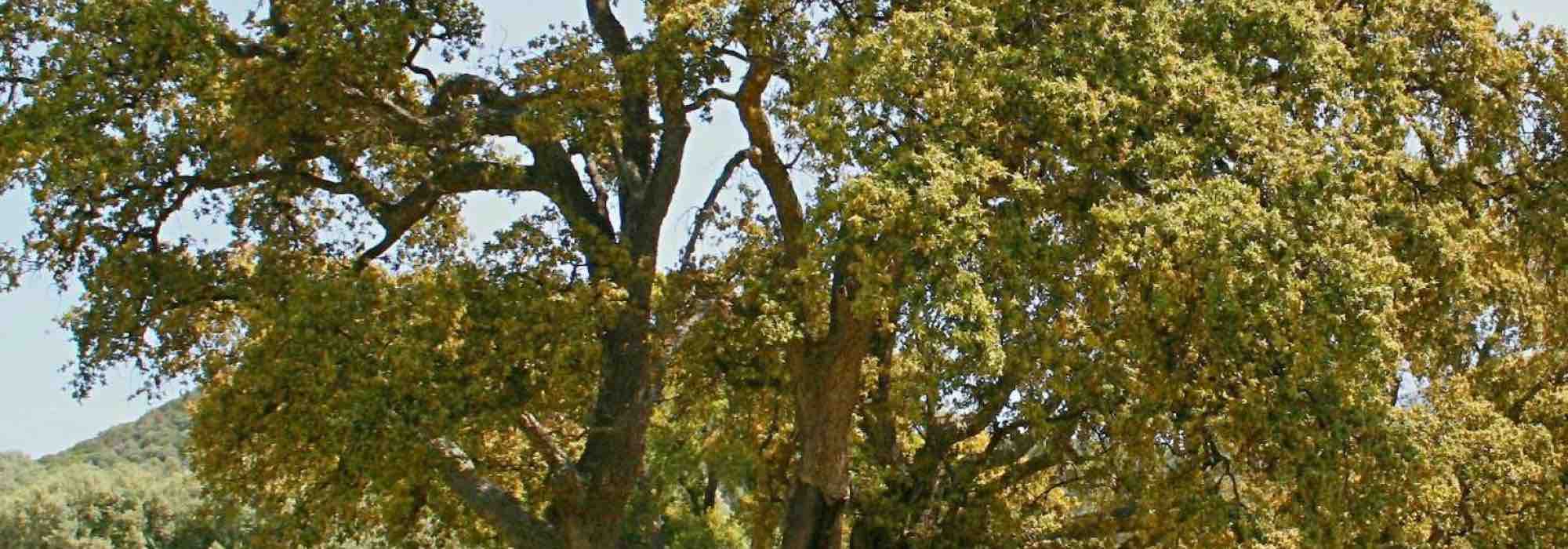
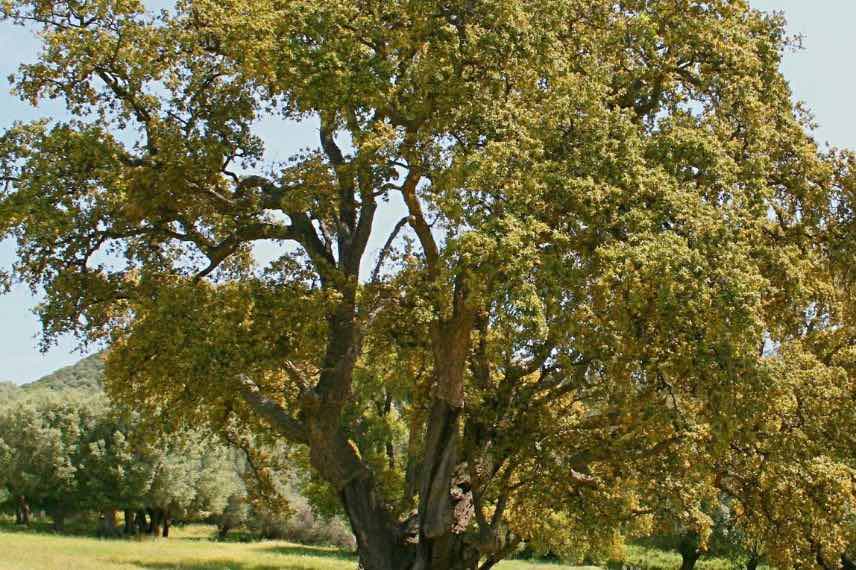
Quercus suber, better known as cork oak, is an evergreen tree iconic to Mediterranean forests and scrub vegetation, which is distinguished by its dependence on acidic soils, in contrast to the holm oak, which is more tolerant. This medium-sized tree is prized for its thick, insulating, fire-resistant bark, known as cork. Its small, dark green, glossy foliage, similar to holly’s, adds to the decorative appeal of this tree with a rounded crown and a picturesque habit.
At maturity, the cork oak reaches an average height of 11 to 12 metres. Growth is slow at first, allowing the tree to develop its long taproot before accelerating. Its longevity is remarkable, capable of reaching 300 to 400 years, especially if not exploited for its bark. With a short and broad trunk, its few, spreading branches support a rounded and fairly sparse crown. Requiring acidic soil for its development, once well established the cork oak grows at a moderate rate and is drought-tolerant in summer.
Alnus glutinosa - glutinous alder
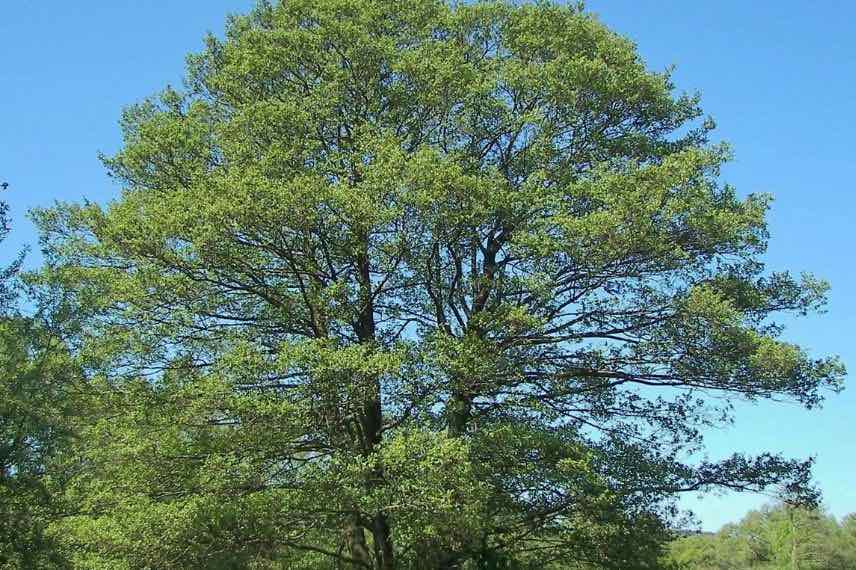
The glutinous alder is a medium-sized deciduous tree, typical of wetlands and along watercourses. It is widespread across Europe, including Scandinavia, up to elevations of 1,200 metres, but is less common in the Mediterranean region. This tree tends to develop several slender trunks from its stump, forming almost horizontal branches that give it an impressive pyramidal silhouette. Its rounded, bright green, glossy leaves are leathery with a truncate tip and stay on the tree for a long time before dropping in winter. In winter, the alder is distinguished by its fine, pendulous male amments, yellowish at emergence and measuring up to 8 cm, evoking an inverted candlestick. Its fruits from the previous year, in the form of dark brown almost black cones, provide a striking contrast with its bright flowers. The black alder is particularly suited to waterlogged and poor soils, where it can sometimes be the only tree to grow. It is often used for planting and erosion control along banks.
Easy to grow, the Glutinous Alder thrives in soils that are always fresh, humus-bearing, even peat-rich and poor, preferably acidic, in full sun or partial shade.
Liquidambar styraciflua - American sweetgum
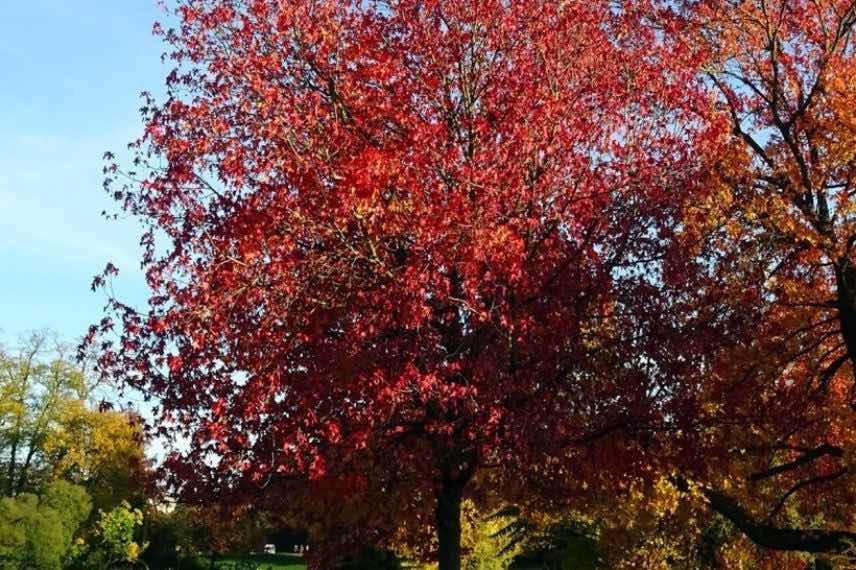
The Liquidambar styraciflua, also called American sweetgum, is a deciduous tree particularly admired in autumn, when its broad palmately foliage takes on sumptuous orange, coppery or golden to scarlet red and purplish hues. Medium-sized, with a conical habit, it reaches an average height of around 20 m and requires a well-spaced position in the garden, either as a specimen plant or in a row, which will allow you to admire it in all its splendour. It develops a very vertical trunk, topped by a dense crown, with a clearly conical and closed habit, somewhat irregular, with a base diameter of about 7 m.
It grows easily in full sun, which enhances its sumptuous autumn colours. It thrives in acidic soils. It prefers heavy and cool soils, of clay or clay-loam type, rich, deep, well-drained in winter, cool, or even damp.
But also
- Birches, and in particular Downy Birch, grow in slightly acidic soil.
- Eucalyptus have different cultivation requirements depending on the species, and thus their native medium. Some grow in acidic soil, such as the Eucalyptus apiculata, Eucalyptus approximans, or the best known Eucalyptus gunnii.
- Subscribe!
- Contents
Comments