





























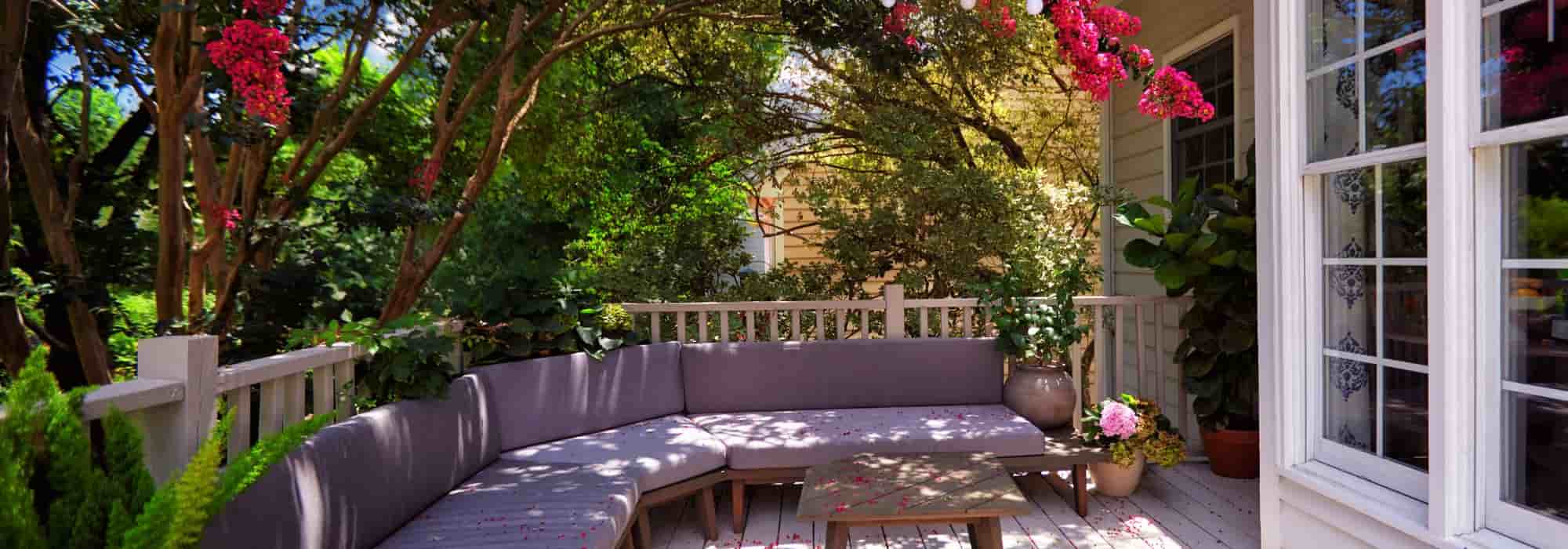
7 trees to shade a terrace
Our selection to create a haven of freshness and greenery
Contents
Summer, as the sun shines brilliantly, the terrace becomes the go-to place for relaxation and socialising. But to make the most of it, it is essential to have natural shade that protects from the blazing rays. What could be better than sheltering under the leaves of a majestic tree? Not only do trees provide refreshing shade, but they also lend a distinctive aesthetic and atmosphere to your outdoor space. Discover our selection of trees to shade a terrace and create a haven of freshness and greenery!

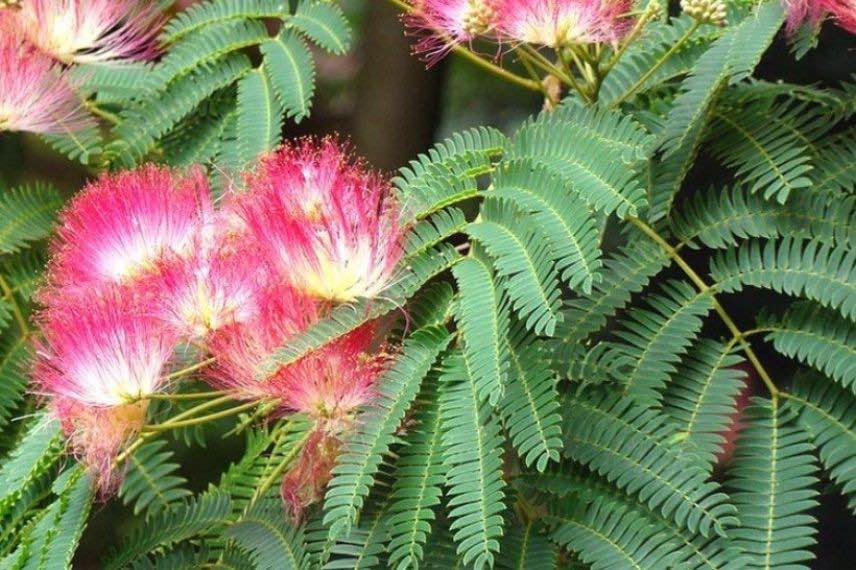
Albizia, for light shade
With its elegant, parasol-shaped silhouette, Albizia has delicate, finely cut foliage resembling mimosa leaves, and it lets light filter through and creates a soft, pleasant shade that doesn’t totally darken the space. Moreover, its bright pink pom-pom-shaped flowers add a splash of colour, elegance and exotic appeal. In winter, the bare tree will let in the sun’s rays. Moreover, its relatively rapid growth and disease resistance make it a wise choice for creating natural shade in record time. Choose a silk-tree variety of a reasonable size, such as the Albizia julibrissin ‘Ombrella’ with a height of 5 metres and a spread of 6 metres.
Hardy to -15°C, this tree is ideal for southern regions with an oceanic climate, where it will thrive in full sun or partial shade. It can also be planted in regions north of the Loire, but only if you choose a site sheltered from winds and south-facing. Albizia prefers well-drained soil, from sandy to loamy, and tolerates drought well once established. However, it dislikes dampness, especially in winter and overly clayey soils.
→ For more on this graceful tree, read our page on Albizia: planting, pruning and maintenance
Lagerstroemia for hot climates
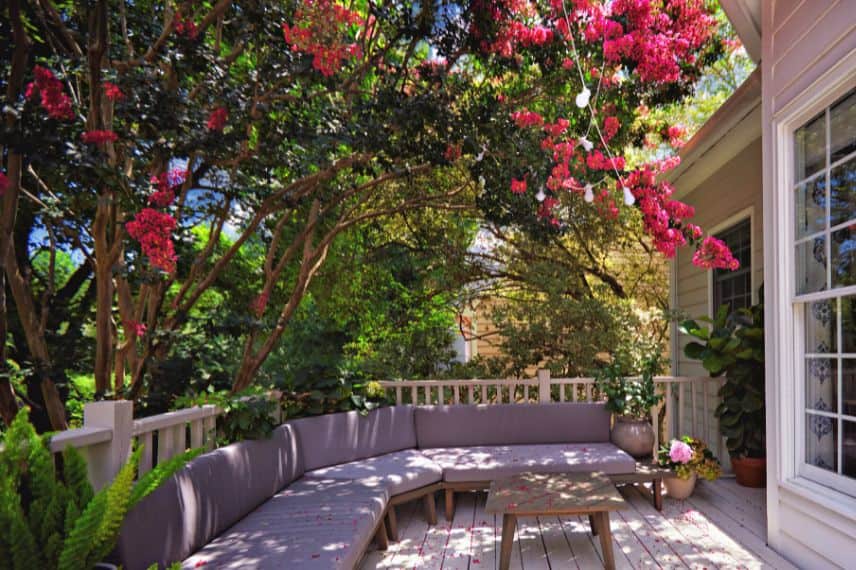
Whether on the terrace or in the garden, Lagerstroemia, nicknamed ‘crape myrtle’, is a sight to behold all year round. Its leathery foliage changes colour with the seasons: it unfurls red, greens in summer, then adopts warm hues in autumn before the leaves fall. Even in winter, when bare, its soft beige bark peels in colourful patches, providing a unique display after a few years. Not to forget that its fresh pink flowering in summer is a real asset to any outdoor space.
Its rapid growth is another asset for a terrace. Choose a variety reaching 3 to 5 m in height, such as the cultivar ‘Jacqueline Desmartis‘, ‘Dynamite‘ or ‘Soir d’Eté‘, which you will prune to a parasol shape. This will give you a pleasant shade, light and exotic.
Rather hardy (resistant down to −9°C), this handsome tree is best suited to mild, Mediterranean or oceanic climates, in a sunny spot and sheltered from the wind. It also prefers neutral or slightly acidic, well-drained soil that remains slightly moist. However, it fears calcareous or overly damp soils in winter.
→ To learn more about this graceful tree, read our page on the Lagerstroemia, crape myrtle: planting, cultivation and maintenance.
'Nana' ball-shaped Catalpa for temperate regions
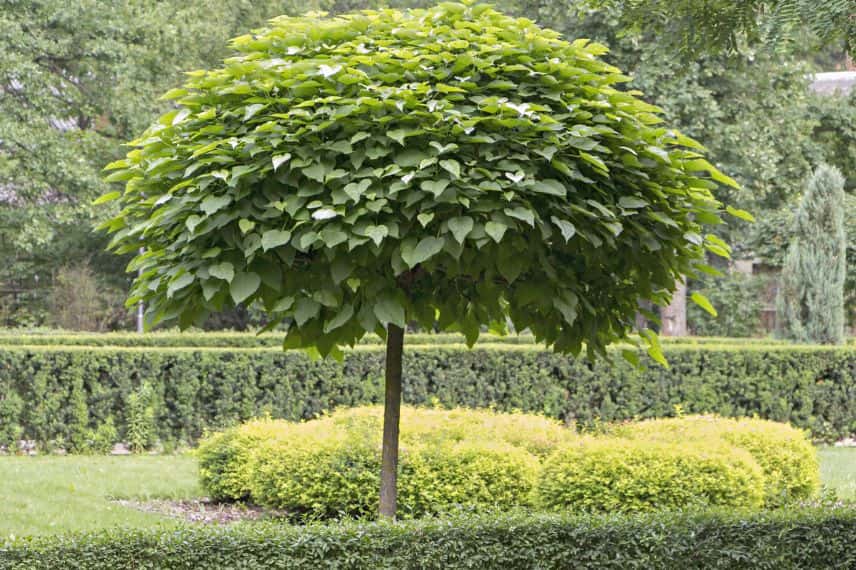
The Catalpa bignonioides ‘Nana’ (or dwarf Catalpa), is a beautiful variety, more compact and without flowers, of the traditional Catalpa. With its naturally rounded habit and dense foliage, it is particularly prized for shading terraces. Its large leaves provide dense, refreshing shade during the hot months, while adding an aesthetic touch with their tender green. In autumn, they take on yellowish hues before falling, offering a seasonal display.
This Catalpa enjoys full sun and prefers sheltered positions away from strong winds. Hardy to -23°C, it will grow well across France, except in regions with dry soils along the Mediterranean coast. It prefers temperate climates and soils that remain slightly moist, even clayey and calcareous. Note that its growth is fairly slow and it will reach 5 to 7 m in height and spread by around 10 years.
→ For more information about this graceful tree, read our page on Catalpa: planting, pruning, maintenance. Catalpa: planting, pruning, maintenance.
Read also
10 shade treesBall Acacia, for its hardiness
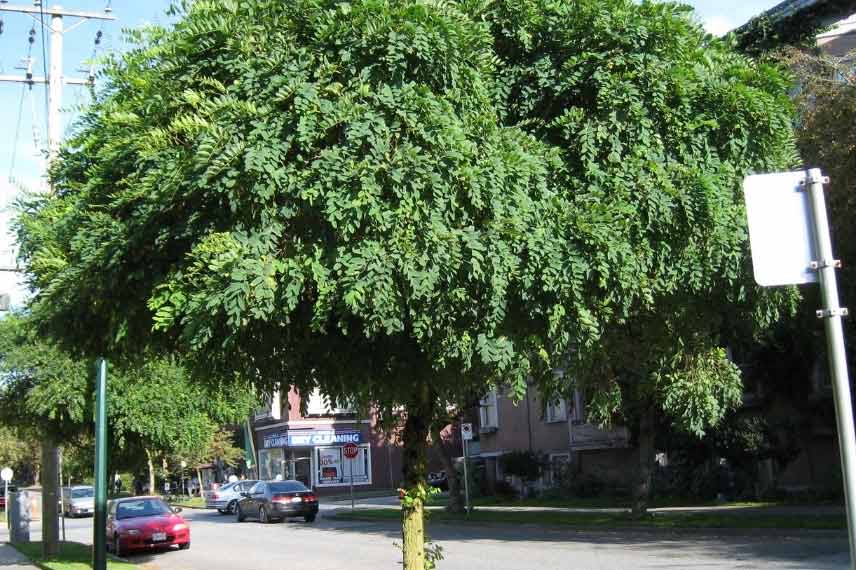
The Robinia pseudoacacia ‘Umbraculifera’, commonly called “Ball Robinia” or “Ball Acacia”, is a particular variety of Robinia that is distinguished by its compact and rounded habit. Its dense foliage consists of small pinnate leaves, bright green in spring and summer, which turn to a golden hue in autumn, perfect for shading a terrace. Note that this variety does not flower, and at maturity it reaches about 4 m wide by 5–6 m high.
The Robinia ‘Umbraculifera’ is also valued for its robustness and hardiness (down to -29°C) which allows it to thrive in most regions, from the mild Atlantic coast climates to the harsher winters of the north and east. It is also pollution-tolerant, making it ideal for urban terraces. Additionally, it is suited to a wide range of soils and tolerates drought well once established. In terms of exposure, this tree prefers full sun, but can adapt to partial shade.
→ For more information on this graceful tree, read our guide on Robinia, False Acacia: Planting, pruning and care.
The False Pepper tree, for its evergreen foliage
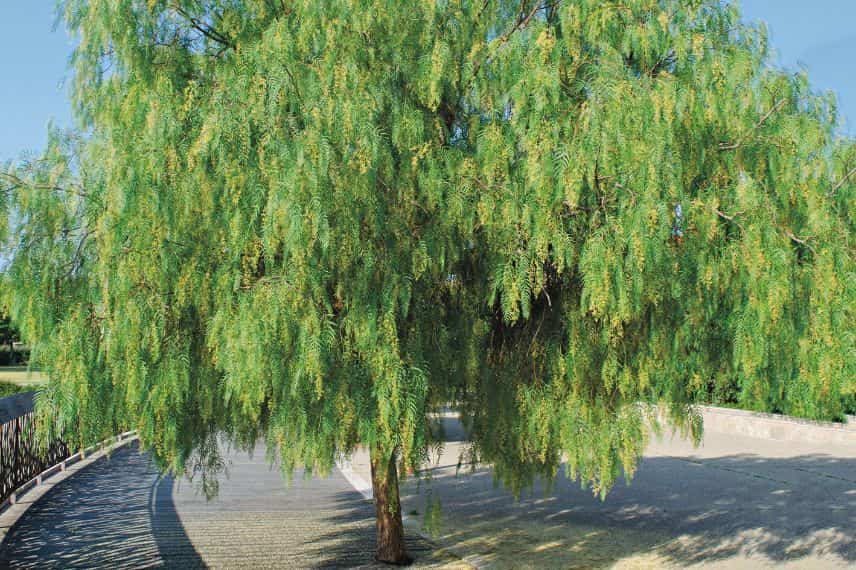
Schinus molle, often referred to as the “California pepper tree” or “wild pepper tree”, is a handsome tree highly valued for its evergreen, fine and trailing foliage. With its weeping habit, it brings a touch of softness and movement to gardens and terraces. Its pretty decorative berries, reminiscent of pepper, add a bright splash of colour, ranging from pink to red. It also has distinctive bark and its trunk becomes gnarled with age. Its other asset: its rapid growth that allows it to reach about 6 m tall and 4 m wide in a few years. It also features discreet flowering just before summer.
Only hardy (to -6°C), but very drought-tolerant once well established, the false pepper tree is suited to hot and dry climates, which makes it particularly interesting for the southern regions of France. It also enjoys full sun. Its airy habit and its ability to adapt to different soil types make it an ideal choice for those seeking to add an exotic touch and light shade to their outdoor space.
The Japanese persimmon, for its fruit
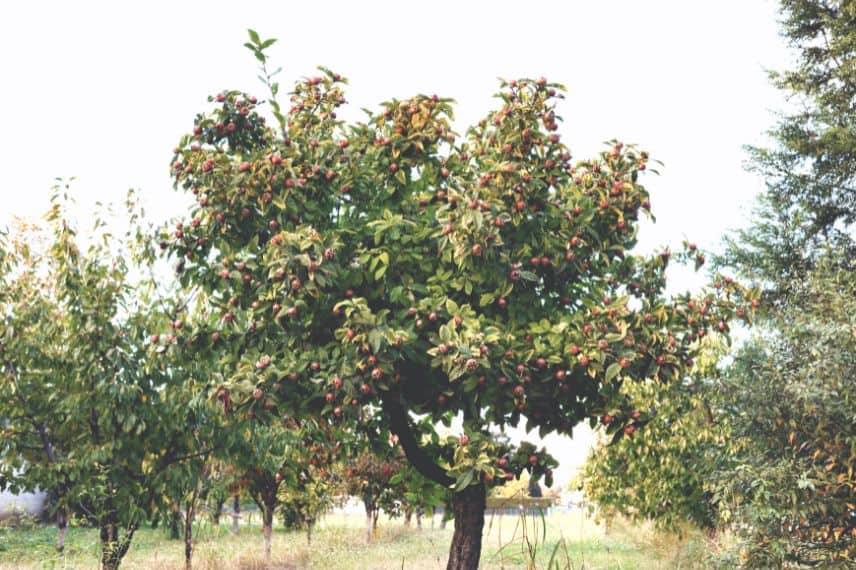
Originating in Asia, the loquat, or Eriobotrya japonica, is a fruit tree that appeals as much for its appearance as for its delicious fruits. With its evergreen, thick and glossy foliage, it provides year-round presence in the garden, even during the winter months. Its leaves, a deep green, contrast nicely with its white fragrant flowers that appear in autumn. Its spreading habit reaches 4–5 m in width and 6 m in height, making it a perfect tree for shading a terrace or a pool.
But the main appeal of the loquat lies in its fruits, the loquats, which ripen in winter and in early spring. These fruits, with a soft and sweet flesh, can be eaten fresh or turned into jams and compotes. Hardy down to -9°C, the loquat adapts particularly well to mild-climate regions, notably along the Atlantic and Mediterranean coasts. It prefers sunny spots sheltered from strong winds, in well-drained soil.
→ For more information on this graceful tree, read our guide on the Japanese loquat: planting, growing, harvesting.
Ball Maple, for its ease of cultivation
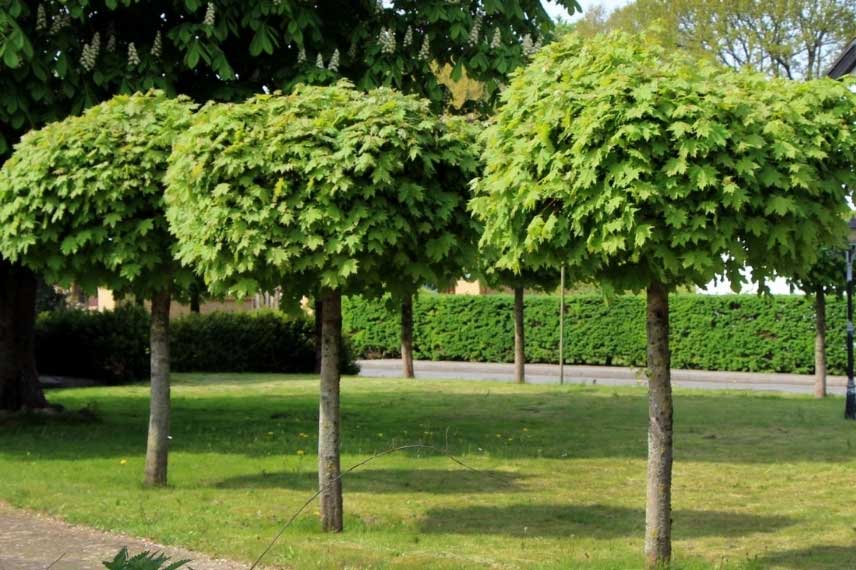
With its naturally rounded habit, the globe maple (Acer platanoides ‘Globosum’) is a compact variation of traditional maples. Its elegant silhouette and its modest size (8 m tall by 6 m wide) make it the ideal choice for shading terraces and small gardens. Its deciduous and dense foliage provides a refreshing shade, while creating an intimate and welcoming atmosphere. As the seasons progress, this foliage evolves, shifting from soft green in spring to fiery colours in autumn.
But the globe maple is not only a feast for the eyes. It is also prized for its excellent hardiness down to -34°C, its robustness and ease of care. Well-suited to rich, deep, slightly damp but well-drained soils, even calcareous ones, it accepts sun that is not scorching or partial shade. Once established, it will withstand even summer drought.
→ To learn more about this graceful tree, read our page on the Maples: planting, pruning and care
- Subscribe!
- Contents

Comments