





























7 trees with variegated foliage for a dazzling garden
Selection of species with decorative, colourful and original foliage
Contents
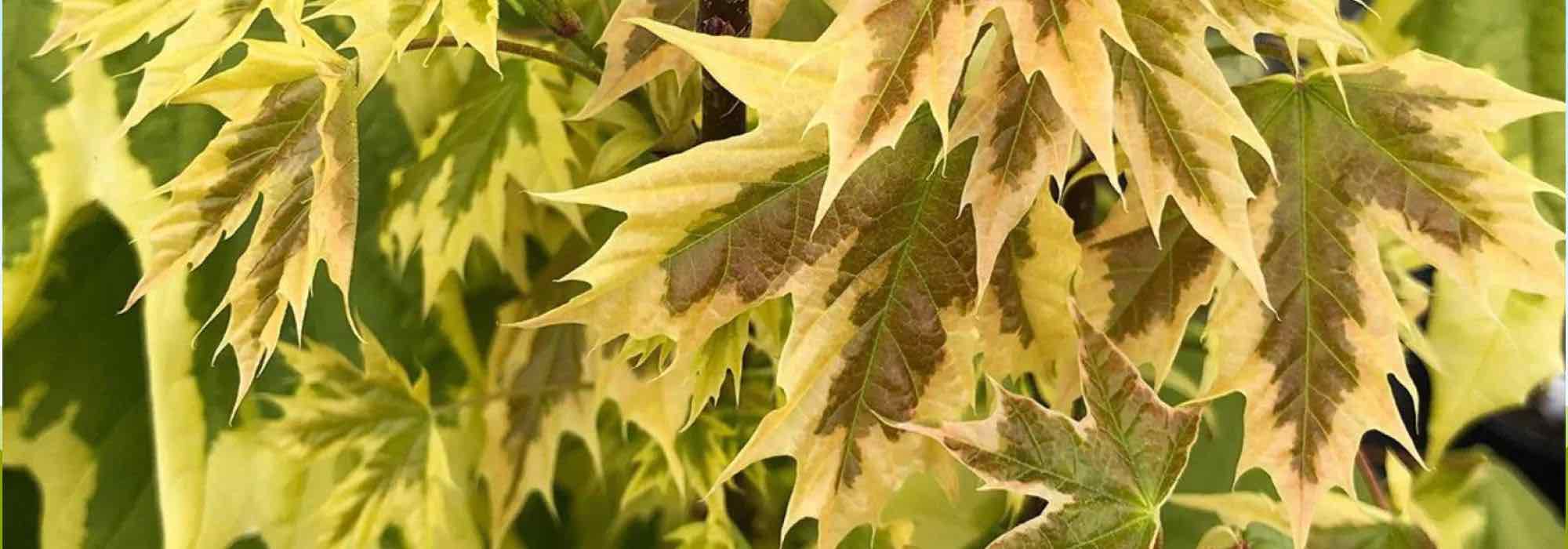
When it comes to plants, foliage can be very varied: finely cut, tough, evolving, scented, coloured, etc. For their part, variegated-leaved trees have no equal for bringing light, visual impact, and even extravagance to the garden. There are marginate, speckled, splashed, bi-coloured or multicoloured varieties.
This kind of natural variegation allows them to depart from the usual green foliage and create depth. While it’s best to use them sparingly, a well-chosen specimen can easily attract the eye and enhance the surrounding plants, in perfect harmony.
Discover, for this purpose, our selection of seven highly ornamental variegated-leaved trees.

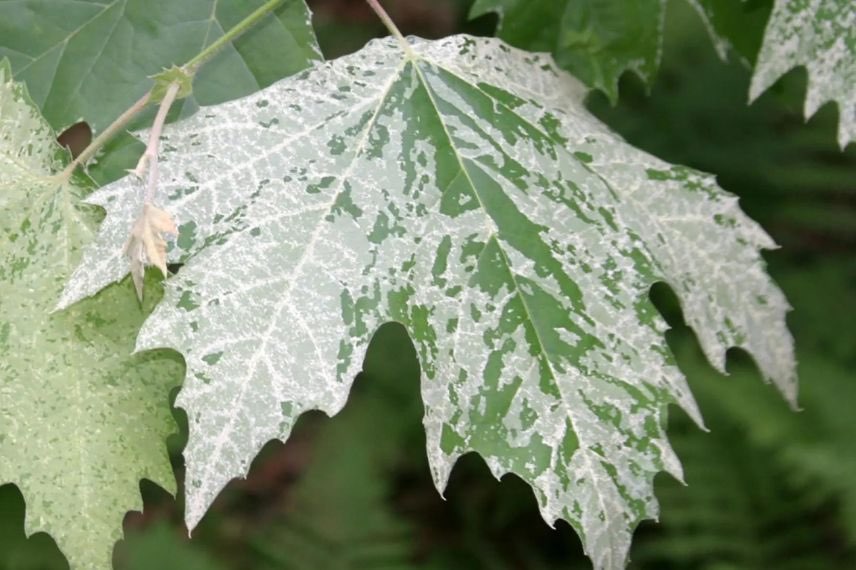
The variegated plane tree - Platanus x hispanica ‘Suttneri’
The variegated plane tree (Platanus x hispanica ‘Suttneri’) has maple-like leaves with striking, evolving colours. The young leaves initially display tones ranging from a pink-tinged green to pale green, before developing their characteristic marbling during the summer. They then reveal a green speckled with cream-white, which adds a lot of light. In autumn they turn yellow, then brown, before falling. Côté form, elles are lobed with pointed lobes, adding a touch of graphic flair.
Among its other ornamental qualities, we note its bark that peels in broad plates. Spring flowering consists of globose heads of yellowish-green. This flowering gives way to fruiting in the form of fluffy pom-poms, which remain on the tree for a long time.
This variety of plane tree has a more modest silhouette than the species proper. It will slowly reach about twelve metres in height with around 10 metres of spread.
This plane tree will be planted as a specimen in a medium-sized garden. It will be ideal for shielding from the scorching sun in summer, thanks to its spreading habit and oval crown.
Plant this variegated tree in full sun. It is hardy and will grow in all types of sufficiently deep soils, including calcareous and clay soils. It tolerates summer drought, as well as pollution, and is hardy to around -20°C. It is a long-lived tree that can reach several hundred years.
For more information: Plane tree: planting, pruning and care
The variegated ash - Fraxinus angustifolia 'Variegata'
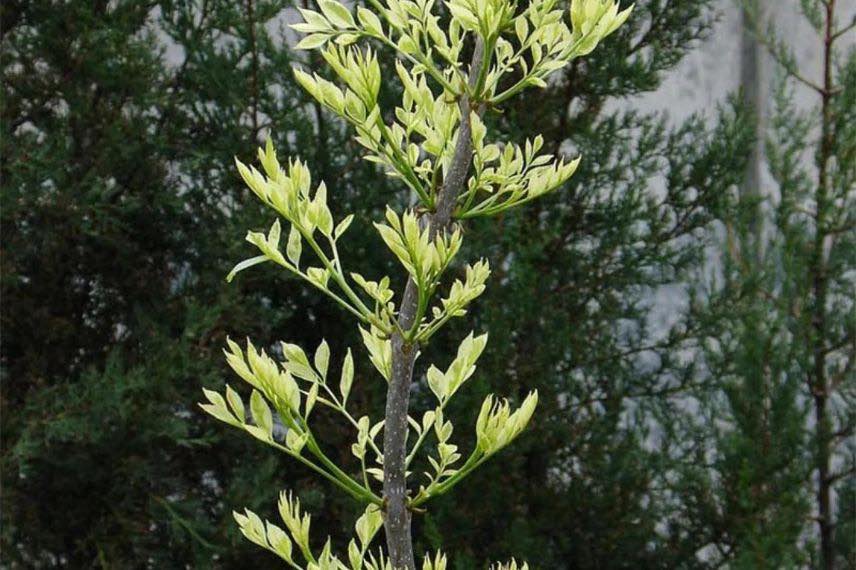
Variegated ash (Fraxinus angustifolia) is a small ornamental tree that grows slowly. In ten years, it will reach around 3 metres in height. But its mature size will ultimately be about 10 metres tall with a 6–7 metre spread.
It produces very fine, narrow and lanceolate foliage, nicely variegated. The laminae are green, maculated with white and cream, which provides a great deal of brightness. In autumn, the foliage takes on vibrant red and coppery huesto warm the atmosphere.
Spring flowering consists of cream-yellow panicles that appear even before the foliage returns to dress the tree. Small dry fruits with two wings (samaras) will follow.
Its silhouette consists of a straight, vertical trunk bearing a rounded crown, which will act as a natural parasol during the hot season.
This ash will thrive in full sun or partial shade. Not fussy, it will thrive in all types of deep and moist soils (which never dry out completely). Hardy, it will tolerate frosts down to -20°C.
For more information: Ash: planting, pruning, and care
Variegated maple - Acer platanoides ‘Drummondii’
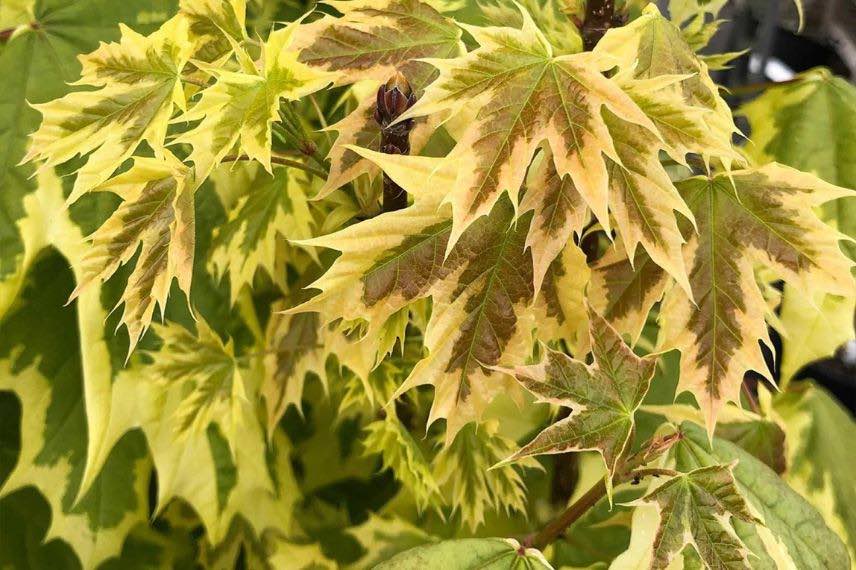
Acer platanoides ‘Drummondii’ is a decorative-leaved maple variety. It rewards us with leaves in the typical maple shape, deeply palmately lobed with pointed and dentate lobes. They are initially tinged pink, and their distinctiveness lies in their variegation: green margins edged with cream-white. In autumn, they take on coppery hues.
The discreet early-spring flowering gives way to small winged fruits, but will require several years of patience.
Smaller than the typical species, it will reach 15 metres in height with an 8-metre spread. Its trunk bears a pyramidal crown, ideal for lounging in the shade during the summer.
Relatively undemanding, it mainly requires a deep, organic-rich soil that remains cool. A sunny, not scorching exposure will favour the colours of the variegated foliage. Its hardiness beyond -30°C allows it to be grown even in our regions with cold montane climates.
For more information: Maples: planting, pruning and care
Variegated birch - Betula nigra ‘Shiloh Splash’
Black birch ‘Shiloh Splash’ graces us with highly ornamental foliage. It is a relatively uncommon species and deserves to be more widely known.
Its leaves are slender and dentate. Their colour is initially pink at bud burst period, before turning variegated green with cream. In autumn, they take on beautiful golden tones before shedding. This tree thus provides a display that renews itself with every season, never dull in the garden!
Its bark is also decorative: initially white with a silvery tint, it will peel away over time into undulating plates, revealing new glossy bronze-brown bark.
Flowering occurs in spring as small pendulous aments.
This birch has a slender, pyramidal silhouette that will reach about 9 metres in height with a 4–5 metre spread after around ten years.
Resistant to cold as well as to diseases, this variegated tree is ideal for creating a bright focal point in partially shaded areas. It prefers cool, moist soils but will also tolerate occasional drought. A perfect candidate for heavy, clay soils that become waterlogged.
For more information: Birches: planting, pruning and maintenance
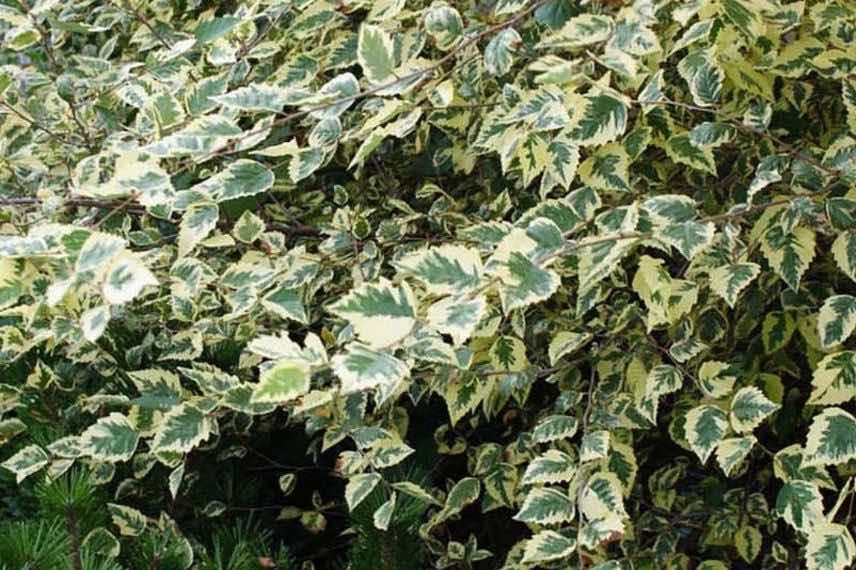
Variegated Davidia - Davidia involucrata ‘Lady Sunshine’
Davidia involucrata ‘Lady Sunshine’ is one of those rare trees, little known to the general public. The name of this variety aptly reflects the bright effect it can bring to the garden. Thanks to its variegated foliage, green edged with cream-yellow, it stands out from the standard species. The leaves will revert to a more common green colour during the summer, before turning golden in autumn. They are heart-shaped, with slightly dentate margins.
This variety also features an astonishing, highly ornamental and long-lasting flowering. In mid-spring, between April and May, this tree indeed produces large pendulous white bracts of 15 cm, surrounding a globose heart of stamens and coloured anthers. Uncommon, this light flowering, like fabric hung from the branches, explains the common name ‘handkerchief tree’. The flowering gives way to fruiting in the form of brown spheres.
It is a tree of unique aesthetics, worthy of being showcased in a large garden. At maturity, expect 12 metres in height with a 10-metre spread.
The handkerchief tree requires deep soil, rich in organic matter, but well-drained and kept moist. It will thrive in gentle sun or partial shade. ‘Lady Sunshine’ is tolerant of calcareous soil and frosts down to -15°C.
For more information: Handkerchief tree, Davidia: planting, pruning and care
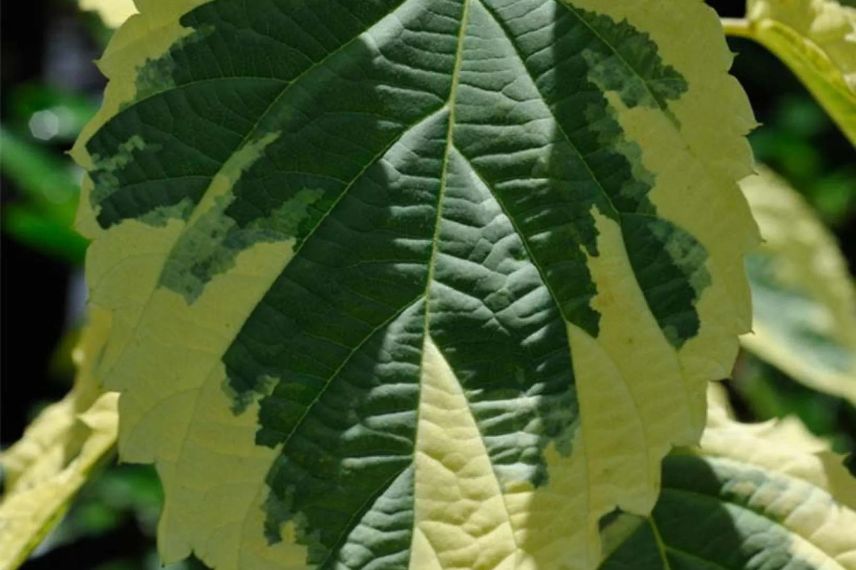
Variegated elm – Ulmus minor ‘Argenteovariegata’
The field elm ‘Argenteovariegata’ is a large tree with variegated foliage. It will be suitable for large gardens, which can accommodate its height of over 20 metres and a 15-metre spread. It will be ideal for providing shade during the summer months.
‘Argenteovariegata’ has dense foliage with green beautifully marbled with white. This irregular variegation can sometimes produce leaves that are almost entirely white.
The autumn then brings golden hues to the foliage, which will further enhance its bright appearance.
Early spring flowering is discreet. It appears on bare shoots in the form of small clusters of red flowers. Winged fruits (samaras) occasionally follow this flowering.
This elm will tolerate full sun or partial shade, in non-acid soils, including heavy calcareous soils. It prefers moist soils, but will be able to withstand greater drought once established.
Hardy to -25°C, it can be grown across a large part of our territory.
Further reading: Elm, Ulmus: planting, pruning and care
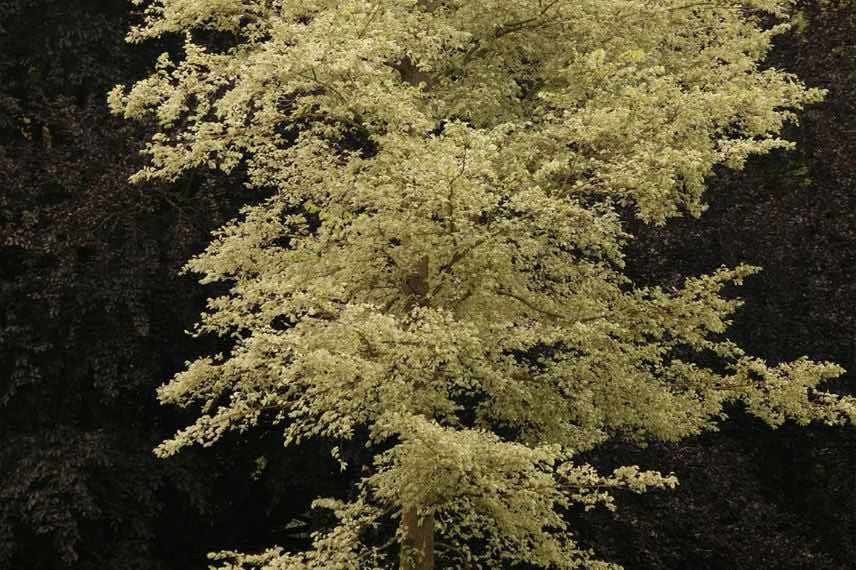
Variegated Virginia tulip-tree – Liriodendron tulipifera 'Aureomarginatum'
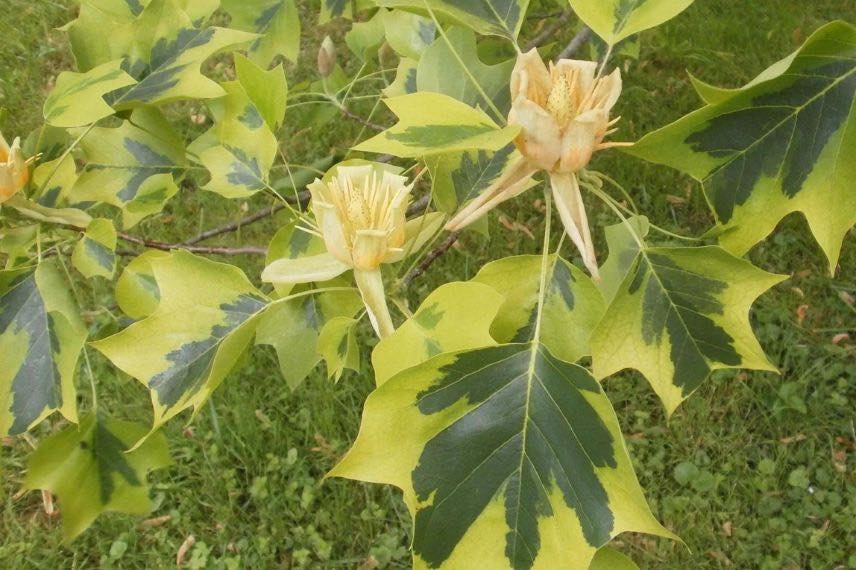
It is a Virginian tulip tree notable for its leaves, a vivid green with yellow margins. In autumn, it displays fiery hues, bearing a warm golden-orange.
This variegated foliage is not its only ornamental asset. This Virginian tulip tree also delights with a striking and fragrant flowering. From May to July, it bears 10 cm cup-shaped flowers, green with a pale yellow tinge, highlighted by an orange base. Their shape, reminiscent of tulips, explains the name given to this handsome tree. In terms of fragrance, they emit very fresh lemon notes. However, flowering occurs on plants aged eight years.
Its columnar silhouette will reach at least 15 metres in height with a 7 metre spread at maturity. Plan donc a generous space to accommodate it in the garden.
In cultivation, it is very hardy. This tree will thrive in fairly rich and cool, deep and well-drained soil, in a sunny position.
For more information: Virginian tulip tree, Liriodendron: planting and care
- Subscribe!
- Contents
Comments