


9 easy perennials for beginners
The best plants for novice gardeners!
Contents
Beginner and inexperienced gardeners are logically on the lookout for plants that are easy to grow, can thrive in almost any location, and require little to no maintenance. Compiling a list of such plants is no easy task, given the abundance of trouble-free perennials that promise beginners encouraging and rewarding results. Whether you have a sunny garden or a shadier spot, dry soil or cooler conditions, harsh winters or milder ones, I have prepared a small selection of 9 of the easiest

Hardy geranium, for all situations
Hardy geraniums are highly adaptable, hardy, floriferous, and very easy to grow. Available in various shades, they also require little maintenance and are not very susceptible to diseases. Among the many species and cultivars, the very popular Geranium ‘Rozanne’ stands out with its endless blue flowering and thrives in both sunny and partially shaded areas. The Geranium macrorrhizum and Geranium nodosum are unbeatable in rather shady areas, even among tree roots, where they form generous groundcover and provide lovely blooms. Wetter locations can accommodate a Geranium maculatum, while in dry, stony soil, the Geranium sanguineum feels right at home. In short, these are very accommodating perennials accessible to any gardener creating their first flower beds!
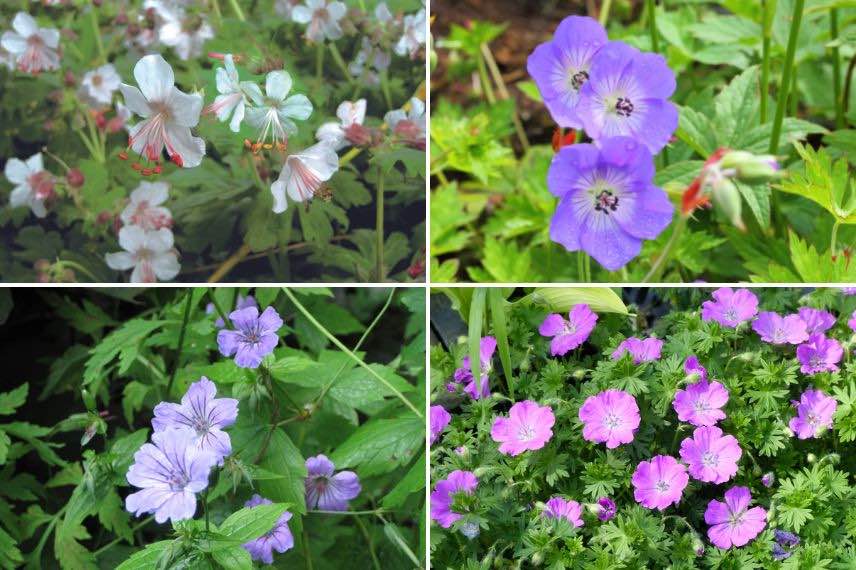
Geranium macrorrhizum ‘Spessart’, Geranium ‘Rozanne’, Geranium nodosum, and Geranium sanguineum
Kalimeris, a must-see!
Close cousin of asters, Kalimeris offers, it is true, a narrower range of colours, but it remains a perennial that every novice gardener should be eager to incorporate into their garden. Measuring between 40 and 80 cm tall, its small star-shaped flowers bloom continuously from late spring to autumn. White (Kalimeris ‘Madiva’), mauve (‘Antonia’) or blue (‘Blue Star’), they are borne on numerous upright stems that are undisturbed by anything. Hardy and never diseased, Kalimeris thickens over time, and is indifferent to exposure and soil, as long as it is not waterlogged in winter. Very drought-resistant, it brightens up any border, bringing a sense of naturalness and lightness.
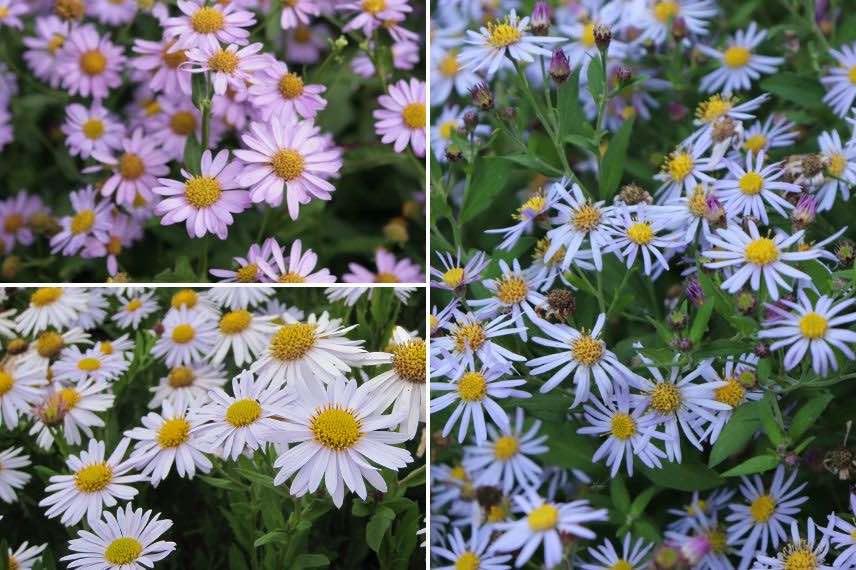
Kalimeris ‘Madiva’, ‘Antonia’ and ‘Blue Stars’
Discover other Perennials
View all →
Available in 0 sizes
Available in 0 sizes
Available in 0 sizes
Available in 1 sizes
Available in 1 sizes
Available in 1 sizes
Available in 1 sizes
Available in 1 sizes
Available in 2 sizes
Available in 1 sizes
Creeping bugle, a groundcover for cool soil
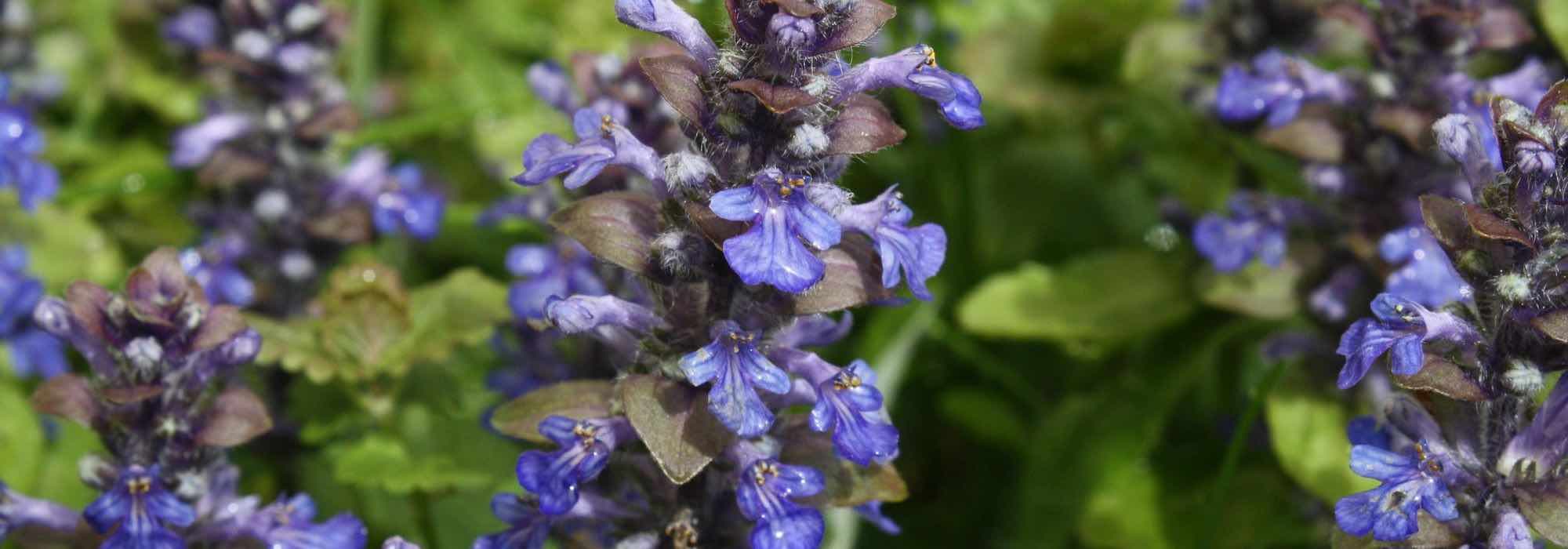
The Ajuga is an excellent groundcover with no fuss. Growing to a height of 15 to 30 cm depending on the variety, its evergreen foliage in green, bronze, gold, or variegated forms spreads into a dense carpet that significantly reduces weeding. From spring to summer, numerous spikes in white, pink, or blue rise above the foliage, creating a colourful and cheerful display. Very hardy and low-maintenance, beginner gardeners can enjoy all its benefits in cool to moist soil, in shade or in non-scorching sun. However, avoid exposing it to overly hot and dry climates, as well as intense sunlight. If you only have a lightly shaded balcony, feel free to grow it in a pot, the edges of which will quickly and elegantly be concealed by its trailing foliage.
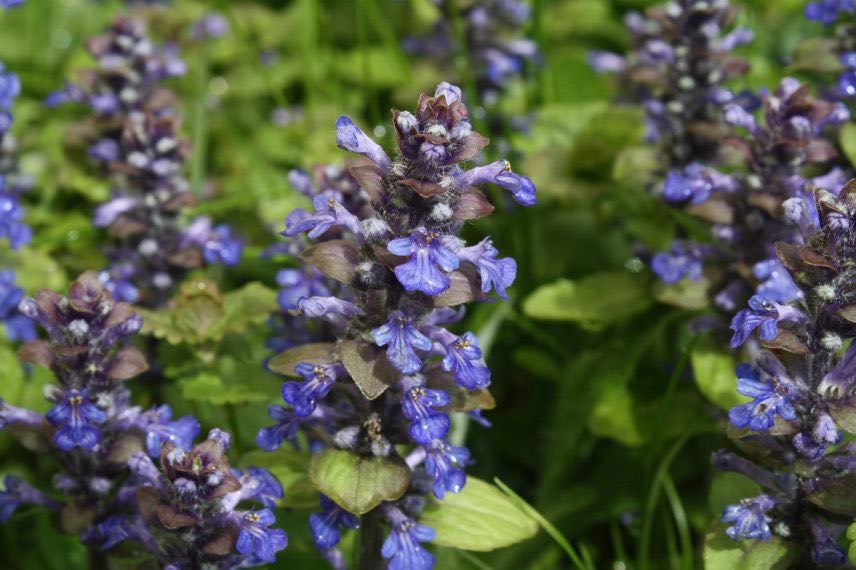
Ajuga
Bergenia, beautiful even in winter
Another groundcover for novice gardeners, the Bergenia, or Elephant’s Ears, is a perennial that has proven itself well. Valued for its large evergreen foliage in shades of green ranging from light to dark, its presence is notable even in the heart of winter, when it takes on a purplish hue due to the cold. From early spring to early summer, depending on the varieties, its bell-shaped flowers stand out well above the foliage. Pure white or slightly tinged with green, pale pink to darker shades, this flowering brightens any border in the garden. With an insolent hardiness, low maintenance, and free from disease, this easy-to-grow perennial thrives particularly well in partial shade, in well-drained soil, even if poor, but that remains slightly moist. Growing to an average height of about twenty centimetres, the Bergenia eventually forms a dense carpet that leaves little chance for unwanted herbs. Just avoid overly hot and dry conditions.
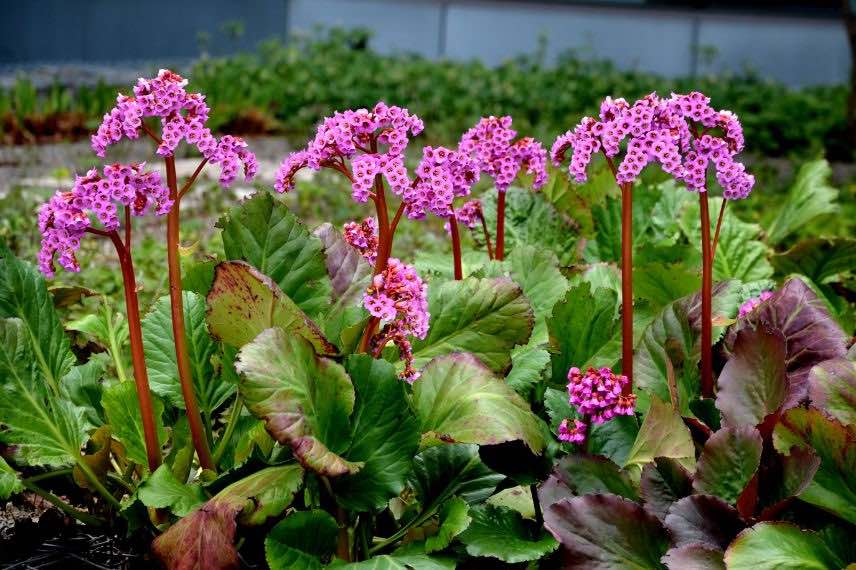
The bergenia
The Fleabane, months of flowers with no effort
Every gardener, even those with little experience, should have a few clumps of Fleabanes, also known as Erigeron, in their garden. The most well-known species is Erigeron karvinskianus, which forms clumps 20 to 40 cm in all directions, and its flowering of small white to pink daisies delights us for 6 months, from May to October, sometimes even longer! Other species and varieties offer bolder colours, such as lavender blue, pink, or purple. Ranging from 10 to 60 cm in height depending on the variety, this perennial is perfect for flowering walls, rockeries, the edges of paths and stairs, as well as more elaborate flower beds. It thrives in full sun and is quite drought-resistant while being relatively hardy. It adapts to all types of soil, even if it is calcareous and shallow.
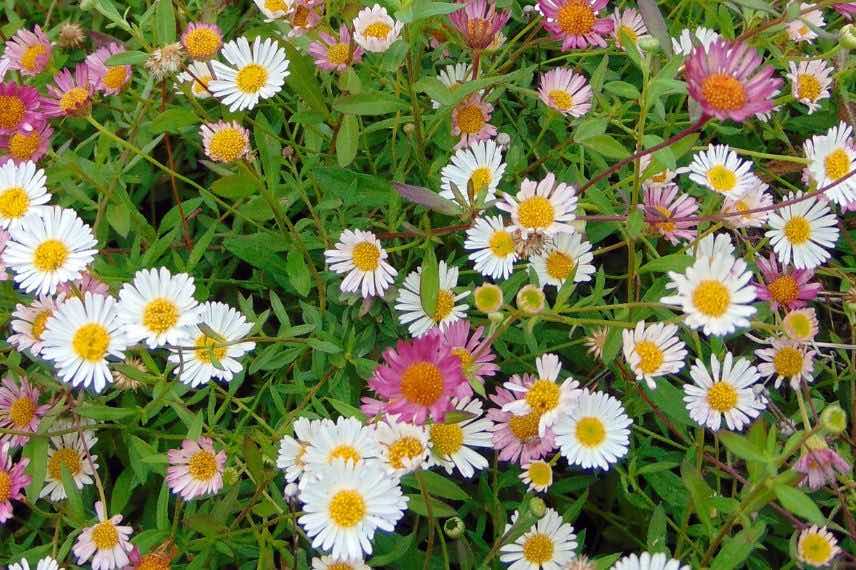
Erigeron karvinskianus
Carex, for low-maintenance graphic borders
The Carex, or sedge, is a perennial often classified among grasses. Reaching an average height of 20 to 50 cm, it is a plant with a more or less rounded habit. With variable hardiness, some species such as Carex buchananii and Carex flagellifera are more suited to milder regions, but the majority of other Carex are perfectly adapted to cold. These perennials are primarily grown for their foliage, which is often evergreen, offering a wide range of colours: golden yellow, blue, silver grey, orange, not to mention the many varieties with different shades of green and those with bright variegations. All these colours allow for the creation of stunning borders, decorative all year round, with minimal maintenance. Not suffering from either diseases or pests, Carex adapts to all exposures. More comfortable in soil that remains cool in summer, it also shows good drought resistance. Grow it in beds or even in pots to add a graphic touch to a terrace.
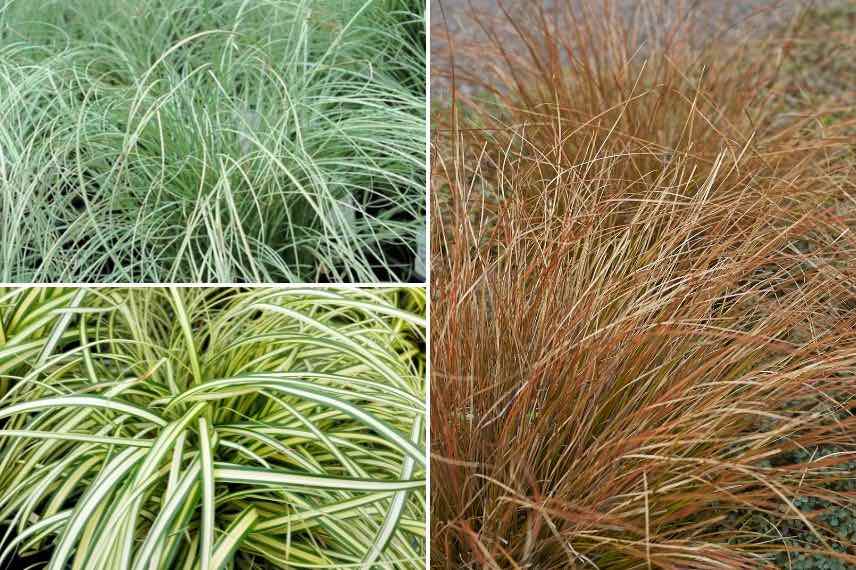
Carex ‘Frosted Curls’, Carex oshimensis ‘Evergold’ and Carex buchananii on the right
Aster, stars in your eyes...
Ruler of autumn, the Aster brightens up borders at the end of the season. With a very generous flowering, this deciduous perennial is available in various sizes and habits. From the giant species, capable of reaching over 1.5 m in height to low and compact varieties, Aster lends itself to multiple uses. Background planting, borders, rockeries, pots… there is one for every configuration. Their small flowers are like daisies in attractive and varied colours, ranging from pure white to deep blue, with various shades of mauve, pink, red, purple, or violet, and there are even yellow or green-tinged flowers. Well hardy, these perennials can naturalise to form beautiful carpets. They thrive in ordinary soil, preferably humus-bearing, in full sun or partial shade. Some species may be more susceptible to powdery mildew, especially in poorly ventilated situations. To minimise this risk, provide them with space, a cool and sunny soil, or opt for more resistant species like Aster novi-anglia.
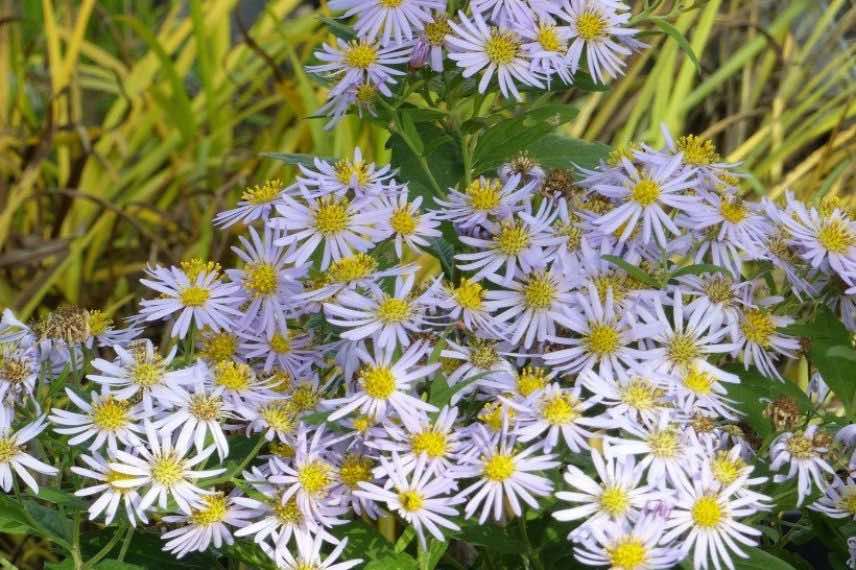
Aster ageratoides ‘Asran’
The Garden Cornflower, a timeless classic
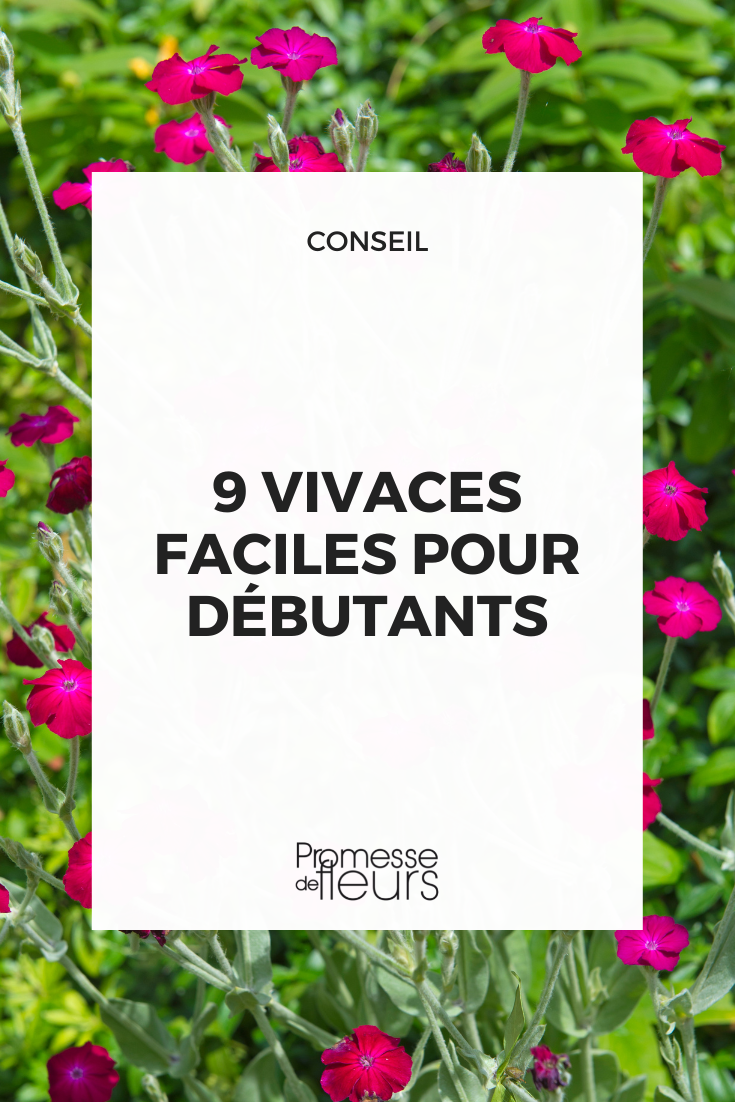
Short-lived perennial, the Garden Campion (Lychnis coronaria) is one of the plants suited for the beginner gardener… or the lazy one. Its extremely easy cultivation, lack of diseases and pests, good hardiness, and ability to thrive in a wide variety of soils make it an ideal choice for those who think they lack a green thumb. The grey, downy foliage, which persists in a low tuft during winter, develops in spring into long, ramified stems topped with numerous flowers in cheerful colours (magenta pink, carmine red) or more subdued (white). The Lychnis ‘Oculata’, with its pearly pinkish-white hues, is a marvel of refinement. Plant these beauties worry-free in full sun or possibly in partial shade, even in poor, stony, and dry soil, as they tolerate these conditions very well. While it may not live for very long, the Campion self-seeds readily, without becoming invasive. Remove unwanted plants, transplant them, or share them with others.
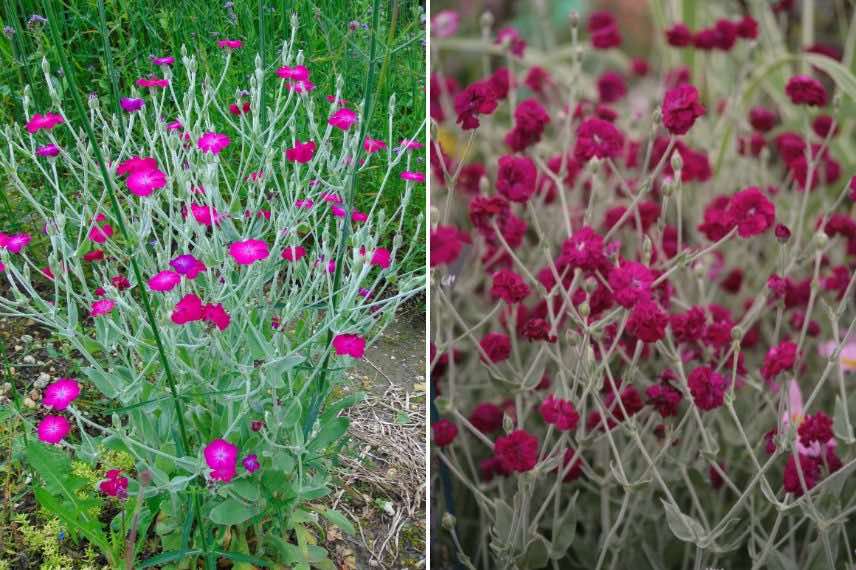
Lychnis coronaria and Lychnis coronaria ‘Gardener’s World’
Calamagrostis, a versatile grass
Ornamental grasses are among the easiest plants to grow, with maintenance often limited to an annual pruning at the end of winter. Among the most accommodating, Calamagrostis could top the list as it is capable of adapting to all kinds of growing conditions. Whether in heavy, clay soil or drier conditions, full sun or partial shade, this grass grows almost anywhere, especially since it is very hardy. With a rapid growth rate, Calamagrostis typically reaches heights of between 1 m and 1.5 m, offering a silhouette that is both upright and flexible. The decorative foliage can be solid green or variegated. It takes on beautiful golden hues at the end of the season and remains decorative throughout winter. The beige spikes are another of its assets, and Calamagrostis brachytricha is a particularly sought-after species for partial shade and fresh soil, known for its superb plumes. Planted in borders or used in groups to create a screen that shields from view, this grass offers nature, grace, movement, and lightness in a garden.
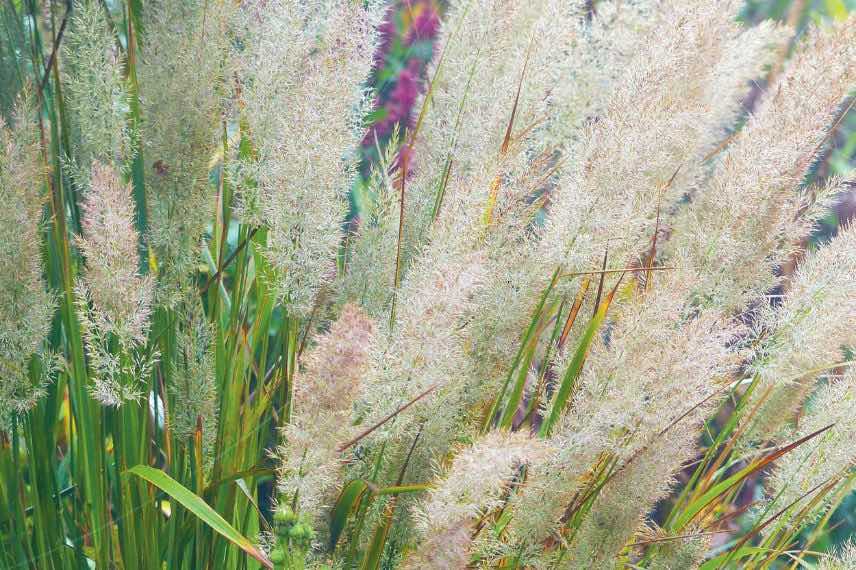
Calamagrostis brachytricha
- Subscribe!
- Contents
Comments