


Add a touch of originality to your garden with these 7 unusual roses
Our selection of roses for collectors and lovers of the unusual
Contents
In the vast world of roses, some varieties stand out for their unique and unusual character and captivate attention. Discover our selection of seven roses that are anything but ordinary. These rare and astonishing varieties, with unusual flowering, colours, unusually distinctive stems or novel fruits, promise to transform your garden into a space for discovery and wonder.

Cluster-flowered rose Greensleeves 'Harlenten'
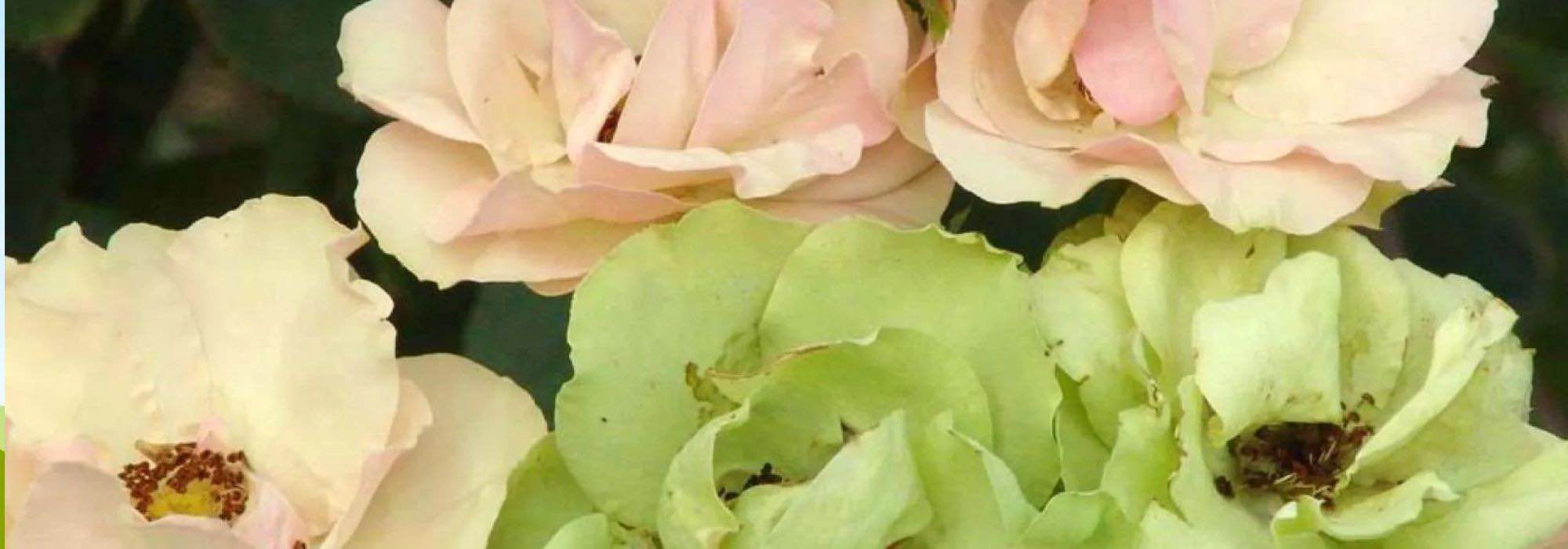
The Greensleeves floribunda rose stands out for its originality and rarity on the market, being virtually unavailable in France. Created by the English rosarian Darkness, it delights with its semi-double, delicate flowers in changing pastel colours, uncommon in roses. At the start of flowering, the petals display a tender old rose, evolving to a cream-white with pale yellow and chartreuse tinges, sometimes enhanced by pink-violet hints. This compact variety, forming a charming shrub 75 cm tall with a 1 m spread, flowers from June to October, and is fairly resistant to diseases and hot climates.
Read also
6 highly fragrant white rosesRosa roxburghii 'Lampion'
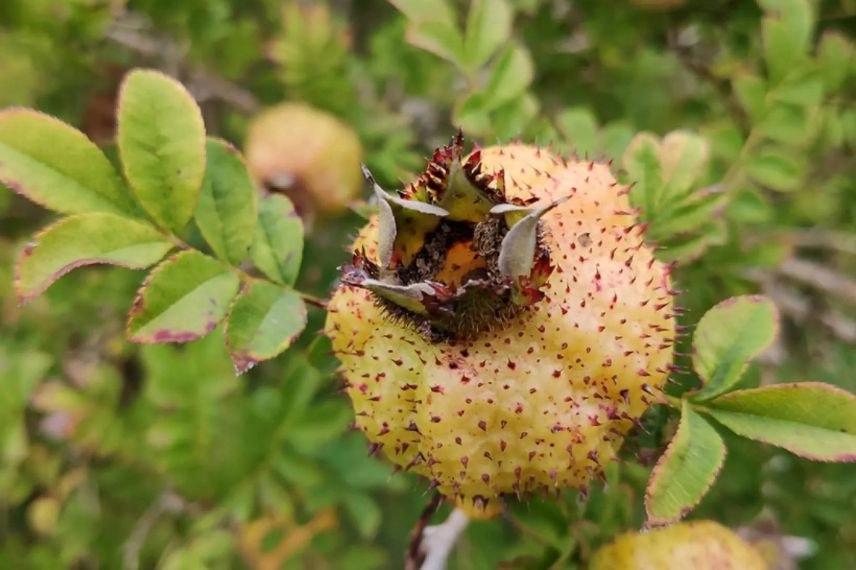
Hybrid of the chestnut rose, the Rosa roxburghii ‘Lampion’ stands out for long-lasting and striking fruiting. Selected by Lens Roses in Belgium in 2013, it offers decorative fruiting, a compact habit and repeat flowering with pale pink, silk-like blooms. Its finely divided foliage, its spiny, persistent hips and its bark that tends to exfoliate make it a remarkable addition to any cottage garden or defensive hedge, appealing to enthusiasts of plant curiosities.
Originating in China and Japan, the Rosa roxburghii grows naturally in mountainous environments. Its nickname of “Chestnut Rose” comes from its fruits that resemble chestnut burrs. ‘Lampion’ presents as a bushy, well-branched shrub, reaching 1.50–1.80 m in height with a 1.20 m spread, with light-green foliage maturing to a pine-green.
It flowers generously from late May to early July, then sporadically through to autumn, producing simple, lightly fragrant flowers in pale pink.
The fruits, large, spiny and persistent hips, turn yellow-orange in autumn, evoking lanterns and inspiring the name of the variety. In winter, the deciduous foliage gives way to an interesting structure.
Ideal for a wild garden or for fans of botanical roses, the Rosa roxburghii ‘Lampion’ tolerates dry, hot summers once established. It sits perfectly in flowering shrub borders or unpruned flowering hedges. It harmonises with other botanical roses, lilacs, mock oranges, Japanese quinces and offers robustness and reliability appreciated in tough soils or under demanding climates.
Old-fashioned rose 'Variegata di Bologna'
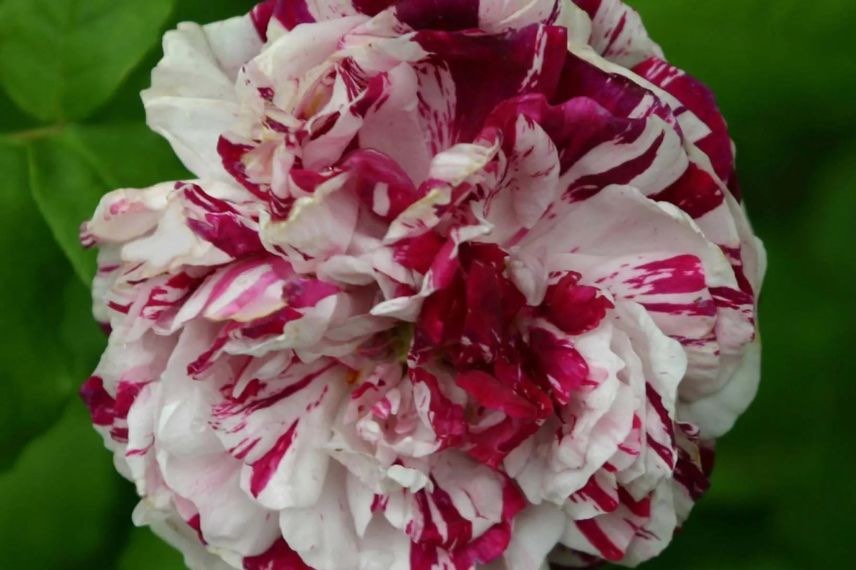
The Rose ‘Variegata di Bologna’, a treasure among antique roses, enchants gardens with its very double and variegated flowers—pink-tinged whites marked with crimson and violet-pink—and a lemongrass fragrance. It forms a tall, bushy shrub and can also be grown as a climber. It flowers mainly in June–July and, more discreetly, in autumn, bringing a touch of freshness and romance to the garden.
Mokarosa cluster-flowered rose
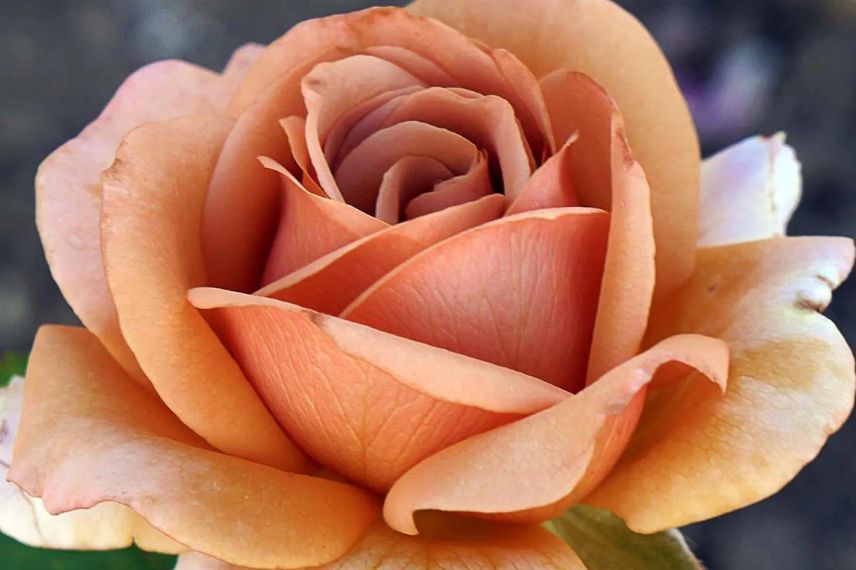
The Mokarosa® grouped-flower floribunda rose ‘Frywitty’ is a modern floribunda variety with exceptional and novel colours. Its blooms range from salmon-tinged old-rose to coffee-cream, around a moka centre, and mantle this compact shrub with nostalgic hues. Its fragrance is notable, subtle and fruity.
Rosa chinensis 'Viridiflora'
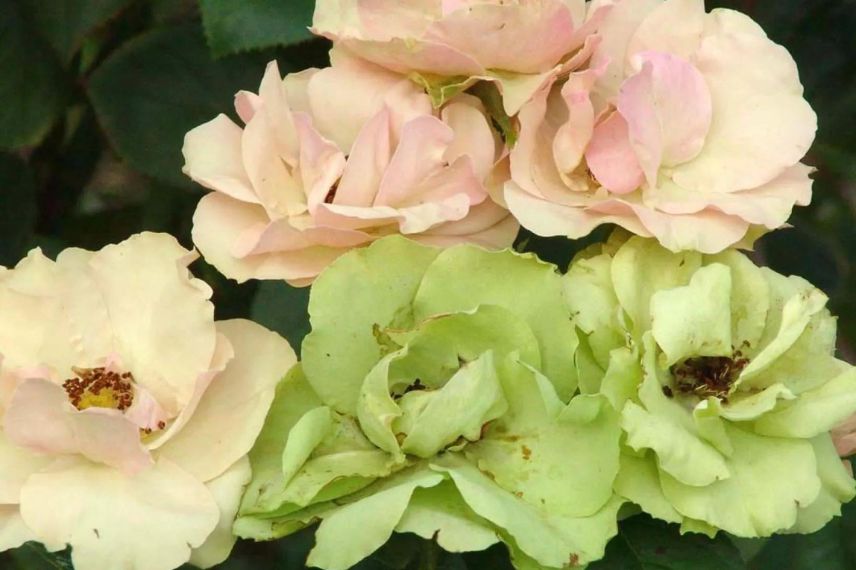
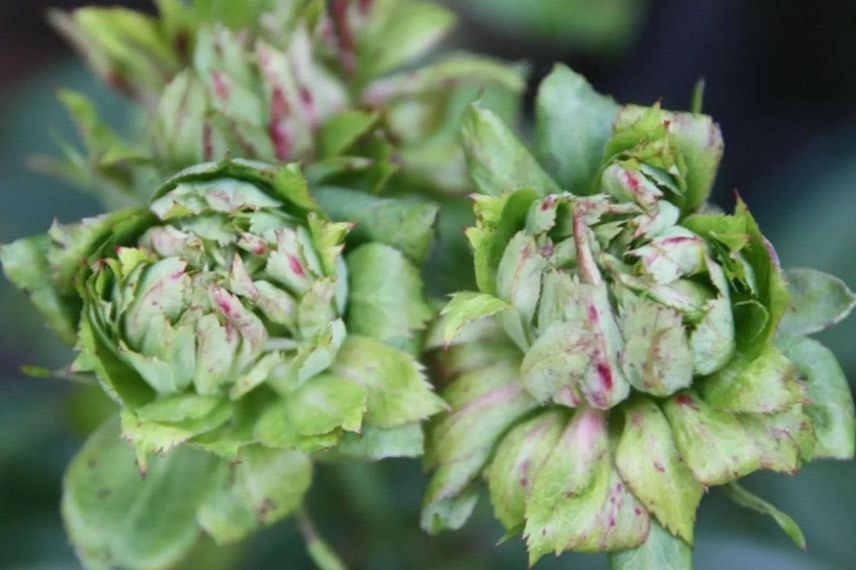
Rosa chinensis ‘Viridiflora’, known for its unique green flowers, is a botanical curiosity native to China, which arrived in England in 1743. This variety, arising from a spontaneous mutation, transformed the Bengal rose of the species into green pom-poms adorned with brown-red-rose hues. These flowers, which remain in bloom until the end of summer, emit a subtle peppery fragrance, surrounded by vibrant, healthy green foliage.
Rosa 'Hanabi' (climbing rose)
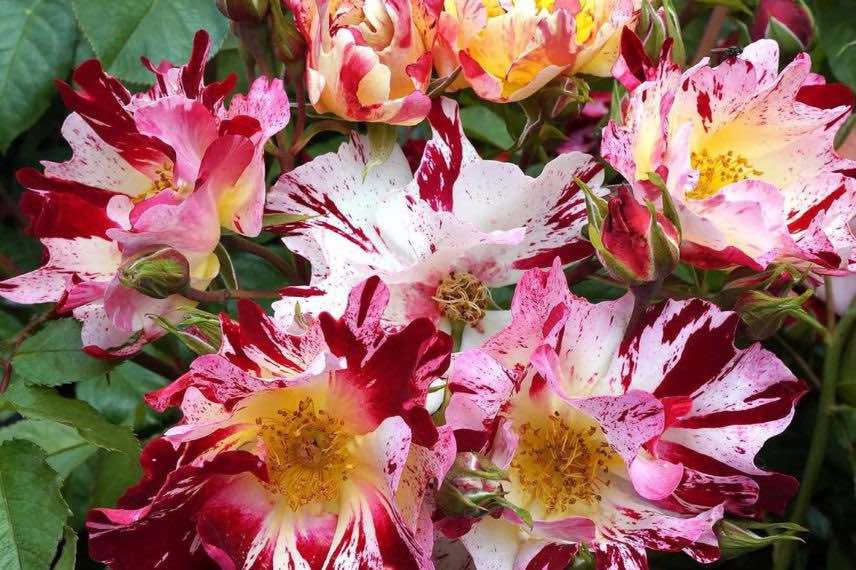
Hanabi® climbing rose is characterised by a truly spectacular appearance, offering from summer to autumn a fireworks display of colour with its flowers splashed with red and fuchsia pink on a white background, illuminated by a heart of yellow stamens. Its flowers, ranging from single to semi-double, open in tight clusters on glossy dark green foliage, creating a striking impressionist effect. Suitable for hard pruning, Hanabi® can also be grown as a bush, making it a versatile and captivating addition to any garden.
Rosa omeiensis pteracantha
Further reading
Also discover the following roses:
- Seven Sisters Rose, an ancient Chinese variety bearing blooms in a beautiful range of hues.
- Rosa rubiginosa with an apple-scented fragrance.
- Striped, bi-coloured or tri-coloured roses, and notably orange- and yellow-coloured flowers, such as ‘Oranges and Lemons’, ‘André Willemse’.
- Rosier ancien ‘Chapeau de Napoléon’ with buds curiously covered by a green, frilly calyx.
- Rosa glauca or rubrifolia with very attractive bluish foliage.
- Subscribe!
- Contents

Comments