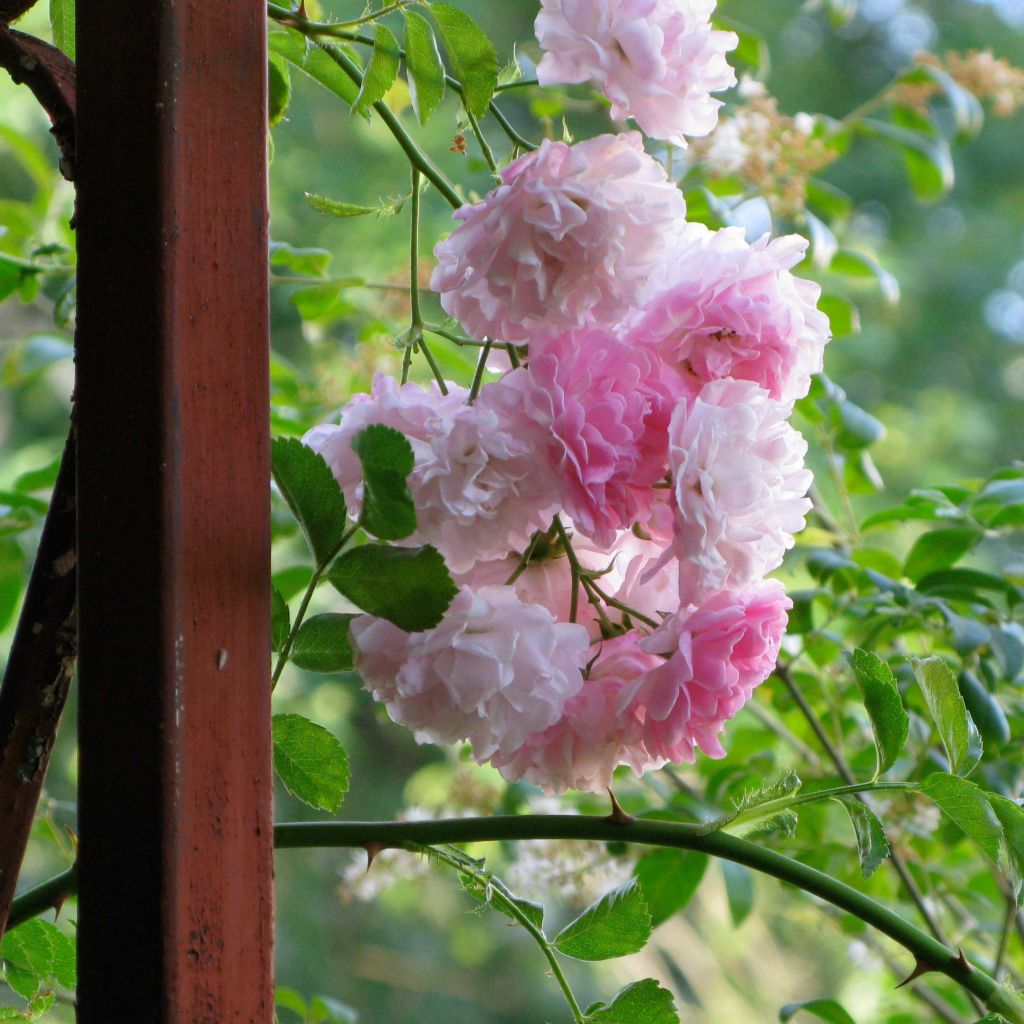
Rosa x multiflora 'Seven Sisters Rose'
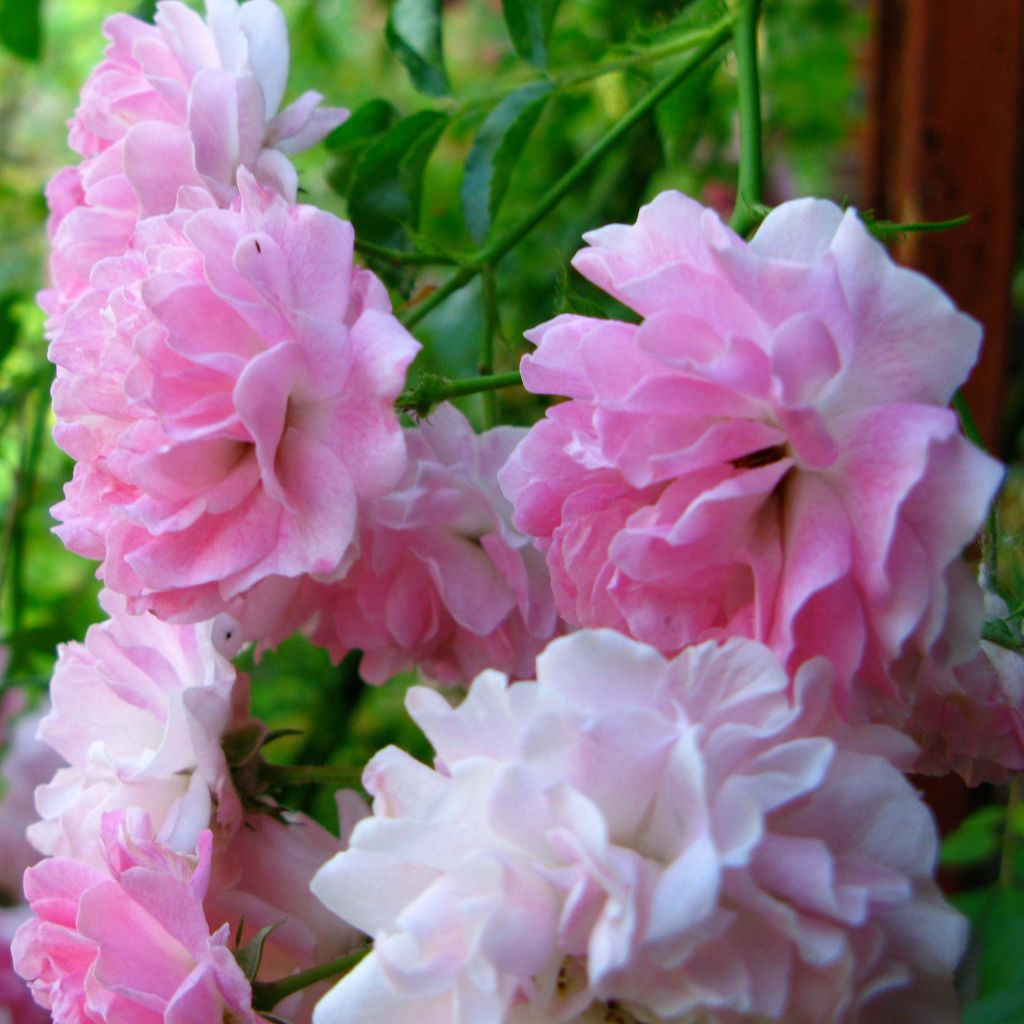
Rosa x multiflora 'Seven Sisters Rose'
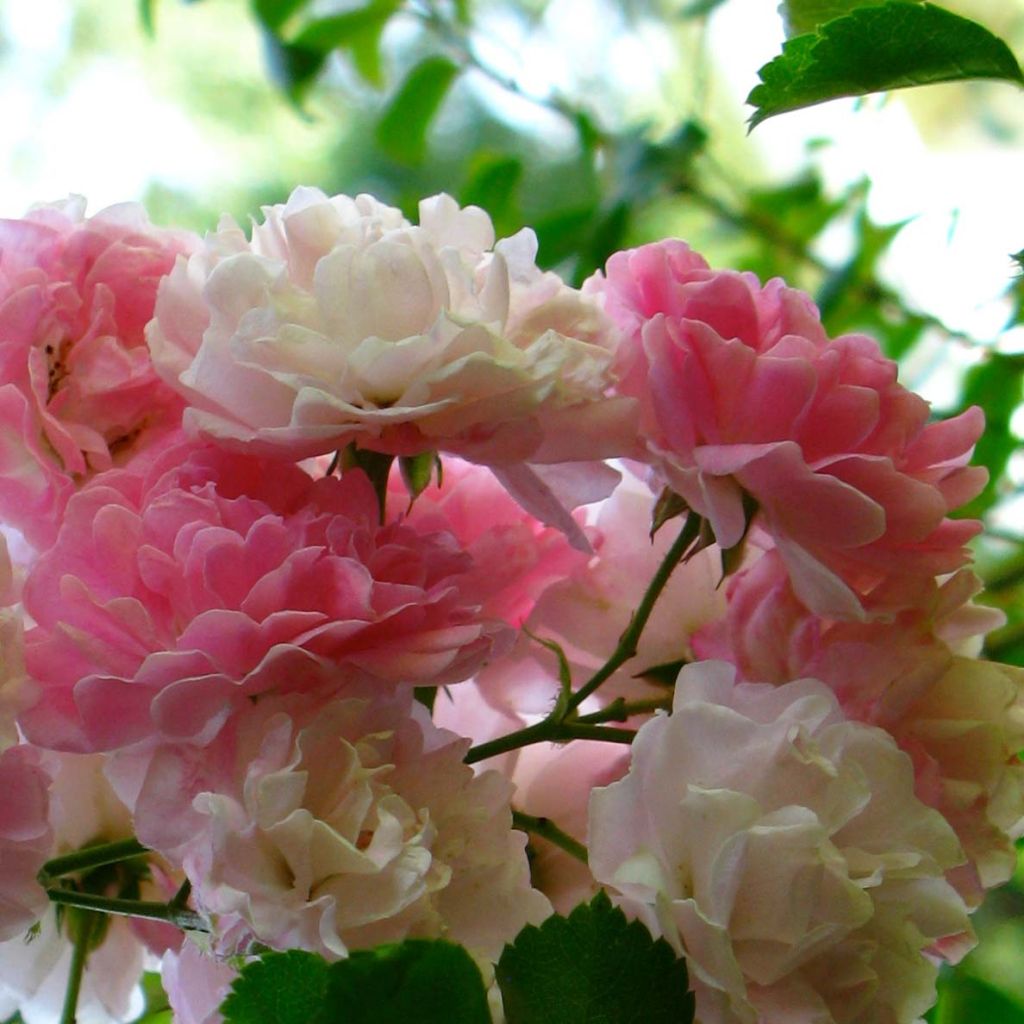
Rosa x multiflora 'Seven Sisters Rose'
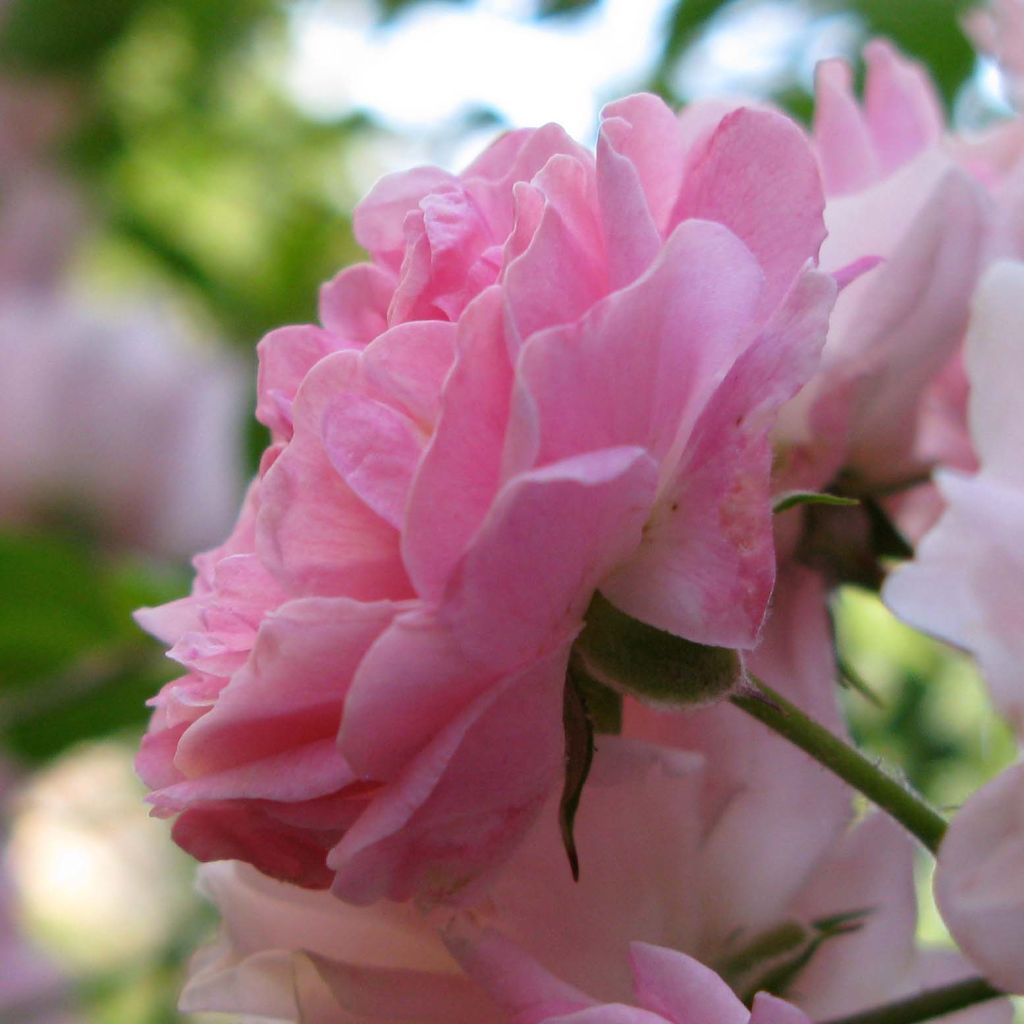
Rosa x multiflora 'Seven Sisters Rose'
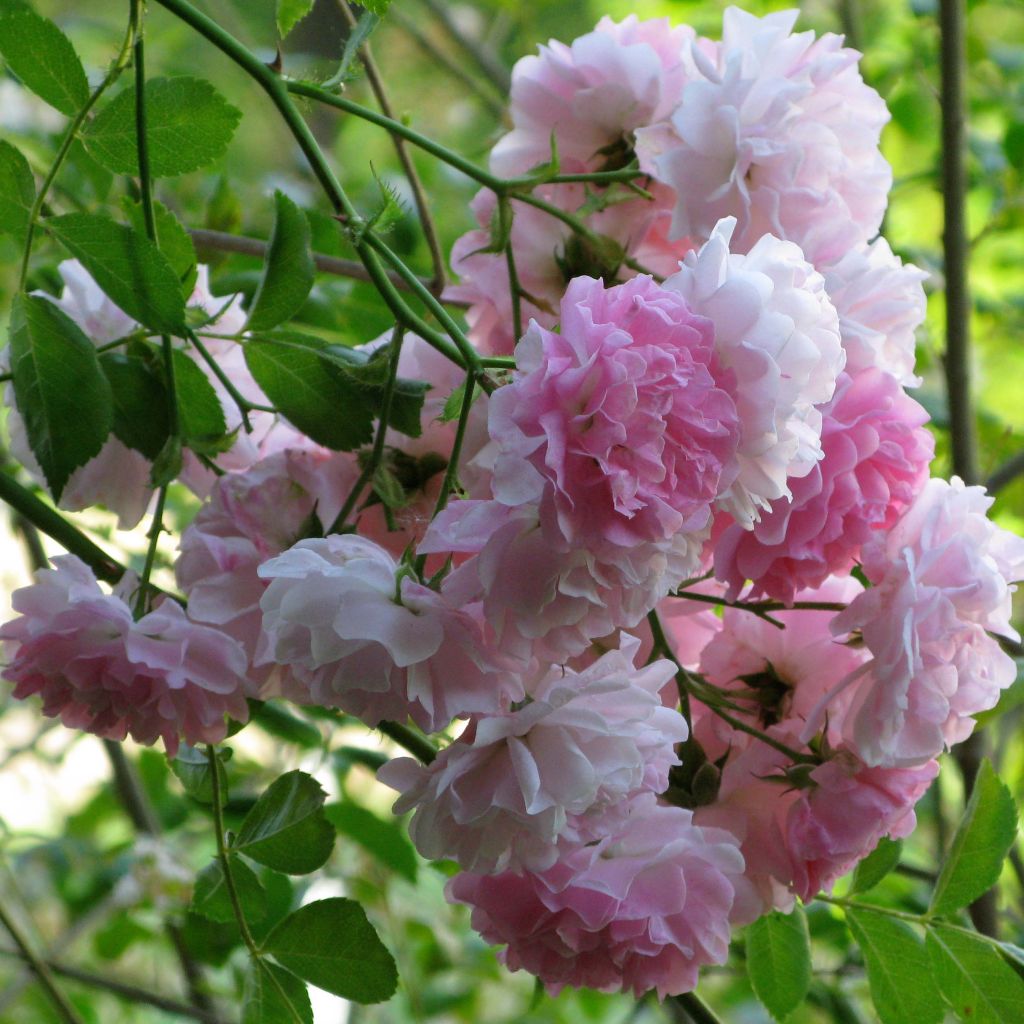
Rosa x multiflora 'Seven Sisters Rose'
Rosa x multiflora 'Seven Sisters Rose'
Rosa x multiflora Seven Sisters Rose
Multiflora Rose, Baby Rose, Japanese Rose, Many-flowered Rose, Seven-sisters Rose, Eijitsu Rose
Quick delivery, planted it and the rose bush got off to a good start; the buds are beautiful, ready to give their first flowers. I can't wait to see the rose bush at ripeness, when it covers the arch it is meant to climb.
ISABELLE, 05/03/2025
Back-to-school special offer!
Get €10 off for every €50 you spend! And get up to €40 off on a single order.
How does it work?
1. Shop your favourites
Add your favourite plants to your basket. For every €50 you spend (excluding delivery charges, store credit and the plastic-free option), you’ll receive a €10 voucher.
€50 spent = €10 voucher
€100 spent = €20 voucher
€150 spent = €30 voucher
€200 spent = €40 voucher
2. Place your order
Once your basket reaches one of the spending thresholds, place your order. You can even choose your delivery date!
3. Receive your voucher
As soon as your order has been shipped, you’ll receive an email containing your personal voucher code and its value.
4. Use it on your next order
Your voucher is valid for 90 days from the date you receive it. It can be used once only, on a new order worth at least the value of the voucher, excluding delivery charges.
Please note: Vouchers can be combined with other offers, but cannot be split or refunded.
Why not try an alternative variety in stock?
View all →
Available in 2 sizes
Available in 2 sizes
Available in 2 sizes
Available in 3 sizes

Available in 2 sizes
Available in 3 sizes
Available in 2 sizes

Available in 3 sizes

Available in 2 sizes
Available in 2 sizes
This plant carries a 24 months recovery warranty
More information
We guarantee the quality of our plants for a full growing cycle, and will replace at our expense any plant that fails to recover under normal climatic and planting conditions.

Description
The climbing rose 'Seven Sisters Rose' is an ancient Chinese variety, somewhat mythical, that has survived countless generations of rose enthusiasts. Its name sounds like the title of a beautiful tale featuring seven sisters, heroines of a world in shades of deep pink to almost white where the roses of this fading beauty change surprisingly. Indeed, one cannot choose only repeat-flowering roses: this one, capable of forming a large bush, has a unique, late but prolonged and fragrant flowering. It will forever mark a floral rendezvous not to be missed for anything in the world!
This exceptional climbing rose, sometimes called Rosa multiflora grevillei, has obscure origins. While it is sure that it descends from Rosa multiflora, a vigorous Asian rose often used as a rootstock, neither its breeder nor its native country is known. Presumably cultivated in China for a very long time, it passed through Japan, from where it reached us through Sir Charles Greville in 1817. Some botanists consider it to be the Rosa multiflora platyphylla, which resembles it greatly.
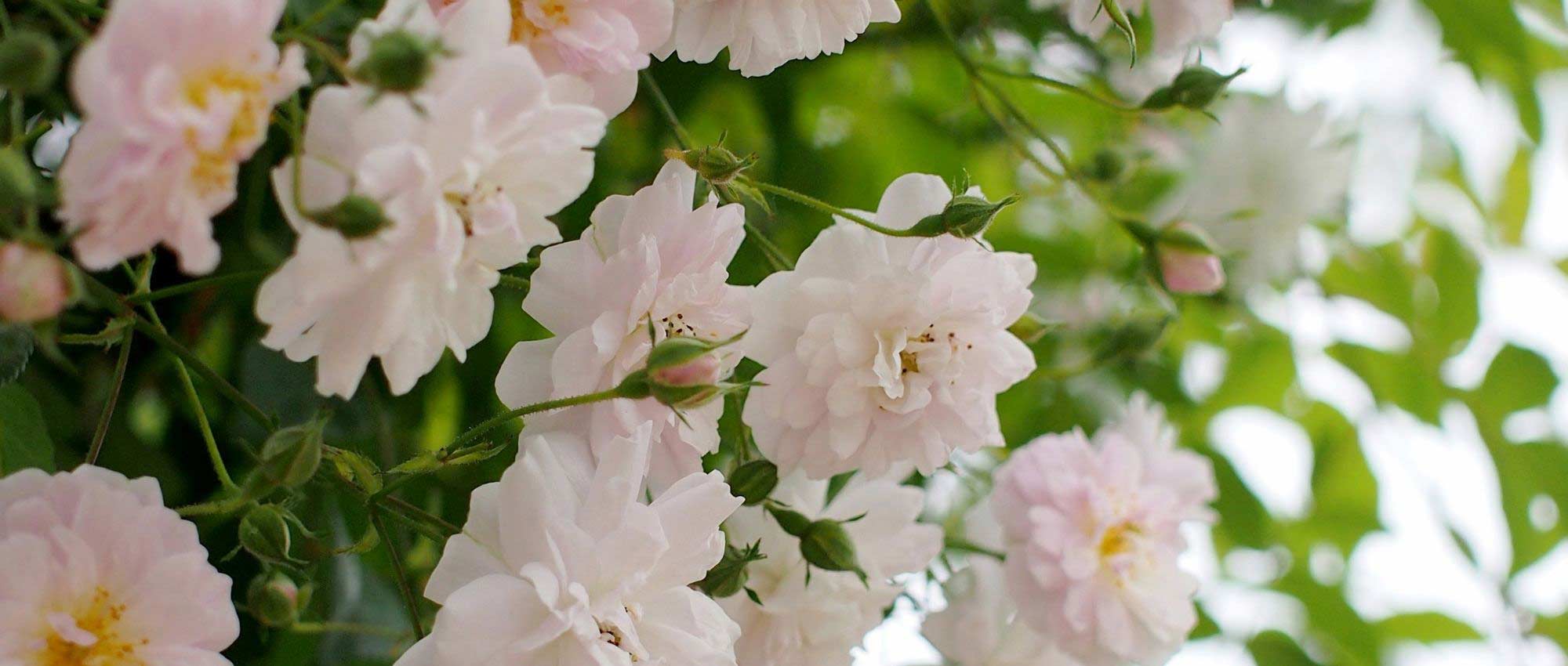
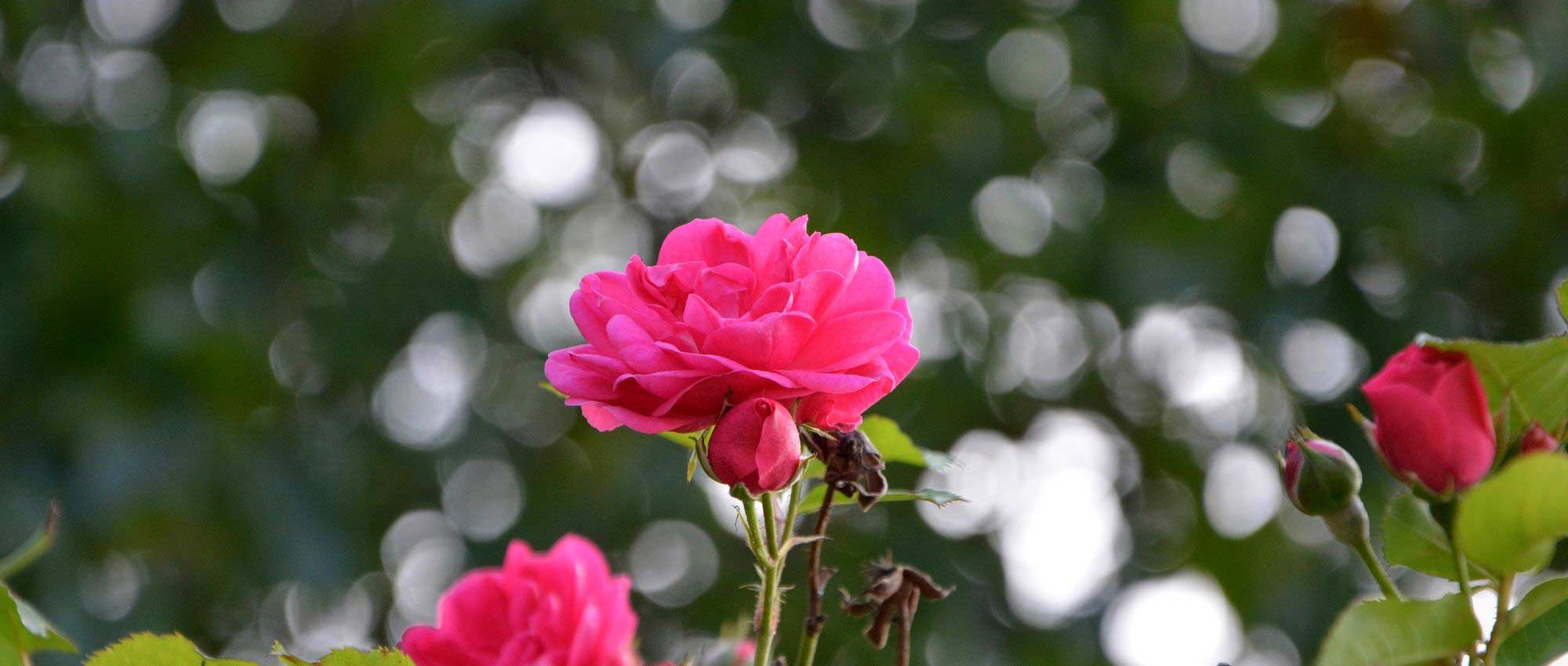
'Seven Sisters Rose' develops long, supple, arching woody climbing stems with few thorns, flexible enough to be trained. Its structure strengthens over the years, allowing it to grow as a large bush: it exhibits a loose and languid habit, most romantic. When grown as a climber, it will reach approximately 5 m in height with a minimum spread of 2 m (7ft). It can be maintained as a bush of 3-4 m (10-13ft) in all dimensions through appropriate pruning. Its foliage, divided into 5 to 7 thick and rough leaflets, is a fairly dark green with a matte appearance. Relatively resistant to diseases, it can be sensitive in excessively humid climates and confined situations. The roses of 'Seven Sisters Rose', well double, cup-shaped, with a diameter of 6 to 8 cm (2 to 3in), form in June-July and bloom for four weeks. They successively change from deep purple to bright medium pink, become soft pink, mauve, lilac-pink, almost ivory, sometimes retaining a few petals of deep pink. They are born on short shoots from the second year in generous clusters. Their fragrance, fresh and fruity, is delightful. Cuttings easily propagate this variety.
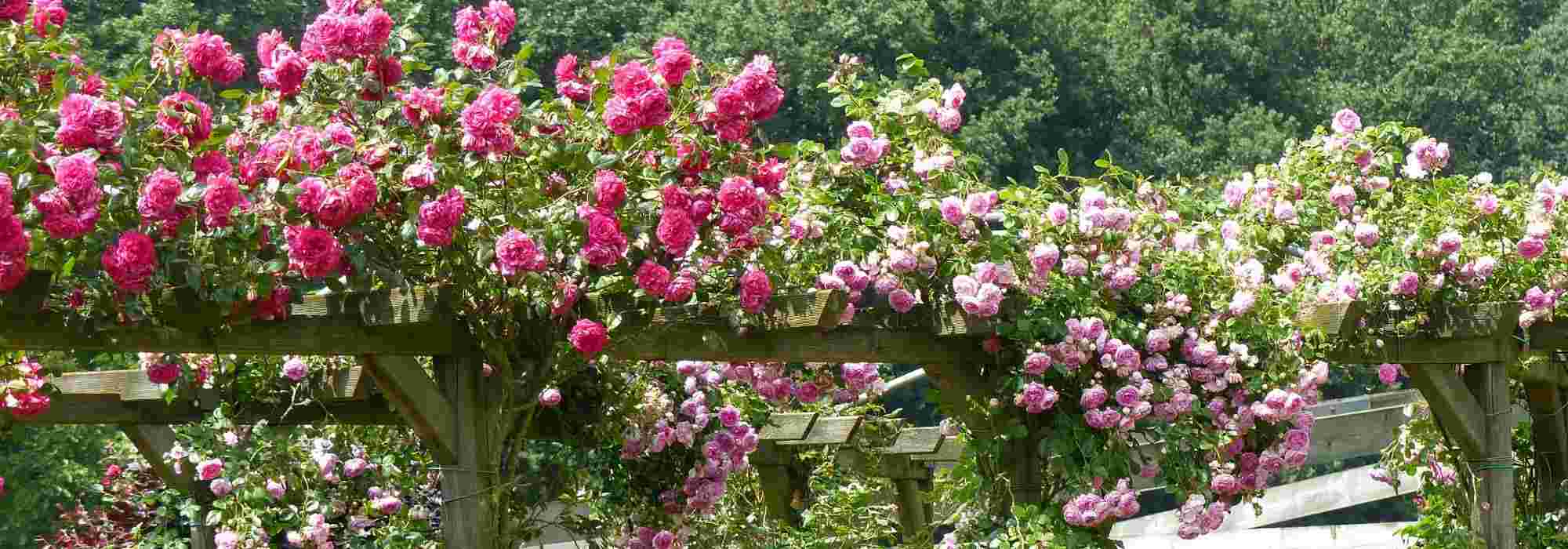
'Seven Sisters Rose' is an incurable romantic endowed with the strength of the tender that cannot leave one indifferent. It will be invited to the garden solely for the incredible range of colours offered by its flowering. Like other climbers, it is incomparable for adorning a gate, fences, and pergolas. Still, its vigorous growth also allows it to grow without support in a flowering hedge alongside a vigorous clematis like 'jackmanii Alba' or 'Prince Charles', to spread alone on a short grass meadow gracefully, or to be planted behind overly strict flower beds. It is an ideal companion for old trees that it will revive or for sheds to which it adds a charming touch. Trained on an arch, installed on an unsightly fence or a somewhat austere shed, it adorns the smallest setting without demanding much effort from the one who planted it. The changing colour of its roses is effortless to combine in the garden with white, pink, mauve, or purple flowers.
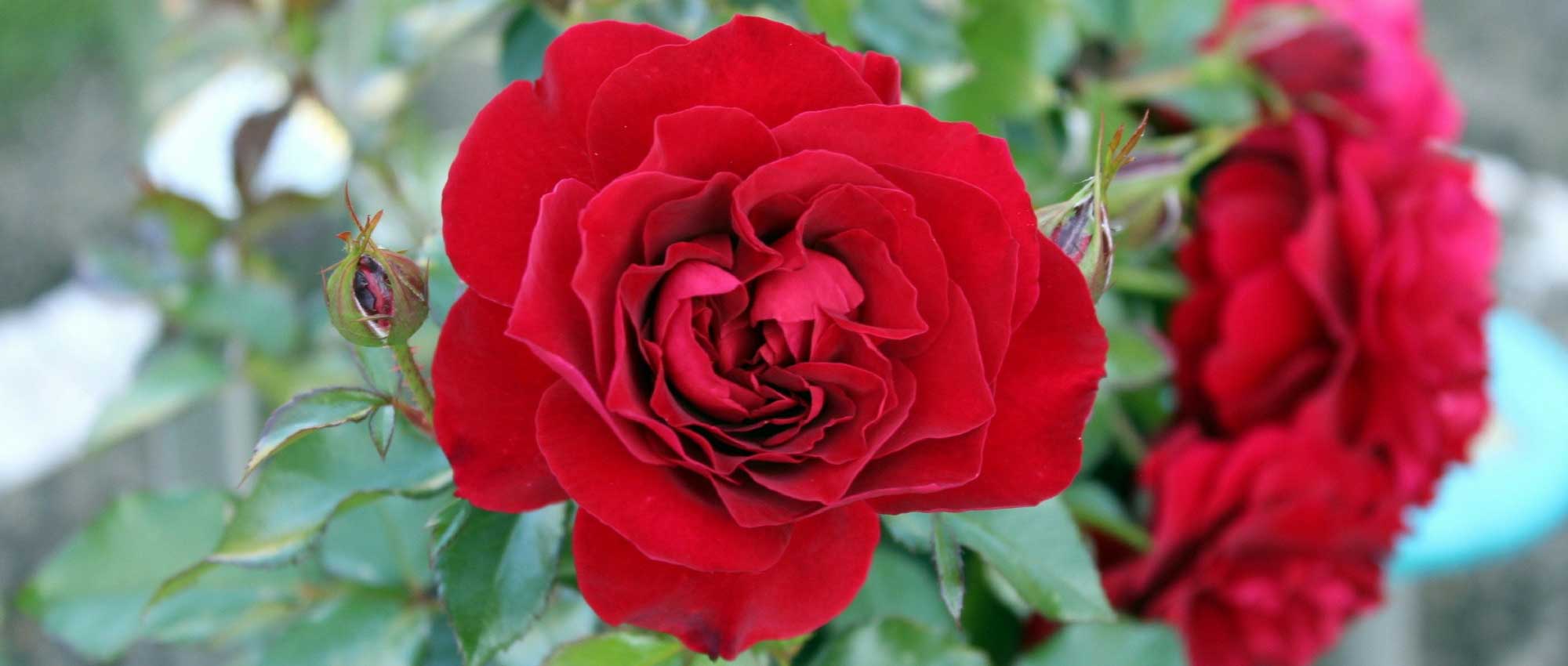
Rosa x multiflora 'Seven Sisters Rose' in pictures
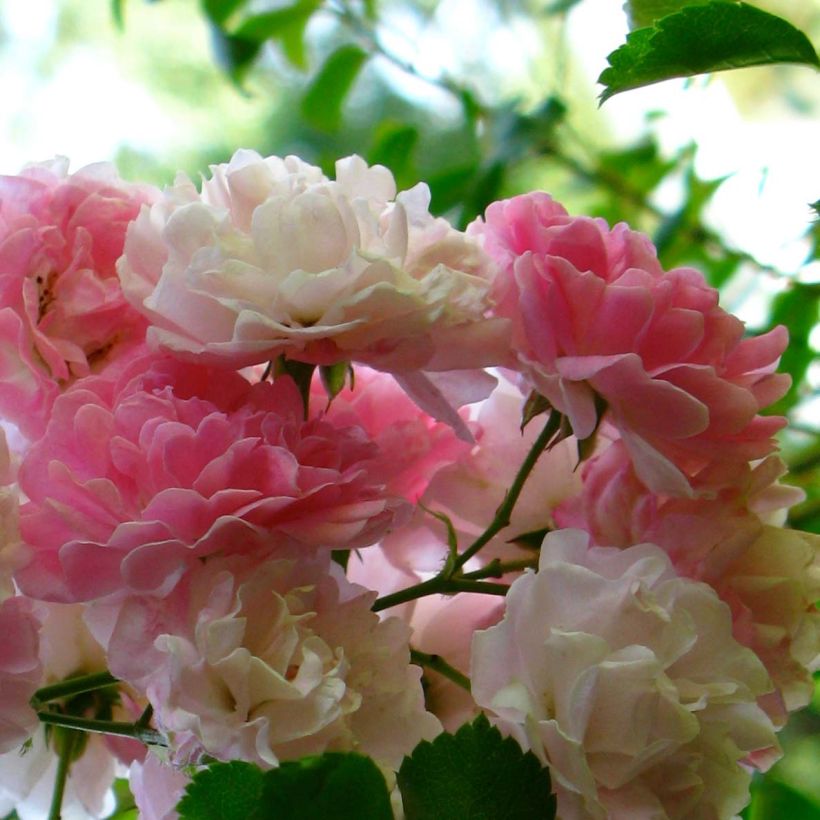
Plant habit
Flowering
Foliage
Botanical data
Rosa
x multiflora
Seven Sisters Rose
Rosaceae
Multiflora Rose, Baby Rose, Japanese Rose, Many-flowered Rose, Seven-sisters Rose, Eijitsu Rose
Cultivar or hybrid
Planting and care
The 'Seven Sisters Rose' grows best in sunny locations, but it dislikes hot and confined areas that can increase its susceptibility to powdery mildew. Therefore, avoid planting it against a south or west wall. Similarly, in excessively humid climates, it can be prone to black spot. Although it can tolerate some limestone, it doesn't appreciate an excess of it. This rose can adapt to any garden if the soil is well-cultivated, well-drained, and rich in nutrients. To plant it, prepare the soil by loosening it and adding an amendment such as blood, fish and bone at the bottom of the planting hole. After planting, water generously to eliminate air pockets and continue to water regularly for a few weeks to encourage rooting, especially during the first two hot and dry summers. Pruning this rose is only necessary to control its growth. If its spread bothers you, feel free to trim its branches. This variety of the 'Seven Sisters Rose' doesn't require deadheading since faded flowers are still beautiful.
Roses may appear stained or unsightly at the end of summer, but this is a natural occurrence that doesn't affect their growth or health.
Planting period
Intended location
Care
Planting & care advice
-
-
-
-

-

-

-
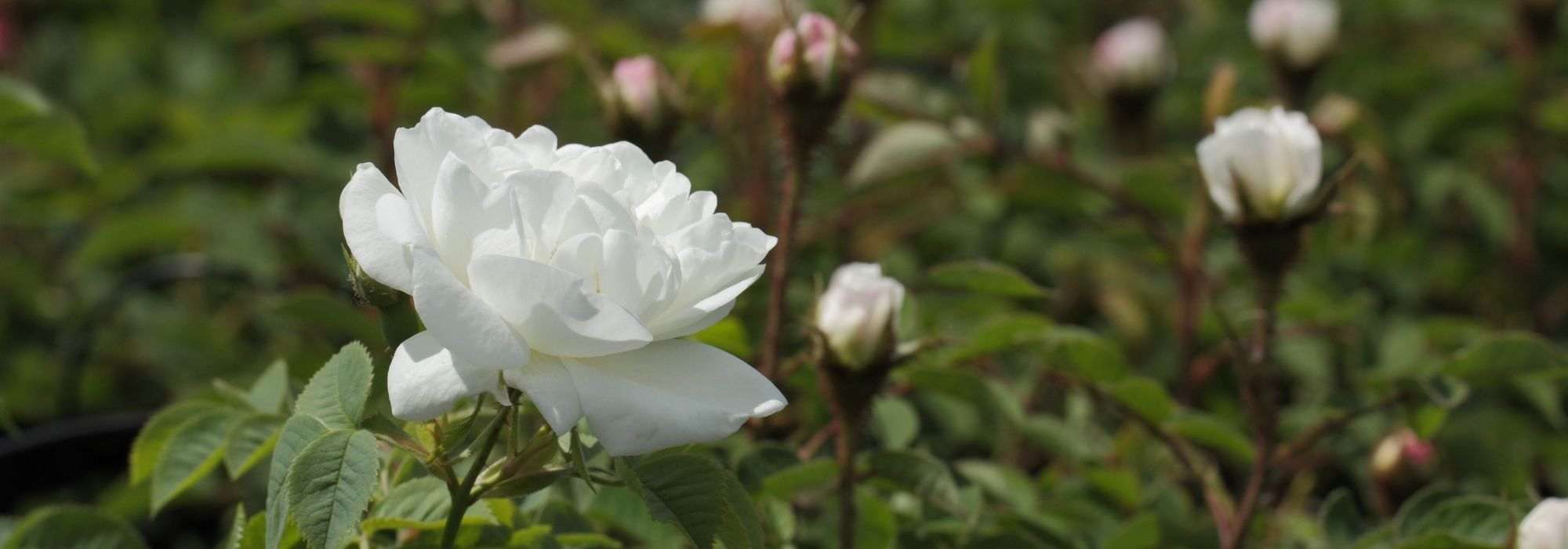
-
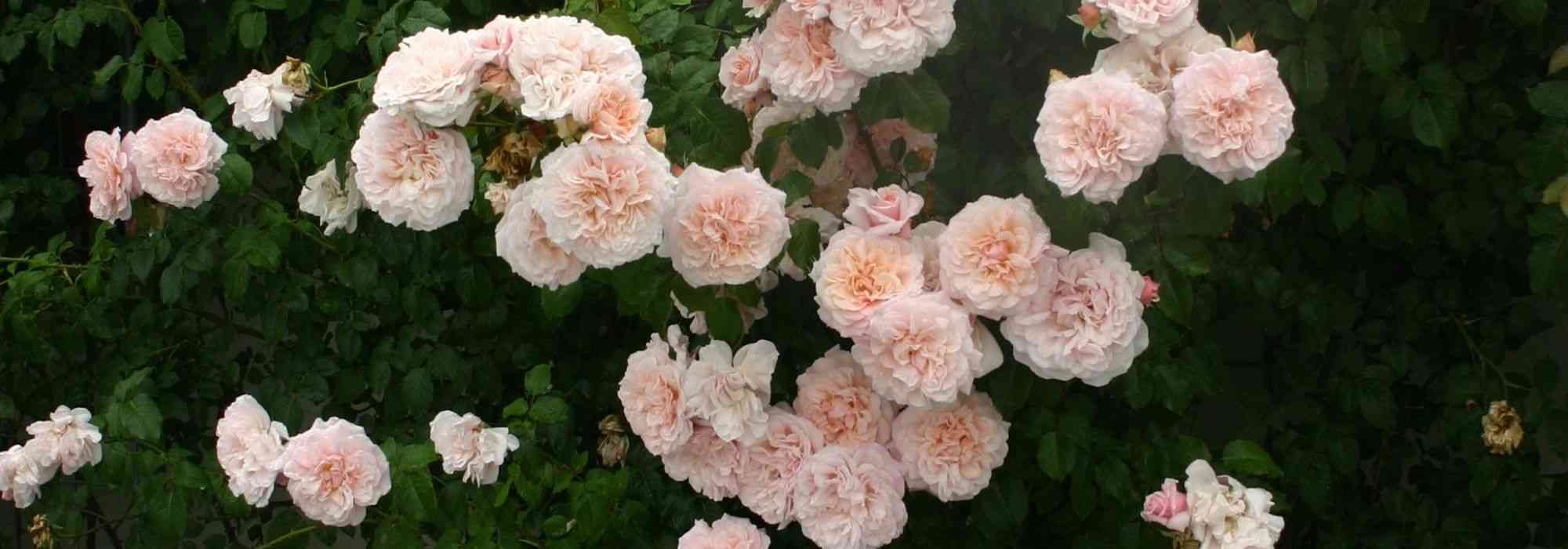
-
, onOrder confirmed
Reply from on Promesse de fleurs
Recently viewed products
Haven't found what you were looking for?
Hardiness is the lowest winter temperature a plant can endure without suffering serious damage or even dying. However, hardiness is affected by location (a sheltered area, such as a patio), protection (winter cover) and soil type (hardiness is improved by well-drained soil).

The flowering period indicated on our website applies to countries and regions located in USDA zone 8 (France, the United Kingdom, Ireland, the Netherlands, etc.)
It will vary according to where you live:- In zones 9 to 10 (Italy, Spain, Greece, etc.), flowering will occur about 2 to 4 weeks earlier.
- In zones 6 to 7 (Germany, Poland, Slovenia, and lower mountainous regions), flowering will be delayed by 2 to 3 weeks.
- In zone 5 (Central Europe, Scandinavia), blooming will be delayed by 3 to 5 weeks.
In temperate climates, pruning of spring-flowering shrubs (forsythia, spireas, etc.) should be done just after flowering.
Pruning of summer-flowering shrubs (Indian Lilac, Perovskia, etc.) can be done in winter or spring.
In cold regions as well as with frost-sensitive plants, avoid pruning too early when severe frosts may still occur.
The planting period indicated on our website applies to countries and regions located in USDA zone 8 (France, United Kingdom, Ireland, Netherlands).
It will vary according to where you live:
- In Mediterranean zones (Marseille, Madrid, Milan, etc.), autumn and winter are the best planting periods.
- In continental zones (Strasbourg, Munich, Vienna, etc.), delay planting by 2 to 3 weeks in spring and bring it forward by 2 to 4 weeks in autumn.
- In mountainous regions (the Alps, Pyrenees, Carpathians, etc.), it is best to plant in late spring (May-June) or late summer (August-September).
The harvesting period indicated on our website applies to countries and regions in USDA zone 8 (France, England, Ireland, the Netherlands).
In colder areas (Scandinavia, Poland, Austria...) fruit and vegetable harvests are likely to be delayed by 3-4 weeks.
In warmer areas (Italy, Spain, Greece, etc.), harvesting will probably take place earlier, depending on weather conditions.
The sowing periods indicated on our website apply to countries and regions within USDA Zone 8 (France, UK, Ireland, Netherlands).
In colder areas (Scandinavia, Poland, Austria...), delay any outdoor sowing by 3-4 weeks, or sow under glass.
In warmer climes (Italy, Spain, Greece, etc.), bring outdoor sowing forward by a few weeks.
Shipping country and language
Your country of residence may be:
Your country of residence is:
For a better user experience on our website, you can select:
Your shipping country:
-
 Austria
-
 Belgium
-
 Bosnia & Herzegovina
-
 Bulgaria
-
 Croatia
-
 Cyprus
-
 Czechia
-
 Denmark
-
 Estonia
-
 Finland
-
 France
-
 Germany
-
 Greece
-
 Hungary
-
 Iceland
-
 Ireland
-
 Italy
Italy
-
 Latvia
-
 Liechtenstein
-
 Lithuania
-
 Luxembourg
-
 Malta
Malta
-
 Netherlands
-
 Poland
-
 Portugal
-
 Romania
-
 Serbia
-
 Slovakia
-
 Slovenia
-
 Spain
Spain
-
 Sweden
-
 Switzerland
Language:
-
French
-
 English
-
Spanish
-
Italian
-
German
-
Portuguese
-
Dutch
-
Finnish
My Account
Hello
My wish lists
My cart
Log in / Register
Existing customer?
This form is protected by reCAPTCHA - the Google Privacy Policy and Terms of Service apply.
New customer?
Create an account to track your orders, access our customer service and, if you wish, make the most of our upcoming offers.