





























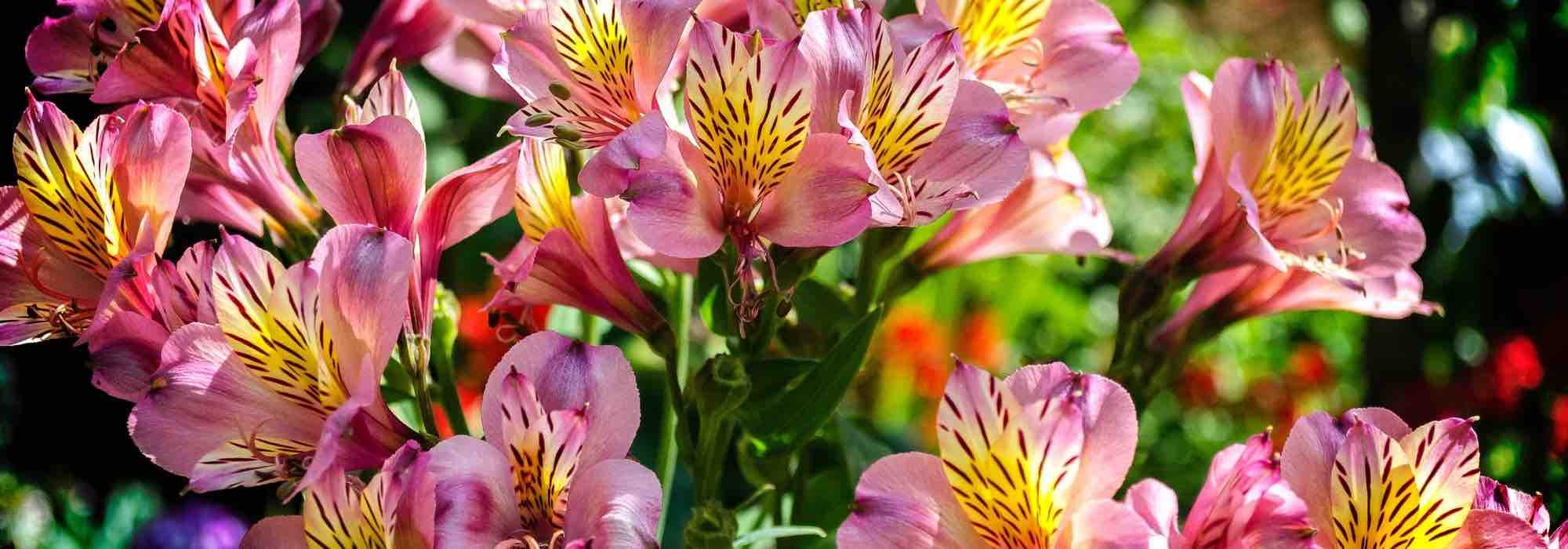
Alstroemeria: the hardiest
The very hardy ones
Contents
Very pretty and with a graceful, exotic appearance, Alstroemeria or Inca Lily is not always very hardy. Many varieties are sensitive to frost and do not withstand temperatures below -5 °C to -10 °C. Additionally, as they are susceptible to planting conditions, they can be a bit tricky to establish in the garden permanently. To maximise your chances, you need to provide them with well-drained, loose soil that is acidic to slightly alkaline all year round. To survive winter, regardless of their frost resistance, soil drainage is crucial to prevent waterlogging. Also, provide them with a mulch at the base to protect the stump. If they thrive, they will spread generously.
Discover here the hardiest varieties you can consider if you are located in USDA zone 7b, with occasional frosts around -15 °C.

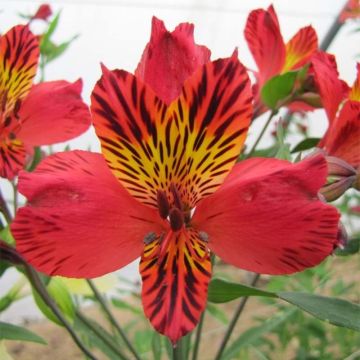
Alstroemeria 'Mars'
Issue of the ‘Planet’ series, the Alstroemeria ‘Mars’ is a hybrid selected for its reliability, floribundity, and the vibrancy of its colours. In well-drained, mulched soil, it withstands frosts down to -15 °C (USDA zone 7b). This alstroemeria is adorned throughout the summer with flowers in well-contrasted colours: an intense carmine red, maculate with yellow and striated with brown. The plant is vigorous, upright, and bushy, reaching a height of 80 cm in bloom with a spread of 50 cm. Not very fussy, it is a hybrid that thrives in well-drained soil. ‘Mars’ is not very suckering, with a tidy appearance. It flowers continuously from June-July to the end of September if the soil remains moist. The 5 cm flowers are very open, and the abundant foliage is dark green and glossy.
Plant it in a border contrasting with the lovely light blue of the Perennial Flax, Linum perenne, or with the intense dark blue of certain Sages, accompanied by some golden or pink grasses like Muhlenbergia capillaris.
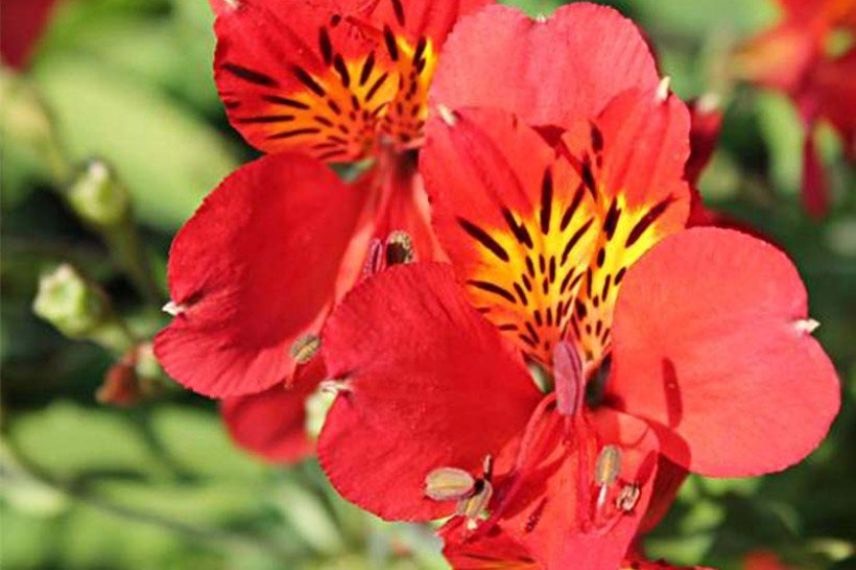
Alstroemeria ‘Mars’
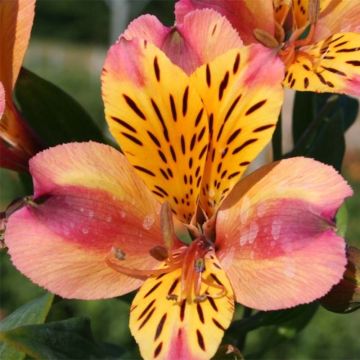
Alstroemeria ligtu hybrid
The Alstroemeria ligtu hybrid is a lovely selection with a pink hue tinged with salmon, maculate with a yellow spot and striated with brown-purple. Native to the drained and rocky slopes of the Andean mountains, in acidic soil, alstroemerias can be quite temperamental. However, if you find the right spot and the right growing conditions, they can be very generous. Loose, well-drained soil, possibly in a mound, provides a good starting point. Growing to a height of 60 cm and a width of 40 cm, the Alstroemeria ligtu hybrid blooms from June to September and withstands frosts down to -15° C, classified in USDA zone 7b.
Against a green-grey foliage, its sturdy, upright stems and mixed colours find their place alongside flowers in shades of pink, orange, salmon, and bright yellow. To accompany it, consider Daylilies, Gauras, Echinaceas, or Dahlias, as well as Fuchsias for their lightness.
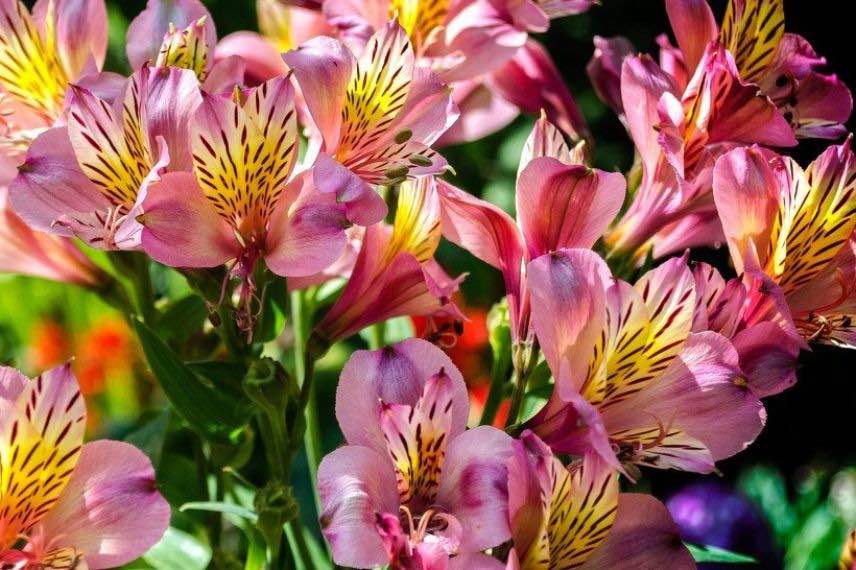
Alstroemeria ‘ligtu hybrid’
Discover other Alstroemerias
View all →
Available in 1 sizes
Available in 1 sizes
Available in 2 sizes
Available in 2 sizes
Available in 2 sizes
Available in 2 sizes
Available in 1 sizes
Available in 2 sizes
Available in 2 sizes
Available in 2 sizes
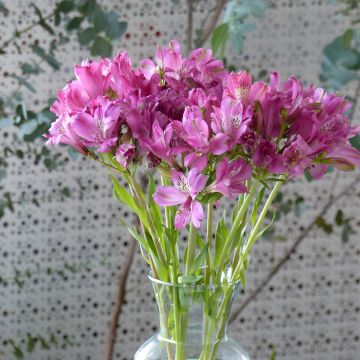
Alstroemeria 'Mauve Majesty'
Excellent variety, the Alstroemeria ‘Mauve Majesty’ stands out with its bluish-pink, mauve-pink flowers, maculate with cream and striped with purple. On a bushy plant 65 cm tall and 50 cm wide, the flower stems are sturdy, adorned with 4 cm wide, very open flowers that bloom from June to September. Mulched for protection, in well-drained soil, this Inca Lily can be grown up to zone 7b, as it withstands frosts down to -15° C.
With an elegant hue, its dark green, glossy foliage highlights its mauve-pink flowering. Plant the Alstroemeria ‘Mauve Majesty’ alongside blue flowers, such as the sky blue of Asters or the lovely Plumbago auriculata or Cape Leadwort, for example. Add some purple foliage.
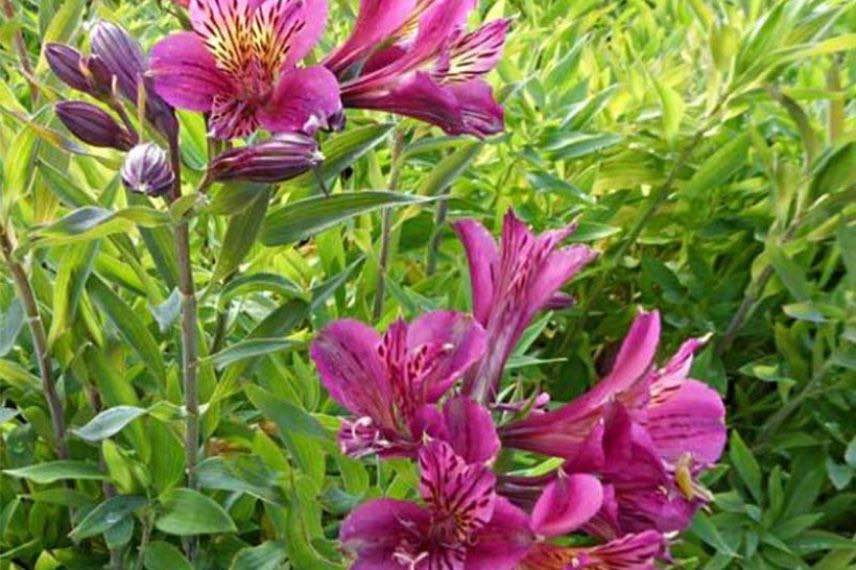
Alstroemeria ‘Mauve Majesty’
Read also
Planting AlstroemeriasAlstroemeria aurea 'Orange King'
A safe bet, the Alstroemeria aurea ‘Orange King’ is a fairly tall variety, reaching 80 cm in height when in flower with a spread of 50 cm. With a warm and exotic appearance and colour, it is adorned with bright, light orange flowers that are very luminous, maculate with yellow and striped with brown. The outer petals are a deeper orange, leaning towards red. It blooms in July and August, on grey-green foliage. It can be grown in USDA zone 7b.
Plant it in a vibrant bed with yellow, orange, or red Crocosmias, with vertical spikes of Kniphofias, and Achilleas, all softened by golden grasses like Chinese fountain grass ‘Fairy Tails’.
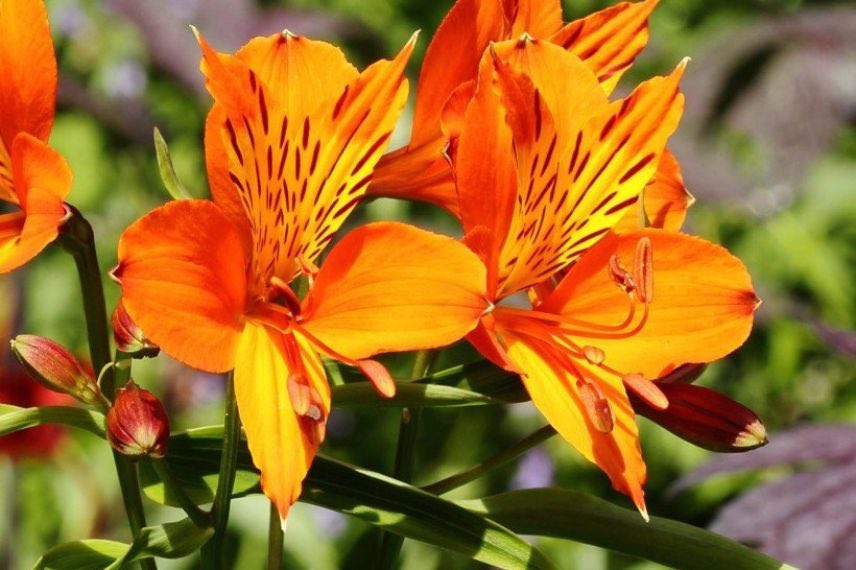
Alstroemeria aurea ‘Orange King’
Alstroemeria 'Garden Summer Red'
Also selected for its cold resistance, Alstroemeria ‘Garden Summer Red’ is derived from a line of hybrids called ‘Summer Paradise’. Floriferous, it produces elegant pinkish-red flowers from June to October-November, marked with a pale yellow that fades to white, striated with purple, on glossy dark green foliage. It blooms for a long time, late in the season. The plant forms compact clumps, 70 cm tall and 50 cm wide.
Pair it with other Alstroemerias in a mix of colours on a semi-shaded bank.
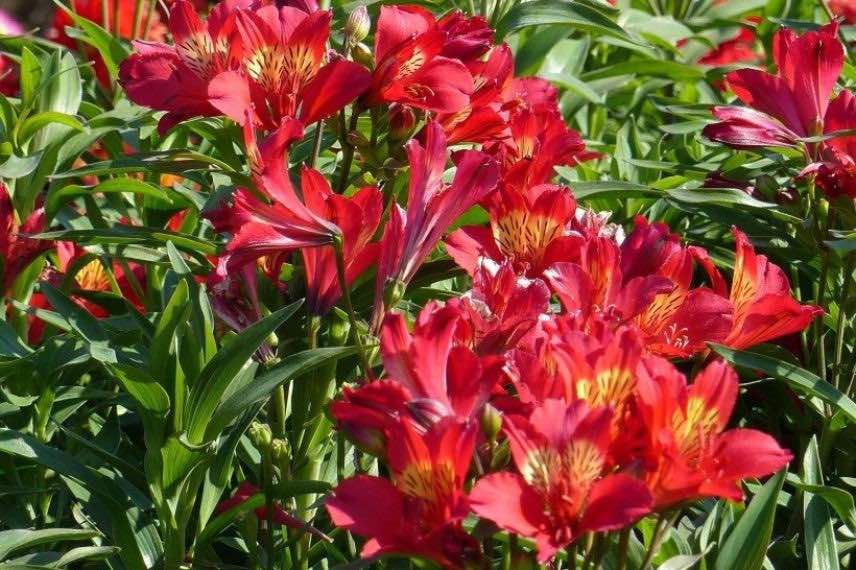
Alstroemeria ‘Garden Summer Red’
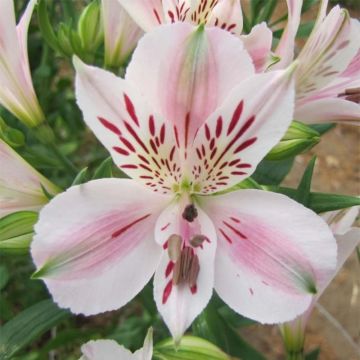
Alstroemeria 'Garden Summer Snow'
From the same selection, the Alstroemeria ‘Garden Summer Snow’ offers a completely different, very soft colour. Delicately bicoloured, its flowers are an ivory white washed with cream yellow, speckled with brown. They contrast beautifully with its glossy dark green foliage. It offers the same advantages as Alstroemeria ‘Garden Summer Red’: good floribundity, hardy up to USDA zone 7b, and a robust, compact clump measuring 70 cm by 50 cm. It also blooms for a long time, from June to October-November.
Once well established in the garden, remember that Alstroemeria is an excellent cut flower. Create a lovely display with its softly coloured flowers alongside brighter yellow blooms, and purple and brown foliage like that of the Lysimachia ciliata ‘Firecracker’ and a few pink flowers.
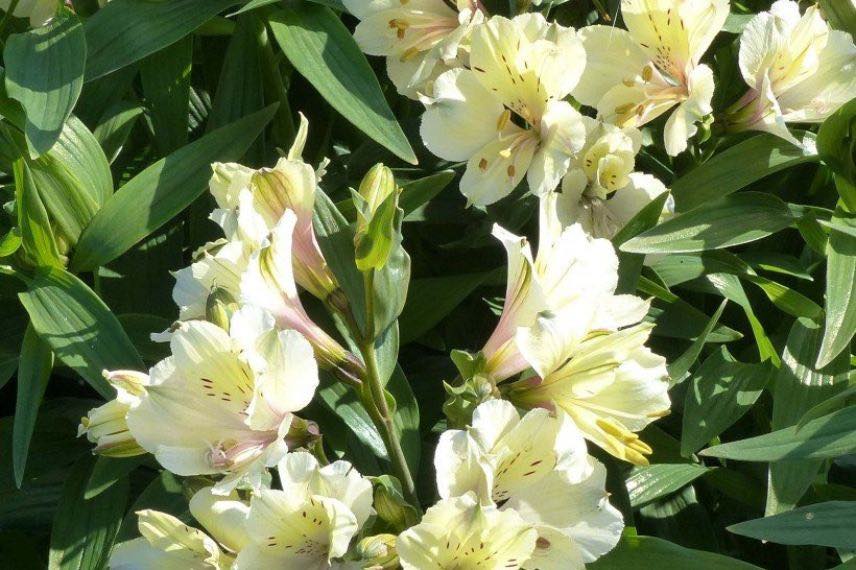
Alstroemeria ‘Garden Summer Snow’
- Subscribe!
- Contents
Comments