





























Annual plant: 8 species for dry garden
Plants that naturally withstand heat and drought.
Contents
Dry soils, often well-draining, have a very low water retention capacity. Rainwater or irrigation tends to infiltrate quickly, sometimes disappearing before plants can fully benefit from it.
Fortunately, there are many plants that can naturally withstand dry conditions without a fuss. They thrive even with little water, in sunny situations, and appreciate that their roots are not suffocated by excess moisture. Among them, we find grasses, perennials, bushes, and of course, annual plants. Although their life cycle lasts only a year, most self-seed spontaneously without any intervention in the garden.
Here is our selection of our 8 favourite annual plants to grow in a dry garden or without watering.

Briza maxima, a charming heart-shaped grass
The great briza (Briza maxima) is an annual grass, the big sister of the quaking grass (Briza media).
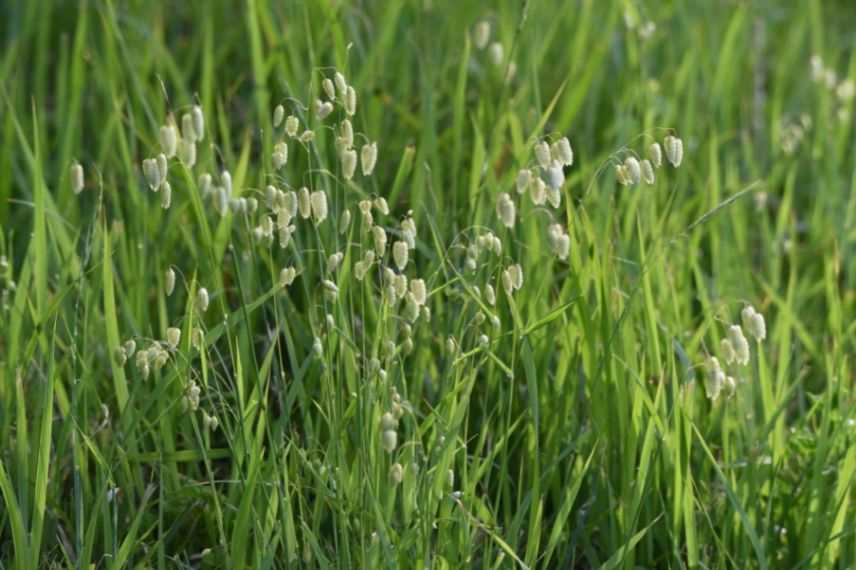
This plant produces airy tufted foliage, from which long stems rise, topped with large trailing spikelets. These, with their beautifully scaly and heart-shaped appearance, sway gently in the breeze, creating a display full of grace and lightness. This characteristic has earned it the poetic nickname “wind rattle.” In terms of colour, the shades transition from green to silvery white, then to purple, before drying to a soft straw hue. These spikelets integrate wonderfully into summer dried flower arrangements.
This sun-loving annual is known for its ability to withstand harsh conditions of dry and poor soils, even arid and rocky ones.
The great briza is an easy plant to sow, in spring or autumn and requires no maintenance. It will then self-seed spontaneously year after year. Its silhouette reaches about fifty centimetres in all directions and is perfect for a wild garden, a country hedge, or a natural border.
Briza maxima
Read also
9 grasses for dry soilOrlaya grandiflora, a flowering in lace
The Orlaya grandiflora or caucalis is an ideal candidate for dry soil gardens. It withstands drought and thrives in sunny locations. Low-maintenance, it grows in all types of soil, even the most challenging, whether poor, stony, calcareous, or clayey, as long as they do not retain water.
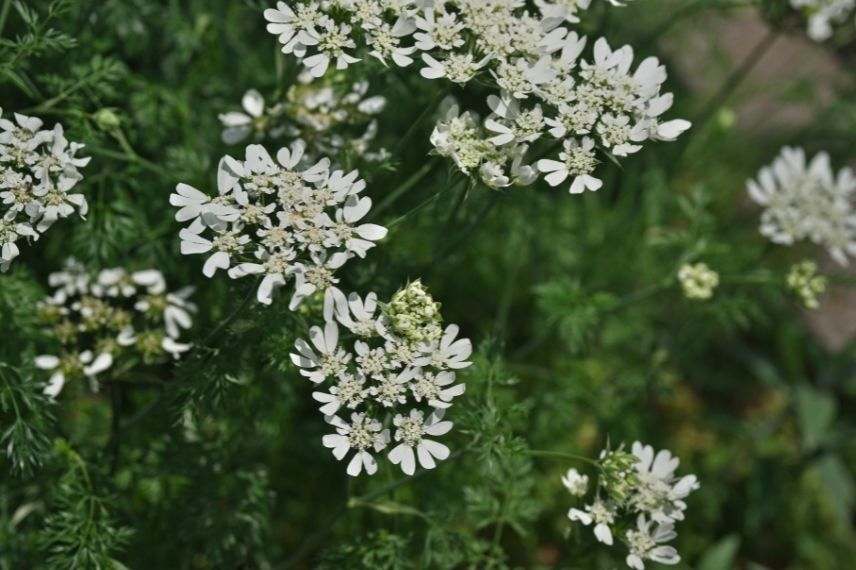
This caucalis enchants us with its long summer flowering, characterised by lightness and delicacy. The plant unveils large umbels of immaculate white flowers, with a fineness reminiscent of lace. The foliage is finely dissected, equally refined.
This annual, reaching around thirty centimetres in all directions, forms a lovely clump that easily integrates into the garden. It adds a natural touch and highlights the colourful blooms of other plants.
Easy to cultivate, it will self-seed in the garden if it is happy there.
Orlaya grandiflora
Discover other Annuals
View all →
Available in 1 sizes
Available in 1 sizes
Available in 1 sizes

Available in 1 sizes
Available in 1 sizes
Available in 1 sizes
Available in 1 sizes
Available in 1 sizes
Available in 1 sizes
Available in 1 sizes
Alyssum, a true flowering and fragrant carpet
Thescented alyssum (Lobularia maritima) is a perfect groundcover for dry gardens, as well as coastal gardens. It quickly forms a compact, spreading clump made up of flexible stems and fine lanceolate foliage.
For many months in summer, the plant rewards us with a multitude of small rounded flowers, almost covering the foliage. They exude sweet notes of honey.
Opt for the white variety ‘Snow Crystals’, creating a lovely immaculate carpet, or a more colourful version with ‘Princess in Purple’ and its vibrant purple flowers.
Easy to grow, the scented alyssum will thrive in warm, sunny conditions. Hardy, this annual flower is resistant to both drought and bad weather. It will shine at the edge of borders, in rockeries, or at the foot of bushes in dry soil. It also makes beautiful flowering pots and hanging baskets.
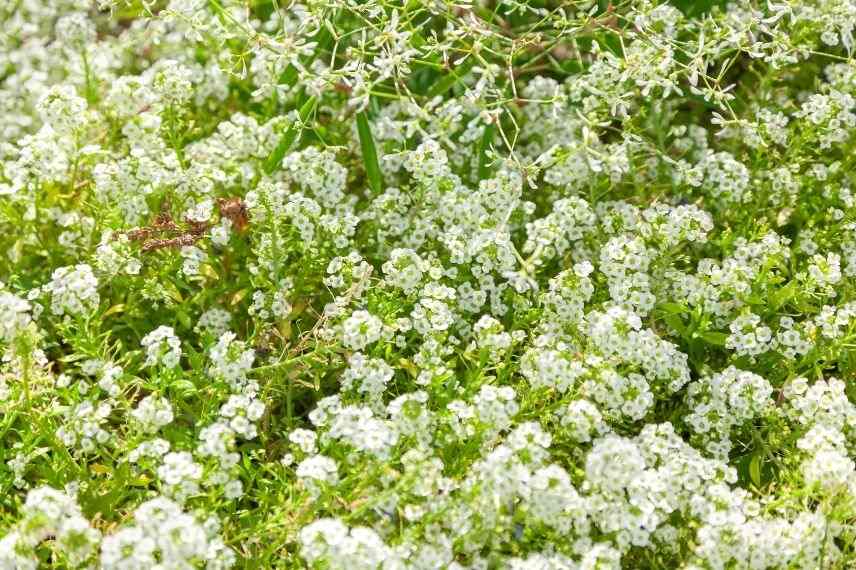
Lobularia maritima
Read also
5 perennials for dry groundLunaria annua, cut flower arrangements of the moon
Money plant”, “lunaria”, “silver dollar”… The Lunaria annua has some lovely nicknames that refer to the decorative and astonishing seed discs it displays after flowering.
It first forms clumps of bright green, triangular, serratifoliated leaves. At the end of spring, it is covered in small, fragrant purple or white flowers. Its fruits then develop, resembling flat, pearly, translucent lunar discs, through which the seeds can be seen. Highly decorative, they are wonderful in dried bouquets.
This is a biennial plant, flowering after the 2nd year. Lunaria annua is easy to grow, thriving in full sun or partial shade and is not afraid of drought. Its silhouette reaches 75 cm in height at ripeness, adding verticality and lightness effortlessly. It is a must-have for natural gardens, wild hedges, or sunny borders.
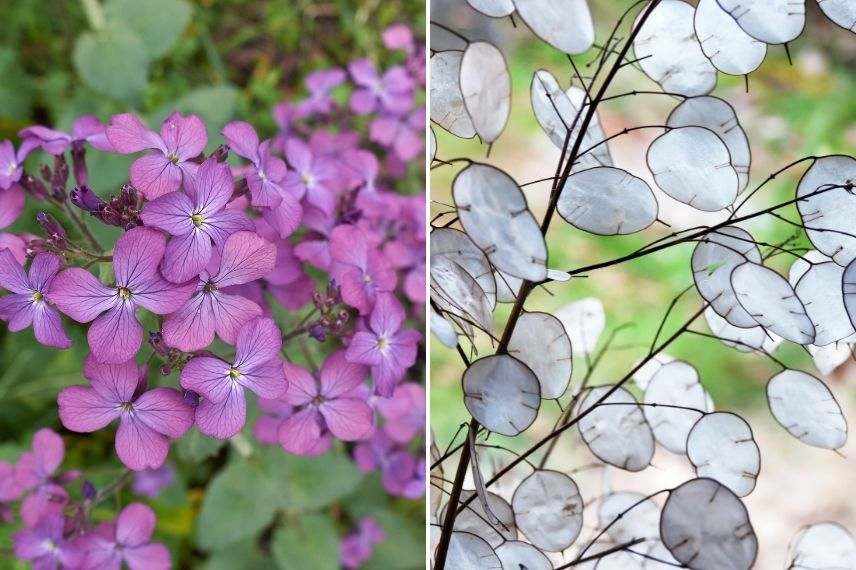
Flowers and fruits of Lunaria annua
Lagurus ovatus, a soft flowering reminiscent of a bunny's tail.
The Lagurus ovatus is also known as “hare’s tail” or “Bunny Tails,” referring to the shape of its inflorescences.
This adorable annual grass naturally grows in poor areas, fallow land, scrublands, or sandy coastal soils. It is therefore an ideal candidate for dry soils. The Lagurus ovatus is easily cultivated in pots or in the ground, in sunny locations.
It forms a true little cushion of 25 cm in all directions, with villous leaves that take on golden blonde hues at the end of the season. Throughout the summer and into early autumn, it rewards us with a long flowering period featuring small spikes a few centimetres long. They are ovate, soft, and fluffy, resembling tiny rabbit tails. Their colour evolves: initially pale green tinged with lilac pink, they then lighten to become cream, and finally blonde as they dry. Again, it is a wonderful annual plant for dried bouquets.
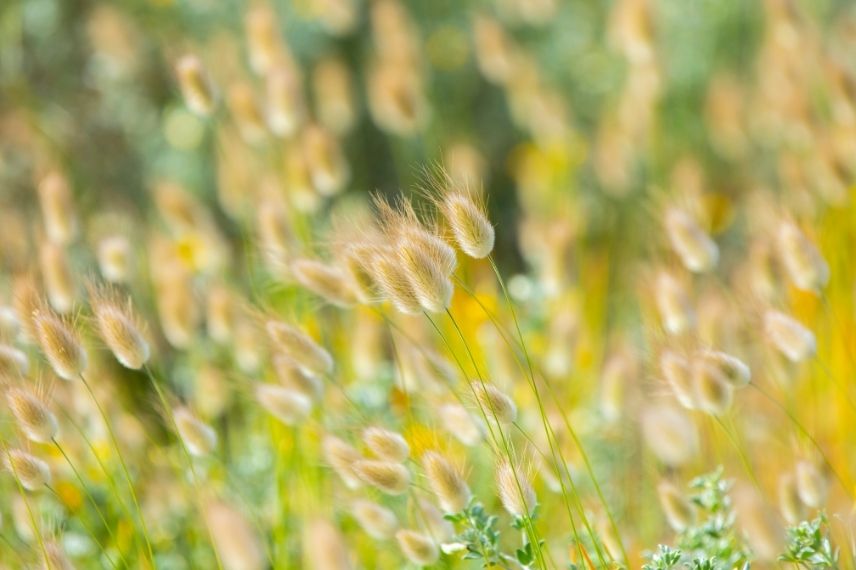
Lagurus ovatus
Calendula officinalis, vibrant flowers full of benefits for the garden
The Calendula officinalis or marigold boasts numerous qualities. Firstly, we love this annual flower for its vibrant colours, typically yellow or orange, which brighten up even the poorest and driest areas of the garden. Melliferous, the flowers also attract pollinating insects. The flowering continues almost uninterrupted from spring until the first frosts. This plant self-seeds spontaneously from year to year.
The marigold is also used in the vegetable garden as a companion plant. It is said to deter pests such as nematodes and serves as a trap plant for aphids, which thus abandon other crops.
Finally, it is a beautiful edible plant that enlivens summer salads or flavours herbal teas. It is also used in cosmetics, as well as in alternative medicine, among other things for its reputed calming properties.
Undemanding, low-maintenance, highly drought-resistant, and requiring little water: this annual has everything to thrive effortlessly in dry soil!
For further reading: « Marigold, calendula: sowing, planting, cultivation »
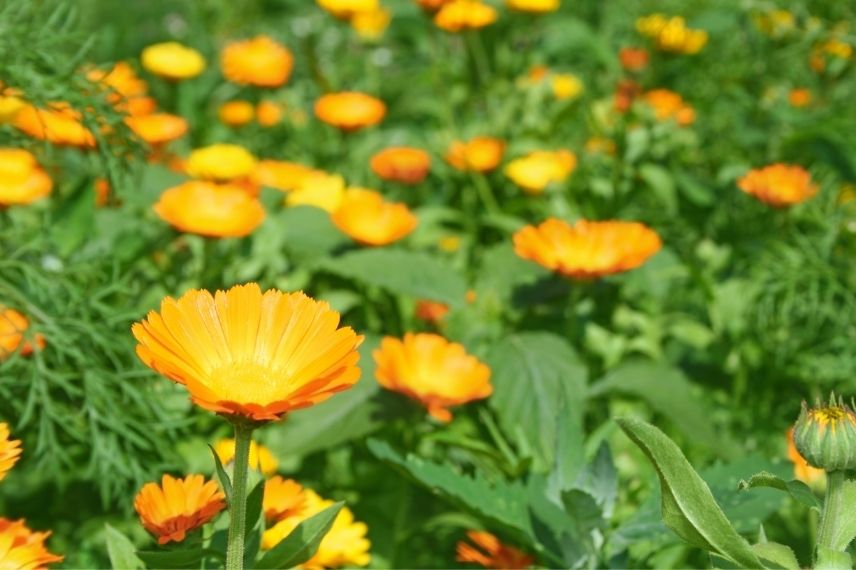
Calendula officinalis
Damask Nigella, ornamental at every level
The Damask nigella is an annual with a rustic charm, decorative at all stages of its life. Its foliage is particularly fine and airy, somewhat reminiscent of fennel. The star-shaped flowers, equally light and wild, can be blue, pink, or white. They enliven the summer and delight pollinating insects. Then come the decorative fruits, consisting of round and globular capsules. They are surrounded by very fine bracts and topped with mini thread-like stems. A true little curiosity! Highly ornamental, these fruits are perfect for dried cut flower arrangements.
The nigella is not demanding: it thrives in the poorest, driest, and stony areas of the garden, requiring little care or attention. Grow Nigella damascena on a bank, in a rockery, a sunny border, or in a minimally watered container.
The seeds, dispersed by wind or insects, allow it to quickly and naturally populate the garden from year to year.
For further reading: “Damask nigella: sowing, cultivation, and care”
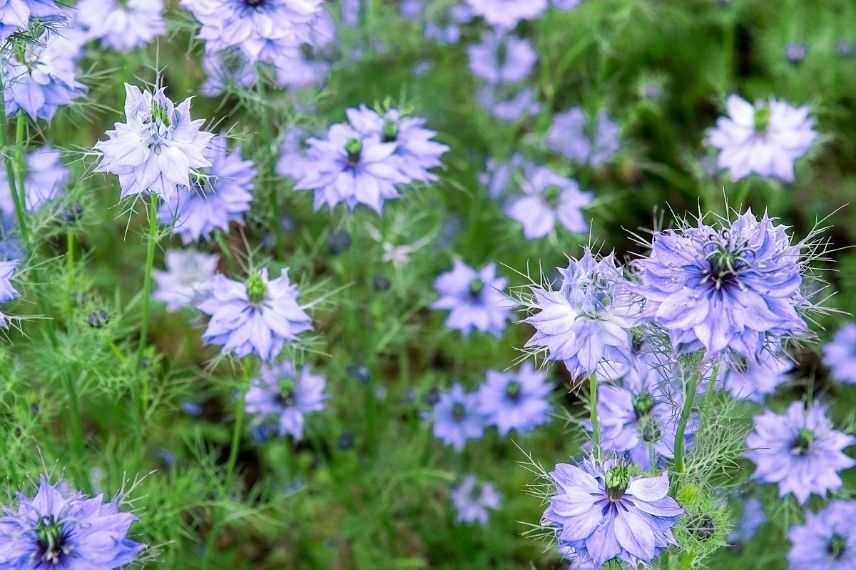
Nigella damascena
California Poppy, vibrant colours for every taste
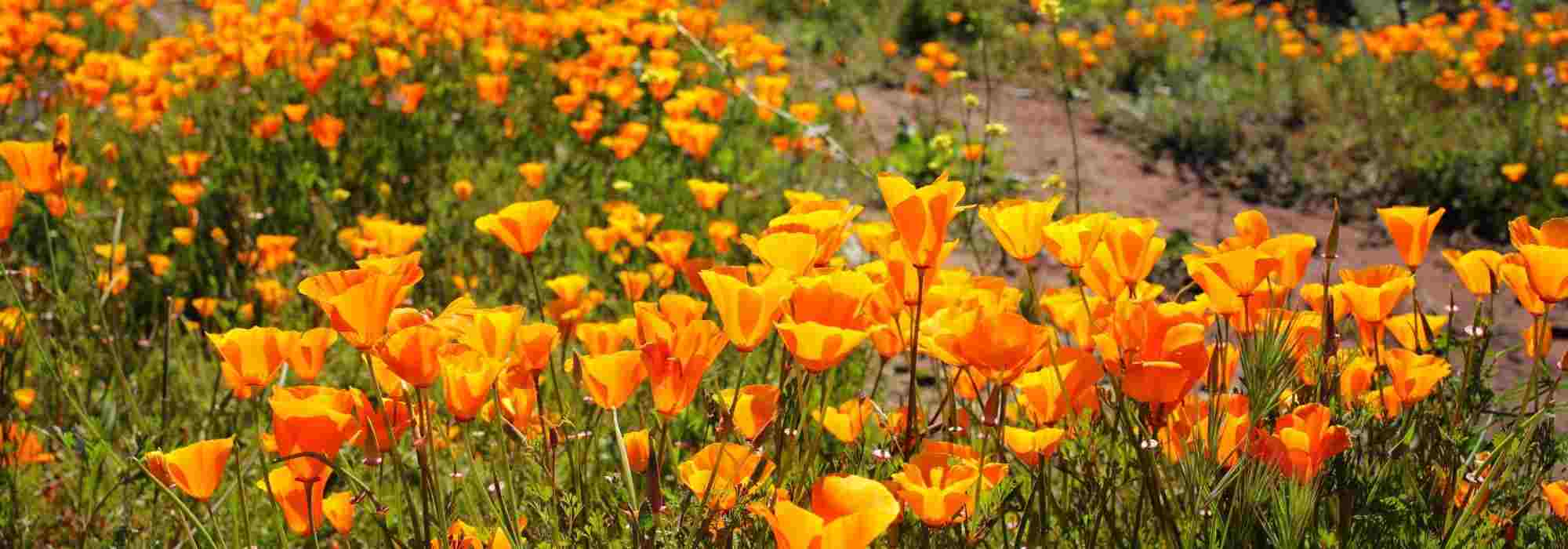
The California Poppy (Eschscholzia californica) is an annual poppy often found in dry gardens. It tolerates both summer drought and heat, as well as poor soils.
It forms clumps of fine, deeply cut, almost sculpted leaves. Ornamental, they display a lovely blue-green hue. In a single season, this annual can quickly spread and take up space if the location suits it.
Flowering occurs from late spring to late summer. Depending on the varieties, the flowers can be single or double, solid-coloured or bi-coloured. ‘Yukon Gold’ offers a vibrant yellow with an orange centre, while ‘Red Chief’ boasts a brilliant red. Softer, the California Poppy ‘Appleblossom’ prefers a lovely peach-pink, while ‘Copper Swirl’ offers an almost coppery orange. All are highly melliferous. They then give way to fruits in long, tapered capsules, which are very ornamental.
Considered foolproof, these generous annuals with warm colours quickly adorn the bases of walls, rockeries, flowering meadows, or borders.
It is worth noting that its cousins, other annual poppies such as the corn poppy (Papaver rhoeas) or the garden poppy (Papaver somniferum), are also perfect plants for dry soils.
For further reading: « Poppies and annual poppies: sowing, growing, and maintaining ».
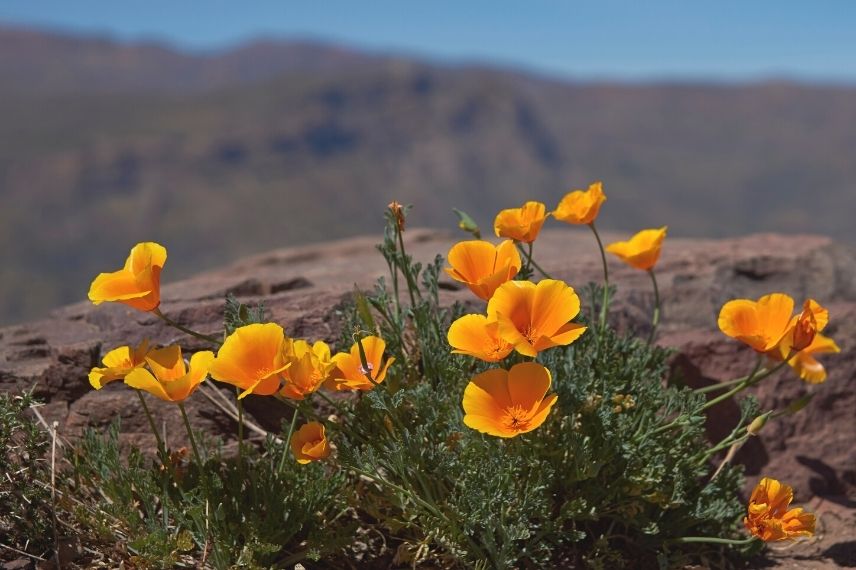
Eschscholzia californica
- Subscribe!
- Contents
Comments