





























Pairing ideas with Anthyllis
how to showcase these beautiful natural-looking plants!
Contents
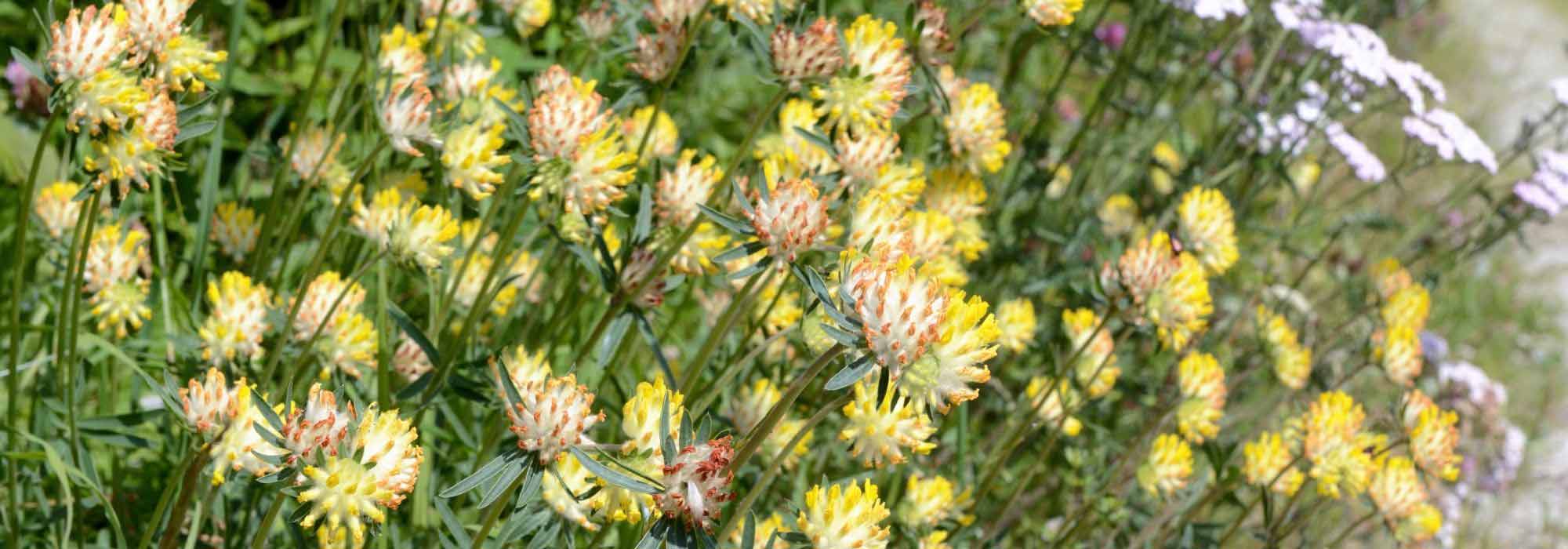
Spontaneously growing plants in the Hexagon and Southern Europe, the Anthyllis belong to a highly diverse group that includes annuals, perennials, and shrubs with beautiful yellow, white, pink, or red flowers resembling those of clovers. Sometimes small groundcover cushions, sometimes shrubs over 1 m tall, Anthyllis are plants with variable hardiness, but they are easy to care for and benefit from being showcased alongside companion plants.
In full sun rockeries, in a flowerbed with warm hues, in a garrigue setting, or on a dry bank, discover our ideas for pairing Anthyllis!

In a sunny rockery
In a south-facing rockery, the Anthyllis vulneraria var. coccinea finds its perfect place. This lovely perennial groundcover forms a small cushion 30 cm high that spreads about twenty centimetres. Its deciduous foliage has a lovely silky appearance, and its short upright stems bear an abundance of reddish-orange flowers from June to August.
Very comfortable in poor, dry, and calcareous soil, this Vulnéraire will pair wonderfully with the Sedum sexangulare, a small carpet-forming perennial with very bright yellow flowers, and the Houseleek Sempervivum arachnoideum. Add tufts of silver Santolines Santolina chamaecyparissus and Helianthemum ‘Elfenbeinglanz’, yellow and white. This easy-going and floriferous rockery will be the focal point of your garden throughout the seasons!
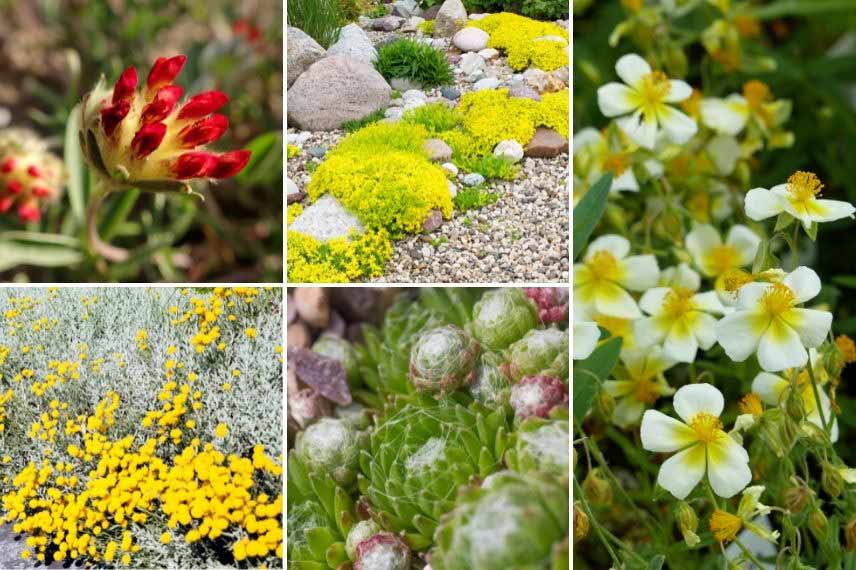
Anthyllis vulneraria var. coccinea, a rockery atmosphere carpeted with Sedum sexangulare, Santolina chamaecyparissus, Sempervivum arachnoideum and Helianthemum ‘Elfenbeinglanz’
Read also
Anthyllis: planting, growing, and careIn a vibrant flowerbed
To create a flowerbed with warm and vibrant colours, choose Anthyllis vulneraria. Planted in mass at the front, its small height of around thirty centimetres will form a groundcover border covered in bright yellow globular flowers throughout the summer.
As a highlight of this composition, plant the very original ‘Kangaroo Paw’ Anigozanthos ‘Bush Inferno’. This compact and highly floriferous variety will make a strong impression with its spikes of deep red, tubular, woolly flowers above iris-like foliage. In the background, the Phlomis fruticosa will structure the flowerbed with its masses of grey evergreen leaves, punctuated by the Agastache barberi ‘Firebird’ with its orange flower spikes.
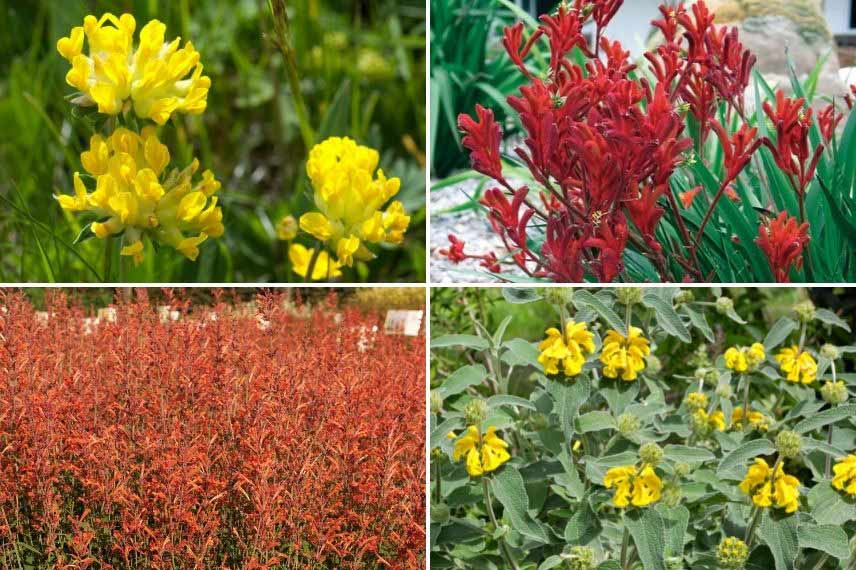
Anthyllis vulneraria, Anigozanthos ‘Bush Inferno’, Agastache barberi ‘Firebird’ and Phlomis fruticosa
Discover other Anthyllis
View all →
Available in 1 sizes
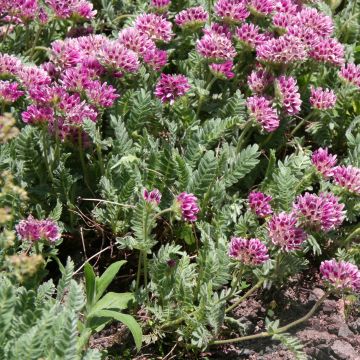
Available in 1 sizes
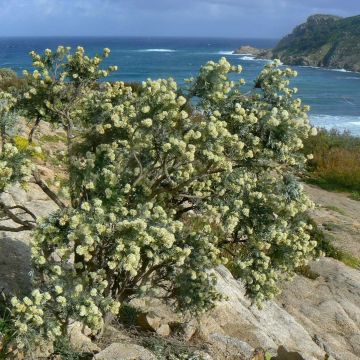
Available in 1 sizes
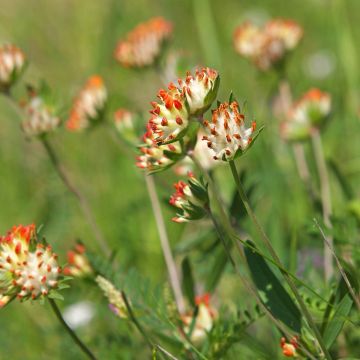
Available in 1 sizes
In a garrigue atmosphere
The Anthyllis barba-jovis, also known as Jupiter’s Beard, is a beautiful Mediterranean shrub with fine silvery foliage, reaching heights of 60 cm to 1.50 m, that bears a naturally charming creamy spring flowering. Valued for its excellent drought resistance, it will thrive in a garrigue setting within a Mediterranean garden without the need for watering.
This setting will, of course, highlight garrigue plants such as the Purple Rockrose Cistus purpureus and Thymus serpyllum, or creeping thyme. One will flower in spring while the other will abundantly sprinkle the bed with its pale pink flowers in late spring and summer. Also pair this lovely shrub with the Convolvulus cneorum, or Silver Bindweed, a magnificent groundcover with white flowers and silvery foliage, highly resistant to drought.
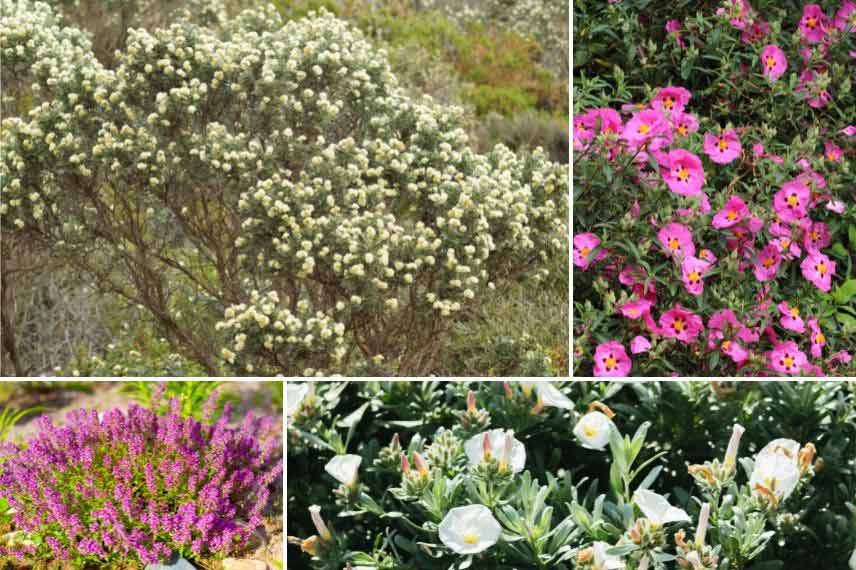
Anthyllis barba-jovis, Cistus purpureus, Thymus serpyllum, and Convolvulus cneorum
In a seaside garden
Pushing spontaneously near the Mediterranean coast, Anthyllis barba-jovis can be planted in a seaside garden that features plants tolerant of salt spray and dry soils: Griselinia, Pittosporum tobira and Elaeagnus ebbingei. Also pair this beautiful Anthyllis with evergreen Ceanothus (Ceanothus ‘Blue Sapphire’ or Skylark, for example), which offer a magnificent blue flowering in spring. For a lovely lightness, you can also plant the Marram grass or Sand reed Ammophila arenaria for a stunning scene.
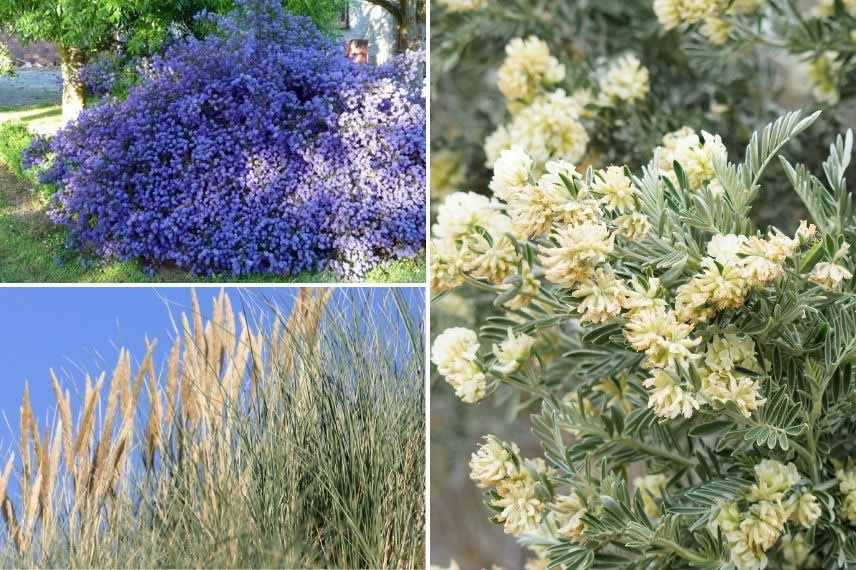
Ceanothus Blue Sapphire, Anthyllis barba-jovis and Ammophila arenaria
To dress a dry bank
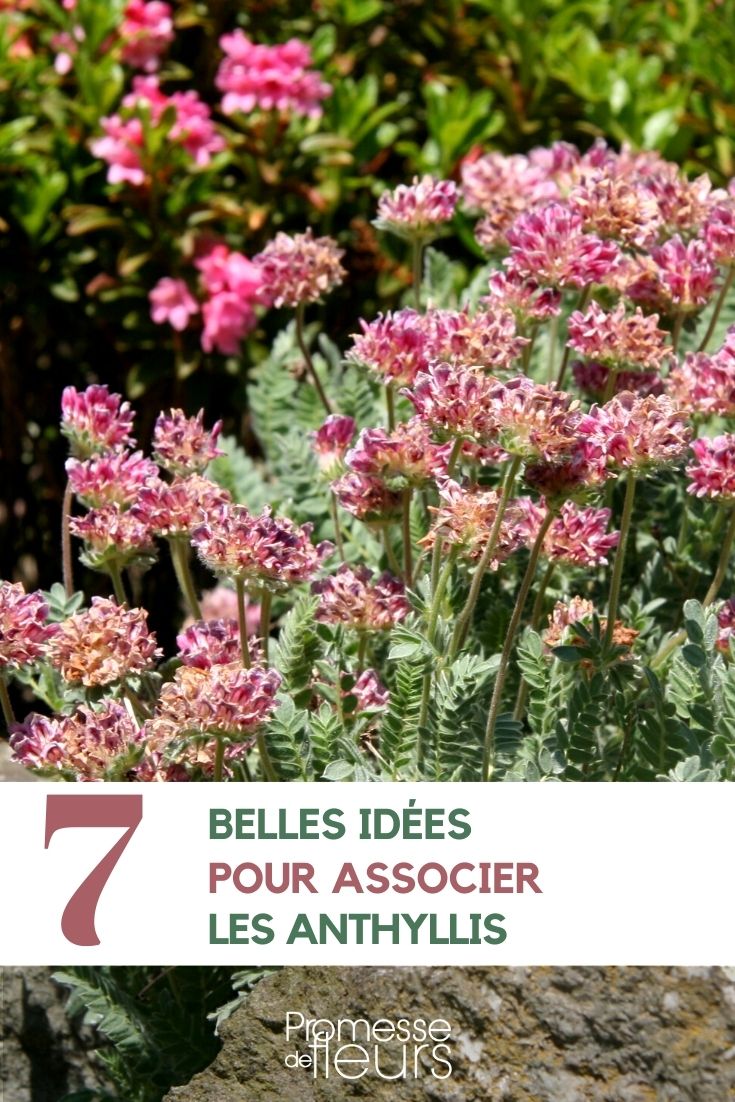
By definition, a bank is a sloped terrain that is subject to soil erosion. When it is located in a dry climate and sits on poor, stony soil, its vegetation can be perplexing. Fortunately, some groundcover plants thrive in these challenging conditions and manage to stabilise slopes quickly and sustainably. Among these is Anthyllis montana ‘Rubra’, which bears charming clusters of carmine flowers throughout the summer.
It can be paired with Arabis caucasica ‘Variegata’, which is very floriferous, forming immaculate cushions from March to May that stand out against lovely variegated foliage. To complement the colour of the Anthyllis, plant the magnificent creeping Plumbago Ceratostigma plumbaginoïdes: its deep azure flowers will stand out beautifully! Finally, the variegated ivy Hedera helix ‘Goldchild’ with its green foliage edged in buttery yellow will add year-round appeal to the ensemble.
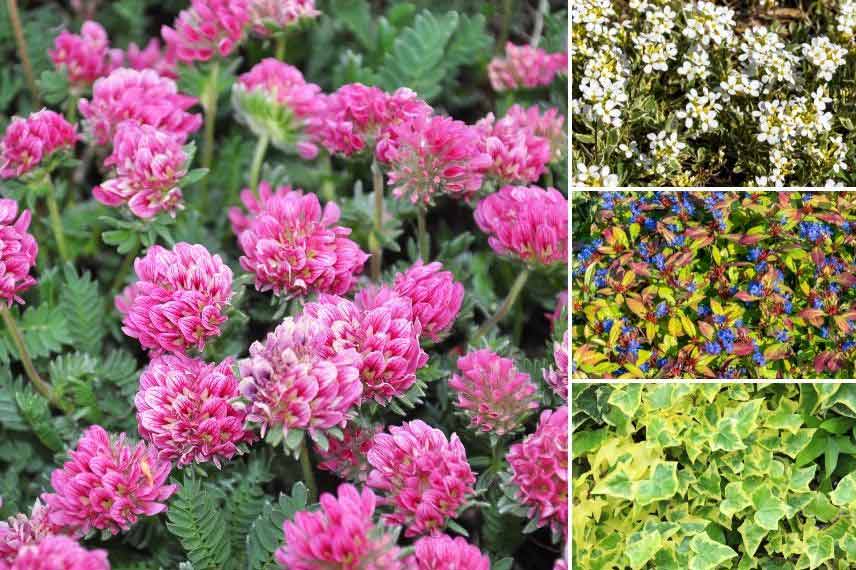
Anthyllis montana ‘Rubra’, Arabis caucasica ‘Variegata’, Ceratostigma plumbaginoïdes and Hedera helix ‘Goldchild’
With colourful foliage
For a colourful display from spring to autumn, consider foliage combinations! For example, integrate Anthyllis vulneraria alongside Persicaria ‘Painter’s Palette’ and Astilbe ‘Chocolate Shogun’. Their colours will harmonise in soft, warm tones.
Next to them, a generous clump of New Zealand Flax Phormium tenax ‘Sundowner’ with long, linear, stiff leaves, a bronze green that takes on brown tones, marginate with pink more or less intense depending on the seasons, will make this composition attractive all year round.
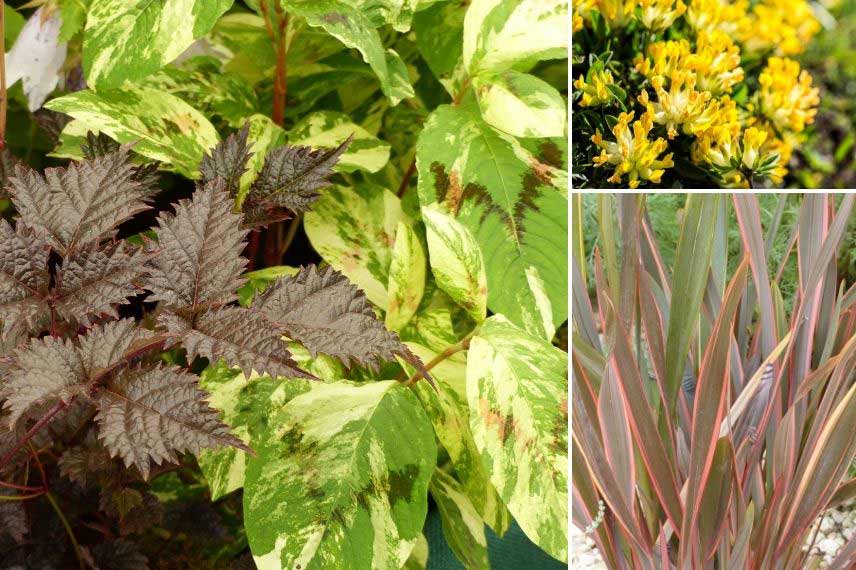
Persicaria ‘Painter’s Palette’ and Astilbe ‘Chocolate Shogun’, Anthyllis vulneraria and Phormium ‘Sundowner’
In a pot or in a planter
Anthyllis thrive in containers or pots, allowing for close-up enjoyment. The small size of Anthyllis montana (with a height at maturity of 15 cm and a spread of 20 cm) invites you to admire its summer flowering. It’s tempting to pair it with some summer plants.
The Inca Lily or Alstroemeria ‘Inticancha Machu’, particularly robust, floriferous, and compact, will shine with its deep pink lily-like flowers, subtly striped with brown, blooming relentlessly from June to October. Accompany it with a small white-flowered rose, such as the Dwarf Rose ‘Schneeküsschen’. This delightful new miniature rose is charmingly hidden beneath clusters of semi-double, pale pink-tinged white roses. Finally, to complete your pot composition, add aBoxwood shaped into a ball: an elegant country-style atmosphere is guaranteed on the terrace with this quartet of easy-care plants!
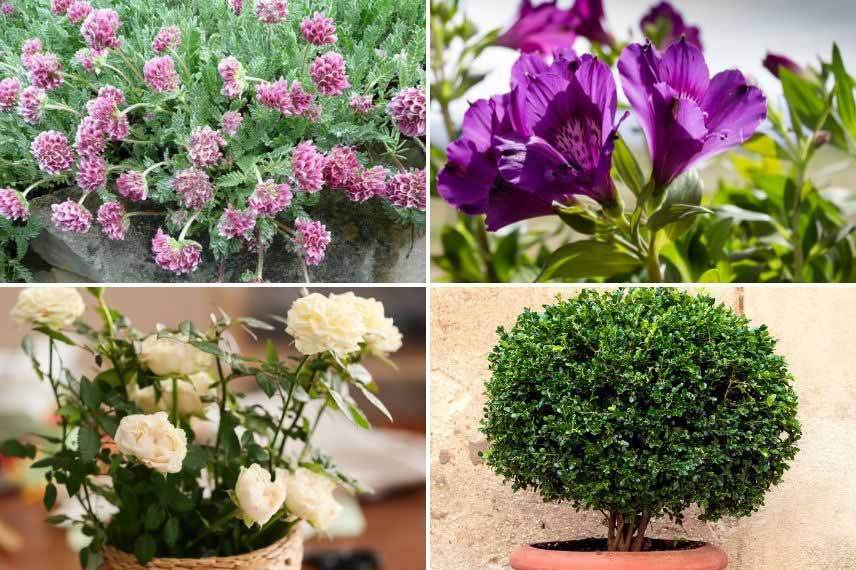
Anthyllis montana, Alstroemeria ‘Inticancha Machu’, Dwarf Rose ‘Schneeküsschen’, and boxwood shaped into a ball

- Subscribe!
- Contents
Comments