


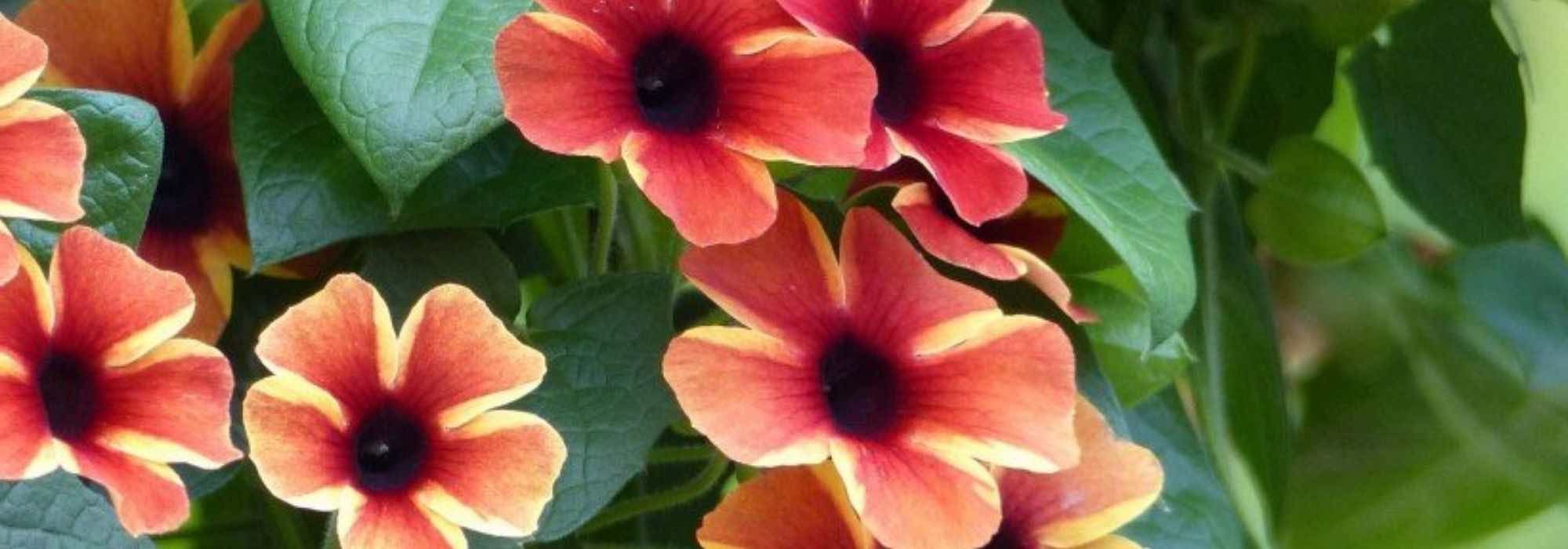
Pairing ideas with Black-eyed Susan
Slide this beautiful climbing plant into your garden scenes.
Contents
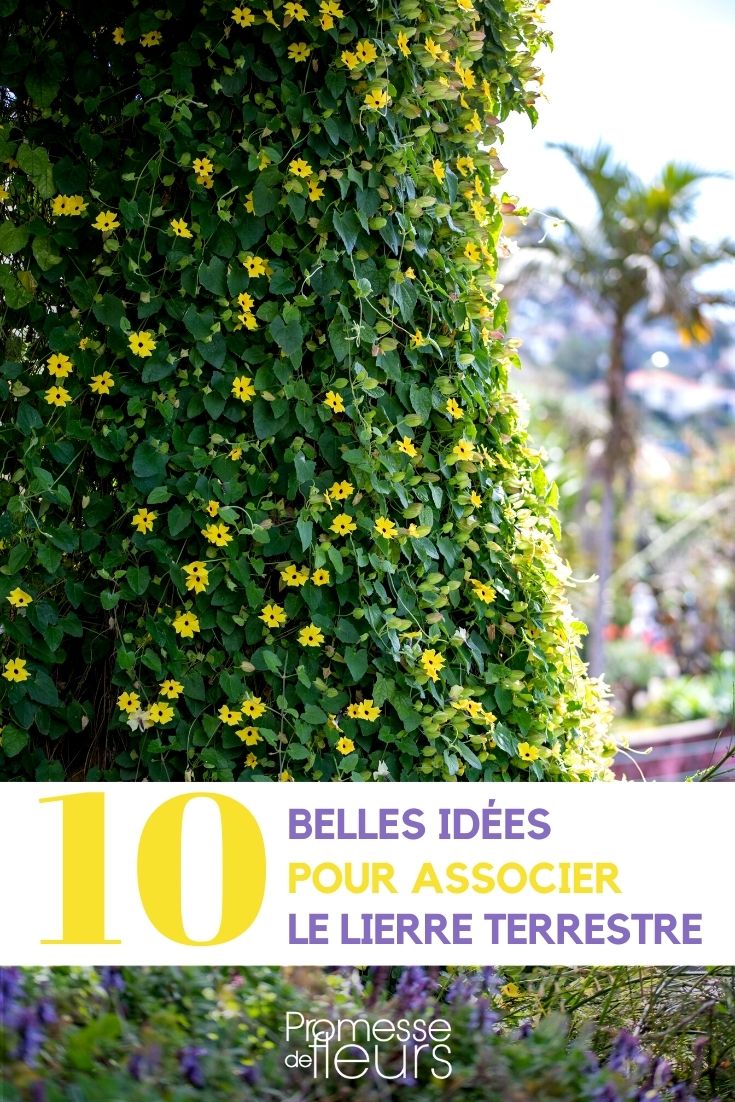
Planted as a plug plant or sown from seeds, Thunbergia or Black-eyed Susan is grown here as an annual due to its sensitivity to cold. The Black-eyed Susan, recognised by its very dark-eyed flowers, develops quickly into a bushy liana and can reach 2 m in a single season. This allows for full enjoyment, albeit ephemeral, for example, to fill young flower beds. It requires warmth, sunlight or light shade and protection from cold winds to thrive. It grows both in the ground and in pots, in light, rich soil or substrate, without dropping below 8° C. However, if you bring it indoors for the winter, above 10° C and in very bright conditions, such as in a greenhouse or conservatory, you can then cultivate it permanently. Its flowers are often yellow or orange for the classics, with salmon, brick red, or pink for the less common varieties.
Discover how to install it and combine it in the garden or on balconies and terraces to enjoy its lush foliage and exotic appearance.

In a vibrant bed of perennials in warm tones
Natural first place for the vibrant colours of Black-eyed Susans: alongside summer or late summer perennials in warm tones like a sunset. Thunbergia will quickly form a backdrop and fill the gaps between your perennials while weaving its way around. This can be interesting, for example, in a young border before the perennials fill out. But don’t reserve it just for that use! It’s worthwhile to mix in a few annuals with your borders; they always bring something different and create a surprise effect for a season. The perennials provide some shade at the base of the Thunbergia, helping to keep the soil cool.
Here, the sparkling Thunbergia ‘Tangerine Slice’ is paired with the delicious chocolate-purple foliage of Cotinus ‘Grace’ and the coppery tones of Miscanthus sinensis ‘Ferner Osten’. In front, a Kniphofia ‘Orange Vanilla Popsicles’ echoes the Thunbergia with its orange-vanilla inflorescence. An Echinacea ‘Tangerine Dream’ and a Sanguisorba officinalis ‘Tanna’ showcase their upright graphic forms and warm colours.
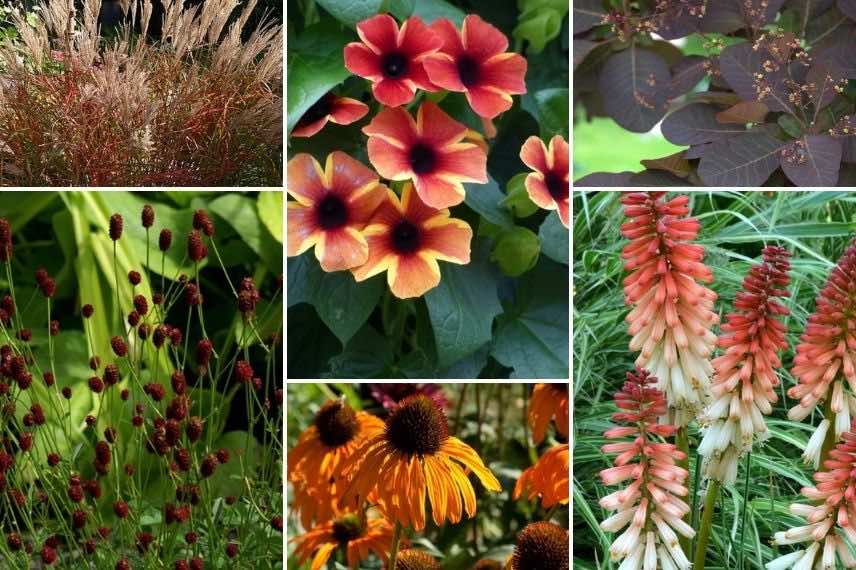
Miscanthus sinensis ‘Ferner Osten’, Thunbergia ‘Tangerine Slice’, Cotinus ‘Grace’, Kniphofia ‘Orange Vanilla Popsicles’, Echinacea ‘Tangerine Dream’, Sanguisorba officinalis ‘Tanna’
In carpet
Another possible use for this generous voluble climbing plant is to let it run along the ground, between and beneath other plants, to create a groundcover carpet. At the base of bushes, for example, it is little hindered by competition, alongside another vigorous plant, the Nasturtium. The Thunbergia quickly covers free spaces with its lush foliage and advantageously forms a temporary groundcover.
The Tropaeolum tuberosum, with its orange trumpets, is a less common, bulbous nasturtium, tender like the Black-eyed Susan, here Thunbergia alata ‘Orange’.
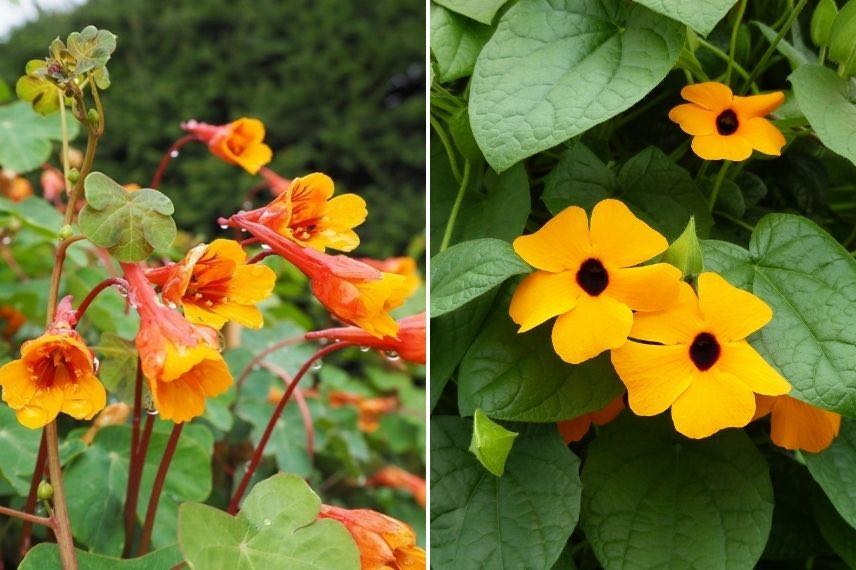
Tropaeolum tuberosum and Thunbergia alata ‘Orange’
Discover other Black-eyed Susans
View all →
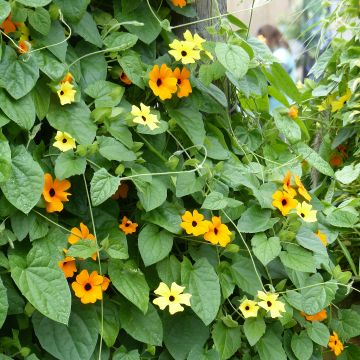
Available in 1 sizes
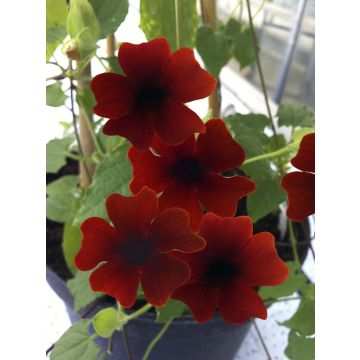
Available in 0 sizes
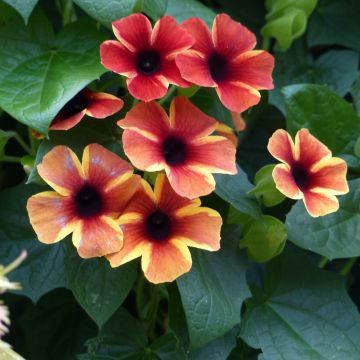
Available in 1 sizes
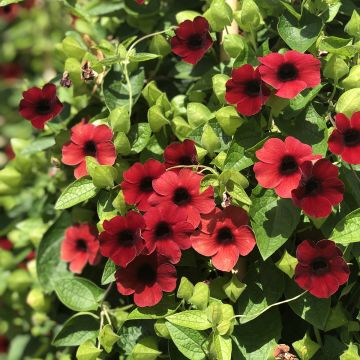
Available in 2 sizes
Available in 1 sizes
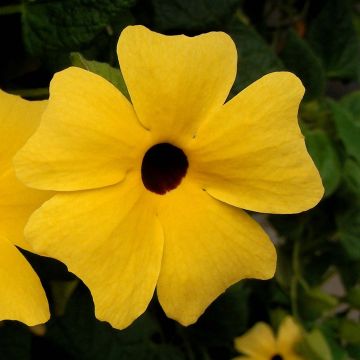
Available in 1 sizes
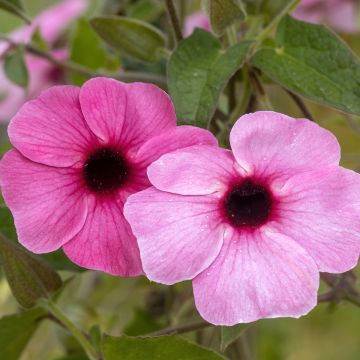
Available in 1 sizes
In an exotic scene
Black-eyed Susan has its place in an exotic scene. As a native of tropical regions, both in terms of its growing conditions and its appearance: it showcases its lush foliage and characterful flowers with that typical black eye. Many beautiful exotics can pair well with it, think of Cannas, Strelitzias, Hakonechloas, Hibiscus…
Mix, for example, the beautiful Thunbergia ‘African Sunset’ in cream and apricot hues, soft and delicate, with Brugmansia arborea, with its long, fragrant trumpets. A Fargesia nitida ‘Red Dragon’ (non-running bamboo), a Fuchsia microphylla ssp microphylla with mini fuchsia trumpets, and a Dahlia ‘Blue Bell’ with large indigo violet flowers create a beautiful contrast and bring vitality to the whole.
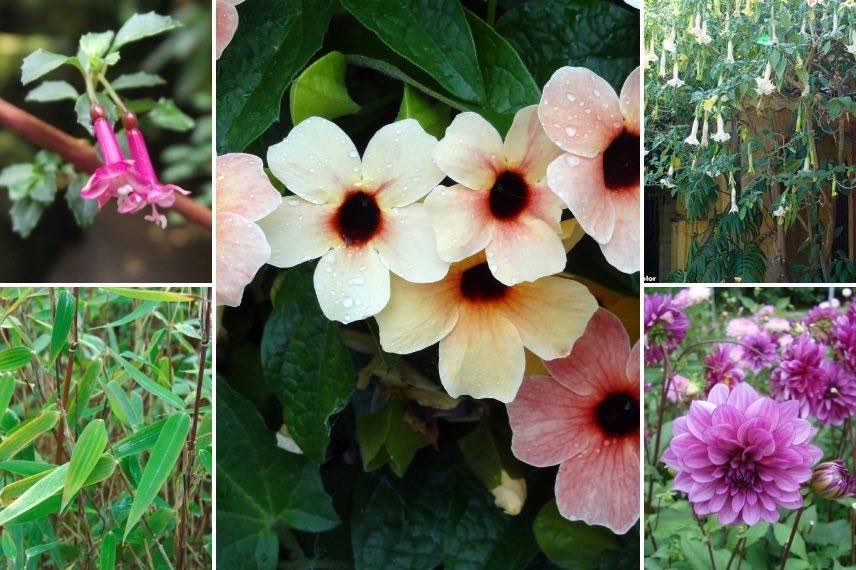
Fuchsia microphylla ssp microphylla, Thunbergia ‘African Sunset’, Brugmansia arborea, Dahlia ‘Blue Bell’, Fargesia nitida ‘Red Dragon’
In a shrub border
As with the first suggestion in the midst of perennials, Black-eyed Susan establishes itself in a bushy bed, cheerfully colouring it while weaving through the gaps for a season.
In the company of shrubs suited to a mild climate, for example, which will appreciate the same conditions, it fills empty spaces with its lush foliage. As it tolerates a bit of shade, even enjoying it during the hottest hours, consider the light shade of the Albizia julibrissin ‘Ombrella’, and also think of Oleander.
Here, a Thunbergia alata ‘Sunny Susy Red Orange’ is accompanied by a Pomegranate with opulent red-orange flowers, Punica granatum ‘Maxima Rubra’. A touch of red is also introduced with the lovely fruits of the Arbutus unedo. Celestial and vibrant blues, with the flowering of the Ceratostigma ‘Willmotianum’ and the foliage of the Senecio mandraliscae add to the brilliance of this combination of primary colours.
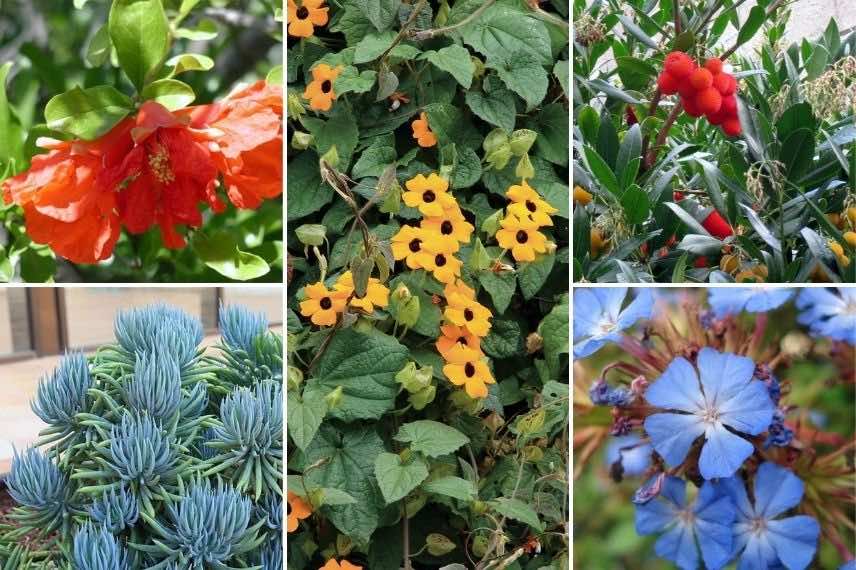
Punica granatum ‘Maxima Rubra’, Thunbergia alata ‘Sunny Susy Red Orange’, Arbutus unedo, Ceratostigma ‘Willmotianum’, Senecio mandraliscae
With other climbing volubles
Black-eyed Susans naturally pair with other climbing, voluble, and light plants like them. Consider perennial climbers such as Clematis, Akebia quinata, or Solanum. They can be planted in the ground as well as in pot gardens.
Also pair them with tender climbers, grown as annuals, such as Morning Glories. Here, the Thunbergia ‘Blushing Suzie’ with pink flowers contrasts with a Morning Glory ‘Heavenly Blue’, joined by the delicate Sollya heterophylla with bright blue bells. A Gladiolus callianthus, refined and fragrant, adds its light.
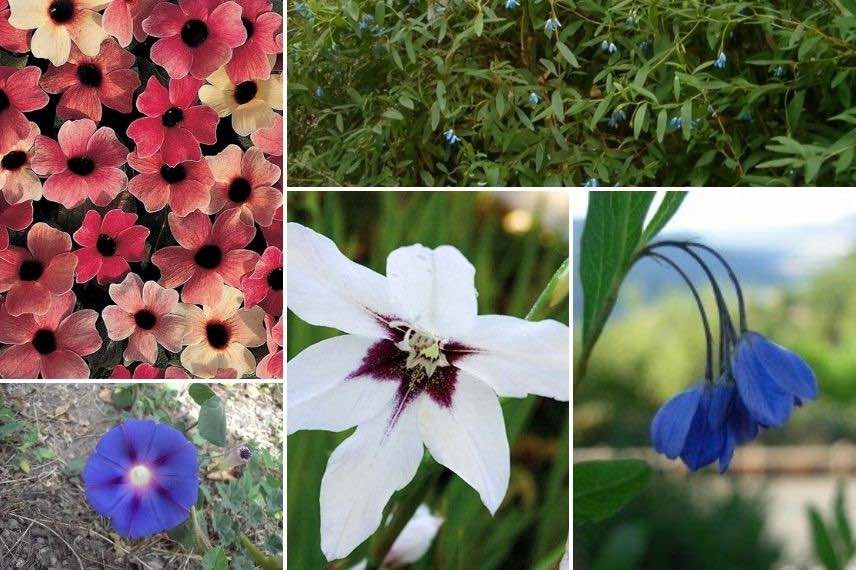
Thunbergia ‘Blushing Suzie’, Sollya heterophylla (2 photos), Gladiolus callianthus, Morning Glory ‘Heavenly Blue’
On hold
A suspension at the right height allows you to beautifully cascade the black-eyed Susan. Plant it alongside, for example, Pelargoniums or Dipladenias, both of which are also annuals.
Here, the Thunbergia alata yellow is planted with a Nasturtium ‘Baby Orange’, which also cascades with its beautiful round foliage and yellow flower maculated with red, and an Alstroemeria ‘Duchesses Aliénor’, which adds a bit of height to the arrangement, reaching 35 cm.
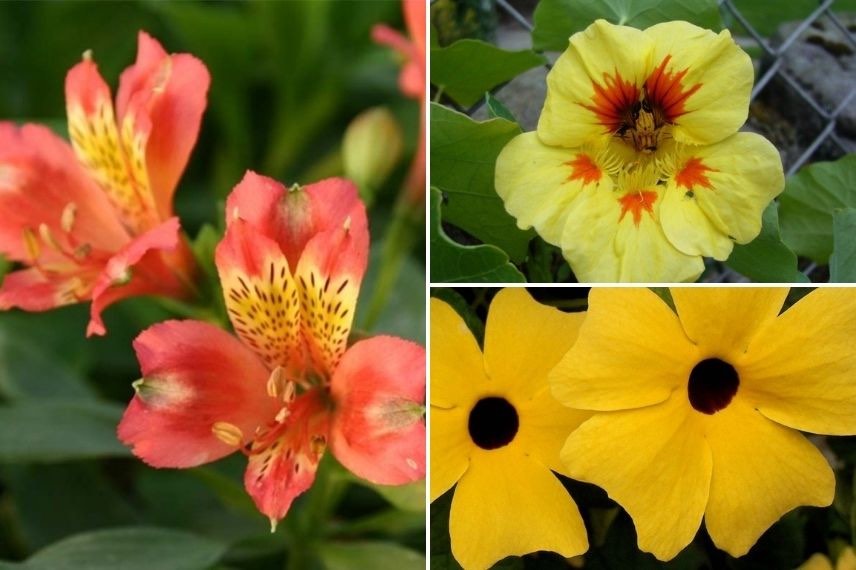
Alstroemeria ‘Duchesses Aliénor’, Nasturtium ‘Baby Orange’, Thunbergia alata yellow
To soften a somewhat rigid scene
Black-eyed Susans can also add a touch of flexibility, whimsy, and vibrancy to somewhat rigid perennials such as upright perennials with erect stems: Kniphofias, Gladioli, Mulleins, Foxgloves, Delphiniums, to name just a few.
Here is a Thunbergia alata mix, in yellow and orange, paired with a Gladiolus, Gladiolus ‘Cream Perfection’, a blue Sage Salvia patens, and a Mullein Verbascum ‘Cotswold Queen’.
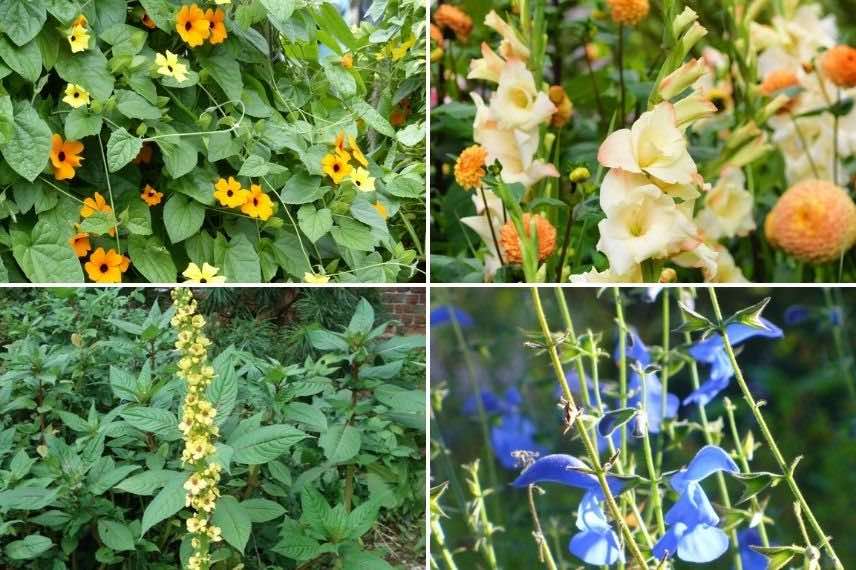
Thunbergia alata mix, Gladiolus ‘Cream Perfection’, Salvia patens, Verbascum ‘Cotswold Queen’
Alone, in sculpture
Here, the manual workshop! On a lovely basket, set up a structure of flexible stems like those of hazel, for example, in a teepee shape, with 5 branches tied at the top. Grow 3 young plants of Thunbergia on it. Its vigour will cover the entire structure up to the top, providing you with a triangular cone-shaped plant sculpture.
In the vegetable garden
In a square vegetable garden, for example, where geometry reigns, structures are advantageously used to support climbing beans or cucurbits. During a season when the structure remains unused, take the opportunity to plant a Thunbergia at its base and watch it bring its flexibility and bright, cheerful flowers as a setting for your beautiful vegetables.
In a pot garden
As mentioned earlier: on a balcony or terrace, have fun planting a variety of perennials and annuals in pots of different heights and diameters to create a truly living garden. There’s nothing like mixing annuals and perennials with varied pots to create this vibrancy.
Imagine, for example, a pot with a bamboo structure for Thunbergia. Plant an ornamental tobacco in another pot, which is also annual. Add Cosmos, the kings of lightness in the realm of annual flowers. Include bamboo for the evergreens, sages and lavenders for the perennials, and why not some culinary herbs for added flavour.
Here, a Thunbergia alata mix is surrounded by a black-stemmed Bamboo, Phyllostachys nigra, an ornamental tobacco in white, Nicotiana sylvestris, a Cosmos Xanthos in pastel yellow, a Rosemary, a Lavender ‘Hidcote Blue’, and a Sage Salvia forsskaolei.
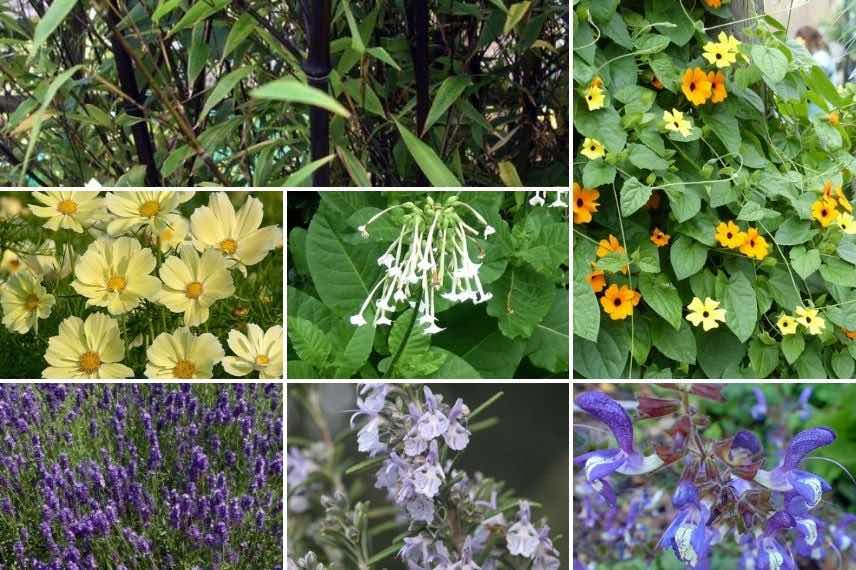
Clockwise from top left: Phyllostachys nigra, Thunbergia alata mix, Salvia forsskaolei, Rosemary, Lavender ‘Hidcote Blue’, Cosmos ‘Xanthos’, Nicotiana sylvestris
- Subscribe!
- Contents
Comments