






























Pairing ideas with Schizachyrium
Our 5 inspiration ideas
Contents
The Schizachyrium scoparium, or “broom grasses”, is a perennial grass valued for its marcescent foliage that changes colour throughout the seasons. Rarely used, it is a grass that is both graceful and robust. It grows in an upright clump, reaching heights of 40 cm to 1.20 m, remaining decorative until the heart of winter. Blue-green in summer, like the varieties ‘Blue Heaven’ and ‘Prairie Blues’, it adorns itself with orange and purple in autumn. Vigorous and hardy, it withstands both cold and heat, thriving in full sun in very well-drained, even poor and dry soil. Like many grasses, it fits well in both contemporary and natural settings. It will find its place in a dry garden or scree garden, in the most inhospitable corners, bringing height, volume, colour, and structure. It adds a light and vibrant touch to large shrub and perennial borders, in dry rockeries and natural meadows, to line a natural and wild path, as well as in a contemporary garden and graphic garden.
Discover our 5 ideas for creating beautiful associations with Schizachyrium in the garden!
→ Also read our complete sheet “Schizachyrium scoparium: planting, cultivation”

In a scree garden
In dry or particularly well-drained soil, Schizachyrium scoparium can be surrounded by other plants that, like it, tolerate summer drought well. It easily finds its place in the minimalist decor of a dry or gravel garden. The variety ‘Chameleon’ is a beautiful cultivar that will not exceed 60 cm in height when in flower. To accompany it, consider low grasses such as Sesleria or ‘Intense Blue’ Fescue, ‘Elijah Blue’, or even amethyst fescue, which form bristly blue or violet clumps. You can also add perennial plants with late flowering that lasts until the onset of winter, autumn Asters or perennial Chrysanthemums. To structure the scene, focus on the upright flowers of Eryngium planum ‘Blue Hobbit’, ‘Lollipop’ Buenos Aires Verbena, and a Perovskia. Complete with succulent perennials and groundcover such as bright Sedums (Sedum reflexum ‘Angelina’) or a carpet of houseleeks to create a contrast in foliage.
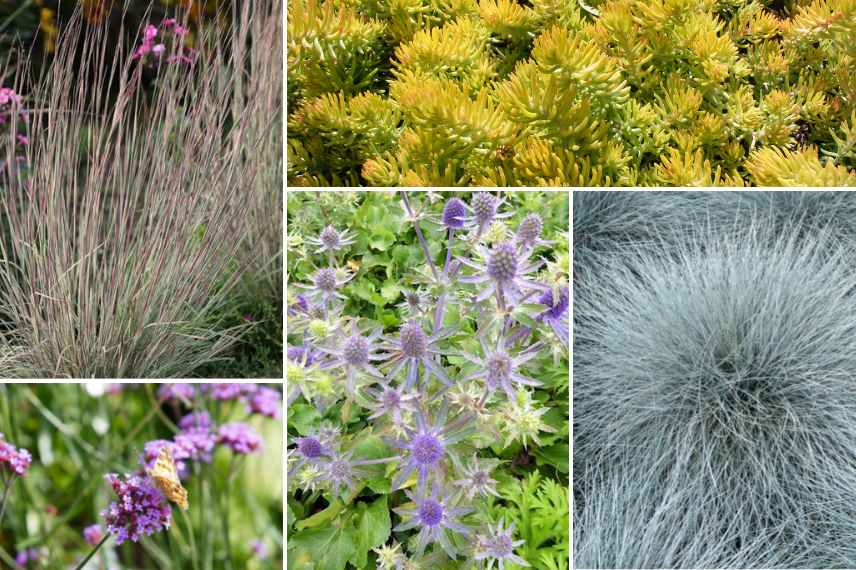
Schizachyrium scoparium ‘Chameleon’, Sedum reflexum ‘Angelina’, ‘Lollipop’ Buenos Aires Verbena, Eryngium planum ‘Blue Hobbit’, and blue fescue
Read also
Grasses: which variety to choose?In a naturalistic border
With its tall silhouette and delicate inflorescences, Schizachyrium scoparium is perfectly suited for a naturalistic or meadow-style border, adding lightness alongside other summer-flowering perennials. Choose a variety with a beautiful stature, such as Schizachyrium scoparium ‘Standing Ovation’, which forms a clump 1.2m tall. As it remains upright without drooping, it is particularly interesting in borders to punctuate and fill empty spaces. It pairs well with equally undemanding plants that appreciate well-drained soils. Create a backdrop with other grasses like Panicum virgatum ‘Prairie Sky’, and Miscanthus, whose flowering is a true spectacle at the end of the season. Also consider trees and shrubs with autumn colours like smokebushes, which will echo the fiery hues of its foliage after summer. In a perennial border, they will provide a backdrop for the summer blooms of orange echinaceas that resonate with its autumn foliage, along with more fluid perennials like cosmos, Gauras with their light blooms, and Asters, such as Aster turbinellus with its bright mauve-blue flowers, or the very versatile Aster divaricatus ‘Beth Chatto’. Some Nepetas can complete this scene that requires very little watering, while the tall hollyhocks will provide a contrast of forms.
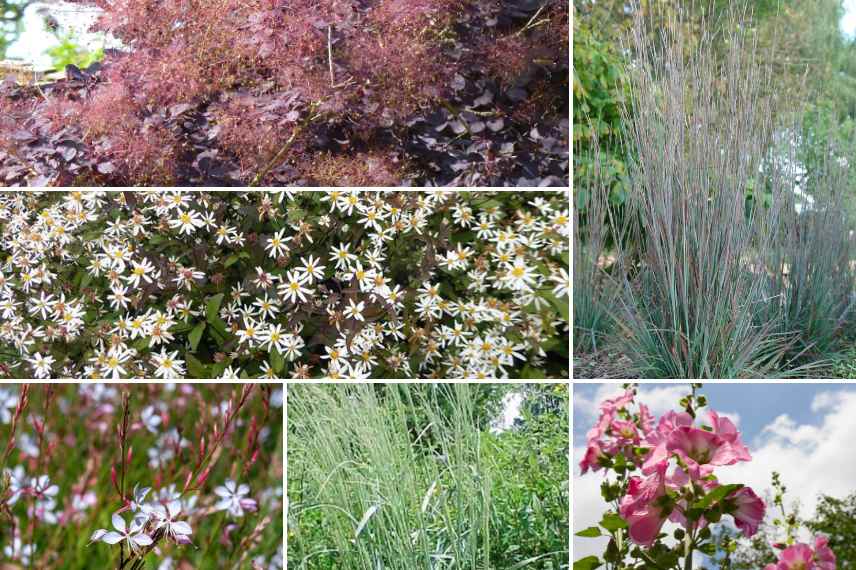
On the right, Schizachyrium scoparium ‘Standing Ovation’, accompanied by a beautiful purple Cotinus ‘Grace’, Asters divaricatus ‘Beth Chatto’, Gauras, Panicum virgatum ‘Prairie Sky’, and hollyhocks
Discover other Schizachyrium
View all →
Available in 3 sizes
Available in 2 sizes
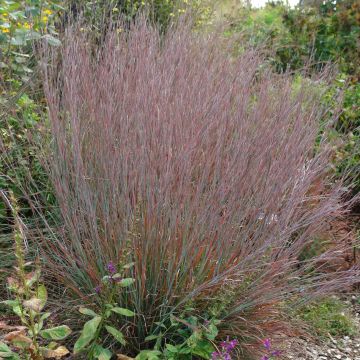
Available in 2 sizes
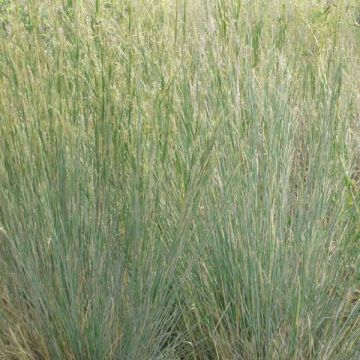
Available in 2 sizes
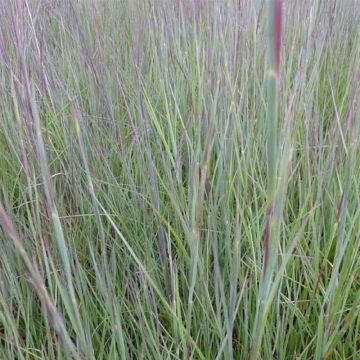
Available in 2 sizes
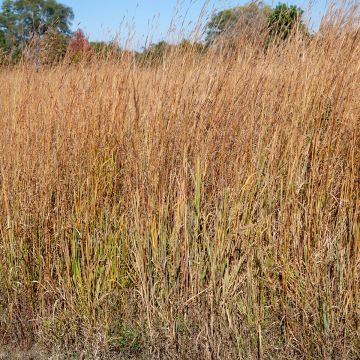
Available in 1 sizes
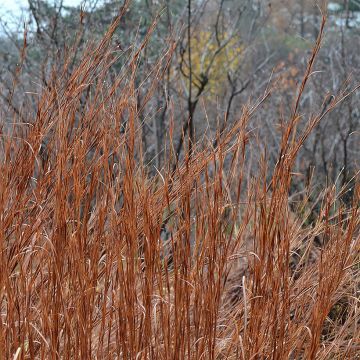
Available in 1 sizes
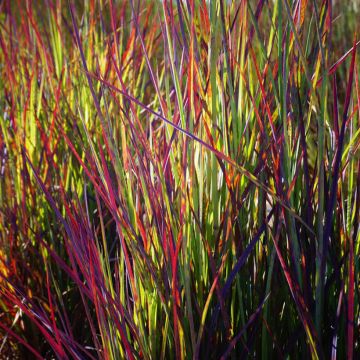
Available in 1 sizes
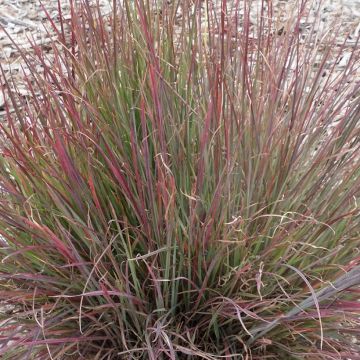
Available in 1 sizes
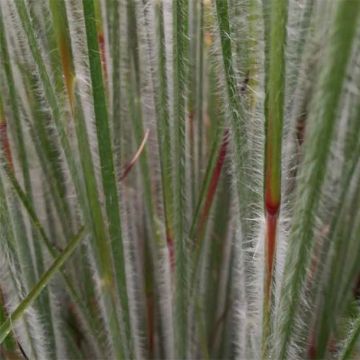
Available in 2 sizes
In a grass garden
Ornamental grasses easily combine with one another; when planted in masses, they create a magical, dynamic, and graphic scene. This type of display requires almost no watering and demands minimal maintenance. You can create a grass garden by incorporating Schizachyrium with other poaceae such as Stipa calamagrostis, Stipa gigantea, Miscanthus, Deschampsias flexuosa, a Andropogon gerardii ‘Red October’ that turns red in autumn, or even the poetic fountain grass. Place the tallest at the back of the border. Remember to intersperse clumps of short grasses suited to challenging conditions, such as Seslerias and Stipa tenuissima. In this highly graphic environment, install some tall and naturally appearing perennials, such as hybrid mulleins and low-maintenance asters. Large sedums like Sedum ‘José Aubergine’ will carpet the ground, creating an interesting visual play and adding charm to the late season.
→ Also discover the visit of Alexandra to Jardin Plume
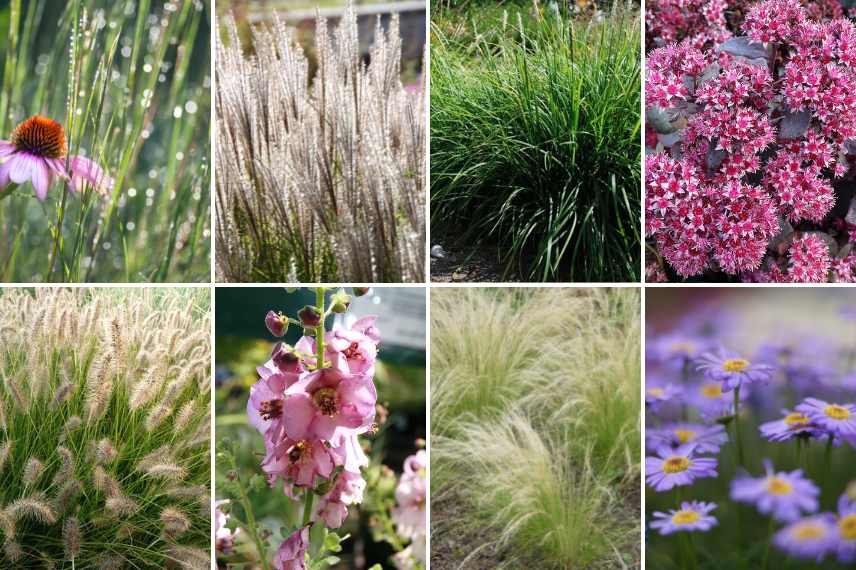
Schizachyrium scoparium and purple coneflower, Stipa calamagrostis, Sesleria automnalis, Sedum ‘José Aubergine’, Pennisetum, Verbascum ‘Sugar Plum’, Stipa tenuissima and asters
Read also
7 blue grassesOn the edge
The lowest varieties can be planted along a pathway or a natural trail. For example, opt for a Schizachyrium scoparium ‘Blue Heaven’, a variety with an upright habit that forms a bush with erect stems. This grass has the advantage of maintaining its structure throughout the year, even in winter, when its dry foliage persists. You can pair it with the sumptuous Stipa arundinacea, whose foliage turns russet in autumn. Both will provide beautiful structure and plenty of colour to the border. For a lush display, intersperse with Rudbeckia maxima, Dianthus plumarius, Euphorbias myrsinites, wormwoods, lavenders, and Scabiosa ‘Chile Black’.
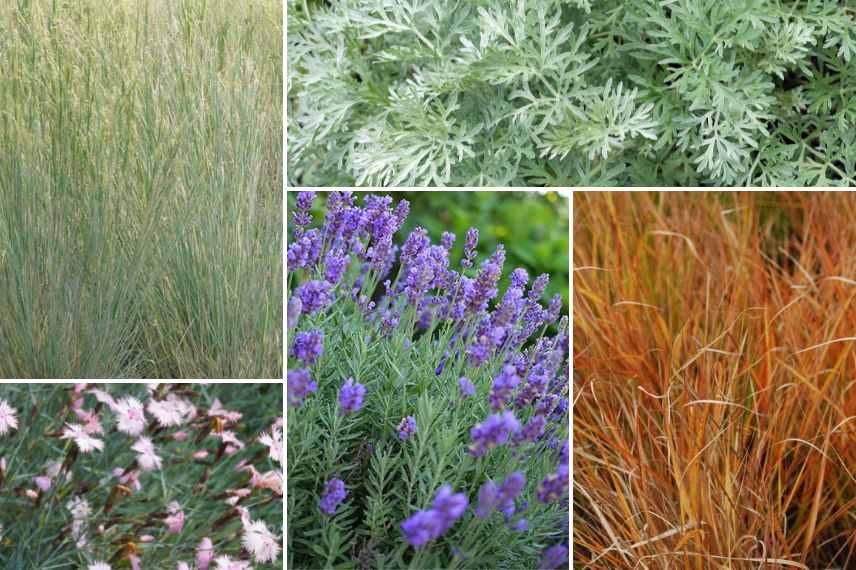
Schizachyrium scoparium ‘Blue Heaven’, wormwood, Dianthus plumarius, Lavandula intermedia, and Stipa arundinacea ”
In a contemporary garden
With its bristly appearance, the Schizachyrium scoparium adds a graphic touch to a contemporary garden or a dry or mineral garden. It punctuates a clean decor alongside a few clumps of upright grasses, such as the upright Panics (Panicum virgatum ‘Blue Darkness’, for example). Incorporate clumps of perennials or bulbous plants such as Agapanthus, a few white Foxtail Lilies (Eremurus), decorative Alliums, and an Eryngium yuccifolium, this stunning sea holly. These plants will create beautiful punctuations and striking contrasts of colours and shapes. For an even more understated and minimalist scene, opt for plants from dry environments such as medium-sized Agaves, an Helictotrichon sempervirens ‘Pendula’, a persistent grass with blue-silver foliage that has metallic reflections, perhaps placed on a bed of white pebbles.
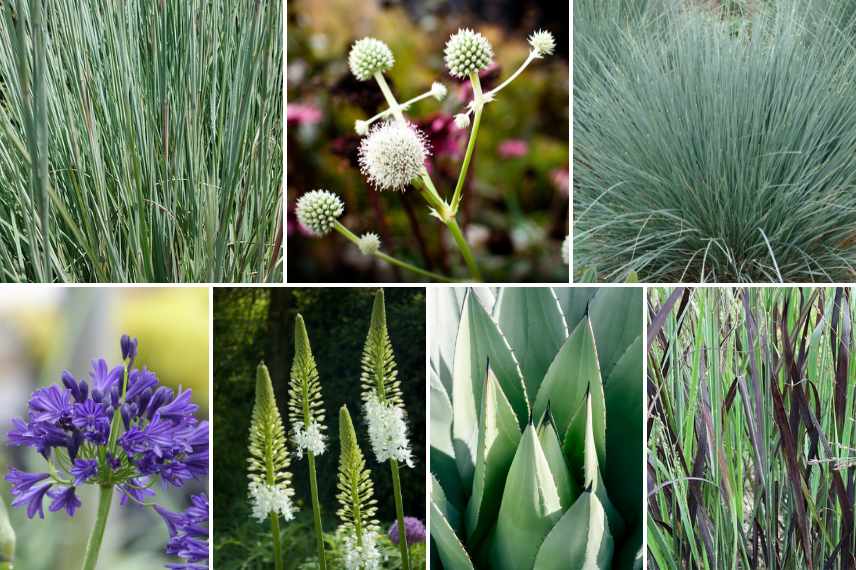 Schizachyrium scoparium, Eryngium yuccifolium, Helictotrichon sempervirens, Agapanthus ‘Royal Velvet’, Eremurus, Agave parryi, and Panicum virgatum ‘Blue Darkness'[/caption>
- Subscribe!
- Contents
![[plant1="Schizachyrium"] to other grasses in your garden can create beautiful and harmonious landscapes.](https://en.promessedefleurs.eu/blogwp/wp-content/uploads/2022/11/associer-le-schizachyrium.jpg "associate the Schizachyrium")
Comments