





























Choosing a Sanguisorba
BUYING GUIDE AND CRITERIA FOR FINDING THE IDEAL PIMPERNEL
Contents
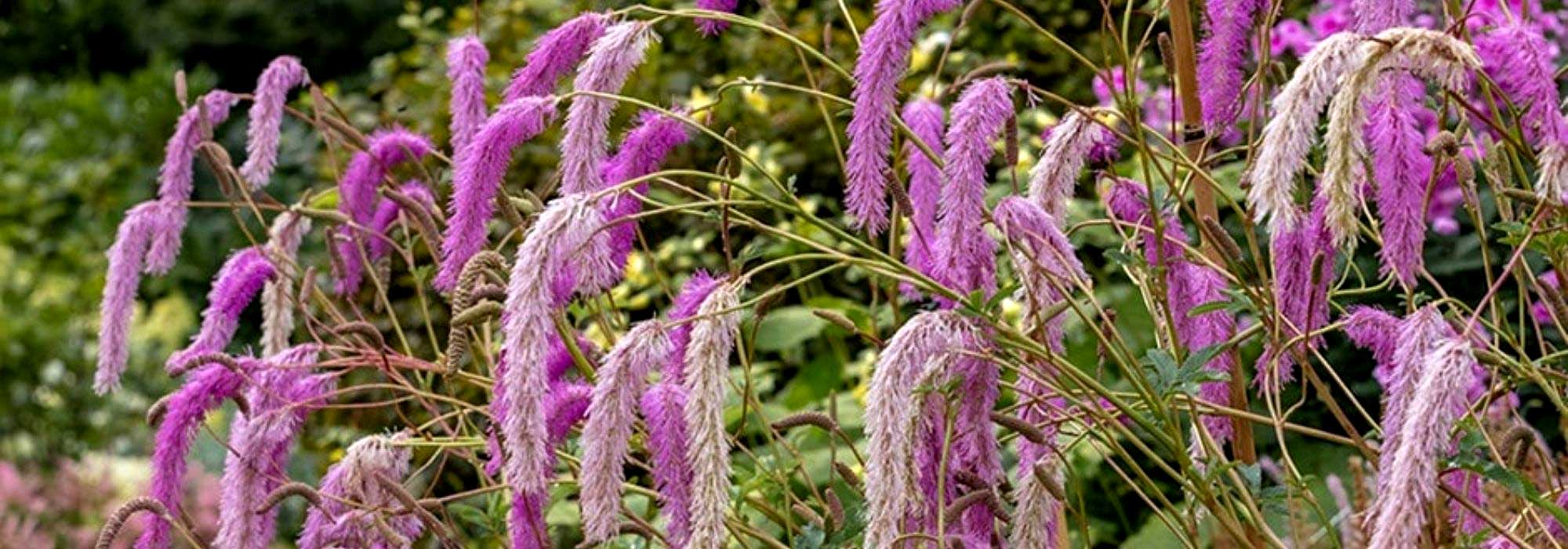
Beautiful rhizomatous perennials, Sanguisorbas, also charmingly known as Burnets, are distinguished by their flowering spikes, which can be either short and cylindrical or feathery and flexible, depending on the species and cultivars. Perfectly hardy and easy to care for, they mostly prefer fresh, rich soil. These perennials, which are too rarely used in our gardens, are ideal for naturalistic scenes, thanks to their simple, rustic appearance. Provided they are given the growing conditions they favour, they require little maintenance and bloom for long weeks during the summer.
Flower shape and colour, height, or use: here is our buying guide based on different criteria. It will be useful for selecting from our collection of Sanguisorbas those that will brighten your days!
→ Planting, cultivation, and maintenance, follow the guide to grow Burnet like an expert

According to the shape of the flowers
Flowering in short cylindrical spikes or longer feathery tassels, the various Burnets can provide a varied effect in the garden, depending on which ones are chosen. Diverse in their appeal for garden displays and depending on the plants they are associated with, here are the main types of flowering of Sanguisorbas.
Burnets with Short, Stiff Spikes
In this category, interesting for creating natural-looking borders as well as for more graphic and modern arrangements, we find:
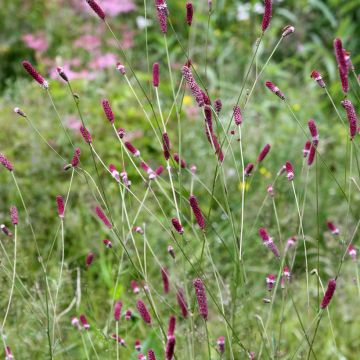
- the Sanguisorba tenuifolia ‘Cangshan Cranberry’ and ‘Pink Elephant’
- the Sanguisorba officinalis ‘Chocolate Tip’, ‘Arnhem’, ‘Tanna’, ‘Morning Select’, ‘Red Thunder’ and ‘Pink Tanna’
- the Sanguisorba ‘Little Angel’
- the Sanguisorba menziesii
- and the Sanguisorba ‘Proud Mary’
Burnets with Longer, Feathery Spikes
Swaying poetically in the wind, these Burnets have longer, feathery spikes that are absolutely delightful:
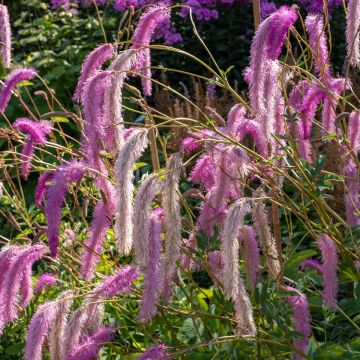
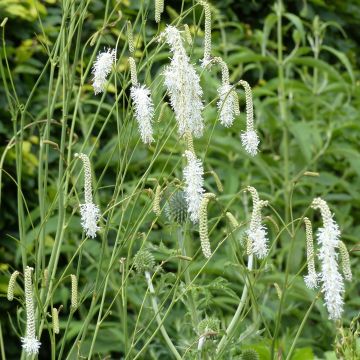
- the Sanguisorba tenuifolia ‘Purpurea’ and ‘Alba’
- the Sanguisorba canadensis
- the Sanguisorba hakusanensis
- the Sanguisorba ‘Pink Brushes’
- and the Sanguisorba obtusa
Burnets with Globose Flowers
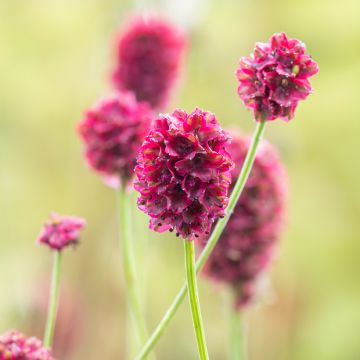
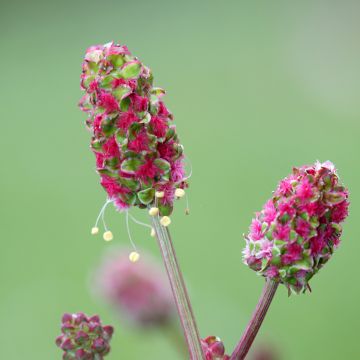
Charming and unique, the Sanguisorba minor is an ancient aromatic perennial, with green and pink globose flowers.
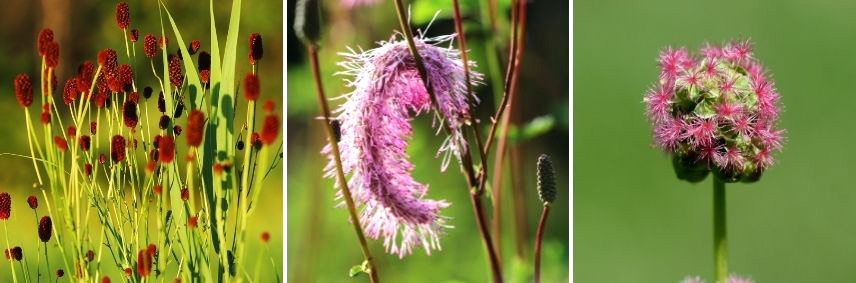
Short, feathery or globose: the flowers of Burnets can come in different shapes (Sanguisorba officinalis ‘Great Burnet’, Sanguisorba obtusa and Sanguisorba minor)
According to the colour of the flowers
The colour palette of Sanguisorbas mainly includes flowers in shades of pink and purple, but some cultivars are also white.
White Flowered Sanguisorbas
This selection includes Sanguisorba tenuifolia ‘Alba’ and Sanguisorba canadensis.
Pink Flowered Sanguisorbas
A very prominent colour among Sanguisorbas, ranging from soft pink to deeper raspberry pink:
- the Sanguisorba minor
- the Sanguisorba tenuifolia var. ‘Purpurea’ and ‘Pink Elephant’
- the Sanguisorba hakusanensis
- the Sanguisorba hybrid ‘Pink Brushes’
- the Sanguisorba obtusa
- and the Sanguisorba officinalis ‘Pink Tanna’
Red and Purple Flowered Sanguisorbas
Among the Sanguisorbas with dark red or purple spikes, we find:
- the Sanguisorba tenuifolia ‘Cangshan Cranberry’
- the Sanguisorba officinalis ‘Chocolate Tip’, ‘Arnhem’, ‘Morning Select’ and ‘Tanna’
- the Sanguisorba ‘Little Angel’
- the Sanguisorba menziesii
- the Sanguisorba ‘Proud Mary’
- as well as Sanguisorba ‘Red Thunder’
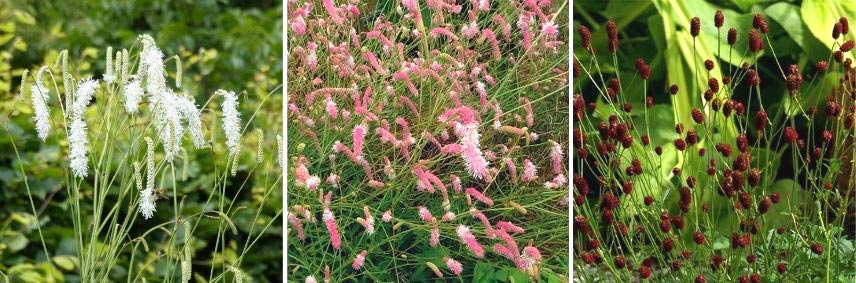
White, pink, or purple, you will certainly find the Sanguisorba whose flower colour meets your desires (Sanguisorba ‘Alba’, Sanguisorba hybrid ‘Pink Brushes’, and Sanguisorba officinalis ‘Tanna’)
Discover other Sanguisorba
View all →
Available in 1 sizes
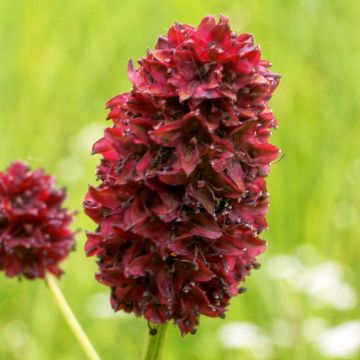
Available in 1 sizes
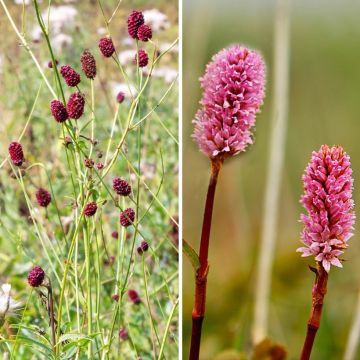
Available in 0 sizes
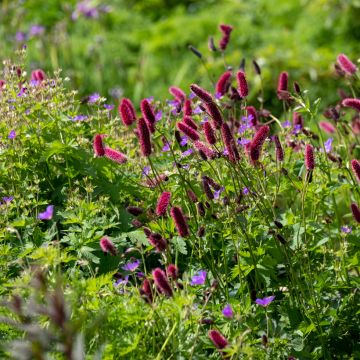
Available in 1 sizes
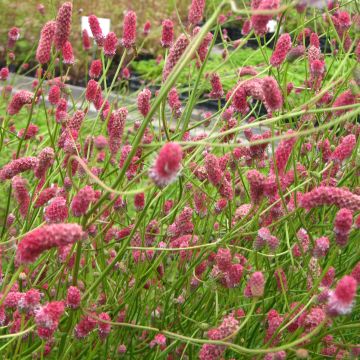
Available in 1 sizes
Available in 2 sizes
Available in 1 sizes
Available in 1 sizes
Available in 2 sizes
Available in 2 sizes
According to the flowering period
The Pimprenelles Flowering in May-June
Among the earliest Sanguisorbas, we can mention Sanguisorba ‘Chocolate Tip’ and Sanguisorba minor. Their flowering enlivens the garden from May onwards.
The Pimprenelles Flowering in July, August, September
Summer-flowering perennials, most Pimprenelles (‘Cangshan Cranberry’, ‘Little Angel’, ‘Red Thunder’, Sanguisorba officinalis ‘Arnhem’, and ‘Morning Select’) flower during this period, from July to August-September, providing long weeks of blooms.
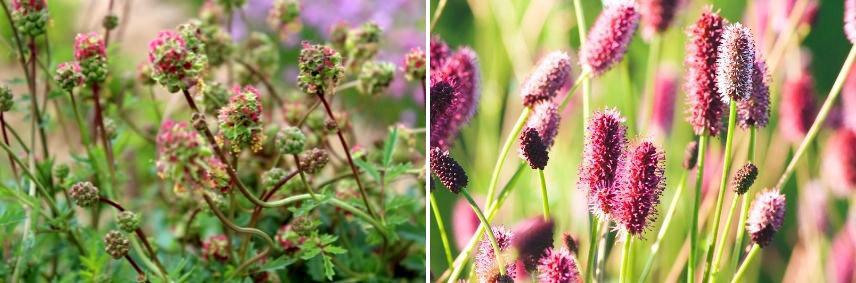
Sanguisorba minor, flowering from May and Sanguisorba ‘Red Thunder’ with a more summer bloom
Read also
9 pink-flowered perennialsAccording to height
Sanguisorbas can be small, non-invasive perennials or take the form of larger clumps, reaching over 1.5 m in height. To make a choice and pair them appropriately, this height criterion is important, whether the gardener wants to plant them at the front or, conversely, behind more compact bushes or perennials.
Small Burnets: up to 40 cm
The smallest varieties such as ‘Little Angel’ and Sanguisorba officinalis ‘Tanna’ can be planted in the ground at the front of a flower bed, either isolated or in groups to enhance the striking effect of their leaves and beautiful flowering. They can also be placed in pots or containers.
Medium Burnets: from 50 cm to 1 m
Most Sanguisorbas reach an intermediate height when in flower; they are easy to integrate into borders. Notable examples include Sanguisorba minor, ‘Proud Mary’, ‘Morning Select’ or the wonderful Sanguisorba obtusa.
Large Burnets: from 1.20 m to 2 m
Quickly forming a clump of 1.5 m in height when in flower and 50 cm in width, notable examples include Sanguisorba tenuifolia ‘Pink Elephant’ and Sanguisorba tenuifolia ‘Alba’. The Sanguisorba canadensis can reach 2 m in height when in flower.
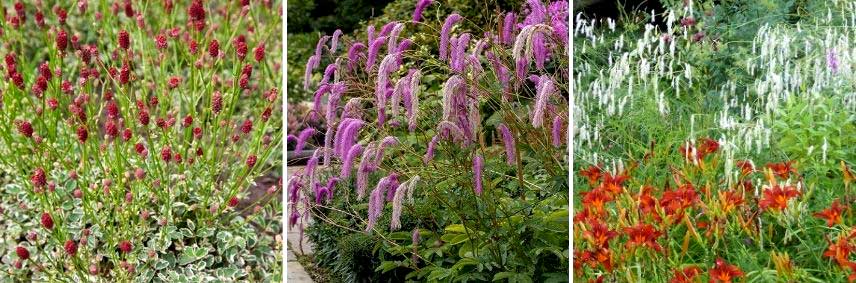
Sanguisorba ‘Little Angel’ has a low habit, Sanguisorba hakusanensis reaches about 1 m in height, while Sanguisorba tenuifolia ‘Alba’ forms a clump of 1.5 m in height when in flower.
Depending on the type of soil and the uses
Pimprenelles thrive best in fertile, cool, well-drained soil with a tendency towards lime. Therefore, do not hesitate to apply mulch to keep the soil cool while simultaneously limiting the growth of weeds.
As an exception that confirms the rule, Sanguisorba minor prefers rather dry and poor soils. As it enjoys dry conditions, Sanguisorba minor can be planted in rockeries alongside other drought-tolerant plants.
Due to their growth and natural appearance, most Sanguisorbas are best placed at the heart of borders, in large flower beds, in meadows, or by the edge of a pond.
You can also grow pimprenelle in pots. Ensure you use a sufficiently large container and add a drainage layer at the bottom.
With its foliage boasting a delightful cucumber aroma, Sanguisorba minor will also find its place in the vegetable garden or among herbs.

- Subscribe!
- Contents
Comments