





























Common potato scab
Identification, prevention and treatment
Contents
Have you ever encountered, while harvesting your potatoes, tubercles covered in lesions that resemble cankers, either isolated or clustered? These depressions are often a sign of a condition known as common scab of potatoes, caused by the development of bacteria. Relatively common, this disease affects the quality of the potato without impacting its profitability, storage, or flavour. However, it is best to avoid it through a few preventive measures to achieve a good harvest.
Join us as we explore how to recognise common scab and, most importantly, how to prevent it.

What is the common potato gall?
Common scab of potato is a infection caused by bacteria of the genus Streptomyces. These filamentous bacteria belong to the class of Actinomycetes, saprophytic and heterotrophic bacteria. These two somewhat obscure terms refer to bacteria that live in the soil and “feed” on the organic matter they find there.
Common scab of potato manifests in two different forms:
- Raised scab: this form of common scab, characterised by the presence of pustules on the epidermis of potatoes, is primarily caused by Streptomyces scabies, bacteria that thrive between 19 and 24 °C.
- Flat or corky scab: this form of scab is caused by Streptomyces reticuliscabies, a bacterium that prefers cooler temperatures, around 13 to 17 °C, and a more humid atmosphere.
These two types of bacteria only attack the epidermis of the tubers. Symptoms are therefore perfectly invisible until harvest, as the aerial parts are not affected. These bacteria are hosted in the soil and can survive there for many years.
Common scab of potato will have an impact on the quality of the tubers, but not on the yield, nutritional value, or flavour. Indeed, the potato retains its characteristics, but peeling will need to be deeper, less superficial. Furthermore, the potatoes will be less presentable for those wishing to sell them.
This disease can also affect other root vegetables such as carrots, parsnips, beets, swedes, and turnips.
Read also
Diseases and pests of potatoesWhat are the symptoms of the disease?
As there are two forms of common scab (which can actually be considered as two different infections given the development conditions!), the symptoms manifest differently:
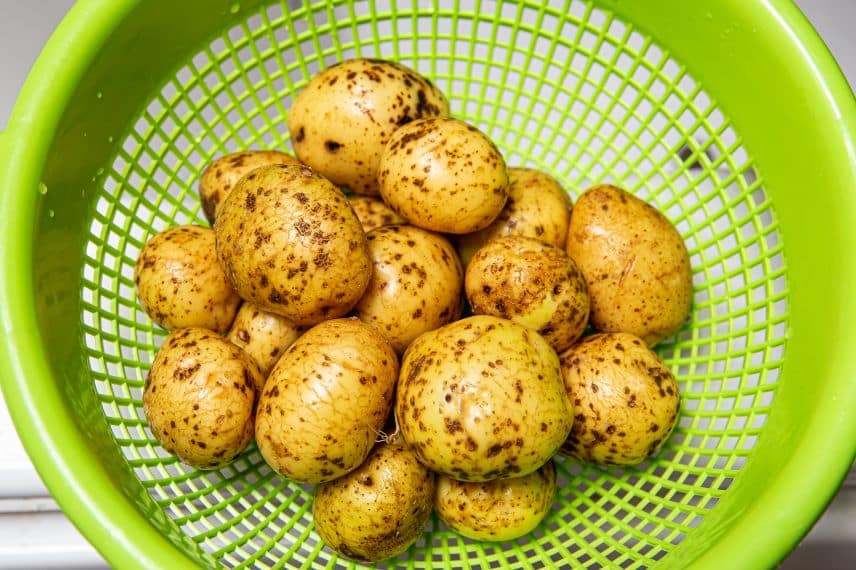
- The raised common scab is identified by the pustules that dot the tubers. The epidermis is marked by cracks and scabby areas of irregular shape and brown spots that can form small craters in the flesh of the potato. The attacks can be deep and truly damage the flesh of the potato.
- The corky common scab is recognisable by more superficial, rough patches that form thick plates.
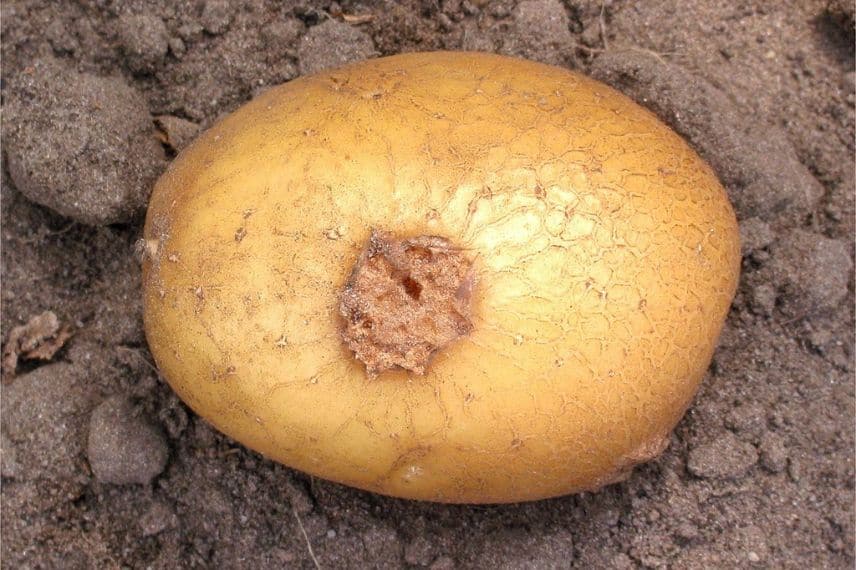
A symptom of common scab on a potato (©Rasbak)
In any case, these scar tissues do not affect the stems or foliage. And they do not progress once the potatoes are harvested.
Discover other Seed potatoes
View all →
Available in 2 sizes
Available in 0 sizes
Available in 1 sizes
Available in 0 sizes

Available in 1 sizes
Available in 2 sizes
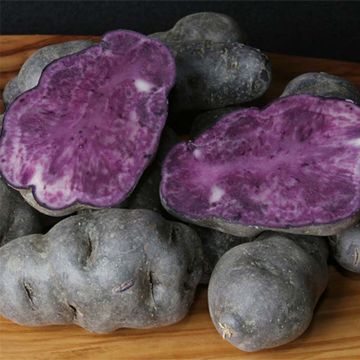
Available in 1 sizes
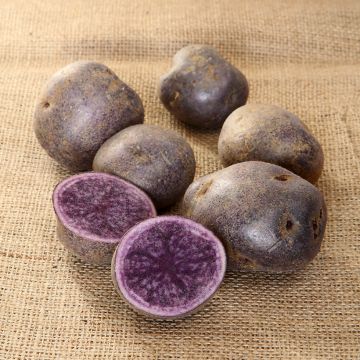
Available in 1 sizes
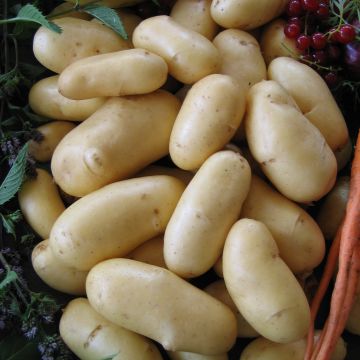
Available in 3 sizes
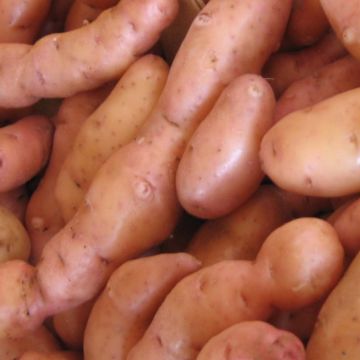
Available in 1 sizes
Factors that facilitate the occurrence of common scab
The Streptomyces are present in the soil, even in the absence of a host plant, on forgotten tubercles or crop residues. They survive through winter. Transmission occurs in several ways: water splashes from watering or rain, wind, seeds, tools, or agricultural equipment.
As for the factors, there are many that favour the growth of the implicated bacteria:
- An aerated and well-oxygenated soil
- A light and sandy soil
- A neutral to alkaline soil with a pH above 5.5
- A dry and warm soil at the time of tuberisation, with a temperature between 19 and 24 °C, amplifies the development of Streptomyces scabies, responsible for common scab in reliefs. In contrast, common scab in cork develops under humid conditions and temperatures between 13 and 17 °C
- An excessive application of fresh manure favours the survival of the bacteria
Read also
Planting potatoHow to prevent common gall?
Knowing that there is no effective natural treatment, everything relies on prevention:
- Remove all crop residues from potatoes and eliminate any potentially infected tuber that may remain in the soil
- Implement a strict crop rotation of at least 4 years for potatoes, as well as for root vegetables like carrots, parsnips, turnips…
- Avoid adding manure or poorly decomposed organic matter
- Do not overwork the soil to promote aeration
- Avoid light and sandy soils for your potato plantings and maintain a certain level of moisture in the soil at the time of tuber formation, which is 4 to 6 weeks after planting
- Limit the addition of lime amendments or liming before planting potatoes
- Choose resistant or less sensitive varieties and certified seed free from scab
- Sow green manures such as vetch, mustard, or lupin as preceding crops
Further reading:
Your questions, our answers on common scab
- Can you eat potatoes affected by common scab? Despite their unappealing appearance, scabby potatoes can perfectly well be consumed. Just peel them thoroughly to remove the damaged tissues, which can sometimes be quite deep. You may experience some loss, but the flesh retains its flavour. Similarly, potatoes store very well.
- What are the most resistant or least sensitive varieties to common scab? The varieties ‘Amandine’, ‘Apollo’, ‘Roseval’ or ‘Ratte’ are found to be more resistant to scab than others.
- Subscribe!
- Contents
Comments